

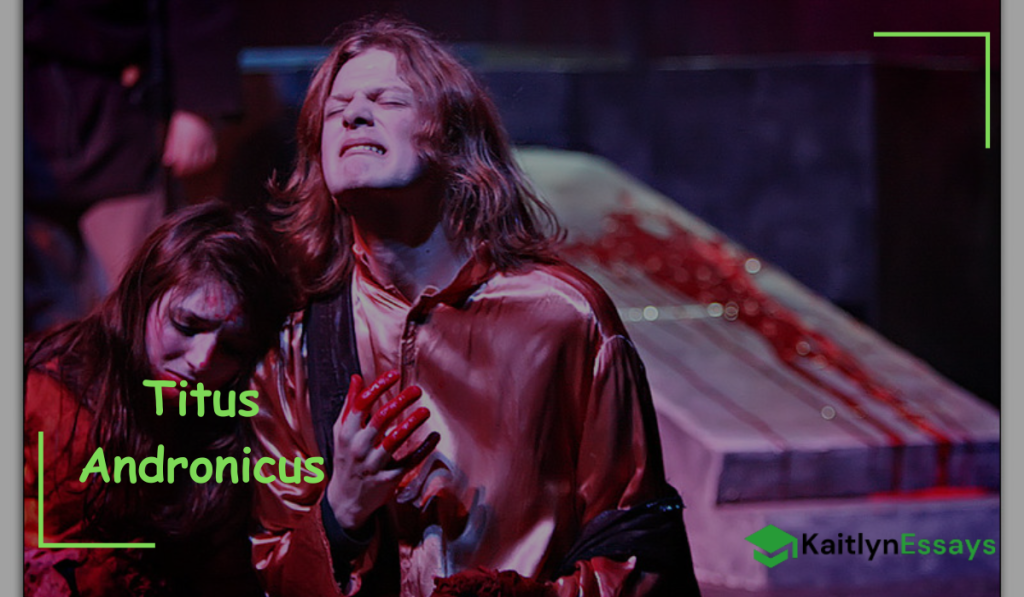
Titus Andronicus is one of William Shakespeare’s earliest and most dramatic tragedies, showcasing a story filled with revenge, betrayal, and the consequences of unchecked violence. Set in ancient Rome, the play revolves around the titular character, a victorious general, whose life spirals into chaos after a series of brutal events involving family honor and political power. Shakespeare explores themes of loyalty, justice, and the destructive nature of vengeance through vivid characters and intense conflicts.
The play’s graphic depictions of cruelty and its intricate plot make it a powerful yet controversial piece of literature. While not as widely performed as some of Shakespeare’s other works, Titus Andronicus remains significant for its portrayal of human suffering and its influence on the development of English tragedy. By pushing the boundaries of theatrical storytelling, this work invites audiences to confront the darker sides of human nature and the costs of revenge.
Summary of Titus Andronicus
Act I: A Triumphant Return and Tragic Decisions
The play opens in Rome, where the victorious general Titus Andronicus returns after defeating the Goths. He brings with him Tamora, the Queen of the Goths, her sons, and her lover, Aaron the Moor, as prisoners of war. In a display of Roman tradition, Titus sacrifices Tamora’s eldest son to honor the fallen soldiers. This act ignites Tamora’s thirst for vengeance.
Meanwhile, a power struggle unfolds for the Roman throne. Titus supports Saturninus, the eldest son of the late emperor, as ruler. Saturninus becomes emperor and offers to marry Titus’s daughter, Lavinia. However, Lavinia is already betrothed to Bassianus, Saturninus’s brother. Defying Titus’s wishes, Lavinia elopes with Bassianus, leading Titus to kill one of his own sons in a fit of loyalty to the emperor. Saturninus, offended by the betrayal, instead marries Tamora, setting the stage for her revenge.
For more insights into Act I’s dynamics and key moments, additional details are available: discover more.
Act II: Revenge Takes Root
Act II moves to the forest, where Tamora and her sons, Demetrius and Chiron, plot their revenge against Titus. Aaron, Tamora’s lover, manipulates Demetrius and Chiron into raping Lavinia and mutilating her by cutting off her hands and tongue. The brothers also murder Bassianus, framing two of Titus’s sons for the crime.
Lavinia’s brutal assault leaves her unable to communicate, but her suffering becomes a powerful symbol of the cruelty inflicted by Tamora’s family. Meanwhile, Aaron cunningly plants evidence to ensure Titus’s sons are condemned, further destabilizing the Andronicus family.
For a closer look at Act II’s shocking developments, further insights are available: discover more.
Act III: The Downfall of Titus
Act III finds Titus pleading for the lives of his condemned sons, but his appeals fall on deaf ears. In desperation, he agrees to Aaron’s suggestion to cut off his own hand in exchange for their freedom. However, Titus is cruelly tricked, as the heads of his sons are returned to him along with his severed hand.
The emotional toll drives Titus to the brink of madness, but he begins to plot his revenge. Lavinia, despite her injuries, manages to reveal the identities of her attackers by writing their names in the dirt with a stick held in her mouth. This revelation fuels Titus’s determination to retaliate against Tamora and her sons.
For an in-depth exploration of Act III’s tragic moments, additional details are available: discover more.
Act IV: The Seeds of Retribution
In Act IV, Titus’s plans for vengeance take shape. He sends his remaining son, Lucius, to gather an army of Goths to challenge Saturninus and Tamora. Meanwhile, Lavinia continues to endure her trauma, becoming a silent witness to her family’s suffering and resilience.
Aaron’s schemes unravel when he is captured by Lucius’s forces. To save his infant son, Aaron confesses to his crimes, revealing the extent of Tamora’s and her sons’ brutality. This confession sets the stage for Titus’s final act of retribution.
For more on Act IV’s revelations and strategies, further insights are available: discover more.
Act V: A Feast of Revenge
The play reaches its bloody conclusion in Act V. Titus invites Saturninus, Tamora, and her sons to a banquet. Before the feast, he kills Demetrius and Chiron, bakes their remains into a pie, and serves it to Tamora. After revealing the horrific truth, Titus kills Tamora and is immediately killed by Saturninus. Lucius, in turn, avenges his father by killing Saturninus.
With the deaths of nearly all the main characters, Lucius is declared the new emperor. He orders a proper burial for Titus and Lavinia, while Tamora’s body is left to be devoured by wild animals as punishment for her deeds. Aaron, unrepentant to the end, is condemned to die a slow, painful death.
For a detailed analysis of Act V’s dramatic finale, additional details are available: discover more.
Characters in Titus Andronicus
Titus Andronicus
Titus Andronicus is the protagonist of Shakespeare’s bloodiest tragedy. As a Roman general, he is highly respected for his military victories, which are celebrated at the start of the play. However, his strict adherence to Roman values and sense of duty to the empire lead him to make several tragic decisions. His initial act of sacrificing Tamora’s son to honor his fallen soldiers marks the beginning of his tragic downfall. Throughout the play, Titus’s loyalty to Rome and his family is tested, and he is forced to navigate a world where honor and revenge clash. The atrocities against his family, particularly the rape and mutilation of his daughter Lavinia, lead him to take extreme actions, ultimately orchestrating the deaths of Tamora’s sons and even serving them in a pie to their mother. Titus’s journey is a commentary on the destructive nature of revenge, the consequences of unchecked authority, and the collapse of traditional values under the weight of cruelty. His tragic flaw is his inability to recognize the true extent of the cycle of vengeance he sets in motion.
For a detailed breakdown of Titus’s tragic arc, discover more.
Tamora
Tamora, the Queen of the Goths, is a complex antagonist who embodies vengeance, manipulation, and power. After her son is sacrificed by Titus, she vows revenge, becoming the driving force of the play’s violence. Tamora’s role as Empress of Rome allows her to manipulate the weak Emperor Saturninus, and she uses her political position and sexual allure to further her schemes. Unlike many other characters, Tamora is highly strategic, organizing the assaults on Lavinia and influencing events from behind the scenes. She orchestrates the rape and mutilation of Lavinia, which symbolizes her attempt to destroy the integrity of Titus’s family in retaliation for the loss of her son. Her relationship with Aaron adds another layer of manipulation, as she conspires with him to carry out her plans of destruction. Ultimately, her drive for vengeance leads to her death when Titus serves her sons’ mutilated bodies as a pie. Tamora’s tragic end reveals the destructive consequences of allowing personal vengeance to overtake one’s humanity.
To explore the depths of Tamora’s vengeful nature and her role as the play’s antagonist, discover more.
Aaron the Moor
Aaron is one of the most villainous characters in Shakespeare’s canon. His relationship with Tamora serves as a catalyst for much of the play’s violence. Aaron’s evil is calculated and deliberate, as he manipulates Tamora’s sons into committing heinous acts, including the rape and mutilation of Lavinia. His role in the play is central to the exploration of race, morality, and power. As a Moor in a Roman society that values Roman virtues, Aaron is an outsider who uses his marginalization to his advantage, crafting plots of revenge and deceit. Despite his villainy, Aaron is unapologetically proud of his actions, making him one of the most unrepentant characters in Shakespeare’s works. His tender affection for his infant son, whom he goes to great lengths to protect, introduces a paradox within his character, showing that even in a man consumed by evil, there can still be fragments of humanity. Aaron’s fate—being sentenced to a brutal death for his crimes—reinforces the play’s theme of the consequences of unchecked malice.
For further analysis of Aaron’s complexities and motivations, discover more.
Lavinia
Lavinia’s role in Titus Andronicus is central to the play’s examination of innocence, suffering, and justice. As Titus’s daughter, she is initially depicted as a symbol of virtue and purity. However, her brutal rape and mutilation at the hands of Tamora’s sons transform her into a tragic figure. After the assault, Lavinia’s inability to speak or use her hands, combined with her silence, speaks volumes about the loss of agency and the violence against women in the play. Despite her horrific circumstances, Lavinia becomes the catalyst for her father’s vengeance when she, through desperate means, reveals her attackers. Her suffering is both a personal tragedy and a larger symbol of the destruction caused by the cycle of revenge. Lavinia’s character arc demonstrates the horrific toll of violence and the complex ways in which the characters respond to it, highlighting both personal endurance and the desire for justice.
For a more detailed exploration of Lavinia’s tragic role, discover more.
Lucius
Lucius, Titus’s eldest surviving son, represents the potential for renewal and justice after the destructive cycle of revenge. Banished from Rome early in the play, Lucius rises as a leader of the Goths and becomes a symbol of resistance to Saturninus’s corrupt reign. Lucius’s return to Rome with an army of Goths represents both a personal and political revival, as he seeks to restore order and honor to his family and Rome. His leadership qualities and sense of justice contrast sharply with the chaos and violence that have overtaken his family. In the end, Lucius’s ascent to the throne as the new emperor of Rome offers a semblance of closure, suggesting that even after such bloodshed, there is hope for a new beginning.
For an in-depth look at Lucius’s role in the play’s resolution, discover more.
Saturninus
Saturninus, the emperor of Rome, is portrayed as a weak and impulsive ruler whose actions are often dictated by the influence of others, particularly Tamora. His character serves as a foil to Titus’s sense of honor and duty, as Saturninus’s decisions are often driven by personal desire rather than the well-being of Rome. His marriage to Tamora and subsequent involvement in her revenge schemes illustrate his susceptibility to manipulation. Saturninus’s corrupt leadership and volatile nature ultimately lead to his demise, as he is killed by Lucius in the play’s final act. His character represents the dangers of unchecked authority and the collapse of leadership in times of turmoil.
To further analyze Saturninus’s role and his tragic downfall, discover more.
Demetrius and Chiron
Tamora’s sons, Demetrius and Chiron, are key figures in the play’s violent actions. They serve as extensions of their mother’s vengeful will, committing heinous acts such as the rape and mutilation of Lavinia and the murder of Bassianus. They are depicted as sadistic, arrogant, and devoid of remorse, which makes their deaths at the hands of Titus all the more fitting. Their violent actions contribute to the overall sense of chaos in the play, and their fate—being baked into a pie and served to their mother—is one of the most grisly and poetic forms of retribution in Shakespearean drama. The sons’ lack of conscience makes them the perfect vehicles for the play’s exploration of unchecked evil and the inevitability of punishment.
For more on Demetrius and Chiron’s role in the play’s violence, discover more.
Marcus Andronicus
Marcus, Titus’s brother and a senator in Rome, plays the role of the voice of reason in a world overtaken by violence and revenge. He acts as a loyal advisor to Titus and serves as a moral compass in the play, urging his brother to seek peace and avoid unnecessary violence. While he is often sidelined by the overwhelming power of vengeance in the play, Marcus’s character highlights the tensions between political duty and familial loyalty. His actions, particularly his assistance in discovering the truth about Lavinia’s assault, show his desire to uphold justice, even as the world around him descends into chaos.
For further insights into Marcus’s role as a moral counterpoint in the play, discover more.
Young Lucius
Young Lucius, the grandson of Titus, represents the potential for a brighter future amid the bloodshed. Though his role is limited, his presence in the final act symbolizes hope and renewal. His survival and his role in the eventual restoration of order after the tragedy of his family’s demise suggest that even after profound loss and destruction, there is the possibility of healing and new beginnings.
To learn more about Young Lucius’s symbolic importance in the play, discover more.
Themes in Titus Andronicus
Revenge and its Consequences
The central theme of Titus Andronicus is revenge and its devastating consequences. The cycle of vengeance begins with Titus’s sacrifice of Tamora’s son and escalates as Tamora seeks retribution. Each act of revenge in the play leads to greater violence, culminating in a series of gruesome deaths. Shakespeare explores how revenge consumes individuals, families, and societies, leaving destruction in its wake. The play questions whether revenge ever achieves justice or simply perpetuates a cycle of suffering and chaos.
For an in-depth exploration of how revenge shapes the play, discover more.
Power and Corruption
Titus Andronicus examines the corrupting influence of power. Saturninus’s ascension to the throne sets the stage for a reign of instability and manipulation. Tamora’s rise to power as empress showcases how ambition and vengeance can drive individuals to abuse authority. Both rulers use their positions to further personal vendettas rather than serve the greater good. The political corruption in Rome mirrors the moral decay of its leaders, showing how power without virtue leads to chaos.
To further analyze the theme of power and its corrupting effects, discover more.
Violence and Human Suffering
The play’s graphic depictions of violence underscore the destructive nature of unchecked hatred and vengeance. From Lavinia’s brutal assault to Titus’s grisly revenge, Titus Andronicus portrays violence as both physical and psychological. Shakespeare forces the audience to confront the consequences of brutality, showing how it dehumanizes individuals and tears apart families and communities. The play also explores the impact of violence on innocent victims, emphasizing the lasting scars it leaves behind.
For a closer look at the role of violence in the play’s narrative, discover more.
Family and Loyalty
The theme of family loyalty is central to the tragedy of Titus Andronicus. Titus’s devotion to his family is evident throughout the play, from his initial decision to sacrifice Tamora’s son to honor his fallen sons, to his relentless pursuit of justice for Lavinia. However, this loyalty often conflicts with his duties to Rome, leading to tragic consequences. The Andronicus family’s suffering reflects the fragility of familial bonds in the face of vengeance and political manipulation. At the same time, the loyalty of characters like Marcus and Lucius demonstrates the enduring strength of family even in the darkest moments.
For more on the complex dynamics of family and loyalty, discover more.
Justice and Injustice
The quest for justice drives much of the action in Titus Andronicus, but the play portrays justice as elusive and often corrupted by personal vendettas. Characters like Titus, Tamora, and Aaron seek justice for perceived wrongs, yet their methods often involve disproportionate acts of cruelty. The Roman legal and political systems are shown as flawed, allowing power and influence to determine outcomes rather than fairness. The play raises important questions about the nature of justice and whether it can truly be achieved through acts of revenge.
To learn more about the play’s commentary on justice and injustice, discover more.
Race and Otherness
Through the character of Aaron the Moor, Titus Andronicus explores themes of race and otherness. Aaron’s status as an outsider in Roman society influences his actions and provides insight into how he is perceived by others. His villainy is both a personal choice and a response to his marginalization, as he seeks to assert power in a society that excludes him. The play examines how racial and cultural differences shape identity, morality, and power dynamics, making Aaron one of Shakespeare’s most complex and controversial characters.
For a detailed analysis of race and otherness in the play, discover more.
Gender and Violence
Gender roles and violence against women are central to the tragedy of Titus Andronicus. Lavinia’s rape and mutilation highlight the vulnerability of women in a patriarchal society and serve as a stark symbol of the broader violence in the play. Tamora’s character challenges traditional gender roles, as she wields power and seeks revenge with the same ferocity as her male counterparts. However, her actions also reveal the ways in which women’s ambitions are often shaped by their relationships with men. The play critiques the exploitation of women and the ways in which they are used as pawns in the larger cycle of vengeance.
To explore the play’s treatment of gender and violence in more detail, discover more.
Fate and Free Will
Titus Andronicus raises questions about the role of fate and free will in the characters’ lives. Many of the tragedies in the play are set in motion by choices made by Titus, Tamora, and others, suggesting that their fates are the result of free will. However, the relentless cycle of revenge and the sense of inevitability surrounding the characters’ actions suggest that they are also trapped by forces beyond their control. The tension between personal responsibility and destiny adds depth to the play’s exploration of human suffering.
For an analysis of fate and free will in Titus Andronicus, discover more.
The Collapse of Rome
The decline of Rome is a significant backdrop to the events of the play. The political chaos, moral corruption, and cycle of vengeance reflect the disintegration of Roman values and society. The failure of leadership, embodied by Saturninus, and the loss of honor among the ruling class mirror the larger collapse of the empire. Shakespeare uses Rome as both a physical and symbolic setting to explore the consequences of moral and social decay.
To analyze the theme of Rome’s collapse in greater depth, discover more.
Morality and Villainy
The play presents a range of characters who embody different aspects of morality and villainy. Aaron’s unapologetic evil contrasts with Titus’s sense of justice, while Tamora’s quest for revenge blurs the line between villain and victim. Shakespeare examines how characters justify their actions and the impact of moral choices on themselves and others. The play ultimately suggests that morality is complex and subjective, shaped by personal experience and societal expectations.
For further insights into the play’s treatment of morality and villainy, discover more.
Symbols in Titus Andronicus
The Hand of Lavinia
Lavinia’s mutilated hand becomes one of the most powerful symbols in Titus Andronicus. After her brutal assault, Lavinia is left unable to speak and with her hands chopped off, representing both her loss of agency and her transformation from an innocent figure into a symbol of suffering. Her hand also serves as a key to unraveling the mystery of her rape, as she uses it to communicate with Titus. The mutilation of Lavinia’s hand highlights the theme of violence against women and the physical and psychological toll of brutality. It symbolizes the cost of revenge and the dehumanization that occurs in the play’s violent world.
To explore the significance of Lavinia’s hand further, discover more.
The Pie of Tamora’s Sons
One of the most infamous symbols in Titus Andronicus is the pie that Titus prepares for Tamora. After killing her sons, Titus serves them to her in a pie, which she unknowingly eats. This grotesque act of revenge symbolizes the culmination of the cycle of vengeance, as Titus turns the tables on Tamora by feeding her the very bodies of her children. The pie represents the complete breakdown of moral boundaries and the grotesque nature of the revenge cycle, turning familial bonds into objects of horrific retribution. It is also a symbol of Titus’s loss of humanity, as he sacrifices any sense of mercy for the sake of revenge.
For a deeper analysis of the pie as a symbol of revenge, discover more.
The Role of the Roman Triumph
The Roman triumph, a public celebration of military victory, is a key symbol in the play. Titus’s return to Rome with the prisoners of war, including Tamora and her sons, is depicted as a Roman triumph. However, instead of celebrating the glory of Rome, this triumph sets the stage for the play’s tragic events. The Roman triumph symbolizes the emptiness of war and victory when based on revenge and destruction, undermining the notion of glory in conquest. It highlights the play’s critique of Rome’s imperial values, emphasizing how the quest for power can lead to moral decay and societal collapse.
For more on the Roman triumph as a symbol, discover more.
The Forest of Andronicus
The forest where Lavinia is assaulted becomes a symbol of lawlessness, violence, and loss of innocence. The natural world in Titus Andronicus is often depicted as a place where societal norms and moral boundaries break down, and where characters like Tamora and her sons carry out their dark deeds. The forest contrasts with the Roman city, which represents order and civilization, and thus the forest becomes a space where chaos reigns. It symbolizes the loss of control and the collapse of the social order that occurs as characters give in to vengeance.
To explore the forest’s symbolic role further, discover more.
The Lavinia’s Dream Sequence
Lavinia’s dream-like vision, wherein she uses her mutilated hands to communicate with her father, is a symbolic moment in the play. The image of Lavinia with her hands outstretched represents both her helplessness and her desire for justice. Her hands, once symbols of purity and innocence, now serve as a powerful tool for revelation and truth. The dream sequence suggests the breakdown of communication and the devastating consequences of violence, as Lavinia’s inability to speak is overcome by her symbolic gesture. The vision also represents the intersection of human suffering and the possibility of redemption through justice.
For a detailed look at Lavinia’s dream sequence and its symbolic significance, discover more.
The Masque of Revenge
Throughout Titus Andronicus, the act of revenge is often portrayed as a ritualistic and theatrical performance. This theme is underscored by the way characters manipulate and stage their acts of vengeance, such as Titus’s elaborate plot to kill Tamora’s sons. Revenge, in this sense, becomes a mask that hides deeper emotions, including grief, guilt, and frustration. The ritualistic nature of revenge makes it both a personal and societal performance, where each character plays a role in the cycle of violence. The masque of revenge symbolizes the way individuals become trapped by the roles they play, losing their humanity in the process.
For an in-depth analysis of the masque of revenge in the play, discover more.
The Symbol of the Knife
Knives, daggers, and swords appear frequently throughout Titus Andronicus and serve as symbols of both power and violence. The knife represents the ability to both destroy and deliver justice, and its repeated use highlights the prevalence of physical violence in the play. From the knife used to mutilate Lavinia to the blades wielded by Titus in his final act of revenge, the knife is a symbol of the characters’ ability to assert control over their fate. However, it is also a symbol of the futility of revenge, as each act of violence only leads to further destruction.
To explore the symbolic importance of the knife in the play, discover more.
The Throne of Rome
The throne of Rome represents the ultimate prize in the play, serving as a symbol of power, leadership, and authority. Characters like Saturninus, Tamora, and Titus vie for control of the throne, and their pursuit of power leads to widespread violence. The throne symbolizes the moral decay and corruption of Rome, as the characters who seek it are willing to sacrifice anything—including their own honor and humanity—to claim it. The throne ultimately becomes a symbol of the emptiness of power when it is pursued through immoral means.
For a detailed exploration of the throne as a symbol of power, discover more.
Blood
Blood is a recurring symbol throughout Titus Andronicus, representing both the physical and symbolic consequences of violence. The play is drenched in blood, from Lavinia’s mutilated body to the numerous deaths that punctuate the narrative. Blood symbolizes the life force that is spilled in the pursuit of revenge, and the repetition of violence suggests that once blood is spilled, it cannot be undone. The bloodshed in the play reflects the cycle of vengeance, as each act of violence begets further suffering and death. Ultimately, blood symbolizes the play’s central themes of retribution and the human cost of revenge.
For a deeper look at the symbolic meaning of blood in the play, discover more.
The Roman Senate
The Roman Senate serves as a symbol of order and justice in Titus Andronicus, but it is ultimately corrupted and ineffective. While it is supposed to represent the collective will of the Roman people, the Senate is shown to be weak and easily influenced by those in power, particularly Saturninus and Tamora. The failure of the Senate to maintain justice mirrors the moral collapse of Rome itself, highlighting the theme of political corruption. The Senate’s impotence is a symbol of the failure of institutions to uphold justice in a society driven by vengeance and power struggles.
To explore the Senate’s symbolic role in the play, discover more.
Literary Devices in Titus Andronicus
Irony
Irony is a key literary device in Titus Andronicus, often used to highlight the tragic consequences of characters’ actions. One of the most striking forms of irony is dramatic irony, where the audience is aware of certain facts that the characters are not. For example, when Titus serves Tamora the pie made from her sons’ bodies, the audience knows the truth while Tamora remains ignorant, heightening the horror and poignancy of the scene. There is also situational irony in the play, as characters’ attempts at revenge often lead to unintended consequences. The play’s use of irony underscores the futility and destructive nature of vengeance.
To further explore the role of irony in the play, discover more.
Allusion
Shakespeare uses allusion to reference classical Roman culture and mythology, drawing parallels between the events of the play and historical or mythological figures. For example, the character of Titus is alluded to as a Roman hero, yet he falls victim to the destructive nature of revenge, much like tragic heroes from ancient mythology. The references to Roman rituals and customs also serve to reflect the moral decline of Rome in the play. These allusions provide a deeper context for the audience, linking the events of the play to broader themes of power, corruption, and revenge.
For a closer look at the use of allusion in the play, discover more.
Metaphor
Metaphor is frequently used in Titus Andronicus to illustrate abstract ideas and emotions. For example, the image of Lavinia’s mutilated body serves as a metaphor for the destruction of innocence and the brutal consequences of unchecked vengeance. Similarly, the Roman state is often compared to a decaying body, symbolizing the moral corruption and decay that runs through the entire society. Through metaphors like these, Shakespeare deepens the emotional impact of the play and emphasizes the tragic themes of violence, revenge, and loss.
To learn more about the metaphors in Titus Andronicus, discover more.
Juxtaposition
Juxtaposition is used to contrast different characters and situations, highlighting the stark differences between innocence and guilt, order and chaos, or justice and revenge. For instance, Titus’s loyalty to Rome and his desire for justice is juxtaposed with his increasingly violent actions, making him a tragic figure caught between his moral code and his desire for revenge. Similarly, the contrast between Tamora’s outward beauty and her inner cruelty underscores the theme of appearances versus reality. Juxtaposition allows Shakespeare to emphasize the moral complexity of the characters and their actions, making their decisions more poignant and tragic.
For a detailed analysis of how juxtaposition works in the play, discover more.
Symbolism
Symbolism is deeply embedded in the structure of Titus Andronicus, with recurring symbols that enhance the play’s themes of revenge, power, and moral decay. Symbols such as Lavinia’s mutilated hands, the pie made from Tamora’s sons, and the bloodshed that permeates the play all carry symbolic meaning. These symbols often represent the physical and emotional toll of the characters’ actions, as well as the play’s exploration of vengeance and the collapse of moral order. Shakespeare uses symbolism to deepen the play’s tragic impact and to create a sense of inevitability.
For more on the symbolism in Titus Andronicus, discover more.
Alliteration
Alliteration, the repetition of consonant sounds at the beginning of words, is used throughout Titus Andronicus to create a rhythm that enhances the mood of the play. The use of alliteration is often found in the speeches of characters like Titus and Tamora, who both use language to manipulate and assert control. For example, when Titus speaks of revenge, the repetition of sounds can amplify the intensity and urgency of his feelings. Alliteration also serves to reinforce key themes, such as the cyclical nature of violence and the characters’ obsessive focus on retribution.
For a closer look at the use of alliteration in the play, discover more.
Foreshadowing
Foreshadowing is used effectively in Titus Andronicus to hint at the tragic events that will unfold. Early in the play, Titus’s decision to sacrifice Tamora’s son sets in motion a series of events that will ultimately lead to his own downfall. The deaths of Titus’s sons, the mutilation of Lavinia, and the growing tension between the characters all serve as foreshadowing for the final, bloody conclusion. By giving the audience glimpses of what is to come, Shakespeare builds suspense and emphasizes the inevitability of tragedy in the play.
To explore how foreshadowing enhances the play’s tragic structure, discover more.
Imagery
Shakespeare’s use of vivid imagery in Titus Andronicus helps to convey the horror and emotional intensity of the play. The imagery of blood, mutilation, and death is central to the play’s themes of violence and revenge. For instance, the image of Lavinia’s bleeding body after her assault, or the description of the pie made from her sons’ bodies, creates a visceral impact on the audience. The frequent use of graphic and disturbing imagery serves to highlight the brutality of the characters’ actions and the play’s overall atmosphere of decay and violence.
For a deeper dive into the play’s imagery and its impact, discover more.
Chorus
The chorus in Titus Andronicus serves as a narrative device that helps to move the story forward and reflect on its themes. The character of Marcus Andronicus often speaks in a way that provides commentary on the action, offering the audience a perspective on the events of the play. The chorus helps to contextualize the violence and moral confusion, adding depth to the story by reflecting on its larger implications. This device helps Shakespeare create a sense of distance between the audience and the characters, making the play’s tragic events feel both inevitable and universal.
For a closer examination of the chorus and its role in the play, discover more.
Anagnorisis
Anagnorisis, or the moment of recognition, is a key literary device in Titus Andronicus. This device occurs when characters come to a realization about themselves or their situation. For example, Titus’s recognition of the extent of his revenge and its consequences is a moment of tragic self-awareness. However, the play’s anagnorisis is often too late to prevent the inevitable tragedy, underscoring the play’s themes of fate and free will. The moments of recognition are pivotal in heightening the emotional impact of the tragedy, as the characters are unable to change the course of their actions in time to avoid destruction.
For a detailed analysis of the moments of anagnorisis in the play, discover more.
Soliloquy
Soliloquies in Titus Andronicus provide insight into the inner thoughts and motivations of the characters. These speeches allow the audience to understand the personal conflicts and moral dilemmas that the characters face. For instance, Titus’s soliloquy in Act 5, in which he reflects on the nature of revenge and justice, provides a glimpse into his tortured soul. Shakespeare uses soliloquies not only to reveal character psychology but also to expose the moral ambiguities at the heart of the play.
For an in-depth exploration of the soliloquies in Titus Andronicus, discover more.
Key Quotes in Titus Andronicus
“You sad false woman! / I’ll slay you.” – Titus Andronicus (Act 1, Scene 1)
This line marks the beginning of the play’s exploration of revenge and betrayal. Titus’s harsh condemnation of Tamora foreshadows the violent acts that will follow. His anger towards her for her role in the death of his sons sets the tone for his character throughout the play, illustrating his relentless pursuit of vengeance. The use of the word “false” highlights the theme of deception and moral corruption that runs throughout the play. This moment also signals the deep moral decay within the Roman world of the play, where justice is often taken into the hands of individuals rather than institutions.
To explore the impact of this quote and others, discover more.
“I am not mad. I know thee well enough. / Thy face, my thane, is as a book where men / May read strange matters.” – Tamora (Act 2, Scene 3)
In this exchange, Tamora reveals her ability to manipulate the truth and deceive others. Her claim that Titus’s face is like a book in which one can “read strange matters” suggests that appearances can be deceiving and that those who seem trustworthy may be hiding dark secrets. This quote touches on the play’s theme of appearances versus reality, where characters often conceal their true motives, leading to tragic misunderstandings. The idea of “reading” people’s faces connects to the idea of judgment and how characters often misjudge others.
For a deeper analysis of how deception is portrayed in the play, discover more.
“But that my noble father / The sun of Rome, is setting, I must die.” – Lavinia (Act 3, Scene 1)
This quote marks a turning point for Lavinia, whose innocence and purity are brutally taken away from her. Her reference to her father as the “sun of Rome” suggests her deep admiration and loyalty to him. Yet, this line also foreshadows her own demise, symbolizing the moral and political decline of Rome itself. Lavinia’s tragic fate, marked by her assault and mutilation, highlights the play’s themes of powerlessness, victimization, and the cost of vengeance. Lavinia’s awareness of the inevitability of her fate underscores the cyclical nature of violence and how innocent characters are often caught in the web of larger societal conflicts.
To explore the deeper meaning of Lavinia’s tragic journey, discover more.
“What, if my house be troubled with a rabble, / And this mischance befall the house of Pallas?” – Marcus Andronicus (Act 4, Scene 4)
Marcus’s line reflects the chaos that ensues when justice is not upheld by proper means. His reference to “trouble with a rabble” highlights the breakdown of social order and the descent into lawlessness that occurs in the absence of true justice. The mention of “Pallas” invokes the goddess of wisdom, juxtaposing the irrationality of the mob against the wisdom of lawful governance. This quote speaks to the theme of justice and the consequences of losing moral direction. Marcus’s frustration with the lack of order in Rome reinforces the destructive effects of revenge and personal vendettas.
For further insight into the consequences of lawlessness in the play, discover more.
“Titus, I am thy friend; / I know thou art a noble Roman.” – Aaron (Act 5, Scene 1)
In this quote, Aaron, who is often portrayed as one of the play’s most malevolent characters, attempts to manipulate Titus by presenting himself as an ally. Aaron’s claim to be Titus’s friend is a stark contrast to his true intentions, emphasizing the theme of deception. His statement also reveals his understanding of the Roman ideals of nobility, which he uses to his advantage to deceive Titus. This quote highlights the moral ambiguity of many characters in Titus Andronicus, where alliances and friendships are based on manipulation rather than genuine trust.
To examine the role of Aaron as a villain and manipulator in the play, discover more.
“I’ll find a day to massacre them all, / And raze their faction and their family.” – Tamora (Act 2, Scene 3)
This quote reveals Tamora’s ruthless desire for revenge, as she plots the destruction of Titus and his family. The imagery of “massacre” and “raze” evokes the violence that dominates the play and highlights the destructive power of vengeance. Tamora’s words represent the play’s central conflict: the cycle of revenge that perpetuates violence and brings about the ultimate downfall of all involved. This line also underscores the lack of moral restraint in the pursuit of personal vengeance, a theme that runs throughout the play.
To understand the tragic consequences of revenge in Titus Andronicus, discover more.
“The tear that’s in my eye / Shall make me see a world of tormenting.” – Titus Andronicus (Act 4, Scene 4)
This line from Titus reflects the emotional devastation he experiences in the face of his family’s suffering. His statement that his tears will reveal “a world of tormenting” underscores the emotional depth of the play and its focus on the human cost of violence and revenge. Titus’s grief, coupled with his desire for justice, highlights the conflict between personal loss and the pursuit of retribution. This quote speaks to the play’s exploration of how intense emotional pain can cloud judgment and lead to further destruction.
For a deeper understanding of the emotional depth in Titus Andronicus, discover more.
“If there be devils, / I have them in my mind, and they will torment me.” – Aaron (Act 5, Scene 1)
Aaron’s admission that he is tormented by the “devils” in his mind reveals his internal conflict and the depth of his villainy. Despite his outward cruelty, this line suggests a sense of self-awareness and guilt, highlighting the complexity of his character. Aaron’s internal torment contrasts with his actions, making him one of Shakespeare’s more complicated villains. This quote contributes to the theme of moral corruption, suggesting that the human capacity for evil can be both externalized through actions and internalized as a psychological burden.
To explore the complexity of Aaron’s character, discover more.
“It’s a terrible state of mind to be in.” – Lucius Andronicus (Act 5, Scene 3)
Lucius’s reflection on the state of his mind sums up the tragic outcome of the play. His words capture the overall despair and devastation that permeates the world of Titus Andronicus, where revenge, violence, and injustice ultimately lead to ruin. This quote encapsulates the play’s exploration of the psychological toll of vengeance and the emotional chaos that follows a breakdown of social order. Lucius’s statement serves as a final commentary on the mental and emotional destruction wrought by the characters’ actions.
For a more detailed examination of the play’s psychological depth, discover more.
Titus Andronicus Essays
Titus Andronicus and its Place in the Shakespearean Canon
William Shakespeare’s Titus Andronicus is a play that consistently provokes discomfort and debate. Its stage is awash in graphic violence, dismemberment, and a relentless cycle of revenge. These extreme elements have led to lingering questions about its authorship, its place within the Shakespearean canon, and even its very value. The query as to whether Titus Andronicus is a “serious” Roman play, or merely an immature exercise, is a complex one, and perhaps the act of wrestling with such questions is as illuminating as any definitive answer.
The question of authorship, while largely settled in Shakespeare’s favor, highlights the unique nature of the play. The sheer excess of violence, a characteristic not typically found in such concentration in his other works, once led some scholars to question whether Shakespeare was the sole author, or if he was working with an earlier draft by a different playwright. However, stylistic analysis and the presence of Shakespearean language patterns ultimately support his authorship. Yet, these questions linger, underscoring the fact that Titus Andronicus occupies a somewhat anomalous position within his oeuvre. It is not, in its tone and style, easily categorized.
Where then, does it stand in the Shakespearean canon? It is a Roman play, certainly, and one of his earliest, likely written in the early 1590s. It shares some thematic concerns with other Roman tragedies like Coriolanus and Julius Caesar, focusing on themes of political corruption, the dangers of unchecked power, and the corrosive nature of revenge. However, Titus Andronicus differs markedly from these later works in its handling of these themes. Instead of the complex character studies and political debates that dominate Julius Caesar, Titus Andronicus delivers a relentless, almost operatic, spectacle of suffering and violence. This has led to its frequent classification as a “revenge tragedy,” a genre popular in the Elizabethan era, where plot and action take precedence over character development and psychological depth. It lacks the intellectual gravity and sophisticated language found in the later tragedies.
This leads us to the heart of the matter: Is Titus Andronicus “serious” enough to be considered a true Roman play alongside its more celebrated counterparts, or should it be dismissed as a flawed “practice” piece? To consign it to the scrapheap would be to miss the potential value it holds. While undeniably crude in places, and often gratuitously violent, the play is not without merit. Its exploration of the dehumanizing effects of violence and the cyclical nature of revenge is powerful, if blunt. It demonstrates, in an exaggerated form, the disintegration of societal order when moral compasses are lost and the thirst for vengeance overwhelms reason. Furthermore, it showcases Shakespeare’s early experimentation with dramatic form, his exploration of what works on stage and the impact of extreme theatricality. The dramatic irony and visual impact of scenes like Lavinia’s mutilation, horrific as they are, are undeniable in their power to shock and disturb, forcing the audience to confront the brutal realities of the Roman world the playwright depicts.
To reduce Titus Andronicus to mere “practice” is to ignore the evidence of its enduring appeal. Despite its gruesome nature, the play has had a long performance history. Modern productions often grapple with its violence in innovative ways, finding resonance in its themes of trauma and brutality, particularly in contemporary contexts marked by conflict and political instability. Perhaps, its power lies precisely in its capacity to push us to the limits of what we can bear to witness, forcing us to confront the darkness within ourselves and the potential for inhumanity.
The question of whether such questions about Titus Andronicus‘s worth are important is, perhaps, the most critical. The canon is not a static entity; it is constantly being debated and reassessed. By engaging in these critical examinations of individual plays, we gain a deeper understanding of the range of Shakespeare’s genius, the evolution of his craft, and the complexities of the historical and cultural contexts in which his plays were produced. Titus Andronicus, in its raw and confrontational way, offers a counterpoint to the more measured brilliance of his later tragedies. It forces us to acknowledge the uncomfortable, the grotesque, and the potentially monstrous within the human condition. While it may not be Shakespeare at his most refined, Titus Andronicus remains a valuable and important piece within his dramatic landscape, serving as a stark reminder that even in the pursuit of beauty and profound wisdom, art can, and perhaps should, explore the darkest corners of human existence. Ultimately, the value lies not in placing the play in a neat category, but in acknowledging its complexities and engaging with the unsettling questions it raises.
Sight, Text, and Tragedy in Titus Andronicus
Philip C. Kolin’s observation that in Titus Andronicus, “eyesight is tragically linked to the process of generating and deciphering texts” offers a crucial lens through which to understand the play’s complex engagement with violence, communication, and the very nature of truth. In this brutally graphic tragedy, sight and its loss, alongside the manipulation and misinterpretation of textual meaning, become central metaphors for the play’s relentless cycle of revenge and the profound breakdown of both individual and societal order. Shakespeare masterfully intertwines these two elements, demonstrating how the inability to see clearly, both literally and figuratively, leads to a world shrouded in miscommunication, cruelty, and ultimately, devastating loss.
The play’s preoccupation with eyesight begins with its very first act. Titus, returning from war with his sons, sacrifices Tamora’s eldest son, Alarbus, a brutal act initiated through a misreading of Roman custom. The act is driven by a sense of duty and a warped perception of honor, revealing how even those with seemingly clear vision can be blinded by ingrained prejudice and the pursuit of perceived justice. This initial act of violence sets the stage for the escalating horrors to follow, where characters are repeatedly rendered blind – both literally and metaphorically – by their passions and their hunger for revenge.
The most striking example of this is the brutal mutilation of Lavinia, Titus’s daughter. Her hands are severed, her tongue cut out, and her beauty, once a source of admiration, is transformed into a grotesque spectacle. This act, designed to silence her and prevent her from bearing witness to her rapists, strips her of both her physical means of communication and her very identity. Lavinia’s disfigurement is not simply a horrifying physical violation; it is an act of textual erasure. Her body, once a legible text of beauty and innocence, is violently rewritten into a testament to malevolence and cruelty. This deliberate destruction of Lavinia’s ability to communicate serves to emphasize the dangers of silencing the truth, and the desperate struggle to make oneself understood amidst the chaos.
The play then turns to the struggle to “read” this newly inscribed body. Initially, Lavinia can only communicate her ordeal through gestures, drawing the attention of her uncle, Marcus. His interpretation of her movements highlights the fallibility of human perception; he initially misinterprets her gestures, struggling to decipher the language of violence written upon her. It is only through a combination of her pantomime and the discovery of a text – Ovid’s Metamorphoses – that Lavinia is able to identify her attackers and provide a form of testimony. This revelation highlights the precarious nature of textual interpretation. The power of the written word, as Kolin’s argument suggests, lies not just in its generation but in its proper decipherment. In Titus Andronicus, texts are not neutral; they are tools that can both reveal and conceal, depending on the reader’s ability to see clearly.
The importance of textual interpretation is further underscored by the complex use of letters within the play. Aaron, the cunning Moor, manipulates text to sow discord and to further his own malicious agenda. He composes false letters designed to implicate others and to perpetuate the cycle of violence. His ability to manipulate words is a form of power, illustrating how text can be weaponized to deceive and destroy. The characters in Titus Andronicus are constantly grappling with false texts, deceptive appearances, and the inability to perceive reality clearly. Their blindness to the truth, their misinterpretations and misreadings, is as crucial to the tragic narrative as the explicit acts of violence.
The most profound example of this is Titus himself, whose vision becomes increasingly warped by his consuming desire for revenge. He descends into a madness fueled by the loss of his children and the violation of his daughter. His literal blindness, a consequence of old age and the trauma he has endured, mirrors his figurative blindness, his inability to see beyond the cycle of retribution. He misinterprets the motives of others, he acts impulsively, and he perpetuates the same violent acts that initially set the tragedy in motion. Titus’s final act of horrific revenge, the killing of Tamora’s sons and their consumption in a pie, is a gruesome climax to this tragic trajectory, an act committed in a state of almost complete blindness to the wider consequences of his actions.
In conclusion, Philip C. Kolin’s observation brilliantly captures the profound connection between eyesight and textual interpretation in Titus Andronicus. The play is not just a spectacle of violence; it is a meditation on the dangers of failing to see clearly, of misinterpreting both the spoken and the written word, and of the destructive nature of unchecked passion and the inability to find a path beyond the cycle of revenge. Through the symbolic interplay of sight and text, Shakespeare reveals the tragic consequences that arise when characters, both literally and figuratively, are blinded to the truth and trapped within their own distorted realities. Titus Andronicus forces us to confront the terrifying power of miscommunication and the terrible consequences of our own willful blindness.
The Genre of Titus Andronicus
Shakespeare’s Titus Andronicus is a notoriously difficult play to categorize. It bursts with a chaotic energy that defies easy classification, borrowing elements from a range of dramatic traditions and genres. It’s been labeled a tragedy of blood, a revenge tragedy, a Roman tragedy, a political play, even a horror comic and parody, amongst other descriptors. This generic fluidity makes analysis challenging, but also incredibly rewarding. By examining the play’s structure, organization, and the diverse generic attributes it embodies, we can gain a deeper understanding of Shakespeare’s intentions and the unique position Titus Andronicus occupies within his dramatic output. While pinning it down to one definitive classification proves elusive, dissecting its constituent parts reveals a complex and compelling theatrical experiment.
The most immediate label applied to Titus Andronicus is undoubtedly “revenge tragedy.” The play’s plot is driven by a relentless cycle of vengeance, initiated by Titus’s sacrifice of Alarbus, and fueled by the subsequent brutal acts perpetrated against him and his family. We see echoes of the Senecan revenge tradition – a tradition of horror, bloodshed, and the theatrical presentation of mutilated bodies – in Lavinia’s dismemberment, the numerous killings, and the cannibalistic feast at the play’s climax. This focus on violent retribution and its corrosive effect on individuals and society firmly places the play within the revenge tragedy framework. The emphasis is less on character development and more on the relentless escalation of violence, driven by a desire for retribution that often spirals out of control.
Yet, Titus Andronicus transcends the simplistic confines of pure revenge tragedy. It’s also frequently labeled a “Roman tragedy,” given its setting and the presence of Roman historical and political figures. The play draws loosely from the historical context of the Roman Empire, depicting a society rife with political intrigue, power struggles, and moral decay. However, the historical accuracy is questionable, and the play does not engage in the same depth of political analysis as Shakespeare’s later Roman plays like Julius Caesar or Coriolanus. Instead, the Roman setting serves as a backdrop for the brutal exploration of human depravity, providing an historical context for the violence and corruption that are central to the play’s concerns. This Roman context allows for an exploration of the limits of justice, the fragility of political order, and the barbarity that lurks beneath the veneer of civilization.
The play also exhibits characteristics of what might be termed a “political play.” The struggle for power between the Emperor Saturninus and his brother Bassianus, and the subsequent manipulation of the political landscape by figures like Aaron, all point towards a concern with the dynamics of political authority and the potential for tyranny. However, the political dimension is secondary to the personal tragedies that unfold. While political machinations influence the plot, they serve largely to amplify the personal suffering and the breakdown of moral order. The play doesn’t focus so much on the intricacies of political maneuvering as on the way political corruption fuels and legitimizes individual acts of violence.
Furthermore, the play’s extreme violence and theatrical excess lend themselves to the labels “horror comic” and “Grand Guignol.” The sheer quantity of graphic bloodshed, the shocking mutilations, and the cannibalistic climax certainly push the boundaries of what was typically depicted on stage, even for the Elizabethan era. These elements elicit a visceral reaction from the audience, prompting a mixture of horror and fascination. The play, in its sensationalism, anticipates the theatricality of the Grand Guignol, a genre noted for its extreme displays of violence and gore. However, Titus Andronicus is not simply a gratuitous exercise in shock value; it uses the horrific to explore deeper themes of revenge, loss, and the dehumanizing effects of violence.
The notion of Titus Andronicus as a “parody” is also intriguing. Some scholars argue that the play exaggerates the conventions of both revenge tragedy and Senecan drama, pushing them to the point of absurdity. The sheer volume of violence, the seemingly endless cycle of retribution, and the stylized language could be interpreted as a deliberate lampoon of these theatrical traditions. The play, in this reading, is not simply a straightforward revenge tragedy, but a commentary on the genre itself, exposing its inherent limitations and excesses. However, this perspective is contested, and while there is certainly a theatricality to the play, it is difficult to conclusively determine if Shakespeare’s intention was truly parodic.
Finally, the label “daddy of all horror plays,” while hyperbolic, captures something crucial about the play’s legacy. It’s a foundational text for the horror genre, showcasing the power of spectacle and the enduring human fascination with violence and the grotesque. Titus Andronicus laid the groundwork for countless subsequent horror narratives, demonstrating how theatrical representation can explore the darkest aspects of human nature.
Ultimately, the challenge in classifying Titus Andronicus arises from its refusal to conform to a single genre. It draws on elements of revenge tragedy, Roman tragedy, political drama, and horror theatre, blending them into a unique and unsettling theatrical experience. The play’s structure reflects this hybridity. The plot is driven by a relentlessly escalating cycle of violence, with scenes of explicit brutality juxtaposed with moments of more introspective reflection. The language, while often stylized and heightened, veers into moments of raw emotion and desperate lament. This deliberate mixing of tones and styles creates a disorienting and unsettling experience for the audience, mirroring the chaos and moral decay depicted on stage.
Shakespeare’s intentions in writing Titus Andronicus remain a matter of debate. It’s possible he was experimenting with dramatic forms, pushing the boundaries of what was considered acceptable on stage. He may also have been exploring the darker aspects of human nature, the corrupting influence of power, and the tragic consequences of revenge. Whatever his precise intentions, Titus Andronicus stands as a testament to his early brilliance, a bold and uncompromising work that continues to provoke, disturb, and fascinate audiences centuries after it was written. Its generic ambiguity is not a weakness, but rather a testament to its power and enduring relevance, proving that some works are too complex, too chaotic, to be confined to any single label.
FAQs
Why is Titus Andronicus Not Popular?
Titus Andronicus is one of Shakespeare’s least-performed and least-loved plays, for several reasons:
Extreme Violence: The sheer amount of graphic violence, including rape, mutilation, and cannibalism, is disturbing and off-putting to many audiences. This is especially true when compared to the more subtle violence in other Shakespearean tragedies.
Lack of Complex Characters: The characters in Titus Andronicus tend to be less psychologically complex than those in his later plays. They often feel like archetypes rather than fully realized individuals. Their actions are often driven by simple motives like revenge and ambition.
Melodramatic Tone: The play’s high drama, exaggerated emotions, and sensational events can feel melodramatic and over-the-top for modern tastes. This makes it difficult to engage with on an emotional level for some.
Difficulty of Interpretation: The play’s extreme nature can make it difficult to interpret, leading to debates about whether it is a serious tragedy, a parody, or something else entirely. This ambiguity adds to the challenge for both performers and audiences.
Early Work: It’s also considered one of Shakespeare’s earliest tragedies, and some argue that it lacks the sophistication and polish of his later works.
Who Kills Titus Andronicus?
Titus is killed by the Roman Emperor, Saturninus. This happens immediately after Titus kills Tamora and reveals the pie made from her sons.
What is the Most Famous Line from Titus Andronicus?
The most famous, and perhaps infamous, line from Titus Andronicus is:
“[W]herefore have I not some book, that I may rail against the author?” (Act 4, Scene 1)
This line is delivered by Titus after he has lost his hand, and he is trying to come to terms with the horrors of what has happened to his family. The line is not “famous” for its wit or wisdom, but for its bleak and despairing tone, perfectly capturing the extent of Titus’ suffering and his descent into madness. It also highlights the play’s fascination with text and the power, or lack thereof, of language in the face of atrocity. While the play does not have the quotable lines found in Hamlet or Romeo and Juliet, this line stands out because it epitomizes the bleakness and despair central to the play.