

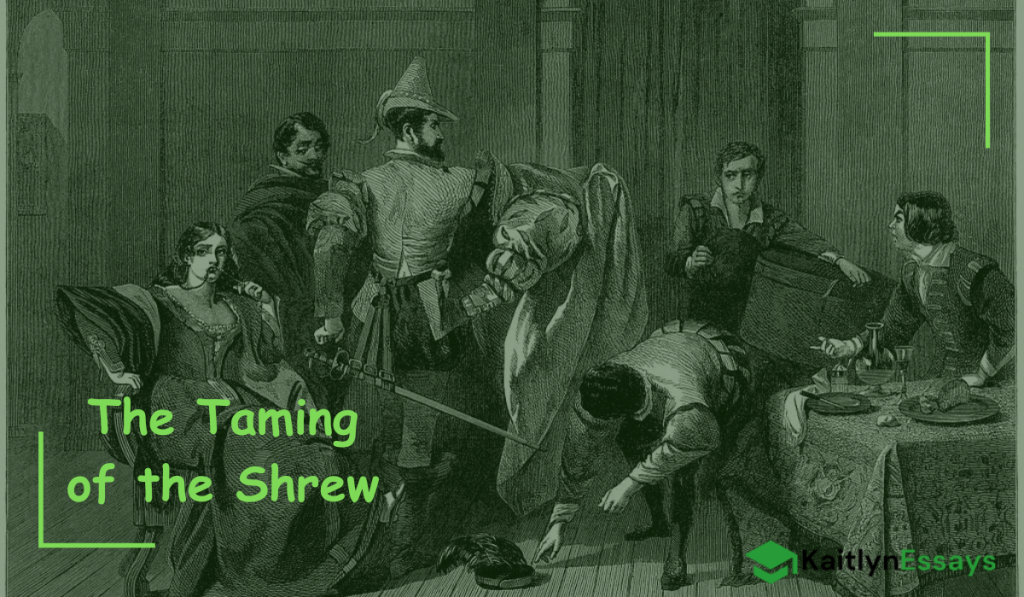
“The Taming of the Shrew” is one of William Shakespeare’s most controversial and debated comedies. Written in the late 16th century, this play explores themes of marriage, gender roles, and social norms in a way that continues to spark discussion today. The story follows the courtship of Petruchio and Katherina, a strong-willed woman nicknamed “the shrew.” Their relationship raises questions about power dynamics and the nature of love.
This study guide aims to help readers understand the play’s context, characters, and key plot points. It offers insights into Shakespeare’s use of language and dramatic techniques, as well as the play’s historical and cultural background.
The Taming of the Shrew: Summary
Baptista’s Dilemma: Bianca and Katherina
Baptista’s younger daughter, Bianca, is docile and admired by many men in Padua. However, her elder sister Katherina is known for her fiery temper and sharp tongue, earning her the reputation of a “shrew.” Baptista declares that Bianca will not marry until Katherina has a husband, which presents a major problem for Bianca’s numerous suitors. Among them are Lucentio, a young man newly arrived in Padua to study, and Hortensio, a persistent yet unsuccessful wooer.
To see how the rivalry for Bianca unfolds, continue with the full story on our site.
Petruchio’s Arrival and Courtship of Katherina
The solution to Baptista’s problem arrives in the form of Petruchio, a brash and confident gentleman from Verona. Petruchio declares that he will marry Katherina for her dowry, regardless of her notorious behavior. He devises a plan to “tame” Katherina by contradicting everything she says and does, effectively wearing down her spirit. Their courtship is a battle of wits, with Petruchio using psychological tactics to control Katherina.
Discover the full details of Petruchio’s strategy to tame the shrew in the extended summary available on our platform.
Lucentio and Bianca: The Subplot
While Petruchio and Katherina’s story is the main focus, the subplot involving Lucentio’s efforts to woo Bianca is equally entertaining. Disguising himself as a tutor named Cambio, Lucentio infiltrates Baptista’s household to get close to Bianca. This subplot features several instances of mistaken identity, including Lucentio’s servant Tranio impersonating his master to secure Baptista’s approval for the marriage.
Find the complete narrative on this page.
The Marriage and the Taming Process
After a hasty wedding, Petruchio takes Katherina to his home, where he begins his process of “taming” her. He denies her food and sleep, claiming that nothing is good enough for her. His behavior becomes increasingly erratic, but Katherina slowly starts to comply with his wishes. This section of the play showcases Shakespeare’s commentary on power dynamics within marriage.
More insights into Petruchio and Katherina’s evolving relationship.
The Final Test: Who Is the True Shrew?
In the final act, both couples—Petruchio and Katherina, as well as Lucentio and Bianca—are put to the test. During a banquet, Petruchio challenges the other husbands to see whose wife is the most obedient. To everyone’s surprise, it is Katherina who responds to Petruchio’s command, while Bianca and another wife refuse. Katherina then delivers a speech about the duty of wives to obey their husbands, marking the culmination of her “taming.”
Read how the play concludes and what this final scene suggests.
The Taming of the Shrew: Characters
Katharina Minola
Katharina, or Kate, is the titular “shrew” of the play, known for her fiery temper, sharp tongue, and refusal to conform to the expectations of being a docile woman in a patriarchal society. Throughout the play, she stands as a symbol of resistance against traditional gender roles. Katharina is fiercely independent, and her outspoken nature contrasts sharply with the more submissive women around her, particularly her younger sister Bianca.
At the start of the play, Katharina’s aggressive behavior alienates her from her family and potential suitors. However, her complexity as a character becomes apparent as the audience learns that her harsh demeanor may stem from a deeper frustration with the way society treats women like her. As she enters into a tumultuous relationship with Petruchio, her journey toward either true “taming” or strategic conformity becomes a central focus of the narrative.
To explore more about Katharina’s transformation and her role as a complex female character, continue reading here.
Petruchio
Petruchio is one of the most intriguing characters in The Taming of the Shrew. He arrives in Padua with the intention of finding a wealthy wife, regardless of her temperament. His decision to marry Katharina for her dowry, despite her reputation, sets the stage for the central conflict of the play. Petruchio’s methods of taming Katharina are often harsh, employing tactics that seem to test the boundaries of power, control, and even cruelty.
However, Petruchio is not simply a one-dimensional figure of male dominance. His actions can be interpreted in multiple ways, raising questions about his motivations. Is he genuinely seeking to subdue Katharina, or is he performing a role to help her navigate the expectations of their society? The relationship between Petruchio and Katharina is complex, with moments of mutual respect emerging amidst their battle of wills.
Petruchio’s character serves as a vehicle for exploring themes of power dynamics in marriage and social roles. To dive deeper into Petruchio’s character and his tactics, access further analysis here.
Bianca Minola
Bianca, Katharina’s younger sister, is portrayed as the ideal woman of the time—beautiful, obedient, and desirable to many suitors. Unlike her sister, Bianca conforms to societal expectations of femininity, making her the favored daughter and a stark contrast to Katharina’s rebellious nature. However, Bianca is not as simple or innocent as she may appear.
Beneath her compliant exterior, Bianca reveals a certain degree of cleverness and autonomy, especially in her dealings with her suitors. She manipulates her father’s control over her marriage prospects and ultimately marries Lucentio on her own terms. While she seems to embody the image of the perfect woman, her actions suggest that she, too, navigates her own desires within the constraints of her society.
To explore the complexities of Bianca’s character and her role in the play’s examination of femininity, read more here.
Lucentio
Lucentio, a young and wealthy student from Pisa, falls in love with Bianca at first sight and immediately begins to plot ways to win her over. His pursuit of Bianca is romantic and idealistic, in stark contrast to Petruchio’s more pragmatic approach to marriage. Lucentio disguises himself as a tutor to get closer to Bianca, which reflects the theme of appearance versus reality that runs throughout the play.
Lucentio’s character represents the youthful, romantic ideal of love, but his actions also involve deception and manipulation. His willingness to disguise himself and play a role for Bianca’s affections demonstrates the lengths to which people will go to achieve their desires, even if it means compromising their true identity.
For a more in-depth look at Lucentio’s role in the play and his influence on its themes, continue reading here.
Baptista Minola
Baptista Minola, the father of Katharina and Bianca, is a wealthy man who plays a key role in shaping the events of the play. His primary concern is securing advantageous marriages for his daughters, and he views them as commodities whose value lies in their ability to marry well. His favoritism toward Bianca is evident, as he is eager to find her a husband while seemingly indifferent to Katharina’s fate.
Baptista’s treatment of his daughters reflects the social expectations of women during the time, particularly the notion that a woman’s worth is tied to her marriage prospects. However, Baptista’s attempts to control his daughters’ futures reveal his limitations in understanding their individual desires and personalities.
To explore Baptista’s role as a patriarchal figure and his impact on the plot, find more analysis here.
Tranio
Tranio, Lucentio’s clever servant, is one of the play’s most entertaining characters. He assumes his master’s identity when Lucentio disguises himself as a tutor, adding a layer of humor and intrigue to the play’s exploration of disguise and deception. Tranio proves to be resourceful and loyal, helping Lucentio orchestrate his courtship of Bianca while navigating the complex social hierarchy.
Tranio’s role highlights the fluidity of social status in the play, as he temporarily steps into a higher position of power. His character also emphasizes the theme of appearance versus reality, as his behavior suggests that social roles are not fixed but can be adapted to suit one’s needs.
If you’re interested in learning more about Tranio’s role in the play and his significance in advancing the plot, continue reading here.
Gremio and Hortensio
Gremio and Hortensio are two older suitors competing for Bianca’s hand in marriage. While they serve as comic relief in the play, they also represent the broader societal competition for wealth and status. Both men are unsuccessful in their attempts to woo Bianca, as she ultimately chooses Lucentio.
Their rivalry and eventual friendship highlight the theme of competition in courtship, as well as the role of social class in determining marital success. Though they are initially rivals, Gremio and Hortensio ultimately serve as minor players in the larger social game that surrounds marriage.
To explore how Gremio and Hortensio contribute to the play’s examination of competition and marriage, read further analysis here.
The Pedant
The Pedant, a minor character in the play, is convinced by Tranio to impersonate Lucentio’s father, Vincentio, in order to help secure Lucentio’s marriage to Bianca. The Pedant’s willingness to assume a false identity reflects the broader theme of disguise and role-playing, as he, like other characters in the play, adopts a new persona to achieve a desired outcome.
Though a minor character, the Pedant’s role underscores the fluidity of identity and the ease with which individuals can manipulate social appearances. His actions are a reminder that in the world of The Taming of the Shrew, identity is not fixed but is often shaped by external circumstances.
For more on how the Pedant’s character contributes to the play’s themes of deception and identity, continue reading here.
Vincentio
Vincentio, Lucentio’s real father, plays a crucial role in the final act of the play when he arrives in Padua and discovers that his son has been impersonated by Tranio. His appearance brings the various deceptions in the play to a head, revealing the true identities of several characters. Vincentio’s shock at the impersonation of both himself and his son serves as a humorous but telling commentary on the ease with which social roles can be manipulated.
Vincentio’s character represents authority and the importance of social status. His indignation at the impersonation of his identity reflects the larger concern with maintaining one’s place in the social hierarchy, a theme that runs throughout the play.
To further explore Vincentio’s role and how his arrival impacts the resolution of the plot, read more here.
Themes in The Taming of the Shrew
Gender Roles and the Power Dynamics in Marriage
One of the central themes in The Taming of the Shrew is the role of gender and power within the institution of marriage. The play reflects the Elizabethan society’s view of marriage as a hierarchical structure where men were expected to dominate and women were expected to submit. Petruchio’s attempts to “tame” Katharina can be seen as an exploration of male authority over women, emphasizing the social expectations placed on women to be obedient wives. However, Shakespeare also uses this dynamic to question the fairness and sustainability of such relationships.
Katharina’s initial resistance to marriage, and to the societal expectations placed on her, represents a challenge to patriarchal authority. As the play progresses, her relationship with Petruchio becomes a stage for exploring whether conformity to gender roles can be authentic or whether it is simply enforced by societal pressure. The tension between Petruchio’s methods and Katharina’s eventual compliance raises the question: Is Katharina truly “tamed,” or does she adopt a new role strategically within a patriarchal society?
To learn how gender roles shape the narrative, and to see how the power dynamics between Katharina and Petruchio evolve throughout the play, check out more detailed insights here.
Appearance vs. Reality
Another significant theme in The Taming of the Shrew is the contrast between appearance and reality. Throughout the play, characters disguise their true selves, either by adopting physical disguises or by masking their intentions. The act of deception often serves as a means to achieve personal goals, whether in the pursuit of love, power, or status.
For instance, Lucentio disguises himself as a tutor to get closer to Bianca, whom he loves. Meanwhile, Tranio, Lucentio’s servant, assumes his master’s identity, highlighting the fluidity of social roles and how easily they can be manipulated. These deceptions serve as a commentary on the superficiality of societal norms and relationships, suggesting that appearances can be misleading and that one’s outward behavior may not reflect their true intentions.
This theme reaches its pinnacle in the portrayal of Petruchio and Katharina’s relationship. Although Petruchio claims to be taming Katharina, the play leaves open the possibility that Katharina’s transformation is merely an outward performance, designed to meet societal expectations, while her true self remains untamed beneath the surface.
If you’re interested in exploring the layers of disguise and deception in The Taming of the Shrew, and how they impact the characters’ relationships, find further analysis here.
Social Hierarchies and Class Structure
The play also touches on issues of social hierarchy and class structure, revealing the rigid distinctions that define the world of The Taming of the Shrew. Characters’ actions and relationships are often influenced by their social standing, and much of the humor in the play arises from characters attempting to transcend or subvert these social boundaries.
Petruchio, for example, is motivated by financial gain when he agrees to marry Katharina, viewing marriage as a transaction rather than a romantic pursuit. This reflects the economic realities of the time, where marriage was often a means of securing wealth and social status. Similarly, Lucentio’s pursuit of Bianca is facilitated by his high social standing, while other suitors, such as Hortensio, also rely on their status to woo her.
Shakespeare uses the theme of social hierarchy to explore the limitations it places on personal freedom. While some characters, such as Petruchio, manipulate the social order to their advantage, others, like Katharina, find themselves constrained by it.
To gain a deeper understanding of how social hierarchies influence the characters’ motivations and actions in the play, continue reading here.
The Nature of Love and Courtship
Love and courtship are central to The Taming of the Shrew, yet Shakespeare presents them in a way that challenges traditional notions of romance. The relationships in the play are marked by manipulation, power struggles, and social transactions, rather than by mutual affection or idealized love.
Petruchio’s pursuit of Katharina, for instance, is driven by his desire for wealth, not love. His taming methods are harsh and unromantic, focusing on breaking Katharina’s spirit rather than winning her heart. In contrast, Lucentio’s courtship of Bianca is more in line with traditional romantic ideals, but even his pursuit involves deception and disguise.
Shakespeare seems to question whether true love can exist within the confines of societal expectations. By presenting love as a series of negotiations and power plays, he invites the audience to reflect on the nature of romantic relationships and whether they are driven by genuine emotion or by external pressures.
If you want to explore how Shakespeare critiques the traditional notions of love and courtship in the play, you can find more in-depth analysis here.
Conformity and Individual Identity
The theme of conformity and individual identity is prevalent throughout The Taming of the Shrew. Katharina’s transformation—or taming—can be seen as a loss of individuality as she conforms to societal expectations of what it means to be a wife. However, the play also suggests that identity is fluid and can be shaped by external forces.
Petruchio’s methods of taming Katharina involve stripping away her sense of self and forcing her to adopt a new identity that aligns with societal norms. However, the ending of the play leaves open the question of whether Katharina has truly been tamed or whether she is simply playing a role. Her final speech, in which she advocates for wifely submission, can be interpreted as either sincere or as a strategic performance designed to navigate a patriarchal world.
The tension between conformity and individuality in the play raises important questions about the cost of social integration. Is Katharina’s transformation a victory for social order, or a loss of her personal identity?
For a more detailed discussion on how the play explores the theme of conformity and individual identity, continue reading here.
Performance and Role-Playing
Performance and role-playing are recurring motifs in The Taming of the Shrew, not just in the literal sense of the play-within-a-play framework, but also in the way characters adopt and discard roles throughout the story. Characters often assume roles that align with or subvert societal expectations, and much of the humor in the play arises from the contrast between characters’ true selves and the personas they present to the world.
Katharina, for example, is portrayed as a shrew at the beginning of the play, but this may be a role she adopts as a defense mechanism against a society that values women primarily for their subservience. Petruchio, on the other hand, takes on the role of the domineering husband, though it’s unclear whether his behavior reflects his true nature or whether he, too, is performing for the benefit of societal norms.
Shakespeare uses the theme of performance to explore the fluidity of identity and the ways in which individuals navigate the social roles imposed upon them.
If you’re interested in a deeper analysis of the theme of performance and role-playing in the play, you can access more insights here.
Symbolism in The Taming of the Shrew
Clothing and Disguise
One of the most prominent symbols in the play is clothing, which is closely tied to the theme of disguise and identity. Throughout The Taming of the Shrew, characters frequently adopt disguises, with their clothing acting as a key element in transforming their roles. For instance, Lucentio dresses as a tutor to win Bianca’s love, and his servant Tranio disguises himself as Lucentio in order to help with the plan.
Clothing in the play represents the idea that identity can be shaped by external appearances. The ease with which characters switch roles based on what they are wearing emphasizes the fluidity of social status and personal identity. It suggests that in this world, appearances can be deceiving, and that societal roles may not reflect true personality or capability.
To learn more about how clothing and disguise serve as central symbols in the play, continue reading here.
The Hawk and Taming
The concept of “taming” is central to the relationship between Katharina and Petruchio, and Shakespeare uses the metaphor of hawk-taming to explore this dynamic. In Renaissance England, falconry was a common practice, and the taming of a hawk—a wild, powerful bird—required patience and control. Petruchio explicitly compares his taming of Katharina to the training of a hawk, treating her initial resistance as something to be subdued.
This symbol raises questions about the nature of power in relationships. Is Petruchio genuinely taming Katharina, or is this a metaphor for mutual understanding and adaptation? The hawk, as a symbol, represents both wildness and the potential for controlled freedom, paralleling Katharina’s own transformation throughout the play.
For further exploration of the hawk-taming metaphor and its implications for Katharina and Petruchio’s relationship, read more here.
The Sun and the Moon
The imagery of the sun and moon plays an important role in Petruchio’s “taming” process. In one key scene, Petruchio insists that the sun is actually the moon, and forces Katharina to agree with him. This exchange highlights the extent to which Petruchio seeks to control not only Katharina’s actions but also her perception of reality.
The sun and moon in this context symbolize the power dynamics between the couple. Petruchio’s manipulation of these natural symbols reflects his desire to dominate Katharina’s will, and her eventual agreement signals her submission—or perhaps her strategic decision to play along with his demands. This scene offers a complex commentary on the nature of power, compliance, and individuality within relationships.
To dive deeper into the symbolic significance of the sun and moon in the play, continue reading here.
Food and Hunger
Food is another important symbol in The Taming of the Shrew, particularly in Petruchio’s treatment of Katharina. After their marriage, Petruchio deprives Katharina of food, claiming that nothing is good enough for her to eat. This act of withholding sustenance serves as a metaphor for Petruchio’s control over Katharina, as he seeks to break her will by denying her basic needs.
The use of food as a symbol of power and control highlights the physical aspect of the struggle between Katharina and Petruchio. By controlling what she eats, Petruchio asserts dominance over her body and mind, reinforcing the play’s exploration of power in marital relationships.
For a more in-depth analysis of food and hunger as symbols in the play, find additional discussion here.
The Wedding
The chaotic wedding of Katharina and Petruchio is another significant symbol in the play. Instead of being a traditional, joyous event, the wedding is marked by disorder and humiliation. Petruchio arrives late, dressed in inappropriate attire, and behaves outrageously during the ceremony. The wedding becomes a symbol of the power imbalance between the couple, as Petruchio asserts control over the situation and publicly embarrasses Katharina.
The unconventional wedding also reflects the play’s larger themes of societal expectations and individual defiance. It suggests that marriage, traditionally viewed as a formal and orderly institution, can be subverted and reshaped according to the whims of those involved.
To explore how the wedding functions as a symbol of power and societal norms, read more here.
The Horse and Transportation
The horse, as a means of transportation, serves as a symbolic tool for Petruchio’s treatment of Katharina. On their journey back from the wedding, Petruchio’s insistence on controlling the horse mirrors his attempts to control Katharina. His commands to the animal reflect his broader efforts to tame both his wife and his surroundings.
The horse symbolizes both physical and emotional control, as well as the unpredictable nature of human relationships. Just as the horse can be difficult to control, so too can the people in one’s life. Petruchio’s handling of the horse highlights the theme of dominance in the play and underscores his role as the “tamer.”
To look into the symbolism of the horse and its connection to themes of control, find further insights here.
Money and Dowry
The theme of money is woven throughout the play, particularly in the form of dowries and financial transactions. Baptista, Katharina and Bianca’s father, views his daughters as commodities to be traded in marriage, with their value tied to their ability to secure advantageous matches. The dowry plays a central role in the negotiations between Baptista and Petruchio, as well as with Bianca’s suitors.
Money in the play symbolizes the transactional nature of marriage during this period, where economic considerations often outweighed romantic feelings. The focus on dowries and wealth reveals the social and economic pressures that shape the characters’ decisions, particularly for women like Katharina and Bianca.
To further explore how money and dowries function as symbols in The Taming of the Shrew, continue reading here.
The Public and Private Spheres
Throughout the play, there is a distinct tension between the public and private spheres. Many of the key events, including the wedding and the interactions between Katharina and Petruchio, take place in public settings, where societal expectations and judgments play a significant role. However, the private moments between the characters, particularly those between Katharina and Petruchio, reveal a more complex dynamic of power and submission.
The public sphere symbolizes societal pressure and conformity, while the private sphere represents individual identity and personal relationships. The interplay between these two realms highlights the tension between societal expectations and personal desires, a theme that is central to the play’s exploration of marriage and gender roles.
To learn more about the symbolic distinction between the public and private spheres in the play, find additional insights here.
Literary Devices in The Taming of the Shrew
Irony
Irony is a significant literary device in The Taming of the Shrew, particularly in the way characters’ words and actions contrast with their true feelings or outcomes. One of the most notable examples of irony is Petruchio’s behavior. Though he claims to be a model husband, his methods of “taming” Katharina are extreme and even cruel, which ironically undermines the notion of civilized behavior.
The title of the play itself is ironic. Katharina is labeled a “shrew,” but as the story unfolds, we begin to question whether her behavior truly warrants such a harsh label, or if the society around her has misjudged her strength and independence.
To explore more instances of irony and how it contributes to the play’s themes, read further here.
Wordplay and Pun
Shakespeare is famous for his wordplay, and The Taming of the Shrew is filled with clever puns and double entendres. Characters, especially Petruchio, frequently engage in verbal sparring, using witty language to assert dominance or flirt.
One example occurs when Katharina and Petruchio first meet. Their initial conversation is a series of rapid-fire exchanges filled with wordplay, where Petruchio’s confidence and Katharina’s sharp tongue clash. These moments of linguistic dexterity create humor and emphasize the power dynamics between characters.
For a more detailed analysis of how wordplay and puns enhance the interactions between characters, continue reading here.
Metaphor
Metaphors are extensively used throughout the play to deepen the audience’s understanding of complex themes. Petruchio famously compares his taming of Katharina to the taming of a wild animal, specifically a falcon, a metaphor that carries through much of the play. This comparison highlights the extent of Petruchio’s desire to control Katharina and frames their relationship as one of trainer and trainee rather than equals.
Another notable metaphor is found in how Katharina is described as a “shrew.” The term itself is metaphorical, likening her to a small, aggressive animal. This metaphor reflects how the society views her, and it also challenges the audience to reconsider the fairness of such labels.
To look deeper into the use of metaphors in the play and their thematic significance, find further discussion here.
Allusion
Shakespeare frequently uses allusions to classical literature and historical figures to enrich the text. In The Taming of the Shrew, several references to Greek and Roman mythology and historical figures are made, especially in Petruchio’s grandiose speeches.
For example, when Petruchio first sets his sights on Katharina, he compares himself to mythological heroes who have tamed wild creatures or accomplished great feats. These allusions elevate Petruchio’s taming of Katharina to an epic struggle, filled with exaggerated bravado and humor.
To learn more about the allusions Shakespeare weaves into the play, continue reading here.
Dramatic Irony
Dramatic irony, where the audience knows more than the characters do, plays a key role in shaping the comedic aspects of the play. One prominent example occurs when Lucentio disguises himself as a tutor to court Bianca, while Tranio disguises himself as Lucentio to help with the deception. The audience is aware of these disguises, which creates a humorous contrast as other characters remain oblivious.
This device also underscores the theme of mistaken identity and the fluidity of social roles. Characters frequently act out of misunderstanding, and the dramatic irony heightens the tension and humor as their true identities are revealed.
For a deeper look at the use of dramatic irony and its role in the play’s comedy, read more here.
Soliloquy and Aside
Shakespeare uses soliloquies and asides to provide the audience with a window into the inner thoughts of his characters. In The Taming of the Shrew, these devices help to reveal the motivations behind certain actions, allowing the audience to see the conflict between appearance and reality.
Petruchio’s aside after meeting Katharina is particularly revealing. While he outwardly maintains a composed and confident demeanor, his aside indicates that he finds Katharina’s spirit both challenging and exciting. These moments of insight help the audience understand the complexity of the characters’ relationships and create a deeper emotional connection with the story.
To explore how soliloquies and asides function to reveal character motivations, continue reading here.
Farce
The Taming of the Shrew contains many elements of farce, a type of comedy characterized by exaggerated situations, physical humor, and improbable events. The chaotic wedding scene, where Petruchio arrives late and behaves outrageously, is a prime example of farcical comedy. The absurdity of the situation contrasts with the traditional expectations of a wedding, creating humor through the violation of social norms.
Farce in the play serves to mock rigid societal structures and highlight the absurdity of the roles characters are forced to play. The exaggerated, over-the-top humor also invites the audience to question the seriousness of the gender roles and power dynamics being portrayed.
For a deeper analysis of farce and its significance in the play, continue reading here.
Foreshadowing
Shakespeare uses foreshadowing to hint at future events in the play, preparing the audience for the outcome of certain storylines. One example is in the early interactions between Petruchio and Katharina, where his confidence and her resistance foreshadow the “taming” that will occur later. Their initial verbal battles lay the groundwork for the power struggles that define their relationship.
The repeated references to taming and training throughout the play also foreshadow the eventual resolution, where Katharina appears to submit to Petruchio’s will. These moments create a sense of anticipation and help build the tension leading up to the play’s conclusion.
To learn more about how Shakespeare uses foreshadowing to guide the narrative, read further here.
Hyperbole
Hyperbole, or deliberate exaggeration, is used throughout The Taming of the Shrew to emphasize certain aspects of the characters and their situations. Petruchio frequently uses hyperbolic language to describe his taming efforts, comparing Katharina’s behavior to wild animals or extreme forces of nature. His exaggerated claims create humor and also serve to underscore his determination.
Katharina herself engages in hyperbole during her confrontations with Petruchio and others. Her exaggerated insults and outbursts paint her as a more extreme character than she truly is, highlighting the societal expectations placed upon her and the labels she has been forced to bear.
For more on the use of hyperbole and its comedic effects in the play, continue reading here.
Quotes from The Taming of the Shrew
“I come to wive it wealthily in Padua;
If wealthily, then happily in Padua.”
— Petruchio (Act 1, Scene 2)
Petruchio makes this statement early in the play, revealing his true motivation for coming to Padua. His desire to marry for wealth is evident, and his pragmatism about marriage underscores one of the play’s central themes: marriage as a social contract rather than a romantic union. This quote sets the tone for Petruchio’s courtship of Katharina, where financial gain is prioritized over love or affection.
To explore how Petruchio’s views on marriage shape the plot and themes, continue reading here.
“I see a woman may be made a fool,
If she had not a spirit to resist.”
— Katharina (Act 3, Scene 2)
Katharina expresses frustration with how women are treated and how societal expectations force them into submission. This quote reflects Katharina’s initial resistance to conforming to traditional gender roles, and her fiery spirit is highlighted here. The tension between her desire for independence and the societal pressure to conform to the submissive role of a wife is a key conflict throughout the play.
For a deeper analysis of Katharina’s character arc and her resistance to societal norms, read further here.
“Thy husband is thy lord, thy life, thy keeper,
Thy head, thy sovereign; one that cares for thee…”
— Katharina (Act 5, Scene 2)
In one of the play’s most controversial moments, Katharina delivers a speech about the duty of a wife to her husband. This speech, which many interpret as a sign of Katharina’s submission, can be viewed through multiple lenses: as genuine acceptance of her role, as a strategic move to placate Petruchio, or as an ironic commentary on societal expectations. The ambiguity of her speech raises important questions about the play’s stance on gender roles.
To explore the various interpretations of this speech and its significance in the play, continue reading here.
“Thus in plain terms: your father hath consented
That you shall be my wife, your dowry ‘greed on,
And, will you, nill you, I will marry you.”
— Petruchio (Act 2, Scene 1)
In this line, Petruchio declares his intention to marry Katharina, regardless of her consent. His forceful attitude exemplifies the patriarchal norms of the time, where a woman’s opinion in matters of marriage was often secondary to the decisions of men. This quote encapsulates the power dynamics at play between Petruchio and Katharina and highlights the theme of control within marriage.
For more on how this quote reflects the gender dynamics in the play, read further here.
“I am as peremptory as she proud-minded;
And where two raging fires meet together,
They do consume the thing that feeds their fury.”
— Petruchio (Act 2, Scene 1)
Petruchio compares his own strong will to Katharina’s stubbornness, likening their relationship to two fires feeding off each other’s energy. This metaphor illustrates the volatile dynamic between the two, where each character’s strength only fuels the other’s resistance. Petruchio’s determination to “tame” Katharina is evident in this line, which foreshadows the intense battle of wills that unfolds in the play.
To explore how the imagery of fire and conflict shapes the characters’ relationship, continue reading here.
“Why, sir, I trust I may have leave to speak;
And speak I will; I am no child, no babe:
Your betters have endured me say my mind.”
— Katharina (Act 1, Scene 1)
This quote demonstrates Katharina’s strong-willed nature and her refusal to be silenced or dismissed. Her defiance of societal expectations for women is a central aspect of her character. Katharina’s outspokenness, which others label as shrewishness, reveals her frustration with the limited role women are expected to play in society.
For more insights into Katharina’s character and her battle for autonomy, continue reading here.
“He kills her in her own humor.”
— Baptista (Act 4, Scene 1)
Baptista’s observation about Petruchio’s treatment of Katharina suggests that Petruchio is using Katharina’s own tactics against her. By mimicking her fiery and stubborn behavior, Petruchio aims to subdue her. This line encapsulates the strategy Petruchio employs throughout the play, reflecting the theme of taming and control in relationships.
To explore how this tactic plays out in the dynamics between Petruchio and Katharina, continue reading here.
“Fie, fie! Unknit that threatening unkind brow,
And dart not scornful glances from those eyes
To wound thy lord, thy king, thy governor.”
— Katharina (Act 5, Scene 2)
In this line from her final speech, Katharina admonishes women to behave submissively towards their husbands. The language she uses—calling husbands “lords” and “kings”—is emblematic of the power imbalance in marriages at the time. The speech raises questions about whether Katharina has truly been “tamed” or if she is playing a role to secure peace in her marriage.
For a closer examination of this quote and its interpretations, read further here.
“Happily to wive and thrive as best I may:
Crowns in my purse I have and goods at home,
And so am come abroad to see the world.”
— Petruchio (Act 1, Scene 2)
Petruchio’s declaration of his intent to “wive and thrive” underscores the practical, rather than romantic, reasons for his marriage. His emphasis on financial gain reflects the transactional nature of marriage in the play, where love and partnership are secondary to wealth and social advancement.
To learn more about how this quote ties into the play’s themes of marriage and materialism, continue reading here.
“If I be waspish, best beware my sting.”
— Katharina (Act 2, Scene 1)
Katharina delivers this sharp retort during her first encounter with Petruchio, warning him that her temper is not to be underestimated. The imagery of a wasp’s sting captures Katharina’s fiery and defensive nature. This line is a prime example of her refusal to be subdued or tamed, at least in the early stages of the play.
For more on how this quote exemplifies Katharina’s character and her resistance, continue reading here.
FAQs
What is the play’s structure?
The play features an “Induction,” a framing device in which a drunken tinker named Christopher Sly is tricked into believing he is a lord and watches The Taming of the Shrew as a play within the play. The main plot involving Katherina and Petruchio begins after this prologue.
Why is The Taming of the Shrew considered a comedy?
It is classified as a comedy because it includes humorous situations, mistaken identities, disguises, and ultimately ends in marriage and resolution. Despite its darker undertones, the play’s structure fits the traditional comedic formula.
Why is The Taming of the Shrew controversial today?
The play’s depiction of Katherina’s “taming” can be seen as problematic by modern audiences because it seems to endorse the subjugation of women. Contemporary performances often reinterpret the play to critique or subvert these themes.
How has The Taming of the Shrew been adapted in modern culture?
The play has inspired numerous adaptations, including the film 10 Things I Hate About You and the musical Kiss Me, Kate. These modern adaptations often recontextualize the story to reflect contemporary views on gender and relationships.