

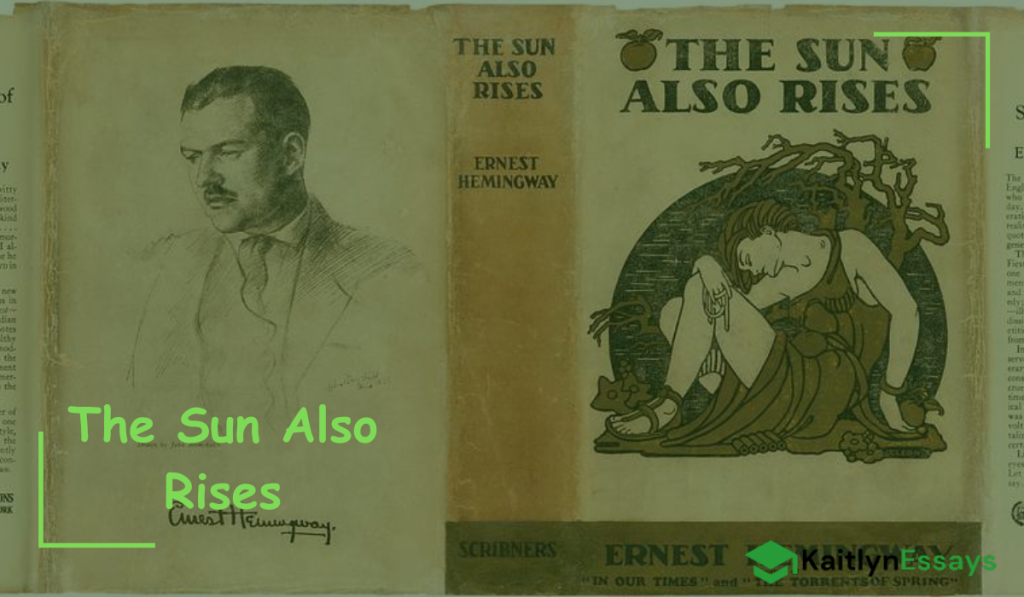
Ernest Hemingway’s “The Sun Also Rises,” published in 1926, is a landmark novel of the Lost Generation. Set in the aftermath of World War I, it captures the disillusionment and aimlessness of expatriate Americans and Britons in Europe. The story follows Jake Barnes, a war-wounded journalist, and his circle of friends as they travel from Paris to Pamplona for the running of the bulls. At its core is Jake’s complicated relationship with the alluring but damaged Lady Brett Ashley.
Hemingway’s spare, understated prose style revolutionized 20th-century literature, stripping away ornate language to reveal raw emotion and experience. This article will summarize the novel’s plot, examine its themes of post-war disillusionment, masculinity, and the search for meaning, and provide essay examples to aid in analysis. Whether you’re a student of literature or a fan of Hemingway’s work, this exploration will offer insights into this influential American novel.
Summary of The Sun Also Rises
The Beginning
The novel opens in Paris, where Jake introduces himself and his circle of friends, including Robert Cohn, an insecure writer who is infatuated with Brett. Cohn feels out of place among the other expatriates, who seem to live a more glamorous life. His desire for Brett is evident, and he becomes increasingly obsessed with winning her love. The group spends time in the lively cafés and bars of Paris, symbolizing both the vibrancy of life and the emptiness that characterizes their existence.
To explore the social dynamics in Paris, additional insights are available: discover more.
The Love Triangle
As the narrative unfolds, Jake’s unrequited love for Brett becomes a focal point. Brett, a liberated woman, enjoys her freedom and engages in romantic relationships with several men, including Cohn. Despite Jake’s deep affection for Brett, he is unable to be with her due to his war injury, which leaves him impotent. This central conflict complicates their relationship and highlights the theme of love intertwined with loss and longing.
For a deeper understanding of the love triangle’s complexities, more details await: discover more.
The Journey to Spain
Seeking distraction from their troubles, Jake and his friends decide to travel to Spain for the San Fermín festival in Pamplona, which includes the famous running of the bulls. The group consists of Jake, Brett, Cohn, Bill Gorton, and Mike Campbell. As they travel, tensions begin to rise, particularly between Brett and Cohn, who is desperate for her affection. Their journey represents a quest for meaning and excitement amid their existential crises.
To analyze the significance of their journey to Spain, further exploration awaits: discover more.
The Fiesta and Bullfighting
Upon arriving in Pamplona, the festival atmosphere envelops the group. The excitement of the running of the bulls and the vibrant celebrations contrasts sharply with their inner turmoil. Cohn continues to pursue Brett, while Jake tries to navigate his feelings of jealousy and frustration. The arrival of Pedro Romero, a talented young bullfighter, adds another layer to the narrative. Brett is captivated by Romero’s skill and passion, which eventually leads to a romantic entanglement.
To examine the themes of passion and vitality in the bullfighting scenes, deeper insights are available: discover more.
The Climax
The climax of the novel occurs during the bullfighting events. The exhilaration of the bullfights serves as a backdrop to the emotional conflicts brewing among the characters. Brett’s affair with Romero highlights her struggle between her desire for freedom and her need for connection. Meanwhile, Jake grapples with his love for Brett and the reality of their situation. The atmosphere becomes increasingly charged as the characters confront their feelings and the implications of their choices.
For a closer look at the climactic moments and their significance, additional insights await: discover more.
The Aftermath
As the fiesta comes to an end, the characters face the repercussions of their actions. Cohn, feeling rejected and humiliated, confronts Jake and the others, leading to a physical altercation. This conflict encapsulates the themes of masculinity and rivalry that run throughout the novel. Eventually, the group begins to disband, each member dealing with the aftermath of their experiences in their own way.
To analyze the aftermath of the characters’ choices and its implications, further discussion is available: discover more.
Characters in The Sun Also Rises
Jake Barnes
Jake Barnes, the novel’s protagonist and narrator, is a war veteran and journalist living in Paris. His defining characteristic is his impotence, caused by a war injury, which plays a central role in his internal conflict. This injury symbolizes not just his physical inability to be with Lady Brett Ashley, but also the loss of vitality and masculinity many men felt after the war. Despite his deep love for Brett, Jake understands that their relationship can never be consummated, and this tension forms the emotional core of his character. Jake’s complex feelings for Brett, mixed with his attempt to find purpose in the modern world, define his journey throughout the novel.
To further explore Jake Barnes’ emotional struggle and its significance in the story, additional insights await: discover more.
Lady Brett Ashley
Lady Brett Ashley is a central figure in the novel and the primary love interest for several male characters. Brett is a beautiful, charismatic, and independent woman who defies traditional gender roles, reflecting the evolving position of women in the post-war era. However, despite her allure and charm, she is emotionally damaged and unable to settle into any long-lasting relationship. Her unrequited love for Jake drives much of the novel’s emotional tension. She seeks solace in fleeting relationships, but none seem to fulfill her. Brett’s free-spirited nature symbolizes the liberating yet emotionally draining pursuit of passion and freedom in the modern world.
To understand Brett’s complex relationships and how they represent changing societal norms, more insights are available: discover more.
Robert Cohn
Robert Cohn is an insecure and romantic Jewish writer who feels out of place within the expatriate community. Unlike Jake, Brett, and the others, Cohn did not fight in World War I, which contributes to his sense of alienation and inadequacy. His infatuation with Brett becomes obsessive, and his pursuit of her—despite her clear disinterest—causes tension within the group. Cohn’s character often embodies traditional values of love and devotion, which clash with the modern, disillusioned attitudes of the other characters. His inability to move on from Brett represents his deeper struggle to reconcile his romantic ideals with the realities of the new, post-war world.
For a detailed exploration of Robert Cohn’s outsider status and its impact on the group, additional perspectives are provided: discover more.
Mike Campbell
Mike Campbell, Brett’s fiancé, is a bankrupt Scottish war veteran who spends most of his time drinking and displaying his jealousy over Brett’s relationships with other men. Mike’s insecurities and financial troubles compound his frustration, leading him to lash out at others, particularly Cohn. His character highlights the tension between the outward appearance of charm and wit and the inner turmoil brought on by financial ruin and unrequited love. Despite his engagement to Brett, Mike seems resigned to the knowledge that she will never be fully devoted to him, which adds to his bitterness.
To analyze Mike’s character and his role as a symbol of post-war frustration, further details are available: discover more.
Bill Gorton
Bill Gorton is a close friend of Jake’s and one of the few characters who provides comic relief throughout the novel. A fellow expatriate, Bill is also a writer, but unlike the other characters, he seems more grounded and less emotionally damaged. His witty banter and humorous outlook on life contrast with the underlying despair of the other characters. Bill represents a certain resilience and acceptance of the post-war world, offering moments of levity that balance the more serious emotional and existential crises the others face. However, even Bill, with his humorous exterior, is not entirely immune to the disillusionment of the Lost Generation.
To explore Bill’s significance as a foil to the other characters’ emotional struggles, more discussion awaits: discover more.
Pedro Romero
Pedro Romero, a young and talented bullfighter, is introduced when the group travels to Spain for the fiesta. He is passionate, courageous, and embodies the traditional masculine ideals that characters like Jake and Cohn struggle with. Brett quickly becomes infatuated with him, seeing in Romero the vitality and strength that she craves but cannot find in her other lovers. Romero represents purity and authenticity, standing in contrast to the cynical and disillusioned expatriates. His brief relationship with Brett offers her a glimpse of the passion she longs for, but it also underscores the theme of unattainable desires.
For a closer look at how Pedro Romero’s character embodies traditional values of masculinity and heroism, further insights are available: discover more.
Frances Clyne
Frances Clyne, Robert Cohn’s fiancée at the beginning of the novel, is a bitter and resentful woman who feels trapped in her relationship with Cohn. As Cohn begins to fall for Brett, Frances becomes increasingly jealous and angry, making public scenes that embarrass both her and Cohn. Her character serves as a reflection of the emotional damage caused by unfulfilled relationships and unreciprocated love. Frances is emblematic of the novel’s theme of the complexities and disappointments inherent in romantic entanglements.
To learn about Frances’ role and how she exemplifies unfulfilled love, more insights await: discover more.
Count Mippipopolous
Count Mippipopolous is a wealthy Greek expatriate who briefly becomes involved with Brett. Despite his opulence and charm, the Count remains a background character, observing the emotional drama of the other characters with detachment. He serves as a symbol of wealth and stability in a world where most of the characters are struggling financially or emotionally. Unlike the other men in Brett’s life, the Count does not demand anything from her, which gives him a sense of security and calmness that contrasts with the rest of the group’s chaos.
To analyze how Count Mippipopolous’ character reflects a sense of emotional detachment and stability, further exploration is available: discover more.
Themes in The Sun Also Rises
The Theme of Alienation and Disillusionment
The characters in The Sun Also Rises represent what Gertrude Stein famously called the “Lost Generation.” Having survived the devastation of World War I, they struggle to find purpose in a world that seems meaningless. Jake Barnes, the protagonist, symbolizes this alienation. His war wound has left him impotent, a metaphor for the psychological and emotional wounds inflicted on the men of his generation. The characters engage in seemingly endless cycles of drinking, traveling, and searching for pleasure, yet they never seem to find lasting satisfaction.
This alienation isn’t limited to the war’s direct effects. The post-war generation finds itself detached from traditional values, norms, and social structures. Their relationships are shallow, and their moral compasses are skewed, as seen in Brett Ashley’s various affairs and Robert Cohn’s persistent dissatisfaction with life. To further explore how this theme unfolds through the characters’ interactions, you can get a more detailed analysis.
The Struggle for Masculinity
Another prominent theme in The Sun Also Rises is the exploration of masculinity. The war has not only impacted Jake physically but also challenges the traditional notions of what it means to be a man. His impotence is a metaphorical loss of manhood, and this becomes a central tension in the novel. Throughout the book, we see men attempting to assert their masculinity in various ways, such as Robert Cohn’s boxing or the bullfighters in Spain.
Jake’s inability to consummate his love for Brett becomes symbolic of this crisis of masculinity. At the same time, Brett herself is a strong female character who disrupts the traditional gender dynamics. Her independence and sexual freedom challenge the conventional male dominance of the time. To further understand how Hemingway uses these characters to question the male identity, explore the in-depth breakdown of these dynamics.
The Impact of War
World War I looms large over The Sun Also Rises, shaping the characters’ perspectives and actions. The war has not only wounded Jake physically but has also emotionally scarred the entire generation. Hemingway paints a world where traditional values have broken down, and the characters wander through life in a disillusioned haze.
Though the novel is not filled with scenes of combat, the war’s aftereffects are palpable in every aspect of the characters’ lives. The expatriates of Paris and Spain try to escape their inner turmoil through travel, drinking, and parties, but these activities only serve as temporary distractions. The war’s true impact is in the loss of hope and purpose. For a deeper look into the psychological and emotional repercussions of war, continue with this comprehensive examination.
The Search for Meaning and Identity
One of the most striking aspects of The Sun Also Rises is its portrayal of a generation searching for meaning. The characters drift aimlessly from Paris to Spain, yet they find no lasting fulfillment. They question their roles in a society that no longer values the things they once held dear, such as honor, duty, and love.
Jake’s disillusionment with the world around him reflects the broader sense of existential crisis that pervades the novel. Despite his outward calm, he grapples with the meaning of his existence and the significance of his relationships. Brett, meanwhile, represents the chaotic pursuit of freedom, yet her inability to settle or find happiness speaks volumes about the inner confusion that plagues the post-war generation.
The bullfighting scenes, often considered the climax of the novel, serve as a metaphor for this search for meaning. The brutal spectacle offers a glimpse of something pure, yet its violence underscores the futility of the characters’ pursuits. For a richer understanding of how bullfighting symbolizes the human condition in the novel, access the extended analysis.
The Role of Love and Desire
The theme of love and desire is central to The Sun Also Rises, but in Hemingway’s world, love is often unrequited or tinged with bitterness. Jake’s love for Brett is perhaps the most poignant example. Though they clearly care deeply for each other, their relationship can never be fully realized due to Jake’s injury. This inability to consummate their love drives much of the novel’s emotional tension.
Brett’s other relationships, meanwhile, are largely based on desire and fleeting pleasures. She moves from man to man, never finding the stability or satisfaction she seeks. Hemingway uses Brett’s relationships to critique the superficial nature of love in the post-war world. The characters’ entanglements are often based on convenience rather than genuine affection. To dive further into the complexities of love and desire in the novel, examine the intricate relationship dynamics in full.
The Concept of Time and the “Lost Generation”
Hemingway’s characters are not only emotionally and psychologically lost but also seem to be perpetually out of sync with time. The novel is filled with references to time, from the changing seasons to the movement of the bullfights, yet the characters remain stuck in their aimless routines. They represent a generation caught between the past and the future, unable to move forward yet disconnected from any meaningful tradition.
This sense of being lost in time is also mirrored in the title of the novel itself, which comes from Ecclesiastes: “The sun also rises, and the sun goes down, and hastens to the place where it arose.” The cyclical nature of time highlights the futility of the characters’ search for meaning, as they seem doomed to repeat the same mistakes over and over. To further explore how the theme of time weaves throughout the narrative, gain deeper insights into its symbolic significance.
Symbols in The Sun Also Rises
Bullfighting as a Symbol of Masculinity and Honor
Bullfighting is one of the most striking and recurring symbols in the novel. The corrida, or Spanish bullfighting, is more than just a background setting in The Sun Also Rises; it serves as a metaphor for the struggles of the characters, particularly the men. Bullfighting is portrayed as a ritualistic display of masculinity, courage, and honor—qualities that the novel’s male characters struggle to uphold in their post-war lives.
The bullfighter, or matador, represents an ideal of masculinity that contrasts sharply with the emasculated condition of Jake Barnes. Pedro Romero, a young and skillful bullfighter, symbolizes the traditional values of manhood, passion, and control, qualities that are fading in the novel’s “Lost Generation.” The bullfights also reflect the characters’ violent emotional battles, especially those of Jake, who admires the bullfighters’ strength but feels a sense of loss over his own inability to participate in traditional masculine roles.
To further explore how Hemingway uses bullfighting as a powerful symbol of masculinity, engage with a detailed exploration of these ideas.
Alcohol
Alcohol is omnipresent in The Sun Also Rises and serves as a key symbol of the characters’ desire to escape reality. Throughout the novel, the characters drink excessively, often to the point of numbness, as they attempt to avoid confronting their feelings of disillusionment, alienation, and despair. In Hemingway’s portrayal, alcohol becomes a tool for emotional avoidance.
Jake and his friends use drinking as a way to fill the emptiness of their lives. Whether in the cafes of Paris or the festivals of Spain, alcohol is always present, and it becomes clear that it functions not just as a social activity but as a method of self-medication. The characters’ dependence on alcohol reflects their deeper emotional wounds and their unwillingness or inability to face the harsh truths of their existence.
For a deeper dive into the role alcohol plays as a symbol in the novel, discover more about its emotional implications.
The Wound
Jake Barnes’ war wound, which has left him impotent, is one of the most significant symbols in The Sun Also Rises. This physical injury is a clear metaphor for the emotional and psychological scars that World War I inflicted on an entire generation. Jake’s wound serves as a symbol of emasculation, both literally and figuratively, and highlights the novel’s exploration of lost masculinity and powerlessness.
The wound is also representative of the broader damage done by the war. It is a constant reminder of the trauma that the characters carry with them, even as they try to move on with their lives. Jake’s inability to have a full relationship with Brett Ashley, despite their deep feelings for each other, underscores the ways in which the war has irreparably damaged human connections.
To explore more about how Jake’s wound serves as a central symbol in the novel, look into this thorough analysis.
The Fiesta
The fiesta, or festival, in Pamplona is another powerful symbol in The Sun Also Rises. The wild celebrations, marked by drinking, bullfighting, and dancing, serve as a temporary escape from the characters’ otherwise aimless lives. However, while the fiesta offers brief excitement, it ultimately reveals the hollow and transient nature of their pursuit of pleasure.
The festival’s chaos mirrors the internal turmoil of the characters, particularly Brett and Jake. The frenzied atmosphere of the fiesta highlights the characters’ attempts to lose themselves in the moment, but like the rest of their lives, it leads to no lasting satisfaction. Once the festivities end, they are left with the same feelings of emptiness and uncertainty that plagued them before.
For more on how the fiesta symbolizes the characters’ inner chaos and search for meaning, access the extended interpretation.
Brett’s Hair
Brett Ashley’s short, bobbed hair is a subtle yet potent symbol in the novel. Her masculine appearance, particularly her hairstyle, symbolizes the breakdown of traditional gender roles in the post-war world. Brett defies conventional expectations of femininity; she is independent, sexually liberated, and in control of her life, much like the men around her.
However, Brett’s modernity comes at a cost. Her inability to find lasting happiness or stability suggests that the rejection of traditional gender roles has left her, like the other characters, adrift. Her short hair also signals a rejection of the submissive female archetype, making her one of the most complex and enigmatic characters in the novel.
To further explore how Brett’s hair serves as a symbol of modern gender dynamics, gain insight into its deeper meaning.
The River
Water, particularly the river, serves as a symbol of cleansing and renewal in The Sun Also Rises. One of the most memorable scenes in the novel is when Jake and his friend Bill go fishing in the Spanish countryside. Away from the noise and chaos of the city and the fiesta, the river provides a moment of peace and reflection. It symbolizes the possibility of escape from the complications and disappointments of their lives.
The act of fishing and being in nature serves as a temporary reprieve from the emotional exhaustion of their day-to-day existence. The river, with its calm and steady flow, stands in contrast to the turbulence of the characters’ personal lives and offers a fleeting sense of clarity and rejuvenation.
To dive deeper into the symbolism of the river and its role in the novel, explore this comprehensive analysis.
The Bull and the Steer
The contrast between the bulls and steers in The Sun Also Rises serves as another important symbol. Bulls, with their raw strength and aggression, represent traditional masculine power, while steers, which are castrated male cattle, symbolize emasculation and submission. This symbolic contrast reflects the novel’s exploration of male identity, particularly through the character of Jake, who, because of his war injury, is more akin to a steer than a bull.
Pedro Romero, the bullfighter, embodies the qualities of a bull—strength, courage, and control—while Jake, despite his inner strength, is rendered powerless by his physical condition. The comparison between bulls and steers also highlights the broader theme of the loss of masculine vitality in the post-war world.
To explore the full symbolism behind the bulls and steers, uncover more insights into their significance.
Literary Devices in The Sun Also Rises
Hemingway’s Minimalist Style and Iceberg Theory
One of the most significant literary techniques Hemingway uses is his minimalist style, which is often referred to as the “Iceberg Theory.” In this approach, Hemingway presents only the surface details of the story, leaving much of the deeper meaning beneath the surface. Just like an iceberg, where most of its mass is hidden underwater, the full emotional weight of the novel is implied rather than explicitly stated.
For example, much of the characters’ emotional pain and internal conflicts are never overtly discussed, particularly in the case of Jake Barnes’ impotence and Brett Ashley’s struggles with love. Hemingway’s choice to leave these issues unspoken allows the reader to engage with the subtext, forcing them to piece together the deeper emotions at play.
To explore how Hemingway’s Iceberg Theory shapes the emotional resonance of the novel, examine the intricate layering of the text.
Dialogue as a Key Narrative Tool
Hemingway’s use of dialogue is another hallmark of his writing style in The Sun Also Rises. The novel’s conversations are often simple and direct, yet they carry significant weight. Hemingway frequently uses dialogue to convey character relationships, emotions, and underlying tension without resorting to lengthy exposition.
In the novel, characters often talk around their true feelings rather than addressing them directly. For instance, Jake and Brett’s conversations about their impossible relationship are laced with unspoken longing and resignation. Hemingway’s mastery of dialogue allows readers to sense the emotional undercurrents that lie beneath the surface, creating a sense of realism and immediacy.
To gain a deeper understanding of how Hemingway uses dialogue to convey unspoken emotions, get the details of his conversational style.
Repetition and Parallelism
Repetition is another literary device that Hemingway employs effectively throughout The Sun Also Rises. He often repeats certain phrases, actions, or themes to emphasize their significance and to reinforce the novel’s sense of aimlessness and disillusionment. The characters’ repeated activities—drinking, traveling, and engaging in fleeting relationships—reflect their inability to escape their emotional stagnation.
For example, the phrase “Isn’t it pretty to think so?” at the end of the novel encapsulates the central theme of disillusionment. Jake’s resigned acknowledgment of the impossibility of his relationship with Brett is a moment where repetition underscores the emotional weight of the entire narrative.
Parallelism, or the use of similar structures in different sections of the text, also contributes to the novel’s thematic coherence. The characters’ repeated patterns of behavior mirror the cyclical nature of their emotional struggles.
For a deeper analysis of how repetition and parallelism are used to enhance the novel’s themes, explore the literary structure in detail.
Understatement and Economy of Language
Hemingway’s writing is famously characterized by understatement. Rather than expressing emotions and events in an overt or melodramatic manner, Hemingway downplays them, allowing their significance to grow in the reader’s mind. This technique is especially effective in a novel like The Sun Also Rises, where much of the characters’ inner turmoil is conveyed through subtle cues rather than direct statements.
For instance, Jake’s emotional pain over his impotence and unrequited love for Brett is never fully articulated, yet it is palpable in his actions and brief, understated comments. This economy of language creates a sense of restraint, making the moments of emotional release all the more powerful when they occur.
To further explore how Hemingway’s use of understatement adds to the emotional depth of the novel, investigate the careful balance of restraint and expression.
Stream of Consciousness
Although The Sun Also Rises is known for its concise style, Hemingway occasionally employs stream of consciousness to explore Jake’s internal thoughts. These moments of introspection give readers a glimpse into Jake’s inner world, contrasting with the stoic and controlled exterior he presents to others. The stream-of-consciousness passages allow Hemingway to explore Jake’s disillusionment, his sense of isolation, and his inner conflict over his love for Brett.
These introspective moments offer a break from the novel’s otherwise sparse prose and provide insight into Jake’s deeper emotional state. The fragmented and fluid nature of his thoughts reflects his inner turmoil, particularly when he is alone, away from the distractions of social interaction.
For a closer examination of how stream of consciousness is used to enhance character development, gain more insights into Hemingway’s narrative techniques.
Irony and Sarcasm
Irony plays a key role in The Sun Also Rises, particularly in the way Hemingway portrays the characters’ pursuit of pleasure and meaning. Despite their constant efforts to escape their emotional pain—whether through travel, alcohol, or relationships—Jake and his friends are never able to achieve true happiness or satisfaction. The irony lies in the fact that their attempts to find meaning often result in further disillusionment.
Sarcasm and wit are also common features of the dialogue in the novel. Characters like Bill Gorton frequently use humor to mask their deeper frustrations and insecurities. This use of sarcasm adds a layer of complexity to the interactions between characters, revealing the emotional distance they often maintain from one another.
To explore how irony and sarcasm are woven into the novel’s dialogue and themes, investigate the layers of complexity in the character interactions.
Symbolism in Language
Beyond the explicit symbols in the novel, such as bullfighting and alcohol, Hemingway often uses language itself symbolically. Simple phrases and repetitive dialogue often carry symbolic meaning, reflecting the characters’ inner emotional states. For instance, Jake’s repeated statements of feeling “fine” are often delivered in situations where he clearly feels anything but fine, highlighting the contrast between appearance and reality.
The understated language and conversational style lend the novel a sense of realism while also allowing Hemingway to embed symbolic meaning in everyday speech. This layering of symbolic language adds depth to the novel’s seemingly straightforward narrative.
For a deeper dive into the symbolic use of language throughout the novel, explore the underlying meanings in Hemingway’s word choices.
Juxtaposition of Settings
Hemingway uses the juxtaposition of settings to enhance the novel’s thematic contrasts. The novel shifts between the bustling streets of Paris and the tranquil countryside of Spain, highlighting the emotional divide between the characters’ hedonistic lifestyles and their moments of introspection. The chaos of the fiesta in Pamplona, with its frenetic energy and violence, stands in stark contrast to the peaceful fishing trip Jake takes with Bill, symbolizing the characters’ internal battles between escape and reflection.
This juxtaposition of settings allows Hemingway to emphasize the dissonance between the characters’ external actions and their internal emotional landscapes. The shifts in scenery also reflect the broader theme of seeking solace in different places, only to find that the external world cannot resolve internal conflicts.
To learn more about how the novel’s settings mirror the characters’ emotional states, uncover the role of location in shaping the narrative.
Quotes from The Sun Also Rises
“You can’t get away from yourself by moving from one place to another.”
This quote, spoken by Jake Barnes, reflects the novel’s theme of emotional and psychological paralysis. The characters in The Sun Also Rises constantly move from city to city—Paris to Pamplona, for example—in search of meaning or escape. Yet, despite their constant travels, they are unable to escape their internal struggles.
This statement suggests that no matter where the characters go, their internal conflicts and disillusionment follow them. Jake’s words emphasize the futility of seeking happiness or fulfillment through external changes when the real issue lies within the characters themselves.
To learn more about how this quote reveals the characters’ existential struggles, uncover the broader implications of Hemingway’s commentary.
“Isn’t it pretty to think so?”
This line, spoken by Jake Barnes in the final scene of the novel, encapsulates the central theme of disillusionment. After the tumultuous events of the story, including the breakdown of his relationship with Brett Ashley, Jake’s remark reflects his resignation to the impossibility of their love. Brett, imagining what their lives could have been if things were different, is met with Jake’s bitter yet tender response.
The phrase “Isn’t it pretty to think so?” suggests the allure of fantasy and the comfort it might provide, but Jake’s tone indicates that he no longer believes in these illusions. This quote serves as a poignant conclusion to the novel, highlighting the tension between romantic idealism and harsh reality.
For more on how this quote serves as the emotional and thematic culmination of the novel, explore its full significance within the story.
“I can’t stand it to think my life is going so fast and I’m not really living it.”
This line, spoken by Robert Cohn, conveys the dissatisfaction and aimlessness felt by many of the characters in the novel. Cohn, like the others, is searching for a sense of purpose and meaning but feels that life is slipping away from him. His frustration at not “really living” mirrors the broader disillusionment of the Lost Generation, who struggled to find meaning after the devastation of World War I.
Cohn’s lament reflects a recurring theme in The Sun Also Rises: the desire for a fulfilling life and the failure to achieve it. His statement echoes the feelings of existential dread that pervade the novel, with characters seeking distraction through travel, alcohol, and fleeting relationships.
For a deeper analysis of how this quote reflects the novel’s existential themes, explore more about the Lost Generation’s search for meaning.
“Oh, Jake, we could have had such a damned good time together.”
Brett Ashley’s words to Jake in one of the novel’s final moments underscore the tragedy of their relationship. Though they share a deep emotional connection, Brett’s desire for passion and Jake’s physical incapacity due to his war injury prevent them from ever being together in a traditional sense. Brett’s line conveys both a sense of regret and longing for what could have been.
This quote highlights the novel’s exploration of love, loss, and the impact of war on personal relationships. Brett’s acknowledgment that they “could have had a good time” if circumstances were different encapsulates the novel’s theme of unattainable desires and unfulfilled love.
To explore how Brett and Jake’s relationship symbolizes the larger emotional damage of the post-war generation, engage with a more in-depth interpretation.
“It is awfully easy to be hard-boiled about everything in the daytime, but at night it is another thing.”
This quote reflects the internal conflict that Jake experiences throughout the novel. During the day, he and his friends appear indifferent, cynical, and “hard-boiled” as they go about their lives in a detached, almost emotionless manner. But when night falls, and they are left alone with their thoughts, the façade of indifference crumbles, and their true emotional vulnerabilities emerge.
Hemingway uses this contrast between day and night to emphasize the characters’ emotional defenses and the inevitable collapse of those defenses when they are confronted with their deeper feelings of loneliness and despair. This quote underscores the theme of emotional isolation that runs throughout the novel.
For further analysis of how this quote speaks to the emotional dichotomy in the characters, discover the emotional layers behind their behavior.
“You are all a lost generation.”
This quote, attributed to Gertrude Stein, who was a mentor to Hemingway, serves as one of the novel’s epigraphs and encapsulates the central concern of the novel. The phrase “lost generation” refers to the disillusioned and aimless youth who came of age during and after World War I. This generation, represented by characters like Jake, Brett, and Cohn, is marked by a sense of loss—loss of traditional values, loss of purpose, and loss of identity.
The novel’s characters embody this sense of disillusionment as they struggle to find meaning in a world that has been forever altered by the war. Hemingway uses the experiences of his characters to explore the broader existential crisis faced by the Lost Generation.
To explore how this quote sets the tone for the entire novel, engage with the analysis of Hemingway’s portrayal of a lost generation.
“You’re an expatriate. You’ve lost touch with the soil. You get precious. Fake European standards have ruined you. You drink yourself to death. You become obsessed by sex. You spend all your time talking, not working. You’re an expatriate, see? You hang around cafés.”
Bill Gorton’s humorous yet biting rant about expatriates reflects the characters’ sense of detachment from their roots. As Americans living in Europe, they have become disconnected from their home country and its values, and instead, they live lives filled with excess—drinking, talking, and seeking temporary pleasures.
This quote captures the irony of the expatriates’ lives: they are searching for meaning in foreign lands, but their aimless pursuit of pleasure only leads to further alienation. Bill’s speech is a moment of self-awareness in the novel, recognizing the characters’ shallowness and lack of purpose.
To further investigate how this quote critiques the lifestyle of expatriates in the novel, explore the deeper commentary on expatriate culture.
The Sun Also Rises: Mini Essays
Mental and Physical Health Consequences of War in The Sun Also Rises
Ernest Hemingway’s The Sun Also Rises is a novel that encapsulates the post-World War I generation, frequently referred to as the “Lost Generation.” The novel’s characters are war survivors, deeply affected by the trauma of the conflict, particularly focusing on the mental and physical toll the war took on individuals. Through the experiences of the protagonist, Jake Barnes, and his cohort, Hemingway explores how war profoundly reshaped the psyches and bodies of the generation who lived through it. The novel explores themes of disillusionment, impotence—both literal and metaphorical—and the struggle to find meaning in a world that seems devoid of it.
One of the central aspects of the novel is Jake’s injury, which has left him impotent. This injury is symbolic of the broader consequences of war, reflecting both the literal physical damage and the emotional scars that the characters must cope with. Jake’s impotence not only affects his relationship with Lady Brett Ashley but also serves as a metaphor for the collective sense of powerlessness and emotional paralysis felt by many veterans. The loss of his ability to engage in sexual relationships is paralleled by a loss of identity, self-worth, and purpose. Jake’s psychological turmoil is intertwined with his physical injury, emphasizing the holistic damage inflicted by the war.
The war has also inflicted less visible but equally damaging wounds on the characters’ mental health. For example, Brett is a character deeply affected by the war’s emotional aftermath. She is depicted as a woman who moves from one lover to another, seemingly unable to settle into a stable relationship. This behavior can be interpreted as a manifestation of her emotional instability and disillusionment with traditional values. War shattered her sense of normalcy, leaving her adrift in a world where love and loyalty seem hollow. Brett’s inability to commit is reflective of a generation traumatized by the war, unable to find solace in old social norms or personal relationships.
The psychological toll of the war is evident in the way the characters attempt to escape reality. They engage in heavy drinking, fleeting romances, and an endless pursuit of pleasure to distract themselves from their inner turmoil. However, these distractions are temporary, and the emptiness they feel cannot be permanently masked. The novel suggests that the war has left them emotionally scarred, unable to fully engage in life in a meaningful way.
In conclusion, the physical and mental health consequences of war are central themes in The Sun Also Rises. Hemingway illustrates the profound and enduring impact of the conflict on the individuals who survived it. Through Jake’s impotence, Brett’s emotional instability, and the characters’ attempts to escape reality, the novel portrays a generation grappling with the loss of purpose, identity, and meaning in the aftermath of one of the most devastating events in human history.
Disillusionment in Ernest Hemingway’s The Sun Also Rises
The theme of disillusionment is central to Ernest Hemingway’s The Sun Also Rises. The novel captures the mood of a generation profoundly affected by World War I, a generation that came to be known as the “Lost Generation.” These individuals, having witnessed the horrors of war, emerged from the conflict with a sense of despair, cynicism, and disillusionment. Hemingway uses his characters and their actions to explore this profound disillusionment, both with the ideals they once held and with the world in which they now live.
At the heart of the novel is the disillusionment with traditional values. The characters in The Sun Also Rises have experienced the breakdown of old social orders and moral codes due to the war. Jake Barnes, the protagonist, and his friends seem to wander aimlessly through life, seeking meaning but finding little. The traditional structures of society, such as family, religion, and love, no longer provide them with a sense of purpose. Jake, for instance, is deeply religious but finds no solace in his faith.
His injury, which has left him impotent, can be seen as symbolic of the impotence of traditional beliefs in the face of modern realities. The war has rendered these old values irrelevant, leaving Jake and his peers adrift in a world where nothing seems to hold any real significance.
Another significant aspect of disillusionment in the novel is the characters’ sense of alienation from their pre-war selves. Jake, Brett, and their friends are all fundamentally changed by the war, and they struggle to reconcile their past ideals with their present realities. They are haunted by memories of who they once were and what they once believed in, but they are unable to return to those old ways of thinking. This sense of disillusionment is particularly evident in Brett’s character.
Once a traditional woman, Brett now defies conventional gender roles, living a life of sexual freedom and rejecting the idea of commitment. However, her promiscuity does not bring her happiness, and she is left with a lingering sense of dissatisfaction.
Hemingway also explores the characters’ disillusionment with love and relationships. Love, which should be a source of comfort and stability, becomes another casualty of the war. Jake and Brett’s relationship is marked by deep emotional attachment, yet it is ultimately unfulfilling because of Jake’s impotence. Their love for each other cannot overcome the barriers created by the war. Similarly, Brett’s other relationships are fleeting and lack any real emotional depth. She moves from one man to another, searching for meaning but finding only temporary distraction. This inability to form lasting, meaningful connections is a reflection of the characters’ larger disillusionment with life itself.
In The Sun Also Rises, the theme of disillusionment is closely tied to the characters’ search for meaning. Hemingway portrays a world where traditional values no longer hold, where love is fleeting, and where the characters are left to grapple with their own inner emptiness. The novel is a poignant exploration of the emotional and psychological toll of war and the disillusionment that follows in its wake.
Analysis of the Roles of Men and Women in The Sun Also Rises
Ernest Hemingway’s The Sun Also Rises offers a complex portrayal of gender roles, as the characters defy traditional expectations in the aftermath of World War I. The men and women in the novel struggle to find their place in a society that has been irrevocably altered by the war. As the novel unfolds, it becomes clear that Hemingway is challenging conventional ideas of masculinity and femininity, while also reflecting the confusion and fluidity of gender roles in the post-war world.
At the center of the novel is Jake Barnes, a man whose war injury has left him impotent. This impotence is symbolic of the broader emasculation felt by many men of the Lost Generation, who struggled to reclaim their sense of masculinity in the aftermath of the war. Jake’s inability to perform sexually challenges traditional notions of manhood, which often equate masculinity with physical power and sexual dominance. Despite his impotence, Jake is portrayed as a strong, stoic figure, suggesting that Hemingway is redefining what it means to be a man. His emotional restraint and resilience, rather than his physical prowess, are what define his masculinity in the post-war world.
In contrast to Jake’s stoicism, Robert Cohn is depicted as a more traditionally masculine figure, yet he is portrayed in a negative light. Cohn’s aggressive pursuit of Brett and his inability to accept rejection make him appear weak and immature, despite his physical strength. Hemingway seems to suggest that traditional displays of masculinity—such as aggression and dominance—are no longer viable in a world that has been so fundamentally altered by the war. Cohn’s failure to adapt to the new social order contrasts sharply with Jake’s quiet acceptance of his situation, further emphasizing the novel’s redefinition of gender roles.
Brett Ashley, the novel’s leading female character, also defies traditional gender expectations. She is sexually liberated, independent, and unapologetic about her desires, which sets her apart from the typical portrayal of women in literature of the time. Brett’s relationships with men are characterized by her control and dominance, reversing the traditional power dynamic. Her refusal to settle down with one man and her rejection of traditional femininity make her a symbol of the modern woman, unbound by societal expectations.
However, Brett’s independence does not bring her happiness, and she is often depicted as emotionally unstable and dissatisfied. This suggests that while she has broken free from traditional gender roles, she is still struggling to find a sense of fulfillment in the new social landscape.
Hemingway’s portrayal of gender roles in The Sun Also Rises is complex. While the novel challenges traditional ideas of masculinity and femininity, it also suggests that the post-war world is one of confusion and uncertainty, where old norms no longer apply but new ones have yet to be fully established. The characters in the novel are grappling with these changes, and their struggles reflect the broader societal shift in gender roles that was occurring during the 1920s.
Sense of Alienation in Hemingway’s The Sun Also Rises
Alienation is a pervasive theme in Ernest Hemingway’s The Sun Also Rises, reflecting the emotional and psychological distance experienced by the novel’s characters. In the aftermath of World War I, the characters find themselves adrift in a world that no longer makes sense to them, and they struggle to form meaningful connections with others. The novel paints a picture of a generation that is fundamentally alienated from the values, relationships, and social structures that once provided stability and purpose.
The most explicit form of alienation in the novel is the physical and emotional distance between the characters. Despite spending much of their time together, Jake, Brett, and their friends are unable to form deep, meaningful bonds. Their interactions are often superficial, centered around drinking, dancing, and other forms of temporary distraction. The war has left them emotionally scarred, and they are unable to fully engage with each other on a deeper level. This alienation from each other reflects a broader sense of alienation from society as a whole. The characters no longer feel a sense of belonging or purpose in the post-war world, and they are left to drift aimlessly from one experience to the next.
Jake Barnes, the novel’s protagonist, is perhaps the character most acutely aware of his own alienation. His war injury has left him physically alienated from others, particularly in his relationship with Brett. Despite their deep emotional connection, Jake’s impotence prevents them from fully realizing their love for each other. This physical alienation mirrors the emotional distance that pervades the novel. Jake’s inability to consummate his love for Brett is symbolic of the broader sense of alienation that defines the lives of the Lost Generation. They are separated not only from each other but also from the values and beliefs that once gave their lives meaning.
Hemingway also uses the setting of the novel to emphasize the theme of alienation. The characters move from Paris to Spain, but no matter where they go, they are unable to escape their sense of isolation. The foreign landscapes serve as a backdrop for their emotional disconnection, highlighting their inability to find a place where they truly belong. Even in moments of supposed connection, such as during the fiesta in Spain, the characters remain emotionally distant from each other. The celebratory atmosphere only serves to underscore their internal emptiness, as they are unable to fully participate in the joy and excitement around them.
In conclusion, The Sun Also Rises is a novel that explores the profound sense of alienation experienced by the post-war generation. Hemingway portrays a world where the characters are disconnected from each other, from society, and from the values that once gave their lives meaning. The novel is a powerful exploration of the emotional and psychological toll of war, and the alienation that follows in its wake. Through Jake’s impotence, Brett’s emotional instability, and the characters’ futile attempts to escape their own disillusionment, Hemingway captures the deep sense of alienation that defines the Lost Generation.
FAQs
Where does the novel take place?
The novel is set primarily in two locations: Paris, France, and Pamplona, Spain. Paris serves as the backdrop for the characters’ expatriate lives, while Pamplona is the setting for the famous running of the bulls and the bullfights, which are key events in the story.
What is the significance of the title The Sun Also Rises?
The title is taken from the Bible (Ecclesiastes 1:5) and reflects the novel’s theme of renewal and the cyclical nature of life. Despite the disillusionment and personal struggles of the characters, life continues, just as the sun rises each day.
What is the tone of The Sun Also Rises?
The novel has a detached and minimalist tone, characteristic of Hemingway’s writing style. The tone often reflects the emotional numbness and existential despair of the characters, though moments of humor and beauty, particularly in descriptions of nature and bullfighting, provide contrast.
What is the significance of the ending?
The novel ends with Jake and Brett together in a taxi in Madrid. Though Brett laments what could have been, the ending highlights the impossibility of their relationship and the ongoing emotional struggles of the characters. The ending is often interpreted as bittersweet and unresolved, emphasizing the novel’s themes of disillusionment.