

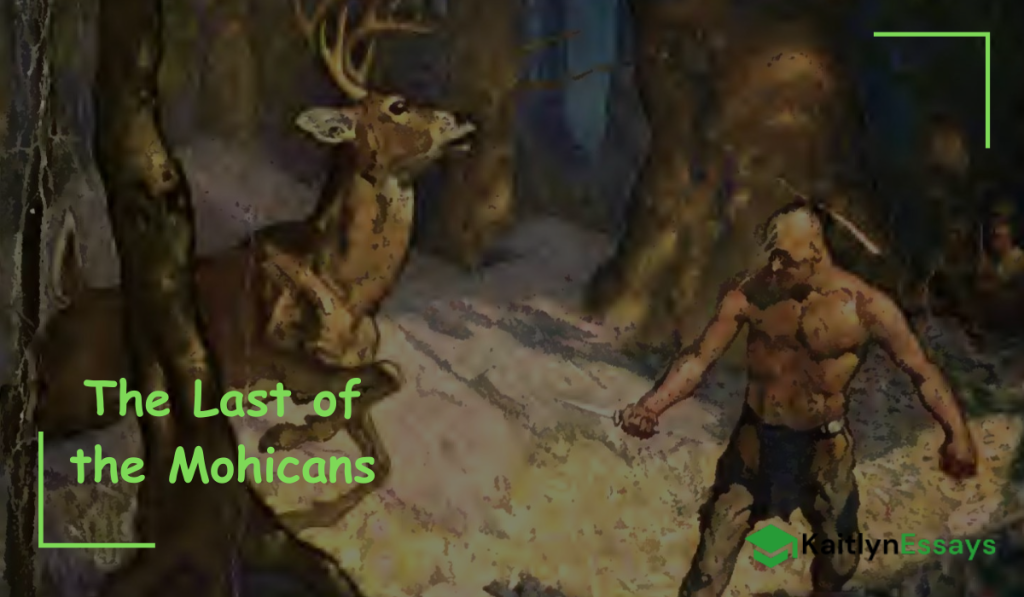
James Fenimore Cooper’s The Last of the Mohicans is a classic novel that has captivated readers since its publication in 1826. Set during the French and Indian War, the story takes place in the wilderness of 18th-century New York, where British, French, and Native American forces collide in a struggle for control. The novel follows Hawkeye, a resourceful frontiersman, and his companions, including the Mohican chief Chingachgook and his son Uncas, as they navigate perilous conflicts, form unlikely alliances, and defend their way of life.
Combining adventure, romance, and a reflection on cultural identity, the book explores themes of loyalty, survival, and the impact of colonization on Indigenous peoples. Cooper’s vivid descriptions and compelling characters offer readers a glimpse into a time of significant historical change, making The Last of the Mohicans both a thrilling tale and a window into the complexities of early American history.
Summary of The Last of the Mohicans
Setting the Stage: A Land Divided by War
The story begins in the forests of upstate New York during the war. The British forces, led by Colonel Munro, are stationed at Fort William Henry, under siege by the French army commanded by General Montcalm. The region is fraught with danger, as alliances with Native American tribes complicate the conflict.
Amid this backdrop, two British sisters, Cora and Alice Munro, set out to visit their father, Colonel Munro. They are escorted by Major Duncan Heyward and an enigmatic Native American guide named Magua. However, Magua secretly harbors a grudge against Colonel Munro and leads the group into a deadly trap.
Discover more about the war’s influence on the story here.
Introduction of Hawkeye and the Mohicans
When Magua’s betrayal becomes evident, the group is saved by Hawkeye, a skilled woodsman, and his companions, Chingachgook and Uncas, the last members of the Mohican tribe. Together, they undertake the perilous journey to reunite the Munro sisters with their father.
Hawkeye, a white man who has embraced the ways of the Mohicans, symbolizes the cultural blending and tensions of the time. Uncas, the noble son of Chingachgook, is a heroic figure whose actions embody bravery and honor.
Learn about Hawkeye’s role as a mediator between cultures here.
Conflicts and Betrayals
The group faces constant threats from Magua, who aligns with the French and seeks revenge against Colonel Munro for past grievances. Magua’s character exemplifies the complexities of loyalty and betrayal in a time of divided allegiances.
As the story progresses, Magua kidnaps Cora and Alice, prompting Hawkeye, Uncas, Chingachgook, and Heyward to embark on a daring rescue mission. This pursuit leads them through dense forests, hidden caves, and Native American villages, offering a vivid depiction of the untamed wilderness and its challenges.
For an in-depth look at Magua’s motivations, read here.
Love and Tragedy
The novel intertwines romance and tragedy as Uncas develops feelings for Cora, whose strong and independent character contrasts with her sister Alice’s gentler demeanor. Their relationship, though unspoken, underscores the novel’s exploration of cultural boundaries and forbidden love.
The climax occurs when Magua captures Cora and Uncas, leading to a confrontation at a Huron village. Despite Hawkeye and his companions’ efforts, Cora and Uncas meet tragic ends, symbolizing the loss of innocence and the inevitable march of cultural extinction.
Uncover how love shapes the novel’s tragic arc here.
Resolution and Reflection
The story concludes with Chingachgook mourning the loss of his son, declaring himself the last of the Mohicans. This poignant moment emphasizes the devastating impact of war and cultural displacement on Native American tribes. Hawkeye, though deeply affected, remains a resilient figure, embodying the complexities of cultural coexistence.
The novel ends on a somber note, reflecting the inevitable erosion of Native American cultures in the face of colonial expansion.
For a deeper dive into the novel’s conclusion, explore here.
Characters in The Last of the Mohicans
Hawkeye (Natty Bumppo)
Hawkeye, or Natty Bumppo, is the novel’s central character and a quintessential frontiersman. Born to white settlers but raised with deep respect for Native American ways of life, Hawkeye symbolizes the intersection of two cultures. He possesses unmatched skills as a tracker, hunter, and marksman, and his sharp intellect and deep knowledge of the wilderness make him an invaluable ally to the British forces.
Hawkeye’s disdain for the corruption of European civilization is evident in his lifestyle, which prioritizes individual freedom and harmony with nature. Unlike many of the other white characters, Hawkeye does not exhibit racial prejudice, respecting the Mohicans and their values as equals. His close friendship with Chingachgook and Uncas reflects this bond, and he frequently serves as their voice in interactions with outsiders.
His refusal to claim nobility or engage in romantic relationships highlights his pragmatic nature and commitment to the frontier’s harsh realities. Hawkeye’s final scenes, where he mourns the death of Uncas alongside Chingachgook, emphasize his deep emotional connection to the Mohicans and their shared grief.
For more insights into how Hawkeye’s character bridges cultural divides, read here.
Chingachgook
Chingachgook, the elder Mohican, is a dignified and noble figure who carries the weight of his tribe’s legacy. He represents the resilience and wisdom of Native American traditions, as well as the sorrow of witnessing their gradual erosion due to war and colonization.
As the father of Uncas, Chingachgook’s role extends beyond that of a warrior to that of a preserver of his tribe’s honor and values. His relationship with Hawkeye is built on mutual respect and camaraderie, reflecting the possibility of genuine cross-cultural friendship amidst the chaos of conflict.
The novel’s most heartbreaking moment comes when Chingachgook mourns Uncas’ death, declaring himself the last of his people. This statement resonates deeply, encapsulating the novel’s commentary on the devastating impact of colonial expansion on indigenous cultures.
Learn more about Chingachgook’s poignant role here.
Uncas
Uncas, the titular “last of the Mohicans,” is a heroic and idealized character. As the son of Chingachgook, Uncas exemplifies courage, loyalty, and nobility. His character is marked by his quiet strength, unyielding bravery in battle, and respect for the values of his tribe.
Uncas’ love for Cora Munro is one of the novel’s most compelling and tragic storylines. Though they come from vastly different worlds, their bond highlights the possibility of unity across cultural divides, even in the face of societal opposition. His willingness to risk his life for her demonstrates his selflessness and chivalry.
Uncas’ death at the hands of Magua is both a personal tragedy and a symbolic event, marking the end of the Mohican lineage. His loss underscores the broader theme of cultural extinction and leaves a lasting impact on both Hawkeye and Chingachgook.
Explore Uncas’ role as a romantic and tragic hero here.
Cora Munro
Cora, the elder daughter of Colonel Munro, is one of the novel’s most compelling characters. She is intelligent, strong-willed, and courageous, often acting as a stabilizing force in moments of chaos. Cooper subtly hints at her mixed racial heritage, which sets her apart and adds complexity to her interactions with other characters, particularly Magua and Uncas.
Cora’s moral strength is evident in her willingness to confront danger and speak her mind, even when it puts her at odds with societal norms. Her relationship with Uncas, while understated, represents the novel’s exploration of love transcending racial and cultural boundaries.
Her tragic death, alongside Uncas, serves as a powerful commentary on the consequences of prejudice and the cost of loyalty. Cora’s character remains a testament to integrity and bravery in a world rife with division.
Learn more about Cora’s symbolic significance here.
Alice Munro
Alice, Cora’s younger sister, is a delicate and sheltered figure who often relies on others for protection. She contrasts sharply with Cora in both temperament and strength of character, embodying the traditional image of innocence and vulnerability.
Alice’s role in the narrative is largely supportive, highlighting the protective instincts of characters like Heyward and Hawkeye. Her survival at the end of the novel stands in stark contrast to the deaths of Cora and Uncas, symbolizing the preservation of innocence amidst tragedy.
For an exploration of Alice’s role as a narrative foil, read here.
Magua (Le Renard Subtil)
Magua is the novel’s primary antagonist, a Huron warrior with a deep-seated hatred for Colonel Munro. His motivations stem from personal grievances, as Munro once humiliated and punished him, leading to his ostracization from his tribe.
Magua’s cunning and ruthless nature make him a formidable adversary, but his character is not without complexity. His actions, though often brutal, are driven by a desire for revenge and a quest to reclaim his honor. Magua’s pursuit of Cora reflects his obsession with asserting dominance over his enemies.
Despite his villainous role, Magua’s character also elicits a degree of sympathy, as he represents the displaced and disenfranchised Native American experience during this period. His death at the hands of Hawkeye marks the end of his vendetta but leaves unresolved questions about justice and morality.
Learn more about Magua’s layered characterization here.
Colonel Munro
Colonel Munro, the British commander of Fort William Henry, is a father torn between his military duties and his responsibilities to his daughters. His character reflects the struggles of maintaining honor and authority in a time of war.
Munro’s love for his daughters, particularly his protective instincts toward Alice, contrasts with his inability to shield them from the dangers of the frontier. His grief over Cora’s death is profound, emphasizing the personal costs of the broader conflict.
For an in-depth analysis of Colonel Munro’s role, read here.
Major Duncan Heyward
Major Heyward is a loyal British officer tasked with escorting the Munro sisters to Fort William Henry. At the start of the novel, he embodies the rigid values of European civilization, struggling to adapt to the wilderness and its demands.
Over time, Heyward grows as a character, displaying bravery and selflessness in his efforts to protect Alice and Cora. His willingness to disguise himself as a French medicine man to rescue the sisters showcases his ingenuity and courage.
Heyward’s eventual marriage to Alice symbolizes the novel’s bittersweet resolution, offering a glimmer of hope amid the tragedy.
Explore Heyward’s transformation and growth here.
Themes in The Last of the Mohicans
The Clash of Cultures
The novel captures the collision between Native American cultures and European colonizers, highlighting the tension and misunderstandings that arise from these encounters. The Mohicans and Hurons represent two distinct Indigenous cultures with differing values and responses to the encroachment of Europeans.
The friendship between Hawkeye, Chingachgook, and Uncas demonstrates that cultural understanding is possible. However, the broader conflict between Indigenous people and European settlers, as seen in Magua’s bitter resentment toward Munro, reveals the devastating consequences of colonialism. The dying out of the Mohican tribe symbolizes the cultural loss caused by European expansion.
Discover how the novel portrays cultural intersections here.
Loyalty and Friendship
Loyalty is a driving force in the novel, with characters forming deep bonds that transcend cultural and racial divides. The friendship between Hawkeye and Chingachgook exemplifies mutual respect and trust, challenging the racial prejudices of the time.
Uncas’ unwavering dedication to protecting Cora, even at the cost of his own life, highlights the theme of sacrificial love. Similarly, Hawkeye’s tireless efforts to assist the Munro sisters reflect his steadfast loyalty to his companions. These relationships serve as a counterpoint to the treachery and betrayal seen in Magua’s actions.
Explore how loyalty shapes the narrative here.
Nature as a Powerful Force
The wilderness is more than a backdrop; it is a central force in the novel, shaping the characters’ journeys and testing their resilience. Cooper’s vivid descriptions of the American frontier emphasize both its beauty and its dangers, symbolizing the untamed world that contrasts with European civilization.
Hawkeye’s expertise in navigating the wilderness underscores the necessity of respecting and understanding nature. In contrast, characters unfamiliar with the frontier, such as Major Heyward, struggle to survive its challenges. The wilderness serves as a metaphor for freedom, danger, and the unknown.
Learn more about the symbolic role of nature here.
Identity and Cultural Hybridity
Hawkeye embodies the theme of cultural hybridity, living between two worlds without fully belonging to either. He is a white man who adopts Native American values and customs, challenging rigid notions of identity.
Uncas and Cora also represent the blending of cultures. Uncas, as a noble Mohican, transcends stereotypes of Indigenous characters in literature, while Cora’s hinted mixed-race heritage complicates her position in society. Their tragic love story underscores the difficulties of bridging cultural divides.
For a deeper exploration of identity in the novel, read here.
War and Its Consequences
Set during the French and Indian War, the novel depicts the devastating impact of conflict on individuals and communities. The war serves as a backdrop for personal tragedies, such as the deaths of Uncas and Cora, and the broader destruction of Native American tribes.
Magua’s transformation from a respected Huron leader to a vengeful outcast highlights the personal toll of war. The novel critiques the futility of violence and its role in perpetuating cycles of revenge and loss.
Discover how war shapes the novel’s characters here.
Gender Roles and Heroism
The novel examines traditional gender roles through its female characters, Cora and Alice Munro. Cora’s courage and independence challenge the era’s expectations of women, while Alice’s reliance on others reflects conventional notions of femininity.
Heroism in the novel is not confined to male characters. Cora’s steadfastness and moral strength make her a heroine in her own right, complementing the bravery of figures like Uncas and Hawkeye. Their actions redefine heroism as a combination of physical prowess and moral integrity.
Learn more about the portrayal of gender in the story here.
Racial Prejudice and Acceptance
Cooper explores the complexities of racial prejudice through characters’ interactions and societal norms. Hawkeye’s respect for Chingachgook and Uncas challenges the racial hierarchies of his time, portraying a vision of equality.
However, the novel also reflects the racial attitudes of its era, particularly in the treatment of Cora’s mixed-race identity. Her tragic fate underscores the barriers to acceptance in a racially stratified society, despite her strength and virtue.
For insights into the theme of race, read here.
The Passage of Time and Loss
The novel conveys a poignant sense of loss, particularly through the decline of the Mohican tribe. Chingachgook’s lament for his son Uncas and the passing of their way of life evoke the irreversible consequences of cultural extinction.
This theme extends to the wilderness itself, as the encroachment of European settlers signals the transformation of the frontier. The novel serves as both a celebration of and an elegy for a disappearing world.
Learn about the theme of loss in the novel here.
Symbols in The Last of the Mohicans
The Wilderness
The untamed American wilderness serves as a complex symbol throughout the novel. It represents freedom, danger, and the untapped potential of the New World. For characters like Hawkeye, the wilderness is a place of expertise and survival, embodying his skill and independence. For others, such as the inexperienced Major Heyward, it is an unpredictable and threatening environment.
The wilderness also symbolizes the clash between civilization and nature. As European settlers expand, the wild landscapes are transformed, reflecting the broader theme of cultural displacement and the destruction of Indigenous ways of life.
Understand the wilderness as a character in itself here.
The Canoe
The canoe, a critical mode of transportation in the novel, symbolizes adaptability and cooperation. It allows characters from diverse backgrounds—such as Hawkeye, the Mohicans, and the Munro sisters—to navigate the challenging terrain together. The act of sharing the canoe mirrors the temporary alliances formed between cultures in the face of mutual dangers.
The fragility of the canoe, however, underscores the precariousness of these alliances and the constant threats posed by the environment and human conflict.
Explore how the canoe bridges cultural divides here.
Fort William Henry
The besieged Fort William Henry stands as a symbol of both human resilience and the vulnerability of colonial power. It represents the European desire to dominate the New World, but its eventual fall highlights the fragility of colonial ambitions amid the larger forces of war and nature.
The massacre that follows the fort’s surrender serves as a stark reminder of the brutal realities of conflict and the breakdown of trust between cultures.
Learn more about the symbolism of the fort here.
The Eagle
The eagle, often associated with Uncas, symbolizes nobility, strength, and a deep connection to nature. His nickname, “The Last of the Mohicans,” and the imagery of the eagle reflect his unique role as the protector of his people and a figure of moral integrity.
As the symbol of an endangered way of life, the eagle’s association with Uncas also foreshadows the tragic decline of the Mohican tribe.
Discover the significance of the eagle’s imagery here.
The Rifle
Hawkeye’s rifle, “Killdeer,” symbolizes precision, skill, and survival. It represents his identity as a frontiersman and his ability to navigate the dangers of the wilderness. The rifle is an extension of his character, emphasizing his independence and resourcefulness.
However, the rifle also highlights the role of violence in the novel. While it is a tool for protection, it is also a reminder of the constant threat of conflict in the frontier world.
For an in-depth look at the role of Killdeer, read here.
The Waterfall
The waterfall scene, where Hawkeye, Uncas, and the others seek refuge, symbolizes both protection and inevitability. While it provides a temporary sanctuary, the relentless flow of the water represents the unyielding passage of time and the inevitability of fate.
The characters’ precarious position near the waterfall mirrors the fragile alliances and dangers they face throughout their journey.
Learn more about the symbolism of the waterfall here.
Uncas’ Burial
Uncas’ burial at the end of the novel symbolizes the tragic end of the Mohican lineage and the broader loss of Native American culture. His death and burial signify the passing of an era and the consequences of colonial expansion.
The rituals surrounding his burial emphasize the dignity and cultural identity of the Mohicans, even in the face of their demise.
Understand the poignancy of Uncas’ burial here.
Cora’s Hair
Cora’s dark hair is frequently mentioned in the novel and symbolizes her mixed-race heritage. It sets her apart from her sister, Alice, and highlights the theme of racial identity. Her unique appearance reflects her bold and independent spirit, contrasting with Alice’s traditional femininity.
Cora’s tragic fate also underscores the societal prejudices tied to her identity, making her hair a poignant symbol of both strength and marginalization.
Explore the implications of Cora’s identity here.
Literary Devices in The Last of the Mohicans
Imagery
Cooper’s vivid use of imagery brings the natural landscape and characters to life, allowing readers to visualize the American frontier and its stark beauty. Through detailed descriptions of forests, rivers, and the wilderness, Cooper immerses readers in the environment that shapes the characters’ experiences. For example, he describes the forest as a “dark and silent” place, evoking both its mysterious allure and its potential dangers.
Imagery is also used to depict the contrasts between civilization and the untamed wilderness, reinforcing the novel’s central theme of the clash of cultures. The wilderness is often portrayed as a space of freedom and danger, while European settlements are described as encroachments on that freedom.
For a deeper dive into Cooper’s use of imagery, read here.
Symbolism
Cooper uses symbols throughout The Last of the Mohicans to underscore key themes and enhance the narrative. For example, the eagle symbolizes Uncas’ nobility and connection to nature, while the rifle represents Hawkeye’s survival skills and independence. These symbols create deeper layers of meaning in the novel, linking the characters’ personal struggles to broader cultural and social contexts.
The wilderness itself is also a symbol of both freedom and violence, reflecting the tension between nature and civilization. The natural world is portrayed as an uncontrollable force, contrasting with the structured society the settlers hope to impose.
To explore more about the symbolism in the novel, click here.
Irony
Irony is a significant device in The Last of the Mohicans, particularly in how characters’ actions often contradict their intentions or desires. One of the most striking instances of irony is in the fate of Uncas and Cora. Despite their bravery, love, and honor, their deaths highlight the futility of their struggle against the inevitable forces of colonialism and cultural destruction. This tragic irony emphasizes the novel’s exploration of the harsh realities of the frontier and the extinction of the Mohican tribe.
Another instance of irony is seen in Major Heyward’s inability to adapt to the wilderness. His European upbringing makes him ill-equipped for survival in the natural world, despite his noble position, which underlines the contrast between the sophistication of European society and the raw power of the frontier.
Learn more about irony and its role in the novel here.
Foreshadowing
Cooper uses foreshadowing to build tension and hint at future events. Early in the novel, the ominous descriptions of the wilderness and the constant threat of danger signal the hardships to come. Additionally, the looming conflict between the British and the French foreshadows the larger battles and personal tragedies that unfold.
Uncas’ tragic death is foreshadowed by his role as “The Last of the Mohicans.” His nobility and heroic qualities suggest that his demise will symbolize the end of an era for his people, making his death both inevitable and poignant.
To understand how foreshadowing shapes the narrative, click here.
Characterization
Cooper’s characterization of both main and secondary characters is vital to the development of the novel’s themes. The protagonist, Hawkeye, is portrayed as a rugged and resourceful frontiersman who blends Native American and European traits. His relationship with Chingachgook and Uncas emphasizes the novel’s exploration of cultural hybridity and the possibility of cross-cultural alliances.
Through characters like Magua, Cooper also examines the complexities of revenge and betrayal. Magua’s hatred for Colonel Munro and the British reflects the deeper conflicts within Indigenous communities, as well as the destructive effects of colonialism.
For a more detailed look at Cooper’s character development, read here.
Dialogue
Dialogue in The Last of the Mohicans serves not only to reveal the personalities of characters but also to convey the tensions between different cultures. Hawkeye’s speech reflects his connection to the land and his rejection of European norms, while the dialogue of Major Heyward and the Munro sisters reveals their European perspectives and contrasting attitudes toward the wilderness.
Magua’s speech is often filled with emotion, reflecting his deep resentment toward the British and his quest for revenge. His dialogue becomes a vehicle for expressing the novel’s exploration of the consequences of colonization.
Discover more about how dialogue shapes character development here.
Conflict
The central conflict in The Last of the Mohicans is both external and internal. Externally, the characters face the ongoing war between the British and the French, which is exacerbated by the different cultural and racial tensions of the time. The personal conflict between the characters, such as Hawkeye’s loyalty to his friends and his desire for justice, also plays a significant role.
Internally, characters like Magua struggle with their desire for revenge and the moral consequences of their actions. This internal conflict is what drives the narrative and ultimately leads to tragic outcomes for many of the key figures.
To learn more about the conflicts that shape the story, click here.
Allegory
The novel can be read as an allegory of the decline of Native American cultures in the face of European expansion. The tragic demise of the Mohican tribe, represented by Uncas and Chingachgook, symbolizes the death of Indigenous ways of life. Hawkeye, as a white man who identifies more with Native Americans than with his own people, represents the possibility of cross-cultural understanding, even as this vision is ultimately doomed by the forces of history.
Through these allegorical elements, Cooper critiques the inevitability of cultural assimilation and the destruction of Indigenous identities.
Explore the allegorical dimensions of the novel here.
Quotes in The Last of the Mohicans
“I am a man without a country, and I live in a place that is no longer mine.” – Hawkeye
This quote speaks to Hawkeye’s identity as someone who has chosen to live among the Native Americans, thus rejecting his European roots. It reflects his internal conflict and the broader theme of cultural displacement. Hawkeye sees himself as neither fully a part of European civilization nor fully integrated into the Indigenous cultures, making him a figure of liminality—caught between two worlds.
For more on the character of Hawkeye and his struggles with identity, click here.
“Uncas was the last of the Mohicans.”
This recurring line in the novel symbolizes the tragic extinction of the Mohican tribe. Uncas, the last surviving member, represents the passing of a once-great culture that was destroyed by colonialism. His death signifies the death of his people and the irreversible loss of Native American cultures. This quote serves as a powerful reminder of the cost of European expansion and the toll it took on Indigenous communities.
Explore the symbolism of Uncas as “The Last of the Mohicans” here.
“The white man is no longer what he once was. He has forgotten the ancient ways of the earth.” – Chingachgook
Chingachgook’s statement reflects the disillusionment of the Native American characters with the encroachment of European settlers and the loss of the land’s natural harmony. It highlights the theme of cultural erosion and the devastating impact of colonization on Indigenous ways of life. Chingachgook mourns the changing world, where the balance with nature is disturbed, and traditional wisdom is being lost to modernity.
To learn more about Chingachgook’s perspective, click here.
“It is not the gift of a great warrior, but the bravery of a man of courage that is needed in this world.” – Uncas
Uncas, as a heroic figure in the novel, emphasizes the importance of moral fortitude over physical strength or battle prowess. This quote reflects the internal values of Uncas and his character’s deep commitment to courage and righteousness, despite the overwhelming odds. It also contrasts the more physical aspects of heroism with an emotional and ethical resolve.
Learn more about Uncas’ character and his noble qualities here.
“I can fight for myself, and I have fought, but I can never forget the memory of the Mohican tribe.” – Hawkeye
In this quote, Hawkeye expresses both his personal independence and his deep connection to the history and legacy of the Mohican tribe. While he is capable of surviving and defending himself, the sense of loss he feels for the tribe’s destruction haunts him. This statement also highlights his internal struggle between his adopted native identity and his European origins.
For a deeper analysis of Hawkeye’s complex character, click here.
“Magua was no common warrior. He had a long-standing grudge, one that could not be forgotten.” – Narration
This quote encapsulates the deep-seated hatred and desire for revenge that drives Magua throughout the novel. It also reflects the theme of vengeance as a destructive force. Magua’s quest for retribution against the British is not simply a personal vendetta but represents the broader violence and destruction caused by colonial oppression. The line emphasizes the emotional intensity and persistence of Magua’s desire for revenge, which ultimately leads to his downfall.
Learn more about Magua’s motivations and the consequences of vengeance here.
“I will not part with a single man who has his life to spare. For we are going to make a stand.” – Colonel Munro
Colonel Munro’s statement underscores his leadership and sense of duty in the face of overwhelming odds. This quote exemplifies the theme of sacrifice and duty, which runs throughout the novel. Despite the perilous situation, Munro refuses to abandon his men, embodying the qualities of courage and responsibility that are essential in times of war.
To explore more on Munro’s character and his leadership qualities, read here.
“The best of the Mohicans are dead, and you are a stranger among the ruins of a nation that once knew how to live.” – Magua
Magua’s bitter declaration highlights the theme of cultural extinction and the impact of colonization on Indigenous peoples. This quote reflects his belief that the Mohican tribe, like many other Native American nations, has been decimated by the forces of European expansion. Magua sees himself as one of the few survivors left to bear witness to the decay of his once-proud culture.
For an in-depth look at Magua’s perception of loss and identity, click here.
“There is no time to waste in vain regrets. You are in the hands of your enemies, and they are not slow to strike.” – Hawkeye
Hawkeye’s pragmatic approach to life in the wilderness is evident in this quote. He urges the other characters to move past their regrets and focus on survival. The line reflects the theme of resilience and the harsh realities of frontier life, where survival often depends on quick thinking and decisive action.
To learn more about the survival themes in the novel, read here.
“We have fought together, and together we shall die, if need be.” – Uncas
Uncas’ loyalty and devotion to his comrades is reflected in this quote. It symbolizes the strong bond between the characters and their willingness to face death in order to protect each other. This quote speaks to the themes of friendship, loyalty, and sacrifice, central to the narrative.
To explore the relationships and loyalties in the novel, click here.
The Last of the Mohicans Essays
The Dichotomy of Good and Evil and the Believability of Cooper’s Indian Characters
James Fenimore Cooper’s The Last of the Mohicans presents a stark and arguably simplistic view of Native Americans, dividing them into seemingly irreconcilable camps of inherent goodness and inherent evil. On one side, we have the noble Mohicans, Uncas and Chingachgook, paragons of stoicism, courage, and loyalty. On the other, we find the treacherous Magua and the bulk of the Huron tribe, portrayed as bloodthirsty savages driven by an insatiable lust for violence and revenge. This stark dichotomy raises the critical question: are there any believable Indian characters within this black-and-white landscape, and to what extent is Cooper’s work marred by racial stereotypes?
The immediate answer is that the lines are not quite so clearly drawn as they might first appear. While Uncas and Chingachgook are idealized figures, they are not entirely devoid of complexity. Chingachgook’s deep sorrow over the loss of his people and their land, for example, adds a layer of depth to his stoic exterior. We see his internal struggle with grief and his determination to honor the past, which makes him more than just a symbol of the “noble savage.” Similarly, Uncas, though seemingly flawless, demonstrates a quiet intensity and a willingness to sacrifice himself for love and honor, showcasing the kind of emotional depth expected from a tragic hero. While they are idealized representations, they are given moments of emotional expression that at least hint at greater interiority.
Even Magua, though presented as the primary antagonist, isn’t a simple embodiment of evil. His actions are driven by a thirst for revenge fueled by past injustices inflicted upon him by white settlers. Cooper, however, is careful to frame these motivations within a framework of savagery, where his desire for vengeance is portrayed as inherently brutal and merciless. In the eyes of the book, this sets him apart from the noble desire for honor and justice displayed by the Mohicans. While this motivation adds a slight degree of complexity, it also reinforces the idea that Native American anger is fundamentally irrational and dangerous, unlike the perceived righteous anger of the colonists.
The other Hurons are presented with even less complexity. They are largely a mass of violent, untrustworthy figures easily swayed by Magua’s influence. They lack the individual motivations and personalities granted to Uncas, Chingachgook, or even Magua. This portrayal of the Hurons as a homogeneous, easily manipulated group contributes to the stereotype of Native Americans as inherently susceptible to violent and primitive impulses.
In assessing the overall believability of the characters, it’s difficult to ignore Cooper’s tendency to depict Native Americans through a lens heavily influenced by prevailing stereotypes of his time. The noble savage, embodying natural wisdom and inherent moral superiority, is juxtaposed with the violent savage, consumed by a primal thirst for blood. This binary approach, while potentially intended to create a dramatic narrative, ultimately prevents a detailed portrayal of individual Native American experiences and complexities. While the motivations are sometimes present, they are almost always framed within the lens of how their actions either contribute to a white supremacist worldview or resist it.
In conclusion, while Cooper attempts to offer some complexity, the characters are ultimately weighed down by the binary he employs, and this is ultimately a reflection of the biased views and racial stereotypes pervasive during the era in which The Last of the Mohicans was written. Even in his attempts at creating “noble” Indians, they are idealised in a manner that serves to reinforce the prevailing ideas of the time, rather than genuinely understanding the cultures he sought to portray.
Contrasting Bonds – Father-Son vs. Father-Daughter in The Last of the Mohicans
James Fenimore Cooper’s The Last of the Mohicans presents a study in contrasts, not just in its portrayal of Native Americans and Europeans, but also in the familial bonds it depicts. The relationship between Chingachgook and his son, Uncas, stands in stark opposition to the connection between Colonel Munro and his daughters, Cora and Alice. These relationships, examined alongside their respective cultural contexts, provide a crucial insight into the novel’s broader themes.
The bond between Chingachgook and Uncas is deeply rooted in the traditions and values of the Mohican culture. Their relationship is characterized by a stoic, yet profound, love and respect. Uncas, as the last of his line, is not just Chingachgook’s son but also his hope for the future of their people. Their communication is often non-verbal, built upon shared experiences, hunting trips, and a mutual understanding of the wilderness. They are partners in survival, both physically capable and intensely loyal to one another. This stoicism, typical of the “noble savage” archetype, masks a deep emotional connection. They do not engage in overt displays of affection, instead showcasing their bond through mutual understanding, shared purpose, and unquestioning loyalty. Chingachgook’s grief at Uncas’ death is all the more powerful for its understated expression, which is ultimately far more powerful than an open display would be. The relationship is ultimately a reflection of their cultural values: quiet strength, stoicism, and a deep reverence for tradition. The father-son relationship is ultimately meant to reflect the way the past and future of the Mohican people is tied together.
In contrast, the relationship between Colonel Munro and his daughters is marked by a different kind of affection, one that is more openly expressed within the confines of European societal norms. However, the relationship is also, and this is significant, very superficial. There is a degree of paternal care, particularly regarding the protection and well-being of his daughters, yet their relationship is largely defined by a social distance appropriate to the times. Munro is more concerned with their societal standing and their marriage prospects than with the deeper aspects of their lives. He is, in many ways, a distant father, more concerned with his duties as a military officer than with the emotional needs of his daughters. While he clearly cares for them, he is not shown to have a deep understanding of either of them as individuals. He is unable to protect them, and often relies on others, and it seems that he almost sees them more as possessions than as children.
Moreover, the relationship between Munro and his daughters is further complicated by their differing personalities and experiences. Cora, the elder daughter, is intelligent, resourceful, and possesses a keen understanding of human nature. She is able to think for herself and is driven by her own internal sense of right and wrong. On the other hand, Alice is more delicate, fragile, and reliant on the men around her for protection. Munro’s relationship with each daughter is somewhat different, but he is ultimately unable to provide them with the safety and protection that a father should be able to. His focus is almost always on external forces, which is why he is often ill prepared for how these forces threaten him and his family internally. In this way, we might see this relationship as an indication of the ways in which Europeans are less attuned to their inner lives and are overly concerned with external manifestations of power.
The cultural gap between the two sets of relationships also highlights a key difference in their approaches to grief and loss. When Uncas dies, Chingachgook does not engage in histrionic mourning, instead responding with quiet dignity and a commitment to keeping the legacy of his son and his people alive. Munro, on the other hand, is broken by the loss of his daughters, particularly the death of Cora. His emotional response is overt, demonstrative, and indicative of the cultural value placed upon sentimentality. This is a striking difference which highlights the different ways the characters relate to their emotions and express them. It also, importantly, continues to align the “good” Native Americans with stoicism and dignity, and it continues to present white characters as overly emotional and reactive.
In conclusion, the father-son relationship of Chingachgook and Uncas is defined by the values of tradition, loyalty, stoicism, and a deep shared understanding rooted in their culture and their struggle. The father-daughter relationship of Munro and his daughters is, by comparison, more constrained by social norms, superficial in its focus, and ultimately unable to provide either protection or comfort. The contrast between these relationships highlights the cultural clashes present in the novel and provides a window into the differing values and approaches to love, family, and loss of each culture.
Hawkeye: The Hero, the Outsider, and the Uninvolved
Hawkeye, also known as Natty Bumppo or the “Long Rifle,” is unequivocally the central heroic figure in James Fenimore Cooper’s The Last of the Mohicans. He embodies the qualities of courage, skill, moral integrity, and a deep understanding of the wilderness, all of which combine to make him the novel’s most compelling and admirable character. However, a curious aspect of Hawkeye’s heroism is his detachment from the novel’s romantic subplots. This detachment is not a flaw, but rather a deliberate character choice that underscores his unique position within the narrative.
Hawkeye’s heroism is complex. First and foremost, he is a master woodsman, possessing unparalleled knowledge of the wilderness and its inhabitants. He is a skilled tracker, hunter, and marksman, capable of navigating the terrain and outmaneuvering his enemies. More than just a skilled survivalist, Hawkeye is also deeply committed to a moral code that guides his actions. He is presented as both honest and honorable, and consistently strives to protect the innocent and uphold justice. He is not driven by greed, ambition, or the desire for power, but by a sense of duty to what he considers right. He is a bridge between the white and Native American worlds, understanding and respecting the ways of both. This allows him to act as a translator, not just of language, but of culture, and he is able to serve as a unifying force between opposing sides.
He is instrumental in saving the Munro sisters multiple times, leading the group through treacherous terrain, and providing crucial tactical support. His bravery in battles and his calm demeanor in the face of danger are continuously highlighted. Even when faced with seemingly insurmountable odds, he remains steadfast and determined. It is through his knowledge and skill that the main characters are able to survive the many trials they face. The narrative frequently emphasizes his almost superhuman abilities and his deep connection to the land, which sets him apart from the other characters.
Despite his heroic role, Hawkeye remains strangely uninvolved in the romantic relationships that are a significant driving force of the narrative. The two main love stories, Cora’s burgeoning affection for Uncas and the more traditional romantic interest between Alice and Major Heyward, occur entirely separately from Hawkeye. This is not accidental; it is central to his characterization. Hawkeye is an outsider, a man who is comfortable in neither the white man’s world nor the Native American’s. He has chosen a life apart, and that includes a detachment from romantic entanglements. He doesn’t belong to the world of social rituals and expectations, and his love and commitment are instead devoted to the wilderness itself.
This detachment from the romantic element of the plot serves several purposes. First, it reinforces his identity as a man of the wilderness, untouched by the social constructs and expectations of the world of the Europeans. His “natural” environment is what he is most attached to, and any attempts to integrate him into the society of the colonists would be a form of captivity. Second, it allows him to remain a purely heroic figure, untainted by the personal conflicts and romantic desires that can often cloud the judgment of other characters. He is free to act solely on principles, unburdened by the emotional baggage that romance can bring. This serves to establish him as a kind of idealised masculine hero, one who is more concerned with larger principles than the needs and desires of the individual. Finally, his emotional distance keeps him separate from the more romanticized and sentimental elements of the novel. He represents something more solid and more grounded, and it is this that allows him to serve as the hero.
Hawkeye’s distance from romance also highlights the novel’s focus on broader themes such as cultural conflict, the changing wilderness, and the nature of civilization. His role is to navigate this complex world with integrity, acting as a moral compass in a world often driven by self-interest. By not engaging in the romantic pursuits, he is able to remain impartial and focused on his more universal mission, which is to maintain order in a world in conflict.
In conclusion, Hawkeye is the undisputed hero of The Last of the Mohicans due to his skills, courage, morality, and intimate knowledge of the wilderness. His detachment from the love stories is not a shortcoming but rather a deliberate choice by Cooper that serves to enhance his heroic stature. It underscores his unique identity as a man of the wilderness, a free and independent figure who is driven by higher ideals rather than personal desires. His role is not to be a participant in the emotional dramas of the characters, but to serve as a guide through the conflicts that confront them, making him the ideal hero for a novel that is concerned with more than just love and romance.
Clashes of Culture and Race in The Last of the Mohicans and Cooper’s Views
James Fenimore Cooper’s The Last of the Mohicans is rife with instances of conflict stemming from the collision of different cultures and races. While Cooper attempts to portray Native Americans with a degree of complexity, the novel ultimately reveals a worldview deeply influenced by the prevailing prejudices of his time. Examining three specific clashes – the massacre at Fort William Henry, the abduction of Cora and Alice, and the climactic battle and the deaths of Uncas and Cora – can offer a clearer picture of Cooper’s views on racism and cultural interaction.
1. The Massacre at Fort William Henry:
The surrender of Fort William Henry to the French and their Native American allies, followed by the brutal massacre of the British soldiers and their families, is a pivotal moment in the novel. This event starkly illustrates the breakdown of order when cultures collide. The French, despite their claims to civilized warfare, are unable to control their Native American allies, highlighting the European perspective that Native Americans were inherently savage and incapable of civilized behavior. Cooper portrays the massacre as a barbaric act driven by a lust for violence and plunder, suggesting a fundamental difference between the supposedly “civilized” Europeans and the “savage” Native Americans. He portrays the Hurons as inherently brutal and untrustworthy and the lack of honor or restraint is placed squarely on the lack of “civilization.” The massacre is ultimately seen as an inevitable consequence of Native American cruelty rather than a product of the specific geopolitical context. This portrays the way that Cooper blames the actions entirely on the Native Americans, absolving the colonial authorities of any wrongdoing or responsibility.
The incident, however, also highlights the failure of the British, and to a greater extent the French, to understand and respect Native American customs. The lack of communication between the two sides is a major contributor to the horrific events. The British, for instance, fail to understand the complexities of Native American warfare and their expectations of how a surrender would be conducted. This failure to comprehend cultural differences results in the tragic loss of life. However, Cooper does not present this as a condemnation of the British, but rather as another example of the barbarity of the Native American tribes. It suggests that the “savage” behavior cannot be reasoned with, and this further perpetuates the sense that they are fundamentally different and that true understanding is impossible.
2. The Abduction of Cora and Alice:
The repeated abductions of Cora and Alice by Magua serve as another focal point for examining the clash of cultures. Magua, driven by a desire for revenge, uses the vulnerability of the white women as a means to punish their people. His actions, presented as the product of his “savage” nature, further emphasize the dichotomy between the “civilized” Europeans and the “barbaric” Indians. The portrayal of Magua is complex, as his desire for revenge is rooted in past injustices. However, this complexity is undercut by framing his actions as inherently brutal and irrational. He is seen as “less than human,” and he is presented as someone whose actions are ultimately dictated by his “primitive” drives.
The abduction highlights a common trope in colonial literature, which is the vulnerability of white women in the face of “savagery.” The women are often depicted as passive victims who need to be rescued by the white men. This portrayal not only reinforces gender stereotypes but also perpetuates racist ideas. The women become symbols for the “civilized” world being threatened by “savage” forces, solidifying the idea that any interaction with the Native Americans is one that is ultimately negative and dangerous for the white Europeans. In this way, it reveals a subtle but clear sense of racial hierarchy.
3. The Climactic Battle and the Deaths of Uncas and Cora:
The final conflict, culminating in the deaths of Uncas and Cora, is the most striking example of the tragic consequences of cultural clashes. The two characters, who serve to bring the cultures together through love, both die. Uncas, a noble and heroic figure, is killed while trying to rescue Cora, highlighting the tragic impossibility of interracial harmony within the world of the novel. His death is framed as a noble sacrifice, yet it simultaneously reinforces the idea that any alliance between Native Americans and white people is inherently doomed. Cora’s death, the result of her attempts to protect Uncas, also serves to reinforce the notion that these two worlds cannot exist in peace. The deaths of the two characters, and the clear sense that love was ultimately not enough to bridge the gap between the two cultures, paints a bleak picture of race relations in the novel.
The final scenes, in which Chingachgook laments the loss of his son and the fading of the Mohican tribe, further emphasize Cooper’s romanticized but ultimately pessimistic view of Native American culture. They are portrayed as a dying race, destined to disappear in the face of advancing European civilization. This romanticized portrayal, however, often serves to diminish the agency of the Native Americans, presenting them as passive victims of historical inevitability. The romanticised, almost elegiac, presentation of their loss continues to cast them as tragic figures, and in doing so, it denies the reader the opportunity to consider them as anything other than victims of forces that they could not hope to resist.
Cooper’s Views on Racism:
Through these clashes, it becomes evident that Cooper’s views on race were complex and ultimately contradictory. He acknowledges the injustices and violence perpetrated against Native Americans, yet he ultimately frames their “savage” nature as the root of the problem. He presents characters like Uncas and Chingachgook as noble and honorable, yet these characters often conform to stereotypes that ultimately serve to justify European dominance. In the end, Cooper’s narrative reinforces the idea that Native American and European cultures are fundamentally incompatible. The novel, while attempting to explore the complexities of cultural interaction, often falls back on romanticized notions of the “noble savage” and prejudiced depictions of the “barbaric Indian.” While he might be interpreted as attempting to explore cultural differences, it is ultimately within a framework that confirms the superiority of the white European colonial project.
In conclusion, the clashes depicted in The Last of the Mohicans highlight the tragic consequences of cultural and racial conflict. While Cooper attempts to portray Native Americans with a degree of complexity, his work is ultimately shaped by the prevailing stereotypes and biases of his time. The novel reveals a belief in the inevitability of European dominance and the tragic fading of Native American cultures, painting a picture of cultural interaction that is both romanticized and deeply flawed.
FAQs
What is the main message of The Last of the Mohicans?
The main message of The Last of the Mohicans is the exploration of loyalty, survival, and cultural conflict during the French and Indian War. It highlights themes of identity, sacrifice, and the clash between the native tribes and European settlers. The novel also emphasizes the complex relationships between different cultures and the impact of war on individuals and societies.
What is The Last of the Mohicans about?
The Last of the Mohicans, written by James Fenimore Cooper, is set during the French and Indian War in 1757. It follows the story of Hawkeye, a frontiersman, and his Native American companions, Uncas and Chingachgook, as they protect two British sisters, Cora and Alice, from the dangers of war. The novel depicts the conflict between the French and the British, as well as the tragic fate of the Mohican tribe, who are among the last survivors of their people.
Was The Last of the Mohicans a true story?
While The Last of the Mohicans is not a true story in the strictest sense, it is based on historical events and real-life figures. The French and Indian War, which serves as the backdrop, was a real conflict, and Cooper incorporated aspects of Native American culture and history into the novel. However, the characters, such as Hawkeye, Uncas, and Chingachgook, are fictional.
What does the phrase “last of the Mohicans” mean?
The phrase “last of the Mohicans” refers to the idea of the final survivors of a group or community. In the context of the novel, it symbolizes the tragic decline of the Mohican tribe and their extinction due to European colonization and warfare. It also conveys the broader theme of cultural loss and the end of an era.