

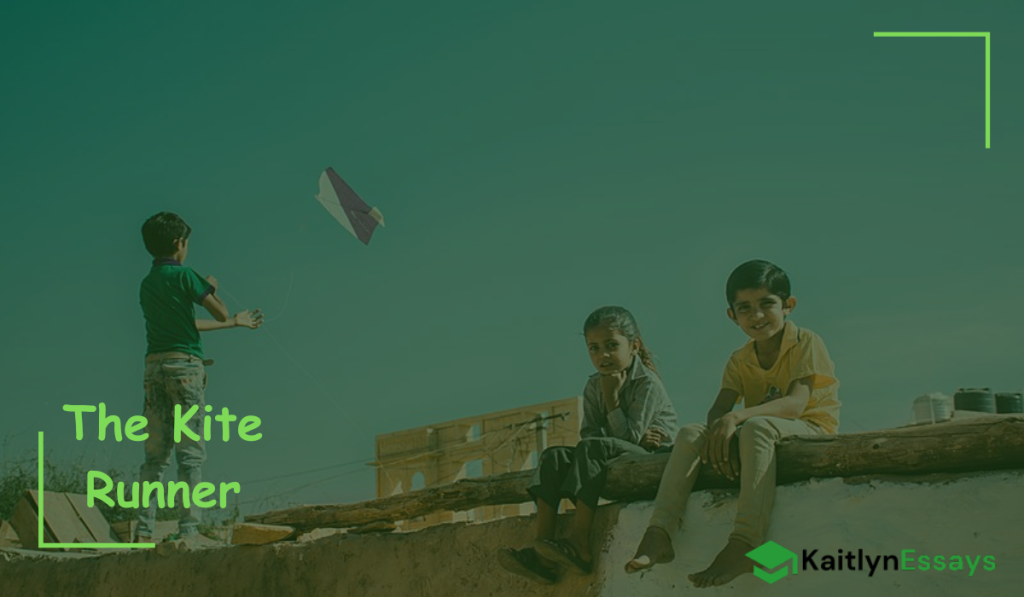
Khaled Hosseini’s The Kite Runner is a powerful story set in Afghanistan and the United States, blending themes of friendship, guilt, redemption, and the complexities of family ties. The novel revolves around the life of Amir, a young boy from a wealthy family in Kabul, and his evolving relationship with Hassan, the son of his father’s servant. The plot unfolds against the backdrop of Afghanistan’s political upheavals, taking readers on a journey that is emotionally gripping and deeply human.
Summary
The story begins in the 1970s, focusing on Amir’s close but complex relationship with Hassan, the son of his father’s servant.
Amir and Hassan are inseparable friends, despite their different ethnic backgrounds and social status. Hassan is a skilled “kite runner,” known for his ability to predict where kites will land during the popular kite-fighting tournaments. During one such tournament, Amir wins the competition with Hassan’s help, but their celebration is short-lived.
Shortly after the tournament, Hassan is cornered and sexually assaulted by a group of bullies led by Assef. Amir witnesses the attack but, paralyzed by fear and cowardice, does nothing to help his friend. This moment of betrayal haunts Amir for years to come.
Overwhelmed by guilt, Amir begins to distance himself from Hassan, eventually framing him for theft, which leads to Hassan and his father leaving Amir’s household. Soon after, the Soviet invasion of Afghanistan forces Amir and his father to flee to America, where they start a new life.
Years later, Amir, now an adult living in California, receives a call from his father’s old friend Rahim Khan, asking him to return to Afghanistan. Rahim reveals a long-held secret: Hassan was actually Amir’s half-brother, sharing the same father. Rahim then tasks Amir with rescuing Hassan’s son, Sohrab, from an orphanage in Kabul.
Amir returns to Afghanistan, now under Taliban rule, to find Sohrab. He discovers that the boy has been taken by a Taliban official, who turns out to be Assef, the same person who assaulted Hassan years ago. Amir confronts Assef to save Sohrab, enduring a brutal beating before Sohrab intervenes.
Amir manages to rescue Sohrab and bring him back to America. However, the traumatized boy struggles to adjust to his new life. The novel ends with a glimmer of hope as Amir and Sohrab fly kites together, suggesting the possibility of healing and redemption.
Full summary of The Kite Runner.
Characters
Amir
Amir, the narrator and protagonist of The Kite Runner, is a deeply flawed individual whose actions early in life come to haunt him. Growing up in Kabul, Afghanistan, he constantly seeks the approval of his father, Baba, and craves attention. This need for validation is a driving force behind many of Amir’s decisions, including his betrayal of Hassan, his closest friend and servant. Amir witnesses Hassan’s assault but does nothing to stop it, allowing the guilt of his inaction to fester. Throughout the novel, Amir’s path to redemption is central to the story, as he grapples with the consequences of his choices and seeks to find peace within himself.
Access the full character breakdown of Amir.
Hassan
Hassan, a Hazara boy who works as a servant in Amir’s household, represents the epitome of loyalty and purity. His unyielding devotion to Amir, despite Amir’s betrayal, serves as a stark contrast to Amir’s moral failings. Hassan is not just a servant but also Amir’s best friend, though their relationship is marred by the societal pressures of ethnic and class divides in Afghanistan. Hassan’s tragic fate — being both a victim of rape and later abandoned by Amir — symbolizes the brutal consequences of prejudice and cowardice. His unwavering loyalty is encapsulated in his famous line, “For you, a thousand times over.”
Learn more about Hassan’s role in the story.
Baba
Baba, Amir’s father, is a larger-than-life character who embodies both strength and moral complexity. A wealthy and respected man in Kabul, Baba holds traditional values and often clashes with Amir, whom he views as weak and incapable of standing up for himself. Despite his high moral standards, Baba hides a secret that ultimately changes Amir’s perception of him: Hassan is his illegitimate son. Baba’s hypocrisy in condemning others while concealing his own sins creates tension between him and Amir, yet it also humanizes him as a character caught between societal expectations and personal failings.
Explore Baba’s influence on Amir’s development.
Rahim Khan
Rahim Khan, Baba’s close friend and a father figure to Amir, serves as a moral compass throughout the novel. He is the one who encourages Amir’s writing and provides the crucial piece of information that sets Amir on his path to redemption: Hassan is his half-brother, and his son, Sohrab, needs Amir’s help. Rahim Khan’s role as a guiding force is pivotal in pushing Amir to confront his past and seek atonement for his sins. His famous words, “There is a way to be good again,” encapsulate the novel’s central theme of redemption.
Learn more about Rahim Khan’s character.
Sohrab
Sohrab, the son of Hassan, is a key figure in Amir’s journey to redemption. After Hassan’s death, Sohrab is left in an orphanage, where he suffers abuse at the hands of the Taliban. When Amir rescues him, Sohrab becomes both a symbol of Amir’s guilt and his hope for salvation. Sohrab’s trauma and silence following his rescue highlight the devastating effects of violence and betrayal. However, his eventual acceptance of Amir as a father figure suggests that healing, while difficult, is possible.
Learn more about Sohrab’s impact on Amir’s redemption.
Assef
Assef, the novel’s primary antagonist, represents the darker side of human nature. A sociopathic bully with extremist views, Assef idolizes Adolf Hitler and believes in ethnic cleansing, targeting Hazaras like Hassan. His rape of Hassan and later role as a Taliban official underscore his capacity for cruelty. Assef’s return as the main villain in the latter part of the novel reinforces the idea that unresolved guilt and sin can resurface. His fight with Amir at the end serves as a physical manifestation of Amir’s struggle for redemption.
Get a more detailed analysis of Assef’s character.
Soraya
Soraya, Amir’s wife, plays a crucial role in his journey toward redemption. Her own past, marked by a rebellious relationship that caused a rift with her family, mirrors Amir’s guilt over betraying Hassan. Soraya’s openness about her past serves as a counterbalance to Amir’s secrecy, and her support helps Amir come to terms with his actions. Through their relationship, Hosseini explores the themes of forgiveness and the possibility of starting anew.
Explore Soraya’s influence on Amir’s journey.
Ali
Ali, Hassan’s father and Baba’s servant, is a character who quietly endures the hardships of life. As a Hazara and a servant, Ali is marginalized in Afghan society, yet his dignity and grace in the face of adversity stand out. Ali’s deep love for Hassan, despite knowing the truth of his paternity, reflects his capacity for unconditional love. His quiet suffering and eventual departure from Baba’s household after Hassan’s assault mark a turning point in the story, as the family’s fragmentation mirrors the broader societal breakdown in Afghanistan.
Get a deeper look into Ali’s character.
General Taheri
General Taheri, Soraya’s father, is a man of strict traditional values. He represents the older generation of Afghans who cling to their customs and expectations, even in the diaspora. His reluctance to accept Soraya’s past and his control over her life exemplify the rigid patriarchal structures that continue to affect the younger generation. However, his eventual acceptance of Amir and Soraya’s decision to adopt Sohrab reflects a gradual shift in his thinking.
Read more about General Taheri’s character.
Sanaubar
Sanaubar, Hassan’s mother, is initially portrayed as a selfish woman who abandons her family, but her return later in the novel reveals her desire for redemption. After leaving Hassan as a child, Sanaubar reappears in his life as an older woman, seeking forgiveness and offering her love to Sohrab, her grandson. Her character arc emphasizes the possibility of redemption, even for those who seem irredeemable at first.
Explore Sanaubar’s transformation.
Themes in The Kite Runner
Theme of Redemption
One of the most prominent themes in The Kite Runner is the concept of redemption. The protagonist, Amir, spends much of his life attempting to atone for the wrongs he committed as a child, particularly his betrayal of Hassan. Redemption, in this context, is depicted as a deeply personal journey. Throughout the novel, Amir grapples with his feelings of guilt and shame, ultimately realizing that redemption can only come through self-awareness and the willingness to make amends.
The theme of redemption is emphasized when Amir returns to Afghanistan as an adult to rescue Hassan’s son, Sohrab. This act of bravery becomes Amir’s attempt to “be good again,” as he seeks forgiveness for his past transgressions. To explore further how Hosseini weaves this theme into the novel, read more on this topic.
Theme of Betrayal and Loyalty
Betrayal and loyalty are interwoven throughout the novel, creating a tense and often heartbreaking narrative. Amir’s betrayal of Hassan is a central moment that haunts him throughout the story. Despite Hassan’s unwavering loyalty to Amir, the latter fails to defend him in a crucial moment of need. This betrayal is compounded by Amir’s later actions, where he frames Hassan for theft, leading to the servant’s departure from the household.
On the other hand, loyalty is embodied by Hassan, who remains devoted to Amir, even in the face of such betrayal. The novel highlights how loyalty can become a source of both strength and suffering. For an in-depth analysis of how betrayal and loyalty shape the characters, discover more in this section.
Theme of Guilt and Forgiveness
The emotions of guilt and forgiveness are intricately linked throughout The Kite Runner. Amir’s guilt over his treatment of Hassan drives much of the novel’s tension. His guilt festers for years, affecting his relationships and sense of self. Hosseini explores how guilt can serve as both a destructive and motivating force, pushing Amir toward his eventual quest for redemption.
Forgiveness, on the other hand, is a more elusive theme. Amir struggles to forgive himself, even as others offer him opportunities for absolution. The act of forgiving—both oneself and others—becomes a crucial element in the novel’s resolution. Hosseini’s portrayal of guilt and forgiveness invites readers to reflect on their own experiences with these complex emotions. Explore more about this theme.
Theme of Father-Son Relationships
Father-son relationships are a recurring theme in The Kite Runner, particularly the complex relationship between Amir and his father, Baba. Amir’s longing for his father’s approval shapes many of his decisions, including his betrayal of Hassan. Baba’s own internal conflicts, as well as his secret about Hassan’s true parentage, add layers of complexity to their relationship.
Hosseini also draws a parallel between Baba’s relationship with Amir and the bond between Hassan and his son, Sohrab. Through these relationships, the novel examines the expectations, disappointments, and misunderstandings that often arise between fathers and sons. To look deeper into the dynamics of these relationships, continue reading here.
Theme of Social Class and Ethnicity
Social class and ethnicity play significant roles in shaping the characters’ lives and relationships in The Kite Runner. Amir and Hassan’s friendship is complicated by the fact that Hassan belongs to the Hazara minority, an ethnic group historically oppressed in Afghanistan. Amir, as a Pashtun, enjoys a higher social status, which creates an imbalance of power in their relationship.
Hosseini uses the disparity between the characters’ social classes to comment on broader issues of inequality and injustice. The novel forces readers to confront the realities of prejudice and privilege in both personal and societal contexts. For further exploration of how class and ethnicity influence the novel’s characters, learn more here.
Theme of Political Turmoil and Its Impact on Personal Lives
The political upheaval in Afghanistan during the 1970s and 1980s serves as a crucial backdrop for the events of The Kite Runner. Hosseini illustrates how political changes—such as the Soviet invasion and the rise of the Taliban—drastically alter the lives of ordinary people. Amir’s comfortable life in Kabul is disrupted by these events, forcing him and his father to flee to the United States.
The novel also depicts how the political turmoil in Afghanistan affects characters like Hassan and Sohrab, who suffer under the brutal Taliban regime. Hosseini’s portrayal of war and displacement underscores the personal cost of political conflict. To gain insight into how the political context shapes the novel, read more on this subject.
Theme of Friendship and Sacrifice
The friendship between Amir and Hassan is at the heart of The Kite Runner, though it is fraught with tension and complications. Hassan’s unwavering loyalty to Amir stands in stark contrast to Amir’s betrayal. This dynamic highlights the sacrifices Hassan makes for his friend, often at great personal cost.
Hosseini’s exploration of friendship is detailed, revealing the complexities of loyalty, jealousy, and the desire for approval. Amir’s eventual realization of the value of true friendship comes too late, as Hassan is gone, but it influences his decision to save Sohrab. For a closer look at the theme of friendship and sacrifice in the novel, continue reading here.
Theme of Identity and Self-Discovery
Throughout The Kite Runner, Amir embarks on a journey of self-discovery, grappling with questions of identity and purpose. As a young boy, Amir struggles to define himself outside of his father’s expectations. His sense of identity is further complicated by his feelings of guilt and betrayal.
The novel also explores identity through the lens of cultural displacement. When Amir and Baba flee to the United States, they must adapt to a new way of life while grappling with their pasts. Hosseini illustrates how identity is shaped by both internal conflicts and external circumstances. Explore Amir’s journey of self-discovery.
Theme of Forgiveness and Healing
In the final chapters of The Kite Runner, Hosseini focuses on the healing process for both Amir and Sohrab. After years of running from his guilt, Amir finally confronts his past and takes steps toward forgiveness—not only from others but also from himself. This healing journey is mirrored in Sohrab, who must come to terms with his own trauma after the death of his parents and his experiences with the Taliban.
The novel suggests that while forgiveness may not erase the past, it is a necessary step toward healing. By rescuing Sohrab, Amir takes the first step in forgiving himself and finding peace. Discover more about the theme of forgiveness and healing.
Symbols in The Kite Runner
Kites
Kites play a pivotal role in the novel, symbolizing both freedom and the guilt that haunts the protagonist, Amir. For Amir, kite flying represents a rare moment of liberation and happiness, particularly during his childhood in Kabul. The annual kite-fighting tournament becomes a metaphor for Amir’s desire to gain his father’s approval. However, the kite also carries a darker connotation, becoming a symbol of Amir’s betrayal of Hassan. After Hassan runs to fetch the last cut kite—a prize in the tournament—he is assaulted, and Amir witnesses the event without intervening. The very kite that wins Amir his father’s approval is tied to the guilt he carries throughout his life.
The duality of the kite as both a source of joy and sorrow encapsulates the central conflict within Amir. It is only later in the novel, when Amir flies a kite with Sohrab, Hassan’s son, that the kite once again represents a form of redemption. Amir’s act of flying the kite for Sohrab serves as a symbolic atonement for his past mistakes. To learn more about the complexity of kites as symbols of guilt and redemption, visit this detailed analysis.
The Pomegranate Tree
The pomegranate tree is another significant symbol in The Kite Runner. In the early chapters, the tree serves as a symbol of Amir and Hassan’s friendship. They carve their names into the tree and spend time playing beneath it, establishing it as a space of innocence and bonding. The inscription “Amir and Hassan, the sultans of Kabul” etched into the bark of the tree symbolizes their eternal connection—at least from Hassan’s perspective.
However, this symbol of friendship also takes on darker overtones as Amir’s guilt intensifies. In a later scene, Amir throws pomegranates at Hassan, hoping to provoke a reaction, but Hassan refuses to retaliate, choosing instead to crush a pomegranate against his own chest. This scene underscores Amir’s internal struggle with his betrayal and his desire to be punished for it. The pomegranate tree thus shifts from a symbol of childhood innocence to a representation of betrayal and guilt. Explore more about the significance of the pomegranate tree in shaping the novel’s themes in this comprehensive breakdown.
The Lamb
The image of the lamb is frequently used throughout the novel, symbolizing sacrifice. Hassan is often associated with the lamb, especially during his assault. Amir’s comparison of Hassan to a lamb being led to slaughter emphasizes Hassan’s innocence and unwavering loyalty to Amir. This image also serves to underline Amir’s own role in Hassan’s “sacrifice,” as Amir does nothing to stop the assault, instead choosing his own well-being over Hassan’s safety.
This symbol reappears later in the novel when Sohrab, Hassan’s son, is similarly placed in a vulnerable position, and Amir must decide whether to atone for his past sins by saving him. The repetition of the lamb imagery emphasizes the theme of sacrifice and highlights Amir’s journey toward redemption. Discover the full implications of the lamb as a symbol of sacrifice in this in-depth essay.
The Cleft Lip
Hassan’s cleft lip is an important physical symbol in The Kite Runner, representing both social division and the potential for redemption. From a young age, Hassan’s cleft lip distinguishes him from others, marking him as different in the eyes of society. His deformity becomes a visible symbol of his lower social status as a Hazara, a group that is marginalized and oppressed within Afghan society.
However, Baba’s decision to pay for Hassan’s surgery to repair the cleft lip represents a moment of kindness and paternal responsibility. While Baba cannot openly acknowledge Hassan as his son due to societal norms, this act symbolizes his attempt to bridge the gap between his public and private lives. Later in the novel, Amir receives a scar on his lip during a fight with Assef, mirroring Hassan’s cleft lip. This physical scar serves as a symbol of Amir’s redemption, as it marks the moment when he finally confronts his past and takes a stand for what is right. Read more about how the cleft lip symbolizes both division and redemption in this detailed interpretation.
The Slingshot
Throughout the novel, the slingshot represents justice and protection, particularly in the hands of Hassan and later Sohrab. Early in the story, Hassan uses his slingshot to protect Amir from Assef, threatening to shoot Assef’s eye out if he doesn’t back down. This moment establishes Hassan as a protector, willing to defend Amir at any cost, despite the unequal power dynamic between them.
Later in the novel, Sohrab mirrors his father’s bravery by using a slingshot to save Amir from Assef, fulfilling the cycle of protection. The slingshot becomes a symbol of poetic justice, as the same weapon that once defended Amir is used again to defeat the same antagonist. This recurrence of the slingshot also highlights the novel’s themes of loyalty and the cyclical nature of violence and redemption. Discover the symbolic weight of the slingshot in The Kite Runner through this thoughtful analysis.
The Monster in the Lake
In one of Amir’s recurring nightmares, he envisions a monster in a lake, a symbol that reflects his deep-seated fear and guilt. This monster is a manifestation of Amir’s internal struggle with his betrayal of Hassan. The fear he feels in the presence of the monster parallels his inability to confront his past mistakes and take responsibility for his actions.
The image of the monster also echoes the larger theme of personal and national guilt in the novel. Just as Amir is haunted by his past, Afghanistan is haunted by the political and social turmoil that ravages the country. The monster in the lake thus serves as a metaphor for the unresolved trauma that lingers in both Amir’s life and in the collective consciousness of Afghanistan. Learn more about the role of the monster as a symbol of fear and guilt in this essay on The Kite Runner.
The Taliban
The rise of the Taliban in The Kite Runner serves as a symbol of oppression and the corruption of Afghan society. The Taliban’s brutal rule exacerbates the existing divisions within the country, intensifying the persecution of marginalized groups like the Hazaras. The novel paints a stark picture of the Taliban’s impact on the lives of ordinary people, particularly through the character of Assef, who becomes a prominent Taliban official.
Assef’s association with the Taliban highlights the way in which personal cruelty and political power can intersect to create a system of oppression. The Taliban’s reign is not only a symbol of Afghanistan’s political decline but also a representation of the moral decay that permeates the novel. Look deeper into the symbolism of the Taliban in The Kite Runner by exploring this critical essay.
The Kite Runner
Finally, the title of the novel itself, The Kite Runner, is symbolic. The title refers not only to Hassan’s literal role as the kite runner for Amir during their childhood but also to Amir’s eventual role as a kite runner for Sohrab. In this sense, the title symbolizes the cyclical nature of the characters’ relationships, as well as the possibility of redemption.
Amir’s decision to run a kite for Sohrab at the end of the novel signifies his attempt to make amends for the mistakes of the past. By embracing the role of the kite runner, Amir acknowledges his guilt and takes the first step toward healing both himself and Sohrab. To understand the full symbolic significance of the title, read this analysis.
Literary Devices in “The Kite Runner”
Symbolism
Symbolism plays a crucial role in “The Kite Runner,” adding layers of meaning to the narrative. One of the most prominent symbols in the novel is the kite itself, which represents multiple themes:
- Freedom and joy: Kite flying embodies the carefree days of Amir and Hassan’s childhood.
- Competition and cultural identity: The kite-fighting tournament symbolizes Afghan traditions and societal hierarchies.
- Guilt and redemption: Amir’s journey to become a kite runner for Sohrab mirrors his quest for atonement.
Another significant symbol is the pomegranate tree, which represents:
- Friendship: The tree where Amir and Hassan spent time together symbolizes their bond.
- Loss of innocence: The withering of the tree parallels the deterioration of their relationship and the loss of childhood innocence.
Discover more symbols in “The Kite Runner”
Foreshadowing
Hosseini employs foreshadowing throughout the novel to create tension and hint at future events. Some notable examples include:
- Amir’s statement in the opening chapter: “I became what I am today at the age of twelve,” which foreshadows the pivotal events that will shape his life.
- The dream of Assef and the Taliban, which prefigures the violence and oppression that will engulf Afghanistan.
- Hassan’s harelip and its surgical correction, foreshadowing Sohrab’s suicide attempt and subsequent recovery.
These instances of foreshadowing create a sense of inevitability and interconnectedness in the narrative.
Explore additional foreshadowing techniques
Irony
Hosseini employs various forms of irony to add depth and complexity to the story:
Situational irony:
- Amir’s quest for redemption leads him to save Hassan’s son, ironically mirroring Hassan’s lifelong devotion to Amir.
- Baba’s harsh judgment of theft, despite his own secret theft of Ali’s wife and Hassan’s birthright.
Dramatic irony:
- The reader’s awareness of Hassan’s true parentage long before Amir discovers it.
- Amir’s ignorance of Baba’s past actions and their consequences.
Uncover more ironic elements in the novel
Flashbacks and Non-linear Narrative
The novel’s structure relies heavily on flashbacks, creating a non-linear narrative that allows Hosseini to weave past and present together seamlessly. This technique serves several purposes:
- Character development: Flashbacks provide insight into the characters’ motivations and backgrounds.
- Thematic exploration: The juxtaposition of past and present events highlights themes of guilt, redemption, and the cyclical nature of history.
- Narrative tension: The non-linear structure creates suspense by withholding key information and gradually revealing it.
Analyze the impact of narrative structure
Motifs
Several recurring motifs enhance the novel’s themes and symbolism:
- Rape and sexual assault: Used to explore power dynamics, guilt, and the cycle of abuse.
- Scars and mutilation: Physical manifestations of emotional and psychological wounds.
- Books and storytelling: Highlighting the power of narrative and education in shaping lives.
These motifs contribute to the novel’s cohesiveness and reinforce its central themes.
Examine additional motifs in “The Kite Runner”
Imagery
Hosseini’s vivid imagery brings the settings and characters to life, immersing readers in the world of the novel:
- Sensory details of Kabul: The sights, sounds, and smells of the city create a rich, immersive experience.
- Contrasts between pre- and post-Taliban Afghanistan: Stark imagery highlights the devastating changes in the country.
- Kite-flying scenes: Detailed descriptions capture the excitement and cultural significance of the sport.
Look deeper into Hosseini’s use of imagery
Characterization
Hosseini develops complex characters through various techniques:
- Direct characterization: Explicit descriptions of characters’ appearances, personalities, and backgrounds.
- Indirect characterization: Revealing character traits through actions, dialogue, and interactions with others.
- Dynamic characters: Amir’s growth and change throughout the novel, contrasted with more static characters like Hassan.
Explore character development techniques
Allusions
The novel contains numerous allusions to Afghan history, culture, and literature:
- References to Afghan folklore and mythology, such as the story of Rostam and Sohrab.
- Allusions to real historical events, like the Soviet invasion and the rise of the Taliban.
- Literary references, including works by Afghan poets and Western authors.
These allusions enrich the narrative and provide cultural context for readers.
Uncover more allusions in the text
Themes
While not strictly a literary device, the novel’s themes are intricately woven throughout the narrative using various techniques:
- Redemption and atonement
- The impact of political events on personal lives
- The complex nature of father-son relationships
- The power of literacy and storytelling
- The persistence of the past in the present
Get the analysis of thematic development in “The Kite Runner”
Point of View
The novel primarily employs a first-person narrative from Amir’s perspective, which allows for:
- Intimate access to Amir’s thoughts and feelings
- Unreliable narration, particularly regarding events from Amir’s childhood
- A personal account of Afghanistan’s history and cultural changes
This narrative choice deeply engages readers with Amir’s journey and internal struggles.
Examine the effects of narrative perspective
Quotes in “The Kite Runner”
On Guilt and Redemption
“For you, a thousand times over.” – Hassan
This quote, repeated throughout the novel, epitomizes Hassan’s unwavering loyalty and selflessness. It first appears when Hassan runs the kite for Amir, symbolizing his dedication to their friendship. The phrase gains deeper significance as the story progresses, becoming a haunting reminder of Amir’s betrayal and his subsequent quest for redemption.
“It may be unfair, but what happens in a few days, sometimes even a single day, can change the course of a whole lifetime.” – Amir
This reflection by Amir underscores the novel’s exploration of how pivotal moments can shape our lives. It refers to the events surrounding Hassan’s rape, which drastically alter the trajectories of both Amir and Hassan’s lives.
Explore more quotes on guilt and redemption
On Father-Son Relationships
“Children aren’t coloring books. You don’t get to fill them with your favorite colors.” – Rahim Khan
Rahim Khan’s wise words to Baba highlight the complex nature of father-son relationships in the novel. This quote emphasizes the importance of accepting children for who they are, rather than trying to mold them into preconceived ideals.
“I wondered if that was how forgiveness budded, not with the fanfare of epiphany, but with pain gathering its things, packing up, and slipping away unannounced in the middle of the night.” – Amir
This introspective quote reflects Amir’s growing understanding of his relationship with Baba. It suggests that forgiveness and healing in relationships often occur gradually and subtly, rather than in dramatic moments of revelation.
More quotes about family dynamics
On Afghanistan and Cultural Identity
“You’ve always been a tourist here, you just didn’t know it.” – Rahim Khan to Amir
This poignant statement highlights Amir’s disconnection from his Afghan heritage and foreshadows his journey back to his homeland. It underscores the theme of cultural identity and belonging that runs throughout the novel.
“Afghanistan is like a beautiful house burned by fire. We must rebuild it brick by brick.” – Amir’s father-in-law
This metaphor captures the devastation of Afghanistan due to war and political turmoil, while also expressing hope for the country’s future. It reflects the novel’s broader themes of destruction and reconstruction, both personal and national.
Uncover more quotes about cultural identity
On Friendship and Loyalty
“But better to get hurt by the truth than comforted with a lie.” – Baba
Baba’s words encapsulate a central conflict in the novel: the tension between truth and deception. This quote relates not only to personal relationships but also to larger themes of honesty and integrity in the face of difficult circumstances.
“I wondered if that was how forgiveness budded, not with the fanfare of epiphany, but with pain gathering its things, packing up, and slipping away unannounced in the middle of the night.” – Amir
This introspective quote reflects Amir’s growing understanding of forgiveness, both in relation to himself and others. It suggests that true forgiveness and healing often occur gradually and subtly, rather than in dramatic moments of revelation.
More quotes on friendship and loyalty
On the Power of Words and Storytelling
“Words were secret doorways and I held all the keys.” – Amir
This quote reflects Amir’s love for storytelling and his recognition of the power of words. It foreshadows his future as a writer and underscores the novel’s theme of the transformative power of narrative.
“That’s the thing about people who mean everything they say. They think everyone else does too.” – Khaled Hosseini
While not directly attributed to a character, this quote from the author provides insight into the nature of honesty and deception in human interactions, a recurring theme in the novel.
Discover more quotes about the power of words
On Social Class and Prejudice
“Perhaps this was my punishment, and perhaps this was just a taste of the price I would have to pay.” – Amir
This quote reflects Amir’s growing awareness of the consequences of his actions and the injustice of the social hierarchy in which he participated. It marks a turning point in his journey towards redemption.
“There is only one sin. and that is theft… when you tell a lie, you steal someone’s right to the truth.” – Baba
Baba’s philosophy, ironically juxtaposed with his own hidden truths, highlights the novel’s exploration of honesty, integrity, and the far-reaching consequences of deception.
Examine more quotes on social issues
On Coming of Age and Loss of Innocence
“I became what I am today at the age of twelve, on a frigid overcast day in the winter of 1975.” – Amir
This opening line of the novel sets the stage for Amir’s coming-of-age story, hinting at the pivotal event that will shape his life and the narrative as a whole.
“And that’s the thing about people who mean everything they say. They think everyone else does too.” – Khaled Hosseini
This observation, while not attributed to a specific character, reflects on the loss of innocence and the realization that not everyone adheres to the same moral standards.
Explore more quotes about growing up
On Sacrifice and Redemption
“There is a way to be good again.” – Rahim Khan
This simple yet powerful statement serves as a catalyst for Amir’s journey of redemption. It encapsulates the novel’s central theme of seeking forgiveness and making amends for past mistakes.
“I wondered if that was how forgiveness budded, not with the fanfare of epiphany, but with pain gathering its things, packing up, and slipping away unannounced in the middle of the night.” – Amir
This introspective quote reflects Amir’s growing understanding of forgiveness and healing, suggesting that these processes often occur gradually rather than in sudden moments of revelation.
More quotes on sacrifice and redemption
On the Cyclical Nature of History
“History isn’t easy to overcome. Neither is religion.” – Baba
This quote reflects on the enduring influence of historical and religious factors in shaping societies and individual lives, a theme that resonates throughout the novel’s portrayal of Afghanistan’s turbulent history.
“Afghanistan is like a beautiful house burned by fire. We must rebuild it brick by brick.” – Amir’s father-in-law
This metaphor not only captures the devastation of Afghanistan due to war but also expresses hope for reconstruction, mirroring Amir’s personal journey of rebuilding his life and relationships.
Discover more quotes about history and change
On Love and Family
“For you, a thousand times over.” – Hassan and Amir
This recurring phrase, first used by Hassan and later echoed by Amir, symbolizes unconditional love and sacrifice. Its repetition throughout the novel traces the evolution of Amir’s character and his journey towards redemption.
“Children aren’t coloring books. You don’t get to fill them with your favorite colors.” – Rahim Khan
This wise observation highlights the novel’s exploration of parental expectations and the importance of accepting children for who they are, rather than trying to mold them into predetermined ideals.
Explore more quotes about love and family
FAQs
What historical events are depicted in “The Kite Runner”?
The novel covers several significant historical events in Afghanistan’s recent history, including:
The end of the Afghan monarchy in 1973
The Soviet invasion in 1979
The exodus of refugees to Pakistan and the United States
The rise of the Taliban in the 1990s
These events form the backdrop of the story and significantly impact the characters’ lives.
Why is Hassan’s cleft lip significant?
Hassan’s cleft lip is symbolic in several ways:
It represents his lower social status and the physical differences that set him apart
Its surgical correction by Baba is a gesture of love and guilt
The scar from the surgery is a constant reminder of Hassan’s unwavering loyalty
How does the novel portray Afghanistan?
The novel presents a vivid portrayal of Afghanistan through different time periods:
The relatively peaceful pre-Soviet era of Amir’s childhood
The chaos and destruction during the Soviet occupation
The oppressive rule under the Taliban
Hosseini’s depiction offers insight into Afghan culture, traditions, and the impact of political upheaval on everyday life.
What is the significance of storytelling in “The Kite Runner”?
Storytelling is a recurring motif in the novel. Amir’s love for writing and stories is established early on and becomes his career. The novel itself is framed as Amir telling his story, highlighting the power of narrative in understanding and coming to terms with one’s past.