

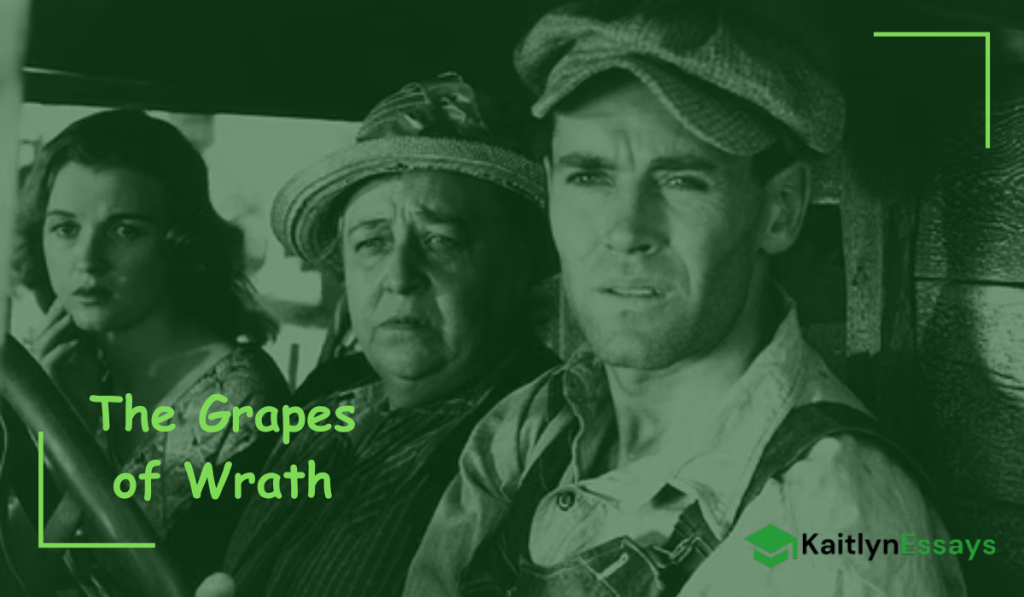
John Steinbeck’s The Grapes of Wrath is a powerful portrayal of the human spirit during one of America’s most challenging times, the Great Depression. Published in 1939, the novel follows the Joad family as they journey from the drought-stricken lands of Oklahoma to the promised opportunities of California. Through their story, Steinbeck sheds light on the struggles of displaced families, the harsh realities of poverty, and the resilience needed to face adversity.
The novel explores themes like social justice, inequality, and the strength of community, offering readers an unflinching look at the hardships faced by migrant workers. By weaving together the personal and collective experiences of his characters, Steinbeck creates a work that is as moving as it is thought-provoking. Decades later, The Grapes of Wrath remains a literary cornerstone, reminding us of the importance of empathy and the enduring fight for fairness in society.
Summary
The Dust Bowl and the Exodus (Chapters 1-7)
The story opens in Oklahoma during the devastating Dust Bowl era, focusing on the Joad family. We are introduced to the harsh realities of their lives: drought, poverty, and the relentless dust storms that ravage their land. The family, along with other tenant farmers, are being forced off their land by banks and large landowning corporations. This section establishes the desperation and suffering of the migrant workers, the loss of their homes, and the economic forces driving them westward.
We meet key members of the Joad family: Ma, Pa, Grandpa, Grandma, Uncle John, and the ex-preacher Jim Casy, who becomes a guiding influence on their journey. The first section highlights the physical hardship and emotional turmoil they face before their departure for California, a land they believe holds promise.
Intrigued to learn more about the environmental and economic factors that forced the Joad family and others off their land? Explore the background of the Dust Bowl and its impact here.
The Journey Westward (Chapters 8-18)
The Joad family, packed into their battered truck, begins their arduous journey on Route 66 towards California, joining a massive migration of “Okies.” The road is a microcosm of the harsh times, as they encounter other displaced families, each with their own stories of suffering and resilience. We witness both kindness and cruelty as the migrants are taken advantage of, scorned, and exploited. Along the way, they lose loved ones – Grandpa and Grandma die from the strain of the journey.
The family’s unity is tested, and new relationships are forged as the Joads and other travelers share stories, resources, and a growing sense of collective identity. This segment emphasizes the growing solidarity among the dispossessed, but also their fragility under constant pressure.
Want to understand the significance of Route 66 as a symbol of hope and hardship? Discover the realities of this iconic road for migrant families during the Great Depression here.
California: Shattered Dreams (Chapters 19-25)
Upon reaching California, the Joads’ hopes of finding work and prosperity are immediately crushed. They discover that the promised land is far from the paradise depicted in handbills. There are too many migrants for the available jobs, and the competition drives down wages. They encounter squalid migrant camps, unsanitary living conditions, police brutality, and the constant threat of starvation. The family experiences further loss and disintegration, and the initial dream of a new start turns into a fight for survival. The Joads move from camp to camp, seeking any scrap of opportunity. This section highlights the systemic exploitation of migrant workers and the broken promises that await them in California.
Interested in the social commentary within the narrative about the realities of migrant labor in California? Uncover the stark realities of the exploitation of the Okies here.
The Struggle for Survival and Solidarity (Chapters 26-30)
Desperation continues to grow as the Joads, after their many heartbreaks, find themselves in a government-run camp where they find some respite. They experience the dignity of self-governance and a sense of community, even if only briefly. However, external forces – anti-migrant violence and the fear of labor organization – threaten their existence. Jim Casy, now a union organizer, is killed for his activities, further fueling the Joads’ sense of injustice and outrage. Tom Joad, now a fugitive, is forced to flee, leaving behind the rest of the family. The family is further splintered as various members succumb to the pressures of the harsh new environment, with more deaths and departures.
Want to learn more about the labor movement and the struggle of migrant workers? Discover the realities of social activism and the resistance to corporate exploitation at the time here.
The Flood and the Enduring Spirit (Epilogue)
The novel culminates with a devastating flood, which forces the Joads to seek refuge once more, this time in a barn. The final scenes are stark and emotionally raw. Ma Joad’s strength and resilience remain a constant throughout the ordeal. In a shocking and controversial scene, Rose of Sharon, having lost her child, offers her breast milk to a starving man, a powerful and symbolic act of compassion and survival. The book concludes not with a definitive ending, but with a message of enduring human spirit and the collective need for empathy and care during times of great adversity. It is a call for compassion and change, emphasizing the continued importance of hope, connection, and resistance against systemic oppression.
Fascinated by the impact of Steinbeck’s ending and its powerful symbolism? Explore the meaning of the concluding scene and the novel’s enduring legacy here.
Characters
Pa Joad:
At the beginning of the novel, Pa Joad is the patriarch of the family, a man tied to the land and determined to provide for his family. He is a hardworking, practical man, but also somewhat set in his ways, used to being the leader. As the family is displaced and faces hardship, Pa struggles with his loss of control and his inability to protect his family from the forces of the Dust Bowl and economic exploitation.
He initially focuses on getting to California, but his authority and confidence are gradually diminished by the overwhelming circumstances and the changing roles within the family. He eventually learns to rely on Ma and struggles with accepting his diminished role, highlighting the challenges to traditional masculinity caused by the depression.
Intrigued by Pa’s struggle with his identity and his changing role in the family? Investigate further the societal pressures that challenge his traditional role as head of household here.
Ma Joad:
Ma Joad is the emotional and practical heart of the family, a strong and resilient woman who holds the family together during their arduous journey. She is a pragmatist, a peacemaker, and a force of unwavering love and determination. She adapts to the changing circumstances, becoming the de facto leader of the family, especially after their arrival in California. Her ability to make difficult decisions, maintain morale, and care for her family demonstrates her immense inner strength and resourcefulness. Ma is a symbol of the enduring human spirit and the strength of women in the face of adversity. She represents stability and compassion in a world of chaos.
Fascinated by Ma’s unwavering strength and her role as the family’s anchor? Explore her character and the ways she embodies resilience and compassion here.
Tom Joad:
Tom Joad is the son of Pa and Ma, and a complex character whose journey is central to the novel. Initially, he is a cynical and somewhat hardened man, recently released from prison. He is driven by his need to protect his family and is quick to anger. However, under the influence of Jim Casy and his experiences with injustice, Tom undergoes a profound transformation. He develops a strong sense of social responsibility and a desire to fight for the rights of the oppressed.
His evolving commitment to justice and his willingness to become a fugitive highlight the power of social consciousness and the necessity of resistance. He becomes a revolutionary figure, driven by a need for equality and justice.
Curious about Tom’s evolution from a cynic to a revolutionary figure? Examine the forces that shape his transformation and his commitment to social justice here.
Jim Casy:
Jim Casy is an ex-preacher who has abandoned traditional religion in search of a deeper truth. He is a spiritual guide for the Joad family and a voice of compassion and empathy. Casy develops a philosophy of interconnectedness, emphasizing the value of all humanity and the importance of collective responsibility. He becomes a champion of the migrant workers, advocating for their rights and organizing labor efforts. Casy’s teachings and his willingness to sacrifice himself for the cause of justice have a profound impact on Tom Joad and shape the novel’s thematic concerns. He serves as a symbol of moral courage and the power of social consciousness.
Interested in learning more about Casy’s philosophy and its influence on the characters? Explore his beliefs and his role as the moral compass of the story here.
Rose of Sharon (Rosasharn):
Rose of Sharon is the pregnant daughter of the Joad family, initially focused on her own romantic dreams and desires. She is young, somewhat naive, and preoccupied with her own happiness. Throughout the journey, she undergoes a significant transformation, experiencing both profound joy and immense sorrow. Her tragic loss of her baby and her subsequent act of compassion at the end of the novel signify her growth and empathy. She embodies the human ability to endure and to find compassion even in the most desperate circumstances. She goes through a journey from a somewhat self-centered character to one defined by her compassion and her capacity for sacrifice.
Want to know more about Rose of Sharon’s journey and her evolving role in the family? Explore how her character changes and what her choices symbolize here.
Uncle John:
Uncle John is a man burdened by guilt over the death of his wife. He struggles with self-destructive behavior and often falls into despair. He is haunted by his past and finds it difficult to cope with the hardships the Joads face on their journey. His character underscores the psychological toll of loss and the challenges of processing trauma. Uncle John serves as a reminder that not all individuals have the same capacity to cope with suffering. He represents the dark underbelly of trauma and the burden of the past.
Intrigued by the psychological effects of loss and trauma on Uncle John? Analyze his character and how he embodies the struggles of those unable to cope with the harsh conditions here.
Grandpa and Grandma Joad:
Grandpa and Grandma Joad represent the older generation’s deep connection to the land and the past. Their deaths on the journey highlight the loss of tradition and the devastation caused by the forced migration. Grandpa’s spirited nature contrasts with Grandma’s more quiet and stoic manner but both show a strong tie to their Oklahoma home. They serve as symbols of the family’s roots and the painful severance from them. Their passing underscores the generational loss and the impact of displacement on the family.
Eager to learn more about the significance of Grandpa and Grandma to the family? Explore the symbolism of their characters and the importance of their connection to the land here.
Al Joad:
Al Joad is the younger brother, initially focused on his cars and his youthful enthusiasm. However, he matures significantly over the course of the journey. He displays loyalty to his family and takes on responsibilities, demonstrating his own resilience and capacity for growth. Al represents the younger generation adapting to the hardship of the depression and also finds love as the story progresses. He shows a capacity for learning and adapting to circumstances.
Interested in Al’s growth throughout the story? Analyze the ways his character matures and his role in the family here.
Themes in The Grapes of Wrath
The Destructive Nature of Capitalism and Economic Injustice:
At the forefront of the novel is the devastating impact of unchecked capitalism and economic inequality. The story vividly depicts how powerful landowners and corporations exploit the migrant workers, reducing them to mere commodities. The banks and large agricultural companies ruthlessly displace tenant farmers from their land, driven solely by profit, and leaving countless families impoverished and desperate. The novel exposes the dehumanizing effects of a system that prioritizes profit over human dignity and basic needs. This theme underscores the systemic nature of the migrant workers’ plight, demonstrating the ways in which economic forces drive inequality and hardship.
Intrigued to learn more about how the novel critiques capitalism and its effects on society? Investigate the economic systems at play and their impact on the characters here.
The Importance of Family and Community:
Despite the hardships faced, the bonds of family and community remain a crucial source of strength and resilience throughout the novel. The Joad family’s journey is a testament to the power of familial love and loyalty. As they face loss and adversity, their shared experiences solidify their connection, and they often look to one another for support. Beyond the family unit, the novel emphasizes the importance of community among the migrant workers, who share their resources and create bonds of solidarity, recognizing their common plight. This theme highlights the human need for connection and shared experience in overcoming adversity.
Want to learn more about the significance of family and community as sources of resilience? Explore the different relationships within the novel and how they provide support amid hardship here.
The Dehumanization of the Dispossessed:
The Grapes of Wrath exposes the ways in which the migrant workers are stripped of their dignity and treated as less than human. They are often referred to as “Okies,” a derogatory term that reduces them to stereotypes and justifies their exploitation. They face constant discrimination, police brutality, and are denied basic human rights. This theme underscores the devastating consequences of prejudice and social injustice, showing how dehumanization makes it easier to exploit and oppress others. The story makes the reader feel the degradation and dehumanization experienced by those who were displaced.
Interested in exploring how the novel depicts the dehumanization of the migrants? Analyze the ways they are treated by society and the impact of these experiences here.
The Enduring Human Spirit and the Power of Resilience:
Despite facing immense suffering and loss, the characters in The Grapes of Wrath demonstrate a remarkable capacity for resilience and hope. Ma Joad, in particular, embodies the enduring human spirit, providing unwavering strength and determination in the face of adversity. The characters find ways to survive, to adapt, and to maintain their dignity even in the most difficult circumstances. This theme emphasizes the human ability to endure, to find hope, and to continue fighting for a better future even when faced with seemingly insurmountable challenges. The resilience of the migrant workers becomes a source of inspiration.
Want to investigate the ways in which the characters exhibit strength and resilience? Explore the individual stories and their capacity to persevere amid hardship here.
The Search for Dignity and Justice:
The migrant workers’ journey is not just a struggle for survival but also a search for dignity and justice. They refuse to accept their dehumanization and actively seek to assert their rights and organize against their oppressors. Characters like Jim Casy and Tom Joad become symbols of social consciousness, inspiring others to resist injustice and demand equality. This theme highlights the importance of fighting for a better world and the collective power of the oppressed to challenge systems of exploitation. The novel becomes a call for social reform and change.
Curious about how the novel portrays the search for justice and equality? Examine the ways characters act as a catalyst for social change and resistance here.
The Importance of Collective Action:
The Grapes of Wrath emphasizes the necessity of collective action in the face of systemic oppression. The migrant workers find strength in unity, sharing their resources, stories, and a sense of solidarity. The novel suggests that individual action alone is not sufficient to combat the forces of injustice and that only through collective organization can meaningful change be achieved. This theme underscores the power of unity and the importance of community in challenging oppressive systems. The growing solidarity among the dispossessed becomes a powerful tool for change.
Interested in exploring the power of collective action within the novel? Investigate the themes of unity and organization among the migrants here.
The Cycle of Life and the Promise of Renewal:
Despite the immense suffering and loss throughout the story, the novel also includes a sense of cyclical renewal and the promise of hope. The final image of Rose of Sharon offering her breast milk to a starving man, though a controversial and shocking scene, symbolizes the continuation of life and the human capacity for compassion and sacrifice. Even in the darkest moments, there is a suggestion that life will go on and that future generations will carry the hope of a better world. This theme emphasizes that even in the face of devastating loss, there is always the potential for rebirth and renewal. The novel does not end with a complete victory, but it leaves readers with hope.
Eager to learn more about the themes of cyclical renewal and the possibilities for the future? Discover how the novel suggests the potential for life to move forward and for change to occur here.
Symbols in The Grapes of Wrath
The Dust Bowl:
The Dust Bowl, a devastating ecological disaster, serves as a potent symbol of both natural and man-made devastation. It represents the harsh realities of the Great Depression and the destructive consequences of poor land management and economic exploitation. The dust storms themselves symbolize the relentless forces that displace and oppress the migrant workers, stripping them of their homes, their livelihoods, and their sense of security. The Dust Bowl is a visual representation of the breakdown of the natural order and the devastating impact of greed and shortsightedness. It becomes a symbol of the larger societal and economic problems of the era.
Intrigued to learn more about the symbolism of the Dust Bowl and its impact on the characters? Investigate the historical context and its metaphorical significance here.
The Road (Route 66):
Route 66, the highway the Joads and other migrant families travel, is a complex symbol representing both hope and hardship. It is the path to California, the “promised land,” but it is also a brutal and unforgiving road filled with challenges, loss, and disappointment. The road symbolizes the migrant’s journey of desperation, filled with the false hope of a better life that turns into a nightmare. It represents the collective experience of the dispossessed, the shared suffering, and also the bonds they form as they travel together. The road becomes a metaphor for the long and difficult path toward a better life, and it also serves to illustrate the exploitation and hardships that the migrants endured.
Want to explore the symbolism of Route 66 as a path of both hope and despair? Learn more about its role as a microcosm of the migrant experience here.
The Joad’s Truck:
The Joad’s battered truck is more than just a means of transportation; it is a symbol of the family’s precarious existence and their struggle to survive. The truck holds all of their worldly possessions and represents their hopes for a new life in California. It is also a fragile symbol of their resilience, as they constantly repair and maintain it despite its wear and tear. The truck becomes an emblem of their mobility, or lack thereof, representing both their freedom and their limitations. It signifies the material and emotional baggage that the family carries along their challenging journey.
Interested in the symbolism of the Joads’ truck? Analyze the ways it represents the family’s struggles and their determination to persevere here.
The Land:
The land, or lack thereof, serves as a central symbol in the novel. The loss of their land in Oklahoma represents the displacement and dispossession of the tenant farmers. The fertile land in California that they had hoped for also represents the broken promises of the capitalist system. For the migrant workers, the land is a symbol of security, stability, and a sense of belonging. The loss of land is equated to the loss of their dignity and the security of their past. The novel explores the inherent and important connection between people and the land that they inhabit.
Want to learn more about the significance of land as a symbol of belonging and security? Explore the loss of land and its impact on the characters here.
The Grapes:
The grapes themselves, mentioned throughout the novel but especially in the title, are a multi-layered symbol. They represent the abundance and fertility of the land, the hope of a plentiful harvest, and the promise of a better life. However, they also symbolize the exploitation of the migrant workers. The landowners and corporations profit from the grapes at the expense of the very people who cultivate them. The “grapes of wrath” become a symbol of the rage and discontent simmering beneath the surface of the migrant community, as they are denied the fruits of their labor. The symbol becomes a call for social justice.
Curious about the symbolism of grapes and the title of the novel? Explore their connection to themes of abundance, exploitation, and social unrest here.
The Turtle:
The turtle, encountered in the early chapters of the novel, is a small but significant symbol of perseverance and resilience. It represents the migrant workers’ slow and arduous journey westward, and their determination to overcome obstacles despite the hardships they face. The turtle’s tenacious climb over barriers, despite the threat of being crushed, mirrors the migrant workers’ struggles and their refusal to give up hope. The turtle also shows how nature and society can both cause pain to those who try to move forward.
Interested in exploring the symbolism of the turtle and its connection to the migrants’ journey? Analyze its representation of resilience and determination here.
Water:
Water, or the lack thereof, is a recurring symbol throughout the novel. The drought that causes the Dust Bowl represents the harshness of nature and the destruction it brings upon the land. The lack of water in California symbolizes the failure of the promised land. The final scenes, with the rain and flood, symbolize both the destructive power of nature and a potential for renewal and cleansing. Water also becomes associated with life and is contrasted with its lack, which often means death. It highlights the importance of natural resources and the dangers of environmental devastation.
Want to learn more about the symbolism of water and its connection to life, destruction, and renewal? Explore its role in the novel and the significance of both its presence and its absence here.
The Sharecropper’s Tools:
The sharecropper’s tools, which the Joads are forced to abandon, are a symbol of a lost way of life and a forced severance from the land. The tools represent their livelihood, their heritage, and their connection to their past. Leaving them behind signifies the loss of their economic independence and the traditional way of life they had known in Oklahoma. They become a symbol of the dispossession of the migrants, highlighting the economic hardship and cultural upheaval caused by the Dust Bowl and the exploitive economic system.
Intrigued by the symbolism of the abandoned tools and their representation of lost heritage? Investigate their connection to themes of dispossession and cultural loss here.
Literary Devices used in The Grapes of Wrath
Imagery:
John Steinbeck masterfully employs vivid imagery throughout The Grapes of Wrath to create a powerful and immersive reading experience. He uses sensory details—sight, sound, smell, taste, and touch—to paint a stark and realistic picture of the Dust Bowl, the migrant camps, and the arduous journey of the Joad family. The descriptions of the dust storms, the parched land, the crowded conditions of the migrant camps, and the hardships of the road are all richly detailed, allowing the reader to feel the physical and emotional toll of their experience. This powerful imagery serves to evoke empathy and to create a lasting impact, ensuring the reader feels the harsh reality of the characters’ lives.
Intrigued by how Steinbeck uses imagery to create a realistic and powerful experience? Investigate how sensory details contribute to the novel’s emotional impact here.
Symbolism:
As discussed in the previous section, symbolism is a cornerstone of The Grapes of Wrath. Steinbeck uses concrete objects and ideas—such as the Dust Bowl, the road, the truck, the land, grapes, the turtle, water, and the sharecropper’s tools—to represent larger abstract concepts. These symbols add layers of meaning to the narrative, making the story more than just a tale of a family’s struggles; they also point to broader societal problems. Symbolism allows Steinbeck to explore the themes of economic inequality, social injustice, resilience, and the enduring human spirit in a more detailed and resonant way. The use of these carefully chosen symbols elevates the story beyond the literal.
Want to explore how Steinbeck utilizes symbols to deepen the thematic elements of the novel? Learn more about the various symbols and their significance in the narrative here.
Foreshadowing:
Steinbeck uses foreshadowing to create a sense of unease and anticipation throughout the novel. He hints at future events, suggesting that the Joads’ journey will not be easy and that the hope of California will be tainted by hardship. The early descriptions of the Dust Bowl, the warnings about California, and the premonitions of loss and suffering all foreshadow the difficulties the family will encounter. This device creates a sense of impending doom, building suspense and intensifying the emotional impact of the events as they unfold. Foreshadowing heightens the tension and makes the narrative more engaging.
Interested in how foreshadowing builds suspense and anticipates future events? Analyze specific examples and their effect on the reading experience here.
Personification:
Steinbeck frequently uses personification, giving human qualities to non-human entities, to emphasize the forces working against the migrant workers. He personifies the land as being hostile, the machines as being predatory, and the economic system as being cruel and heartless. This technique enhances the sense of the migrants’ helplessness against forces beyond their control. By giving human qualities to nature and to the capitalist system, Steinbeck makes them seem more like deliberate enemies, further intensifying the sense of struggle against overwhelming odds. Personification serves to make abstract forces seem more tangible and powerful.
Want to explore the use of personification and its contribution to the novel’s themes? Learn more about the specific examples and analyze their impact here.
Juxtaposition:
Steinbeck often employs juxtaposition to highlight the stark contrasts within the novel. He juxtaposes the beauty of the natural world with the ugliness of human exploitation, the wealth of the landowners with the poverty of the migrant workers, and the hope for a better future with the brutal realities of their present. This technique serves to intensify the emotional impact of the narrative and to underscore the stark injustices of the time period. The use of juxtaposition highlights the inequities of society and heightens the readers’ sense of outrage.
Curious about how juxtaposition is used to emphasize the contradictions and inequalities of the era? Explore specific examples of this device and their effect on the novel here.
Biblical Allusions:
The Grapes of Wrath is filled with biblical allusions, drawing parallels between the Joad family’s journey and the stories of the Old Testament. The Joads’ exodus from Oklahoma can be seen as an allusion to the Israelites’ flight from Egypt, and Jim Casy’s transformation from a preacher to a champion of the dispossessed mirrors the figures of prophets. The novel also features biblical language, imagery, and themes of suffering, redemption, and the search for a promised land. The use of biblical allusions adds a layer of spiritual depth to the narrative, elevating the migrant’s struggle to an almost epic scale and giving it a moral significance.
Interested in the use of biblical allusions and their connection to the larger themes of the novel? Analyze the examples and how they deepen the narrative’s resonance here.
Dialect and Vernacular:
Steinbeck uses the distinct dialect and vernacular of the Oklahoma migrants to create a sense of authenticity and to highlight the characters’ cultural identity. The use of their unique speech patterns, idioms, and slang makes the characters feel real and relatable. The colloquial language adds to the novel’s sense of realism and underscores the plight of the working class. This technique allows the reader to connect more deeply with the characters and appreciate their humanity.
Want to learn more about the use of dialect and vernacular in the novel? Analyze how it enhances character development and realism here.
Significant Quotes from The Grapes of Wrath
“I’ll be there.” – Tom Joad
This simple quote, repeated throughout the novel, represents Tom’s evolving sense of responsibility and his commitment to the cause of justice. Initially, it expresses a more personal and familial connection as he promises to be there for his family. However, as Tom becomes more politically aware, the quote takes on a broader meaning, symbolizing his pledge to stand with the oppressed and fight for social change. His transformation makes it more and more about fighting for those who need his help and his promise to do what is right, even when it is dangerous. It becomes an iconic quote representative of his radicalized commitment.
Intrigued by the significance of Tom’s pledge? Explore how the meaning of this recurring line evolves through the narrative here.
“Maybe all men got one big soul ever’body’s a part of.” – Jim Casy
This quote encapsulates Jim Casy’s philosophy of interconnectedness and his belief in a shared humanity. He articulates his idea of an “oversoul,” emphasizing the importance of collective responsibility and empathy for all people. Casy rejects traditional religious dogma and embraces a more humanistic view of spirituality, believing that true salvation lies in treating others with kindness and compassion. This quote captures his personal belief that all human beings are connected and part of a larger whole. It also becomes a central tenet of the novel.
Want to explore the importance of Casy’s philosophy and its influence on the novel’s themes? Discover how this idea becomes integral to the story here.
“Them goddamn Okies got no sense and no feelings. They ain’t human. A human being wouldn’t live like they do. A human being couldn’t stand it.” – Gas Station Attendant
This quote, spoken by a gas station attendant, illustrates the dehumanization and prejudice faced by the migrant workers. It reveals the callous attitudes of many Californians toward the “Okies,” who were often viewed as less than human and treated with contempt and disdain. The quote shows the dangerous effects of prejudice and how easily people can turn away from the suffering of others. It highlights the way that dehumanization can justify acts of cruelty and exploitation. It also showcases the cruel stereotypes that were widely held at the time.
Interested in how the novel portrays the dehumanization of the migrant workers? Analyze the effects of prejudice and the dangers of othering here.
“Use’ ta be the fambly was fust. It ain’t so now. It’s anybody. Worse off we get, the more we got to do.” – Ma Joad
This quote reflects Ma Joad’s evolving sense of responsibility and her growing awareness of the need for collective action. She recognizes that the traditional family unit is not enough to survive and thrive in such a difficult world. Her statement marks a pivotal shift, showcasing that she has come to believe that the family unit must be extended to include all those who are suffering alongside them. Her compassion expands to encompass all those who are displaced and in need of help, signaling the novel’s emphasis on the importance of community and solidarity.
Want to explore how Ma Joad’s understanding of family evolves? Examine her transformation and the novel’s message about social responsibility here.
“I ain’t gonna cry. I’m a-gonna do something about it.” – Ma Joad
This quote showcases Ma Joad’s pragmatic approach and her unwavering determination in the face of adversity. Instead of succumbing to despair, she chooses to take action and find solutions. This quote embodies her resilience, her ability to cope with tragedy, and her commitment to her family. She represents the strength and resourcefulness that is needed to survive and to make meaningful change in a difficult world. This shows Ma’s deep understanding of what it will take to survive and her decision to do whatever is necessary.
Curious about Ma Joad’s strength and her role as the family’s anchor? Explore her character and her embodiment of resilience here.
“How can we live without our lives? How will we know it’s us without our past?” – Pa Joad
This quote highlights the emotional toll of displacement and the loss of connection to the land and their past. Pa Joad grapples with the painful loss of their homes, and his identity, which were so intertwined with their history and family legacy. It underscores the importance of memory, heritage, and the deep connection between people and their place of origin. This question reflects the deeper struggle of the migrants and the psychological toll of being uprooted from everything they have ever known.
Want to learn more about the significance of connection to the land and the emotional impact of displacement? Explore how this quote underscores the themes of identity and loss here.
“If a fella’s got somepin to eat, why he ain’t got no right to eat it by hisself.” – Jim Casy
This quote is a simple articulation of Casy’s belief in sharing and compassion, embodying his commitment to the collective good. It reflects his rejection of self-centeredness and his commitment to seeing the world through a lens of empathy for the needs of others. It captures the essence of his philosophy and his belief that human beings should act as caretakers for one another. It also showcases his focus on communal and shared living.
Interested in Casy’s philosophy and its importance to the migrant community? Analyze his beliefs about sharing and community here.
The Grapes Of Wrath Essay Examples
The American Dream in Steinbeck’s The Grapes of Wrath
John Steinbeck’s The Grapes of Wrath, a powerful and poignant novel set against the backdrop of the Dust Bowl and the Great Depression, serves not only as a stark depiction of economic hardship but also as a profound commentary on the elusive nature of the American Dream. Through the harrowing journey of the Joad family, Steinbeck dismantles the myth of upward mobility and self-reliance, revealing the dream to be a fragile and often unattainable construct for the marginalized and downtrodden. The novel explores how this idealized vision of prosperity, deeply rooted in the American psyche, is ultimately corrupted by systemic inequality and the brutal realities of economic exploitation, leaving its characters grappling with a profound sense of disillusionment and despair.
Initially, the Joads, like many other families displaced by the Dust Bowl, cling to the promise of California as a land of opportunity. This is the driving force behind their perilous trek, fueled by the belief in a better future, where hard work and honest labor will be rewarded with fertile land, abundant harvests, and a life free from want. The “handbills” advertising plentiful jobs in the West serve as tangible representations of this dream, igniting a spark of hope within the desperate community. This yearning for a slice of the American pie, a basic expectation of dignity and survival, underscores the fundamental appeal of the dream: the belief that anyone, regardless of their origins, can achieve success through their own merits.
However, as the Joads’ journey progresses, the idyllic vision of California quickly unravels. Instead of a promised land flowing with milk and honey, they encounter prejudice, exploitation, and abject poverty. The migrant camps, filled with desperate families just like their own, expose the systemic failures that prevent these individuals from achieving even a basic level of sustenance. The “Okies” are treated as expendable commodities, their labor bought for pennies, their dignity stripped away by predatory landowners and corrupt officials. The dream of economic mobility is systematically crushed under the weight of a capitalist system that prioritizes profit over people. The characters’ persistent struggles with hunger, homelessness, and the indignity of being labeled “Okies” highlight the stark contrast between the promise of the American Dream and the lived experience of those deemed undesirable.
The breakdown of the family unit further underscores the fragility of the dream. As the Joads are forced to confront constant hardship, their bonds of kinship and tradition are strained. Ma Joad, the unwavering pillar of the family, grapples with the challenge of maintaining hope and unity amidst the growing despair. While she embodies a powerful sense of resilience, even her strength is tested by the relentless adversity they face. The loss of Grandpa, Grandma, and Noah represents not only personal tragedies but also the crumbling foundations of the familial structure that was supposed to provide support and stability. These losses reflect the broader disintegration of the American dream, which relies on community and a shared sense of belonging.
Moreover, the novel also examines the corrupting influence of power and greed. Landowners like the ones who own the “peach pickin” farms are portrayed as heartless and indifferent to the suffering of the migrants, prioritizing their own financial gain over the well-being of the workers. This depiction reveals how the pursuit of the American Dream can be twisted into a relentless pursuit of wealth, often at the expense of others. The characters’ exploitation by these powerful figures highlights the inherent inequalities that underpin the capitalist system, demonstrating that the dream is not equally accessible to everyone and is often built on the backs of the marginalized.
Ultimately, Steinbeck does not offer a simple rejection of the American Dream but rather a profound critique of its distorted reality. The Joads’ struggle is not just about economic hardship, but also about the loss of dignity and the erosion of fundamental human rights. The novel suggests that the true essence of the American Dream lies not in individual accumulation of wealth, but in the collective pursuit of justice, equality, and human connection. This idea is embodied by the communal spirit found in some of the migrant camps, where families share what little they have and offer each other support. The novel culminates not in a triumphant victory, but in a stark recognition of the systemic injustices that prevent many from achieving their dreams. The “we are the people” mantra at the end suggests a potential for change and solidarity.
In conclusion, The Grapes of Wrath serves as a powerful indictment of the broken promises embedded within the American Dream. Steinbeck’s masterful storytelling reveals how this idealized vision can be warped by systemic inequality and individual greed, leaving countless individuals disenfranchised and desperate. Through the heartbreaking journey of the Joad family, the novel compels us to reconsider what constitutes a true “American Dream,” emphasizing the importance of collective action, empathy, and the fight for justice as essential components of a more equitable and humane society. The crumbling promise of the dream in Steinbeck’s novel becomes a call to action, a reminder that true progress requires a dismantling of unjust systems and a commitment to ensuring that all individuals have the opportunity to live a life of dignity and fulfillment.thumb_upthumb_down
Socioeconomic Struggles in Steinbeck’s The Grapes of Wrath
John Steinbeck’s The Grapes of Wrath is a stark and unflinching portrayal of socioeconomic struggles during the Great Depression, a period of profound hardship and injustice that dramatically impacted the lives of millions of Americans. Through the agonizing journey of the Joad family and their fellow “Okies,” Steinbeck lays bare the complex interplay of economic forces, social inequalities, and political negligence that conspired to create a landscape of widespread poverty and despair. The novel serves not only as a historical record of this tumultuous era but also as a powerful commentary on the systemic failures that perpetuate the cycle of poverty and exploitation.
The novel’s foundation is built upon the economic catastrophe of the Dust Bowl. The devastating combination of drought, soil erosion, and unsustainable agricultural practices forced thousands of farmers off their land, rendering them destitute and desperate. This ecological disaster is presented not as an isolated event but as a consequence of unchecked industrialization and the exploitative relationship between landowners and tenant farmers. The displacement of families like the Joads is a direct result of a system that prioritizes profit over the well-being of the working class, demonstrating the inherent vulnerability of those who rely on the land for their livelihoods. Steinbeck skillfully illustrates how economic forces, seemingly impersonal, can have devastating human consequences, stripping individuals of their homes, their dignity, and their sense of security.
Beyond the immediate impact of the Dust Bowl, The Grapes of Wrath highlights the brutal realities of socioeconomic disparity in California. The promise of plentiful work in the West turns out to be a cruel mirage, as the Joads and other migrants find themselves competing for scarce jobs in an already saturated labor market. The novel meticulously depicts the exploitative practices of large landowners who capitalize on the migrants’ desperation, paying them meager wages and subjecting them to inhumane working conditions. The migrant camps become symbols of abject poverty, where families struggle to survive with inadequate food, shelter, and sanitation. Steinbeck’s detailed descriptions of these camps – the squalor, the disease, and the sheer hopelessness – paint a grim picture of the socioeconomic realities faced by the displaced population.
The novel also exposes the insidious nature of social stratification and the dehumanizing effects of labeling. The term “Okie,” initially a geographic designation, quickly becomes a derogatory slur, used to marginalize and discriminate against the migrant workers. This labeling serves to reinforce existing social hierarchies and allows those in positions of power to justify their exploitation of the vulnerable. The characters are frequently subjected to prejudice and hostility, denied basic rights and treated as subhuman. This systematic dehumanization reinforces the systemic nature of poverty, highlighting how societal biases contribute to the perpetuation of socioeconomic inequality. The experiences of the Joads and their fellow migrants underscore the profound impact of social stigmas on individual lives and collective well-being.
Moreover, The Grapes of Wrath critiques the political apathy and negligence that exacerbated the economic crisis. The novel portrays the indifference of government officials and law enforcement to the plight of the migrant workers, demonstrating how institutions designed to protect the vulnerable often fail to do so. The powerlessness of the migrants in the face of systemic injustice is a recurring theme, highlighting the need for collective action and political reform. Steinbeck implicitly challenges the reader to question the structures of power and to recognize the responsibility of society to address the needs of its most vulnerable members. The absence of effective political solutions further underscores the complex and deeply entrenched nature of the socioeconomic struggles depicted in the novel.
The characters in The Grapes of Wrath grapple not only with physical hardship but also with the psychological toll of poverty and social injustice. The loss of land, the constant struggle for survival, and the dehumanizing treatment they endure inflict profound emotional wounds. The novel explores the themes of desperation, despair, and the erosion of hope as the characters attempt to maintain their dignity and resilience in the face of overwhelming odds. The breakdown of familial bonds and the growing sense of hopelessness reveal the devastating impact of prolonged socioeconomic hardship on the individual psyche. Steinbeck masterfully portrays the human cost of poverty, emphasizing that its effects extend far beyond material deprivation.
In conclusion, The Grapes of Wrath serves as a powerful and enduring testament to the devastating consequences of socioeconomic inequality. Through the compelling narrative of the Joad family, Steinbeck exposes the systemic failures that contribute to poverty and exploitation, revealing the complex interplay of economic forces, social stratification, and political negligence. The novel’s unflinching depiction of the migrant workers’ struggles offers a sobering reminder of the human cost of unchecked capitalism and the imperative need for social justice and economic equality. By illuminating the crushing weight of socioeconomic hardship, Steinbeck’s masterpiece not only captures a specific moment in history but also speaks to the enduring challenges of poverty and inequality that continue to plague our society. The enduring relevance of The Grapes of Wrath lies in its ability to inspire empathy, promote social awareness, and demand a more just and equitable world.
The Grapes of Wrath in Historical Perspective
John Steinbeck’s The Grapes of Wrath is not merely a work of fiction; it is a powerful and poignant historical document, deeply rooted in the realities of the Great Depression and the Dust Bowl era. To understand the novel’s enduring significance, it’s crucial to place it within its historical context, examining the social, economic, and political forces that shaped its narrative and continue to resonate with readers today. The Grapes of Wrath serves as both a chronicle of a national crisis and a call for profound social and economic change.
The most immediate historical backdrop of the novel is the Great Depression, a period of unprecedented economic collapse that ravaged the United States throughout the 1930s. The stock market crash of 1929 triggered a cascade of failures, leading to widespread unemployment, bank closures, and a dramatic decline in agricultural prices. This economic devastation disproportionately affected the rural poor, particularly tenant farmers in the Great Plains region. The novel accurately depicts the desperate conditions of the era, including the mass unemployment, the lack of social safety nets, and the intense competition for meager resources. Steinbeck’s portrayal of the Hoovervilles, the makeshift shantytowns where the homeless sought shelter, offers a stark reminder of the human cost of economic collapse.
Beyond the general economic crisis, The Grapes of Wrath is deeply intertwined with the ecological catastrophe of the Dust Bowl. Years of unsustainable farming practices, coupled with a severe drought, transformed the fertile plains into a desolate wasteland. This environmental disaster forced thousands of families, like the Joads, to abandon their land and seek a better life elsewhere. The dust storms, depicted with visceral intensity in the novel, serve as a powerful symbol of the environmental destruction caused by human negligence and the devastating consequences of unchecked industrialization. The Dust Bowl is not simply a background detail but a central force that shapes the narrative and underscores the fragility of the relationship between humanity and nature.
The novel also reflects the social and political realities of the era. The plight of the migrant workers, often referred to as “Okies,” exposes the deep-seated prejudices and social inequalities that plagued American society. The derogatory use of the term “Okie” highlights the dehumanization and marginalization of the displaced population, who were often denied basic rights and treated as disposable commodities. Steinbeck accurately portrays the discriminatory practices of the landowners and law enforcement officials in California, who exploited the migrants’ desperation for personal gain. The novel thus critiques not only economic systems but also the societal prejudices that allow such injustices to persist.
The Grapes of Wrath also grapples with the political climate of the 1930s. The novel’s portrayal of the government’s inadequate response to the crisis, particularly the lack of support for the dispossessed farmers, subtly criticizes the policies of the Hoover administration. While the novel doesn’t explicitly endorse any particular political ideology, it suggests that capitalism’s unchecked pursuit of profit often leads to exploitation and suffering. The migrant workers’ growing awareness of their collective power, their attempts to organize and fight for better conditions, also reflects the rise of labor movements and social activism during this period. The novel implicitly calls for government intervention and social reforms to address the systemic inequalities that fuel the crisis.
Furthermore, the novel’s narrative structure and thematic concerns are deeply informed by the literary traditions of the 1930s. Steinbeck’s use of naturalism, with its emphasis on the influence of social and environmental forces on individual lives, is characteristic of the writing of the era. The novel’s focus on the struggles of the working class and its exploration of the themes of community, solidarity, and the fight for justice align with the proletarian literature movement that emerged during the Depression. By blending realistic depictions of hardship with a powerful sense of social consciousness, Steinbeck’s work both reflects and shapes the literary landscape of its time.
The publication of The Grapes of Wrath in 1939 was met with both acclaim and controversy. While many lauded its powerful portrayal of the plight of the migrant workers, others attacked it for its perceived leftist leanings and its unflattering depiction of American capitalism. The novel was banned in some communities and faced criticism from powerful business interests who sought to downplay the severity of the socioeconomic crisis. The controversy surrounding the novel underscores its enduring relevance as a critique of injustice and a call for social change.
In retrospect, The Grapes of Wrath remains a vital piece of American literature because of its historical accuracy and its ability to evoke empathy for the marginalized. The novel serves as a reminder of the fragility of economic systems and the human cost of social inequality. It compels us to confront uncomfortable truths about our past and to consider the challenges that continue to confront our society. By placing the novel in its historical perspective, we gain a deeper understanding of its artistic achievement and its enduring significance as a work of literature that transcends its specific time period. The Grapes of Wrath is more than just a story; it is a historical document, a social commentary, and a call for a more just and equitable world. Its relevance remains potent because its lessons about the dangers of economic inequality and environmental degradation continue to resonate in the 21st century
Tom Joad: A Symbol of Resilience and Moral Evolution in The Grapes of Wrath
Tom Joad, the protagonist of John Steinbeck’s The Grapes of Wrath, is far more than just a character caught in the maelstrom of the Great Depression; he is a potent symbol of resilience, moral evolution, and the enduring human spirit in the face of relentless adversity. From his initial, somewhat hardened demeanor as a recently paroled convict to his eventual transformation into a selfless advocate for social justice, Tom’s journey embodies the central themes of the novel and offers a compelling portrait of personal growth amidst societal collapse. His character arc serves as a microcosm of the broader struggles faced by the migrant workers and underscores the power of human agency to overcome even the most daunting circumstances.
Initially, Tom is presented as a man shaped by his past, marked by a period of imprisonment for homicide. His time in jail has instilled in him a pragmatic, almost cynical worldview, evident in his initial desire to remain detached and focused on his own survival. He is a man who operates within a defined set of rules, albeit a code forged by the harsh realities of his environment. However, this self-imposed detachment begins to crumble as he witnesses the suffering of his family and fellow migrants. The forced displacement from their land, the exploitative working conditions, and the constant struggle for basic sustenance chip away at his hardened exterior, revealing a growing sense of empathy and a nascent moral consciousness.
Tom’s resilience is evident in his physical strength and his unwavering loyalty to his family. He is a man of action, willing to take risks and confront challenges head-on. He is the one who repairs the broken-down truck, who seeks out work, and who consistently puts his own needs aside for the well-being of his family. His determination to survive against seemingly insurmountable odds embodies the indomitable spirit of the migrant workers. This physical resilience, however, is not merely a brute force; it’s a manifestation of his deep-seated desire to protect and provide for his loved ones.
Crucially, Tom’s journey is not just about physical survival; it’s about a profound moral evolution spurred by his interaction with Jim Casy, the former preacher. Casy’s spiritual awakening, his belief in the holiness of all humanity, begins to profoundly influence Tom’s perspective. While initially skeptical of Casy’s philosophical leanings, Tom gradually begins to absorb the preacher’s message of empathy, compassion, and collective responsibility. Casy’s sacrifice at the hands of vigilantes, a profound injustice witnessed by Tom, solidifies his transformation and sets him on a path toward a higher purpose.
The shift in Tom’s character is exemplified by his increasing engagement with the migrant community. He transitions from being a solitary figure concerned primarily with his own family to becoming an active participant in the broader struggle for social justice. His encounters with other displaced families, his experiences in the migrant camps, and his exposure to the systemic exploitation of the workers fuel his growing awareness of the injustices prevalent in the system. He learns that individual action, however heroic, is not enough to effect change; collective solidarity is essential.
Tom’s decision to leave his family and take up Casy’s mantle reflects the depth of his moral transformation. He moves beyond the simple need for survival and embraces a higher calling, choosing to fight for the dignity and rights of all the oppressed. His iconic declaration, “Wherever there’s a cop beatin’ up a guy, I’ll be there…I’ll be in the way kids laugh when they’re hungry and they know supper’s ready. And when our folks eat the stuff they raise, and live in the houses they build—why, I’ll be there,” underscores his unwavering commitment to social justice. This powerful speech transforms Tom from a specific individual with a particular past into a symbol of collective action and resistance.
The evolution of Tom Joad is not portrayed as a linear progression; it’s a complex and often painful journey marked by moments of doubt, frustration, and anger. His moral awakening is not a sudden transformation but a gradual process of learning, reflection, and action. His story is one of growth through suffering, of finding purpose and meaning in the face of overwhelming despair. Tom’s journey suggests that individuals are not static entities defined by their past, but rather that they have the capacity to change and adapt to new circumstances. His transformation shows that even the most hardened individuals can become catalysts for social change and that the seeds of compassion and justice can take root even in the most barren landscapes.
In conclusion, Tom Joad is a multi-faceted character who embodies the resilience, moral evolution, and enduring hope that run through The Grapes of Wrath. He is a survivor, a protector, and ultimately, a symbol of social justice. His transformation from a detached individual to a selfless advocate for the oppressed highlights the power of human agency to transcend personal limitations and to challenge systemic inequalities. Through Tom’s journey, Steinbeck illuminates the importance of empathy, collective action, and the unwavering pursuit of a more just and equitable world. Tom’s legacy endures as a reminder that even in the darkest of times, the spirit of humanity can prevail.
FAQs
What is the main message of The Grapes of Wrath?
The novel highlights the struggles of the working class, emphasizing themes of unity, resilience, and social justice in the face of economic inequality and exploitation.
What is a brief summary of The Grapes of Wrath?
The Grapes of Wrath follows the Joad family as they journey from Oklahoma to California during the Great Depression, seeking better opportunities but encountering hardships, exploitation, and disillusionment.
What is the main focus of The Grapes of Wrath?
The novel focuses on the economic and social struggles of migrant workers and the importance of collective action to achieve justice and dignity.
What is the main conflict in The Grapes of Wrath?
The main conflict is between the impoverished migrant workers and the wealthy landowners who exploit them, representing the broader struggle between the oppressed and the oppressors.
What do grapes symbolize in The Grapes of Wrath?
Grapes symbolize both hope for prosperity and the bitterness of unfulfilled promises, as well as the anger and resistance brewing among the oppressed.