

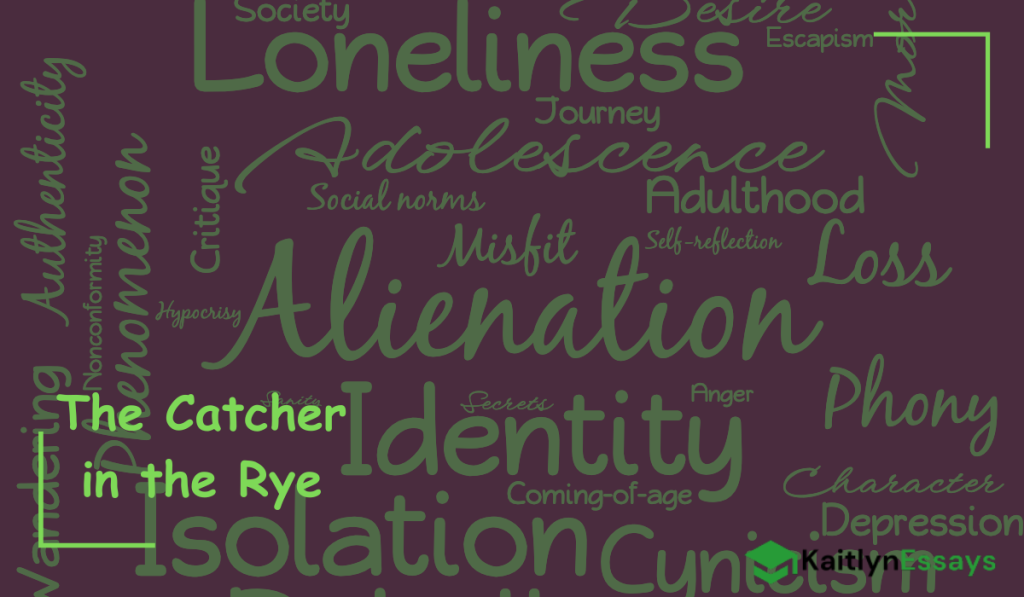
J.D. Salinger’s The Catcher in the Rye is a seminal work in American literature, first published in 1951. It explores the turbulent journey of adolescence through the eyes of its protagonist, Holden Caulfield. The novel addresses themes such as the innocence of youth, the phoniness of the adult world, and the struggle to find one’s identity.
Set in the post-World War II era, it captures the angst and confusion of growing up in a society that feels increasingly superficial and alienating. This work resonates deeply with readers, as it encapsulates the universal struggle of transitioning from childhood to adulthood, a journey fraught with confusion, anger, and disillusionment.
Summary
Holden’s Expulsion from Pencey Prep
The story begins with Holden Caulfield recounting his experiences at Pencey Prep, a prestigious boarding school in Pennsylvania. Holden, who has failed all his classes except English, is about to be expelled for poor academic performance. He feels alienated and disconnected from the school environment, describing his peers as “phonies.” After an altercation with his roommate, Stradlater, over a date with Jane Gallagher—Holden’s childhood friend whom he deeply cares about—he decides to leave Pencey before the official start of winter break. To explore how Holden’s decision sets the stage for his adventures, see further details: learn more.
A Lonely Night in New York City
After leaving Pencey, Holden takes a late-night train to New York City. During the journey, he has an awkward conversation with the mother of a Pencey student, pretending to be someone else to avoid revealing his expulsion. Arriving in New York, he checks into the Edmont Hotel, where he feels both excited and depressed. From his hotel window, he observes strange behavior from other guests, reinforcing his view of the world as a place filled with bizarre, inauthentic people. This initial night sets the tone for his aimless wandering and search for meaning. For more on Holden’s first encounters in New York, continue reading: discover more.
Encounters with Strangers: The Lavender Room and Ernie’s
Holden tries to combat his loneliness by visiting public places. He first goes to the Lavender Room, a lounge in the Edmont Hotel, where he awkwardly flirts with three women. They are uninterested in him, and the encounter leaves him feeling even more isolated. Later, he visits Ernie’s, a nightclub in Greenwich Village. There, he feels out of place and alienated, especially when he sees his brother’s ex-girlfriend, who is with a date. He leaves feeling frustrated by his inability to connect with others. To learn how these interactions contribute to Holden’s increasing sense of isolation, read further: explore more deeply.
A Failed Attempt at Adult Experiences: Sunny and Maurice
Back at the hotel, Holden agrees to hire a prostitute named Sunny, but when she arrives, he feels uncomfortable and decides he only wants to talk. This encounter turns sour when Maurice, the elevator operator who arranged the meeting, demands extra payment. When Holden refuses, Maurice beats him up, leaving him physically hurt and emotionally shaken. This incident deepens Holden’s disillusionment with the adult world and his own struggle to assert himself. To examine the implications of this event on Holden’s psyche, see more analysis: uncover further insights.
A Fleeting Connection: The Date with Sally Hayes
The next day, Holden arranges to meet Sally Hayes, a girl he has dated before. They go to a play and later to an ice-skating rink, but their conversation quickly turns into an argument when Holden impulsively suggests they run away together. Sally, shocked and confused, refuses and calls him crazy. Frustrated, Holden lashes out, and their date ends on a sour note. This failed connection leaves Holden feeling even more isolated and misunderstood. To understand the significance of Holden’s failed attempt to reach out to Sally, consider more details: learn more here.
The Visit to the Museum and Memories of Childhood
Feeling nostalgic, Holden visits the Museum of Natural History, a place he loved as a child. He finds comfort in the museum’s unchanging displays, contrasting them with the unpredictability of life. This visit underscores his fear of change and his desire to preserve the innocence of childhood. The scene highlights Holden’s inner conflict and his struggle to come to terms with growing up. For an exploration of the symbolic role of the museum in Holden’s story, find more: explore further insights.
An Encounter with Mr. Antolini: A Troubling Incident
Later, Holden visits his former English teacher, Mr. Antolini, hoping for guidance. Mr. Antolini offers Holden a place to stay and gives him advice about finding a purpose in life. However, the visit takes a disturbing turn when Holden wakes up to find Mr. Antolini patting his head in a way that makes him feel uncomfortable and confused. He hastily leaves, feeling betrayed and further isolated. This incident adds to Holden’s fear and mistrust of adults. To better understand this complex interaction and its impact on Holden: gain more insight.
The Climax: A Moment of Realization with Phoebe
Desperate and alone, Holden sneaks into his parents’ apartment to see his younger sister, Phoebe. She is thrilled to see him but quickly becomes upset when she learns he has been expelled again. Holden tells her about his fantasy of being “the catcher in the rye,” a guardian who saves children from falling into the corruption of adulthood. Moved by his sincerity, Phoebe offers to run away with him, but Holden, realizing the impracticality of his plan, changes his mind and decides to take her to the zoo instead. This interaction marks a turning point in his understanding of his own limitations. For more on this crucial moment, see further details: discover more.
The Carousel Scene: A Symbolic Acceptance of Change
The novel reaches its emotional climax when Holden watches Phoebe ride the carousel in Central Park. As she reaches for the gold ring, he realizes he cannot protect her from the risks of life, but he must let her try. This moment symbolizes Holden’s acceptance that he cannot preserve innocence forever and that growing up is inevitable. It’s a bittersweet realization, offering a glimmer of hope in his otherwise bleak outlook. To explore the significance of this powerful scene, find more: gain further understanding.
The Resolution: Holden’s Reflection in the Rest Home
In the final chapter, Holden reveals that he is recounting his story from a rest home, where he is receiving treatment for his mental health. He expresses regret for having told his story, feeling that sharing his experiences makes him miss the people in his life. Despite everything, he expresses a desire to go back to school in the fall, suggesting a faint hope for the future. The novel ends with Holden’s acknowledgment that he cannot escape his own reality, but perhaps he can learn to live within it. To reflect on the lasting impact of Holden’s journey, see more analysis: discover the legacy.
Characters of The Catcher in the Rye
Holden Caulfield
Holden Caulfield is the novel’s narrator and main character. His perspective dominates the entire narrative, and we see the world through his eyes. Holden is a deeply troubled teenager, grappling with the challenges of adolescence, his brother’s death, and the phoniness he perceives in the world around him. He feels alienated and misunderstood, struggling to find his place in a society he feels disconnected from. One of his defining traits is his desire to protect the innocence of others, especially children. His fantasy of becoming the “catcher in the rye” reflects his wish to save children from the harsh realities of adulthood.
Yet, despite his often cynical outlook, Holden is deeply sensitive and caring, particularly when it comes to his younger sister, Phoebe. His conflicting emotions — his rejection of society’s norms and his desire for connection — form the heart of his internal struggle.
For an extended analysis of Holden’s complex personality, explore more.
Phoebe Caulfield
Phoebe, Holden’s younger sister, represents the innocence that Holden desperately wants to preserve. She is one of the few characters Holden genuinely admires, and their bond is one of the few positive relationships in his life. Phoebe is intelligent, perceptive, and, in many ways, more mature than her older brother. Despite her young age, she offers Holden emotional support, often acting as his anchor when he feels lost.
Phoebe’s role is crucial because she embodies the purity and innocence that Holden cherishes. She also highlights the contradictions within Holden; while he wants to protect her from the world, she demonstrates that she understands more about life than Holden gives her credit for.
Explore more about Phoebe’s significance to Holden’s journey: Read more.
Mr. Antolini
Mr. Antolini, one of Holden’s former teachers, serves as a guiding figure for him. When Holden is in dire need of advice and a place to stay, he turns to Mr. Antolini, who welcomes him into his home. Mr. Antolini offers Holden sound guidance, warning him about the dangers of self-destruction and the importance of finding direction in life. He encourages Holden to pursue education and to stop running from his problems.
However, their relationship becomes complicated when Holden interprets a gesture from Mr. Antolini as inappropriate, which causes him to flee. This incident showcases Holden’s deep mistrust of adults and his heightened sensitivity toward perceived betrayal.
To look into Mr. Antolini’s impact on Holden’s outlook, learn further.
Allie Caulfield
Allie, Holden’s younger brother, who passed away before the events of the novel, plays a significant symbolic role in Holden’s life. Holden idealizes Allie, remembering him as kind, intelligent, and compassionate. Allie’s death is a pivotal event in Holden’s life, and it is clear that Holden has not fully come to terms with his grief. Allie represents the innocence that Holden is so desperate to protect. Holden’s inability to move past Allie’s death reflects his struggle to accept the inevitability of growing up and the pain that comes with it.
Holden often talks to Allie in moments of distress, indicating how much he relies on his brother’s memory for comfort and guidance. Allie’s presence in Holden’s thoughts reveals the depth of Holden’s grief and the unresolved trauma that defines much of his behavior.
To understand more about Allie’s profound influence on Holden, continue with.
Sally Hayes
Sally Hayes is another significant character in The Catcher in the Rye. She represents the superficial world that Holden despises. Although Holden spends time with her and even considers running away with her at one point, it is clear that he doesn’t respect Sally. He views her as shallow and materialistic, emblematic of the world he feels disconnected from. Their interactions highlight Holden’s frustrations with the world and his inability to form meaningful relationships with people who don’t share his values.
Sally’s character serves to emphasize Holden’s growing disillusionment with society and his struggle to find genuine connections with others.
For a closer analysis of Sally’s role in Holden’s narrative, pursue further.
Jane Gallagher
Jane Gallagher is a crucial character in the novel, even though she never appears in the story directly. Jane represents Holden’s ideal of childhood innocence. They spent a significant part of their childhood together, and Holden’s memories of Jane are filled with affection. He holds her in high regard, and she symbolizes a time in his life before he became disillusioned with the world.
Holden’s reluctance to reach out to Jane throughout the novel reflects his fear of change. He is afraid that Jane, like so many others, has become part of the adult world he loathes. Jane’s absence from the novel emphasizes Holden’s struggle to come to terms with the fact that people grow up and change.
To investigate Jane’s symbolism in Holden’s world, access more.
D.B. Caulfield
D.B., Holden’s older brother, is a writer who has moved to Hollywood to work as a screenwriter. Holden views D.B.’s career move as a form of selling out, a betrayal of the authenticity that Holden holds dear. D.B.’s success and departure to Hollywood epitomize, for Holden, the loss of artistic integrity. Holden is disappointed in D.B. because he sees him as another adult who has compromised his values for material success.
D.B.’s character helps to highlight Holden’s disdain for the adult world and his fear of losing his own sense of authenticity as he grows older.
For more on D.B.’s role in the novel and Holden’s perspective on him, see more.
Ackley
Ackley is Holden’s neighbor at Pencey Prep, and he is often described as an awkward and unpleasant character. Holden feels a sense of pity for Ackley but is also annoyed by his lack of social awareness and poor hygiene. Ackley represents another form of alienation in the novel — the misfit who is ostracized by his peers. However, Holden himself is not much different from Ackley in terms of feeling out of place. Their relationship underscores Holden’s tendency to judge others harshly, even though he shares many of the same insecurities.
To explore Ackley’s role as a reflection of Holden’s own struggles, read more.
Stradlater
Stradlater, Holden’s roommate at Pencey Prep, is portrayed as everything Holden is not — popular, handsome, and self-assured. Despite these qualities, Holden despises Stradlater, viewing him as arrogant and superficial. Holden’s disdain for Stradlater comes to a head when Stradlater goes on a date with Jane Gallagher, a girl Holden cares about deeply. Stradlater’s casual attitude toward the date infuriates Holden, and the tension between them results in a physical fight.
Stradlater’s character serves to highlight Holden’s intense jealousy and protectiveness over the people he cares about, as well as his discomfort with the realities of sexual relationships.
For a deeper dive into the tension between Holden and Stradlater, learn more.
Themes in The Catcher in the Rye
Alienation as a Form of Self-Protection
One of the dominant themes in The Catcher in the Rye is Holden’s profound sense of alienation. Throughout the novel, Holden isolates himself from the people around him, convinced that most individuals are “phony.” This feeling of alienation is not only a response to his perception of the adult world but also serves as a defense mechanism. Holden repeatedly withdraws into his own thoughts and rejects societal norms, preferring to distance himself from the pain of rejection or disappointment.
Holden’s alienation manifests in his constant movement—whether he’s leaving schools, wandering the streets, or pushing away people who try to connect with him. Yet, despite this detachment, he longs for connection, revealing the paradox of his character: the more he yearns for closeness, the more he pushes others away.
To gain deeper insights into Holden’s alienation and its implications, discover more.
The Preservation of Innocence
Holden’s desire to protect innocence is one of the most striking themes in the novel. He idealizes childhood and longs to shield young children, particularly his sister Phoebe, from the corruption and disillusionment that he believes defines the adult world. His famous fantasy of being the “catcher in the rye,” where he imagines himself saving children from falling off a cliff, symbolizes his deep fear of growing up and losing innocence.
Holden’s concern for innocence can be seen in his interactions with Phoebe, Jane Gallagher, and even random children he encounters during his journey. His inability to preserve innocence—whether his own or others’—becomes one of the central tragedies of the novel, revealing the inevitability of maturation and the loss that accompanies it.
To further explore Holden’s view on innocence and its significance, read more.
The Phoniness of the Adult World
Throughout The Catcher in the Rye, Holden repeatedly condemns the adult world for its superficiality, dishonesty, and hypocrisy—what he calls “phoniness.” This perception of phoniness defines Holden’s worldview and serves as the basis for much of his criticism of the people around him. From his brother D.B., whom he views as a sellout, to his interactions with adults who fail to live up to his standards of honesty, Holden is constantly disappointed by the world he is growing into.
Holden’s fixation on phoniness reveals both his fear of adulthood and his unrealistic expectation for purity in human behavior. As he strives to avoid becoming like the “phony” adults he detests, he is ultimately faced with the reality that imperfection and complexity are inherent to life.
For an extended examination of Holden’s disdain for phoniness, learn further.
The Struggles with Identity and Belonging
Holden’s journey is marked by an internal struggle to understand himself and find a place where he belongs. He constantly questions who he is and what kind of person he wants to become. His journey through New York is not just a physical one but a psychological exploration of his own identity. He frequently reflects on how others perceive him and grapples with his own contradictions—wanting to be independent while craving understanding and companionship.
Throughout the novel, Holden encounters various people and situations that force him to confront his sense of identity. Yet, his journey is far from complete, as he repeatedly fails to reconcile his desire for authenticity with the pressures of conforming to societal expectations.
To further explore Holden’s battle with identity, learn more.
Depression and Mental Health
Mental health, particularly Holden’s struggle with depression, is a theme that looms over the entire novel. Holden is deeply affected by the death of his brother Allie, and this trauma colors many of his interactions and thoughts throughout the novel. His depressive tendencies are evident in his constant fatigue, his feelings of worthlessness, and his morbid thoughts. At various points, Holden even expresses a desire to disappear or die.
Holden’s journey through New York serves as a reflection of his internal state, and his mental health deteriorates as he becomes more and more isolated. His inability to find joy or meaning in life highlights the deep emotional pain he experiences, even if he cannot fully articulate it.
To understand Holden’s mental health struggles more fully, read further.
The Fear of Change
Holden’s fear of change is intricately tied to his desire to preserve innocence and avoid adulthood. He constantly reflects on the past, reminiscing about simpler times when things seemed more predictable and less complicated. The Museum of Natural History, which Holden frequently visits in the novel, becomes a symbol of his longing for things to remain unchanged. The exhibits, frozen in time, represent a world that is static and immune to the passing of time.
However, Holden’s obsession with maintaining the status quo clashes with the inevitable reality that everything changes. His refusal to accept change becomes another source of internal conflict, driving much of his angst throughout the novel.
To examine Holden’s fear of change and its broader implications, explore more.
Death and Loss
The theme of death looms heavily over Holden’s journey. The death of his younger brother, Allie, is a trauma that Holden has not fully processed, and it becomes a recurring theme in his thoughts and behaviors. Holden’s inability to cope with Allie’s death affects his relationships with others, his mental health, and his worldview. He often talks to Allie as though he were still alive, revealing his deep sense of grief and loss.
Holden’s fixation on death also surfaces in his obsession with mortality and the desire to escape from life’s burdens. His musings on death, coupled with his thoughts of running away, underscore the existential struggle that defines much of the novel.
For more insights into the impact of death on Holden’s psyche, read more.
Loneliness and the Need for Connection
Loneliness is a pervasive theme in The Catcher in the Rye. Despite his cynical exterior, Holden constantly seeks connection with others, whether it’s reaching out to old friends, attempting to make new ones, or even engaging in fleeting interactions with strangers. His loneliness is palpable, and much of the novel revolves around his attempts to bridge the gap between himself and the people around him.
However, Holden’s fear of intimacy and his mistrust of others often sabotage these efforts. He vacillates between wanting to be close to people and rejecting them out of fear of being hurt or betrayed.
To examine Holden’s complex relationship with loneliness, continue with.
Sexual Confusion and Anxiety
Holden’s struggle with his sexual identity and anxiety about intimate relationships is another central theme. Throughout the novel, Holden has difficulty navigating his feelings about sex. He views sex as something inherently corrupting, and his inability to reconcile this with his desire for genuine affection complicates his relationships with women. His encounter with a prostitute and his conflicted feelings toward Jane Gallagher highlight the tension he experiences between physical attraction and emotional connection.
Holden’s sexual confusion is reflective of his broader struggle with maturity and adulthood. His discomfort with sex represents a fear of losing control and becoming part of the adult world he so despises.
For Holden’s sexual confusion, find out more.
Symbols in The Catcher in the Rye
The Red Hunting Hat
One of the most recognizable symbols in The Catcher in the Rye is Holden’s red hunting hat. This odd piece of clothing represents Holden’s desire for individuality and his struggle with self-consciousness. Holden puts on the hat whenever he feels insecure or isolated, using it as a kind of protective shield. The bold color of the hat symbolizes his need to stand out, yet it also reflects his feelings of alienation from those around him. At the same time, the hat is a symbol of comfort for Holden, a way to escape into his own world and away from the pressures of society.
For a closer examination of the role this red hat plays in Holden’s journey, uncover further perspectives: explore more.
The Museum of Natural History
The Museum of Natural History in New York City is another significant symbol in the novel. For Holden, the museum represents a world of permanence and stability—qualities that are lacking in his own life. Unlike the chaos and unpredictability of the real world, the exhibits in the museum never change, even as people grow older. Holden yearns for this kind of unchanging, predictable environment, and his frequent visits to the museum reveal his deep discomfort with the uncertainties of adulthood. This symbol highlights Holden’s desire to preserve the innocence of childhood and resist the inevitable march of time.
To gain a more comprehensive understanding of the museum’s role in the novel, consider further analysis: learn more.
The Ducks in Central Park
Holden’s obsession with the ducks in the lagoon at Central Park serves as a powerful metaphor for his own feelings of displacement and confusion. He repeatedly asks where the ducks go during the winter, revealing his deep concern about what happens to things when they disappear or leave. The ducks symbolize the transient nature of life and Holden’s fear of change. His fascination with their seasonal migration reflects his own struggle to cope with the changes happening in his life, particularly the transition from adolescence to adulthood.
If you’re interested in a more detailed exploration of this symbolism, additional interpretations are available: read further.
The Catcher in the Rye
The novel’s title itself is a symbol that carries immense weight in understanding Holden’s character. When Holden misinterprets Robert Burns’ poem “Comin’ Thro’ the Rye,” he imagines a field of rye where children play near a cliff. He sees himself as the “catcher” who saves the children from falling off the edge, symbolizing his desire to protect the innocence of youth. This fantasy reveals Holden’s deep-seated fear of growing up and becoming corrupted by the adult world. His idealized role as the protector of innocence shows how disconnected he feels from the realities of life, emphasizing his struggles with identity and responsibility.
For further insight into the meaning behind the novel’s title, additional analysis is offered: continue reading.
Phoebe Caulfield
Phoebe, Holden’s younger sister, is one of the few characters he genuinely cares about, and she serves as a symbol of innocence and the idealized childhood Holden is trying to preserve. Throughout the novel, Holden is drawn to children because they represent purity and simplicity in a world he views as phony and corrupt. Phoebe’s unwavering love and concern for Holden give him brief moments of solace and hope. She also represents the possibility of connection, even in a world Holden feels alienated from. However, even Phoebe cannot stop Holden from spiraling into deeper emotional turmoil, underscoring the inevitability of change and loss.
To look further into Phoebe’s symbolic importance in the novel, additional reflections are available: discover insights.
The Carousel
The carousel, featured in one of the novel’s final scenes, is a poignant symbol of life’s cyclical nature and Holden’s complex feelings about growing up. As Holden watches Phoebe ride the carousel, he experiences a rare moment of contentment. The carousel represents both the innocence of childhood and the inevitability of moving forward in life. While the carousel goes around in circles, it also serves as a reminder that childhood, like the ride, cannot last forever. The moment signifies Holden’s reluctant acceptance that he cannot stop Phoebe, or anyone else, from growing up. It’s one of the few moments in the book where Holden seems at peace with the idea of change.
For an expanded look into the carousel’s symbolism, find further context: view more.
The Broken Record
Holden’s purchase of a record for Phoebe, and its subsequent breaking, serves as a symbol of the fragility of Holden’s world. He buys the record with the hope of sharing a meaningful moment with his sister, but it shatters before he can give it to her. This broken record symbolizes Holden’s broken state of mind and the many ways in which his attempts to preserve innocence and create meaningful connections are thwarted. Despite the record being broken, Holden still gives the pieces to Phoebe, highlighting his deep desire to communicate and connect, even when he feels everything around him is falling apart.
For a more in-depth discussion of the significance of the broken record, further insights are provided: explore now.
The Rye Field and the Cliff
The rye field that Holden envisions, where he imagines saving children from falling off a cliff, is one of the novel’s most iconic symbols. The field represents the innocence of childhood, while the cliff symbolizes the fall into the corrupt, complex adult world. Holden’s desire to be the “catcher” illustrates his reluctance to let go of his own innocence and his fear of facing adulthood. This symbol encapsulates Holden’s entire struggle throughout the novel—his desperate attempt to protect what he perceives as the purity of childhood, even as he himself is on the brink of losing it.
For a more detailed exploration of this central image, more details are available: continue reading.
Literary Devices in The Catcher in the Rye
First-Person Narrative
The use of a first-person narrative in The Catcher in the Rye is a powerful literary device that gives readers direct access to Holden Caulfield’s thoughts and emotions. Through this technique, readers experience the world entirely from Holden’s perspective, which allows for an intimate connection with his character. The stream-of-consciousness style allows readers to follow Holden’s disjointed and often contradictory thoughts, reflecting his inner turmoil. This narrative style also highlights Holden’s unreliability as a narrator, as his emotional state influences his perception of events.
For a deeper analysis of the first-person narrative and its impact on the story, additional insights are offered: explore further.
Symbolism
Symbolism is one of the most prominent literary devices in The Catcher in the Rye. Salinger uses various objects, places, and actions to represent larger ideas, such as Holden’s red hunting hat symbolizing his uniqueness and need for protection. The Museum of Natural History represents Holden’s longing for permanence in a constantly changing world. The carousel is another significant symbol, representing both the innocence of childhood and the inevitability of growing up. These symbols provide readers with a deeper understanding of Holden’s inner conflicts and the novel’s major themes.
To discover more about the symbols used in the novel and their significance, additional interpretations are available: read more.
Colloquial Language and Slang
Salinger’s use of colloquial language and slang is a key literary device that makes Holden’s voice authentic and relatable. Holden speaks in a conversational, sometimes crude tone, using expressions like “phony,” “lousy,” and “crumby” throughout the novel. This use of everyday language helps establish Holden as a typical teenager of the 1950s and emphasizes his rebellious nature. The casual language also creates a contrast between Holden’s cynical worldview and the deeper emotional pain he experiences, which he often hides behind his slang-filled speech.
To better understand the significance of Holden’s language, a deeper exploration is available: learn more.
Irony
Irony plays a significant role in The Catcher in the Rye, particularly in highlighting Holden’s contradictions. Holden frequently criticizes others for being “phony,” yet he often engages in the very behaviors he despises. For instance, while he condemns others for their superficiality, he lies to strangers and acts hypocritically throughout the novel. This irony exposes Holden’s inner conflict and his struggle to reconcile his ideals with the realities of the world. The device helps to underscore the gap between Holden’s perception of the world and his actual behavior.
For a closer look at the novel’s use of irony and how it shapes Holden’s character, more insights can be found: continue reading.
Stream of Consciousness
Salinger uses a stream-of-consciousness narrative technique to mirror Holden’s fragmented and erratic thoughts. Holden jumps from one topic to another, often without logical transitions, which reflects his unstable emotional state. This device allows readers to experience Holden’s anxiety and confusion in real time, as his mind wanders from past traumas to present fears. The disjointed nature of his thoughts emphasizes his lack of direction and inability to focus on a single issue, further highlighting his alienation and depression.
For more in-depth exploration of how this device reflects Holden’s mental state, further analysis is offered: view further.
Foreshadowing
Foreshadowing is used subtly throughout The Catcher in the Rye to hint at Holden’s mental breakdown and eventual institutionalization. Early in the novel, Holden mentions that he’s narrating the story from a mental facility, which foreshadows the eventual outcome of his journey. Additionally, his increasing erratic behavior and frequent mention of death, including his fixation on his deceased brother Allie, signal that Holden’s mental health is deteriorating. These clues build a sense of inevitability and tension, as readers anticipate Holden’s breakdown long before it happens.
For a detailed look at how foreshadowing shapes the novel’s narrative, more information is available: uncover more.
Hyperbole
Holden frequently uses hyperbole to express his emotions, particularly his frustration and disdain for the world around him. He often exaggerates situations to highlight how absurd or “phony” he believes people are. For example, he claims that nearly everyone he meets is a liar or a phony, and he often makes sweeping generalizations about entire groups of people. These exaggerations serve to reflect Holden’s extreme emotions and his tendency to view the world in black-and-white terms, a symptom of his inability to cope with the complexities of adulthood.
To further explore how hyperbole reflects Holden’s worldview, further readings are available: learn more.
Motif of Death
The motif of death recurs throughout the novel, reflecting Holden’s preoccupation with mortality and loss. His fixation on death stems largely from the traumatic loss of his younger brother, Allie, whose death haunts him throughout the novel. Holden frequently references death, whether through his thoughts about Allie or his own reckless behavior, such as running away from school and wandering aimlessly around New York City. The motif of death emphasizes Holden’s deep-seated fear of change and his desire to protect himself from the pain of loss.
For more in-depth analysis of the death motif and its role in the novel, additional details are available: read further.
Imagery
Salinger uses vivid imagery to bring Holden’s world to life, particularly in his descriptions of New York City. The city is portrayed as both vibrant and overwhelming, mirroring Holden’s inner chaos. Holden’s detailed descriptions of places like the Museum of Natural History, Central Park, and the carousel provide readers with a sense of place while also serving as symbolic reflections of his emotional state. The imagery helps to ground the novel in reality, while also conveying the abstract themes of alienation, confusion, and the search for meaning.
To learn more about the use of imagery in The Catcher in the Rye, additional interpretations can be found: explore more.
Repetition
Repetition is a key device used to emphasize Holden’s obsessions and emotional state. Throughout the novel, Holden frequently repeats certain words and phrases, such as “phony,” “depressing,” and “crazy.” This repetition not only reflects his disillusionment with the world but also highlights his inner distress. By constantly repeating these words, Holden reveals his inability to move past certain ideas and emotions, illustrating his mental and emotional stagnation.
For a closer look at how repetition reinforces Holden’s mindset, further analysis is available: learn more.
Unreliable Narrator
Holden Caulfield is an example of an unreliable narrator, a literary device where the storyteller’s credibility is questionable. Holden often contradicts himself, misinterprets events, and withholds information, leading readers to question the accuracy of his account. His emotional instability and skewed perception of the world make it difficult for readers to determine what is real and what is exaggerated or imagined. This device adds complexity to the narrative, as readers must sift through Holden’s subjective version of events to uncover the truth.
To explore more about Holden’s role as an unreliable narrator, additional details are offered: view more.
Quotes in The Catcher in the Rye
“People always think something’s all true.”
This quote reveals Holden’s deep distrust of the world and his belief that people are often deceived by appearances. Holden frequently feels that people are superficial, dishonest, or “phony.” He struggles to accept the idea that truth and reality can be subjective and complex. This line encapsulates his skepticism and his inability to see beyond his black-and-white worldview, which is a major source of his internal conflict throughout the novel.
For a more detailed analysis of this quote and its significance, further exploration is available: uncover more.
“Don’t ever tell anybody anything. If you do, you start missing everybody.”
This is one of the last lines in the novel, and it highlights Holden’s emotional detachment and fear of connection. Throughout the story, Holden isolates himself from others, yet he also craves meaningful relationships. This quote reflects Holden’s belief that revealing his emotions or allowing himself to care about others will ultimately lead to pain and loss. It also ties into the novel’s larger theme of alienation and Holden’s fear of vulnerability.
To understand the depth of this closing sentiment, more insights are offered: learn more.
“The best thing, though, in that museum was that everything always stayed right where it was. Nobody’d move.”
Holden’s visit to the Museum of Natural History is significant because it symbolizes his desire for permanence and stability in a world that constantly changes. In this quote, Holden expresses his yearning for a place where time stands still, where nothing changes, and where he can escape from the confusion of growing up. The museum represents the safety of childhood, and Holden’s wish to remain in that state forever. His nostalgia for this static world underscores his resistance to the inevitabilities of time and adulthood.
For further insight into the meaning behind this quote, additional analysis is available: view further.
“I’m the most terrific liar you ever saw in your life.”
Holden openly admits to being a liar, yet he condemns others for being phony. This contradiction is central to Holden’s character, as he struggles with his own hypocrisy and inability to live up to the standards he sets for others. This quote emphasizes Holden’s unreliable nature as a narrator and his tendency to hide from uncomfortable truths by distorting reality. His dishonesty is a defense mechanism, allowing him to avoid facing the complexities of the adult world.
For more in-depth exploration of Holden’s unreliable narration and self-deception, further discussion is offered: read further.
“It’s funny. All you have to do is say something nobody understands and they’ll do practically anything you want them to.”
This quote reveals Holden’s cynical view of people and his belief that most individuals are easily manipulated. He often feels that people don’t think for themselves and are quick to follow others blindly, which is why he criticizes them as “phony.” This line also reflects Holden’s alienation from society and his sense of superiority over others, as he believes that he is one of the few who sees through the lies and falsehoods of the adult world.
For a closer look at the significance of Holden’s cynicism and superiority complex, further analysis is available: discover more.
“I keep picturing all these little kids playing some game in this big field of rye and all. Thousands of little kids, and nobody’s around—nobody big, I mean—except me. And I’m standing on the edge of some crazy cliff. What I have to do, I have to catch everybody if they start to go over the cliff.”
This is perhaps the most famous quote in the novel and the one that gives the book its title. It encapsulates Holden’s desire to protect the innocence of children, reflecting his fear of adulthood and the loss of purity that comes with it. The field of rye symbolizes the innocence of childhood, while the cliff represents the dangers and responsibilities of adult life. Holden’s wish to be the “catcher” of children about to fall off the cliff underscores his deep-seated need to preserve innocence and avoid the harsh realities of the adult world.
For a detailed breakdown of the significance of this iconic quote, additional insights are provided: learn more.
“Certain things they should stay the way they are. You ought to be able to stick them in one of those big glass cases and just leave them alone.”
This quote echoes Holden’s longing for a world where nothing changes. He wishes to preserve the things he loves, especially the innocence of childhood, and protect them from the inevitable changes of life. His desire to “stick them in a glass case” is symbolic of his deep fear of change and the loss of control that comes with it. It also reinforces one of the novel’s central themes: Holden’s struggle to accept the inevitability of growing up.
For more insights into how this quote ties into Holden’s resistance to change, further reflection is available: explore further.
“People never notice anything.”
This simple yet profound statement reflects Holden’s belief that people are oblivious to the deeper, more meaningful aspects of life. He feels that most people go through life without paying attention to the things that matter, such as honesty, authenticity, and emotional connection. This quote also highlights Holden’s sense of isolation, as he believes he sees the world differently from those around him. His frustration with people’s lack of awareness fuels his alienation and cynicism.
For a more comprehensive understanding of this quote and its implications, further analysis is available: read further.
“I can’t explain what I mean. And even if I could, I’m not sure I’d feel like it.”
This quote perfectly captures Holden’s emotional state throughout much of the novel. He struggles to articulate his feelings and experiences, not just to others but even to himself. His inability to communicate effectively reflects his deep sense of confusion and frustration. Holden’s reluctance to express his emotions is also a defense mechanism, as he is afraid of exposing his vulnerabilities. This quote highlights his internal conflict and his detachment from the people around him.
To learn more about the significance of Holden’s emotional inarticulateness, additional perspectives are offered: view more.
“It’s partly true, too, but it isn’t all true. People always think something’s all true.”
Holden’s view of truth is complex and often contradictory. This quote reflects his belief that people tend to oversimplify things and cling to what they believe is absolute truth. Holden, however, sees the world as more complex and difficult to categorize. His struggles with understanding truth and reality play a central role in the novel, as he frequently questions what is real and what is fake, especially in human interactions.
For a detailed analysis of Holden’s perception of truth and how it shapes his worldview, more insights are available: uncover more.
Catcher in The Rye Essay Examples
The Role of Women in The Catcher in the Rye
In The Catcher in the Rye, J.D. Salinger portrays women in a complex and sometimes contradictory manner, through the eyes of Holden Caulfield. Holden has a complicated relationship with women, influenced by his adolescence, mental struggles, and societal norms of the 1950s. While women do not dominate the narrative, they are central to understanding Holden’s perception of the world and the struggles he faces.
Women in The Catcher in the Rye are often viewed through Holden’s emotional and psychological lens, which is tinged with confusion and insecurity. Throughout the novel, Holden encounters a range of female characters, including his sister Phoebe, Sally Hayes, Jane Gallagher, and various women he meets casually. His interactions with them reveal his longing for companionship and understanding, but also his inability to fully connect with or understand them.
Phoebe Caulfield, Holden’s younger sister, represents innocence and purity to him. She is one of the few characters that Holden truly respects and admires. Phoebe’s presence provides a contrast to Holden’s cynicism and disillusionment. Her role in the novel highlights Holden’s desire to protect the innocence he sees in her, reflecting his fear of the adult world.
Jane Gallagher is another significant female figure in Holden’s life, though she never actually appears in the novel. Jane represents Holden’s idealized version of a woman, someone who is both caring and trustworthy. Holden constantly reminisces about Jane, showing that he is deeply affected by her presence in his past. However, his reluctance to reach out to her in the present underscores his fear of change and growing up.
Sally Hayes, on the other hand, represents the more superficial side of Holden’s interactions with women. He dates her but feels a strong sense of detachment. His disdain for Sally’s social ambitions reflects his overall frustration with the world around him, but also his immaturity and inability to engage in meaningful relationships.
Holden’s mixed feelings toward women are symbolic of his overall struggle with maturity and identity. On one hand, he wants to protect and idealize women, but on the other, he is deeply suspicious of their motivations and fears intimacy. His interactions with women highlight his inner turmoil, and they serve as a vehicle for Salinger to explore themes of innocence, alienation, and emotional struggle.
The Meaning of the Title in The Catcher in the Rye
The title The Catcher in the Rye is deeply symbolic, encapsulating Holden Caulfield’s desire to protect innocence, particularly in children. The phrase originates from a song Holden misremembers, which is actually Robert Burns’ poem “Comin’ Thro’ the Rye.” Holden imagines himself as the “catcher in the rye,” standing in a field where children play near a dangerous cliff. His role, as he envisions it, would be to catch the children before they fall over the edge, symbolizing his desire to save them from losing their innocence and falling into the corrupt and confusing adult world.
The title reflects Holden’s internal conflict between childhood innocence and the harsh realities of adulthood. Throughout the novel, Holden is obsessed with preserving purity, whether it be in his younger sister Phoebe, his memories of Jane Gallagher, or even the museum exhibits that never change. His fixation on being a “catcher” reveals his struggle with the concept of growing up. He wants to shield others from the pain and complexity he associates with adult life, as he himself feels lost in it.
The meaning of the title also speaks to Holden’s reluctance to accept that growing up is inevitable. His idealized version of a catcher who saves children from losing their innocence is an unattainable fantasy, representing his desire to reject the adult world’s expectations and responsibilities. In reality, Holden cannot stop time or protect others from change, just as he cannot protect himself from the difficulties he faces as he transitions from adolescence to adulthood.
Coming of Age in The Catcher in the Rye
The Catcher in the Rye is a classic coming-of-age novel, chronicling Holden Caulfield’s journey through adolescence. Although Holden is resistant to growing up, the novel explores the emotional and psychological struggles that define his maturation process. Coming of age in The Catcher in the Rye is not portrayed as a smooth or straightforward path. Instead, it is fraught with confusion, alienation, and a deep sense of loss.
Holden’s coming-of-age experience is shaped by his rejection of the adult world, which he views as phony, corrupt, and hypocritical. He longs for the simplicity of childhood and resists the pressures to conform to societal norms. His deep aversion to adult life is reflected in his interactions with others, particularly authority figures such as his teachers, parents, and even the headmaster of his former school. Holden feels that the adult world is full of pretentiousness and dishonesty, and he wants no part of it.
However, as much as Holden tries to distance himself from growing up, the novel reveals that he cannot escape the realities of life. His journey is marked by a series of emotional crises, including his feelings of loneliness, his grief over the death of his brother Allie, and his struggles with his mental health. These experiences force Holden to confront his own vulnerability and the inevitability of change.
One of the key moments of Holden’s coming-of-age journey occurs in his interaction with Phoebe toward the end of the novel. When she asks him what he wants to do with his life, and he responds by describing his fantasy of being the “catcher in the rye,” it becomes clear that Holden is struggling to reconcile his desire to protect innocence with the realization that he cannot stop the passage of time. His eventual breakdown and subsequent stay in a mental health facility suggest that coming of age for Holden is not about finding easy answers but learning to cope with life’s uncertainties and challenges.
In this way, Salinger presents coming of age as a complex and often painful process. Holden’s journey is characterized by his resistance to maturity, but it also shows his growing awareness of his limitations and the difficulties that come with adulthood.
Theme of Growing Up in The Catcher in the Rye
The theme of growing up is central to The Catcher in the Rye, as Holden Caulfield grapples with the challenges of adolescence and the transition to adulthood. Throughout the novel, Holden is caught between the innocence of childhood and the responsibilities of adult life, and his refusal to grow up serves as a defense mechanism against the pain and confusion he associates with adulthood.
Holden’s fear of growing up is reflected in his desire to preserve the innocence he sees in others, particularly in his sister Phoebe. He idolizes childhood as a time of purity and simplicity, while viewing adulthood as corrupt and insincere. This fear of growing up is also linked to his inability to move on from the death of his brother Allie, whose untimely passing represents the loss of innocence for Holden. Allie’s death has a profound impact on Holden’s psychological state, and he often reminisces about him as a symbol of the innocence he wishes to protect.
Throughout the novel, Holden’s actions demonstrate his struggle to come to terms with the inevitability of growing up. His constant running away from schools, his attempts to isolate himself from others, and his erratic behavior all suggest that he is trying to escape the responsibilities and complexities of adult life. However, his journey reveals that growing up is not something he can avoid. His experiences force him to confront the realities of life, including his own emotional and mental health struggles.
The theme of growing up in The Catcher in the Rye is also explored through the lens of societal expectations. Holden is pressured to conform to the norms of success and maturity, yet he finds these expectations stifling and disingenuous. His rejection of societal standards is part of his broader rejection of adulthood, and it is only when he begins to accept his limitations and vulnerability that he starts to confront the challenges of growing up.
Death and Morality in Teen’s Life in The Catcher in the Rye
The themes of death and morality are central to The Catcher in the Rye, particularly in the context of Holden Caulfield’s life as a teenager. Throughout the novel, Holden is haunted by the death of his younger brother Allie, which has a profound effect on his emotional and psychological well-being. Allie’s death serves as a symbol of the loss of innocence for Holden, and it is a key factor in his struggles with morality and his perception of the world.
Holden’s fixation on death is evident in his frequent references to it, whether through his memories of Allie or his contemplation of his own mortality. He often expresses a sense of guilt and responsibility, as though he feels he should have done something to prevent Allie’s death, even though it was beyond his control. This guilt contributes to Holden’s ongoing sense of despair and alienation, and it shapes his outlook on life.
Morality, for Holden, is closely tied to his desire to protect the innocent from the harsh realities of the adult world. He sees himself as a defender of purity, and he struggles with the idea that death and corruption are inevitable parts of life. His inability to come to terms with Allie’s death reflects his broader inability to accept the complexities of life, including the moral ambiguities that come with growing up.
Holden’s grappling with death and morality also extends to his interactions with others. He is highly critical of what he perceives as the phoniness of adults, whom he views as morally compromised. His own moral compass is guided by his desire to remain true to himself and to protect others from harm, but this idealism often leads to his frustration and disillusionment.
In many ways, Holden’s preoccupation with death and morality is a reflection of his inner turmoil as he tries to navigate the transition from adolescence to adulthood. His struggle to make sense of death, particularly in the context of his brother’s passing, reveals the depth of his emotional pain and his fear of growing up. The Catcher in the Rye presents a detailed exploration of how death and morality shape the life of a teenager, and how these themes contribute to Holden’s ongoing search for meaning and identity.
Mental Struggles of the Main Character in The Catcher in the Rye
Holden Caulfield’s mental struggles are a central aspect of The Catcher in the Rye, as his psychological state deteriorates throughout the novel. His depression, anxiety, and feelings of alienation are evident from the beginning, and they are exacerbated by the trauma of his brother Allie’s death, his struggles with growing up, and his inability to connect with others. Holden’s mental health is a key lens through which the novel explores themes of identity, loss, and the challenges of adolescence.
Holden’s mental struggles manifest in various ways, including his erratic behavior, his frequent bouts of anger and frustration, and his tendency to isolate himself from others. He often feels disconnected from the people around him, and he struggles to form meaningful relationships. His alienation is compounded by his deep cynicism and mistrust of others, particularly adults, whom he views as insincere and morally compromised.
One of the most striking aspects of Holden’s mental state is his depression, which permeates much of the novel. He frequently expresses feelings of sadness and hopelessness, and he often contemplates death and suicide. His depression is closely linked to his unresolved grief over Allie’s death, as well as his fear of growing up and facing the uncertainties of the adult world.
Holden’s mental struggles are also reflected in his tendency to retreat into fantasies and idealized versions of the past. His fixation on preserving innocence, particularly in children like his sister Phoebe, reveals his deep discomfort with the complexities and ambiguities of life. He longs for a world that is simple and unchanging, but his inability to reconcile this desire with the realities of life contributes to his ongoing sense of despair.
Holden’s mental struggles are a key component of The Catcher in the Rye, shaping his interactions with others and driving the narrative forward. His emotional pain and psychological turmoil reflect the broader challenges of adolescence, and they highlight the difficulties of navigating the transition from childhood to adulthood.
FAQs
Why is The Catcher in the Rye considered a classic?
The novel is seen as a classic due to its portrayal of teenage angst and alienation, themes that resonate with many readers. Holden’s voice and perspective have made him a relatable character for generations of readers.
Why is The Catcher in the Rye controversial?
The novel has been banned or challenged in some schools and libraries due to its use of profanity, portrayal of teenage rebellion, and discussions of sensitive topics like mental health, sexuality, and alcohol use.
What time period does The Catcher in the Rye take place in?
The novel is set in the late 1940s or early 1950s, right after World War II. However, the issues Holden faces are often considered timeless.
Why is The Catcher in the Rye still relevant today?
The novel remains relevant because it explores universal themes of adolescence, identity, and the search for meaning. Many readers, particularly young people, continue to relate to Holden’s feelings of confusion, isolation, and his desire to find authenticity in a world he views as “phony.”