

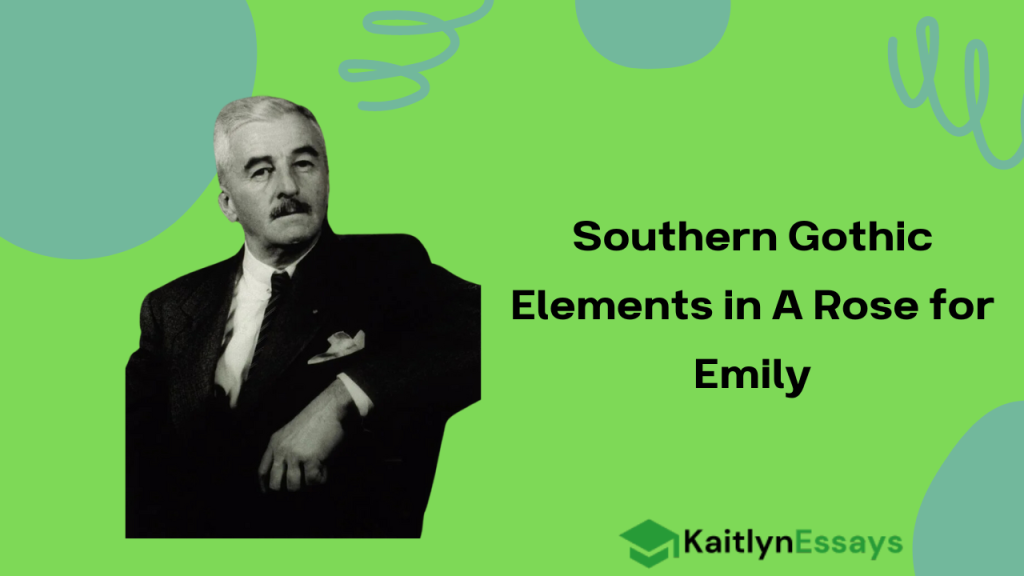
Exploring the Southern Gothic Elements in A Rose for Emily
Introduction
William Faulkner’s “A Rose for Emily” is a quintessential example of Southern Gothic literature, characterized by its exploration of dark themes, decayed settings, and eccentric characters in the American South. Set in the fictional town of Jefferson, Mississippi, the story delves into the complexities of tradition, isolation, and the human psyche. This essay will examine the Southern Gothic elements in A Rose for Emily, analyzing how Faulkner utilizes the genre to convey deeper truths about the Southern experience.
Introduction to Southern Gothic Literature
Southern Gothic literature emerged in the American South in the late 19th and early 20th centuries, reflecting the region’s tumultuous history and cultural landscape. Characterized by its macabre themes, grotesque characters, and atmospheric settings, Southern Gothic literature often explores the darker aspects of Southern society, including slavery, racism, and social decay.
Decay and Decline
One of the defining features of Southern Gothic literature is its focus on decay and decline, both physical and moral. In “A Rose for Emily,” Faulkner vividly depicts the decayed setting of the Grierson house, once a grand mansion that has fallen into disrepair. The decaying mansion serves as a metaphor for the decline of the Old South and the fading glory of the aristocratic families that once dominated the region.
Source 1:
Smith, Robert H. The Southern Gothic: New Perspectives on the Literature of the South. Louisiana State University Press, 1991.
Isolation and Madness
Southern Gothic literature often explores themes of isolation and madness, highlighting the psychological toll of living in a society rife with oppression and decay. In “A Rose for Emily,” Emily Grierson’s reclusive nature and increasingly erratic behavior serve as prime examples of this theme. Isolated from the outside world by her domineering father and trapped in the decaying Grierson house, Emily descends into madness, ultimately leading to her tragic demise.
Source 2:
O’Connor, Flannery. “Some Aspects of the Grotesque in Southern Fiction.” Mystery and Manners: Occasional Prose. Farrar, Straus and Giroux, 1969.
Grotesque Characters

Southern Gothic literature often features grotesque or eccentric characters who defy societal norms and expectations. In “A Rose for Emily,” characters such as Emily Grierson, with her bizarre behavior and mysterious past, and Colonel Sartoris, the town’s former mayor who continues to exert influence from beyond the grave, embody the grotesque elements of the genre.
Source 3:
Link, Eric Carl. Understanding William Faulkner: The Rose for Emily. University of South Carolina Press, 1999.
Themes of Race and Class
Southern Gothic literature frequently explores themes of race and class, highlighting the deep-seated inequalities and social divisions that characterize Southern society. While “A Rose for Emily” does not directly address these themes, the story’s depiction of the rigid social hierarchy of the Old South and the tensions between the townspeople and Emily, a member of the once-prominent Grierson family, reflects the broader concerns of the genre.
Source 4:
Mize, Felicia. “Race, Resistance, and the Reclamation of Southern Gothic in ‘A Rose for Emily’.” The Faulkner Journal, vol. 33, no. 1, 2017, pp. 78-95.
Atmospheric Setting

Atmospheric settings are another hallmark of Southern Gothic literature, with authors using vivid descriptions of the Southern landscape to evoke a sense of unease and foreboding. In “A Rose for Emily,” Faulkner paints a vivid portrait of the town of Jefferson, with its oppressive heat, overgrown gardens, and decaying buildings, creating a haunting backdrop for the story’s events.
Source 5:
Shackelford, Dean. Faulkner’s “A Rose for Emily”. Bedford Books, 1996.
Conclusion
“A Rose for Emily” exemplifies the key characteristics of Southern Gothic literature, from its focus on decay and decline to its exploration of isolation, madness, and the grotesque. Through Faulkner’s masterful storytelling and richly atmospheric prose, the story transcends its regional setting to offer profound insights into the human condition. As readers delve into the dark and mysterious world of Emily Grierson and the town of Jefferson, they are confronted with the complexities of Southern society and the enduring legacy of the Gothic tradition.
Make your academic journey smoother with our professional writing assistance. From brainstorming ideas to polishing your final draft, we provide comprehensive support to ensure your success. Don’t let academic challenges hinder your progress; contact us today and take the first step towards excellence.
Southern Gothic Literature
Southern Gothic literature is a sub-genre of Gothic fiction that takes place in the American South and often explores themes of decay, isolation, grotesque characters, and the supernatural. It emerged in the late 19th and early 20th centuries and is characterized by its use of dark and eerie settings, as well as its focus on the complexities of Southern society.
Some key elements of Southern Gothic literature include:
1. Haunting settings: Southern Gothic literature often takes place in decaying, eerie Southern landscapes such as crumbling plantations, swampy bayous, and dilapidated towns.
2. Grotesque characters: Characters in Southern Gothic literature are often morally ambiguous, eccentric, and troubled individuals who are struggling with their own inner demons.
3. Social commentary: Southern Gothic literature often explores the dark side of Southern society, addressing issues such as racism, poverty, and class struggle.
4. The supernatural: Many Southern Gothic stories incorporate elements of the supernatural, such as ghosts, curses, and demonic forces.
Some notable examples of Southern Gothic literature include William Faulkner’s “The Sound and the Fury,” Flannery O’Connor’s “A Good Man is Hard to Find,” and Harper Lee’s “To Kill a Mockingbird.”
Southern Gothic Genre
Southern gothic is a genre of literary fiction that combines elements of the gothic novel and American literature with the southern gothic tradition. It’s definitely a unique sub-genre that emerged in the post-Civil War American South. Some of the most notable southern gothic writers include Tennessee Williams, Edgar Allan Poe, Carson McCullers, Flannery O’Connor, and William Faulkner. Faulkner’s “A Rose for Emily” is a classic example of southern gothic literature that explores the dark and twisted side of the South’s history. Themes of southern gothic often revolve around morally ambiguous characters, decayed or haunted settings, and the grotesque. Flannery O’Connor once famously said that the South is “Christ-haunted,” a fitting theme for southern gothic works.
One of the key elements of the southern gothic genre is its focus on the gothic themes present in the southern United States. The southern gothic authors often delve into the complexities of the southern psyche, exploring themes of isolation, madness, and decay. Characters in southern gothic novels are often haunted by the past and struggle with issues of morality and redemption. Eudora Welty, another important figure in the southern gothic tradition, once described the South as “a society in which kinship and social class define one’s identity.” This sense of place and history is a central part of the southern gothic genre.
FAQs About Elements of Southern Gothic in A Rose for Emily
What are the Southern Gothic characteristics?
Southern gothic literature is a genre of American literature that is heavily influenced by the Southern gothic tradition and the South’s history. Southern gothic authors such as Flannery O’Connor and William Faulkner often explore gothic themes in their works, such as in Faulkner’s “A Rose for Emily”.
Who is the author of “A Rose for Emily”?
“A Rose for Emily” was written by William Faulkner, an American author known for his contributions to Southern Gothic literature and his experimental narrative techniques.
What are some common Southern Gothic themes?
Common themes in Southern Gothic literature include decay, isolation, madness, the grotesque, race, class, and the tension between tradition and change.
What are some key characteristics of Southern Gothic literature Elements?
Key characteristics of Southern Gothic literature include atmospheric settings, grotesque or eccentric characters, macabre themes, a focus on decay and decline, and an exploration of the darker aspects of Southern society.
What role does the setting play in “A Rose for Emily”?
The setting of “A Rose for Emily,” the fictional town of Jefferson, Mississippi, plays a significant role in the story, serving as a backdrop for the events that unfold and contributing to the overall atmosphere of decay and foreboding.
Who is Emily Grierson?
Emily Grierson is the protagonist of “A Rose for Emily,” a reclusive woman from a once-prominent family who becomes the subject of fascination and speculation among the townspeople of Jefferson.
What are some examples of Southern Gothic elements in “A Rose for Emily”?
Examples of Southern Gothic elements in “A Rose for Emily” include the decaying setting of the Grierson house, the grotesque and eccentric characters, the themes of isolation and madness, and the atmospheric descriptions of the Southern landscape.
How does “A Rose for Emily” reflect the traditions of Southern Gothic literature?
“A Rose for Emily” reflects the traditions of Southern Gothic literature through its exploration of dark themes, its vivid portrayal of the Southern landscape, its eccentric characters, and its emphasis on decay and decline.
What is the significance of the title “A Rose for Emily”?
The title “A Rose for Emily” is symbolic, suggesting both the beauty and tragedy of Emily Grierson’s life. The rose symbolizes love, beauty, and remembrance, while also serving as a metaphor for the decay and death that pervade the story.
Why is “A Rose for Emily” considered a classic example of Southern Gothic literature?
“A Rose for Emily” is considered a classic example of Southern Gothic literature because it embodies many of the key characteristics and themes of the genre, including its exploration of decay, isolation, madness, and the complexities of Southern society.