

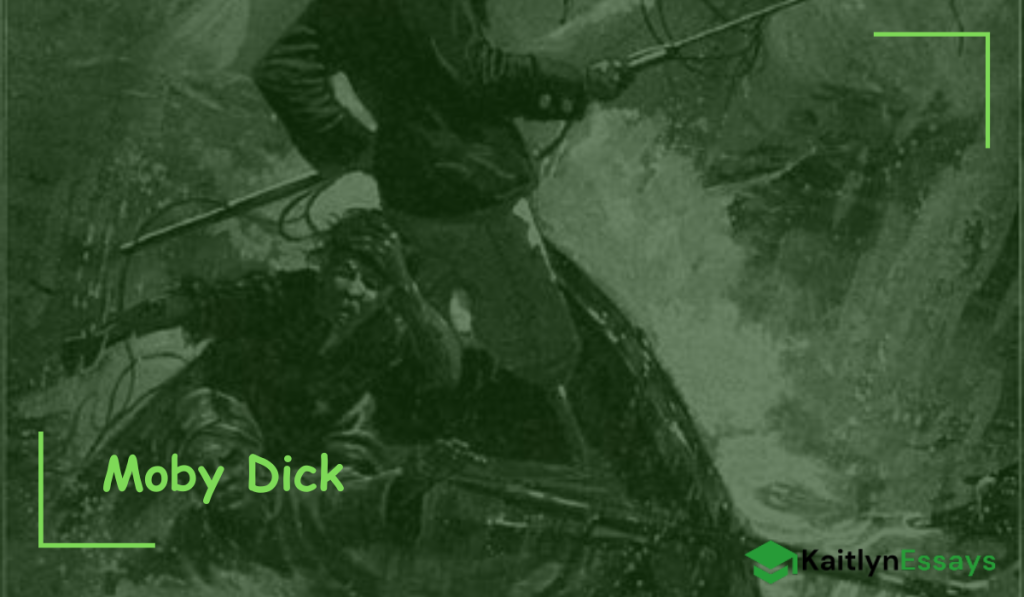
Herman Melville’s Moby-Dick is often hailed as one of the greatest American novels, a complex work that explores the themes of obsession, revenge, fate, and the human condition. Published in 1851, Moby-Dick was initially met with mixed reviews but has since gained recognition as a literary masterpiece. The novel tells the story of Captain Ahab’s relentless pursuit of the white whale, Moby Dick, which had previously destroyed his ship and severed his leg. The narrative is rich with symbolism, philosophical musings, and deep psychological exploration, making it a subject of extensive analysis and interpretation.
Historical and Cultural Context
To fully appreciate Moby-Dick, it is essential to understand the historical and cultural backdrop against which Melville wrote. The mid-19th century was a period of significant change and turmoil in the United States. The country was on the brink of civil war, and issues such as slavery, industrialization, and westward expansion were at the forefront of national discourse. These tensions are reflected in Moby-Dick, particularly in its exploration of themes like power, hierarchy, and the relationship between man and nature.
Melville himself was influenced by his own experiences at sea. Before writing Moby-Dick, Melville worked on whaling ships, where he encountered the brutal realities of life at sea. These experiences provided him with the material and insight necessary to write a novel that is not only a thrilling adventure but also a profound meditation on human existence. Melville’s exposure to different cultures and philosophies during his voyages also informed the novel’s diverse range of ideas and perspectives.
Themes in Moby Dick
The Limits of Knowledge
In “Moby-Dick,” the theme of the limits of knowledge is deeply embedded in the narrative, reflecting the idea that certain truths about life, nature, and existence are beyond human comprehension. Ishmael, the narrator, often meditates on the mysteries of the sea and the enigmatic nature of the whale, particularly Moby Dick. Throughout the novel, Ishmael acknowledges that the human mind has boundaries, and there are aspects of the universe that remain inscrutable despite all efforts to understand them.
For instance, in Chapter 32, “Cetology,” Ishmael attempts to categorize and explain the different species of whales but ultimately admits the futility of his endeavor: “Dissect him how I may, then, I but go skin deep; I know him not, and never will.”
This acknowledgment underscores the novel’s portrayal of the whale as a symbol of the unknowable and the vastness of nature that defies human understanding. Ahab’s quest to conquer Moby Dick can be seen as an attempt to penetrate these mysteries, yet the novel suggests that such knowledge is inherently out of reach. The whale remains an elusive and inscrutable force, representing the limits of what humans can know or control. Even the ocean itself is depicted as a vast, uncharted territory, filled with secrets that humanity can only partially grasp. This theme invites readers to reflect on the limitations of human knowledge and the humility required in the face of the unknown.
Obsession
Obsession is a central theme in “Moby-Dick,” personified by Captain Ahab’s relentless pursuit of the White Whale. Ahab’s obsession with Moby Dick is not merely a desire for revenge but a deep, consuming fixation that overtakes his entire being. The novel portrays Ahab as a tragic figure, driven by an overwhelming need to confront and defeat the whale, which he sees as the embodiment of all the world’s malice.
Ahab’s obsession is evident in his monomaniacal focus, as described in Chapter 36, “The Quarter-Deck,” where he nails a gold doubloon to the mast and promises it to the first man who sights Moby Dick: “Whosoever of ye raises me a white-headed whale with a wrinkled brow and a crooked jaw; whosoever of ye raises me that white whale, he shall have this gold ounce, my boys!”
This act is symbolic of Ahab’s willingness to sacrifice anything and anyone in his pursuit, showing how his obsession distorts his sense of reality and morality. Ahab’s fixation on Moby Dick isolates him from the crew and from humanity itself, as he becomes increasingly consumed by his quest.
In Chapter 135, “The Chase—Third Day,” Ahab’s final confrontation with the whale is depicted as a moment of tragic inevitability, where his obsession leads to his downfall: “Towards thee I roll, thou all-destroying but unconquering whale; to the last I grapple with thee; from hell’s heart I stab at thee; for hate’s sake, I spit my last breath at thee.” These words capture the intensity of Ahab’s obsession, which ultimately drives him to his death.
Through Ahab’s character, Melville explores the destructive power of obsession, illustrating how it can consume an individual’s life, distort their perspective, and lead to their ruin. The novel suggests that Ahab’s downfall is not just the result of his pursuit of the whale, but of the obsession that blinds him to everything else, including his own humanity. This theme serves as a cautionary tale about the dangers of allowing any single pursuit or idea to dominate one’s life.
Fate vs. Free Will
In “Moby-Dick,” the tension between fate and free will is a prominent theme, explored through the actions and beliefs of the characters, particularly Captain Ahab. Ahab’s pursuit of Moby Dick is driven by a belief that he is fated to confront the whale, suggesting a deterministic view of the world where events are preordained. Ahab often speaks as though he is bound by destiny, unable to escape the course that has been set for him. In Chapter 132, “The Symphony,” Ahab reflects on his life, lamenting how he feels trapped by his own fate: “Ahab never thinks; he only feels, feels, feels; that’s tingling enough for mortal man! To think’s audacity. God only has that right and privilege.”
Despite this belief in fate, Ahab also exercises his free will in choosing to pursue the whale with such relentless determination. His actions are not those of a passive participant in his fate but of someone who actively shapes his destiny, even if it leads to his destruction. The interplay between fate and free will is further complicated by the prophecy of Fedallah, Ahab’s dark companion, who foretells Ahab’s death in specific terms that seem to seal his fate. Yet, Ahab’s refusal to heed warnings and his insistence on pursuing the whale can be seen as acts of defiance against fate, illustrating the complex relationship between destiny and choice.
Ishmael, the narrator, also contemplates this theme, particularly in his reflections on life and death at sea. The unpredictability of the ocean and the dangers of whaling underscore the idea that human beings are at the mercy of forces beyond their control, yet they still make choices within those constraints. This theme raises questions about the extent to which individuals control their own destinies versus being subject to the whims of fate. “Moby-Dick” ultimately leaves the resolution of this tension ambiguous, reflecting the complexity of human experience and the uncertainties of life.
The Power and Terror of Nature
The theme of the power and terror of nature is central to “Moby-Dick,” where the vast, uncontrollable forces of the natural world are depicted through the sea, the whale, and the challenges faced by the crew of the Pequod. Nature, as portrayed in the novel, is both awe-inspiring and terrifying, a force that dwarfs human ambition and exposes the fragility of human life.
The sea, in particular, is a constant presence, symbolizing the unpredictable and often violent power of nature. Ishmael frequently describes the ocean as a place of mystery and danger, where human beings are vulnerable to the elements. In Chapter 23, “The Lee Shore,” Ishmael reflects on the overwhelming power of the sea: “In landlessness alone resides the highest truth, shoreless, indefinite as God.”
Moby Dick, the White Whale, embodies the terror and power of nature in a more specific form. The whale is described as an almost supernatural force, immense and invincible, capable of destroying ships and men with ease. The crew’s encounters with Moby Dick illustrate the insignificance of human efforts in the face of such a powerful natural entity. Ahab’s obsession with conquering the whale can be seen as a futile attempt to assert human control over nature, an endeavor that the novel suggests is doomed to fail. In Chapter 133, “The Chase—First Day,” the sight of Moby Dick inspires fear and awe in the crew: “Moby Dick seemed combinedly possessed by all the angels that fell from heaven.”
The novel also highlights the indifferent cruelty of nature, where the sea and its creatures act without regard for human life. The whalers are constantly at risk, and their survival depends on their ability to navigate the dangers of the natural world. This theme is further emphasized by the shipwrecks and storms that occur throughout the novel, reminding the reader of the destructive potential of the environment. “Moby-Dick” portrays nature as a powerful, indifferent force that can inspire both reverence and terror, challenging the characters’ beliefs in their ability to control their own destinies. Through this theme, Melville explores the limits of human power and the inevitability of confronting forces that are beyond human understanding or control.
The Complexity of Good and Evil
In “Moby-Dick,” Herman Melville explores the complexity of good and evil, challenging traditional notions and presenting a more ambiguous perspective. The novel does not offer clear-cut definitions of what is good and what is evil but instead examines the gray areas where morality is uncertain and subjective. Captain Ahab’s perception of Moby Dick as the embodiment of evil is central to this theme. Ahab views the whale as a malevolent force, attributing to it a personal malice that justifies his obsessive pursuit. In Chapter 41, “Moby Dick,” Ahab describes the whale as “that inscrutable thing, chiefly known to me, and which I know as the Wrath of God.”
However, the novel leaves open the possibility that Moby Dick is simply an innocent creature acting according to its nature, not an evil being but rather a part of the natural world that Ahab has wrongly demonized. This ambiguity forces readers to question whether the whale truly represents evil or whether Ahab’s interpretation is a projection of his own inner turmoil and madness. Furthermore, the diverse crew of the Pequod, hailing from different cultural and religious backgrounds, adds layers to the exploration of morality. Characters like Queequeg, a “savage” by Western standards but depicted as noble and virtuous, challenge the simplistic binaries of good and evil.
Melville also complicates the idea of evil through the character of Ahab himself. While Ahab’s obsession with revenge can be seen as destructive and self-serving, his passionate defiance against what he perceives as a malevolent universe also carries a tragic, heroic quality. The novel suggests that evil may not be an external force embodied by a single entity like Moby Dick but rather a more complex interplay of motives, actions, and interpretations. This theme invites readers to reflect on the nature of evil and whether it can be clearly defined, or if it is shaped by perspective, circumstance, and the inherent contradictions of human nature.
Isolation and the Search for Companionship
Isolation and the search for companionship are recurring themes in “Moby-Dick,” reflecting the human need for connection and the often-lonely existence of those who seek it in a vast and indifferent world. The novel portrays both physical and emotional isolation, particularly through the character of Captain Ahab, who is deeply isolated from the rest of humanity.
Ahab’s obsession with Moby Dick has consumed him to the point where he is cut off from meaningful relationships with others, even with his own crew. In Chapter 132, “The Symphony,” Ahab acknowledges his loneliness, saying, “Close! stand close to me, Starbuck; let me look into a human eye; it is better than to gaze into sea or sky; better than to gaze upon God.”
Ahab’s isolation is self-imposed, driven by his single-minded pursuit of the whale, but it also underscores the broader theme of isolation in the novel. The crew of the Pequod, despite being together on the ship, often experiences loneliness and separation, both from their families and from the broader world. The vastness of the ocean and the dangerous, unpredictable nature of whaling contribute to a sense of isolation, where each man is alone with his thoughts and fears. Ishmael, the narrator, is another character who grapples with isolation. However, his bond with Queequeg, a fellow crew member, provides a counterpoint to this theme, illustrating the human capacity for forming deep, meaningful connections even in the most unlikely circumstances.
The relationship between Ishmael and Queequeg, which begins with initial suspicion but grows into a profound friendship, serves as a reminder of the importance of companionship in overcoming isolation. In Chapter 10, “A Bosom Friend,” Ishmael reflects on this bond: “Queequeg was George Washington cannibalistically developed.” Their friendship symbolizes the potential for connection and understanding across cultural and personal divides. This theme of companionship extends to the broader crew, who, despite their differences, must rely on each other to survive the dangers of the sea.
Through these contrasting experiences of isolation and companionship, “Moby-Dick” explores the human need for connection in the face of a world that can be cold and indifferent. The novel suggests that while isolation is a fundamental part of the human condition, the search for companionship and community is equally essential, offering comfort and meaning in an otherwise lonely existence.
The Ambiguity of Reality
In “Moby-Dick,” the theme of the ambiguity of reality is intricately woven into the narrative, reflecting the novel’s exploration of perception, truth, and the subjective nature of experience. Herman Melville blurs the line between fact and fiction, leaving readers to question what is real and what is imagined. This ambiguity is evident in the way Ishmael, the narrator, presents his story. His accounts of events, particularly those involving Moby Dick, often mix personal reflection with broader philosophical musings, creating a narrative that is as much about the inner world of the characters as it is about the external events.
Ishmael’s descriptions of the whale itself are filled with contradictions and uncertainties. In Chapter 85, “The Fountain,” he acknowledges the difficulty of understanding Moby Dick: “How wondrous familiar is a fool!” Ishmael presents the whale as an almost mythic creature, whose true nature cannot be fully comprehended or accurately depicted. This ambiguity is further emphasized by the various interpretations of the whale by different characters, each of whom sees Moby Dick in a different light—some as a fearsome beast, others as a manifestation of divine wrath or natural wonder. This multiplicity of perspectives suggests that reality is not a fixed or singular concept but is instead shaped by individual perception and interpretation.
The novel also plays with narrative techniques that add to the sense of ambiguity. Melville uses shifts in tone, digressions into scientific or philosophical discourse, and even elements of stage drama to create a story that defies straightforward categorization. The blending of genres and styles reflects the complexity and uncertainty of reality as experienced by the characters. This theme challenges readers to consider how much of what they perceive is shaped by their own biases, fears, and desires, and how much remains elusive and unknowable. The ambiguity of reality in “Moby-Dick” underscores the novel’s broader exploration of the human condition, where truth is often elusive, and certainty is an illusion.
Revenge
Revenge is a central theme in “Moby-Dick,” driving the plot and shaping the fate of the characters, particularly Captain Ahab. Ahab’s pursuit of revenge against Moby Dick, the White Whale, is the primary force propelling the narrative forward. His obsession with exacting vengeance on the whale for the loss of his leg becomes an all-consuming mission that ultimately leads to his downfall. Ahab’s quest for revenge is portrayed as both deeply personal and tragically misguided, as he allows his desire for retribution to overshadow all other aspects of his life. In Chapter 37, “Sunset,” Ahab reflects on his obsession: “The path to my fixed purpose is laid with iron rails, whereon my soul is grooved to run.”
Ahab’s relentless pursuit of the whale is symbolic of the destructive power of revenge. His fixation on Moby Dick blinds him to reason, compassion, and even self-preservation. Ahab’s willingness to risk the lives of his crew and his own life for the sake of revenge highlights the theme’s darker implications—revenge is shown as a force that consumes and destroys. In Chapter 132, “The Symphony,” Ahab admits to Starbuck, “What is it, what nameless, inscrutable, unearthly thing is it; what cozening, hidden lord and master, and cruel, remorseless emperor commands me; that against all natural lovings and longings, I so keep pushing, and crowding, and jamming myself on all the time.”
This theme is further explored through the novel’s broader reflections on the futility of revenge. Ahab’s pursuit of Moby Dick ultimately leads to his own destruction, along with the demise of his crew and the ship, the Pequod. The final confrontation between Ahab and the whale in Chapter 135, “The Chase—Third Day,” ends with Ahab’s death, symbolizing the self-destructive nature of revenge. The novel suggests that Ahab’s need for vengeance is not only futile but also self-defeating, as it drives him to his inevitable doom.
Through Ahab’s tragic story, Melville illustrates the corrosive effects of revenge on the human soul and the futility of seeking justice through retribution. The theme of revenge in “Moby-Dick” serves as a cautionary tale about the dangers of allowing anger and resentment to dominate one’s life, ultimately leading to self-destruction and the harm of others.
Religion and the Divine
In “Moby-Dick,” the theme of religion and the divine is intricately woven into the narrative, reflecting the characters’ diverse spiritual beliefs and the novel’s broader exploration of faith, fate, and the nature of existence. The novel is rich with religious imagery and allusions, drawing from various religious traditions, including Christianity, paganism, and mysticism. Captain Ahab’s conflict with Moby Dick is often framed in religious terms, with Ahab perceiving the whale as a god-like force that he must confront.
Ahab’s struggle against the whale can be seen as a symbolic rebellion against a malevolent or indifferent deity, as he expresses in Chapter 132, “The Symphony”: “Aye, aye! and I’ll chase him round Good Hope, and round the Horn, and round the Norway Maelstrom, and round perdition’s flames before I give him up.”
Ahab’s relationship with the divine is complex and fraught with tension. He is both defiant and despairing, challenging what he sees as a cruel fate imposed by an uncaring god. His obsession with Moby Dick becomes a kind of religious crusade, driven by a desire to defy the divine order and assert his own will against what he perceives as an unjust universe. This struggle reflects the novel’s broader questions about the nature of God and the role of fate in human life. Is Ahab’s battle with the whale a fight against an evil force, or is it a misguided attempt to challenge the inscrutable workings of a higher power?
The novel also explores different religious perspectives through its diverse crew, who come from various cultural and religious backgrounds. Characters like Queequeg, a harpooner from a “pagan” culture, bring their own spiritual beliefs to the Pequod, contrasting with the more traditional Christian views of characters like Starbuck, the first mate. In Chapter 7, “The Chapel,” Ishmael reflects on the universal fear of death and the hope for salvation, contemplating the different ways in which people find meaning and solace in their beliefs: “Methinks we have hugely mistaken this matter of Life and Death. Methinks that what they call my shadow here on earth is my true substance.”
Through these various perspectives, “Moby-Dick” examines the nature of faith, the role of religion in human life, and the ways in which people seek to understand the divine. The novel does not provide clear answers but instead presents a complex view of spirituality, where the divine is both a source of comfort and a source of fear, something that can be revered, questioned, or even defied. This ambiguity reflects Melville’s exploration of the complexities of faith and the human struggle to find meaning in a world that is often mysterious and incomprehensible.
Death and Mortality
Death and mortality are pervasive themes in “Moby-Dick,” shaping the novel’s atmosphere and the characters’ actions and thoughts. The ever-present threat of death looms over the crew of the Pequod, who are constantly aware of the dangers that come with whaling. The novel opens with Ishmael’s reflections on death, as he contemplates the reality of mortality and the transient nature of life.
This awareness of death influences Ishmael’s decision to go to sea, as he sees it as a way to confront the fear of death head-on. In Chapter 1, “Loomings,” Ishmael muses, “Whenever I find myself growing grim about the mouth; whenever it is a damp, drizzly November in my soul… then, I account it high time to get to sea as soon as I can.”
The novel’s depiction of the sea as a vast, indifferent force further emphasizes the inevitability of death. The ocean is portrayed as both a giver and taker of life, a place where men must face their mortality with every wave and storm. The frequent references to drowning, shipwrecks, and the violent deaths of whales reinforce this theme, reminding both the characters and the readers of the fragile nature of human existence. In Chapter 96, “The Try-Works,” Ishmael reflects on the eerie connection between life and death in the whaling industry: “For the most part, this fire on the sea is a thing of most diabolical adventure and suggestively Devilish.”
Captain Ahab’s obsession with Moby Dick is also deeply connected to the theme of death and mortality. Ahab is haunted by the whale, which symbolizes the inevitability of death and the futility of trying to escape it. His pursuit of the whale can be seen as an attempt to assert control over his own fate, to confront and conquer the fear of death. However, the novel suggests that this quest is ultimately doomed, as Ahab’s relentless pursuit leads to his own destruction. In Chapter 135, “The Chase—Third Day,” Ahab meets his end, entangled by his own harpoon line, symbolizing how his desire to master death only brings him closer to it.
The theme of death and mortality in “Moby-Dick” serves as a reminder of the transient nature of life and the inevitable end that awaits all living beings. The novel explores how different characters cope with the knowledge of their mortality, whether through defiance, acceptance, or a search for meaning. Ishmael’s survival at the end of the novel, floating on Queequeg’s coffin, underscores the thin line between life and death and the randomness of survival. “Moby-Dick” ultimately portrays death not as something to be feared or avoided, but as an integral part of the human experience, one that must be confronted and understood in all its complexity.
Symbols in Moby Dick
The White Whale (Moby Dick)
Moby Dick, the enormous white sperm whale, is arguably the most significant symbol in the novel. As an embodiment of the unknowable and unconquerable forces of nature, the whale represents the limits of human understanding and control over the natural world. Its whiteness is particularly symbolic, evoking a sense of blankness that can be filled with various meanings – purity, terror, or the void of meaning itself.
The whale also serves as a powerful symbol of obsession. Captain Ahab’s relentless pursuit of Moby Dick, which ultimately leads to his demise and that of his crew, illustrates the destructive nature of fixation and the dangers of allowing a single purpose to consume one’s life. In this sense, Moby Dick becomes a mirror for Ahab’s own inner demons and unresolved conflicts.
Furthermore, the whale symbolizes the human struggle against fate. Ahab sees Moby Dick as the physical manifestation of all the malicious forces in the universe, and his quest to kill the whale becomes a metaphor for humanity’s attempt to conquer the uncontrollable aspects of existence. The futility of this endeavor is underscored by the tragic ending, suggesting that some forces in life are simply beyond human mastery.
The Pequod (ship)
The Pequod, the whaling ship at the center of the narrative, functions as a microcosm of human society. Its crew, composed of individuals from various racial, ethnic, and cultural backgrounds, represents the diversity of America in the mid-19th century. This multicultural assembly allows Melville to explore themes of unity and conflict within a confined space, mirroring broader societal issues.
As a symbol of America itself, the Pequod reflects the nation’s expansionist ambitions during the era of Manifest Destiny. The ship’s journey across vast oceans in pursuit of wealth (in the form of whale oil) parallels America’s westward expansion and its growing global influence. The eventual destruction of the Pequod can be interpreted as a critique of the potential consequences of unchecked ambition and the pursuit of material gain at the expense of moral considerations.
The ship also serves as a floating stage for the power dynamics and hierarchies that exist in society. From the tyrannical rule of Ahab to the various ranks among the crew, the Pequod becomes a lens through which Melville examines authority, obedience, and rebellion.
The Sea
The sea in Moby-Dick is complex symbol that represents the mysterious and unpredictable aspects of life. Its vast, ever-changing nature mirrors the complexities and uncertainties of human existence. The sea’s depths conceal unknown dangers and possibilities, much like the hidden aspects of the human psyche or the unfathomable nature of the universe.
As a symbol of the unconscious mind, the sea represents the deep, often turbulent realm of human thoughts and emotions that lie beneath the surface of conscious awareness. Just as the sea can be calm one moment and tempestuous the next, so too can the human mind shift rapidly between states of tranquility and turmoil. The characters’ interactions with the sea often reflect their internal struggles and revelations.
Moreover, the sea serves as a backdrop for the theme of isolation. The Pequod’s journey takes it far from civilization, emphasizing the solitude of the human condition and the individual’s struggle to find meaning in a vast, often indifferent universe. The sea’s boundlessness also evokes ideas of freedom and possibility, contrasting with the constraints of society and the limitations of human knowledge.
Queequeg’s Coffin
Queequeg’s coffin is a complex symbol that evolves throughout the novel. Initially, it represents Queequeg’s acceptance of mortality when he falls ill and believes he’s dying. The coffin is crafted as a replica of his canoe, connecting it to his cultural heritage and identity.
However, the coffin takes on new meaning when Queequeg recovers and it’s repurposed as a life buoy for the Pequod. This transformation symbolizes the thin line between life and death, and how objects associated with death can sometimes preserve life. The duality of the coffin reflects the novel’s broader themes of fate and the unpredictability of existence.
In the novel’s climax, the coffin becomes Ishmael’s salvation, allowing him to survive the Pequod’s destruction. This final use of the coffin symbolizes rebirth and the cyclical nature of life and death. It also represents hope and the possibility of survival even in the face of overwhelming odds.
The Gold Doubloon
The gold doubloon that Ahab nails to the mast serves as a powerful symbol of the varied motivations driving the Pequod’s crew. Ahab promises this valuable coin to the first man who spots Moby Dick, turning it into a focal point for the crew’s ambitions and desires.
Each character who contemplates the doubloon sees something different reflected in its surface, revealing their individual perspectives and priorities. For instance, Ahab sees it as a representation of the world he seeks to conquer, while Starbuck views it as a reminder of his family and home. These diverse interpretations highlight the subjective nature of perception and the way personal experiences shape our understanding of the world.
The doubloon also symbolizes greed and the corrupting influence of material wealth. It serves as a constant temptation for the crew, encouraging them to prioritize personal gain over safety or moral considerations. In this way, the doubloon becomes a microcosm of the larger economic forces driving the whaling industry and, by extension, many human endeavors.
Ahab’s Ivory Leg
Ahab’s prosthetic leg, made from the ivory of a sperm whale, is a potent symbol of his obsession and thirst for revenge against Moby Dick. The leg serves as a constant physical reminder of Ahab’s past encounter with the white whale and the injury that fuels his monomania.
The use of whale ivory for the leg creates a paradoxical connection between Ahab and the object of his hatred. It symbolizes how Ahab’s identity has become inextricably linked to Moby Dick and the whaling industry, to the point where a part of him is literally made from the substance he seeks to destroy.
Furthermore, the ivory leg represents the conflict between man-made artifice and nature. It’s a human attempt to replicate and replace what nature has taken away, but it remains an imperfect substitute. This symbolism extends to broader themes in the novel about humanity’s attempts to conquer or control nature, and the ultimate futility of such efforts.
The leg’s whiteness also connects it to the novel’s complex symbolism of the color white, associating it with themes of blankness, terror, and the unknown. Like Moby Dick himself, the white leg becomes a canvas onto which various meanings can be projected.
The Harpoon
The harpoon is a central symbol in Moby-Dick, representing human will and determination in the face of nature’s power. As the primary tool used by whalers to hunt their prey, the harpoon symbolizes humanity’s attempt to assert dominance over the natural world.
In the novel, special attention is given to Ahab’s personal harpoon, which he has forged and baptized in blood. This particular weapon becomes an extension of Ahab’s obsession and vengeful spirit. The process of its creation, involving pagan rituals and dark symbolism, imbues it with an almost supernatural quality, reflecting the depth of Ahab’s monomania.
The harpoon also serves as a metaphor for human ambition and the reach of human endeavor. Just as the harpoon is thrown to bridge the gap between the whaler and the whale, it symbolizes humanity’s efforts to extend its influence beyond its natural limits. However, the frequent failures of harpoons to secure their targets also highlight the limitations of human power when pitted against the forces of nature.
Moreover, the violent nature of the harpoon’s use underscores the destructive aspects of human interaction with the natural world. It becomes a symbol of the exploitation inherent in the whaling industry, and by extension, in many human enterprises that seek to extract resources from nature.
The Color White
The color white plays a crucial symbolic role in Moby-Dick, particularly in relation to the whale itself. Melville dedicates an entire chapter (“The Whiteness of the Whale”) to exploring the symbolic implications of this color, highlighting its complexity and ambiguity.
In the novel, white represents mystery and the unknown. Unlike other colors that have more definite associations, white is presented as a blank canvas that can evoke a wide range of emotions and ideas. This blankness makes it particularly terrifying, as it can be filled with whatever fears or anxieties the observer brings to it.
White is also associated with purity and innocence in many cultures, but Melville subverts this expectation by linking it to terror and death. The whiteness of Moby Dick makes the whale more frightening, not less, challenging readers’ preconceptions about color symbolism.
Furthermore, the color white in the novel symbolizes the limits of human perception and understanding. Just as white light contains all colors of the spectrum, the white whale represents the totality of existence that humans struggle to comprehend. This ties into the novel’s themes about the limitations of human knowledge and the vastness of the unknown.
The ambiguity of white also relates to the novel’s exploration of good and evil. By making the object of Ahab’s hatred white instead of black (more traditionally associated with evil), Melville complicates the moral landscape of the novel. The whiteness of the whale suggests that concepts of good and evil are not as clear-cut as they might seem, reflecting the moral ambiguity that permeates much of the story.
Literary Devices in Moby Dick
Foreshadowing
Foreshadowing in “Moby-Dick” serves to build suspense and hint at future events in the narrative. Melville uses various forms of foreshadowing, including prophecies, dreams, and omens. For example, the prophecy made by Fedallah, one of Ahab’s crew members, foreshadows Ahab’s demise by predicting that he will see two hearses on the sea and that his death will come from hemp, a reference to hanging or a rope, which alludes to the line attached to the harpoon. These hints create a sense of inevitability, making Ahab’s fate seem predestined and heightening the tragic tension as the story unfolds.
Metaphor
Metaphors in “Moby-Dick” are used to draw deeper connections between the physical and the abstract. The sea, for instance, is a recurring metaphor for the unknown and the subconscious. It represents the vast, mysterious, and often terrifying aspects of life that are beyond human control or understanding. Similarly, the hunt for Moby Dick serves as a metaphor for humanity’s relentless pursuit of knowledge, power, and meaning, often leading to destructive consequences. Ahab’s pursuit of the whale is a metaphor for obsession and the dangers of allowing a single goal to dominate one’s life, ultimately leading to his downfall.
Irony
Irony is a key literary device in “Moby-Dick,” often used to underscore the futility of human efforts against larger, uncontrollable forces. Ahab’s monomaniacal quest to kill Moby Dick is deeply ironic because, in his attempt to conquer the whale, he ultimately destroys himself and his crew. The irony lies in the fact that Ahab’s obsession, which he believes will give his life meaning, leads only to his death and the destruction of his ship. Additionally, the survival of Ishmael, the least involved in Ahab’s obsession, adds another layer of irony. Despite being relatively passive throughout the novel, Ishmael is the only one who lives to tell the tale, emphasizing the randomness of survival and fate.
Allusion
Melville’s use of allusion enriches the text by drawing connections to a wide range of literary, religious, and historical sources. The name “Ahab” is a direct biblical allusion to the wicked King Ahab, who defied God and faced divine retribution, paralleling Captain Ahab’s defiance against the natural order. Additionally, the novel alludes to Greek mythology, such as the character of Narcissus, who becomes a metaphor for self-destructive obsession, much like Ahab’s fixation on the whale. These allusions serve to deepen the reader’s understanding of the characters and themes, linking Ahab’s tragic fate to broader, universal stories of hubris and downfall.
Imagery
Imagery in “Moby-Dick” is vivid and often grandiose, helping to create a powerful sensory experience for the reader. Melville’s descriptions of the sea, the whale, and the various scenes aboard the Pequod are filled with rich, detailed imagery that evokes the vastness and majesty of the ocean, the terror of the hunt, and the eerie atmosphere of life at sea. For example, the image of the Pequod sailing through a storm captures the raw power of nature and the perilous journey of the crew. The use of light and dark imagery also contributes to the novel’s mood, with the whiteness of the whale symbolizing both purity and terror, depending on the perspective.
Allegory
“Moby-Dick” can be read as an allegory, with the story of the whale hunt serving as a broader commentary on human existence. The novel explores the conflict between humanity and nature, the limits of knowledge, and the dangers of obsession. Ahab’s relentless pursuit of Moby Dick can be seen as an allegory for man’s struggle to conquer and control nature, an effort that ultimately proves futile. The diverse crew of the Pequod represents different aspects of humanity, each with their own beliefs, cultures, and motivations, coming together in a doomed quest. This allegorical reading invites readers to consider the novel as a reflection on the human condition and the often-destructive consequences of our desires.
Narrative Techniques
Melville employs a variety of narrative techniques that add complexity to the storytelling in “Moby-Dick.” One key technique is the use of an unreliable narrator in the form of Ishmael. While Ishmael narrates most of the novel, his interpretations of events are subjective and sometimes contradictory, leading readers to question the accuracy of his account.
This unreliability adds a layer of complexity to the narrative, as readers must sift through Ishmael’s biases and uncertainties. Additionally, Melville occasionally shifts from Ishmael’s first-person perspective to a more omniscient point of view, particularly in dramatic scenes such as Ahab’s confrontations with the crew. These shifts in perspective allow the reader to gain a broader understanding of the events and characters, providing a more detailed view of the story.
Personification
Personification is used throughout “Moby-Dick” to give human qualities to the sea, the whale, and other natural elements, emphasizing their power and agency. The sea is often described as a living entity, with moods and intentions that influence the fate of the characters. Moby Dick himself is personified as a malevolent force, almost a nemesis with a will of its own, rather than just an animal. This personification blurs the line between the natural and the supernatural, making the whale and the sea seem like conscious adversaries that the characters must confront. This technique heightens the sense of danger and adds to the novel’s exploration of humanity’s struggle against overwhelming natural forces.
Juxtaposition
Melville uses juxtaposition to highlight contrasts between characters, themes, and ideas in “Moby-Dick.” For instance, Ahab’s obsessive, vengeful nature is often juxtaposed with Starbuck’s more rational, cautious approach to the whaling mission. This contrast between Ahab’s monomania and Starbuck’s pragmatism serves to emphasize the dangers of unchecked obsession and the potential for reason to be overruled by emotion. Additionally, Melville juxtaposes moments of intense action, such as the whale hunts, with quieter, more reflective passages that explore philosophical questions, creating a dynamic narrative that moves between external conflict and internal contemplation. This juxtaposition enriches the novel’s exploration of its themes, making the story both an adventure and a meditation on deeper issues.
Diction and Syntax
The diction and syntax in “Moby-Dick” reflect the novel’s epic scope and philosophical depth. Melville’s use of archaic language, including biblical and Shakespearean phrasing, gives the novel a formal, elevated tone, suitable for its grand themes. The syntax is often complex, with long, elaborate sentences that mirror the complexity of the ideas being explored. This style can make the novel challenging to read, but it also contributes to its richness, as the language itself becomes a vehicle for expressing the novel’s exploration of existence, knowledge, and fate. The use of such language also aligns the novel with epic literature, positioning it as a modern-day epic that grapples with timeless questions.
Quotes from Moby Dick
“Call me Ishmael.”
The opening line of Moby-Dick, “Call me Ishmael,” is deceptively simple but loaded with meaning. It establishes the narrator’s identity and sets the tone for the entire novel. By choosing the name “Ishmael,” Melville draws on a rich biblical tradition; in the Bible, Ishmael is the son of Abraham who is cast out into the wilderness. This allusion immediately suggests themes of exile, isolation, and wandering—key elements of Ishmael’s character and the journey he undertakes.
The use of “Call me” instead of “My name is” also invites a certain level of informality and intimacy, making the reader a confidant. This phrase positions Ishmael not just as a passive observer but as an active participant in the narrative, someone who is deliberately choosing to tell this story and share this identity with the reader. The ambiguity of “Ishmael” as both a name and a role further highlights the novel’s exploration of identity, as Ishmael’s experiences at sea lead him to question and redefine himself.
“From hell’s heart I stab at thee; for hate’s sake I spit my last breath at thee. Ye damned whale!”
This powerful quote captures the essence of Captain Ahab’s consuming obsession with Moby Dick, the great white whale. As Ahab hurls these words at Moby Dick, they express his unrelenting hatred and desire for revenge. The phrase “From hell’s heart” indicates that Ahab’s vengeance is so deep-rooted that it comes from the darkest, most infernal part of his being. His hatred is not just personal but cosmic, as if he sees Moby Dick as the embodiment of all evil and suffering in the world. The expression “I stab at thee” signifies Ahab’s willingness to fight against this perceived evil, even if it costs him his life.
The intensity of “for hate’s sake I spit my last breath at thee” further emphasizes that Ahab’s life has been entirely consumed by this destructive hatred. This quote illustrates the tragic nature of Ahab’s character—his obsession with the whale has completely taken over his life, driving him to madness and leading to his inevitable downfall. The “damned whale” represents not just a physical adversary but the larger, incomprehensible forces of fate and nature that Ahab feels compelled to challenge, despite the futility of such an endeavor. This moment encapsulates the novel’s exploration of obsession, revenge, and the human struggle against an indifferent universe.
“I know not all that may be coming, but be it what it will, I’ll go to it laughing.”
This quote from Herman Melville’s “Moby-Dick” demonstrates a defiant attitude towards the uncertainties of life and fate. Spoken by the character Stubb, it reveals a complex mixture of bravery, recklessness, and philosophical acceptance.
The first part of the quote, “I know not all that may be coming,” acknowledges the fundamental unpredictability of the future. It’s a humble admission of human limitations in the face of the unknown. This sentiment resonates with the novel’s broader themes of man’s struggle against nature and the inscrutable workings of the universe.
However, the latter part of the quote, “but be it what it will, I’ll go to it laughing,” demonstrates a remarkable resilience and even a kind of joyous defiance. Stubb’s determination to face whatever comes with laughter suggests a refusal to be cowed by fear or uncertainty. It’s an attitude that goes beyond mere acceptance of fate; it’s an active embrace of life’s challenges with a spirit of adventure and humor.
This philosophy aligns well with the dangerous and unpredictable nature of whaling, the central activity in “Moby-Dick.” In a profession where death or injury could come at any moment, Stubb’s approach represents a coping mechanism, a way to maintain sanity and courage in the face of constant peril.
On a deeper level, the quote can be seen as a microcosm of the human condition. We all face an uncertain future, filled with potential joys and sorrows. Stubb’s attitude suggests that the key to living well is not in trying to control the uncontrollable, but in cultivating a spirit of resilience and even joy in the face of whatever life brings.
“It is not down on any map; true places never are.”
At face value, the quote suggests that the most significant or “true” places are not those that can be easily charted or mapped. It implies that there’s a profound difference between geographical knowledge and experiential or spiritual understanding. The places that truly matter in our lives and journeys are often those that can’t be pinpointed on a conventional map.
Metaphorically, this quote can be interpreted as a commentary on the human experience and the nature of truth itself. It suggests that the most meaningful aspects of life – be they emotional states, personal revelations, or spiritual insights – are not easily quantifiable or describable in conventional terms. They exist beyond the realm of what can be objectively measured or documented.
In the context of “Moby-Dick,” this quote aligns with the novel’s exploration of the vast, unknowable nature of the sea and the equally mysterious depths of the human psyche. It reinforces the idea that true understanding and meaningful experiences often lie beyond the boundaries of what we can neatly categorize or explain.
This sentiment also resonates with the Romantic ideals prevalent in Melville’s time, which emphasized individual experience, emotion, and the sublime nature of the undiscovered or unexplored. It challenges the Enlightenment-era belief that all of nature could be systematically studied and understood.
“Better to sleep with a sober cannibal than a drunken Christian.”
On the surface, the quote presents a startling comparison that immediately grabs the reader’s attention. It suggests that the company of a sober cannibal is preferable to that of a drunken Christian. This unexpected juxtaposition serves to shake up conventional thinking and moral assumptions.
At a deeper level, the quote is a commentary on the importance of behavior over labels or professed beliefs. It implies that actions and current state of mind are more important than cultural or religious background when judging a person’s character or deciding whom to trust. The sober cannibal, despite being considered “uncivilized” by Western standards, is presented as a more reliable companion than the Christian who has lost control through intoxication.
This statement also reflects Melville’s critique of Western civilization and its presumed moral superiority. By portraying a “cannibal” (likely referring to a native Pacific Islander) in a more favorable light than a “Christian” (representing Western civilization), Melville challenges the ethnocentric views prevalent in his time.
Furthermore, the quote touches on themes of appearance versus reality and the potential hypocrisy within organized religion. It suggests that those who claim moral high ground (like Christians) may not always live up to their professed values, while those deemed “savage” by society might possess admirable qualities.
In the context of “Moby-Dick,” this quote aligns with the novel’s broader exploration of cultural relativism and its questioning of societal norms. It’s particularly relevant to the character Queequeg, a tattooed harpooner from the South Seas, who is initially feared for his “savage” appearance but proves to be one of the most loyal and capable characters in the story.
“I try all things; I achieve what I can.”
This quote reflects a pragmatic and resilient philosophy, likely representing Ishmael’s approach to life. In the context of Moby-Dick, it suggests a mindset of adaptability and perseverance. Ishmael, as the narrator and a survivor of the novel’s tragic events, demonstrates a willingness to confront challenges and explore possibilities, even when success is uncertain.
The phrase “I try all things” indicates an openness to experience and an experimental attitude toward life. However, the follow-up, “I achieve what I can,” tempers this ambition with a realistic acknowledgment of limitations. This balance between aspiration and acceptance of reality highlights the novel’s broader themes of human effort in the face of an unpredictable and often indifferent universe. Ishmael’s attitude contrasts sharply with Captain Ahab’s obsessive pursuit of Moby Dick, showing a more measured and sustainable way of engaging with life’s challenges.
“The sea had jeeringly kept his finite body up, but drowned the infinite of his soul.”
This quote encapsulates the novel’s exploration of the sea as both a physical and metaphysical force. Here, Melville presents the sea as a powerful, almost malevolent entity that sustains the body while crushing the spirit. The distinction between the “finite body” and the “infinite soul” underscores a key theme in Moby-Dick: the conflict between the material and the spiritual, the earthly and the transcendent.
The sea, in its vastness and mystery, becomes a metaphor for the indifferent and overwhelming forces of nature and fate. It can sustain life, but it can also destroy the inner essence of a person, symbolizing the existential struggles the characters face. The phrase “jeeringly kept his finite body up” suggests that the sea mocks human frailty and persistence, supporting life only to deliver a deeper, more profound defeat by drowning the soul. This quote reflects the novel’s dark view of the human condition, where the struggle against nature and destiny is ultimately futile, and where the most profound losses are not physical but spiritual.
“Ignorance is the parent of fear.”
This quote speaks to one of the central themes in Moby-Dick: the fear of the unknown. Melville suggests that much of human fear arises from ignorance or a lack of understanding. In the context of the novel, this can be seen in the crew’s fear of the sea, the whale, and the mysteries that lie beneath the surface. The vast, uncharted ocean and the enigmatic nature of Moby Dick symbolize the unknown, and it is this uncertainty that breeds fear.
By stating that “ignorance is the parent of fear,” Melville highlights the importance of knowledge and understanding as tools to combat fear. This idea is relevant not only to the characters in the novel but also to broader human experience. It suggests that by seeking knowledge and confronting the unknown, individuals can overcome their fears. However, the novel also complicates this notion, as some knowledge, particularly Ahab’s obsessive understanding of Moby Dick, leads to destruction rather than enlightenment.
“Ahab is forever Ahab, man. This whole act’s immutably decreed.”
This quote underscores the theme of fate and the inevitability of Ahab’s actions. It reflects the idea that Ahab is bound by his own nature and by a destiny that he cannot escape. The statement “Ahab is forever Ahab” suggests that his character is fixed, driven by an unchangeable obsession with vengeance against Moby Dick. The phrase “immutably decreed” implies that Ahab’s fate is predestined, that his tragic end is written in the stars, and that no matter what he does, he cannot alter his course.
This deterministic view of Ahab’s character and actions aligns with the novel’s exploration of free will versus fate. It portrays Ahab as a tragic figure, doomed by his own obsessive nature and by forces beyond his control. The inevitability of his downfall serves as a commentary on the human condition, suggesting that some aspects of our nature and destiny are beyond our power to change, leading to a sense of fatalism in the novel.
FAQs
How long is Moby-Dick?
Moby-Dick is a lengthy novel, typically running around 600 to 700 pages, depending on the edition. It is divided into 135 chapters.
Why is Moby-Dick considered a classic?
Moby-Dick is considered a classic because of its complex narrative structure, rich symbolism, and exploration of universal themes such as fate, revenge, and humanity’s place in the natural world. Its depth and layers of meaning have inspired extensive literary analysis and interpretation.
What inspired Herman Melville to write Moby-Dick?
Herman Melville was inspired to write Moby-Dick by his own experiences as a sailor, as well as by real-life events such as the sinking of the whaling ship Essex by a whale. Additionally, Melville was influenced by literature, philosophy, and his personal reflections on existence and human nature.