

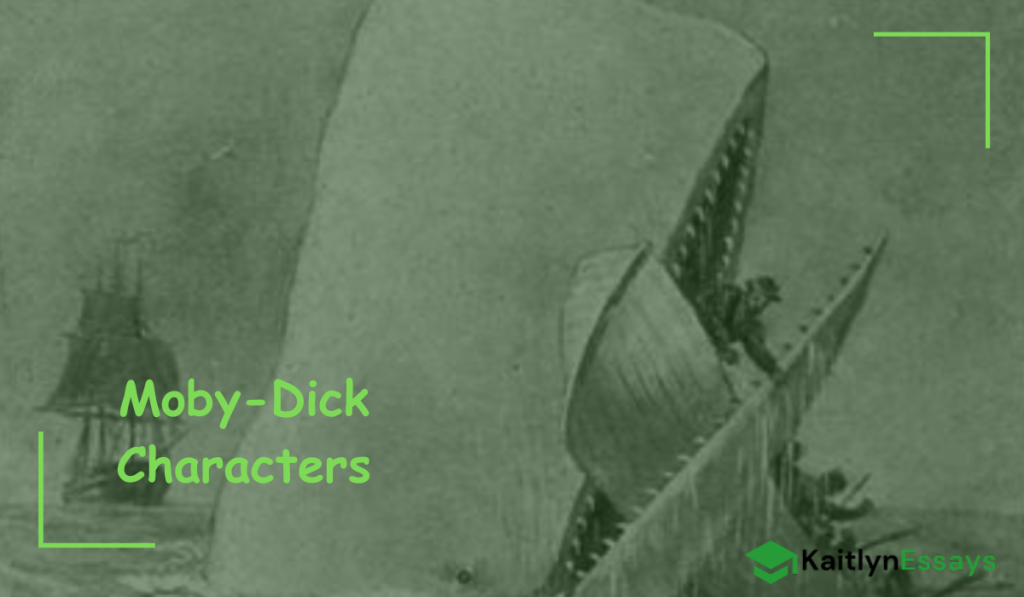
Herman Melville’s “Moby-Dick” features a rich cast of characters that bring the whaling world to life. At the center is Ishmael, the thoughtful narrator who guides readers through the story. Captain Ahab, driven by his obsession with the white whale, leads the crew of the Pequod on their fateful voyage. The diverse crew includes the skilled harpooner Queequeg, the cautious first mate Starbuck, and the jovial second mate Stubb. Each character adds depth to the narrative, from the mysterious prophet Elijah to the loyal cabin boy Pip.
Even minor figures like Flask, Tashtego, and Daggoo play key roles in shaping the story’s events. As Moby-Dick characters interact and face challenges, they reveal truths about human nature, ambition, and the struggle against forces beyond our control. Through these vivid personalities, Melville creates a compelling exploration of life aboard a 19th-century whaling ship and the complex motivations that drive people to pursue their goals.
Ishmael
Ishmael’s journey in Moby-Dick begins with his decision to join a whaling voyage, driven by a sense of restlessness and a desire for adventure. This pivotal choice sets the entire narrative in motion, as Ishmael leaves behind his familiar life to seek out new experiences on the open sea. His decision to embark on this journey introduces him to the world of whaling and the diverse individuals who will become central to his story.
One of the most significant developments in Ishmael’s character is his friendship with Queequeg, a tattooed harpooner from the South Seas. Despite their vastly different backgrounds, Ishmael and Queequeg form a deep bond that transcends cultural differences. This relationship highlights themes of tolerance and brotherhood, as Ishmael learns to embrace diversity and open his mind to new perspectives. Their friendship becomes a cornerstone of Ishmael’s experience on the Pequod.
As Ishmael and Queequeg sign on to the whaling ship Pequod, Ishmael is thrust into a new world of whaling and maritime adventure. Aboard the ship, he encounters a diverse crew and the enigmatic Captain Ahab, whose presence looms large over the journey. As the voyage progresses, Ishmael becomes increasingly aware of Ahab’s obsessive quest to hunt the white whale, Moby Dick. This obsession gradually reveals Ahab’s descent into madness, and Ishmael’s role as an observer deepens as he documents the captain’s unrelenting pursuit.
Throughout the voyage, Ishmael engages in philosophical reflections that reveal his intellectual growth. He contemplates a wide range of themes, from the nature of the universe to the moral implications of whaling. These reflections showcase Ishmael’s evolving understanding of the world around him and his place within it. His musings add depth to the narrative, allowing readers to explore complex ideas alongside him.
In the novel’s climax, Ishmael becomes the sole survivor of the Pequod’s final, fatal encounter with Moby Dick. As the ship is destroyed and the crew perishes, Ishmael clings to Queequeg’s coffin, which serves as a life buoy. This moment of survival symbolizes Ishmael’s endurance and the cyclical nature of the story. His survival allows him to bear witness to the tragic events of the voyage and to share the tale with others, marking the culmination of his character’s development.
Character Analysis
- Curiosity and openness: Ishmael’s insatiable curiosity is a driving force throughout the novel. He embarks on the whaling voyage not out of necessity, but out of a desire to experience and understand the world of whaling. This curiosity extends beyond just the practical aspects of the job to encompass a wide range of topics, including biology, philosophy, and different cultures. His openness to new experiences and ideas allows him to form unlikely friendships and adapt to the harsh realities of life at sea. This trait also serves the narrative by providing a justification for the novel’s many digressions into topics related to whales and whaling.
- Outsider perspective: As a newcomer to whaling, Ishmael provides readers with an outsider’s perspective on this unfamiliar world. This narrative device allows Melville to introduce and explain various aspects of whaling to the audience without it feeling forced or unnatural. Ishmael’s status as an outsider also positions him as an objective observer of the crew’s dynamics and the unfolding drama surrounding Ahab’s quest. His fresh eyes pick up on details and oddities that a seasoned whaler might overlook, enriching the narrative with vivid descriptions and insightful observations.
- Philosophical nature: Ishmael frequently engages in philosophical musings, contemplating themes such as fate, free will, the nature of good and evil, and humanity’s place in the universe. These reflections often arise from his observations of whaling life but extend to broader existential questions. His philosophical bent adds depth to the narrative, elevating it from a simple adventure story to a complex exploration of human nature and the cosmos. This aspect of his character also allows Melville to incorporate various philosophical and literary allusions into the text.
- Adaptability: Ishmael’s ability to adapt is crucial to his survival both socially and physically. He quickly acclimates to the rigors of life at sea and the dangerous work of whaling. More notably, he shows remarkable cultural adaptability, as evidenced by his friendship with Queequeg. Despite initial trepidation, Ishmael overcomes his prejudices and forms a deep bond with the Polynesian harpooner. This adaptability allows him to navigate the diverse and often challenging social environment of the Pequod.
- Observant: Ishmael’s keen powers of observation are essential to his role as narrator. He provides detailed descriptions of everything from whaling techniques to the subtle dynamics among the crew. His observations extend beyond the physical to include astute psychological insights into his fellow crew members, particularly Captain Ahab. This trait allows Melville to paint a vivid picture of life aboard a whaling ship and to develop complex characters.
- Survivor: Ishmael’s role as the sole survivor of the Pequod’s destruction is crucial to the novel’s structure and themes. As the only one left to tell the tale, he becomes a witness to the tragic consequences of Ahab’s monomaniacal quest. His survival can be interpreted in various ways: as mere chance, as fate, or as a result of his adaptability and lack of allegiance to Ahab’s mission. This aspect of his character also adds a layer of poignancy to his narration, as he recounts a story in which he lost his ship and comrades.
- Introspective: Ishmael’s introspective nature is closely tied to his philosophical tendencies but focuses more on self-examination. He frequently analyzes his own thoughts, feelings, and motivations, providing readers with a deep understanding of his character. This introspection also serves as a counterpoint to the external action of the novel, creating a balance between inner contemplation and outward adventure. His self-awareness and honesty in describing his own flaws and fears make him a relatable and trustworthy narrator.
Captain Ahab
Captain Ahab is introduced as the captain of the Pequod, though he initially remains unseen by the crew. He eventually appears on deck, revealing his ivory leg, a result of a previous encounter with Moby Dick. Ahab gathers the crew and nails a gold doubloon to the mast, offering it as a reward to whoever first spots the white whale. He then shares his personal vendetta against Moby Dick and makes it clear that the voyage’s true purpose is to hunt and kill the whale.
Throughout the journey, Ahab frequently isolates himself, spending long hours in his cabin and on deck, staring at the sea. He repeatedly engages in rituals that underscore his obsession, such as pacing the deck and speaking to the whale as if it were a nemesis. Ahab orders the ship to sail in pursuit of any leads that might bring them closer to Moby Dick, often ignoring the practical concerns of whaling and the needs of his crew.
Ahab confronts several ships during the voyage, questioning their captains about sightings of Moby Dick, but he dismisses their warnings and stories of the whale’s dangers. He rejects offers of help and continues his relentless pursuit. As they near Moby Dick’s location, Ahab becomes increasingly intense, refusing to heed Starbuck’s pleas to abandon the chase.
In the final confrontation, Ahab spots Moby Dick and leads the crew in a three-day chase. Despite the whale’s destructive power, Ahab refuses to give up. He repeatedly throws his harpoon at the whale, cursing it with each strike. In the end, Moby Dick rams the Pequod, sinking the ship. Ahab’s final act is to hurl one last harpoon at the whale before being caught in the line and dragged down into the sea, sealing his fate.
Character Analysis
- Monomaniacal obsession: Ahab’s defining trait is his all-consuming obsession with hunting down the white whale, Moby Dick, who bit off his leg in a previous encounter. This obsession drives the plot of the novel and shapes Ahab’s every action and decision. It transforms the Pequod’s voyage from a commercial whaling expedition into a personal vendetta, ultimately leading to the destruction of the ship and almost all its crew.
- Charismatic leadership: Despite his madness, Ahab possesses a powerful charisma that allows him to bend the crew to his will. He’s able to inspire loyalty and convince the sailors to abandon their original mission in favor of his personal quest for revenge. This charisma is often described as almost supernatural, with Ahab seeming to have an hypnotic effect on those around him.
- Tragic hero qualities: Ahab can be seen as a tragic hero in the classical sense. He’s a man of great ability and renown brought low by a fatal flaw – in this case, his obsessive need for revenge. His inability to let go of his grudge against Moby Dick leads to his downfall and the destruction of those around him.
- Complexity and depth: While Ahab’s madness is his most obvious trait, Melville gives him moments of lucidity and self-awareness that add depth to his character. He sometimes recognizes the destructive nature of his quest but feels powerless to change course. This internal conflict adds a layer of tragedy to his character.
- Symbolism: Ahab is often interpreted as a symbol of human hubris in the face of nature or the divine. His attempt to conquer or destroy Moby Dick, who is frequently seen as a symbol of the unconquerable forces of nature, represents humanity’s futile attempts to fully control or understand the natural world.
- Isolation: Despite being surrounded by his crew, Ahab is fundamentally isolated. His obsession separates him from normal human concerns and relationships. This isolation is symbolized physically by his habit of pacing the deck alone at night.
- Eloquence: Ahab is given some of the most powerful and poetic speeches in the novel. His language is often grand and biblical, reflecting both his charisma and the epic nature of his quest as he perceives it.
- Psychological complexity: Melville provides hints of Ahab’s background and psychology that suggest reasons for his obsession. These include hints of past trauma, a god complex, and a need to impose order on a chaotic universe.
- Physical description: Ahab’s physical appearance is striking and symbolic. His missing leg, replaced by one made of whalebone, is a constant reminder of his encounter with Moby Dick. The livid white scar that runs down his face and body adds to his fearsome appearance and hints at inner torment.
- Conflict with rationality: Ahab’s character stands in stark contrast to the more rational characters in the novel, particularly Starbuck. This contrast highlights the conflict between reason and passion, a major theme in the book.
Starbuck
Starbuck, the first mate of the Pequod, is introduced as a cautious and religious man. He is a skilled and experienced whaleman, known for his sense of duty and strong moral principles. Throughout the voyage, Starbuck frequently questions Captain Ahab’s obsession with Moby Dick and expresses concern for the safety of the crew.
When Ahab first reveals his intention to hunt Moby Dick, Starbuck privately challenges the captain, arguing that the pursuit of the whale is blasphemous and reckless. Despite his reservations, Starbuck continues to carry out his duties, balancing his loyalty to Ahab with his own ethical beliefs.
At several points during the voyage, Starbuck contemplates taking drastic action to prevent Ahab from endangering the crew, including considering whether to kill Ahab while the captain sleeps. However, he ultimately decides against it, restrained by his conscience and his respect for the chain of command.
As the ship nears Moby Dick, Starbuck makes repeated attempts to persuade Ahab to abandon the chase and return home, citing the dangers ahead and the crew’s growing unease. Ahab dismisses Starbuck’s concerns each time, leading to increasing tension between them.
In the final moments of the chase, Starbuck remains on board the Pequod as Ahab and the other officers pursue the whale. He witnesses the destruction of the ship but is unable to prevent it. Starbuck’s last recorded actions are his attempts to save the ship and crew as the Pequod sinks, remaining loyal to his duties until the end.
Character Analysis
- Voice of reason: Starbuck represents rationality and pragmatism aboard the Pequod. He consistently opposes Ahab’s obsessive quest for Moby Dick, arguing for the ship to focus on its intended purpose of hunting whales for profit. This puts him in direct conflict with Ahab’s irrational vendetta.
- Moral compass: As a devout Quaker, Starbuck embodies strong moral and religious principles. He views Ahab’s quest as not just financially unwise but morally wrong, bordering on blasphemy. His faith informs his decisions and worldview throughout the novel.
- Loyalty vs. duty: Starbuck struggles with the conflict between his loyalty to Ahab as his captain and his duty to the ship’s owners and crew. This internal conflict is a source of significant tension, as he considers mutiny but ultimately cannot bring himself to act against Ahab.
- Courage and fear: While Starbuck is brave in the face of the physical dangers of whaling, he shows a different kind of fear when confronting Ahab’s madness. His reluctance to stand firmly against Ahab, despite recognizing the captain’s destructive path, reveals a complex relationship with courage and authority.
- Family man: Unlike many of the other characters, Starbuck is deeply connected to his family on shore. His thoughts often turn to his wife and child, adding a humanizing element to his character and emphasizing what’s at stake in Ahab’s dangerous quest.
- Competence: Starbuck is portrayed as a skilled and experienced whaler. His practical knowledge and leadership abilities make him respected among the crew and highlight the tragedy of his inability to prevent Ahab’s destructive course.
- Symbolic role: In the broader narrative, Starbuck often symbolizes the futility of reason against unchecked passion or madness. His failure to sway Ahab or take decisive action against him underscores one of the novel’s themes about the limits of rationality.
- Tragic figure: While not the central tragic character, Starbuck has his own tragic arc. His inability to act decisively against Ahab, despite recognizing the danger, makes him partly complicit in the Pequod’s fate. This adds a layer of moral complexity to his character.
- Contrasting personality: Starbuck’s calm, thoughtful demeanor stands in stark contrast to Ahab’s fiery passion. This contrast helps to highlight Ahab’s madness and the extremity of his obsession.
- Philosophical perspective: Through Starbuck, Melville explores ideas about fate, free will, and moral responsibility. Starbuck’s struggles with these concepts provide a more grounded, human perspective on the novel’s philosophical themes.
Queequeg
Queequeg is introduced as a skilled harpooner from the South Seas, covered in tattoos and initially seen as a mysterious and intimidating figure. He first meets Ishmael at the Spouter-Inn, where they share a room and eventually become close friends despite their cultural differences. Queequeg participates in a ceremonial act of friendship with Ishmael, sealing their bond.
He joins the Pequod as one of the harpooners and quickly proves his worth with his exceptional skill in hunting whales. Queequeg’s physical strength and expertise make him a valuable member of the crew. He carries with him a small, intricately carved idol named Yojo, to which he is deeply devoted, and he performs daily rituals to honor it.
During the voyage, Queequeg demonstrates his bravery and loyalty, often putting himself in dangerous situations to protect others. At one point, he rescues a crew member who falls overboard, risking his own life in the process. His calm demeanor and fearlessness in the face of danger earn him the respect of the crew.
As the journey progresses, Queequeg falls seriously ill and, believing he will die, has a coffin built for himself. He prepares for death by lying in the coffin and instructs the ship’s carpenter to carve it to his specifications. However, Queequeg miraculously recovers and decides to use the coffin as a sea chest instead.
In the final chase after Moby Dick, Queequeg continues to fulfill his duties as a harpooner. When the Pequod is destroyed, Queequeg’s coffin is converted into a life buoy, which ultimately saves Ishmael’s life. Queequeg’s coffin, a symbol of both death and survival, plays a crucial role in the novel’s conclusion.
Character Analysis
- Cultural contrast: As a Polynesian harpooner, Queequeg represents a stark cultural contrast to the predominantly Western crew. His tattoos, religious practices, and customs serve to highlight themes of cultural diversity and the encounter between Western and non-Western worldviews.
- Skilled harpooner: Queequeg is renowned for his exceptional skill as a harpooner. This expertise makes him a valuable crew member and earns him respect despite cultural differences. His prowess symbolizes the importance of ability over background in the meritocracy of a whaling ship.
- Friendship with Ishmael: Queequeg’s deep friendship with Ishmael is one of the novel’s most significant relationships. Their bond transcends cultural and racial barriers, embodying themes of human connection and brotherhood. This relationship also allows Ishmael (and by extension, the reader) to gain insight into Queequeg’s world.
- Spiritual nature: Queequeg adheres to his own spiritual practices, which include worshipping a small idol named Yojo. His spirituality is portrayed as sincere and meaningful, encouraging readers to consider perspectives beyond Western religious traditions.
- Nobility and honor: Despite being perceived as a “savage” by some, Queequeg consistently displays noble qualities. He’s loyal, brave, and often more ethical than his Western counterparts. This characterization challenges 19th-century stereotypes about indigenous peoples.
- Adaptability: Like Ishmael, Queequeg shows remarkable adaptability. He navigates Western society and the world of whaling while maintaining his own cultural identity. This adaptability makes him a survivor and allows him to thrive in diverse environments.
- Symbolic coffin: Queequeg’s coffin, which he has made when he believes he’s dying but later becomes a life buoy that saves Ishmael, is rich with symbolism. It represents the blending of life and death, and how Queequeg’s culture and friendship ultimately save Ishmael.
- Physical prowess: Queequeg is often described in terms of his physical strength and agility. These attributes contribute to his success as a harpooner and emphasize his connection to nature and physical reality.
- Outsider perspective: Like Ishmael, Queequeg provides an outsider’s perspective on Western society and whaling practices. His observations often highlight absurdities or contradictions that others take for granted.
- Fatalism and acceptance: Queequeg displays a kind of fatalism or acceptance of destiny that contrasts with Ahab’s rage against fate. This is evident in his calm acceptance when he believes he’s dying and in his general approach to the dangers of whaling.
- Language and communication: Queequeg’s limited command of English adds complexity to his character. Despite the language barrier, he manages to communicate effectively, often through actions rather than words. This emphasizes themes of non-verbal understanding and the limitations of language.
- Loyalty: Throughout the novel, Queequeg shows unwavering loyalty to his friends and to the ship. This loyalty stands in contrast to the self-serving attitudes of some other characters and adds to the tragedy of the Pequod’s fate.
Stubb
Stubb, the second mate of the Pequod, is introduced as a cheerful and easygoing character, known for his sense of humor and laid-back attitude. He often smokes a pipe and maintains a lighthearted demeanor, even in tense situations. Stubb is an experienced whaleman, respected by the crew for his skill and leadership.
Throughout the voyage, Stubb approaches the challenges and dangers of whaling with a sense of detachment and fatalism. He frequently jokes about the situations they encounter, using humor to cope with the harsh realities of life at sea. Despite his carefree attitude, Stubb takes his duties seriously and effectively commands his boat during whaling operations.
Stubb participates in several key whaling hunts, demonstrating his prowess as a harpooner and leader. He successfully kills a whale and oversees the butchering process, showing his deep knowledge of the trade. In one notable incident, Stubb orders the cook, Fleece, to deliver a sermon to the sharks feeding on a whale carcass, mocking the creatures’ ferocity and highlighting his irreverent outlook.
Stubb interacts with Captain Ahab with a mix of respect and amusement, often making light of Ahab’s intense obsession with Moby Dick. However, he remains loyal to Ahab’s command and follows orders without question, even when he privately acknowledges the madness of their mission.
As the Pequod approaches its final encounter with Moby Dick, Stubb continues to perform his duties with his characteristic nonchalance. He participates in the three-day chase of the white whale, showing no signs of fear or hesitation. In the end, Stubb perishes along with the rest of the crew when the Pequod is destroyed by Moby Dick. His cheerful outlook and acceptance of fate remain consistent until his death.
Character Analysis
- Jovial nature: Stubb is known for his perpetually cheerful and easygoing demeanor. He often laughs in the face of danger and maintains a lighthearted attitude even in dire situations. This cheerfulness serves as a contrast to the grim determination of Ahab and the seriousness of Starbuck.
- Competent whaler: Like the other mates, Stubb is highly skilled in his profession. He’s an experienced whaler who knows his job well and performs it with enthusiasm. His competence adds credibility to his more carefree approach to life.
- Philosophical outlook: Despite his seemingly carefree attitude, Stubb often expresses a unique philosophical perspective. He has a fatalistic view of life, believing that what will be, will be. This philosophy allows him to face the dangers of whaling and Ahab’s obsessive quest with equanimity.
- Mockery and humor: Stubb frequently uses humor, often in the form of mockery or sarcasm, to deal with tense situations. His wit serves as comic relief in the novel but also often carries deeper meanings or critiques.
- Relationship with hierarchy: While respectful of the chain of command, Stubb isn’t afraid to speak his mind. He interacts with both his superiors and subordinates in a familiar manner, though he knows when to draw the line.
- Appetite for life: Stubb is characterized by his hearty appetite, both literally (he loves to eat whale steak) and figuratively in his zest for life and whaling. This appetite symbolizes his embrace of life’s pleasures in the face of its dangers.
- Ambiguous morality: While generally portrayed positively, Stubb has moments of cruelty or callousness, particularly towards those he considers beneath him. This adds complexity to his character and prevents him from being a simple comic relief figure.
- Superstition: Like many sailors, Stubb has a superstitious streak. He interprets omens and signs, adding to the novel’s exploration of fate and human understanding of the world.
- Contrast with other officers: Stubb’s character serves as a contrast to both Starbuck and Flask. He’s neither as serious and moral as Starbuck nor as pugnacious and simplistic as Flask, occupying a middle ground between them.
- Adaptability: Stubb shows a remarkable ability to adapt to changing circumstances. Whether facing a whale hunt or Ahab’s increasingly dangerous obsession, he manages to maintain his composure and effectiveness.
- Symbol of resilience: In many ways, Stubb symbolizes human resilience in the face of adversity. His ability to laugh in dangerous situations and find joy in his work represents one way of coping with the harsh realities of life at sea.
- Narrative function: Stubb’s monologues and interactions with other characters often serve to provide exposition or commentary on events in the story. His unique perspective helps to illuminate different aspects of the narrative and themes.
Flask
Flask, the third mate of the Pequod, is introduced as a short, stout, and pugnacious man. Known for his aggressive and no-nonsense attitude, Flask approaches his duties with a straightforward and practical mindset. He is less contemplative than the other officers and focuses primarily on the immediate task of hunting whales.
Throughout the voyage, Flask displays a strong sense of duty and is highly determined in his pursuit of whales. He takes great pride in his work and is particularly enthusiastic about killing whales, viewing it as both a challenge and a source of personal satisfaction. Flask often sees the whales as mere adversaries to be conquered rather than as majestic creatures.
Flask’s interactions with the crew and other officers are marked by his combative nature. He shows little patience for philosophical discussions or reflections on the deeper meaning of their mission, preferring to keep things simple and direct. He follows Ahab’s orders without hesitation, driven by his loyalty to the captain and his desire to succeed in their whaling endeavors.
During the whaling hunts, Flask leads his boat with determination and energy, often pushing his crew hard to ensure successful captures. He is known for his fearlessness and tenacity in the face of danger, consistently focusing on the practical aspects of the hunt rather than the broader implications.
As the Pequod nears its final confrontation with Moby Dick, Flask continues to carry out his duties with the same intensity and determination that have defined his character throughout the voyage. He joins in the chase of the white whale with his usual focus on the task at hand. Like the rest of the crew, Flask meets his end when the Pequod is destroyed by Moby Dick, his aggressive spirit and dedication to the hunt persisting until the very end.
Character Analysis
- Aggressive temperament: Flask is characterized by his aggressive and pugnacious nature. He’s often described as having a belligerent attitude, particularly towards whales. This aggression contrasts with Starbuck’s caution and Stubb’s cheerfulness.
- Nickname: Flask is often referred to as “King-Post” due to his short stature and square frame. This nickname reflects both his physical appearance and his sturdy, unmovable nature.
- Materialism: Unlike some of the more philosophical characters, Flask is primarily motivated by material concerns. He views whaling purely as a means to make money and doesn’t attach any deeper meaning to the hunt.
- Lack of imagination: Flask is portrayed as having little imagination or capacity for abstract thought. He takes things at face value and doesn’t engage in the kind of philosophical ponderings that characters like Ishmael or even Stubb do.
- Courage and recklessness: While Flask is undoubtedly brave in the face of the dangers of whaling, his courage often borders on recklessness. He doesn’t seem to fully comprehend or care about the risks involved in his profession.
- Relationship with Ahab: Flask doesn’t seem to grasp the full implications of Ahab’s obsessive quest. He follows orders without much questioning, focusing more on the immediate tasks at hand than the broader consequences of their mission.
- Contrast with other mates: Flask’s straightforward, action-oriented approach contrasts sharply with Starbuck’s moral considerations and Stubb’s philosophical musings. This contrast helps to highlight the different ways people can approach danger and duty.
- Symbol of unquestioning obedience: In many ways, Flask represents the kind of unquestioning obedience that allows Ahab’s dangerous quest to continue. His willingness to follow orders without deeper consideration contributes to the tragedy of the Pequod.
- Relationship with his boat crew: Flask is known for his harsh treatment of his boat crew, particularly the Native American crew member Dagoo. This behavior reveals a darker side to his character and touches on themes of racism and abuse of power.
- Comic relief: At times, Flask’s simplistic worldview and aggressive attitude are played for comedic effect, providing moments of levity in the often heavy narrative.
- Whale perception: Flask sees whales merely as commodities to be harvested for profit. This utilitarian view contrasts with the more complex perceptions held by other characters, contributing to the novel’s exploration of humanity’s relationship with nature.
- Loyalty: Despite his flaws, Flask shows strong loyalty to the ship and its mission. This loyalty, while admirable in some contexts, becomes problematic when it means following Ahab into danger.
Moby Dick
Moby Dick, the titular white whale, is depicted as a colossal and enigmatic creature whose presence significantly influences the events of the novel. Initially introduced through the crew’s accounts and descriptions, Moby Dick is renowned for his immense size and distinctive white color, which evoke both awe and dread. His reputation precedes him, setting the stage for the central conflict of the story.
The first significant encounter with Moby Dick occurs when he damages the Pequod and causes the ship to lose a whaleboat. These early sightings establish his formidable and elusive nature, hinting at the challenges that lie ahead. His brief appearances are enough to instill a sense of menace and anticipation in the crew, particularly in Captain Ahab, who becomes obsessed with the whale.
As the voyage progresses, Moby Dick becomes the focal point of Captain Ahab’s relentless quest for revenge. The whale’s actions, including his avoidance of capture and his ability to inflict significant damage, drive Ahab’s obsessive pursuit. Moby Dick’s encounters with the Pequod become more frequent and intense, highlighting his resistance to being captured and his role as a symbol of nature’s indomitable power.
The narrative reaches its climax during a dramatic three-day chase in which Moby Dick demonstrates extraordinary strength and cunning. He repeatedly attacks the Pequod, causing severe damage and contributing to the ship’s eventual destruction. Moby Dick’s fierce resistance and strategic maneuvers underscore the intensity of the confrontation and his role as Ahab’s ultimate nemesis.
In the final moments, Moby Dick’s relentless attacks culminate in the destruction of the Pequod. The whale rams the ship, leading to its sinking and the death of most of the crew. Moby Dick’s actions in this climactic battle reflect his vengeful nature and the tragic culmination of Ahab’s obsession. Despite being killed in the chaos, Moby Dick’s final act represents the ultimate expression of nature’s power and the profound consequences of human ambition.
Character Analysis
- Physical description: Moby Dick is described as an enormous, albino sperm whale. His most distinctive features are his white color, which is unusual for whales, and the many harpoons stuck in his side from previous encounters with whalers.
- Mythical status: Among the whaling community, Moby Dick has achieved an almost mythical status. Stories of his size, intelligence, and ferocity have spread, making him a legend of the seas.
- Ahab’s nemesis: For Captain Ahab, Moby Dick represents a personal nemesis. The whale bit off Ahab’s leg in a previous encounter, leading to Ahab’s monomaniacal quest for revenge.
- Symbol of nature’s power: Moby Dick often symbolizes the immense, uncontrollable power of nature. His ability to destroy ships and evade capture represents nature’s supremacy over human efforts to dominate it.
- Ambiguity: The whale’s true nature is left ambiguous. It’s unclear whether Moby Dick is a malevolent force actively seeking to destroy humans, or simply an animal acting on instinct.
- Psychological projection: For many characters, especially Ahab, Moby Dick becomes a blank canvas onto which they project their own fears, desires, and interpretations of existence.
- Religious symbolism: Some interpretations view Moby Dick as a symbol of God or an unknowable divine force. His whiteness can represent purity or the blankness of the unknown.
- Embodiment of the sublime: In philosophical terms, Moby Dick represents the sublime – a force so great and terrible that it inspires both awe and fear.
- Intelligence and intentionality: The novel suggests that Moby Dick possesses a high level of intelligence and possibly even malice, particularly in his encounters with ships and whalers.
- Economic significance: As a whale, Moby Dick represents significant economic value, highlighting the commercial aspects of whaling that drive much of the action in the novel.
- Vengeance: Some characters, like Ahab, see Moby Dick as an agent of vengeance, punishing humanity for its hubris in attempting to dominate nature.
- Inscrutability: Moby Dick’s whiteness is often associated with the inscrutability of the natural world and the limits of human understanding.
- Narrative driver: While not an active character, Moby Dick drives much of the novel’s plot, with the chase for the whale structuring the narrative.
- Historical inspiration: Moby Dick was inspired in part by a real albino whale named Mocha Dick, known for its encounters with whalers in the early 19th century.
Fedallah
Fedallah is introduced as a mysterious and enigmatic figure who serves as a prophet and a member of Captain Ahab’s inner circle. He is a Parsee, a member of a Zoroastrian religious community from Persia, and his presence on the Pequod adds an element of exoticism and foreboding.
Fedallah first appears when he is seen aboard the Pequod, having joined Ahab’s crew before the ship’s departure. He is described as having a long, dark beard and a somber demeanor, which contributes to his otherworldly aura. Fedallah’s role is primarily as a sort of spiritual advisor or oracle to Ahab, who regards him with a mixture of reverence and distrust.
During the voyage, Fedallah provides Ahab with cryptic prophecies and warnings, which seem to both support and challenge Ahab’s quest for Moby Dick. His predictions often carry an air of foreboding and are intended to manipulate or influence Ahab’s decisions. Fedallah foretells that Ahab will have a final encounter with Moby Dick and hints at his own mysterious fate.
Fedallah’s most notable action is his involvement in the climactic chase of Moby Dick. He is seen in the final confrontation, where he appears alongside Ahab and participates in the hunt. His presence during the chase emphasizes his role in Ahab’s obsession and the supernatural elements of the narrative.
In the end, Fedallah meets a grim fate. He is killed by Moby Dick during the whale’s final attack on the Pequod. His death, along with the destruction of the ship, serves as a dramatic conclusion to the novel’s exploration of fate, prophecy, and the consequences of obsession. Fedallah’s enigmatic role and his final moments underscore the novel’s themes of inevitability and cosmic retribution.
Character Analysis
- Origin and appearance: Fedallah is described as a Parsee (Zoroastrian) from India. His appearance is striking and often portrayed as somewhat demonic, with a turban, long black hair, and a sinister aspect.
- Secret crew member: Fedallah is not part of the original crew but is secretly brought aboard the Pequod by Ahab. His sudden appearance adds to the air of mystery surrounding him.
- Role as harpooner: He serves as one of Ahab’s personal harpooners, demonstrating considerable skill in this role.
- Prophetic nature: Fedallah is associated with prophecy and mysticism. He makes several predictions about Ahab’s fate and the outcome of their quest for Moby Dick, which ultimately prove accurate.
- Relationship with Ahab: Fedallah has a close, almost symbiotic relationship with Ahab. He’s often described as Ahab’s shadow, emphasizing their connection and Fedallah’s role as a dark influence on the captain.
- Symbolic representation: Many interpret Fedallah as a representation of Ahab’s darker impulses or as a Mephistophelean figure, tempting Ahab towards his doom.
- Cultural otherness: Fedallah’s foreign origin and exotic appearance contribute to the novel’s themes of cultural diversity and the encounter between Western and Eastern worldviews.
- Ambiguous morality: Fedallah’s moral alignment is unclear. While he seems to encourage Ahab’s destructive quest, his true motivations remain ambiguous.
- Fatalism: Fedallah embodies a sense of fatalism, seeming to accept and even embrace the tragic destiny he foresees.
- Supernatural associations: There are hints of the supernatural in Fedallah’s character, with some crew members suspecting him of being a devil or evil spirit.
- Prophecies: Fedallah’s prophecies about Ahab’s death and the fate of the Pequod are central to the novel’s exploration of fate and free will.
- Silence and mystery: Fedallah often remains silent, adding to his air of mystery and making his rare pronouncements seem more significant.
- Narrative function: His presence and prophecies heighten the sense of impending doom and inevitability that permeates the latter part of the novel.
Minor Characters
Dagoo
Dagoo is a towering harpooner from Africa who serves alongside Queequeg on the Pequod. His character is known for his impressive physical stature and strength. Dagoo participates actively in the whaling operations aboard the ship, contributing his skills and expertise. He is often seen alongside Queequeg during hunts, and while he is not as prominent in the narrative as some other characters, his role as a harpooner is crucial to the ship’s success. Like the other harpooners, Dagoo meets his end during the final confrontation with Moby Dick when the Pequod is destroyed.
Pip
Pip is a young, inexperienced cabin boy who suffers a traumatic experience during the voyage. While he initially appears as a cheerful and energetic boy, Pip’s role becomes more significant after he is left stranded in the ocean during a whale hunt. The traumatic experience causes him to go mad, and he becomes a tragic figure aboard the Pequod. Pip’s mental decline is evident through his increasingly erratic behavior and delusional remarks. He survives the sinking of the Pequod by clinging to a small piece of wreckage before being rescued by the crew.
Peleg
Peleg is one of the owners of the Pequod and is introduced early in the novel. He is an old, retired whaleman who provides information about the ship and its history. Peleg’s role is primarily to offer background details about the Pequod and its previous voyages. He is portrayed as a wise and experienced figure who shares his knowledge of whaling with Ishmael. Peleg’s role diminishes after the ship’s departure, and he is not directly involved in the voyage or the final events of the story.
Captain Bildad
Captain Bildad is another owner of the Pequod and is introduced alongside Peleg. Like Peleg, Bildad is a retired whaleman who helps prepare the ship for its voyage. He is depicted as a more reserved and practical individual compared to Peleg. Bildad’s role is mainly limited to his involvement in the administrative aspects of the Pequod and he is not directly involved in the events of the voyage. His interactions with the main characters are brief and primarily concern the logistical arrangements for the journey.
Father Mapple
Father Mapple is the preacher at the Whaleman’s Chapel, where Ishmael and Queequeg attend a sermon before boarding the Pequod. He is a former whaleman who now serves as a religious figure, and his sermon addresses themes of sin and redemption using whaling as a metaphor. Father Mapple’s character is marked by his powerful oratory and deep understanding of the moral implications of whaling. His sermon foreshadows some of the novel’s central themes and provides insight into the religious and philosophical context of the story. After the sermon, he does not play a direct role in the voyage or the ship’s events.
Captain Boomer
Captain Boomer is the captain of the ship Rachel, which encounters the Pequod during the voyage. He appears briefly in the novel and is primarily involved in the search for a missing crew member from his own ship. Boomer provides information about Moby Dick and the various dangers of the ocean, though his interactions with the main characters are limited. His presence highlights the interconnected nature of the whaling community and the impact of Moby Dick’s presence on other ships.
Gabriel
Gabriel is a minor character who appears as a member of the Pequod‘s crew. He is known for his somewhat unsettling and erratic behavior. Gabriel is often associated with prophetic or mystical utterances, contributing to the novel’s themes of fate and foreboding. His role is relatively minor compared to other characters, but his presence adds to the atmosphere of mystery and tension aboard the ship. Like many other characters, Gabriel meets his end during the final confrontation with Moby Dick.
FAQs
Who is the main character in Moby-Dick?
The main character and narrator is Ishmael, a sailor who signs up for a whaling voyage.
What is significant about Moby Dick?
Moby Dick is the giant white sperm whale that bit off Ahab’s leg in a previous encounter, becoming the object of his vengeful quest.
Are there any female characters in Moby-Dick?
There are very few female characters in the novel. The most notable is perhaps Mrs. Hussey, an innkeeper’s wife who appears briefly.
What role does Pip play?
Pip is a young African-American cabin boy who goes temporarily insane after being left alone in the ocean during a whale chase.