

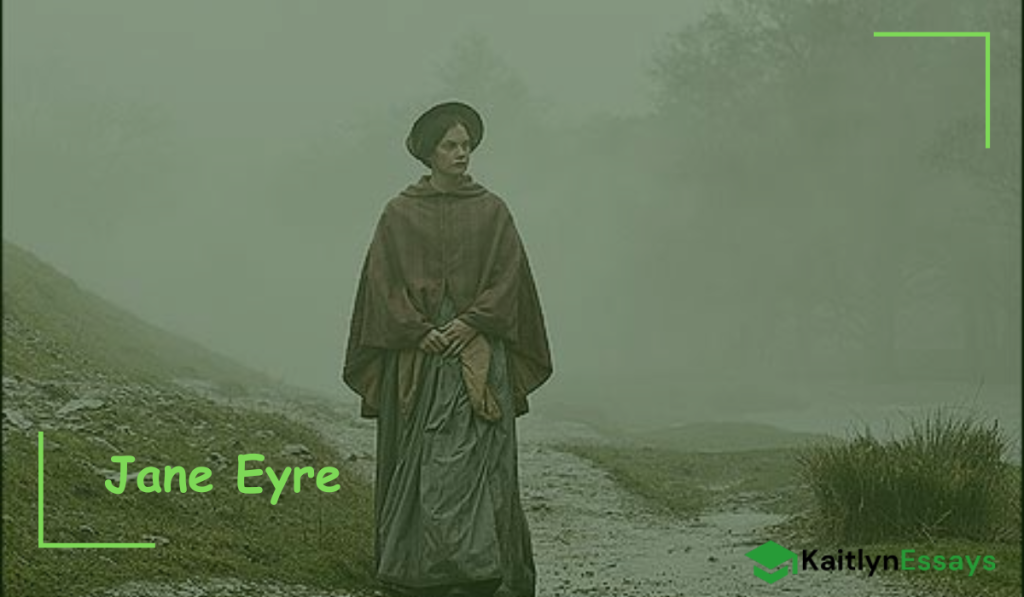
Charlotte Brontë’s Jane Eyre, first published in 1847, is a revolutionary novel that combines elements of romance, social criticism, and gothic mystery. It explores themes such as class structure, gender inequality, morality, and the journey of self-discovery. As one of the earliest novels to focus on a female protagonist’s internal thoughts and emotions, Jane Eyre has earned its place as a cornerstone of English literature. The novel is not only a love story but also a profound reflection on the human condition, individualism, and moral integrity.
Summary of Jane Eyre
Childhood at Gateshead
The novel opens with Jane Eyre, a young orphan, living with her cruel aunt, Mrs. Reed, at Gateshead Hall. Jane is mistreated by her aunt and cousins, particularly by her cousin John, and is constantly reminded that she is an outsider in the family. After a violent confrontation with John, Jane is locked in the “red room,” a traumatic experience that symbolizes her isolation and emotional suffering. This incident intensifies Jane’s sense of injustice, fueling her determination to escape her oppressive environment.
Eventually, Mrs. Reed sends Jane away to Lowood School, a harsh charity institution for orphaned girls, where Jane hopes to find a new start.
Life at Lowood School
At Lowood, Jane experiences strict discipline and harsh living conditions. The school is run by the hypocritical Mr. Brocklehurst, who enforces severe austerity on the students while enjoying personal luxury. Despite the hardships, Jane makes a lasting friendship with Helen Burns, a pious and stoic girl who accepts her suffering with grace. Helen teaches Jane valuable lessons about faith and endurance, though she tragically dies of tuberculosis, marking Jane’s first encounter with loss.
Jane’s life improves after Mr. Brocklehurst’s mismanagement is exposed, and Lowood’s conditions are reformed. She excels in her studies, and after several years, she becomes a teacher at the school. However, longing for more, Jane advertises for a governess position, seeking new opportunities beyond Lowood.
Governess at Thornfield Hall
Jane’s next phase begins when she secures a position as a governess at Thornfield Hall, where she is responsible for educating Adele, the ward of the mysterious and brooding Edward Rochester. Jane gradually grows close to Rochester, despite the differences in their social status and the ambiguity of his past. Rochester’s demeanor is unpredictable—at times, he is kind and warm toward Jane, while at other moments, he is distant and secretive.
As their relationship deepens, strange and eerie occurrences begin to haunt Thornfield. Jane hears unsettling laughter, and Rochester narrowly escapes a fire in his bedroom, which Jane helps extinguish. Jane suspects something is hidden within the mansion, but Rochester remains tight-lipped about the mystery.
Rochester eventually confesses his love for Jane and proposes to her, despite her lower social standing. Jane, who has fallen deeply in love with him, accepts his proposal, and their wedding is planned.
The Secret of Bertha Mason
On the day of the wedding, the ceremony is interrupted when a man named Mr. Mason, along with a lawyer, reveals that Rochester is already married. He has a wife named Bertha Mason, who is living in the attic of Thornfield. Bertha is mentally ill, and Rochester has kept her hidden for years, cared for by a servant, Grace Poole. This revelation shatters Jane’s hopes for happiness, as she realizes she cannot stay with Rochester under these circumstances.
Heartbroken and determined to preserve her integrity, Jane leaves Thornfield, despite Rochester’s pleas for her to stay. She embarks on a journey alone, with no money or resources.
Independence and St. John Rivers
After wandering in destitution, Jane is taken in by St. John Rivers, a clergyman, and his two sisters, Diana and Mary. Jane discovers that St. John is her cousin, and she has inherited a substantial fortune from her uncle. She decides to share the inheritance with her newfound family.
St. John, a deeply religious and ambitious man, proposes to Jane and asks her to accompany him on a missionary journey to India as his wife. However, Jane realizes that St. John’s proposal is not based on love but on duty. She refuses to marry him, as her heart still belongs to Rochester.
Reunion and Conclusion
Jane eventually returns to Thornfield, only to find the mansion in ruins, destroyed by a fire started by Bertha. She learns that Bertha perished in the fire and that Rochester, in his attempt to save her, was severely injured, losing his eyesight and a hand.
Jane finds Rochester living in seclusion, humbled and remorseful. Their reunion is heartfelt, and Jane, now financially independent and emotionally matured, chooses to marry him on her own terms. The novel concludes with their marriage, and they find happiness together, with Rochester gradually regaining some of his sight.
Jane Eyre ends on a note of redemption and personal fulfillment, with Jane having found love, independence, and a sense of belonging after a life of hardship and struggle.
For more on Jane’s life and her resilience amidst hardship, further details can be uncovered: explore additional perspectives.
Characters in Jane Eyre
Jane Eyre
Jane Eyre, the protagonist and narrator, is a strong-willed, intelligent, and independent woman. As an orphan, Jane is subjected to hardship and cruelty early in life, but her resilient spirit carries her through adversity. From a young age, Jane values personal integrity and autonomy over the expectations society places on women of her status. She refuses to be subjugated, whether by her cruel aunt, Mrs. Reed, or by the oppressive conditions at Lowood School. Jane’s sense of morality, emotional depth, and quest for love and belonging are the driving forces behind the novel’s plot.
Throughout the story, Jane grows from a mistreated child into a confident woman, making difficult decisions to stay true to her principles. Her inner strength and commitment to self-respect set her apart from many other literary heroines of the time. Jane is notable for her ability to challenge Victorian norms about gender and class while remaining humble and caring.
For further insights into Jane’s emotional evolution and how her character challenges Victorian ideals: discover the complexities of Jane’s persona.
Edward Rochester
Edward Rochester, Jane’s love interest and the master of Thornfield Hall, is a complex character full of contradictions. Initially portrayed as a mysterious and somewhat domineering figure, Rochester is later revealed to be emotionally tormented by his past. His charm and intelligence captivate Jane, but he also embodies the darker aspects of Victorian masculinity. Rochester’s secret—a mad wife hidden in the attic—exposes his moral failings, but his vulnerability and regret later humanize him in Jane’s eyes. Despite the gothic mystery that surrounds him, Rochester’s relationship with Jane becomes a platform for her emotional and moral growth.
Rochester’s character defies the expectations of a traditional romantic hero; he is deeply flawed, yet Jane’s love for him is not superficial. It is based on intellectual and emotional kinship rather than societal status or wealth.
Explore the complexities behind Rochester’s enigmatic personality: more details about Rochester’s role.
St. John Rivers
St. John Rivers is another critical male figure in Jane’s life, representing an entirely different type of relationship and worldview compared to Rochester. Whereas Rochester embodies passion and emotional depth, St. John is coldly pragmatic, driven by duty and religious zeal. After Jane leaves Thornfield, she is taken in by St. John and his sisters, and St. John proposes marriage to Jane, not out of love but as a practical arrangement. He wants Jane to accompany him as a missionary to India, but his self-denial and strict religious beliefs make him incapable of providing Jane with the emotional connection she seeks.
St. John’s character serves as a foil to Rochester, highlighting the tension between duty and passion in Jane’s life. His proposal offers Jane security and purpose, but Jane ultimately refuses him, choosing personal freedom and emotional fulfillment over a life of cold duty.
For a deeper analysis of how St. John contrasts with Rochester and impacts Jane’s decisions: dive into the character of St. John Rivers.
Bertha Mason
Bertha Mason, Rochester’s first wife, is one of the most controversial and symbolic characters in Jane Eyre. Bertha is portrayed as mentally ill and violent, hidden away in Thornfield’s attic for years. She represents the dark secrets that Victorian society preferred to ignore, as well as the repressed fears and desires of the novel’s characters. Bertha’s existence serves as an obstacle to Jane and Rochester’s happiness, but she also raises important questions about mental illness, colonialism (Bertha is of Creole descent), and the treatment of women who deviate from societal norms.
Bertha is often interpreted as a foil to Jane, embodying the destructive consequences of a lack of autonomy and agency. While Jane chooses to leave Thornfield to preserve her sense of self, Bertha is literally imprisoned, symbolizing the confinement that many women of the era faced.
For more insights into the symbolic meaning of Bertha’s character: learn more about the role of Bertha Mason.
Mrs. Reed
Mrs. Reed, Jane’s aunt, is one of the earliest antagonists in the novel. After Jane’s parents die, Mrs. Reed takes her in, but she treats Jane with contempt and cruelty. Mrs. Reed favors her own children and punishes Jane for standing up for herself. She represents the oppressive and unjust social system that Jane must contend with throughout her life. Even on her deathbed, Mrs. Reed remains cold and unrepentant, embodying the rigid class distinctions and heartlessness of the upper classes in Victorian England.
Jane’s relationship with Mrs. Reed is crucial to her character development, as it teaches her resilience and self-reliance in the face of adversity. Jane’s ultimate forgiveness of her aunt highlights her moral superiority and emotional growth.
Examine more about how Mrs. Reed’s treatment of Jane shapes her early life: explore Mrs. Reed’s influence.
Helen Burns
Helen Burns is Jane’s close friend at Lowood School and serves as a foil to Jane’s fiery personality. Helen is deeply religious and accepts suffering with grace, believing in the Christian ideal of turning the other cheek. Helen’s philosophy of passive endurance contrasts with Jane’s belief in standing up for one’s rights. Despite their differing approaches to adversity, Helen has a profound impact on Jane, teaching her the value of forgiveness and inner peace.
Helen’s tragic death from tuberculosis marks Jane’s first real experience with loss, but it also strengthens Jane’s resolve to live a life of integrity and purpose.
To understand Helen’s influence on Jane’s character development: unpack more about Helen Burns.
Adele Varens
Adele Varens, the young French girl Jane is hired to tutor at Thornfield, is the daughter of Rochester’s former lover. Though Adele’s mother abandoned her, Rochester takes responsibility for her care. While Adele is not a central figure in the novel, her presence serves as a reminder of Rochester’s past indiscretions and the moral complexities of his character. Adele also helps humanize Rochester, showing that he has a sense of duty and care, even if his past is marred by mistakes.
Jane’s affectionate yet firm approach to teaching Adele highlights her compassionate nature and her ability to form meaningful connections with those around her, regardless of social status.
To further explore how Adele contributes to the overall dynamics of Thornfield Hall: read more about Adele’s role.
Mrs. Fairfax
Mrs. Fairfax is the housekeeper at Thornfield Hall and initially the only person to welcome Jane when she arrives. Mrs. Fairfax represents the traditional values of the time, and though she is kind and supportive of Jane, she also believes in maintaining the social hierarchy. She does not approve of Jane and Rochester’s developing relationship, as she believes it inappropriate due to their differing social classes.
Mrs. Fairfax’s presence in the novel serves to underscore the social barriers that Jane must overcome in her pursuit of love and independence.
Discover more about Mrs. Fairfax’s traditional worldview and her role in Thornfield: more on Mrs. Fairfax.
Themes in Jane Eyre
Theme of Social Class and Inequality
Jane Eyre highlights the rigid class structure of Victorian society and its influence on individuals’ lives. Jane is constantly reminded of her low social status, whether as an orphan at Gateshead, a student at Lowood, or a governess at Thornfield. Despite her intelligence and resilience, Jane is marginalized because she lacks wealth and family connections. The novel also portrays how social class affects relationships—most notably Jane’s romance with Rochester. Though they love each other, their different social standings initially prevent them from being equals.
Throughout the story, Brontë critiques the superficiality of class distinctions, suggesting that personal integrity and character should matter more than wealth or birthright. Jane’s journey illustrates her struggle to find a place in a society that seeks to define her worth based on external factors.
Further insights on social class.
Theme of Love and Passion
One of the central themes in Jane Eyre is the tension between love and passion. The novel is, at its core, a love story between Jane and Rochester, but it is far from conventional. Their relationship is passionate but fraught with difficulties, as Rochester’s dark past and Jane’s moral integrity stand in the way of their union. Jane’s love for Rochester is deep, but she refuses to sacrifice her self-respect or principles for him. Her decision to leave Thornfield after discovering Rochester’s secret marriage demonstrates her belief that love must not come at the cost of personal integrity.
Additionally, the novel contrasts different types of love: the passionate, tumultuous love between Jane and Rochester; the cold, duty-bound relationship St. John offers; and the familial love Jane craves. These variations in love reflect Brontë’s exploration of emotional depth, sacrifice, and personal fulfillment.
Theme of Independence and Self-Respect
A core theme in Jane Eyre is Jane’s quest for independence. From the beginning of the novel, Jane is determined to live life on her own terms, even when society and those around her attempt to impose their expectations. This quest for autonomy is evident in her defiance of her abusive aunt, Mrs. Reed, and her decision to leave Lowood to forge her own path as a governess. Jane values emotional and financial independence, believing that she should not rely on anyone for her sense of self-worth.
Even in her relationship with Rochester, Jane refuses to become dependent. When she discovers his marriage to Bertha Mason, she chooses to leave, despite her love for him, to maintain her integrity. It is only after she achieves financial independence through an inheritance and returns to Rochester on equal footing that she is able to find true happiness.
Theme of Morality and Religion
Morality is a central concern in Jane Eyre, with Jane constantly grappling with questions of right and wrong. Throughout her life, she encounters different models of religious belief and moral behavior, from Helen Burns’ Christian stoicism to Mr. Brocklehurst’s hypocritical piety, and from St. John Rivers’ strict sense of duty to Rochester’s moral ambiguities. Each of these figures challenges Jane’s own moral convictions, but she remains firm in her belief that true morality lies in being true to oneself while also being considerate of others.
Helen Burns represents passive, enduring faith, which Jane admires but cannot fully embrace. St. John Rivers, though devout, represents an extreme version of duty that would require Jane to sacrifice her personal happiness for a cause. Jane ultimately rejects this, finding a balance between moral righteousness and personal fulfillment. Her decisions are guided by her internal moral compass, rather than external religious dictates, making her a deeply principled and self-aware character.
Discover more about morality in Jane Eyre.
Theme of Gender Roles and Feminism
Jane Eyre is often considered a proto-feminist novel, largely due to its depiction of Jane’s resistance to traditional gender roles. Throughout the novel, Jane defies the expectations placed upon women in Victorian society. She refuses to be subservient, whether as a child at Gateshead, a student at Lowood, or a governess at Thornfield. Her relationship with Rochester is particularly significant in this regard, as Jane demands to be treated as his equal, despite her lower social standing and his attempts to control her.
Brontë uses Jane to challenge the notion that women should be submissive and dependent on men. Jane’s desire for self-respect and independence is not limited to her personal life—it extends to her professional life as well, as she works to support herself rather than relying on a husband or family. The novel’s conclusion, with Jane and Rochester reunited on equal terms, further emphasizes Brontë’s progressive views on gender equality.
Further reading on gender roles.
Theme of Gothic Elements and Mystery
Jane Eyre is steeped in gothic elements, contributing to its dark and suspenseful atmosphere. Thornfield Hall itself is a classic gothic setting—an isolated, mysterious mansion filled with secrets. The eerie laughter that Jane hears at night, the strange occurrences in the mansion, and the revelation of Bertha Mason as the “madwoman in the attic” all create an air of gothic horror that heightens the emotional intensity of the novel.
These gothic elements serve as metaphors for Jane’s internal struggles and the hidden secrets of those around her. The mystery of Rochester’s past and the tension it creates in Jane’s life reflect broader themes of repression, passion, and societal norms. Bertha Mason, in particular, serves as a symbol of the darker, uncontrollable forces within both individuals and society that must be confronted.
Learn more about the gothic elements.
Theme of Family and Belonging
Throughout Jane Eyre, the theme of family and belonging is a recurring one, as Jane struggles with her sense of isolation and her search for a place where she is accepted and loved. Orphaned at a young age, Jane is raised by her cruel aunt and cousins, who reject her. Her time at Lowood offers her some sense of community, but it is not until later in the novel that Jane truly finds familial love, first with the Rivers siblings and then with Rochester.
The novel suggests that family can be chosen, not just inherited. Jane’s eventual discovery of her cousins, the Rivers, and her reunion with Rochester provide her with the sense of belonging she has long sought. By the end of the novel, Jane has found a family on her own terms, based on mutual respect and love.
Symbols in Jane Eyre
The Red Room
One of the earliest and most important symbols in the novel is the Red Room, where young Jane is locked as punishment by her cruel Aunt Reed. The Red Room is a place of fear and trauma for Jane, symbolizing her feelings of isolation and the unjust treatment she experiences at Gateshead. It is also associated with death and mourning, as it was the room in which Jane’s uncle passed away, reinforcing its ominous atmosphere.
The room becomes a symbol of Jane’s entrapment, both physically and socially. Her punishment is a manifestation of the strict social hierarchy that relegates her, as an orphan, to a lower status within the Reed household. The confinement in the Red Room foreshadows Jane’s ongoing struggles with societal constraints, her fight for freedom, and her desire for belonging.
For more about how the Red Room shapes Jane’s early experiences: explore the significance of the Red Room.
Fire and Ice
Throughout the novel, Brontë uses fire and ice as symbolic representations of opposing emotional forces. Fire symbolizes passion, emotion, and warmth, while ice represents coldness, repression, and isolation. These elements are most clearly reflected in the characters of Edward Rochester and St. John Rivers, who embody these extremes. Rochester, with his passionate nature and turbulent emotions, is aligned with fire, while St. John, who values duty and discipline over emotional fulfillment, is associated with ice.
Jane’s own development involves finding a balance between these two forces. She is drawn to Rochester’s fiery nature, but she also fears being consumed by it. Meanwhile, St. John’s icy demeanor offers security but at the cost of emotional coldness. The destruction of Thornfield Hall by fire and Jane’s rejection of St. John’s cold proposal signify her ultimate choice to seek both passion and balance in her life.
Discover more about the symbolic significance of fire and ice in the novel: learn about fire and ice in Jane Eyre.
The Chestnut Tree: Love, Division, and Fate
One of the most memorable symbols in Jane Eyre is the chestnut tree under which Rochester proposes to Jane. Shortly after their engagement, the tree is struck by lightning and splits in half, foreshadowing the turbulent events that will soon follow in their relationship. The chestnut tree becomes a symbol of both their love and the obstacles they must overcome.
The lightning strike suggests the powerful forces—both external and internal—that threaten their happiness. It can also be seen as a reflection of Rochester’s divided self, torn between his passionate love for Jane and the secret of his past that threatens to destroy their future together. The eventual regrowth of the tree, albeit scarred, parallels the renewal of their relationship after Jane and Rochester overcome the challenges that initially divide them.
More about the tree’s symbolism.
The Madwoman in the Attic
Bertha Mason, Rochester’s first wife, is often referred to as the “madwoman in the attic.” She is one of the most complex and controversial symbols in the novel. On the surface, Bertha represents the consequences of repression, both emotional and social. Her confinement in the attic symbolizes the Victorian tendency to hide away individuals who do not conform to societal norms, especially women deemed mad or uncontrollable.
Bertha’s wildness and violence also mirror the suppressed desires and passions that exist within Rochester and, to a lesser extent, Jane. Her presence in the attic is a gothic element that adds an air of mystery and horror to the story, while also serving as a dark reflection of Jane’s own fears of losing control and becoming confined by societal expectations. Bertha’s eventual death symbolizes the destruction of the forces that keep Jane and Rochester apart, allowing for their ultimate union on equal terms.
Learn more about the symbolic role of Bertha Mason in the novel: explore the meaning behind the madwoman in the attic.
The Splitting of the Veil
On the eve of Jane and Rochester’s intended wedding, a mysterious figure (later revealed to be Bertha Mason) tears Jane’s wedding veil in two. This act serves as a potent symbol of the shattered dreams and broken promises that are about to unfold. The tearing of the veil foreshadows the revelation of Rochester’s secret marriage to Bertha and the collapse of Jane’s hopes for a happy future with him.
The veil itself symbolizes purity, innocence, and the institution of marriage. Its destruction reflects the destruction of the idealized romantic relationship between Jane and Rochester. However, this moment also paves the way for Jane to assert her independence and make decisions based on her own moral code, rather than societal conventions.
To understand the significance of the torn veil in the narrative: find out more about the veil’s symbolism.
Jane’s Inheritance
When Jane learns of her inheritance from her uncle, it symbolizes more than just financial gain—it represents her newfound autonomy and self-sufficiency. Throughout the novel, Jane grapples with her lack of wealth and social standing, often feeling at the mercy of those who are more powerful. Her inheritance allows her to return to Rochester as an independent woman, no longer constrained by financial dependency or societal expectations.
Jane’s inheritance also represents the idea of family and belonging, as it is through this windfall that she discovers her connection to the Rivers siblings. The money enables her to share her good fortune with her newfound family, symbolizing the value she places on relationships built on equality and mutual respect.
For further insights into the importance of Jane’s inheritance: read more about this symbol.
The Moors
The moors, which Jane traverses during her time of self-imposed exile from Thornfield, serve as a symbol of both freedom and isolation. The wide, open landscape reflects Jane’s emotional state as she seeks independence and a fresh start, free from the complications of her past. At the same time, the bleakness and desolation of the moors symbolize the loneliness and hardship that come with her decision to leave Rochester and strike out on her own.
The moors represent a turning point for Jane, where she must confront her internal struggles and come to terms with her own desires and moral beliefs. Ultimately, her time on the moors leads her to a deeper understanding of herself and her need for connection and love.
For more on how the moors reflect Jane’s emotional journey: Explore the symbolism of the moors.
Birds
Birds are a recurring motif throughout Jane Eyre, often symbolizing freedom and the desire to escape confinement. Jane frequently compares herself to a bird, especially in moments when she feels trapped by her circumstances. For example, during her time at Gateshead, Jane likens herself to a caged bird, yearning to break free from her oppressive environment.
The symbol of birds also appears in Jane’s relationship with Rochester, who refers to her as a “little bird” that he wishes to keep with him. This metaphor underscores the tension between Jane’s desire for freedom and Rochester’s attempts to possess her. Ultimately, Jane’s journey is one of breaking free from the various “cages” that society, love, and class place on her, allowing her to soar independently.
Read more about the bird symbolism.
Literary Devices in Jane Eyre
Narrative Style
One of the most prominent literary devices in Jane Eyre is the use of a first-person narrative. The entire story is told from Jane’s point of view, which creates an intimate connection between the reader and the protagonist. This choice allows readers to experience Jane’s emotions, thoughts, and inner conflicts directly, fostering a deeper understanding of her character and journey.
The first-person perspective also ensures that the narrative is subjective, colored by Jane’s personal biases and perceptions. This can create moments of uncertainty, as readers must sometimes question whether they are getting the full truth. The narrative style also emphasizes the novel’s exploration of selfhood and personal growth, as the story is framed as Jane’s reflection on her life experiences.
Foreshadowing
Foreshadowing is a key device that Brontë uses throughout Jane Eyre, often hinting at future events through subtle clues in the narrative. One of the most notable examples is the splitting of the chestnut tree after Rochester’s proposal, which foreshadows the revelation of his marriage to Bertha Mason and the subsequent separation between him and Jane. This use of foreshadowing not only builds suspense but also lends a sense of inevitability to the events of the story.
Similarly, Jane’s unsettling dreams and visions often serve as premonitions of significant plot developments. For instance, Jane dreams of a child before she learns of her aunt’s death, and later before she discovers Rochester’s secret, reflecting the novel’s gothic tone and its interest in the supernatural.
Further insights on foreshadowing.
Gothic Elements
Jane Eyre is steeped in gothic elements, which Brontë uses to create an atmosphere of mystery, suspense, and emotional intensity. Thornfield Hall, with its hidden attic, eerie laughter, and secretive master, is a classic gothic setting that evokes feelings of isolation and entrapment. The novel’s gothic elements often reflect the characters’ internal struggles—Rochester’s concealed past, Bertha Mason’s madness, and Jane’s sense of being an outsider.
The gothic tone also amplifies the emotional stakes of the narrative. The revelation of Bertha Mason as the “madwoman in the attic” adds a layer of horror to Jane’s relationship with Rochester, while the fire at Thornfield serves as a climactic moment that brings both destruction and renewal.
For a deeper understanding of how gothic elements shape the novel: explore the gothic tone in Jane Eyre.
Symbolism: Deepening the Meaning
Brontë frequently employs symbolism to enrich the narrative and underscore the novel’s major themes. From the Red Room as a symbol of Jane’s isolation and social marginalization, to the chestnut tree’s representation of the fractured love between Jane and Rochester, symbols in Jane Eyre carry profound emotional and thematic weight.
Fire and ice are recurring symbols that represent passion and repression, respectively. Rochester, with his intense emotions, is aligned with fire, while the cold, duty-bound St. John Rivers embodies the characteristics of ice. Jane’s journey involves navigating these extremes and finding a balance between emotional intensity and self-control.
To explore more about the symbolic elements that drive the novel’s deeper themes: discover more about the symbolic richness of Jane Eyre.
Imagery: Vivid Descriptions of Emotion and Setting
Brontë’s use of imagery in Jane Eyre enhances the emotional and psychological depth of the story. The novel is filled with vivid descriptions of nature, weather, and landscapes, which often reflect the internal states of the characters. For instance, the storm that breaks out after Rochester’s proposal mirrors the emotional turbulence that follows when Jane learns the truth about his marriage.
Nature imagery is particularly significant in Jane’s personal journey. The desolate moors, with their wild and untamed beauty, symbolize Jane’s sense of isolation and her desire for freedom. Conversely, the warmth and comfort of Ferndean at the novel’s conclusion symbolize the peace and contentment Jane finds after reuniting with Rochester.
Discover how Brontë’s use of imagery enhances the novel’s emotional landscape: learn more about the power of imagery.
Allusion: Connections to Other Literary Works
Brontë makes extensive use of literary allusions in Jane Eyre, connecting the novel to a broader literary tradition. The novel frequently references the Bible, works of classical literature, and English poetry, enriching its themes and adding layers of meaning. For example, Jane’s moral dilemmas often lead her to reflect on Biblical teachings, while her descriptions of Thornfield Hall evoke the gothic settings of earlier novels like Wuthering Heights and Frankenstein.
In addition to literary allusions, Brontë also incorporates references to fairy tales and folk stories. Rochester even refers to Jane as a “fairy” at one point, and their relationship often takes on a mythic quality, with Rochester as the Byronic hero and Jane as the moral guide.
Explore the impact of literary allusions on the novel’s themes and tone
Irony: Complex Emotional and Social Dynamics
Irony plays an important role in Jane Eyre, adding complexity to the relationships between characters and the social dynamics of the story. One of the most significant examples of irony in the novel is Jane’s relationship with Rochester. Despite his wealth and power, Rochester is emotionally vulnerable and morally conflicted, while Jane, though socially and financially inferior, possesses a strong moral compass and inner strength.
Irony also appears in the portrayal of characters like Mr. Brocklehurst, who presents himself as a pious Christian but behaves hypocritically by subjecting the girls at Lowood to harsh conditions while living in luxury himself. This contrast between appearance and reality highlights the novel’s critique of societal norms and hypocrisy.
For more insights into how irony adds depth to the novel’s characters and themes: explore the irony in Jane Eyre.
Metaphor: Expanding Emotional Meaning
Metaphors abound in Jane Eyre, enriching the emotional texture of the story and enhancing the novel’s exploration of complex themes. Jane often uses metaphors to express her feelings of confinement, likening herself to a bird trapped in a cage. This metaphor is particularly significant as it reflects her longing for freedom and her desire to escape the societal and personal constraints placed upon her.
Rochester, too, is described in metaphorical terms, often as a force of nature—wild, untamable, and passionate. His emotional intensity and unpredictability are conveyed through metaphors of fire and storms, emphasizing the turbulent nature of his character and his relationship with Jane.
Read more about metaphors in Jane Eyre.
Pathetic Fallacy: Nature Reflecting Emotion
Pathetic fallacy, where nature reflects the emotions of the characters, is frequently used in Jane Eyre to amplify the emotional tone of the narrative. The weather often mirrors Jane’s internal state, with storms, rain, and gloom coinciding with moments of emotional conflict or despair. For example, the storm during Jane and Rochester’s engagement foreshadows the turmoil that will soon follow.
In contrast, scenes of calm, peaceful weather are often associated with moments of resolution and emotional clarity. When Jane finally returns to Rochester at the end of the novel, the natural surroundings are described as serene, symbolizing the peace and harmony she has found after a long period of struggle.
Explore how the use of pathetic fallacy heightens the novel’s emotional stakes: learn more about the role of nature in Jane Eyre.
Quotes in Jane Eyre
“I am no bird; and no net ensnares me: I am a free human being with an independent will.”
This is one of Jane Eyre’s most iconic quotes, spoken during a pivotal moment in her relationship with Mr. Rochester. At this point, Rochester has begun to exert emotional control over Jane, but she asserts her independence by reminding him—and herself—that she is not a creature to be trapped or manipulated.
This statement encapsulates Jane’s core belief in her autonomy and right to self-determination. Throughout the novel, Jane fights for her independence, whether in her childhood at Gateshead, her time at Lowood, or her complicated relationship with Rochester. It highlights her fierce commitment to maintaining her identity and moral integrity, even when faced with the pressures of love and societal expectations.
“Do you think I am an automaton?—a machine without feelings? … Do you think, because I am poor, obscure, plain, and little, I am soulless and heartless? You think wrong!”
Jane speaks this quote in a passionate confrontation with Mr. Rochester, challenging the notion that her social and economic status defines her worth. Here, Jane rejects society’s view that those who are poor or socially inferior lack the capacity for deep emotion or intelligence. She reminds Rochester that she is a thinking, feeling individual, worthy of love and respect regardless of her outward appearance or position in society.
This quote also reflects Brontë’s critique of the rigid social hierarchy of Victorian England, where class and wealth were often equated with personal value. Jane’s insistence on her humanity and emotional complexity serves as a powerful defense of the individual’s right to dignity and respect, no matter their background.
“I would always rather be happy than dignified.”
Jane utters this line as she reflects on her feelings for Mr. Rochester, grappling with the choice between following her heart or adhering to societal norms. This quote is significant because it highlights Jane’s internal struggle between the pursuit of happiness and the societal expectation to maintain dignity and decorum, especially as a woman in the Victorian era.
Throughout the novel, Jane often faces choices between passion and reason, emotion and duty. Her decision to prioritize her own happiness, even at the potential cost of her dignity, speaks to her evolving sense of self and the importance of following her own path, even when it goes against conventional expectations.
“I am not an angel, and I will not be one till I die: I will be myself.”
Jane says this to Rochester as she expresses her frustration with his expectations of her. Rochester often idealizes Jane, seeing her as pure and innocent, but Jane insists that she is not a saint. She wants to be accepted as a real, flawed human being, not an unattainable ideal.
This quote reflects one of the novel’s key themes—the rejection of imposed identities and the assertion of selfhood. Jane insists on being seen for who she truly is, rather than conforming to society’s or Rochester’s expectations. It is a declaration of her right to live authentically, with all her strengths and imperfections.
“I care for myself. The more solitary, the more friendless, the more unsustained I am, the more I will respect myself.”
This quote comes from one of the most defining moments in Jane’s life—when she decides to leave Rochester after discovering that he is already married. Faced with the temptation to stay with the man she loves, Jane chooses to walk away, prioritizing her moral principles and self-respect over her emotional desires.
Jane’s words here reflect her deep inner strength and commitment to maintaining her integrity, even in the face of loneliness and hardship. It highlights her belief in self-reliance and her refusal to compromise her values, even for the sake of love.
“Reader, I married him.”
This brief but powerful statement, which concludes the novel, is perhaps one of the most famous lines in English literature. It marks the culmination of Jane’s journey toward self-actualization and love on her own terms. By stating that she married Rochester, Jane asserts her agency in the decision, emphasizing that it is her choice and that she enters into the marriage as an equal partner.
The direct address to the reader is also significant, as it creates a personal connection between Jane and the audience. It reinforces the idea that Jane is in control of her own narrative and her own destiny, a woman who has overcome hardship to find both love and independence.
“I must respect myself.”
Jane repeatedly voices her need for self-respect throughout the novel, and this quote sums up one of her guiding principles. Whether in her relationship with Rochester, her time at Lowood, or her encounters with St. John Rivers, Jane consistently chooses to act in accordance with her values rather than succumbing to societal pressures or emotional desires.
Her emphasis on self-respect is central to her character’s development and underscores Brontë’s message about the importance of personal integrity. Jane’s self-respect is not just about moral righteousness but also about ensuring that she does not lose herself in relationships or societal expectations.
Jane Eyre: Mini Essays
Insider and Outsider: Social Class
One of the most significant aspects of Jane’s character is her ambiguous social status. She occupies a liminal space between classes, which contributes to her outsider status in various situations throughout the novel. Born into a poor family, Jane becomes an orphan at a young age and is sent to live with her aunt, Mrs. Reed. Even within the Reed household, Jane is an outsider, constantly reminded of her lower status and lack of familial ties.
At Lowood School, Jane’s social position remains precarious. Although she is educated and well-mannered, she is still marked by her humble origins, making her an outsider in Victorian society’s upper echelons. Her role as a governess at Thornfield Hall further complicates her status. A governess was considered socially superior to servants but inferior to the family she worked for, leaving Jane in a liminal position—neither fully belonging to the working class nor the upper class.
Despite this, Jane’s intelligence and moral fortitude allow her to navigate these social boundaries, making her an insider in certain intellectual and moral contexts. For example, her conversations with Mr. Rochester reveal her intellectual equality with him, if not superiority. In these moments, she is an insider, acknowledged for her intelligence and wisdom, yet socially, she remains an outsider due to her lack of wealth and family connections.
Brontë uses Jane’s shifting social status to critique the rigid class structures of Victorian society. By allowing Jane to succeed despite her lowly origins, Brontë challenges the notion that social class should determine a person’s worth. Jane’s character demonstrates that inner qualities, such as intelligence, morality, and resilience, can be more important than external markers of status.
Gender Roles and Feminism in Jane Eyre
Jane Eyre is often considered a feminist novel, and one of the central ways it explores feminist ideas is through Jane’s negotiation of gender roles. In Victorian society, women were expected to be submissive, passive, and obedient, particularly in relation to men. Jane, however, consistently resists these expectations, asserting her independence and agency at every turn.
From the beginning of the novel, Jane is depicted as a strong-willed and independent character. Even as a child, she refuses to be subjugated by her cruel aunt and cousins, standing up for herself despite the consequences. This early rebellion against unjust authority sets the tone for the rest of Jane’s life, as she continually challenges the gender norms of her society.
As an adult, Jane’s relationship with Mr. Rochester is one of the most significant sites of tension between traditional gender roles and feminist ideals. While Mr. Rochester is initially depicted as a domineering figure, Jane refuses to be subservient to him. She insists on maintaining her independence, both emotionally and financially, even when she is in love with him. For example, when Mr. Rochester proposes to Jane, she refuses to become his possession, insisting that they are equals: “I am not an angel…and I will not be one till I die: I will be myself.”
Jane’s insistence on equality in her relationship with Mr. Rochester is a radical departure from the typical gender dynamics of Victorian marriage, in which the husband was expected to be the dominant partner and the wife was expected to be obedient. Brontë’s portrayal of Jane as an independent, self-reliant woman who demands respect and equality in her relationships was groundbreaking for its time and has since made Jane Eyre a seminal text in the feminist literary canon.
However, Jane’s feminism is not without its limitations. While she challenges traditional gender roles, she still operates within the constraints of Victorian morality. For example, when she discovers that Mr. Rochester is already married, she leaves him, despite her love for him. This decision is based on her moral principles, which are deeply rooted in the Victorian values of the time. In this way, Jane’s feminism is tempered by her adherence to the moral codes of her society, highlighting the complexity of her character and the novel’s engagement with feminist ideas.
The Function of Surroundings in Jane Eyre
Throughout Jane Eyre, the physical surroundings in which Jane finds herself play a significant role in shaping her experiences and reflecting her emotional state. Brontë uses the settings of the novel not only as backdrops for the action but also as symbolic representations of Jane’s internal struggles and personal growth.
Gateshead, Lowood, Thornfield, Moor House, and Ferndean all serve as important settings that reflect different stages in Jane’s journey. At Gateshead, Jane feels trapped and oppressed by her aunt and cousins, a reflection of her outsider status within the Reed family. The cold, inhospitable environment of Gateshead mirrors Jane’s sense of isolation and alienation.
Lowood School, with its harsh conditions and strict discipline, represents a period of suffering and endurance for Jane. However, it is also a place where she begins to develop her sense of self and moral fortitude. The stark, barren environment of Lowood reflects the emotional and physical deprivation Jane experiences there, but it also serves as a crucible for her character, strengthening her resolve and resilience.
Thornfield Hall, where Jane works as a governess, is perhaps the most significant setting in the novel. The Gothic elements of Thornfield—its dark corridors, mysterious secrets, and foreboding atmosphere—mirror the emotional and psychological turmoil that Jane experiences during her time there. The revelation of Mr. Rochester’s hidden wife, Bertha Mason, and the subsequent destruction of Thornfield symbolize the collapse of Jane’s illusions and the need for her to forge a new path on her own terms.
After leaving Thornfield, Jane finds refuge at Moor House, a more modest and peaceful setting that contrasts with the grandeur and drama of Thornfield. Moor House represents a period of healing and self-discovery for Jane, as she reconnects with her inner strength and independence. Finally, at Ferndean, Jane and Mr. Rochester are reunited, and the simplicity and isolation of this setting reflect the more equal and balanced relationship they are able to forge at the end of the novel.
Brontë’s use of settings in Jane Eyre serves to underscore the novel’s themes of personal growth, moral integrity, and the tension between individual desires and societal expectations. The physical surroundings in which Jane finds herself are inextricably linked to her emotional and psychological journey, making them a crucial element of the narrative.
Gothic Elements in Jane Eyre
Jane Eyre is often classified as a Gothic novel, and it contains many of the key elements that define the genre, including a brooding, mysterious atmosphere, supernatural occurrences, and a heroine in peril. These Gothic elements serve to heighten the emotional intensity of the novel and contribute to its exploration of themes such as isolation, madness, and the struggle for autonomy.
One of the most prominent Gothic elements in Jane Eyre is the character of Bertha Mason, Mr. Rochester’s first wife, who is kept hidden in the attic of Thornfield Hall. Bertha’s presence introduces a sense of mystery and danger to the narrative, as her existence is initially unknown to both Jane and the reader. The revelation of Bertha’s madness and her subsequent violent actions—culminating in the destruction of Thornfield—serve as a climactic moment in the novel, heightening the tension and drama.
The supernatural also plays a role in Jane Eyre, though it is often presented in a more ambiguous and psychological form. For example, Jane experiences a series of eerie, dreamlike visions and premonitions throughout the novel, such as the haunting image of a ghostly woman in her childhood and the mysterious voice that calls to her just before she returns to Mr. Rochester. These supernatural occurrences contribute to the Gothic atmosphere of the novel, blurring the lines between reality and imagination.
In addition to its supernatural and mysterious elements, Jane Eyre also contains many of the architectural and atmospheric features commonly associated with Gothic literature. Thornfield Hall, with its dark corridors, hidden rooms, and secretive inhabitants, is a quintessential Gothic setting. The isolation and remoteness of many of the novel’s settings, from the moors surrounding Thornfield to the desolate landscapes of Moor House, further contribute to the Gothic tone of the novel.
Brontë’s use of Gothic elements in Jane Eyre serves to create a sense of heightened emotional intensity and psychological depth. The novel’s exploration of themes such as madness, isolation, and the struggle for personal autonomy is amplified by its Gothic atmosphere, making it a powerful and enduring example of the genre.
FAQs
What is the significance of the title Jane Eyre?
The title emphasizes the importance of the protagonist’s personal journey and her struggle for identity and independence. By naming the novel after Jane, Brontë highlights her experiences and growth throughout the story.
How does the setting influence the story?
The settings in Jane Eyre—including Gateshead, Lowood, Thornfield Hall, and Moor House—reflect Jane’s emotional states and personal growth. Each location symbolizes different phases of her journey, from oppression to freedom.
What role does religion play in Jane Eyre?
Religion is a significant theme, represented through various characters, such as Helen Burns and St. John Rivers. Brontë explores different interpretations of faith, contrasting the compassionate, forgiving nature of Helen with St. John’s more rigid, duty-bound approach.
How has Jane Eyre influenced literature and popular culture?
Jane Eyre has had a significant impact on literature and culture, inspiring numerous adaptations, including films, stage productions, and modern retellings. Its themes of identity, love, and social criticism continue to resonate with readers today.