

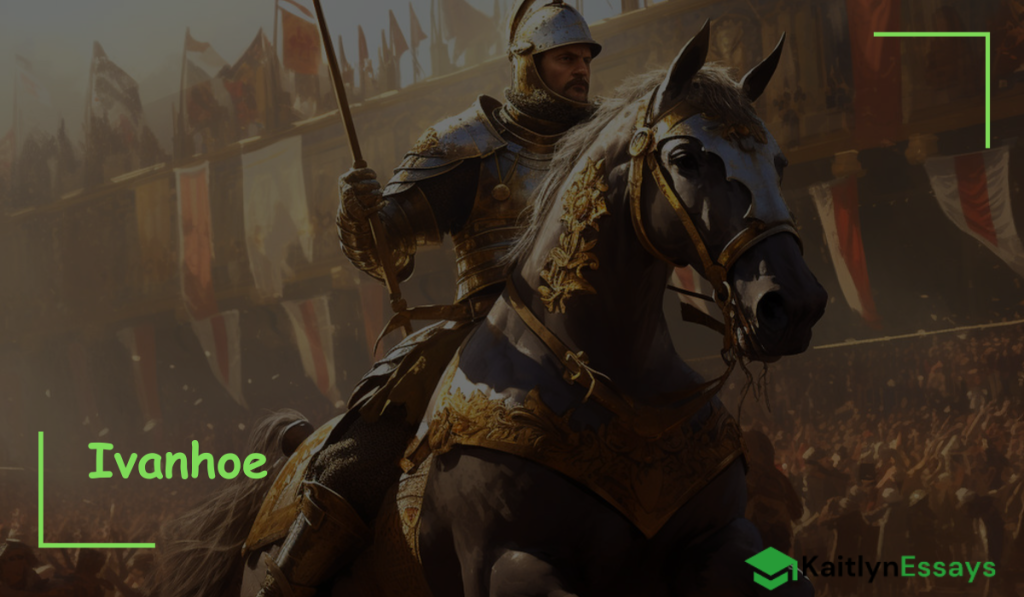
Walter Scott’s Ivanhoe, first published in 1820, is a classic novel that weaves adventure, romance, and historical drama into a captivating story. Set in 12th-century England during the reign of Richard the Lionheart, the book explores themes of chivalry, loyalty, and social conflict. Through the experiences of Wilfred of Ivanhoe, a disinherited knight, Scott introduces readers to a rich tapestry of characters, including the legendary Robin Hood, the noble Rebecca, and the villainous Bois-Guilbert.
The novel captures a time of shifting power between Saxons and Normans, portraying the tensions and alliances that shaped medieval society. Scott’s vivid descriptions and engaging narrative bring the past to life, making Ivanhoe a cornerstone of historical fiction. Its influence on literature and popular culture remains undeniable, showcasing the enduring appeal of heroic deeds, forbidden love, and the quest for justice in a complex world.
Running against the clock?
Our experts can complete your Ivanhoe essay assignment right now
Summary of Ivanhoe
Opening and Introduction to Key Characters
The novel begins with a vivid depiction of the English countryside, introducing Cedric the Saxon, a staunch nationalist. Cedric dreams of restoring Saxon dominance by marrying his ward, Rowena, to Athelstane, a descendant of the Saxon royal line. However, Cedric has disinherited his son, Wilfred of Ivanhoe, for falling in love with Rowena and for his loyalty to the Norman King Richard the Lionheart.
Ivanhoe, having recently returned from the Crusades, is disguised as a palmer and remains anonymous to avoid Cedric’s wrath. Meanwhile, Prince John, Richard’s scheming brother, is consolidating power in Richard’s absence and sowing discord in the kingdom.
Read more about Cedric’s ambitions and Ivanhoe’s concealed return in this comprehensive character exploration.
The Tournament at Ashby-de-la-Zouch
The narrative gathers momentum with a grand tournament hosted at Ashby-de-la-Zouch. This event brings together knights from across the realm and showcases the chivalric ideals of the time. A mysterious knight, known as the Disinherited Knight, dominates the tournament, defeating powerful adversaries, including the formidable Knight Templar, Sir Brian de Bois-Guilbert.
The Disinherited Knight is revealed to be Ivanhoe. Despite his victory, Ivanhoe collapses due to wounds sustained during the tournament. He is tended to by Rebecca, the beautiful and kind-hearted daughter of Isaac of York, a Jewish moneylender. Rebecca’s skills as a healer save Ivanhoe’s life, but her actions also expose her to societal prejudice and danger.
Discover how the tournament shapes the novel’s pivotal conflicts in this exciting breakdown.
Conflict and Captivity
As the political intrigue deepens, Cedric, Rowena, Athelstane, and Isaac are captured by the villainous Front-de-Boeuf, who is aligned with Prince John. They are imprisoned in Torquilstone Castle, where they face humiliation and the threat of death. Ivanhoe, still recovering from his injuries, is also taken captive.
Rebecca is pursued by Sir Brian de Bois-Guilbert, who becomes infatuated with her. His conflicting emotions—torn between his Templar vows and his obsession with Rebecca—add to the tension.
Explore Rebecca’s peril and Bois-Guilbert’s turmoil in this detailed narrative analysis.
Rescue by Robin Hood and Allies
The novel introduces the legendary Robin Hood, referred to as Locksley, and his band of merry men. They join forces with Cedric’s allies to storm Torquilstone Castle. In a dramatic and action-packed rescue, the castle is set ablaze, and the captives are freed. Front-de-Boeuf dies in the fire, while Bois-Guilbert escapes with Rebecca.
Learn about the dramatic rescue at Torquilstone in this thrilling account.
Rebecca’s Trial and Ivanhoe’s Loyalty
Rebecca’s ordeal intensifies as she is accused of witchcraft by the Templars, with Bois-Guilbert caught in a moral dilemma. Despite his growing affection for Rebecca, he does little to protect her, constrained by his loyalties to the order. Rebecca is sentenced to trial by combat, with the expectation that no champion will come to her defense.
Ivanhoe, though still weak, steps forward to champion Rebecca. In a climactic duel, Ivanhoe defeats Bois-Guilbert, who dies from the stress of internal conflict rather than Ivanhoe’s blow. Rebecca is vindicated, and her honor is preserved.
Learn more about the emotional climax of Rebecca’s trial in this insightful discussion.
Resolution and Reconciliation
With Richard the Lionheart’s return, Prince John’s plans are thwarted, and order is restored to the kingdom. Ivanhoe and Rowena marry, cementing their love and bringing closure to their struggles. Rebecca, recognizing the impossibility of a relationship with Ivanhoe due to societal constraints, departs England with her father.
The novel ends with a poignant reflection on the cultural divides and the enduring values of chivalry, loyalty, and justice.
Reflect on the resolution and Rebecca’s poignant farewell here.
Characters in Ivanhoe
Wilfred of Ivanhoe
Ivanhoe, the disinherited son of Cedric the Saxon, embodies the chivalric ideals of courage, loyalty, and justice. His character serves as a bridge between Saxon and Norman cultures, demonstrating that unity and honor can transcend historical divides. Ivanhoe’s dedication to King Richard the Lionheart and his secret love for Rowena bring him into conflict with his father’s nationalist ambitions.
Ivanhoe’s heroism shines during the tournament at Ashby, where he fights under the guise of the Disinherited Knight and triumphs despite severe injuries. His willingness to champion Rebecca in her trial for witchcraft, even while unwell, underscores his unwavering commitment to justice and moral integrity. Ivanhoe’s arc reflects the virtues of a knight who values love, honor, and fairness over personal gain.
Explore Ivanhoe’s moral dilemmas and heroism in this comprehensive analysis.
Cedric the Saxon
Cedric is a symbol of Saxon pride and resistance against Norman rule. His vision of restoring Saxon dominance through Rowena’s marriage to Athelstane reflects his deep-seated nationalism. However, Cedric’s rigidity and inability to adapt to changing times isolate him, as shown by his estrangement from Ivanhoe.
Despite his stern demeanor, Cedric’s eventual reconciliation with Ivanhoe and acceptance of Rowena’s autonomy reveal his capacity for growth. His character represents the challenges of holding onto the past while navigating a rapidly evolving world.
Uncover Cedric’s transformation and struggles in this detailed character study.
Rowena
Rowena, a Saxon noblewoman, embodies grace, dignity, and loyalty. She is central to Cedric’s plans for Saxon restoration but asserts her independence by rejecting Athelstane and remaining steadfast in her love for Ivanhoe.
Though often portrayed as a damsel, Rowena’s strength lies in her moral fortitude and ability to maintain her principles amidst political and personal pressures. Her eventual marriage to Ivanhoe symbolizes a hopeful reconciliation between Saxons and Normans.
Learn how Rowena bridges cultural divides in this character analysis.
Rebecca
Rebecca is one of the novel’s most compelling and tragic figures. As a Jewish woman, she faces prejudice and exclusion, yet she rises above these challenges with her intelligence, compassion, and strength. Her healing skills save Ivanhoe’s life, and her quiet love for him adds emotional depth to her character.
Rebecca’s trial for witchcraft highlights societal intolerance and the injustices faced by marginalized groups. Her refusal to compromise her values, even when Bois-Guilbert offers to save her, underscores her moral courage. Her decision to leave England at the end of the novel is a poignant commentary on the limitations of tolerance in a divided society.
Discover Rebecca’s resilience and moral strength in this insightful profile.
Sir Brian de Bois-Guilbert
A Knight Templar, Bois-Guilbert is one of the novel’s most complex characters. He is driven by ambition, pride, and his forbidden love for Rebecca. His obsession with her creates an inner conflict between his Templar vows and his personal desires.
Bois-Guilbert’s eventual death during the trial by combat is not caused by Ivanhoe but by the weight of his own internal struggles. His tragic end serves as a critique of unchecked passion and the moral contradictions within the Templar order.
Examine Bois-Guilbert’s turmoil and downfall in this detailed analysis.
Isaac of York
Isaac is a representation of the challenges faced by Jewish people in medieval England. Despite constant persecution, Isaac remains steadfast in his devotion to his daughter, Rebecca, and his faith.
His character also highlights the economic role of Jews in medieval society, as he finances Ivanhoe’s participation in the tournament. Isaac’s unwavering love for Rebecca and his resilience against adversity underscore the novel’s critique of societal prejudices.
Understand Isaac’s role in illustrating societal injustices in this character-focused discussion.
Prince John
Prince John, the younger brother of King Richard, epitomizes greed and political opportunism. His efforts to usurp the throne during Richard’s absence reveal his disregard for justice and loyalty.
Prince John’s schemes create much of the conflict in the story, as he aligns himself with corrupt nobles like Front-de-Boeuf and Bois-Guilbert. His ultimate failure serves as a reaffirmation of rightful leadership and moral order under King Richard.
Dive into Prince John’s ambitions and failures in this engaging analysis.
Robin Hood (Locksley)
Robin Hood, known as Locksley in the novel, represents justice and rebellion against tyranny. As the leader of a band of outlaws, he aids Ivanhoe and plays a crucial role in the rescue at Torquilstone.
Locksley’s character reflects the ideal of a noble outlaw who fights for the oppressed. His alliance with Ivanhoe highlights the importance of solidarity in the face of injustice.
Explore Locksley’s legendary heroism in this character overview.
Athelstane
Athelstane, a descendant of Saxon royalty, is a passive and somewhat comical figure. His reluctance to act decisively contrasts sharply with Ivanhoe’s bravery.
Though initially presented as a potential suitor for Rowena, Athelstane’s withdrawal from the competition for her hand underscores his unsuitability as a leader. His character serves as a foil to both Ivanhoe and Cedric’s ambitious plans.
Learn more about Athelstane’s role in the story in this detailed character analysis.
Themes in Ivanhoe
Chivalry and Knighthood
The ideals of chivalry and knighthood are central to Ivanhoe. Through Wilfred of Ivanhoe, Scott portrays the virtues of honor, loyalty, and courage expected of a knight. The tournaments, battles, and trials of the story underscore these ideals, while characters like Sir Brian de Bois-Guilbert reveal the flaws and hypocrisies of the chivalric code.
Ivanhoe’s dedication to King Richard and his willingness to risk his life for justice, as seen in his defense of Rebecca, epitomize the noble aspects of knighthood. Conversely, the corruption of the Templar order, represented by Bois-Guilbert, critiques the failings of these lofty ideals.
Discover more about how Ivanhoe explores chivalry in this insightful discussion.
Prejudice and Tolerance
A recurring theme in Ivanhoe is societal prejudice, particularly against the Jewish community. Rebecca and her father, Isaac, face discrimination and hostility, even from the novel’s more sympathetic characters. Their experiences highlight the marginalization and injustices endured by minorities in medieval society.
Rebecca’s trial for witchcraft exemplifies the dangers of intolerance, while her resilience and virtue challenge the prejudices of those around her. The novel subtly advocates for understanding and acceptance, as seen in Ivanhoe’s defense of Rebecca and his respect for her integrity.
Examine the theme of prejudice in Ivanhoe in this detailed analysis.
Cultural Reconciliation
The Norman-Saxon conflict serves as a backdrop for the novel’s exploration of cultural reconciliation. Cedric the Saxon’s dream of a restored Saxon rule contrasts with Ivanhoe’s vision of unity under King Richard.
Rowena and Ivanhoe’s marriage symbolizes the possibility of harmony between the two cultures. Scott uses their union to suggest that shared values, mutual respect, and love can overcome historical divisions.
Learn more about cultural reconciliation in Ivanhoe in this thematic exploration.
Justice and Injustice
Justice is a central concern in Ivanhoe. From Rebecca’s trial to the exploitation of the Saxons by Norman lords, the novel examines the dynamics of power and fairness. Characters like Prince John and Front-de-Boeuf represent the abuse of power, while King Richard and Robin Hood symbolize the restoration of justice.
The resolution of the story, with Richard reclaiming his throne and the wrongful accusations against Rebecca dismissed, underscores the triumph of justice over tyranny.
Uncover the role of justice in the novel in this comprehensive breakdown.
Loyalty and Betrayal
Loyalty is a defining trait of many characters in Ivanhoe. Ivanhoe’s unwavering allegiance to King Richard, despite his father’s disapproval, exemplifies true loyalty. Similarly, Robin Hood and his band of outlaws display steadfast loyalty to the cause of justice.
In contrast, characters like Prince John and Bois-Guilbert betray their oaths and obligations for personal gain, leading to their ultimate downfall. The theme of loyalty versus betrayal adds tension and depth to the narrative.
Explore the dynamics of loyalty in Ivanhoe in this thematic discussion.
Love and Sacrifice
Love is depicted in various forms in Ivanhoe, from romantic love to familial devotion. Ivanhoe’s love for Rowena drives much of his actions, while Rebecca’s unrequited love for Ivanhoe adds emotional complexity to the story.
Sacrifice is closely tied to love, as seen in Rebecca’s willingness to endure persecution to remain true to her values. Cedric’s eventual acceptance of Ivanhoe and Rowena’s union reflects the sacrifices parents make for their children’s happiness.
Learn more about the theme of love and sacrifice in this detailed analysis.
Heroism and Moral Integrity
The novel explores what it means to be a hero through characters like Ivanhoe, Rebecca, and Robin Hood. Heroism is depicted not just in physical bravery but in moral courage. Rebecca’s strength in the face of prejudice and Ivanhoe’s determination to fight for justice highlight the importance of integrity and ethical values.
Conversely, characters like Bois-Guilbert demonstrate how the absence of moral integrity can lead to self-destruction.
Learn more about heroism in Ivanhoe in this insightful thematic study.
The Role of Religion
Religion plays a significant role in the novel, often as a source of conflict. The division between Christians and Jews highlights the religious intolerance of the era. The corruption within the Templar order, represented by Bois-Guilbert, critiques the misuse of religion for personal gain.
Rebecca’s piety and ethical conduct challenge the stereotypes held against her faith, offering a counterpoint to the prejudices of other characters.
Discover how Ivanhoe critiques religious divisions in this thematic exploration.
Symbols in Ivanhoe
The Disinherited Knight
The identity of the Disinherited Knight, revealed to be Ivanhoe, symbolizes both personal and cultural disinheritance. Ivanhoe’s estrangement from his father, Cedric, mirrors the broader disinheritance of the Saxons by the Norman conquerors.
The knight’s triumph in the Ashby tournament reflects Ivanhoe’s resilience and his ability to reclaim his honor despite adversity. This symbol underscores themes of justice, reconciliation, and the struggle for rightful identity.
Learn more about the symbolism of the Disinherited Knight in this in-depth analysis.
The Tournament at Ashby
The tournament at Ashby symbolizes the cultural clash between Saxons and Normans, as well as the chivalric ideals of the time. It serves as a microcosm of the larger societal tensions in the novel, with characters like Ivanhoe, Bois-Guilbert, and Athelstane representing different factions.
The tournament also highlights the performative nature of knighthood, where valor and skill are displayed publicly, often masking underlying personal and political conflicts.
Explore the cultural and symbolic significance of the Ashby tournament in this thematic discussion.
Rebecca’s Healing Skills
Rebecca’s role as a healer symbolizes compassion, intelligence, and the potential for unity in a divided society. Her ability to heal Ivanhoe transcends the religious and cultural barriers that separate her from the other characters.
However, her healing skills also become a source of suspicion, as seen during her trial for witchcraft. This duality symbolizes the tension between progress and prejudice in medieval society.
Discover the deeper meaning behind Rebecca’s healing in this character-focused study.
The Burning of Torquilstone
The destruction of Torquilstone, a Norman stronghold, symbolizes the fall of corrupt power and the triumph of justice. This event serves as a turning point in the novel, where Saxon and outlaw forces unite to challenge Norman oppression.
The flames consuming the castle are a vivid image of retribution and the cleansing of societal wrongs.
Learn how the burning of Torquilstone symbolizes justice in this symbolic breakdown.
Bois-Guilbert’s Helmet
Bois-Guilbert’s helmet, with its Templar insignia, symbolizes the duality of his character. While it represents his knightly status and commitment to the Templar order, it also reflects his inner conflict and moral corruption.
His helmet, removed in moments of vulnerability, signifies his humanity beneath the rigid facade of a Templar knight.
Explore the symbolism of Bois-Guilbert’s helmet in this insightful discussion.
Rowena’s Veil
Rowena’s veil symbolizes her status and the expectations placed upon her as a Saxon noblewoman. It represents her modesty, dignity, and the constraints of societal roles, as Cedric seeks to use her marriage as a political tool.
When Rowena removes her veil, it often marks moments of personal assertion, reflecting her inner strength and independence.
Learn more about the symbolic role of Rowena’s veil in this thematic analysis.
The Black Knight’s Armor
The armor of the Black Knight, revealed to be King Richard the Lionheart, symbolizes mystery, power, and the hidden forces that shape the story. His anonymity allows him to operate freely and observe the events unfolding without the burden of his royal identity.
The Black Knight’s armor also reflects the idea of justice cloaked in secrecy, as Richard ultimately restores order and fairness to the kingdom.
Examine the symbolism of the Black Knight’s armor in this comprehensive study.
The Forest
The forest, where Robin Hood and his outlaws reside, symbolizes freedom, justice, and rebellion against tyranny. It serves as a refuge for those oppressed by Norman rule and a place where traditional hierarchies are subverted.
The forest contrasts with the rigid structures of castles and courts, representing a space where fairness and equality can flourish.
Explore the symbolic significance of the forest in Ivanhoe in this thematic exploration.
Cedric’s Ancestral Hall
Cedric’s hall symbolizes Saxon heritage and resistance to Norman domination. Its structure, decor, and customs reflect Cedric’s commitment to preserving Saxon traditions in the face of cultural assimilation.
The hall also serves as a space of conflict, as Cedric’s rigid adherence to the past clashes with Ivanhoe’s vision for a united future.
Discover how Cedric’s hall embodies Saxon identity in this detailed analysis.
Literary Devices in Ivanhoe
Historical Allusion
Scott uses historical allusions extensively to ground the story in its medieval setting. References to real figures such as King Richard the Lionheart and Prince John lend authenticity to the narrative. The inclusion of the Crusades, the Norman-Saxon conflict, and the rise of chivalry situates Ivanhoe within a broader historical context.
This device bridges the gap between fiction and history, immersing readers in a richly detailed world while exploring timeless themes like justice and reconciliation.
Learn more about how historical allusion shapes Ivanhoe in this comprehensive analysis.
Irony
Irony plays a significant role in Ivanhoe, particularly in highlighting the flaws of characters and societal structures. For example, Cedric’s fierce loyalty to Saxon traditions contrasts ironically with Ivanhoe’s pragmatic approach to cultural unity.
Similarly, the Templars, sworn to uphold religious ideals, often act in ways that contradict their moral obligations, revealing the hypocrisy within their order.
Explore the layers of irony in Ivanhoe in this thematic discussion.
Symbolism
Scott incorporates rich symbolism to deepen the narrative. Objects like the Disinherited Knight’s armor, Rebecca’s healing herbs, and the burning of Torquilstone carry meanings that extend beyond their literal significance. These symbols reflect themes of identity, justice, and resilience.
For a detailed exploration of symbolism in the novel, visit this insightful analysis.
Dialogue and Dialect
The use of dialogue and dialect enhances character development and reflects cultural diversity. Cedric’s formal and old-fashioned speech contrasts with the more practical language of Robin Hood and his band, highlighting differences in social status and values.
The speech patterns of characters like Rebecca and Isaac also underscore their marginalized position, emphasizing their struggle for acceptance.
Learn how dialogue and dialect enrich the narrative in this linguistic analysis.
Foreshadowing
Foreshadowing is skillfully used to build suspense and hint at future events. For example, the tension between Ivanhoe and Cedric foreshadows the eventual reconciliation of Saxon and Norman factions. Similarly, Rebecca’s initial acts of compassion and bravery foreshadow her pivotal role in the climax.
Scott’s use of foreshadowing keeps readers engaged while maintaining a sense of inevitability in the plot’s progression.
Discover the role of foreshadowing in Ivanhoe in this narrative breakdown.
Imagery
Scott’s vivid imagery brings the medieval setting to life. Descriptions of the Ashby tournament, the forest where Robin Hood resides, and the grandeur of castles create a sense of time and place that immerses readers in the story.
For example, the depiction of the burning of Torquilstone is both dramatic and symbolic, representing the fall of oppressive power.
Explore how imagery enhances the novel’s appeal in this descriptive study.
Conflict
Various forms of conflict drive the narrative of Ivanhoe. The central cultural conflict between the Saxons and Normans is mirrored in interpersonal conflicts, such as Cedric’s opposition to Ivanhoe’s loyalty to King Richard.
Internal conflicts, like Bois-Guilbert’s struggle between his ambition and his love for Rebecca, add psychological depth to the story.
Discover the aspects of conflict in Ivanhoe in this thematic exploration.
Allegory
Some elements of Ivanhoe function as allegory, reflecting broader societal concerns. For instance, the plight of the Jewish characters, Rebecca and Isaac, serves as an allegory for the marginalization of minority groups and the need for tolerance.
This allegorical layer enriches the novel’s themes and provides a commentary on Scott’s own society.
Examine the allegorical elements in Ivanhoe in this insightful discussion.
Juxtaposition
Scott uses juxtaposition to highlight contrasts between characters and ideologies. The noble yet flawed Bois-Guilbert is juxtaposed with the honorable Ivanhoe, while Cedric’s rigid traditionalism contrasts with Rowena’s openness to change.
These contrasts underscore the complexities of the characters and the shifting dynamics of the story.
Explore the role of juxtaposition in Ivanhoe in this literary analysis.
Pathos
Scott employs pathos to evoke emotional responses from readers. Rebecca’s trial and her stoic courage in the face of prejudice create moments of profound empathy. Ivanhoe’s struggles to reconcile his loyalty to King Richard with his love for Rowena also add emotional weight to the story.
Pathos deepens the reader’s connection to the characters and their struggles, making the narrative more impactful.
Learn how Scott uses pathos to enhance Ivanhoe in this emotional exploration.
Don’t let tight deadlines stress you out
Our Ivanhoe essay assignment experts are ready 24/7
Ivanhoe Essays
The Simmering Tensions Between Saxons and Normans as Presented in the Opening Chapter of Sir Walter Scott’s Ivanhoe
The primary root of the Saxon-Norman conflict lies in the Norman Conquest of 1066. This historical event, which occurred generations before the novel’s setting, forms the foundation of the antagonism. As the opening chapter makes clear, the Saxons view the Normans as usurpers, their land forcibly taken by foreign invaders. The very language used by Gurth the swineherd and Wamba the jester reveals this resentment; the Normans are often referred to with disparaging terms like “conquerors” and “opressors.” This underlying grievance fuels a constant sense of injustice among the Saxons, who perceive themselves as a subjugated people in their own land. This dispossession extends beyond land ownership; it encompasses the erosion of Saxon culture, language, and traditions, replaced by the Norman French influence. The Normans, in turn, view themselves as the rightful rulers, believing their victory on the battlefield granted them the legitimacy to govern. They often demonstrate a sense of superiority, dismissing Saxon customs and considering the Saxons as a lower class, fit only for servitude.
The responsibility for this conflict is not easily placed on one party alone. While the initial act of conquest by William the Conqueror is undeniably the origin of the issue, it’s crucial to acknowledge that both sides perpetuate the animosity. The Normans, with their arrogance and lack of regard for Saxon heritage, continually re-open the wounds of the past. They fail to integrate with the Saxon populace, maintaining a sense of separateness and fostering resentment. On the other hand, the Saxons, while justified in their grievances, also contribute to the problem through their persistent resistance and refusal to acknowledge Norman authority. Their clinging to the past and their inability to adapt to the new reality hinder progress towards peaceful co-existence. Ultimately, historical circumstance and the actions of subsequent generations on both sides maintain a cycle of mistrust and animosity. The historical conquest initiated the conflict, but the continued failures to find common ground by both parties are responsible for perpetuating it.
The consequences of this deep-seated conflict are significant for both the Saxons and the Normans. For the Saxons, the consequences are readily apparent in the first chapter itself. They are relegated to a lower social class, forced into servitude under Norman masters like Cedric. They are burdened with heavy taxes and treated as second-class citizens. Moreover, their culture and language are slowly fading, as Norman French becomes the language of the court and power. The novel will show how this loss of cultural identity and social power leaves many Saxons feeling disenfranchised and angry. Some, like Cedric, cling fiercely to their past, while others, like Gurth and Wamba, find subtle ways to resist Norman domination through their wit and defiance. The consequences are also reflected in the lack of opportunity for advancement and the constant threat of exploitation.
For the Normans, the conflict also has its repercussions. Despite holding power, they live in a state of perpetual unease, constantly aware of the underlying Saxon resentment. This insecurity manifests in the need to maintain a large military presence and the imposition of strict laws. The Normans must continuously guard their position and are therefore in a state of conflict as well. Though seemingly in a position of power, this constant vigilance takes a toll. The first chapter introduces characters like Prior Aymer and the Templar Brian de Bois-Guilbert, who, while powerful figures, are not immune from the societal tension they are a part of. They are forced to assert their authority and keep a constant watch over the Saxons.
In conclusion, the conflict between the Saxons and Normans in Ivanhoe, particularly as introduced in the first chapter, is a complex issue stemming from the historical Norman Conquest and perpetuated by the actions and attitudes of both groups. While the Normans bear the initial responsibility for the conquest, both sides contribute to the ongoing conflict, neither willing to fully reconcile. The consequences for the Saxons are readily visible in their subjugated status and loss of cultural power, while the Normans live in a precarious state of power built upon unease and the constant need to assert authority. This simmering conflict, established in the first chapter, sets the stage for the rest of the novel, where we see the characters navigate the deep-seated tension and struggle for power and identity in a divided England.
Religion and the Medieval Church in Ivanhoe
Sir Walter Scott’s Ivanhoe offers a rich and complex portrayal of religion in medieval England, moving beyond simple piety to explore the complex interplay between faith, power, and societal influence. Through a diverse cast of religious figures, ranging from the corrupt Templars to the jovial Friar Tuck and the enigmatic palmer, Scott presents a detailed and often critical view of the medieval church, revealing its strengths, weaknesses, and the varying ways it impacted the lives of individuals and the broader community. Rather than presenting a monolithic entity, Scott shows a church riddled with inconsistencies, often falling short of its own ideals, and subject to human fallibilities.
The Templars, represented most prominently by Brian de Bois-Guilbert, serve as a stark example of the corruption and hypocrisy that had taken root within some corners of the medieval church. Though ostensibly men of God, dedicated to holy warfare, their primary concern is power and worldly gain. Bois-Guilbert’s ambition, his ruthless pursuit of wealth and prestige, and his willingness to break his vows of chastity demonstrate a profound deviation from the principles they profess to uphold. His passionate and lustful desires towards Rebecca highlight the conflict between his vows and his true nature, exposing the Templar Order’s moral decay and highlighting the hypocrisy of those who hide behind the cloak of religious fervor. The Templars are presented as a powerful, self-serving institution, more interested in accruing wealth and exerting influence than fulfilling their spiritual obligations. Scott thus critiques the abuse of religious authority and the dangers of unchecked power, particularly within a hierarchical structure.
Prior Aymer of Jorvaulx Abbey, though perhaps not as overtly corrupt as Bois-Guilbert, embodies the worldly concerns and opulent lifestyle that plagued many within the higher echelons of the church. He revels in luxury, indulging in fine food, wine, and entertainment, a stark contrast to the supposed austerity and humility expected of a religious leader. Aymer’s primary motivations are self-preservation and the pursuit of comfort, and he demonstrates a marked lack of genuine spiritual concern for his flock or any sense of social responsibility. He is portrayed as a political figure, maneuvering to protect the Abbey’s interests and maintain its privilege. Through Aymer, Scott criticizes the material excesses and the lack of spiritual depth that characterized a segment of the medieval clergy, highlighting the discrepancy between the church’s lofty ideals and the reality of its practice.
In stark contrast to the ambition of the Templars and the worldliness of Prior Aymer, Friar Tuck, the jovial outlaw from Copmanhurst, represents a more unconventional and perhaps a more genuine form of faith. Though not adhering strictly to the rules and regulations of the organized church, Tuck embodies Christian values through his charitable acts, his loyalty to Robin Hood and his men, and his boisterous good humor. He is a man of the people, connected to the community and providing for their needs, unlike the self-serving figures who dominate the established church. Tuck’s preference for the forest over the monastery symbolizes a rejection of the rigid structures of the church in favor of a more personal and practical expression of faith. Scott uses Tuck to suggest that genuine spirituality can exist outside the formal confines of the institution, and that a life of simple faith and acts of kindness can be just as meaningful as rigid adherence to dogma.
The figure of the palmer, who is later revealed to be King Richard, offers yet another perspective on faith and the role of religion in medieval life. The palmer, a returning pilgrim, embodies a genuine and dedicated pursuit of spiritual understanding. Though he is a king in disguise, his choice to assume the guise of a pilgrim suggests a commitment to seeking spiritual growth and a rejection of worldly power and prestige. His journeying, his encounters with various people and perspectives, and his acts of good will, present a different form of Christian ideal, where personal faith is practiced through acts of charity and service. He stands as a representative of piety outside the formal power structures of the church, suggesting an alternative path towards spiritual growth through personal experience and engagement with the world.
Through these diverse characters, Scott suggests that the medieval church was a complex and often contradictory institution. While it held the potential for great good, it was also susceptible to corruption, hypocrisy, and the abuse of power. Scott does not paint a universally negative picture; he acknowledges that there were individuals within the church, like the palmer and Friar Tuck, who lived their faith genuinely and selflessly. However, he also critiques the systemic issues, such as the pursuit of worldly wealth and political power at the expense of spiritual integrity, that plagued the established religious institutions of the time.
In conclusion, Scott’s portrayal of religion in Ivanhoe is not a condemnation of faith itself, but rather a critique of the human institutions that claim to represent it. He seems to suggest that true faith lies not in the adherence to rigid rules and dogma, but in the practice of genuine compassion, charity, and a sincere effort to live according to one’s conscience. By presenting such a wide array of religious characters and their divergent values, Scott invites readers to examine the complexities of faith and the different ways it manifests within individuals and within institutions, in the medieval era, and beyond. He underscores the importance of individual responsibility and the need for critical engagement with power structures, even those cloaked in the mantle of religion.
Disguise in Sir Walter Scott’s Ivanhoe
The most obvious function of disguise in Ivanhoe is its role as a tool for navigating a dangerous and unstable social landscape. In a time of great political turmoil and divided loyalties, disguises offer a layer of protection and allow characters to move freely without attracting unwanted attention. For instance, Ivanhoe’s return to England is initially concealed by his anonymity as a pilgrim, as he is aware of the political tensions surrounding his family and his own ambiguous status after his exile. Likewise, King Richard’s disguise as the Black Knight and then as the palmer allows him to move incognito through his kingdom, witnessing the true state of affairs and the injustices plaguing his people, something he would not be able to do as the King. In this sense, disguises serve as shields, enabling characters to act without fear of immediate reprisal or recognition, allowing them to observe, assess, and ultimately to intervene when needed.
Beyond mere protection, disguises also facilitate a form of social leveling. By temporarily abandoning their established identities, characters are given the opportunity to step outside the rigid social hierarchy of the time. The disguised Ivanhoe, for example, can compete in tournaments and display his prowess without the limitations and prejudices associated with his Saxon heritage. He is judged based on his ability, rather than his lineage. Similarly, King Richard, disguised first as the Black Knight and then the palmer, can experience his kingdom from a more grounded perspective, connecting with individuals from various social strata in ways he otherwise would never experience. This temporary suspension of social norms, facilitated by disguise, highlights the inherent inequalities within the feudal system and allows characters to demonstrate their merit regardless of their birth or social standing.
Furthermore, the motif of disguise allows characters to explore and express different aspects of their personalities. Wamba, the jester, consistently uses his disguise as a fool to deliver truths that would otherwise be unacceptable. His wit and his seeming foolishness masks an intelligence and awareness of the political situation, which allows him to offer subtle critiques and insights that often escape notice. Wamba’s use of disguise is not about concealing himself, but rather about liberating his voice and expressing opinions that would be dangerous to express as a regular member of Cedric’s household. Similarly, Cedric, disguised as a palmer, seeks to gather information and intervene discreetly, showing a side of him that is not always apparent in his role as a stern and somewhat inflexible Saxon lord. Disguise thus allows for the exploration of hidden qualities and the expression of latent potential.
The specific reasons why characters take such pains to conceal their identities vary, depending on their individual circumstances and motivations. For Ivanhoe, it is primarily a matter of protection and strategy. His return is not met with universal support, especially from the Normans, and he also recognizes that revealing himself too early might make him a target. He must gain allies and establish his presence through deeds, not through his name alone. Richard’s disguise stems from his desire to gauge the true state of his kingdom and to intervene personally in matters of injustice. He needs to see the situation for himself, outside of the limitations of his royal perspective. Wamba’s disguise allows him the freedom of speech that would not otherwise be afforded to him in his role as a servant. Each disguise serves the specific objectives of the character, whether it be to evade danger, gain information, or exert influence from behind the scenes.
Moreover, the recurring theme of disguise also enhances the dramatic tension and suspense of the narrative. The reader is often privy to the characters’ true identities while others in the story are not, creating dramatic irony. The mystery surrounding who is in disguise and why adds layers to the plot, and the reader is constantly anticipating the moment when true identities will be revealed. This suspense builds throughout the novel, culminating in moments of recognition that have significant dramatic impact and drive the narrative forward.
In essence, the motif of disguise in Ivanhoe is far more than just a convenient plot device. It serves as a critical tool for exploring themes of identity, power, and social injustice within the novel. Disguises allow characters to navigate a dangerous world, level the playing field, express hidden aspects of their personalities, and ultimately, to affect the course of the story and achieve their individual objectives. The deliberate efforts characters make to conceal their identities reveal the deep divisions within their society and the challenges they must overcome to find justice and forge a better future. By constantly shifting the boundaries of identity through the use of disguise, Scott creates a dynamic and engaging narrative, where the true nature of characters, and of society itself, is gradually revealed through layers of deception.
The Complex Roles of Women in Ivanhoe
Sir Walter Scott’s Ivanhoe presents a seemingly paradoxical view of women, simultaneously confining them within the restrictive social norms of medieval society while also granting certain female characters a vividness and complexity that transcends those limitations. While the novel undeniably reflects the patriarchal attitudes of its time, where women are often defined by their marriageability and their roles within the domestic sphere, it also offers glimpses of strength, intelligence, and defiance through characters like Ulrica and Rebecca. Examining the portrayal of women in Ivanhoe reveals a tension between the prevailing societal expectations and the potential for female agency, leading to questions about the novel’s acceptability both in its own time and in ours.
At first glance, the women in Ivanhoe appear to occupy a largely passive and decorative role. The emphasis on Rowena’s beauty and her desirability as a bride highlights the importance placed on women as objects of marriage alliances. Her worth is frequently discussed in terms of the political and economic benefits she would bring to a potential suitor, reducing her to a pawn in the patriarchal game of power. The narrative often frames her as a damsel in distress, dependent on male characters for rescue and protection. This portrayal reflects the prevailing social attitudes of Scott’s time, where women, especially those of noble birth, were often seen as the property of their families, their primary function being to secure strategic unions. The presence of multiple suitors vying for Rowena’s hand further emphasizes this transactional view of women within the novel.
However, beneath this surface-level portrayal, Scott provides glimpses of female characters who possess a depth and complexity that challenge the stereotypical representations of their time. Ulrica, the aged Saxon woman confined to the walls of Torquilstone Castle, is a figure of formidable power and vengeful energy. Though driven by her own past suffering and motivated by bitterness, she embodies a resistance to Norman oppression and a fierce loyalty to her heritage. Her actions, while often violent and destructive, are rooted in a desire to avenge her family and reclaim a sense of agency in a world that has long denied it to her. Ulrica transcends the limitations placed on women by refusing to be a passive victim; instead, she actively engages with the forces of power, becoming a catalyst for destruction.
Rebecca, the Jewish physician, is perhaps the most compelling female character in Ivanhoe. Her intelligence, her skills as a healer, and her deep moral integrity set her apart from the more stereotypical female characters. She possesses a self-reliance and intellectual curiosity that were uncommon for women of her time. She is also fiercely independent and refuses to be defined by her gender or her religious background. She displays grace and strength in the face of prejudice and persecution, becoming a symbol of resilience and courage. Despite being the target of religious bigotry and unwanted desire, Rebecca maintains her integrity and her conviction, choosing exile over compromising her principles. Through Rebecca, Scott challenges the prevailing prejudices of his time and presents a complex, multidimensional woman who defies easy categorization.
Scott’s portrayal of women, therefore, is complex and arguably contradictory. While he operates within the framework of his own time, where women were often relegated to secondary roles, he also imbues certain female characters with qualities that challenge these limitations. In terms of social prejudice, his portrayal can be seen as both reflecting and questioning the prevailing attitudes of the early 19th century. He acknowledges the limitations placed on women and the societal prejudices that existed against them, while also showcasing the potential for female agency and intellect.
By the standards of his own time, Scott’s portrayal of women was likely considered to be both acceptable and, in some ways, even progressive. While he did not fully dismantle the patriarchal structures of his society, he did give prominence to female characters who possessed inner strength and defied expectations. Rebecca, in particular, was a groundbreaking character, challenging the deeply ingrained anti-Semitism of the time and presenting a Jewish woman as intelligent, virtuous, and morally superior to many of her Christian counterparts. Ulrica’s character, while less conventionally sympathetic, was still a powerful portrayal of female agency, though a vengeful one.
By the standards of our time, the portrayal of women in Ivanhoe is more problematic and subject to scrutiny. While we can appreciate Scott’s efforts to present complex female characters, the overall narrative still reflects a patriarchal bias, where women are often defined by their relationships with men and are marginalized within the broader historical narrative. The limited scope of their roles, often confined to marriage and domesticity, stands in stark contrast to our more modern understanding of gender roles and female agency. However, we can also acknowledge the historical context in which the novel was written. Scott’s attempts to offer diverse female characters within the limitations of his time can be seen as a stepping stone towards a more equitable representation of women in literature. The inherent contradictions within the novel present a complex portrait of the past and its struggles with gender roles.
In conclusion, the role of women in Ivanhoe is complex and often contradictory. While the novel reflects the patriarchal attitudes of Scott’s time, it also offers glimpses of female agency, intelligence, and defiance through characters like Ulrica and Rebecca. Though the novel may fall short of modern expectations for gender equality, it provides valuable insights into the societal norms of the past and the struggles of women within those norms. By presenting such a detailed portrayal, Scott compels readers to confront the complex relationship between gender, power, and individual identity, and to engage in critical reflection on how societal expectations impact individual lives. The women of Ivanhoe, despite the limitations they face, leave a lasting impact, challenging readers to look beyond their constraints and acknowledge their complexity and inner strengths.
FAQs about Ivanhoe Essay Examples
Is Ivanhoe a hard read?
Ivanhoe by Sir Walter Scott is considered a challenging read due to its old-fashioned language and complex sentence structure. It was published in 1819, and while the story itself is engaging, the language might feel a bit difficult for modern readers. However, if you enjoy historical fiction or adventure stories, it’s definitely worth the effort.
What does the name Ivanhoe mean?
The name Ivanhoe is of Old English origin, and it’s thought to be a combination of “Ivan” (meaning “John” in Slavic languages) and “hoe” (an Old English term meaning “hill” or “mound”). The name is symbolic in the novel as it represents the protagonist, Sir Wilfred of Ivanhoe, a knight with noble blood but of humble circumstances.
Why should I read Ivanhoe?
You might want to read Ivanhoe for its rich portrayal of medieval England, the Crusades, and the tension between Saxons and Normans. The book introduces themes of chivalry, honor, and love, all set in a fascinating historical backdrop. It’s a classic that has influenced many other works in literature, especially in the adventure and historical genres.