

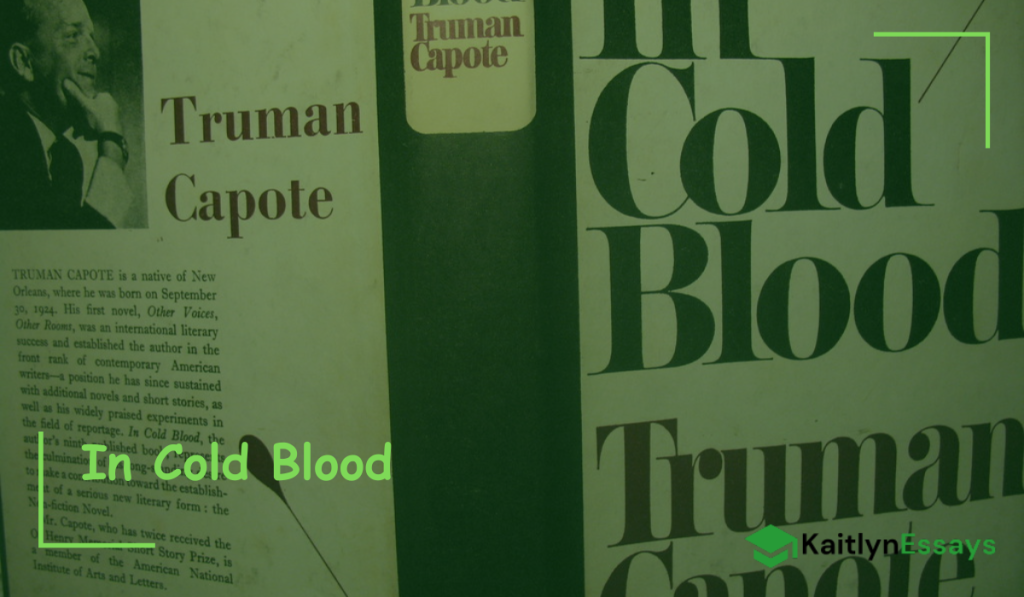
Truman Capote’s In Cold Blood is a groundbreaking piece of literature that blurs the lines between journalism and fiction. Published in 1966, this novel recounts the brutal 1959 murder of the Clutter family in Holcomb, Kansas, and the subsequent investigation and trial. Capote spent years researching the case, interviewing those involved, and piecing together a vivid account of the crime and its aftermath. The book explores themes of morality, justice, and the nature of human behavior, making readers question the forces that shape actions and consequences.
Capote’s unique storytelling style, combining factual accuracy with a narrative approach, brought new depth to true crime writing, influencing the genre for decades to come. By focusing on both the victims and the perpetrators, In Cold Blood offers a gripping look into the complexities of crime and punishment, making it a timeless work that still resonates with audiences today.
In Cold Blood: Summary
The Quiet Before the Storm: Introducing Holcomb and the Clutters
The story begins in Holcomb, Kansas, a small, quiet farming community where life revolves around routine and tradition. We meet the Clutter family: Herb, the respected farmer; Bonnie, his wife, battling her inner demons; and their two bright children, Nancy and Kenyon, each with promising futures. Capote meticulously paints a picture of their daily lives, their comfortable home, and the deep-rooted values that define them. The narrative establishes a sense of normalcy and stability, setting the stage for the shocking events that will soon shatter this peaceful existence.
To understand the established normalcy that is about to be broken, trace the unfolding of events further.
The Fateful Night: The Convergence of Paths
The narrative shifts, introducing us to Perry Smith and Dick Hickock, two ex-convicts with troubled pasts. We follow their journey as they plot a robbery, driven by a false rumor of a hidden fortune at the Clutter home. Capote interweaves their story with the final hours of the Clutters’ peaceful evening, creating a sense of impending doom. The two paths, one of innocence and routine, and the other of desperation and criminality, converge on the night of November 15, 1959, culminating in a brutal and senseless crime: the murder of the entire Clutter family.
To understand the lead-up to the tragic convergence of these two disparate paths, trace the sequence of events further.
The Aftermath of Violence: The Discovery and the Fear
The discovery of the Clutter family’s bodies sends shockwaves through the quiet town of Holcomb. The police investigation, led by Alvin Dewey, begins, and the community is gripped by fear and suspicion. Capote details the painstaking process of the investigation, the search for clues, and the growing sense of unease as the truth remains elusive. The once-peaceful town is transformed, its innocence lost in the face of this horrific act.
To understand the profound impact of the crime on the community and the early stages of the investigation, trace the sequence of events further.
The Flight and Pursuit: Tracking the Killers
While the investigation unfolds, Capote shifts the narrative to follow Perry and Dick’s escape. We see them driving across state lines, engaging in petty crimes to fund their flight, and the growing tension in their own fractured relationship. Interwoven with this is the detailed development of their personalities, their troubled pasts, and their motivations. The narrative reveals the complexities of their individual characters, revealing both the depravity of their actions and the troubled lives that led them down that path. The police investigation, coupled with the killers’ movements, creates a suspenseful pursuit across the American landscape.
To trace the journey and unravel the complex backgrounds of the killers, follow the unfolding events further.
The Net Closes: Capture and Confession
The narrative culminates in the capture of Perry and Dick in Las Vegas. The police interrogation that follows leads to their detailed confessions, revealing the horrific truth of what happened that night in the Clutter home. Capote presents these confessions with a clinical, detached tone, allowing the sheer horror of the crime to speak for itself. The initial mystery of the crime is finally revealed, but the stark details only raise deeper questions about the nature of violence and the men who committed it.
To understand the details of the capture and the impact of their chilling confessions, trace the events further.
Justice and its Process: The Trial and Its Impact
The focus shifts to the legal process, tracing the events of the trial. The courtroom drama unfolds as the prosecution seeks justice for the Clutters, while the defense attempts to mitigate the severity of their punishment by exploring their mental and psychological backgrounds. The narrative exposes the legal system’s struggle to balance justice with the complexities of human behavior. The trial becomes a microcosm of the larger themes, highlighting the public’s thirst for retribution and the deep impact of violence on the community.
To understand how the justice system responds and the community grapples with the trial, trace the unfolding of events further.
The Long Wait: Life on Death Row
The narrative slows as it follows Perry and Dick’s lives on death row, revealing the inner lives of the condemned men as they await their fate. We see their interactions with guards, other inmates, and their own psychological struggles. Capote paints a picture of the bleak reality of death row, a place where time seems to stand still, forcing the two men to confront the consequences of their actions. The slow passage of time adds to the sense of inevitability, drawing readers closer to their final moments.
To follow their final years in prison and their reflections, trace their lives further.
The Inevitable End: The Executions
The story culminates in the execution of Perry Smith and Dick Hickock. Capote describes the events of the day with a detached precision, emphasizing the clinical and irreversible nature of the act. The end is a somber reflection on the finality of death and the haunting consequences of violence. The execution is not presented as a triumphant resolution, but as a necessary conclusion to the legal process, leaving the reader to grapple with the complexities of capital punishment and the enduring impact of the crime.
To understand the conclusion of the legal process and its emotional impact, trace the final events.
Aftermath and Reflection: Unresolved Questions
In the final section, Capote revisits the people and places affected by the murders, providing a glimpse of their lives after the executions. The book concludes without offering easy answers or a clear sense of closure. Instead, it leaves the reader with a profound sense of unease and a deep contemplation of human nature, violence, and the enduring impact of tragedy. The story ends, not with resolution, but with a lingering question about what is knowable and what remains forever a mystery.
To reflect upon the remaining questions and the lasting impact of these events, trace the conclusion further.
In Cold Blood: Character Analysis
Herbert Clutter:
Herbert Clutter is presented as a paragon of virtue and success. He’s a man of routine, discipline, and hard work, embodying the values of rural, mid-century America. He’s a respected community leader, a successful farmer, and a devoted family man. Clutter is portrayed as a pragmatic, rational individual, focused on achievement and maintaining a sense of order. He’s not overly emotional, but rather grounded and practical. He represents stability and success achieved through traditional American values.
His character is not overtly complex, but his unwavering adherence to these values and his role as a pillar of the community make his sudden, violent death all the more shocking and tragic. He becomes the symbol of the life that is senselessly lost. His dedication to his work and his family underlines the injustice of his fate. He is the embodiment of a life destroyed by chaos and senseless violence.
To understand more about the life and values that define Herbert Clutter, learn more.
Bonnie Clutter:
Bonnie Clutter is a tragic figure, largely defined by her struggles with depression and her withdrawal from the world. She is presented as a quiet, introspective woman, often lost in her own thoughts. Her mental health challenges are hinted at rather than explicitly detailed, leaving her as an enigma to both the community and the reader. She is portrayed as a loving but detached mother and wife, whose internal struggles are rarely acknowledged. Bonnie’s vulnerability is juxtaposed with the strength of her family, making her a figure of quiet suffering and hidden pain. Her inability to fully connect with her family, due to her illness, makes her a target.
She is a figure of tragic vulnerability, whose internal suffering mirrors the external violence she ultimately endures. Her life is a study in the isolation that mental illness can create, and the tragic consequences that can result. To explore the complexities of Bonnie Clutter’s inner world, learn more.
Nancy Clutter:
Nancy Clutter is presented as the ideal teenage daughter – popular, accomplished, and kind. She’s a leader in her community, excelling in school, active in extracurriculars, and well-loved by her peers. She is a symbol of youthful potential, with her future seemingly bright and full of possibilities. Nancy is portrayed as compassionate and responsible, with a strong sense of duty and a caring heart. She is a nurturer, a teacher, and a friend. She embodies the promise of the next generation and the hope for the future.
Her character, while seemingly flawless, is a tragic reminder of the potential cut short. Her murder is a particularly devastating blow to the community, as it symbolizes the loss of innocence and the shattering of youthful promise.
To understand the full impact of Nancy’s life and loss, learn more.
Kenyon Clutter:
Kenyon Clutter is the more reserved son, focused on practical pursuits and the inner workings of machinery. He’s portrayed as intelligent and skilled with his hands, often found tinkering in his workshop. He is not as socially outgoing as his sister, but is presented as thoughtful and introspective, with a quiet sense of self. He is a young man with a love for practicality and mechanics, representing the more grounded, practical side of the Clutter family. He is often overlooked in favor of his more outwardly shining sister but is portrayed as equally loved and equally devastated by the crime. He embodies the quiet promise of a life well-lived, cut short by senseless violence.
To learn more about Kenyon’s character and the potential tragically lost, learn more.
Perry Smith:
Perry Smith is arguably the most complex character in In Cold Blood. He is a product of a traumatic childhood, marked by abuse, neglect, and a series of disappointments. He is physically and emotionally scarred, carrying deep-seated resentments and feelings of inadequacy. Perry is an intelligent and artistic individual with a love for literature, music, and dreaming, yet he is also capable of great violence. He struggles with identity, seeking to escape his troubled past through fantasies and dreams of a better life. His capacity for both tenderness and brutality makes him a deeply disturbing and tragic figure.
He is a product of a broken system, and a stark reminder of the long-term consequences of abuse and neglect. His complex personality elicits both empathy and revulsion, making him a central character in the book’s exploration of human nature.
To learn more about the complexities of Perry Smith’s psyche, learn more.
Richard “Dick” Hickock:
Richard Hickock stands in stark contrast to Perry, representing a more cold and calculating form of criminality. He is portrayed as lacking empathy and remorse, seeing others as tools to satisfy his own needs. His character is defined by his sexual aggression, his fascination with violence, and his inability to accept responsibility for his actions. He lacks the inner conflicts and complexities of Perry, making him a more straightforward representation of psychopathy. His character serves as a disturbing exploration of human depravity, and the callous indifference some people are capable of. He is a chilling reminder of the capacity for violence that exists without remorse or empathy. His character is a terrifying exploration of a person completely lacking in moral compass.
To better understand the depths of Richard Hickock’s darkness, learn more.
Alvin Dewey:
Alvin Dewey, the lead investigator on the Clutter case, is presented as a dedicated, methodical, and deeply affected man. He is driven by a sense of duty, a desire to uncover the truth, and a profound sense of empathy for the victims and their families. Dewey is portrayed as intelligent, thorough, and persistent, embodying the qualities of a good law enforcement officer. His dedication to the case becomes almost obsessive, reflecting the emotional toll the murders take on him. He is a reminder of the people who dedicate their lives to seeking justice, even at great personal cost. Dewey represents a sense of order and reason, working to make sense of the senseless violence, and bringing closure to a horrific crime. He’s the balance in the story, a good man facing an incredible evil.
To learn more about Alvin Dewey’s role and his pursuit of justice, learn more.
Themes in In Cold Blood
The Nature of Violence:
One of the most prominent themes in In Cold Blood is the exploration of the nature of violence itself. Capote looks into the brutality of the Clutter murders, but also explores the psychological and social factors that contribute to violence. He presents violence not just as a physical act but as a complex phenomenon rooted in a web of factors including individual pathology, societal conditions, and personal histories. The book avoids sensationalism, opting instead to examine the chilling reality of violence and its ripple effects on individuals and communities. It questions whether violence is an inherent part of human nature or a product of circumstance and environment. The narrative exposes the seemingly motiveless brutality, prompting readers to confront the discomforting reality of human capacity for violence.
To further explore the various aspects of violence presented in the book, learn more.
The Loss of Innocence:
The Clutter family, and particularly Nancy and Kenyon, embody a certain innocence that is brutally shattered by the murders. The seemingly idyllic community of Holcomb is also revealed to be vulnerable, exposing the fragility of its perceived safety. The book demonstrates how violence can irrevocably alter the world, leaving behind lasting trauma and a deep sense of loss. The innocence of the victims is contrasted with the depravity of the killers, amplifying the tragedy and emphasizing the devastating consequences of the loss. The theme also touches on the loss of innocence for the community, which is forced to confront the reality of evil in their midst.
To understand the lasting impact of the loss of innocence in the book, learn more.
The Duality of Human Nature:
In Cold Blood explores the duality of human nature through the characters of Perry Smith and Richard Hickock. Perry is capable of both deep tenderness and extreme violence, while Dick displays a chilling lack of empathy alongside a pragmatic focus on self-interest. The book challenges the idea that people are inherently good or evil, suggesting that everyone is capable of both. It looks into the complexities of human motivation, highlighting the internal struggles that can lead to both heroic and destructive actions. The juxtaposition of these two characters emphasizes the capacity for both good and evil that resides within humanity.
To examine the complex interplay of good and evil in human nature within the story, learn more.
The Search for Justice:
The investigation led by Alvin Dewey and the subsequent trial become a central focus of the narrative. The book examines the legal process, the complexities of seeking justice for victims, and the limitations of the justice system itself. It explores how the system operates to bring order from chaos but also reveals its inherent flaws. The book asks questions about the fairness of punishment, the role of the death penalty, and whether the judicial process can truly bring closure and healing. It also highlights the psychological toll the pursuit of justice can have on the individuals involved.
To learn more about the pursuit of justice and its complexities within the book, learn more.
The Impact of Environment and Circumstance:
Capote’s work suggests that environment and circumstance play a significant role in shaping human behavior, particularly in the case of Perry Smith. His troubled childhood, marked by abuse and neglect, serves as an explanation for his violent tendencies. The book explores the social and economic factors that contribute to crime and examines the ways in which poverty, lack of opportunity, and dysfunctional families can impact an individual’s trajectory. The narrative raises questions about personal responsibility and the influence of external forces in shaping our identities.
To explore the impact of circumstance on the characters’ lives and actions, learn more.
The Fragility of Life and the Inevitability of Death:
The sudden and violent deaths of the Clutter family highlight the fragility of life and the inevitability of death. The book forces readers to confront the reality of mortality and the unpredictable nature of fate. It underscores the transience of existence and the way in which life can be disrupted without warning. The inevitability of death is contrasted with the human desire for control and security, creating a sense of unease and reminding us of our own vulnerability. The book ends with a sense of lingering loss, emphasizing the irreversible nature of death.
To explore the thematic impact of mortality and the fragility of life in the book, learn more.
The American Dream and its Dark Side:
The Clutter family embodies the traditional American Dream of hard work, success, and a happy family life. However, their brutal murders expose the darker side of this dream, revealing that even the most seemingly idyllic existence is not immune to violence and tragedy. The book challenges the myth of American exceptionalism, suggesting that evil and suffering are universal realities that cannot be escaped. It questions the illusion of safety and security in the modern world and highlights the inherent flaws within American society.
To analyze the ways in which the American Dream is challenged and subverted in the book, learn more.
Symbols in In Cold Blood
The Clutter House:
The Clutter home itself acts as a powerful symbol of the traditional American family and the values they represent: hard work, stability, and a comfortable life. It’s a meticulously maintained, orderly space reflecting Herbert Clutter’s meticulous nature. The home symbolizes a place of safety and domesticity, which is brutally violated by the murders. The detailed descriptions of the house’s contents and the family’s routines emphasize the order that is ultimately disrupted by chaos. After the murders, the house is forever tainted, serving as a constant reminder of the violence that occurred within its walls, signifying the loss of innocence and the shattering of the American ideal.
To explore the changing symbolism of the Clutter house, learn more.
Holcomb, Kansas:
The town of Holcomb represents the idyllic, small-town American community, a place seemingly untouched by the darker aspects of the modern world. It symbolizes a life rooted in tradition, routine, and a sense of community. The violence that erupts in Holcomb disrupts its perceived tranquility, exposing the vulnerability of such communities and highlighting the illusion of safety they offer. The town becomes a microcosm of American society, reflecting the ways in which violence can shatter even the most seemingly idyllic existences. The disruption in Holcomb serves as a symbol of the loss of innocence and the end of a certain kind of security in the American consciousness.
To understand how Holcomb serves as a symbol for a specific vision of American life, learn more.
Perry Smith’s Physical Scars and Tattoos:
Perry’s physical scars from a motorcycle accident and his tattoos are symbolic of his troubled past and his internal struggles. They represent the visible and invisible wounds he carries, reminders of his difficult childhood and the abuse he has suffered. The tattoos, often described as crude and ill-conceived, symbolize his attempts to create an identity for himself and to project a persona of toughness. The scars and tattoos become a physical manifestation of his emotional pain and his marginalized status, reflecting both his inner turmoil and his attempts to shape his identity. They highlight the way in which trauma can leave lasting marks both physically and psychologically.
To analyze how Perry’s physical markings reflect his inner life, learn more.
The Color Yellow:
The recurring color yellow is often associated with sickness, decay, and corruption. It appears in various contexts throughout the book, such as the descriptions of the Kansas landscape, the lighting in the courtroom, and even in the descriptions of the Clutter home. The color subtly hints at the underlying rot and decay beneath the surface of seemingly normal environments. It serves as a subtle reminder of the presence of evil and the corruption that can exist even within places that appear idyllic. The use of yellow acts as a subtle foreshadowing of the tragic events and emphasizes the insidious nature of violence.
To understand the symbolic significance of the color yellow in the narrative, learn more.
Perry’s Dreams and Fantasies:
Perry’s dreams of treasure-filled islands and his elaborate fantasies of escaping his reality symbolize his desire for a better life and his inability to confront his circumstances. These dreams serve as a temporary refuge from the harsh realities of his existence, representing his longing for freedom and escape from his traumatic past. His fantasies are often depicted as unrealistic and escapist, highlighting the disconnect between his desires and his actual capabilities. They highlight his internal struggles and his need to cope with his difficult reality by creating alternative worlds in his mind. To explore the meaning of Perry’s escapist dreams and fantasies, learn more.
Dick’s Car:
The car that Dick uses becomes a symbol of his restless nature and his desire for mobility and freedom. The car allows him and Perry to travel across state lines, committing crimes and attempting to escape the consequences of their actions. The car also represents the illusion of control that Dick seeks, symbolizing the power he believes he holds over his own life and the lives of others. However, like his other pursuits, the car ultimately becomes a tool that leads him closer to his own demise, highlighting the self-destructive nature of his actions.
To analyze how Dick’s car represents his desires and his downfall, learn more.
The Raven:
The presence of a raven is a subtle symbol that appears in connection with Perry. The raven, often associated with death and ill omen, suggests a sense of impending doom and foreshadows the tragic fate of both Perry and his victims. The raven serves as a reminder of the darkness that surrounds Perry and his actions, emphasizing the tragic inevitability of the events. It acts as a subtle literary symbol enhancing the sense of impending doom surrounding the characters and the narrative itself.
To explore the ominous symbolism of the raven in the story, learn more.
The Black Stockings:
The black stockings that were on Bonnie Clutter’s body become a striking symbol of the senseless and dehumanizing nature of the crime. The stockings, an everyday article of clothing, become a macabre reminder of the violence that was inflicted upon her. The details of the crime, including this image, underscore the brutality of the murders and the violation of human dignity. This detail, made significant by the narrative, serves as a powerful and haunting symbol of the senseless brutality of the crime.
To understand the disturbing symbolism of the black stockings, learn more.
In Cold Blood: Literary Device Analysis
Juxtaposition:
Capote masterfully uses juxtaposition throughout In Cold Blood to create dramatic tension and highlight thematic contrasts. He juxtaposes the idyllic lives of the Clutter family with the grim realities of Perry Smith and Dick Hickock’s existence. He alternates between scenes of the Clutters’ peaceful routine and the escalating tension of Perry and Dick’s criminal plans. This juxtaposition intensifies the impact of the violence when it occurs, highlighting the clash between normalcy and the depravity of the crime. The use of juxtaposition forces the reader to confront the stark differences between these worlds and to contemplate the fragile nature of life.
To understand how Capote uses juxtaposition to create tension and contrast, learn more.
Foreshadowing:
Capote employs foreshadowing to create a sense of impending doom and to prepare the reader for the tragic events to come. He subtly hints at the violence to come through descriptions of the Kansas landscape, the characters’ internal states, and seemingly insignificant details. The use of foreshadowing builds suspense and anticipation, making the unfolding events all the more disturbing when they finally occur. The effect is one of tragic inevitability, guiding the reader towards the inescapable horror of the Clutter murders. The subtle hints create a sense of disquiet, adding to the overall feeling of unease.
To examine how foreshadowing is used to create a sense of dread and inevitability, learn more.
Third-Person Limited Omniscient Narration:
Capote uses a third-person limited omniscient point of view, primarily focusing on the thoughts and feelings of specific characters while maintaining an objective tone. This technique allows the reader access to the inner lives of both the victims and the perpetrators, providing a more detailed understanding of their motivations and perspectives. While the narrative maintains a degree of objectivity, it also offers carefully selected insights into the characters’ inner worlds, allowing the reader to form their own opinions. This style creates a sense of intimacy with the characters while simultaneously maintaining a degree of narrative detachment.
To understand the impact of Capote’s narrative perspective, learn more.
Imagery and Sensory Details:
Capote’s writing is rich with vivid imagery and sensory details, creating a powerful and immersive experience for the reader. He uses detailed descriptions of the Kansas landscape, the Clutter home, and the characters’ physical appearances to paint a realistic and compelling picture. His careful use of language engages the reader’s senses, bringing the story to life and making the events feel immediate and palpable. This rich detail enhances the reader’s understanding and emotional investment in the story, allowing them to viscerally experience the world he creates.
To look deeper into the power of Capote’s use of imagery, learn more.
Nonlinear Narrative:
Capote employs a nonlinear narrative structure, shifting between different timelines and perspectives. He moves back and forth between the events leading up to the murders, the investigation, the trial, and the lives of Perry and Dick on death row. This nonlinear approach builds suspense and allows Capote to explore the events from multiple angles. By jumping between different time periods and points of view, the narrative creates a more complex portrayal of the story. This fragmented structure mirrors the fragmented nature of the human experience.
To analyze the impact of the book’s nonlinear structure, learn more.
Symbolism:
As explored in the previous analysis, Capote uses symbolism extensively to add depth and meaning to his narrative. Objects, places, and even colors are infused with symbolic significance, representing larger themes and ideas. The symbolism contributes to the rich tapestry of meaning woven throughout the book, enhancing its impact and complexity. The symbolic details add layers of interpretation, encouraging a deeper engagement with the text.
To further explore the significance of symbols in the narrative, learn more.
Psychological Realism:
Capote looks into the psychological complexities of his characters, presenting them as flawed, conflicted individuals with deep-seated motivations. He utilizes techniques like internal monologue and carefully crafted dialogue to reveal the characters’ inner thoughts, feelings, and traumas. This focus on psychological realism makes the characters feel more fully realized and allows the reader to grapple with the complexities of human behavior. It provides a deeper understanding of the forces that drive both the victims and perpetrators in the narrative.
To look deeper into Capote’s exploration of psychological realism, learn more.
Irony:
Irony is used subtly throughout the book, highlighting the discrepancies between appearance and reality. For instance, the seemingly idyllic town of Holcomb becomes the site of a horrific crime. The legal system, which is supposed to bring justice, is sometimes depicted as flawed and impersonal. This use of irony adds layers of complexity to the narrative, challenging simple interpretations and encouraging the reader to look beyond the surface. The irony underscores the fragility of our perceptions and the unpredictable nature of life.
To understand the role of irony in revealing the complexities of the narrative, learn more.
In Cold Blood Essay Examples
Capote’s Critique of American Identity in In Cold Blood
Truman Capote’s “In Cold Blood,” more than a true crime narrative, functions as a stark and unsettling portrait of America in the mid-20th century. Published in 1966, the book’s meticulous reconstruction of the 1959 Clutter family murders in Holcomb, Kansas, serves not just as a gripping chronicle of violence, but also as a lens through which Capote scrutinizes the undercurrents of anxiety, hypocrisy, and fractured identity that defined the seemingly placid American landscape of the 1950s and 60s. Through his meticulous prose, Capote presents a vision of the era where the promise of the American Dream is juxtaposed with the bleak reality of its failure, revealing a society haunted by its own shadows.
One of the most prominent themes in “In Cold Blood” is the fragility of the idyllic American Dream, particularly as it manifested in small-town life. The Clutter family, with their well-tended farm, community involvement, and respectable reputation, embody the ideal of pastoral perfection. However, this carefully constructed facade is shattered by the brutal murders, exposing the vulnerability that lay beneath the surface of such communities. The violence itself becomes a symbol of the disruptive forces lurking beneath the veneer of American normalcy. Capote highlights the economic disparities present even in seemingly homogenous settings like Holcomb, implying that the promise of prosperity and stability was not universal, and that even in the heartland, individuals could find themselves marginalized. Richard Hickock and Perry Smith, the killers, come from the fringes of society, marked by broken homes, poverty, and a sense of rootlessness, representing a stark contrast to the rootedness of the Clutters. This juxtaposition implies that the American Dream, for many, remains an elusive and unattainable fantasy.
Furthermore, Capote explores the latent violence simmering beneath the surface of American life. The meticulous detail with which he recounts the murders, coupled with the chillingly detached tone he often employs, reveals a disturbing capacity for brutality that belies the nation’s self-image of peacefulness and progress. The almost mundane aspects of the crime – the planning, the execution, and the aftermath – highlight how easily violence can erupt, even within the seemingly quiet and orderly confines of small-town America. This element undermines the comfortable narrative of American exceptionalism and prosperity, hinting at a darker, more primal reality beneath the nation’s carefully constructed image.
Moreover, the narrative explores the theme of alienation and social displacement. Hickock and Smith, driven by a desperate need for money and a yearning for a better life, become emblematic of the disenfranchised individuals who fall through the cracks of the American social fabric. Their struggles with poverty, education, and family relationships are juxtaposed with the stability and prosperity of the Clutters, emphasizing the social divide present in the seemingly egalitarian American landscape. The two killers, in many ways, are byproducts of a society that promises opportunity but fails to deliver on that promise for everyone, forcing them into a life of crime.
Capote’s use of the “nonfiction novel” format, while groundbreaking, also reflects a desire to move beyond simplistic notions of good versus evil. He looks into the complex psyches of Hickock and Smith, offering glimpses into their troubled pasts and inner motivations. This complex portrayal challenges the prevailing cultural narrative of clear-cut villains and heroes, forcing readers to confront the messy complexities of human nature. By granting the killers a level of depth and understanding, Capote compels the audience to consider the social and psychological factors that might contribute to such acts of violence. He suggests that even in the face of monstrous actions, there are societal forces at play that cannot be ignored.
In conclusion, “In Cold Blood” is more than just a recounting of a horrific crime; it’s a critical commentary on the American experience of the 1950s and 60s. Through his exploration of the Clutter family murders and the lives of their killers, Capote exposes the anxieties and contradictions lurking beneath the surface of the American Dream. He reveals a society grappling with its own internal contradictions—the promise of equality versus the reality of inequality, the illusion of peace versus the reality of violence, and the struggle to reconcile the public image with the private despair. Capote’s masterful blend of journalism and narrative storytelling ultimately offers a complex and unflinching portrait of a nation grappling with its own identity, making “In Cold Blood” a lasting contribution to American literature and social commentary.
How Rough Childhoods Cultivate Murder in In Cold Blood
Truman Capote’s “In Cold Blood” looks into the brutal murders of the Clutter family, but it is equally a study of the perpetrators, Perry Smith and Richard “Dick” Hickock. While not absolving them of their heinous crime, Capote painstakingly reconstructs the fractured childhoods of both men, using their past traumas and deprivations as a lens through which to understand their descent into violence. The narrative implicitly suggests that the deeply damaging environments in which Perry and Dick were raised did not excuse their actions, but they undeniably shaped their personalities and contributed to their capacities for such extreme brutality. Capote’s exploration suggests a harrowing link between a neglected childhood and the potential for violence, making a compelling argument about the societal responsibility in addressing the conditions that can breed such outcomes.
Perry Smith’s childhood is a stark portrait of neglect and abuse. Abandoned by his mother, shuffled between orphanages and abusive relatives, Perry experienced a lifetime of instability and psychological trauma. Capote details the beatings he endured, the lack of affection, and the deep-seated feelings of worthlessness that permeated his early years. The recurring image of Perry as a vulnerable child, physically and emotionally scarred, highlights the ways in which his formative experiences shaped his worldview and his capacity for violence. His longing for belonging and his repeated betrayals by those he should have been able to trust fostered a deep resentment toward the world. Capote suggests that the seeds of Perry’s violent tendencies were sown early on, nurtured by the systemic failures of care and compassion he was subjected to as a child. The neglect became a fertile ground for rage and despair.
Dick Hickock, while perhaps not experiencing the same level of overt physical abuse as Perry, also suffered from a fractured childhood characterized by a lack of emotional warmth and stability. His father, while outwardly present, was often emotionally unavailable, failing to provide the secure foundation necessary for healthy development. This lack of emotional connection, coupled with a strained relationship with his mother and her seeming preference for his brother, left Dick with a sense of inadequacy and a need to prove himself. This emotional void, Capote implies, fueled Dick’s relentless need for validation through his supposed prowess, a form of compensation for his deep-seated insecurities. The car accident that disfigured his face is depicted as a further blow to his fragile ego, solidifying his path towards violence as a means of asserting his power and control.
The contrasting backgrounds of Perry and Dick, while different in their specific details, both point to the role of childhood trauma in shaping their capacity for violence. Perry’s emotional volatility and sensitivity are linked to his history of abuse, while Dick’s detached cynicism and manipulative tendencies stem from his own experiences with rejection and emotional neglect. Capote presents these childhoods not as direct causes of their violence, but rather as integral factors that created the conditions in which such extreme actions became possible. Their shared sense of displacement, their longing for a sense of self-worth, and their inability to form healthy relationships all trace back to these formative experiences.
Capote does not romanticize these troubled childhoods nor does he offer them as excuses for the murders. Rather, he utilizes them to create a deeper understanding of the human capacity for both good and evil. He reveals that behind the veneer of a cold-blooded killer lies a complex individual whose path was tragically influenced by a series of negative experiences. By examining their backgrounds, Capote challenges the reader to consider the broader social context that can contribute to violent behavior. He hints that the seeds of violence are sown not in a vacuum, but in the fertile ground of neglect, abuse, and despair. The narrative serves as a warning, urging the audience to consider the impact of childhood trauma on individual development and to address the systemic issues that can lead to such outcomes.
In conclusion, “In Cold Blood” effectively utilizes the rough childhoods of Perry Smith and Dick Hickock to illustrate how such formative experiences can contribute to the making of a murderer. By detailing the abuse, neglect, and instability that defined their early lives, Capote highlights the devastating impact of such conditions on the development of personality and behavior. While not exonerating the killers, Capote presents a complex and unsettling portrait of the social and psychological factors that can pave the path toward violence, suggesting that the seeds of destruction are often sown in the earliest and most formative years of life, demanding society’s attention and responsibility. The book serves not only as a chilling true crime account but also as a crucial exploration of the link between childhood trauma and the making of a murderer.
The Murder of the American Dream in Capote’s In Cold Blood
Truman Capote’s In Cold Blood, ostensibly a meticulous reconstruction of the brutal Clutter family murders in Holcomb, Kansas, transcends the boundaries of true crime to become a profound meditation on the fragility of the American Dream. Through the juxtaposition of the seemingly idyllic life of the Clutters and the grim realities faced by Perry Smith and Dick Hickock, Capote unveils the darker undercurrents of American society in the late 1950s. He presents a narrative where the promise of prosperity, stability, and upward mobility – the core tenets of the American Dream – is not just undermined but violently extinguished, leaving behind a landscape of shattered illusions. The murders, in this light, become a symbol of the profound failure of the American Dream to deliver on its promises, suggesting a deep-seated unease within the national psyche.
The Clutter family, in many ways, embodies the embodiment of the American Dream. Herbert Clutter is a successful farmer and community leader; his home is a model of domestic order and virtue. He is hardworking, respected, and deeply integrated into his community. The Clutters’ meticulously tended farm, their active participation in local affairs, and their close-knit family life represent the idealized vision of pastoral American life. They are living proof, it seems, that through hard work and dedication, one can achieve the promises of the American Dream. Yet, this image of prosperity and security is violently shattered by the intrusion of Hickock and Smith. Their sudden and inexplicable destruction of the Clutter family serves not just as a shocking act of violence, but also as a symbolic assault on the very foundations of the American Dream. The suddenness and senselessness of the crime underscore the precariousness of the idyllic image the Clutters represented.
The contrasting lives of Perry Smith and Dick Hickock serve as a brutal counterpoint to the Clutter’s success story. Perry and Dick, products of broken homes and poverty, represent the individuals who are left behind in the relentless pursuit of the American Dream. Their upbringing, marked by abuse, neglect, and a sense of rootlessness, stands in stark contrast to the Clutters’ stable and prosperous existence. Their desperation for money and their lack of opportunity highlight the social inequalities that undercut the promise of equal opportunity for all. The fact that they target the Clutters, a family who seemingly “had it all,” suggests a desperate and misguided attempt to claim a piece of the American Dream that has been consistently denied to them. Their violence, therefore, becomes a tragic reflection of a system that has failed to provide for all of its citizens.
Capote’s exploration of the social context surrounding the murders further reveals the cracks in the American Dream’s façade. Holcomb, Kansas, while appearing as an idyllic small town, is shown to be a community struggling with its own limitations and tensions. The economic disparities, the undercurrents of suspicion, and the stark realities of rural life contrast with the idealized vision of pastoral America. The narrative suggests that even within the heartland of America, where the American Dream is supposed to flourish, there are pockets of disillusionment and despair. The murder of the Clutters becomes a stark reminder that the promise of success and security is not uniformly distributed and that many individuals are left marginalized and forgotten.
Moreover, Capote’s detailed portrayal of the killers’ psyches challenges simplistic notions of good versus evil. He presents Smith and Hickock not as mere monsters but as complex individuals shaped by their traumatic pasts and social circumstances. By delving into their inner lives, Capote undermines the comforting narrative of the American Dream as a land of equal opportunity and unlimited possibilities. He subtly suggests that the dream itself may be partly responsible for creating the desperation and resentment that can lead to such acts of violence. Their desperation to obtain a piece of the American pie, and their violent frustration when they can’t, turns the dream into a nightmare.
In conclusion, “In Cold Blood” is not just a true crime account; it is a devastating critique of the American Dream. Capote masterfully uses the murder of the Clutter family and the tragic lives of Smith and Hickock to expose the dark realities beneath the veneer of prosperity and success. The book suggests that for many, the American Dream is not a promise fulfilled but a cruel illusion. By violently disrupting the idyllic world of the Clutters, Capote creates a potent metaphor for the unfulfilled promises, inequalities, and the inherent fragility of the American Dream. The murder, in this light, is not just a senseless act of violence, but a symbolic shattering of the nation’s most cherished ideals, leaving behind a chilling reminder of its limitations and failures.
Nature vs. Nurture in Capote’s In Cold Blood
Truman Capote’s In Cold Blood, beyond its meticulous recounting of the Clutter family murders, serves as a powerful exploration of the enduring nature versus nurture debate. Through the detailed characterizations of Perry Smith and Richard “Dick” Hickock, Capote presents a complex study of how both innate predispositions and environmental factors contribute to the development of violent tendencies. Rather than offering a simplistic answer, Capote intricately weaves a narrative that suggests that human behavior, particularly in the realm of violence, is the result of a complex interplay between inherited traits and the impact of lived experiences. The book therefore functions as a chilling illustration of how the “seeds” of violence, whether planted by nature or nurtured by circumstance, can ultimately lead to horrifying consequences.
The character of Perry Smith immediately brings the nature argument to the forefront. Capote repeatedly alludes to Perry’s “sensitive” nature, his artistic tendencies, and his deep-seated emotional vulnerabilities, suggesting that these may be inherent aspects of his personality. He describes Perry as having a vivid imagination, a passion for music, and a tendency to romanticize his past – qualities often attributed to an innate artistic temperament. Furthermore, the descriptions of Perry’s physical attributes, particularly his small stature and chronic pain, contribute to a sense of him as a person who is inherently at odds with his environment. These elements, Capote subtly implies, are intrinsic aspects of Perry’s personality that predispose him to certain emotional and psychological responses, perhaps even contributing to his capacity for violence. This element suggests that nature has equipped him with a volatile sensitivity that is easily exploited by circumstance.
However, the narrative also makes a strong case for the power of nurture. Perry’s traumatic childhood, marked by neglect, abandonment, and physical and emotional abuse, is depicted as a deeply formative force in his life. Capote details the beatings he endured in orphanages, his mother’s struggles with alcoholism, and the repeated betrayals by those he should have been able to trust. These experiences, Capote makes clear, instilled in Perry a profound sense of insecurity, a deep resentment toward authority, and a persistent feeling of worthlessness. This history of trauma, the narrative suggests, acted as a breeding ground for his rage, making him more prone to act out violently. The scars of his childhood are portrayed as deeply etched into his psyche, shaping his responses and contributing to his capacity for extreme actions.
Dick Hickock, in contrast, presents a different, yet equally compelling, case for the interplay between nature and nurture. While not as overtly sensitive as Perry, Dick’s personality is still shown as influenced by both internal and external forces. Capote hints at Dick’s innate sociopathic tendencies, his lack of empathy, and his manipulative charm. He’s depicted as someone who readily lies and exploits others, with little remorse. He is presented as an individual who often acts impulsively and with a clear sense of entitlement. This implies an inherent moral deficiency, suggesting a potential natural inclination towards callousness.
However, just as with Perry, Hickock’s development is heavily shaped by his environment. His lack of emotional connection with his parents, especially his father’s emotional distance, and the strained relationship with his mother, highlight the impact of a dysfunctional family environment. The accident that disfigured his face and his subsequent feelings of inadequacy further underscore how external forces can shape self-perception and behavior. Hickock’s perceived loss of status and physical attractiveness, coupled with his growing criminal tendencies, suggest that his actions are as much a product of environmental and situational factors as they are a reflection of any inherent depravity.
Capote’s narrative wisely avoids offering a definitive conclusion to the nature vs. nurture debate. He presents both Smith and Hickock as complex individuals shaped by a multitude of factors. The book seems to suggest that human beings are not simply blank slates shaped solely by their environments, nor are they predetermined by their genetic makeup. Rather, the narrative reveals that human potential is a result of the complex and dynamic interaction between inherent predispositions and the impact of personal experiences. The violence in In Cold Blood becomes a chilling testament to how both aspects, working in tandem, can lead to such tragic outcomes.
In conclusion, In Cold Blood offers a complex and compelling exploration of the nature vs. nurture debate. Capote’s detailed character portrayals of Perry Smith and Dick Hickock highlight the interplay of innate traits and environmental factors in shaping human behavior, particularly violent behavior. Through their complex stories, Capote demonstrates that human potential, for both good and evil, arises from the intricate interaction between our inherent predispositions and the powerful influences of our lived experiences. The book’s enduring power lies in its ability to provoke deeper reflection on the intricate roots of violence and the complex forces that shape human destinies.
FAQs
What is the book In Cold Blood about?
In Cold Blood by Truman Capote is a nonfiction novel that recounts the true story of the brutal 1959 murders of the Clutter family in Kansas and the subsequent investigation, trial, and execution of the killers, Richard Hickock and Perry Smith.
Why is In Cold Blood a banned book?
It has been banned due to its graphic depictions of violence, mature themes, and strong language, which some consider inappropriate for certain audiences, especially in school settings.
Why is In Cold Blood so famous?
The book is famous for its groundbreaking style, blending journalism and literature. Capote’s meticulous research and vivid storytelling created one of the first examples of a “nonfiction novel,” influencing true crime writing.
What is the main idea of In Cold Blood by Truman Capote?
The main idea is the exploration of the nature of crime, human psychology, and morality, showcasing the devastating impact of violence on victims, perpetrators, and their communities.