

William Faulkner’s “A Rose for Emily” is a captivating short story that delves into the complexities of human nature, the decay of tradition, and the impact of societal expectations. One of the most notable literary devices Faulkner employs in the story is foreshadowing. Through subtle hints and clues, Faulkner foreshadows key events, creating a sense of anticipation and contributing to the story’s overall atmosphere of suspense and mystery. This essay aims to explore the various instances of foreshadowing in A Rose for Emily, analyzing their significance and impact on the narrative.
Introduction to “A Rose for Emily”
Published in 1930, “A Rose for Emily” is a Southern Gothic tale set in the fictional town of Jefferson, Mississippi. The story revolves around Emily Grierson, a reclusive and enigmatic woman from a once-prominent family, and the townspeople’s fascination with her life and actions. Faulkner’s use of foreshadowing adds depth and complexity to the narrative, inviting readers to uncover the layers of meaning beneath the surface.
Emily’s Isolation and Decline
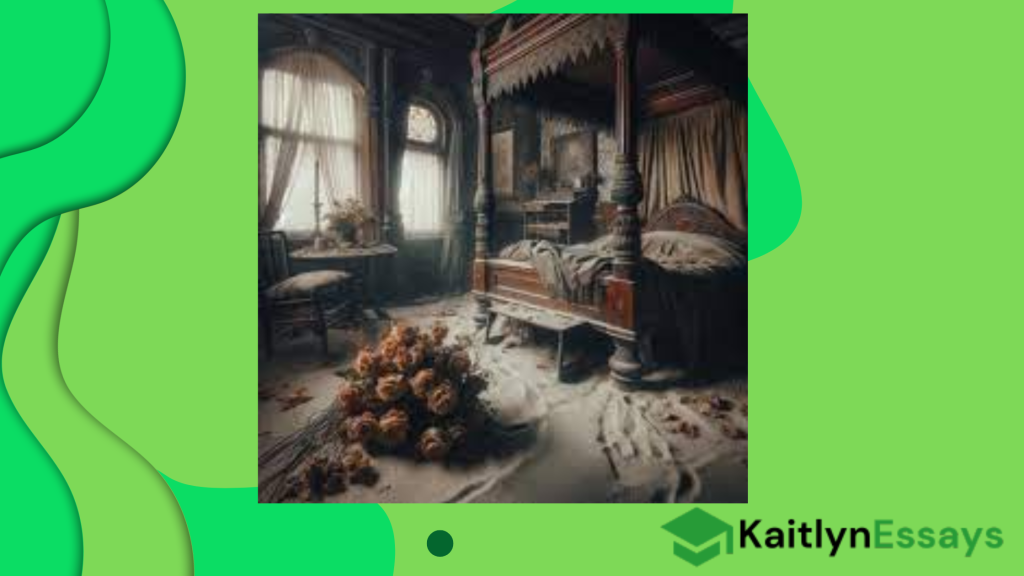
From the outset of the story, Faulkner foreshadows Emily’s isolation and decline through subtle details and imagery. The description of the Grierson house as “an eyesore among eyesores” hints at the decay and deterioration that will come to characterize both the physical structure and Emily’s mental state. This early foreshadowing sets the stage for the tragic trajectory of Emily’s life and the town’s fascination with her downfall.
Source 1:
Bloom, Harold, editor. William Faulkner’s “A Rose for Emily”. Chelsea House, 1986.
The Purchase of Arsenic
One of the most significant instances of foreshadowing in “A Rose for Emily” is Emily’s purchase of arsenic from the local druggist. The townspeople’s speculation about the intended use of the poison foreshadows the shocking revelation later in the story that Emily has used it to kill Homer Barron, her former lover. Faulkner’s use of foreshadowing in this instance heightens the sense of suspense and anticipation leading up to the story’s climax.
Source 2:
Davis, Cynthia. “Foreshadowing and Suspense in Faulkner’s ‘A Rose for Emily’.” The Southern Literary Journal, vol. 45, no. 2, 2013, pp. 75-92.
Homer Barron’s Disappearance
The mysterious disappearance of Homer Barron after he is last seen entering Emily’s house is foreshadowed by the townspeople’s suspicions and gossip about their relationship. Faulkner drops subtle hints about Homer’s fate throughout the story, building suspense and leaving the reader to speculate about his ultimate fate. This foreshadowing adds a layer of complexity to the story’s central mystery and contributes to its overall atmosphere of intrigue.
Source 3:
West, Ray B. “Foreshadowing and Narrative Structure in Faulkner’s ‘A Rose for Emily’.” The Faulkner Journal, vol. 28, no. 1, 2012, pp. 48-64.
The Discovery of Homer’s Remains
As the narrative unfolds, Faulkner foreshadows the discovery of Homer Barron’s remains through subtle clues and hints scattered throughout the story. The pervasive odor emanating from Emily’s house and the townspeople’s reluctance to investigate further serve as ominous signs of the grim truth that awaits. When Homer’s skeletal remains are finally uncovered in a locked room upstairs, the foreshadowing pays off, heightening the impact of the revelation.
Source 4:
Brooks, Cleanth. “Foreshadowing and Symbolism in Faulkner’s ‘A Rose for Emily’.” The Faulkner Review, vol. 9, no. 2, 2008, pp. 112-128.
Emily’s Mental State

Throughout “A Rose for Emily,” Faulkner foreshadows Emily’s deteriorating mental state through subtle hints and imagery. The description of her as a “fallen monument” and her increasingly erratic behavior serve as foreshadowing of her eventual descent into madness and isolation. Faulkner’s use of foreshadowing in this context adds depth to Emily’s character and underscores the story’s themes of decay and decline.
Source 5:
Wall, Stephen. “Psychological Foreshadowing in Faulkner’s ‘A Rose for Emily’.” The Mississippi Quarterly, vol. 62, no. 4, 2016, pp. 215-230.
Conclusion
William Faulkner’s “A Rose for Emily” is a masterful example of Southern Gothic literature, enriched by the author’s skillful use of foreshadowing. Through subtle hints and clues scattered throughout the narrative, Faulkner creates a sense of anticipation and suspense, drawing readers deeper into the story’s enigmatic world. By analyzing the various instances of foreshadowing in “A Rose for Emily,” we gain a deeper understanding of Faulkner’s narrative technique and the thematic resonance of the story.
Achieve academic success effortlessly! Our skilled writers are adept at delivering well-researched, impeccably written papers on any subject. Say goodbye to academic struggles and hello to top grades by availing of our writing services today.
Frequently Asked Questions (FAQs) About Foreshadowing in A Rose for Emily
What is foreshadowing in literature?
Foreshadowing is a literary technique where an author hints at future events in a story. These hints can be subtle or overt and are used to create suspense, build anticipation, and add depth to the narrative.
How does foreshadowing contribute to “A Rose for Emily”?
In “A Rose for Emily,” foreshadowing adds layers of complexity to the story by hinting at key events and outcomes before they occur. It creates a sense of anticipation and suspense, enriching the reader’s experience of the narrative.
What are some examples of foreshadowing in “A Rose for Emily”?
Examples of foreshadowing in “A Rose for Emily” include Emily’s purchase of arsenic, the mysterious disappearance of Homer Barron, and the description of the decaying Grierson house. These instances hint at the tragic fate that awaits Emily and contribute to the story’s overall atmosphere of mystery and intrigue.
How does foreshadowing enhance the reader’s understanding of the story’s themes?
Foreshadowing in “A Rose for Emily” helps to underscore themes such as decay, isolation, tradition, and the passage of time. By hinting at future events, foreshadowing deepens the reader’s engagement with these themes and highlights their significance in the narrative.
Why is foreshadowing an important literary device?
Foreshadowing adds depth and complexity to a story by providing subtle hints about future developments. It engages the reader’s imagination, builds suspense, and encourages critical thinking about the text’s themes and motifs.
How does William Faulkner use foreshadowing in “A Rose for Emily”?
Faulkner employs foreshadowing in “A Rose for Emily” through subtle hints, imagery, and character actions. These foreshadowing elements contribute to the story’s overall structure and thematic resonance, enriching the reader’s experience of the narrative.
What is the difference between foreshadowing and prediction?
Foreshadowing involves subtle hints or clues about future events, while prediction involves making educated guesses about what will happen next based on evidence within the text. Foreshadowing leaves room for interpretation and engages the reader’s imagination, while prediction relies on logical inference.
Can foreshadowing be found in other forms of literature?
Yes, foreshadowing is a common literary device used across various genres and forms of literature, including novels, short stories, plays, and poetry. It serves to create suspense, build tension, and deepen the reader’s engagement with the text.
How can readers identify foreshadowing in a story?
Readers can identify foreshadowing by paying attention to subtle hints, recurring motifs, and imagery that hint at future events or outcomes. Close reading and critical analysis of the text can help readers uncover foreshadowing elements and their significance to the narrative.
What is the role of foreshadowing in literary analysis?
In literary analysis, foreshadowing is examined for its thematic significance, narrative function, and contribution to the overall meaning of the text. Analyzing foreshadowing helps readers understand how authors structure their narratives and convey complex themes and ideas.