

The Great Gatsby by F. Scott Fitzgerald is a classic American novel with many important themes and messages. To write a great essay on this book, it is crucial to identify and focus on one or more of the major themes. Think about the appeal of a Great Gatsby Essay that doesn’t just summarize the story but digs deeper into its hidden meanings. Some of the key themes in The Great Gatsby include the hollowness of the wealthy elite, the unattainability of the American Dream, the corrupting influence of greed and materialism, and the futile pursuit of lost love.
A strong thematic analysis is essential for an excellent Gatsby essay. You need to pick a theme that resonates with you, gather evidence from the text that illustrates the theme, and build an argument around it. Fitzgerald’s vivid symbolism and complex characters offer plenty of material to analyze the themes in-depth.
For example, if writing about the American Dream theme, you could examine how the wealthy characters like Tom and Daisy have achieved material success, but lead empty, immoral lives devoid of true happiness. In contrast, the poorer residents of the valley of ashes represent the harsh realities that contradict the promised American ideals of equality and opportunity.
By zooming in on a focused thematic lens, you can write an insightful analysis that gets to the core of Fitzgerald’s brilliant social commentary in The Great Gatsby.
Selecting a Theme
The first step to writing an excellent thematic analysis is selecting a theme from The Great Gatsby that resonates with you. Some other major themes you could focus on include:
- The disillusionment of the 1920s Jazz Age and its societal excesses
- Social stratification and class conflicts between the old money and newly rich
- The role of women as objects of desire or status symbols
- The pervasiveness of dishonesty and betrayal in relationships
Whichever theme you choose, make sure it is something you find meaningful and can explore in-depth using evidence from the novel.
Gathering Textual Evidence
Once you have settled on a theme, you need to closely re-read the book, annotating everywhere that theme appears through quotes, symbols, characters’ actions, etc. Gather as many relevant examples as possible to substantiate your analysis.
For the American Dream theme, you could analyze quotes like Nick’s description of the “green light” representing Gatsby’s hope and dissect symbols like the Valley of Ashes showing the moral decadence underlying the glittery Jazz Age façade.
Writing Your Argument
The key to an insightful thematic analysis is creating a unique, detailed argument about your theme, rather than simply listing examples. You want to make a compelling case about how Fitzgerald uses this theme to deliver his overarching message about society.
For instance, your argument could be that Fitzgerald uses the American Dream as an idealistic goal that is inevitably corrupted by the pursuit of shallow material wealth and status over more meaningful values like integrity and purpose.
With a focused theme, ample textual evidence, and a well-reasoned argument, your Great Gatsby essay will demonstrate a sophisticated understanding of Fitzgerald’s multi-layered critique of the American experience.
Struggling to find time for your Great Gatsby essay?
With tight deadlines and a busy schedule, it’s easy to feel overwhelmed. Our professional writing service is here to help. Let us deliver a well-researched and compelling essay, so you can focus on other important tasks.
The Great Gatsby Essay Examples
The American Dream in The Great Gatsby
Introduction
In F. Scott Fitzgerald’s novel, The Great Gatsby, the concept of the American Dream is central to the narrative, serving as both a driving force for the characters and a critique of the society in which they live. Through the character of Jay Gatsby and his pursuit of wealth, status, and love, Fitzgerald paints a vivid picture of the corrupted American Dream in the Roaring Twenties.
The Illusion of the American Dream
At the heart of The Great Gatsby lies the illusion of the American Dream, embodied by Jay Gatsby himself. Gatsby’s rise from humble origins to a position of immense wealth and influence is a testament to the idea that in America, anyone can achieve success through hard work and determination. However, Fitzgerald reveals the hollowness of this dream through Gatsby’s relentless pursuit of Daisy Buchanan, a pursuit that ultimately leads to his tragic downfall.
Gatsby’s mansion, with its extravagant parties and opulent decor, symbolizes the superficiality and emptiness of the American Dream in the 1920s. Despite his material wealth and social standing, Gatsby remains fundamentally unsatisfied, his life defined by a longing for a past that can never be recaptured. This disillusionment with the American Dream reflects Fitzgerald’s own skepticism towards the values of his time, highlighting the moral decay and corruption that accompany the relentless pursuit of wealth and status.
The Corruption of the American Dream
Throughout the novel, Fitzgerald explores the ways in which the American Dream has been corrupted by greed, materialism, and a lack of moral integrity. Characters like Tom and Daisy Buchanan, representatives of the old money aristocracy, embody the moral bankruptcy that often accompanies inherited wealth and privilege. Their careless attitudes towards others, their infidelity, and their lack of empathy serve as a stark contrast to Gatsby’s idealized vision of love and success.
Gatsby himself is not immune to this corruption. His single-minded pursuit of Daisy blinds him to the reality of her character and the impossibility of recapturing the past. His association with organized crime and his willingness to engage in illegal activities to achieve his goals further tarnish his image as a self-made man and reveal the darker side of the American Dream.
The Divide Between Old Money and New Money
One of the central themes in The Great Gatsby is the divide between old money and new money, represented by the residents of East Egg and West Egg, respectively. The Buchanans, with their inherited wealth and social status, look down upon Gatsby and other newcomers as vulgar upstarts, highlighting the class prejudices that underpin American society. This divide underscores the tension between the traditional values of the past and the changing social landscape of the 1920s, where wealth and status are increasingly valued over character and integrity.
Gatsby’s proximity to Daisy’s world in East Egg symbolizes his desire to transcend his humble origins and be accepted into the elite circles of society. However, his inability to bridge the gap between old money and new money ultimately leads to his tragic demise, underscoring the futility of his quest and the limitations of the American Dream.
In conclusion, The Great Gatsby offers a poignant and powerful critique of the American Dream in the 1920s, exposing the moral decay and corruption that lie beneath the surface of a society obsessed with wealth, status, and appearances. Through the character of Jay Gatsby and his ill-fated pursuit of love and success, F. Scott Fitzgerald challenges the myth of the American Dream, revealing it to be a hollow and ultimately unattainable fantasy. The novel serves as a cautionary tale, reminding us of the dangers of placing material wealth above human connection and moral integrity, and urging us to reevaluate our values and priorities in pursuit of a more meaningful and fulfilling life.
The Tragic Pursuit of Wealth and Status in Fitzgerald’s Masterpiece
Introduction
Symbols and Motifs that Unveil the Hollowness of 1920s High Society
The symbols and motifs in F. Scott Fitzgerald’s The Great Gatsby are crucial in revealing the hollowness of 1920s high society. The novel is replete with recurring structures, contrasts, and literary devices that help to develop and inform the text’s major themes. Here are some key symbols and motifs that contribute to this critique:
The Green Light
The green light at the end of Daisy’s dock symbolizes Gatsby’s hopes and dreams, which are ultimately unattainable. The green light represents the elusive and ever-receding American Dream, which Gatsby believes will bring him happiness and fulfillment. However, the light remains out of reach, symbolizing the futility of his pursuit.
The Valley of Ashes
The Valley of Ashes, a desolate wasteland between Long Island and New York City, represents the moral and social decay of America. This desolate area serves as a backdrop for the characters’ empty lives, highlighting the moral decay and spiritual emptiness that underlie the glittering facade of the era.
The Eyes of Doctor T.J. Eckleburg
The eyes of Doctor T.J. Eckleburg, a giant billboard in the Valley of Ashes, symbolize God or a higher power watching over the characters. The eyes are often seen as a reminder of the moral decay and spiritual emptiness that pervades the society.
Color Imagery
Color imagery plays a significant role in the novel, with different colors symbolizing various aspects of the characters and their world. Gold represents true wealth and privilege, while yellow symbolizes fake gold, reflecting Gatsby’s artificial wealth. Blue represents loneliness and isolation, while green symbolizes greed and envy, as well as life and vitality.
The American West and East
The divide between the American West and East is a central theme in the novel. The West represents traditional social values and ideals, while the East symbolizes the corrupting influence of wealth and the pursuit of status. This dichotomy highlights the class prejudices and the difficulty of escaping one’s social stratification, no matter how much wealth one accumulates.
The Parties
The lavish parties hosted by Gatsby and the Buchanans serve as a backdrop for the characters’ empty lives. These parties are filled with superficiality and moral decay, highlighting the hollowness of the upper class. The parties also symbolize the transitory nature of material wealth and the ephemeral nature of pleasure.
The Characters
The characters themselves are symbols of the hollowness of high society. Tom and Daisy Buchanan, representatives of the old money aristocracy, embody the moral decay and emptiness that often accompany inherited wealth and privilege. Gatsby, despite his wealth and status, remains isolated and unfulfilled, highlighting the futility of his pursuit of the American Dream.
In conclusion, the symbols and motifs in The Great Gatsby are essential in revealing the hollowness of 1920s high society. Through these recurring structures, contrasts, and literary devices, Fitzgerald critiques the superficiality and moral decay that often accompany the relentless pursuit of wealth and status.
The role of women in F. Scott Fitzgerald’s The Great Gatsby is a significant aspect of the novel, reflecting the societal norms and expectations of the 1920s. The female characters in the novel, particularly Daisy Buchanan, Myrtle Wilson, and Jordan Baker, are portrayed as objects of desire, beauty, and material possessions. These portrayals are a reflection of the patriarchal society in which the novel is set, where women are often seen as secondary to men and are expected to conform to traditional gender roles.
The Role of Women in The Great Gatsby
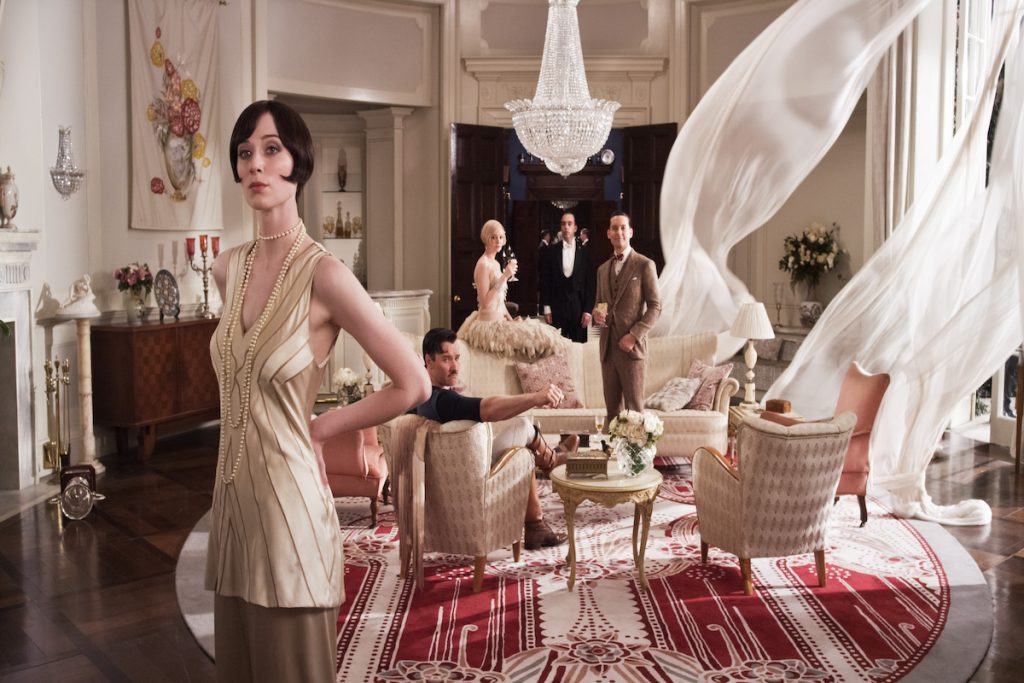
The role of women in F. Scott Fitzgerald’s The Great Gatsby is a significant aspect of the novel, reflecting the societal norms and expectations of the 1920s. The female characters in the novel, particularly Daisy Buchanan, Myrtle Wilson, and Jordan Baker, are portrayed as objects of desire, beauty, and material possessions. These portrayals are a reflection of the patriarchal society in which the novel is set, where women are often seen as secondary to men and are expected to conform to traditional gender roles.
Daisy Buchanan
Daisy is the most prominent female character in the novel, and her role is multifaceted. She is portrayed as a beautiful, naive, and innocent woman who is trapped in a loveless marriage with Tom Buchanan. Daisy’s primary concern is her physical appearance and her relationships with men. She is often described as a “beautiful little fool” who is unable to make her own decisions and is controlled by the men in her life.
Myrtle Wilson
Myrtle is another significant female character in the novel. She is portrayed as a working-class woman who is desperate to escape her circumstances and rise socially. Myrtle is involved in an affair with Tom Buchanan, which highlights the class differences and the objectification of women in the novel. Myrtle’s death serves as a catalyst for the tragic events that unfold, emphasizing the consequences of the patriarchal society in which the characters live.
Jordan Baker
Jordan is the only independent female character in the novel, who defies traditional gender roles. She is portrayed as a golfer, a smoker, and a drinker, which were considered unconventional behaviors for women at the time. Jordan’s independence and androgynous appearance make her a symbol of the changing roles of women in the 1920s. However, even Jordan is not immune to the patriarchal society, as she is ultimately controlled by Nick Carraway and her relationships with men.
The Portrayal of Women
The portrayal of women in The Great Gatsby is a reflection of the societal norms and expectations of the 1920s. Women are often seen as objects of desire, beauty, and material possessions. The novel highlights the objectification of women, where they are treated as commodities to be bought and sold. The characters of Daisy, Myrtle, and Jordan are all trapped in this patriarchal society, where they are expected to conform to traditional gender roles and are often controlled by the men in their lives.
Conclusion
In conclusion, the role of women in The Great Gatsby is a significant aspect of the novel, reflecting the societal norms and expectations of the 1920s. The female characters in the novel are portrayed as objects of desire, beauty, and material possessions, highlighting the objectification of women in the patriarchal society. The novel serves as a critique of the societal norms and expectations of the time, emphasizing the need for women to break free from these constraints and assert their independence.
East vs. West: The Clash of Old Money and New Money in the Novel
In F. Scott Fitzgerald’s masterpiece, “The Great Gatsby,” the clash between old money and new money serves as a central theme, driving the narrative and revealing the underlying tensions of the Jazz Age. This distinction is symbolized by the geographical divide between East Egg and West Egg, each representing different aspects of wealth and societal values. As we examine this dichotomy, it becomes clear that Fitzgerald’s portrayal of old and new money is not just about financial status but also about identity, morality, and the American Dream.
The Symbolism of East Egg and West Egg
East Egg and West Egg, two fictional villages on Long Island, serve as symbols for the contrasting worlds of old money and new money. East Egg, home to characters like Tom and Daisy Buchanan, represents the aristocratic, established wealth that has been inherited over generations. These characters embody a sense of entitlement and moral decay, using their wealth to maintain their social status while disregarding the consequences of their actions.
In contrast, West Egg is populated by self-made individuals like Jay Gatsby, who have acquired their fortunes through their own efforts. This new money is often viewed with suspicion and disdain by the old money elite, who see it as lacking the refinement and cultural sophistication that comes with inherited wealth. Gatsby’s lavish parties and ostentatious displays of wealth are seen as vulgar and excessive by the residents of East Egg, highlighting the social divide between the two groups.
Old Money: Tradition and Entitlement
The residents of East Egg, such as Tom Buchanan, epitomize the attitudes and values of old money. Tom’s arrogance and sense of superiority are evident in his interactions with other characters. He dismisses Gatsby as a social climber and ridicules his attempts to enter their exclusive world. Tom’s wealth has been passed down through generations, and he sees it as a marker of his inherent worth and superiority.
Daisy Buchanan, although more sympathetic than her husband, also embodies the superficiality and moral ambiguity of old money. Her reluctance to leave Tom for Gatsby, despite her professed love for the latter, underscores her dependence on the security and status that old money provides. Daisy’s decision to stay with Tom, despite his infidelities and abusiveness, highlights the constraints and moral compromises inherent in the world of old money.
New Money: Ambition and Aspiration
Jay Gatsby, the protagonist of the novel, represents the rise of new money in the 1920s. His wealth, accumulated through questionable means, is a testament to his ambition and determination to transcend his humble origins. Gatsby’s dream is not just to be wealthy but to be accepted into the upper echelons of society, epitomized by his love for Daisy Buchanan.
Gatsby’s pursuit of wealth is driven by his desire to win Daisy’s love and prove his worth to the old money elite. His parties, filled with excess and extravagance, are an attempt to emulate the lifestyle of East Egg residents and gain their acceptance. However, despite his wealth, Gatsby remains an outsider, never fully accepted by the old money crowd. His tragic end underscores the futility of his quest and the rigid boundaries that separate old money from new money.
The American Dream: Illusion and Disillusionment
The clash between old money and new money in “The Great Gatsby” reflects the broader theme of the American Dream. Gatsby’s rise from poverty to wealth is emblematic of the American Dream, the idea that anyone can achieve success through hard work and determination. However, Fitzgerald’s portrayal of Gatsby’s life reveals the hollowness and corruption of this dream.
Gatsby’s wealth, achieved through illegal activities, highlights the moral compromises often required to attain the American Dream. His relentless pursuit of Daisy and the acceptance of the old money elite ultimately leads to his downfall, suggesting that the American Dream is an unattainable illusion. The novel critiques the idea that wealth and social status are the ultimate measures of success and questions the true cost of achieving the American Dream.
The Social and Moral Divide
The distinction between old money and new money in “The Great Gatsby” is not just about wealth but also about social and moral values. The old money characters, despite their outward appearances of refinement and sophistication, are often morally bankrupt. Tom and Daisy’s carelessness and lack of accountability lead to the destruction of lives around them, yet they remain unscathed, protected by their wealth and social status.
In contrast, the new money characters, while often seen as gauche and unrefined, exhibit a sense of aspiration and drive that the old money characters lack. Gatsby’s ambition and determination, although ultimately futile, set him apart from the complacency and moral decay of the old money elite. The novel suggests that the true measure of a person’s worth lies not in their wealth or social status but in their character and integrity.
The Role of Geography in Social Stratification
The geographical divide between East Egg and West Egg serves as a physical manifestation of the social stratification in the novel. The residents of East Egg, with their inherited wealth, live in a world of stability and privilege, insulated from the struggles and uncertainties faced by the residents of West Egg. This geographical divide reinforces the social and moral divide between the two groups, highlighting the rigid boundaries that separate them.
Fitzgerald’s use of geography to symbolize social stratification is further emphasized by the location of the valley of ashes, a desolate wasteland that lies between the two Eggs and New York City. This area, inhabited by the working class, serves as a stark contrast to the wealth and luxury of the Eggs and represents the harsh realities faced by those who are excluded from the world of old and new money. The valley of ashes underscores the idea that the pursuit of wealth and social status often comes at the expense of others, highlighting the inequalities and moral compromises inherent in the world of “The Great Gatsby.”
Conclusion
In “The Great Gatsby,” the clash between old money and new money serves as a central theme, driving the narrative and revealing the underlying tensions of the Jazz Age. Through the characters of Tom and Daisy Buchanan, Jay Gatsby, and the geographical symbolism of East Egg and West Egg, Fitzgerald explores the social and moral divide between inherited and self-made wealth. The novel critiques the American Dream, highlighting the moral compromises and disillusionment that often accompany the pursuit of wealth and social status. Ultimately, “The Great Gatsby” suggests that true worth lies not in material possessions or social standing but in one’s character and integrity.
Analyzing the Tragic Hero in The Great Gatsby
F. Scott Fitzgerald’s The Great Gatsby is a quintessential piece of American literature that captures the essence of the Jazz Age and explores themes of ambition, love, and the American Dream. Central to the novel is the character of Jay Gatsby, whose life story embodies the qualities of a tragic hero. Gatsby’s rise to wealth, his unrelenting love for Daisy Buchanan, and his ultimate downfall mirror the classic elements of tragedy found in ancient literature. This essay explores the characteristics that make Jay Gatsby a tragic hero, exploring his hamartia, peripeteia, and anagnorisis, while also reflecting on the broader implications of his story.
The Classical Tragic Hero and Gatsby’s Hamartia
A tragic hero, as defined by Aristotle, is a character of noble stature who possesses a fatal flaw (hamartia) that leads to their downfall. Gatsby, originally James Gatz, transforms himself from a poor farm boy into a wealthy and enigmatic figure, embodying the American Dream’s promise of self-made success. However, his fatal flaw lies in his obsession with the past and his idealized love for Daisy Buchanan.
Gatsby’s hamartia is his unwavering belief that he can recreate the past and relive the perfection of his relationship with Daisy. This delusion blinds him to the reality of Daisy’s life and her intrinsic connection to Tom Buchanan, her husband. Gatsby’s romantic idealism prevents him from seeing Daisy as a flawed human being and instead, he idolizes her to an unrealistic extent. As critic Lionel Trilling notes, “Gatsby comes inevitably to stand for America itself,” representing the nation’s idealism and its susceptibility to illusions.
Peripeteia: The Reversal of Fortune
In classical tragedy, peripeteia refers to a sudden reversal of fortune. For Gatsby, this reversal is both swift and devastating. Despite his immense wealth and grandiose efforts to win back Daisy, Gatsby’s dream is shattered when she chooses to stay with Tom. This choice becomes evident during the confrontation at the Plaza Hotel, where Daisy’s inability to repudiate Tom unequivocally exposes the futility of Gatsby’s quest.
Tom’s revelation of Gatsby’s illicit business dealings further seals his fate. The image of Gatsby as a noble, self-made man is tarnished, revealing the corrupt means by which he achieved his fortune. This peripeteia underscores the moral decay underlying Gatsby’s dream and the broader American Dream. As noted by scholar Marius Bewley, “Gatsby’s tragedy is a commentary on the corruption of the American Dream.”
Anagnorisis: The Moment of Critical Discovery
Anagnorisis, or the moment of critical discovery, is a pivotal element in the tragic hero’s journey. For Gatsby, this moment occurs with tragic irony. While he waits for Daisy’s call that will never come, he remains steadfast in his belief that she will leave Tom and join him. However, Gatsby’s true moment of anagnorisis is posthumous; it is Nick Carraway, the novel’s narrator, who realizes the profound implications of Gatsby’s life and death.
Nick’s reflection on Gatsby’s incorruptible dream and the hollowness of the society around him serves as the novel’s true anagnorisis. As Nick muses, “Gatsby believed in the green light, the orgastic future that year by year recedes before us.” This realization highlights the central tragedy of Gatsby’s character: his unyielding faith in a dream that was never attainable, a poignant commentary on the broader American experience.
The Social and Moral Landscape of the 1920s
To fully understand Gatsby as a tragic hero, it is essential to consider the social and moral landscape of the 1920s. The Jazz Age, characterized by opulence, excess, and a break from traditional values, provides the backdrop for Gatsby’s rise and fall. This era’s materialism and moral laxity are embodied in characters like Tom and Daisy Buchanan, who epitomize the carelessness and moral vacuity of the old money elite.
Fitzgerald’s critique of this society is evident in his portrayal of Gatsby’s lavish parties, which symbolize the era’s hedonism and superficiality. Despite the grandeur and spectacle, these gatherings are ultimately hollow, attended by guests who care little for their host. Gatsby’s wealth, while dazzling, is rooted in the illicit activities of the underworld, further emphasizing the moral ambiguity of his success. As Sarah Churchwell notes, “The Great Gatsby is a cautionary tale of the decadent downside of the American Dream.”
Gatsby’s Isolation and Tragic End
One of the most poignant aspects of Gatsby’s character is his profound isolation. Despite his wealth and social standing, Gatsby remains an outsider in the world of East Egg’s old money aristocracy. His parties, though grand, fail to secure him genuine friendships or social acceptance. Gatsby’s isolation is highlighted by the sparse attendance at his funeral, a stark contrast to the throngs that attended his parties.
Gatsby’s tragic end is marked by a series of misunderstandings and deceptions. Myrtle Wilson’s death, mistakenly attributed to Gatsby by her husband George, sets the stage for Gatsby’s murder. Gatsby’s decision to take the blame for the accident to protect Daisy ultimately leads to his demise, underscoring his unwavering devotion to a dream built on illusions. As Tony Tanner observes, “Gatsby’s tragedy lies in his utter fidelity to his dream and his willingness to sacrifice everything for it.”
The Role of Nick Carraway
Nick Carraway, as the novel’s narrator, plays a crucial role in shaping our understanding of Gatsby as a tragic hero. Nick’s Midwestern values and outsider status position him as a moral compass within the story. His gradual disillusionment with the East Coast elite and his growing admiration for Gatsby’s incorruptible dream provide a lens through which the reader views Gatsby’s tragedy.
Nick’s final assessment of Gatsby, “You’re worth the whole damn bunch put together,” encapsulates the complexity of Gatsby’s character. Despite his flaws and the moral ambiguity of his actions, Gatsby’s unwavering pursuit of his dream and his idealistic vision set him apart from the cynicism and corruption of those around him. Nick’s narrative ultimately elevates Gatsby to the status of a tragic hero, whose life and death offer a profound critique of the American Dream.
The Broader Implications of Gatsby’s Tragedy
Gatsby’s story is not just a personal tragedy but a reflection of the broader societal and cultural shifts of the 1920s. His rise and fall encapsulate the era’s tensions between old and new money, tradition and modernity, illusion and reality. Gatsby’s tragic heroism lies in his embodiment of the American Dream’s promise and its inherent contradictions.
Fitzgerald’s novel serves as a critique of a society that prizes material success above all else, revealing the moral and emotional costs of such a pursuit. Gatsby’s life, marked by relentless ambition and unfulfilled longing, underscores the ephemeral nature of the American Dream and the human desire for meaning and connection. As Fitzgerald himself wrote, “Gatsby turned out all right at the end; it is what preyed on Gatsby, what foul dust floated in the wake of his dreams that temporarily closed out my interest in the abortive sorrows and short-winded elations of men.”
Conclusion
In The Great Gatsby, Jay Gatsby emerges as a tragic hero whose life story reflects the complexities and contradictions of the American Dream. His fatal flaw, or hamartia, lies in his idealized love for Daisy and his belief that he can recreate the past. Gatsby’s peripeteia and anagnorisis reveal the profound disillusionment at the heart of his dream, while his ultimate downfall underscores the moral and social critiques embedded in Fitzgerald’s narrative.
Through Gatsby’s tragic journey, Fitzgerald explores themes of ambition, love, and the relentless pursuit of an unattainable ideal. Gatsby’s story serves as a poignant reminder of the human cost of the American Dream and the enduring allure of the green light, symbolizing hope and the perpetual quest for something beyond reach. In analyzing Gatsby as a tragic hero, we gain deeper insights into the novel’s enduring relevance and its critique of a society driven by materialism and the pursuit of illusory dreams.
Running out of time to complete your Great Gatsby essay?
Don’t let the pressure of deadlines compromise the quality of your work. Our dedicated writing service can deliver a flawless essay tailored to your needs. Take control of your academic journey and get the help you deserve
FAQs
How do I use textual evidence effectively in my essay?
To use textual evidence effectively:
Choose Relevant Quotes: Select quotes that directly support your argument or analysis.
Integrate Smoothly: Incorporate quotes seamlessly into your sentences, providing context where necessary.
Analyze, Don’t Just Quote: Follow each quote with analysis explaining its significance and how it supports your point.
Cite Properly: Use MLA format to cite your sources accurately, both in-text and in your works cited page.
What are the main themes in The Great Gatsby?
The Great Gatsby explores several significant themes, including:
The American Dream: The novel examines the ideals and the darker aspects of the American Dream, particularly through the character of Jay Gatsby.
Class and Social Status: The distinction between old money and new money, and the associated social implications, are central to the narrative.
Love and Relationships: The complexities of love, particularly the relationship between Gatsby and Daisy, highlight issues of fidelity, desire, and disillusionment.
Moral Decay: The novel portrays the moral decay hidden beneath the glamorous surface of the Jazz Age.
How does F. Scott Fitzgerald use symbolism in the novel?
Fitzgerald employs various symbols to deepen the narrative, including:
The Green Light: Symbolizes Gatsby’s hopes and dreams, particularly his aspiration to reunite with Daisy.
The Eyes of Doctor T.J. Eckleburg: Represent the eyes of God or a moral conscience watching over the characters.
The Valley of Ashes: Depicts the moral and social decay resulting from the pursuit of wealth.
East Egg and West Egg: Symbolize the divide between old money and new money, respectively.
What is the significance of the setting in The Great Gatsby?
The setting of the novel is crucial in highlighting the contrasts between different social classes and moral attitudes:
East Egg: Represents old money, traditional values, and social stability.
West Egg: Represents new money, ambition, and the flamboyant, often dubious, pursuit of the American Dream.
The Valley of Ashes: Acts as a stark reminder of the consequences of moral and social decay in the pursuit of wealth.
New York City: Represents a place of both opportunity and moral ambiguity, where characters often engage in dubious activities.