

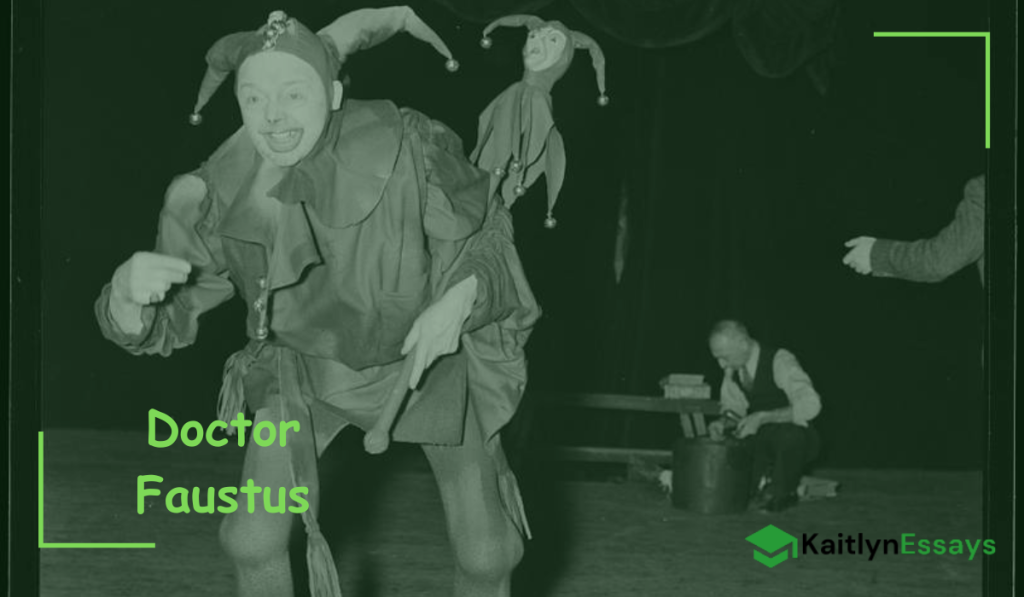
Doctor Faustus, written by Christopher Marlowe, is a classic Elizabethan tragedy that explores ambition, knowledge, and the consequences of human choice. The play follows the story of Faustus, a scholar dissatisfied with traditional fields of study, who turns to necromancy in his quest for unlimited power. By making a pact with the devil, Faustus gains access to supernatural abilities but at a steep cost—his soul. Marlowe uses this compelling narrative to highlight themes of temptation, the thirst for power, and the struggle between good and evil.
The play also reflects Renaissance attitudes toward religion, science, and human potential, making it a powerful commentary on its time. Through Faustus’s journey, Marlowe examines the limits of human ambition and the dangers of overreaching. Doctor Faustus remains a timeless work, inviting readers and audiences to reflect on the consequences of their choices and the value of humility and redemption.
Summary of Doctor Faustus
Act I: The Decision to Pursue Forbidden Knowledge
The play opens with Faustus in his study, expressing dissatisfaction with conventional fields of learning. Despite being highly educated in theology, law, medicine, and philosophy, Faustus finds these disciplines inadequate for his aspirations. He yearns for ultimate power and knowledge, beyond human limitations.
Faustus turns to necromancy, encouraged by his friends Valdes and Cornelius. They provide him with the tools and guidance to summon Mephistopheles, a demon in service to Lucifer. Faustus performs the summoning ritual and successfully calls forth Mephistopheles. The demon warns Faustus about the dangers of dealing with Lucifer, but Faustus is undeterred.
Faustus agrees to sign a pact, offering his soul to Lucifer in exchange for 24 years of unlimited power and Mephistopheles’ servitude. Initially hesitant when his blood coagulates while signing the contract, Faustus ignores this omen and proceeds, solidifying his fateful decision.
For more insights into Faustus’ internal struggles in this act, explore further here.
Act II: The Inner Conflict Begins
After signing the pact, Faustus begins experimenting with his newfound powers. However, his triumph is overshadowed by recurring doubts about the morality of his actions. The Good Angel and Evil Angel appear, representing Faustus’ internal battle between repentance and ambition. While the Good Angel urges him to seek God’s mercy, the Evil Angel tempts him to embrace his dark powers fully.
Mephistopheles provides Faustus with luxurious gifts and answers his questions about the nature of hell, which deeply unsettle Faustus. Despite his growing fear, he rationalizes his decision and refuses to repent. Lucifer himself appears to reaffirm the pact, presenting Faustus with a show of the Seven Deadly Sins as a distraction from his doubts.
This act underscores Faustus’ wavering resolve, as he begins to understand the gravity of his decision but remains unable to turn back. Learn more about the symbolism in this act.
Act III: Displays of Power and Growing Disillusionment
With Mephistopheles by his side, Faustus embarks on a journey across Europe, performing magic and showcasing his powers. His actions become increasingly frivolous and self-indulgent. For instance, he humiliates the Pope by becoming invisible and playing tricks during a banquet. These acts of mischief highlight the trivial ways Faustus uses his extraordinary powers, contrasting with the grand ambitions he initially professed.
Despite his success and fame, Faustus begins to feel the emptiness of his pursuits. Mephistopheles, too, grows weary of Faustus’ shallow displays, further reflecting the futility of Faustus’ bargain.
For a deeper analysis of how this act reveals Faustus’ moral decline, read more here.
Act IV: The Approach of Doom
As Faustus’ time runs out, he becomes increasingly reflective. He performs one final feat by summoning Helen of Troy, the epitome of beauty, to impress a group of scholars. This act is both a demonstration of his powers and a desperate attempt to find solace in worldly pleasures. He famously exclaims, “Was this the face that launched a thousand ships?” showcasing his awe and despair.
Despite warnings from old friends and visions of his impending doom, Faustus remains unable to repent. The Good Angel and Evil Angel reappear, with the Good Angel urging repentance and the Evil Angel pushing Faustus further into despair. Faustus’ reluctance to seek forgiveness stems from his belief that he has gone too far for redemption, a misconception that seals his fate.
For an exploration of how Faustus’ fear prevents him from seeking salvation, continue your reading here.
Act V: The Tragic Climax
As the final hour approaches, Faustus is overwhelmed by fear and regret. He realizes the eternal consequences of his pact and expresses a desperate desire to repent. However, his prayers are half-hearted, and he fails to fully commit to seeking God’s mercy.
In the play’s heart-wrenching conclusion, Faustus pleads for time to stop and for his soul to be spared. But as the clock strikes midnight, devils appear and drag him to hell, fulfilling the terms of his pact. The scholars who witness his demise mourn his tragic fate, lamenting the loss of a man who could have achieved greatness but succumbed to his hubris.
For a closer examination of the play’s powerful ending and its moral implications, learn more here.
Characters in Doctor Faustus
Doctor Faustus
Doctor Faustus is the central character, embodying the Renaissance spirit of ambition and the tragic flaws of human nature. He is a brilliant scholar with expertise in theology, law, medicine, and philosophy. However, Faustus feels constrained by the limits of these disciplines and seeks power beyond human reach, turning to necromancy.
Example: In his opening soliloquy, Faustus expresses his dissatisfaction with traditional knowledge:
“Philosophy is odious and obscure, / Both law and physic are for petty wits; / Divinity is basest of the three, / Unpleasant, harsh, contemptible, and vile.”
This passage reflects his hubris and sets the stage for his pursuit of forbidden knowledge.
Faustus’ refusal to repent, even as he recognizes the eternal consequences of his pact, illustrates his tragic flaw: pride. He consistently rationalizes his choices, rejecting opportunities for redemption.
Example: When he contemplates repentance, the Evil Angel persuades him otherwise:
“Think’st thou that Faustus is so fond to imagine / That after this life there is any pain? / Tush, these are trifles and mere old wives’ tales.”
This moment underscores Faustus’ internal conflict and his eventual downfall.
For an exploration of Faustus’ moral struggle, read more here.
Mephistopheles
Mephistopheles is both a servant of Lucifer and a complex character who reveals the consequences of damnation. While he tempts Faustus with promises of power, he also offers glimpses of the torment that awaits those who turn away from God.
Example: When Faustus inquires about hell, Mephistopheles replies:
“Why, this is hell, nor am I out of it: / Think’st thou that I who saw the face of God / And tasted the eternal joys of heaven / Am not tormented with ten thousand hells / In being deprived of everlasting bliss?”
This speech reveals Mephistopheles’ regret and serves as a warning to Faustus, who dismisses it as irrelevant.
Throughout the play, Mephistopheles manipulates Faustus to ensure he remains loyal to Lucifer. However, his occasional moments of candor suggest a deep understanding of the tragedy unfolding before him.
Example: When Faustus laments his fate in Act V, Mephistopheles coldly reminds him of their agreement:
“Thou art damned; think thou of hell.”
This line reflects Mephistopheles’ role as both tempter and enforcer of Faustus’ doom.
For a closer look at Mephistopheles’ duality, explore further here.
Lucifer
Lucifer, the ruler of hell, represents absolute evil and the ultimate consequence of rejecting God. He appears in the play to accept Faustus’ soul and reinforce the pact.
Example: In Act II, Lucifer presents the Seven Deadly Sins to Faustus in a grotesque pageant, distracting him from thoughts of repentance. This spectacle emphasizes Lucifer’s cunning and his ability to exploit human weakness.
Lucifer’s interactions with Faustus highlight the irreversibility of Faustus’ decision and the futility of his pursuits.
Discover how Lucifer reinforces the play’s moral lessons here.
Good Angel and Evil Angel
The Good Angel and Evil Angel represent Faustus’ internal moral struggle. The Good Angel urges repentance and faith, while the Evil Angel tempts him with power and pleasure.
Example: In Act II, the Good Angel pleads:
“O Faustus, lay that damned book aside, / And gaze not on it lest it tempt thy soul.”
In contrast, the Evil Angel counters:
“Go forward, Faustus, in that famous art / Wherein all nature’s treasure is contained.”
These exchanges illustrate the constant tug-of-war within Faustus, which he ultimately resolves by choosing the path of damnation.
For an in-depth analysis of their symbolic roles, read more here.
Wagner
Wagner, Faustus’ servant, serves as a minor comic figure who mirrors Faustus’ ambitions in a humorous way. He attempts to mimic his master by dabbling in magic, though his actions are far less consequential.
Example: Wagner summons clowns to mock Faustus’ summoning of Mephistopheles. This parallel provides levity while highlighting the absurdity of Faustus’ grand ambitions.
Explore more about Wagner’s significance in the play here.
The Scholars
The Scholars serve as a moral counterpoint to Faustus. They admire his intellect and lament his downfall, representing the potential he squandered.
Example: In the final scene, they mourn Faustus’ fate:
“Cut is the branch that might have grown full straight, / And burned is Apollo’s laurel bough.”
This lament emphasizes the tragedy of Faustus’ wasted potential and reinforces the play’s moral message.
Learn how the Scholars contribute to the moral framework of the play here.
Helen of Troy
Helen of Troy, conjured by Faustus, symbolizes the seductive allure of worldly pleasures. Her appearance represents Faustus’ attempt to distract himself from his impending doom.
Example: In Act V, Faustus gazes upon Helen and declares:
“Was this the face that launched a thousand ships, / And burnt the topless towers of Ilium?”
This moment reflects Faustus’ continued reliance on superficial pleasures, even as he approaches eternal damnation.
For a detailed discussion on Helen’s symbolic significance, learn more here.
Themes in Doctor Faustus
The Quest for Knowledge and Power
The central theme of Doctor Faustus is the human desire for knowledge and power beyond mortal limitations. Faustus’ dissatisfaction with conventional fields of study drives him to pursue necromancy, believing it will grant him ultimate control over nature and destiny.
Example: In his opening soliloquy, Faustus dismisses theology, medicine, and philosophy as insufficient, declaring:
“A sound magician is a mighty god: / Here, Faustus, tire thy brains to gain a deity.”
This statement highlights his ambition to transcend human boundaries, a hallmark of the Renaissance spirit. However, his overreaching desire leads to his downfall, illustrating the dangers of unchecked ambition.
For an in-depth exploration of Faustus’ relentless pursuit of power, read further here.
Sin and Damnation
Sin and its consequences are central to the play. Faustus’ pact with Lucifer symbolizes his ultimate rejection of God in exchange for temporary worldly pleasures. The play explores the idea that sin is not only a rejection of divine grace but also a self-imposed damnation.
Example: Faustus’ inability to repent, despite numerous opportunities, reflects his pride and fear. In Act V, he laments:
“My heart is hardened; I cannot repent.”
This line underscores the play’s depiction of sin as a progressive estrangement from God.
Discover more about how the theme of sin shapes Faustus’ journey here.
Free Will and Predestination
The tension between free will and predestination is a recurring theme. While Faustus appears to exercise free will in signing the pact, his repeated failures to repent suggest he is trapped by his own choices and the influence of external forces like Mephistopheles and the Evil Angel.
Example: The Good Angel frequently urges Faustus to repent, as in Act II:
“Faustus, repent; yet God will pity thee.”
However, Faustus ultimately succumbs to despair, believing his fate is sealed:
“The stars move still, time runs, the clock will strike, / The devil will come, and Faustus must be damned.”
Explore how Marlowe examines this complex interplay between human agency and divine will here.
The Fragility of Human Existence
The play portrays the fleeting nature of earthly pleasures and the vulnerability of human existence. Faustus gains immense power but uses it for trivial acts, such as summoning Helen of Troy and playing pranks on nobles. These pursuits fail to provide the fulfillment he craves.
Example: In Act V, as the end of his 24-year pact approaches, Faustus reflects on his wasted life:
“The clock strikes twelve, despair doth drive despair; / Heaven strives with mercy, but despair prevails.”
This moment emphasizes the ephemeral nature of his achievements and the futility of worldly pursuits.
Learn more about how Faustus’ existential crisis unfolds here.
Redemption and the Mercy of God
The possibility of redemption is a significant theme, underscoring the play’s moral message. Despite his sins, Faustus is repeatedly offered opportunities to repent and return to God. However, his pride and despair prevent him from seeking forgiveness.
Example: In Act V, the Scholars pray for Faustus, symbolizing divine mercy even at the eleventh hour:
“Pray that God may have mercy upon thee.”
Faustus’ failure to embrace this mercy highlights the consequences of rejecting redemption.
For insights into the theme of redemption in the play, read more here.
The Conflict Between Renaissance and Medieval Values
Doctor Faustus reflects the transition from the medieval worldview, which emphasized faith and divine authority, to the Renaissance focus on individualism and human achievement. Faustus embodies this tension as he challenges the limits imposed by God and traditional knowledge.
Example: His defiance of divine authority is evident when he declares:
“Divinity, adieu! These metaphysics of magicians / And necromantic books are heavenly.”
This statement illustrates his embrace of Renaissance ideals while foreshadowing the consequences of rejecting spiritual values.
Discover how Marlowe captures this cultural conflict in the play here.
Symbols in Doctor Faustus
The Contract with Lucifer
The contract Faustus signs with his blood symbolizes his ultimate rejection of God and submission to the devil. The act of signing represents the permanence of his decision and the binding nature of his pact.
When Faustus’ blood congeals as he attempts to sign the contract, it symbolizes a divine intervention, urging him to reconsider his actions. However, Faustus ignores this warning and proceeds, solidifying his damnation.
Discover how the contract serves as a turning point in Faustus’ story here.
The Good Angel and Evil Angel
The Good Angel and Evil Angel symbolize Faustus’ internal moral struggle. The Good Angel represents his conscience and the possibility of redemption, while the Evil Angel embodies temptation and the allure of sin.
Their frequent appearances highlight the duality of human nature and the ongoing conflict between good and evil within Faustus.
Learn more about the symbolic significance of these characters here.
The Seven Deadly Sins
The parade of the Seven Deadly Sins symbolizes the temptations that distract Faustus from repentance. Their grotesque and exaggerated portrayal serves as a reminder of the consequences of indulging in sinful behavior.
Lucifer’s presentation of the sins demonstrates his manipulation of Faustus, using spectacle to keep him bound to his pact.
Explore how the Seven Deadly Sins reinforce the play’s moral themes here.
Helen of Troy
Helen of Troy represents the seductive allure of worldly beauty and pleasure. Her conjuring by Faustus reflects his continued reliance on superficial distractions as he avoids confronting his impending damnation.
Faustus’ famous line, “Was this the face that launched a thousand ships?” captures his infatuation with illusionary ideals, further emphasizing the futility of his pursuits.
Discover more about Helen’s role in Faustus’ downfall here.
The Books of Magic
The books Faustus studies symbolize his ambition and desire for forbidden knowledge. They serve as both a source of power and a reminder of his moral corruption.
Faustus’ obsession with these books underscores his rejection of divine knowledge and his embrace of dark, destructive forces.
Learn how the books reflect Faustus’ intellectual and spiritual downfall here.
The Clock
The ticking clock is a recurring symbol of the passage of time and Faustus’ impending doom. As the end of his 24-year pact approaches, the clock’s strikes heighten the tension and remind Faustus of his inevitable fate.
In the final scene, the clock striking midnight marks the culmination of Faustus’ tragic journey, emphasizing the irreversible nature of his choices.
Explore the symbolism of time in the play here.
The Feast with the Pope
The scene where Faustus mocks the Pope and disrupts his feast symbolizes the misuse of his powers for trivial and irreverent purposes. This act reflects Faustus’ descent into pettiness, as he fails to achieve anything meaningful with his newfound abilities.
This episode also serves as a critique of religious institutions, a common theme in Marlowe’s works.
Discover the layered significance of this scene here.
The Final Moments
The storm and the devils that appear to drag Faustus to hell symbolize the ultimate consequences of his choices. The storm reflects the chaos and terror of Faustus’ final moments, while the devils represent the culmination of his pact.
This climactic scene underscores the moral lesson of the play: the irreversible consequences of rejecting divine mercy.
Learn how the final symbols reinforce the play’s tragic resolution here.
Literary Devices in Doctor Faustus
Soliloquies
Soliloquies are a cornerstone of Doctor Faustus, allowing audiences to access Faustus’ inner thoughts and moral dilemmas. Through his soliloquies, Marlowe looks into Faustus’ ambition, doubt, and eventual despair. These speeches serve to humanize Faustus, exposing his vulnerabilities and the inner conflict between repentance and damnation. The soliloquies also reflect the broader themes of free will and the consequences of overreaching ambition.
For a closer examination of how soliloquies reveal Faustus’ psyche, read more here.
Allegory
Marlowe uses allegorical elements to convey moral and spiritual lessons. The Good Angel and Evil Angel represent the dual forces of morality and temptation, acting as external manifestations of Faustus’ internal struggle. Similarly, the pageant of the Seven Deadly Sins functions as a vivid moral allegory, illustrating the temptations that distract Faustus from repentance and deepen his descent into damnation. These allegorical figures emphasize the moral consequences of Faustus’ choices and highlight the play’s didactic purpose.
Discover how allegory shapes the narrative structure of the play here.
Imagery
Marlowe employs vivid imagery to heighten the emotional and thematic impact of the play. The descriptions of hell and eternal damnation evoke a sense of terror and inevitability, mirroring Faustus’ growing realization of his fate. The imagery surrounding Helen of Troy, described as an ethereal and unattainable beauty, reflects Faustus’ infatuation with illusions of power and pleasure. Through these striking images, Marlowe immerses the audience in Faustus’ world, making his experiences palpable and immediate.
Learn more about the role of imagery in creating dramatic tension here.
Irony
Irony permeates Doctor Faustus, particularly in the way Faustus achieves vast supernatural powers only to squander them on trivial pursuits. His initial ambitions to “command all things” are undermined by his descent into petty acts, such as playing tricks on the Pope and summoning mythical figures for entertainment. This tragic irony underscores the futility of Faustus’ pact and highlights the disparity between his aspirations and the reality of his choices.
Explore how Marlowe uses irony to critique human ambition here.
Foreshadowing
Marlowe uses foreshadowing to build tension and emphasize the inevitability of Faustus’ downfall. The congealing of Faustus’ blood when he tries to sign the contract with Lucifer hints at divine intervention and the potential for redemption. However, Faustus’ dismissal of these signs foreshadows his ultimate damnation. Similarly, the recurring references to time, such as the ticking clock in the final act, foretell the climax of the play, reminding both Faustus and the audience of the finite nature of his earthly pleasures.
Learn how foreshadowing shapes the emotional arc of the play here.
Allusion
The play is rich in classical and biblical allusions, reflecting Marlowe’s erudition and the intellectual climate of the Renaissance. Faustus frequently references figures such as Icarus and Helen of Troy, aligning his ambition and eventual fall with these mythological tales. These allusions not only contextualize Faustus’ hubris but also link his story to broader narratives of human overreach and divine punishment. Biblical allusions, such as the story of Lucifer’s fall, serve to underscore the moral and spiritual dimensions of Faustus’ choices.
For a detailed analysis of the play’s allusions, read more here.
Symbolism
Symbolism plays a crucial role in enriching the play’s themes and messages. The contract with Lucifer symbolizes Faustus’ rejection of divine grace, while the Good Angel and Evil Angel reflect the moral dichotomy within him. The ticking clock and the appearance of the devils in the final scene symbolize the inevitability of his fate and the ultimate consequences of his actions. These symbols reinforce the play’s exploration of sin, redemption, and the human condition.
Discover how Marlowe uses symbolism to deepen the narrative here.
Tragic Structure
As a tragedy, Doctor Faustus adheres to the classical structure outlined by Aristotle. Faustus, the tragic hero, possesses a fatal flaw—his insatiable ambition—that leads to his downfall. The play follows his journey from initial hubris to eventual despair, fulfilling the Aristotelian notion of catharsis as the audience witnesses the consequences of his actions. The structure emphasizes the moral lessons of the play while showcasing Marlowe’s mastery of dramatic form.
Explore the elements of tragedy in Doctor Faustus here.
Quotes in Doctor Faustus
“A sound magician is a mighty god.”
This declaration by Faustus encapsulates his belief in the boundless potential of knowledge and power. It reflects his hubris and his decision to pursue forbidden knowledge, positioning himself as a figure who seeks to transcend human limitations. This quote also foreshadows his tragic downfall, as his ambition blinds him to the moral and spiritual consequences of his actions.
Unpack how this quote sets the tone for Faustus’ ambitions here.
“Why, this is hell, nor am I out of it.”
Mephistopheles’ admission highlights the torment of eternal separation from God, even in the absence of physical flames. This line introduces a complex portrayal of hell, emphasizing its psychological and spiritual dimensions. It serves as a warning to Faustus, though one he fails to heed, further reinforcing the play’s theme of eternal damnation.
Explore the implications of this definition of hell here.
“Is this the face that launched a thousand ships?”
Faustus’ reverence for Helen of Troy illustrates his continued obsession with worldly beauty and pleasures. This line underscores his reliance on illusions to distract himself from the reality of his damnation. Helen becomes a symbol of Faustus’ inability to seek redemption, as he indulges in fleeting joys rather than confronting his spiritual demise.
Learn more about the symbolic weight of this famous line here.
“My heart’s so hardened I cannot repent.”
Faustus’ confession of his inability to repent marks a critical moment in his moral decline. Despite moments of doubt and fear, he remains resolute in his rejection of God’s grace. This line encapsulates the tragedy of his situation: his own choices and pride have rendered him incapable of seeking salvation.
Examine how this line reflects Faustus’ inner conflict here.
“Hell strives with grace for conquest in my breast.”
This line epitomizes the internal struggle Faustus faces throughout the play. The juxtaposition of hell and grace highlights the tension between his sinful desires and his lingering conscience. This conflict underscores the broader theme of free will and the choices that ultimately seal Faustus’ fate.
Look deeper into the portrayal of Faustus’ moral struggle here.
“Oh, soul, be changed into little water drops, / And fall into the ocean, ne’er be found!”
In his final moments, Faustus expresses his desperate wish to escape divine judgment. This poignant plea reflects his recognition of the gravity of his sins and the terror of facing eternal damnation. The imagery of water drops and the ocean conveys a sense of insignificance and the futility of his attempts to avoid the consequences of his choices.
Discover the emotional impact of Faustus’ last words here.
“The reward of sin is death.”
This biblical allusion underscores the moral foundation of the play, emphasizing the consequences of sin. Faustus’ dismissal of this truth reveals his arrogance and his refusal to accept the spiritual implications of his actions. The line also serves as a reminder to the audience of the inevitability of divine justice.
Learn how this line ties into the play’s moral framework here.
“What art thou, Faustus, but a man condemned to die?”
This reflection highlights Faustus’ growing awareness of his mortality and the futility of his pursuits. It signals his recognition of the limits of his power and the irreversible nature of his choices. This line encapsulates the tragedy of Faustus: a man who gains the world but loses his soul.
Explore the significance of Faustus’ self-realization here.
“Adders and serpents, let me breathe awhile!”
As devils drag Faustus to hell, his desperate cry for respite conveys the terror and anguish of his fate. The reference to serpents evokes biblical imagery of sin and punishment, reinforcing the play’s exploration of divine justice. This moment captures the culmination of Faustus’ tragic journey, leaving a lasting impression on the audience.
Learn how this climactic line reinforces the play’s themes here.
Doctor Faustus Essays
The Tragedies of the Main Characters in Doctor Faustus
Christopher Marlowe’s Doctor Faustus is a seminal work of Elizabethan drama that explores the tragic consequences of ambition, pride, and the human desire for power and knowledge. The play centers on the titular character, Dr. Faustus, a brilliant scholar whose insatiable thirst for knowledge leads him to make a pact with the devil, ultimately resulting in his downfall. However, Faustus is not the only character who experiences tragedy in the play. The fates of other key figures, such as Mephistophilis and Wagner, also underscore the play’s themes of despair, wasted potential, and the inescapable consequences of one’s choices. Through the tragedies of its main characters, Doctor Faustus serves as a cautionary tale about the dangers of overreaching ambition and the moral and spiritual costs of forsaking one’s humanity.
The central tragedy of the play is, of course, that of Dr. Faustus himself. Faustus is a man of extraordinary intellect, possessing a deep understanding of philosophy, medicine, law, and theology. Yet, he is dissatisfied with the limitations of human knowledge and yearns for divine power and omnipotence. This hubris leads him to reject conventional scholarship and turn to necromancy, summoning the demon Mephistophilis and striking a deal with Lucifer. In exchange for 24 years of service from Mephistophilis, Faustus agrees to surrender his soul to hell. This pact symbolizes the ultimate tragedy of Faustus: he trades eternal salvation for fleeting earthly pleasures and power. Throughout the play, Faustus is plagued by moments of doubt and remorse, particularly when he contemplates the horrors of hell. However, his pride and fear of losing his newfound power prevent him from repenting. In the end, Faustus’s tragic flaw—his inability to reconcile his ambition with his moral conscience—leads to his damnation. His final soliloquy, in which he desperately pleads for mercy as the clock strikes midnight, is a harrowing depiction of a man who realizes too late the gravity of his choices.
Mephistophilis, the demon who serves as Faustus’s guide and tempter, also embodies a profound tragedy. Unlike the stereotypical depiction of demons as purely evil, Mephistophilis is a complex character who reveals his own suffering and regret. In one of the play’s most poignant moments, Mephistophilis confesses to Faustus that he was once an angel who fell from grace due to his rebellion against God. He describes hell not as a physical place but as a state of eternal separation from divine grace, a torment far worse than any earthly pain. Mephistophilis’s tragedy lies in his awareness of the bliss he has lost and his role in leading others to the same fate. He serves as a mirror to Faustus, reflecting the consequences of pride and rebellion against God. Yet, despite his own suffering, Mephistophilis remains bound to his duty, carrying out Lucifer’s will and ensuring Faustus’s damnation. His character underscores the play’s exploration of the inescapable nature of sin and the futility of seeking redemption without genuine repentance.
Wagner, Faustus’s servant, represents a different kind of tragedy—one of wasted potential and misguided ambition. Wagner is a comic figure in many ways, often mimicking his master’s grandiose language and aspirations. However, his attempts to emulate Faustus’s necromantic practices highlight the dangers of blindly following in the footsteps of those who have strayed from the path of righteousness. Wagner’s tragedy is not as dramatic as Faustus’s or Mephistophilis’s, but it is nonetheless significant. He represents the ordinary individual who is lured by the promise of power and knowledge without fully understanding the consequences. His character serves as a reminder that the pursuit of forbidden knowledge is not limited to the elite or the intellectually gifted; it is a temptation that can ensnare anyone, regardless of their station in life.
The tragedies of the main characters in Doctor Faustus are deeply intertwined with the play’s moral and theological themes. Marlowe uses these characters to explore the human condition, particularly the tension between ambition and morality. Faustus’s downfall is a result of his refusal to accept the limitations of human existence and his desire to transcend them at any cost. Mephistophilis’s suffering reflects the eternal consequences of rebellion against divine authority, while Wagner’s misguided aspirations highlight the pervasive nature of temptation. Together, these characters illustrate the play’s central message: that the pursuit of power and knowledge, when divorced from moral and spiritual considerations, leads inevitably to destruction.
In conclusion, Doctor Faustus is a profound exploration of tragedy on both a personal and universal level. The fates of Faustus, Mephistophilis, and Wagner serve as cautionary tales about the dangers of hubris, the inevitability of divine justice, and the moral compromises that accompany the quest for power. Marlowe’s play remains a timeless meditation on the human condition, reminding audiences of the perils of overreaching ambition and the importance of humility, repentance, and faith. Through its tragic characters, Doctor Faustus continues to resonate as a powerful and enduring work of literature.
Guilt and Responsibility in Doctor Faustus and Paradise Lost
The themes of guilt and responsibility are central to both Christopher Marlowe’s Doctor Faustus and John Milton’s Paradise Lost. While these works differ in genre, style, and focus, they both explore the moral and psychological consequences of human (and, in Milton’s case, angelic) choices. Through the characters of Faustus, Satan, Adam, and Eve, Marlowe and Milton look into the complexities of free will, the burden of guilt, and the inescapable responsibility that comes with the power to choose. Both works serve as profound meditations on the human condition, examining how individuals grapple with the aftermath of their decisions and the moral dilemmas that arise from their actions.
In Doctor Faustus, the titular character’s guilt and responsibility are inextricably linked to his decision to sell his soul to the devil in exchange for knowledge and power. Faustus is a man of immense intellect and potential, but his ambition leads him to reject the limits of human understanding and seek divine capabilities. From the moment he signs the pact with Lucifer, Faustus is haunted by a growing sense of guilt, which manifests in his moments of doubt and fear. For instance, he repeatedly contemplates repentance, particularly when confronted with the reality of hell and the consequences of his actions. However, his pride and fear of losing his newfound power prevent him from seeking redemption. Faustus’s tragedy lies in his inability to take full responsibility for his choices until it is too late. His final soliloquy, in which he desperately pleads for mercy as the clock strikes midnight, is a powerful expression of his guilt and the realization of his irreversible fate. Marlowe portrays Faustus as a deeply flawed but sympathetic figure, whose downfall serves as a cautionary tale about the dangers of hubris and the moral responsibility that comes with free will.
In Paradise Lost, Milton explores guilt and responsibility through the characters of Satan, Adam, and Eve. Satan’s guilt is rooted in his rebellion against God and his subsequent fall from grace. Unlike Faustus, who is human and thus susceptible to temptation, Satan is an angel who knowingly chooses to defy divine authority. His guilt is evident in his soliloquies, where he expresses regret and self-loathing but ultimately refuses to repent. Satan’s sense of responsibility is twisted; he takes pride in his role as the tempter and seeks to corrupt humanity as a way of justifying his own fall. However, his guilt is inescapable, and it manifests in his internal torment and the realization that he can never escape God’s justice.
Adam and Eve, on the other hand, experience guilt and responsibility as a result of their disobedience in the Garden of Eden. Their decision to eat the forbidden fruit is driven by a combination of curiosity, temptation, and a desire for knowledge—motives that echo Faustus’s own ambitions. After their fall, Adam and Eve are overwhelmed by guilt and shame, recognizing the gravity of their actions and the consequences for themselves and their descendants. However, unlike Faustus, they ultimately take responsibility for their choices and seek redemption. Milton portrays their repentance as a hopeful counterpoint to Satan’s defiance, emphasizing the possibility of forgiveness and the importance of accepting responsibility for one’s actions.
Both Doctor Faustus and Paradise Lost highlight the interplay between guilt and responsibility, illustrating how individuals grapple with the moral consequences of their choices. Marlowe’s Faustus is a tragic figure whose inability to fully confront his guilt and take responsibility for his actions leads to his damnation. In contrast, Milton’s Adam and Eve, though flawed, ultimately accept their guilt and seek redemption, offering a more hopeful vision of human potential. Satan, like Faustus, serves as a cautionary example of the destructive consequences of pride and the refusal to accept responsibility.
The two works also differ in their theological perspectives. Marlowe’s play is deeply rooted in the Calvinist doctrine of predestination, which suggests that Faustus’s fate is sealed from the outset. His guilt and inability to repent are portrayed as inevitable, underscoring the play’s tragic tone. Milton, however, adopts a more Arminian view, emphasizing the importance of free will and the possibility of redemption. This difference is reflected in the ways the characters in Paradise Lost respond to their guilt and take responsibility for their actions.
In conclusion, Doctor Faustus and Paradise Lost both explore the themes of guilt and responsibility through their complex and morally ambiguous characters. Marlowe’s Faustus and Milton’s Satan serve as cautionary figures, illustrating the destructive consequences of pride and the refusal to accept responsibility. Adam and Eve, on the other hand, offer a more hopeful vision of human potential, demonstrating the possibility of redemption through repentance and accountability. Together, these works provide profound insights into the human condition, reminding readers of the moral and psychological complexities that arise from the power to choose and the inescapable burden of guilt.
People’s Key Drives in Prebble’s Enron and Marlowe’s Doctor Faustus
Lucy Prebble’s Enron and Christopher Marlowe’s Doctor Faustus are two works separated by centuries but united in their exploration of the key drives that motivate human behavior: ambition, greed, the pursuit of power, and the desire for transcendence. Both plays look into the psychological and moral complexities of their protagonists, revealing how these drives can lead to extraordinary achievements as well as catastrophic downfalls. Through the characters of Jeffrey Skilling in Enron and Dr. Faustus in Marlowe’s play, Prebble and Marlowe offer a critical examination of the human condition, highlighting the dangers of unchecked ambition and the moral compromises that often accompany the pursuit of success.
In Enron, Jeffrey Skilling is portrayed as a visionary whose ambition and innovative thinking transform the energy company into a symbol of corporate success. However, Skilling’s drive for power and recognition leads him to engage in unethical practices, including the creation of fraudulent financial schemes to maintain the illusion of profitability. Skilling’s ambition is fueled by a desire to transcend traditional business models and create something revolutionary, but this drive blinds him to the ethical and legal consequences of his actions. Prebble uses Skilling’s character to critique the culture of corporate greed and the moral bankruptcy that can result from the relentless pursuit of success. The play highlights how Skilling’s key drives—ambition, greed, and the desire for legacy—ultimately lead to his downfall and the collapse of Enron, serving as a cautionary tale about the dangers of prioritizing personal gain over ethical responsibility.
Similarly, in Doctor Faustus, the titular character is driven by an insatiable thirst for knowledge and power. Faustus is a brilliant scholar who has mastered all conventional fields of study, but his ambition leads him to seek something greater: divine capabilities and omnipotence. This drive for transcendence compels him to turn to necromancy and make a pact with the devil, trading his soul for 24 years of unlimited power and knowledge. Faustus’s ambition is initially portrayed as noble, reflecting the Renaissance ideal of the limitless potential of human intellect. However, as the play progresses, it becomes clear that his drive is tainted by hubris and a disregard for moral and spiritual consequences. Marlowe uses Faustus’s tragic downfall to explore the dangers of overreaching ambition and the moral compromises that accompany the pursuit of forbidden knowledge. Faustus’s inability to repent and his eventual damnation underscore the play’s central message: that the pursuit of power and knowledge, when divorced from ethical considerations, leads to destruction.
Both works also examine the role of greed as a key drive in human behavior. In Enron, greed is depicted as a pervasive force that corrupts not only Skilling but also the entire corporate culture of the company. The play highlights how the desire for wealth and status can lead individuals to engage in unethical and illegal practices, ultimately resulting in widespread harm. In Doctor Faustus, greed is manifested in Faustus’s desire for earthly pleasures and power. Despite his initial aspirations for knowledge and transcendence, Faustus squanders his powers on trivial pursuits, such as conjuring illusions and playing pranks. This shift from noble ambition to petty greed underscores the moral degradation that accompanies the unchecked pursuit of personal desires.
Another key drive explored in both works is the desire for legacy and immortality. Skilling’s ambition is driven by a desire to leave a lasting impact on the world, to be remembered as a revolutionary figure who transformed the business landscape. Similarly, Faustus’s quest for knowledge and power is fueled by a desire to transcend the limitations of human existence and achieve a form of immortality. However, both characters ultimately fail to achieve their goals, as their actions lead to their downfall and tarnish their legacies. Prebble and Marlowe use these characters to critique the human desire for immortality, suggesting that true legacy is not achieved through personal ambition or power but through ethical and meaningful contributions to society.
In conclusion, Prebble’s Enron and Marlowe’s Doctor Faustus offer a profound analysis of the key drives that motivate human behavior: ambition, greed, the pursuit of power, and the desire for transcendence. Through the characters of Jeffrey Skilling and Dr. Faustus, both works explore the psychological and moral complexities of these drives, highlighting the dangers of unchecked ambition and the moral compromises that often accompany the pursuit of success. Both plays serve as cautionary tales, reminding audiences of the importance of ethical responsibility and the potential consequences of prioritizing personal gain over moral integrity. By examining these key drives, Prebble and Marlowe provide timeless insights into the human condition and the challenges of navigating the complexities of ambition and desire.
Equivocality in Doctor Faustus by Christopher Marlowe
Christopher Marlowe’s Doctor Faustus is a play rich in ambiguity and equivocality, a quality that permeates its themes, characters, and moral messages. Equivocality—the use of ambiguous language or ideas to create multiple interpretations—is central to the play’s exploration of human ambition, morality, and the consequences of choice. Marlowe employs this technique to challenge the audience’s perceptions, leaving room for debate about Faustus’s motivations, the nature of his damnation, and the play’s ultimate moral stance. This equivocality not only deepens the complexity of the play but also reflects the broader intellectual and religious uncertainties of the Elizabethan era.
One of the most striking examples of equivocality in Doctor Faustus is the character of Faustus himself. Faustus is a deeply ambiguous figure, embodying both the Renaissance ideal of human potential and the Christian warning against hubris. On one hand, he is a brilliant scholar whose thirst for knowledge and desire to transcend human limitations reflect the intellectual and cultural aspirations of the Renaissance. His ambition to “resolve all ambiguities” and master the secrets of the universe can be seen as noble, even admirable. On the other hand, his decision to turn to necromancy and make a pact with the devil is a clear violation of Christian morality, marking him as a tragic figure whose pride leads to his downfall. Marlowe leaves it to the audience to decide whether Faustus is a hero who pushes the boundaries of human achievement or a fool who succumbs to temptation and sin.
The play’s treatment of religion and morality is similarly equivocal. While Doctor Faustus is often interpreted as a Christian morality play that warns against the dangers of sin and the devil, it also raises questions about the nature of divine justice and the possibility of redemption. Faustus’s damnation seems inevitable from the moment he signs the pact with Lucifer, yet he is repeatedly given opportunities to repent. The Good Angel and the Old Man both urge Faustus to seek God’s mercy, suggesting that redemption is still possible. However, Faustus’s pride and fear of losing his power prevent him from doing so. This tension between predestination and free will creates ambiguity about whether Faustus is truly responsible for his fate or if he is merely a pawn in a larger divine plan. Marlowe does not provide clear answers, leaving the audience to grapple with these theological questions.
The character of Mephistophilis further contributes to the play’s equivocality. Unlike the stereotypical depiction of demons as purely evil, Mephistophilis is a complex and even sympathetic figure. He reveals his own suffering and regret, describing hell as a state of eternal separation from God’s grace. His warnings to Faustus about the horrors of hell and his admission that he “serves Lucifer out of necessity, not choice” complicate the audience’s understanding of his role. Is Mephistophilis a tempter who leads Faustus to damnation, or is he a tragic figure who, like Faustus, is trapped in a cycle of sin and suffering? Marlowe’s portrayal of Mephistophilis blurs the line between good and evil, challenging the audience’s assumptions about morality and redemption.
The play’s structure and tone also reflect its equivocal nature. Doctor Faustus alternates between scenes of high drama and moments of low comedy, creating a sense of uncertainty about the play’s genre and purpose. The comic scenes, such as Faustus’s pranks on the Pope and his interactions with the clownish characters Robin and Rafe, seem at odds with the play’s tragic themes. This juxtaposition of tragedy and comedy has led to debate about whether Marlowe intended the play to be a serious moral warning or a satirical critique of religious and intellectual pretensions. The play’s equivocal tone invites multiple interpretations, making it difficult to pin down a single, definitive meaning.
Finally, the play’s ending is deeply ambiguous. Faustus’s final soliloquy, in which he pleads for mercy as the clock strikes midnight, is one of the most powerful moments in English drama. His realization of the gravity of his choices and his desperate desire to escape his fate evoke both pity and terror. However, Marlowe does not provide closure or resolution. Faustus is dragged off to hell, but the play leaves unanswered questions about the nature of his punishment and the possibility of divine mercy. This open-endedness reinforces the play’s equivocality, forcing the audience to confront the moral and theological uncertainties it raises.
In conclusion, equivocality is a defining feature of Doctor Faustus, shaping its characters, themes, and moral messages. Marlowe’s use of ambiguity challenges the audience to grapple with complex questions about ambition, morality, and the human condition. By refusing to provide clear answers, Marlowe creates a play that is both thought-provoking and timeless, inviting multiple interpretations and continuing to resonate with audiences centuries after its creation. The equivocality of Doctor Faustus reflects the intellectual and religious uncertainties of the Elizabethan era, while also speaking to the enduring complexities of the human experience.
FAQs
What is the story of Doctor Faustus about?
Doctor Faustus is about a brilliant scholar, Dr. Faustus, who, dissatisfied with traditional knowledge, turns to necromancy and sells his soul to the devil (Lucifer) in exchange for 24 years of power and service from the demon Mephistophilis. Over time, Faustus squanders his powers on trivial pursuits and is ultimately damned to hell for his pride and refusal to repent.
What is the main message of Doctor Faustus?
The main message is a warning against the dangers of unchecked ambition, hubris, and the pursuit of forbidden knowledge. It highlights the moral and spiritual consequences of prioritizing personal desires over ethical and divine laws.
Why did Faustus sell his soul?
Faustus sold his soul to gain unlimited knowledge, power, and worldly pleasures. He sought to transcend human limitations and achieve godlike capabilities, driven by his ambition and dissatisfaction with conventional learning.
What is the moral story of Dr. Faustus?
The moral story is that the pursuit of power and knowledge at the expense of morality and spirituality leads to destruction. Faustus’s tragic downfall serves as a cautionary tale about the consequences of pride, greed, and the rejection of redemption.