

Do you ever find yourself staring at a laundry list of goals, yearning for them to transform from fleeting wishes into tangible achievements? You’re not alone. Many individuals and organizations struggle with setting goals that are clear, focused, and, ultimately, achievable. This is where the revolutionary power of SMART objectives comes in.
But what exactly are SMART objectives? They’re not just catchy initials. They represent a structured approach that guarantees your goals are Specific, Measurable, Achievable, Relevant, and Time-bound. This guide will take you on a journey through each of these crucial elements, offering clear explanations.
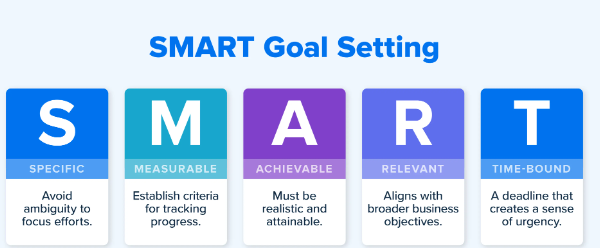
The Importance of SMART Objectives
In a world overflowing with nebulous desires and half-baked intentions, SMART objectives stand as a beacon of clarity and purpose. They go beyond the realm of wishful thinking, offering a structured approach to translate even the most ambitious dreams into actionable plans. Let’s look deeper into why SMART objectives hold such tremendous value:
Clarity of Intent:
Imagine navigating a foreign city without a map. Vague directions might get you started, but true progress requires a precise understanding of your destination and the route to get there. SMART objectives serve as your detailed map, defining precisely what you want to achieve (Specific), leaving no room for ambiguity.
Quantifiable Progress:
Ever felt lost amidst a seemingly endless goal? SMART objectives combat this by injecting measurability. They equip you with clear metrics — numbers, percentages, milestones — to track your progress, offering a tangible sense of accomplishment with each step forward. It’s no longer a nebulous “getting healthier,” but a quantified “losing 10 pounds in 3 months.”
Attainable Ambition:
Shooting for the stars is admirable, but setting unrealistic goals can breed discouragement and derail progress. SMART objectives bridge this gap, ensuring your aspirations are achievable within your capabilities and resources. They encourage you to dream big while keeping your feet firmly planted in reality.
Relevant Alignment:
Have you ever climbed a mountain only to realize you were on the wrong peak? SMART objectives prevent this by emphasizing relevance. They ensure your goals are aligned with your broader values and vision, guaranteeing that every step taken contributes to something truly meaningful for you.
Time-Bound Momentum:
Procrastination’s siren song is alluring, but deadlines have a way of focusing the mind. SMART objectives inject time-bound urgency, setting clear deadlines that create a sense of momentum and keep you moving forward. Instead of “learn a new language someday,” it becomes “become conversational in Spanish within 6 months.”
The benefits of SMART objectives extend far beyond personal endeavors. Organizations, too, can harness their power to achieve greater efficiency, clarity, and success. Imagine teams working towards clearly defined objectives, with measurable progress tracked, and deadlines motivating action. The result? A focused, collaborative environment where everyone understands their role and contributes to the collective goal.
Crafting SMART Objectives: A Step-by-Step Guide
Step 1: Define Your Goal (Specific):
- Start with a broad aspiration. What do you ultimately want to achieve?
- Refine your aspiration into a clear and concise statement. Who will be involved? What will be achieved? When and where will it happen?
- Avoid ambiguity. Don’t say “get fit,” say “run a 5K race.”
Step 2: Make it Measurable:
- Identify metrics to track your progress. Numbers, percentages, or milestones work best.
- Ensure your metrics are relevant and specific to your goal. Don’t measure weight loss if your goal is muscle gain.
- Define how you’ll collect and track your data. Apps, journals, or progress charts can be helpful.
Step 3: Ensure Achievability:
- Be honest about your current skills, resources, and limitations. Can you realistically achieve this goal?
- Break down large goals into smaller, manageable steps. Celebrate each milestone!
- Consider seeking support or resources if needed. Can a coach, mentor, or online community help?
Step 4: Align with Your Values (Relevant):
- Ask yourself: “Does this goal align with my bigger picture and values?” Does it contribute to your overall purpose?
- If not, adjust your goal or explore alternative paths. Goals should be meaningful and motivating.
- Connect your goal to a larger vision or purpose for added motivation.
Step 5: Set a Time-Bound Deadline:
- Give yourself a clear timeframe for achieving your goal. Deadlines create urgency and focus.
- Be realistic about the time needed, but don’t be afraid to stretch yourself.
- Consider dividing your goal into phases with smaller deadlines for each.
Bonus Step: Regularly Review and Adapt:
- Circumstances change, so be prepared to adjust your goals as needed. Track your progress and don’t be afraid to adapt.
- Celebrate your successes along the way to stay motivated.
- Don’t be discouraged by setbacks; view them as learning opportunities.
SMART Objectives Example
Imagine a group of young wizards attending the prestigious Alchemist Academy. Inspired by their headmaster, Professor Arcanum, they each set SMART objectives for the upcoming semester:
1. Elara, the Potions Prodigy:
- Specific: Brew a complex healing potion, the “Phoenix Elixir,” known for its restorative properties.
- Measurable: Achieve a perfect score on the potion’s taste, efficacy, and presentation by the semester’s end.
- Achievable: Elara has mastered basic healing potions and has access to Professor Arcanum’s guidance.
- Relevant: This aligns with Elara’s dream of becoming a renowned healer and aligns with the academy’s mission of advancing magical medicine.
- Time-bound: Complete the potion and presentation by the semester’s final exam.
2. Finn, the Fearless Flier:
- Specific: Master the advanced spell “Nimbus Cloud,” allowing him to summon and control a personal cloud mount.
- Measurable: Successfully lift and maneuver the cloud at least 50 meters above the academy grounds within 3 months.
- Achievable: Finn has a strong foundation in flight spells and is physically fit.
- Relevant: Mastering Nimbus Cloud aligns with Finn’s desire to explore distant lands and complements the academy’s focus on practical applications of magic.
- Time-bound: Successfully summon and control the cloud before the upcoming inter-academy flying competition.
3. Luna, the Lore Librarian:
- Specific: Translate a rare ancient text, the “Grimoire of Forgotten Alchemy,” from its original Elvish dialect.
- Measurable: Translate at least 50% of the text with accuracy, consulting with Professor Arcanum for verification.
- Achievable: Luna has advanced linguistic skills and access to the academy’s extensive library resources.
- Relevant: Deciphering the Grimoire aligns with Luna’s passion for knowledge and contributes to the academy’s goal of preserving magical history.
- Time-bound: Present a preliminary translation of 25% of the text by the mid-semester break.
4. Kai, the Keen Inventor:
- Specific: Design and build a self-stirring cauldron prototype to improve potion-brewing efficiency.
- Measurable: The prototype must automatically stir ingredients at specified speeds and durations, reducing human error.
- Achievable: Kai possesses strong mechanical skills and access to the academy’s workshop facilities.
- Relevant: This invention aligns with Kai’s innovative spirit and the academy’s focus on magical advancements.
- Time-bound: Present a functional prototype by the semester’s invention showcase.
These examples showcase how SMART objectives can be applied to diverse goals and personalities, driving motivated young wizards towards personal and academic growth within the magical realm of the Alchemist Academy. Crafting SMART objectives can be a challenging task, but you don’t have to do it alone. Our team of experts is here to provide you with the support you need to create effective objectives that drive results. Reach out to us today and take the first step towards achieving your goals.
Resources
- TED Talk: How to set SMART Objectives
- Khan Academy: What are SMART goals and why are they important?