

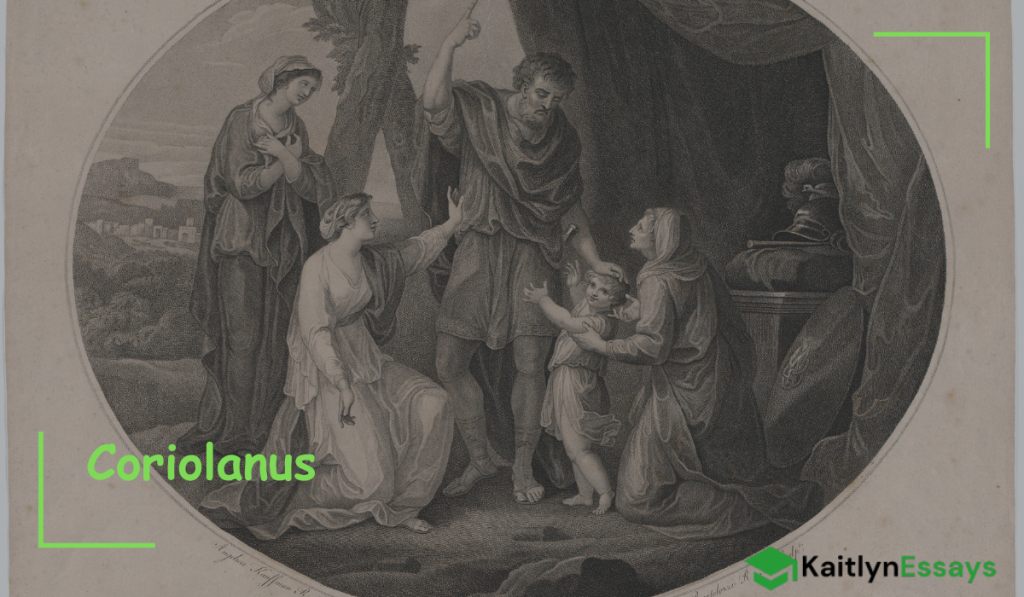
William Shakespeare’s Coriolanus is a compelling exploration of power, pride, and politics. Set in ancient Rome, the play follows the life of Caius Martius Coriolanus, a war hero whose ambition and unyielding nature lead to his rise and fall. Through sharp dialogue and intense conflict, Shakespeare examines themes of loyalty, honor, and the relationship between leaders and the people they govern. The play highlights the struggles of a society torn between democracy and authoritarianism, as Coriolanus faces opposition from both the ruling elite and the common citizens.
As one of Shakespeare’s lesser-performed tragedies, Coriolanus provides a thought-provoking look at personal and political identity, making it as relevant today as it was in the 17th century. This introduction to Shakespeare’s gripping drama offers an opportunity to reflect on timeless issues that continue to resonate in modern society.
Summary of Coriolanus
Act I
The play opens in Rome, where the citizens protest food shortages and blame the patrician class for their suffering. Caius Marcius, a proud and skilled general, mocks the commoners’ complaints, reinforcing his disdain for the plebeians. News arrives that Rome’s enemy, the Volscians, led by Tullus Aufidius, are preparing to attack. Marcius leads the Roman army to battle.
In Corioli, the Volscian stronghold, Marcius fights valiantly, earning the name “Coriolanus” for his bravery. His military success brings him acclaim among the patricians, who encourage him to pursue political office.
Explore how Marcius’s pride and disdain for the people set the stage for conflict in this detailed breakdown.
Act II
Back in Rome, Coriolanus is encouraged by his ambitious mother, Volumnia, and his allies to run for consul. Despite his reluctance to engage in politics, Coriolanus seeks the plebeians’ support as required by tradition. Initially, his military reputation wins their favor, but his contempt for the common people soon alienates them.
Tribunes Brutus and Sicinius, representatives of the plebeians, manipulate public opinion against Coriolanus, sowing distrust and resentment.
Discover how political manipulation drives the plot forward in this thematic analysis.
Act III
As tensions escalate, Coriolanus’s pride leads him to insult the plebeians and reject their authority. The tribunes accuse him of treason, and he responds with rage, further alienating the citizens. The Senate, unable to calm the situation, banishes Coriolanus from Rome.
Humiliated and enraged, Coriolanus vows revenge against the city that cast him out.
Uncover the dramatic consequences of Coriolanus’s banishment in this focused discussion.
Act IV
Coriolanus seeks refuge in Volsci, allying himself with his former enemy, Tullus Aufidius. The two plot to attack Rome, combining their forces to threaten the city. In Rome, the citizens begin to regret their decision, realizing the threat Coriolanus poses.
Meanwhile, Aufidius harbors resentment toward Coriolanus, envious of his military prowess and the loyalty he inspires.
Explore the shifting dynamics between Coriolanus and Aufidius in this in-depth exploration.
Act V
As the Volscian army approaches Rome, Volumnia, Coriolanus’s wife Virgilia, and his son confront him, pleading for peace. Volumnia’s emotional appeal ultimately sways him, and Coriolanus agrees to a truce, sparing Rome.
However, this act of mercy alienates him from the Volscians. Feeling betrayed, Aufidius and his followers assassinate Coriolanus in a public display of vengeance.
Discover the tragic resolution and its implications in this thematic analysis.
Characters in Coriolanus
Caius Marcius Coriolanus
Coriolanus, the play’s protagonist, is a soldier whose valor and martial prowess define his identity. He is introduced as a fearless warrior, earning the title “Coriolanus” after his decisive victory in Corioli. However, his unyielding pride and contempt for the plebeians become his tragic flaws. Coriolanus views the common people as unworthy of power or respect, which alienates him from those he is supposed to protect. His inability to adapt to the political arena contrasts sharply with his success on the battlefield.
Coriolanus’s complexity lies in his conflicting roles. As a soldier, he is loyal to Rome, but as a political figure, he fails to embody the humility and diplomacy required. His alliance with Tullus Aufidius, a sworn enemy, underscores his personal disillusionment and the fragile nature of loyalty. His ultimate downfall is both self-inflicted and shaped by external manipulation, solidifying his role as a tragic hero.
Explore how Coriolanus’s pride shapes his fate in this comprehensive analysis.
Volumnia
Volumnia is a driving force behind Coriolanus’s actions and serves as the embodiment of Roman ideals of honor and loyalty. Her ambition for her son to achieve greatness is matched only by her influence over him. Volumnia’s pride in Coriolanus’s military achievements blinds her to his emotional needs, pushing him into the political arena where he is ill-suited.
Volumnia’s most powerful moment occurs in Act V when she persuades Coriolanus to spare Rome. Her emotional appeal reveals her ability to wield maternal love as a tool of persuasion. Despite her success, this moment also marks her ultimate sacrifice, as Coriolanus’s decision leads to his death. Volumnia is a symbol of both strength and tragedy, representing the cost of ambition.
Discover the duality of Volumnia’s character in this detailed character study.
Tullus Aufidius
As Coriolanus’s rival and eventual ally, Aufidius is a character driven by both respect and envy. His admiration for Coriolanus’s military skill is evident, but it is tempered by a deep resentment of his superiority. This duality makes Aufidius a compelling antagonist. His decision to ally with Coriolanus highlights the complex nature of power dynamics and the interplay of rivalry and partnership.
However, Aufidius’s jealousy ultimately consumes him. Feeling overshadowed by Coriolanus even within his own ranks, he orchestrates his assassination. Aufidius’s actions reveal the destructive nature of envy and the fragility of alliances formed out of necessity rather than genuine trust.
Learn about the portrayal of Aufidius in this focused exploration.
Brutus and Sicinius
The tribunes Brutus and Sicinius represent the voice of the plebeians and the challenges of balancing power between the ruling class and the people. They are shrewd manipulators, leveraging Coriolanus’s disdain for the commoners to undermine his political ambitions. Their success in turning public opinion against Coriolanus demonstrates their political savvy but also raises questions about their motives and morality.
Their actions are instrumental in Coriolanus’s downfall, highlighting the dangers of mob mentality and the complexities of democratic representation. They are neither heroes nor villains but rather a reflection of the political tensions that define the play.
Examine the tribunes’ role in shaping Rome’s political landscape in this detailed breakdown.
Virgilia
Virgilia, Coriolanus’s wife, is a character of quiet strength and compassion. She serves as a foil to Volumnia, offering a softer, more empathetic perspective. While Volumnia drives Coriolanus toward ambition, Virgilia represents the personal and emotional sacrifices he makes in pursuit of honor.
Though her role is understated, Virgilia’s presence underscores the personal cost of Coriolanus’s pride and ambition. Her loyalty and love for her husband humanize him, providing a glimpse of his vulnerabilities amidst his otherwise rigid persona.
Explore the significance of Virgilia’s subtle but impactful role in this character-focused analysis.
Menenius Agrippa
Menenius is a trusted friend of Coriolanus and a voice of reason throughout the play. His wit and pragmatism make him an effective mediator between the patricians and the plebeians. Menenius’s loyalty to Coriolanus is unwavering, but his efforts to protect him are ultimately in vain.
Menenius’s character serves to highlight the tension between personal loyalty and political necessity. His failure to prevent Coriolanus’s downfall reflects the limitations of diplomacy in the face of deeply entrenched conflicts.
Discover Menenius’s pivotal role in navigating Rome’s political turmoil in this thematic exploration.
Themes in Coriolanus
Pride and Tragic Downfall
One of the central themes of Coriolanus is the destructive power of pride. Caius Marcius Coriolanus is a man of immense talent and honor, yet his arrogance blinds him to the complexities of political and social dynamics. His disdain for the plebeians, whom he views as inferior, becomes the root of his downfall. Pride not only isolates him but also fuels his inability to compromise, a trait that dooms his political career and ultimately his life.
This theme resonates throughout the play, showcasing how excessive pride can alienate individuals and lead to tragic consequences. Coriolanus’s inability to adapt highlights the fine line between self-respect and hubris.
Explore how pride shapes the tragedy in this detailed discussion.
Class Struggle and Power Dynamics
Coriolanus explores the tensions between the ruling patricians and the plebeians. The common people, represented by the tribunes Brutus and Sicinius, demand a voice in governance, challenging the traditional power structures of Rome. Coriolanus, as a patrician and soldier, embodies the elite’s disdain for the plebeians, dismissing their concerns as petty and unworthy.
This theme examines the complexities of democracy, exploring how power shifts and compromises are essential in a society with diverse interests. Shakespeare critiques both the arrogance of the ruling class and the volatility of the masses, presenting a detailed view of political dynamics.
Discover how class struggles shape the narrative in this in-depth exploration.
Loyalty and Betrayal
Loyalty is a recurring theme in Coriolanus, with the titular character’s sense of honor and duty driving much of the action. However, loyalty is also a double-edged sword, as seen in Coriolanus’s shifting alliances. His betrayal of Rome, by joining forces with the Volscians, highlights the fragile nature of loyalty when personal grievances outweigh civic duty.
Similarly, Aufidius’s loyalty to Coriolanus is tainted by envy, leading to betrayal and murder. The theme of loyalty is explored not as a steadfast virtue but as a complex interplay of personal ambition, pride, and circumstance.
Learn more about the complexities of loyalty in this focused analysis.
The Role of Family and Influence
Family relationships play a significant role in the play, particularly the bond between Coriolanus and his mother, Volumnia. Volumnia’s influence over her son is both a source of strength and a catalyst for his downfall. Her relentless ambition pushes Coriolanus into political life, despite his unsuitability for it.
The climactic moment when Volumnia convinces Coriolanus to spare Rome underscores the power of familial ties. Yet, this act of mercy ultimately leads to his death, highlighting the paradoxical nature of her influence.
Explore the impact of family dynamics in this character-driven exploration.
War and Honor
War is central to Coriolanus’s identity, shaping his values and defining his place in society. His military prowess earns him respect and glory, but it also isolates him from the political and social spheres. Coriolanus views war as a realm of clear-cut honor, contrasting with the compromises and deceptions of politics.
This theme highlights the incompatibility between martial values and civic governance, as Coriolanus struggles to reconcile his identity as a soldier with the demands of public life.
Discover how war and honor intersect in this thematic analysis.
Manipulation and Public Opinion
The manipulation of public opinion is a recurring theme, with characters like Brutus and Sicinius exploiting the plebeians’ emotions to achieve their goals. Coriolanus’s downfall is as much a result of his own arrogance as it is of the tribunes’ cunning tactics.
This theme explores the power of rhetoric and the role of perception in politics. Shakespeare portrays the masses as easily swayed, raising questions about the effectiveness and stability of democratic governance.
Examine the role of manipulation in the play in this detailed breakdown.
Identity and Alienation
Coriolanus’s journey is one of identity and alienation. As a soldier, he thrives in the battlefield, but as a politician, he is a misfit. His rigid adherence to personal values alienates him from both the patricians and the plebeians, leaving him isolated and vulnerable.
This theme underscores the challenges of navigating multiple identities and the consequences of failing to adapt to societal expectations. Coriolanus’s alienation reflects the broader tension between individualism and community.
Explore the theme of identity in this focused discussion.
Symbols in Coriolanus
The Wound as a Symbol of Honor and Vulnerability
In Coriolanus, wounds are a recurring symbol representing both honor and vulnerability. Coriolanus takes pride in his battle scars, viewing them as proof of his bravery and dedication to Rome. When urged to display his wounds to gain public support, his refusal highlights his disdain for the plebeians and his belief that honor should not be flaunted for political gain.
However, these wounds also symbolize his vulnerability. They expose the physical and emotional toll of his rigid ideals. As much as they reflect his heroism, they also foreshadow his downfall, emphasizing the fragility of a life built solely on martial valor.
Discover how wounds function as a dual symbol in this detailed exploration.
The City of Rome: Identity and Betrayal
Rome itself is a powerful symbol in the play, representing both Coriolanus’s identity and his ultimate betrayal. As a soldier, Coriolanus dedicates his life to defending Rome, equating his honor with the city’s well-being. However, his expulsion from Rome marks a turning point, severing his bond with the city and pushing him into alliance with its enemies.
Rome symbolizes the conflicting loyalties that define Coriolanus’s character. His betrayal of Rome and subsequent march against it symbolize the destructive power of pride and alienation, as well as the complexities of loyalty.
Explore Rome’s role as a symbolic force in this thematic breakdown.
Bread as a Symbol of Sustenance and Division
Bread appears in Coriolanus as a recurring symbol of sustenance, economic inequality, and political power. The plebeians’ demand for affordable grain sparks the early conflict, highlighting the divide between the ruling patricians and the commoners. Coriolanus’s disdain for the plebeians’ concerns reveals his inability to empathize with their struggles, reinforcing the theme of class conflict.
Bread also symbolizes the dependence of the masses on the elite and the tensions that arise from this dynamic. It becomes a metaphor for the broader struggles over resources and representation in Roman society.
Unpack the symbolic significance of bread in this focused discussion.
The Threshold as a Symbol of Transition
Thresholds and boundaries feature prominently in Coriolanus, symbolizing transitions and conflict. The scenes where Coriolanus is either entering or leaving a space often mark pivotal moments in the narrative. His banishment from Rome, for instance, symbolizes his transition from hero to outcast.
Similarly, his return to Rome as a potential conqueror represents his internal conflict and the blurred lines between loyalty and vengeance. Thresholds thus serve as metaphors for the shifting dynamics of identity and allegiance.
Learn how thresholds symbolize transformation in this character-driven analysis.
The Plebeians’ Voices: Unity and Chaos
The collective voice of the plebeians is a powerful symbol of unity and chaos in the play. Their cries for representation and justice symbolize the democratic spirit of Rome, while their susceptibility to manipulation underscores the instability of mass opinion.
Their voices symbolize the shifting power dynamics in the city, as well as the tension between governance and the governed. This duality makes their collective presence a compelling symbol of both hope and discord.
Explore how the plebeians’ voices shape the play’s narrative in this thematic analysis.
The Lictors’ Fasces: Authority and Oppression
The fasces, carried by the lictors accompanying Roman officials, symbolize authority and the enforcement of law. In Coriolanus, the presence of the lictors underscores the rigid hierarchical structure of Roman society. The fasces also serve as a reminder of the oppressive nature of this authority, particularly in the hands of individuals like Coriolanus who view power as absolute.
This symbol encapsulates the tension between the need for order and the dangers of tyranny, reflecting the broader themes of governance and justice.
Examine the symbolic role of the fasces in this detailed breakdown.
Literary Devices in Coriolanus
Irony
Irony is central to Coriolanus, especially in the character arc of its protagonist. Coriolanus, who earns his reputation by defending Rome, becomes its greatest threat when he allies with the Volscians. The irony lies in his unwavering commitment to honor, which leads him to betray the very city he once swore to protect.
This situational irony underscores the complexities of loyalty and pride, revealing how rigid adherence to personal values can lead to self-destruction. The play’s tragic outcome is a testament to the ironic interplay between Coriolanus’s virtues and flaws.
Learn more about the role of irony in this in-depth exploration.
Rhetoric
Rhetoric plays a pivotal role in the power dynamics of Coriolanus. The tribunes Brutus and Sicinius manipulate public opinion through carefully crafted speeches, while Coriolanus struggles with the art of persuasion due to his disdain for the plebeians.
Volumnia’s rhetorical skills, particularly in her climactic plea to her son, demonstrate the emotional power of language. Her words sway Coriolanus, leading to his decision to spare Rome—a decision that ultimately seals his fate.
Explore how rhetoric shapes the narrative in this focused discussion.
Symbolic Imagery
Shakespeare uses vivid imagery to emphasize Coriolanus’s identity as a soldier. References to blood, wounds, and battlefields evoke the physical and psychological toll of war. These images symbolize Coriolanus’s sense of honor and his inability to adapt to the political arena.
The imagery of wounds, in particular, serves as a metaphor for Coriolanus’s vulnerability. His refusal to display his scars to gain public support reflects his rejection of superficial politics and highlights his tragic inflexibility.
Learn more about the symbolic power of imagery in this literary analysis.
Foreshadowing
Foreshadowing is skillfully employed to build tension and hint at the play’s tragic conclusion. Early in the play, Coriolanus’s disdain for the plebeians and his uncompromising nature foreshadow his eventual downfall.
The warnings of Volumnia and the tribunes about Coriolanus’s behavior serve as ominous signs of the conflicts to come. These moments of foreshadowing create a sense of inevitability, emphasizing the tragic trajectory of the protagonist’s journey.
Learn how foreshadowing enhances the drama in this focused breakdown.
Personification
Rome is often personified in Coriolanus, depicted as a living entity that demands loyalty and sacrifice. This personification reflects the characters’ emotional connection to the city and the central role it plays in their lives.
Coriolanus’s betrayal of Rome is not just a political act but a deeply personal one, as his relationship with the city mirrors his struggles with identity and allegiance. This literary device underscores the thematic weight of Rome as more than a mere setting—it becomes a character in its own right.
Explore the personification of Rome in this thematic analysis.
Repetition
Shakespeare frequently uses repetition to highlight key ideas and conflicts. For example, Coriolanus’s repeated disdainful references to the “voices” of the plebeians underscore his contempt for democratic governance.
This repetition serves to reinforce his isolation from the masses and his inability to navigate the political landscape. It also amplifies the tension between Coriolanus and the people, driving the central conflict of the play.
Discover how repetition shapes the narrative in this literary exploration.
Tragic Flaw
Coriolanus’s tragic flaw—his hubris and inflexibility—is central to the play’s structure. This literary device serves as the driving force behind the plot, as his refusal to compromise alienates allies and antagonizes enemies.
The exploration of this flaw highlights the classical elements of tragedy in the play, offering a timeless study of the dangers of pride and the inability to adapt.
Unpack Coriolanus’s tragic flaw in this detailed breakdown.
Allusion
Shakespeare weaves allusions to Roman history and mythology throughout the play, grounding the narrative in its historical context. References to figures like Hercules and events from Roman lore lend a sense of grandeur to the characters’ struggles.
These allusions enrich the text, offering insights into the cultural and historical framework that shapes the characters’ actions and beliefs.
Examine the use of allusion in this focused analysis.
Juxtaposition
The juxtaposition of Coriolanus’s valor on the battlefield with his vulnerability in the political arena underscores the central tension of the play. His strength as a warrior contrasts sharply with his weakness as a politician, highlighting the incompatibility of these roles.
This literary device emphasizes the internal and external conflicts that define Coriolanus’s journey, making his downfall all the more poignant.
Explore the power of juxtaposition in this literary discussion.
Key Quotes in Coriolanus
“He is a lion that I am proud to hunt.” – Aufidius
This line, spoken by Aufidius, encapsulates the complex relationship between the two warriors. The metaphor of the lion conveys Coriolanus’s strength and majesty, while the phrase “proud to hunt” reveals Aufidius’s admiration for and rivalry with Coriolanus.
This quote reflects the duality of their relationship—an interplay of respect, envy, and hostility. It foreshadows the eventual betrayal as Aufidius’s admiration turns to resentment.
Unpack the layered meaning of this quote in this detailed discussion.
“What is the city but the people?” – Citizens
This rhetorical question, posed by the plebeians, underscores one of the play’s central themes: the relationship between governance and the governed. It emphasizes the idea that the power of Rome lies not in its walls or leaders but in its citizens.
The line challenges Coriolanus’s elitist views, serving as a reminder of the democratic spirit that clashes with his aristocratic pride.
Learn how this quote shapes the narrative in this thematic breakdown.
“Let me o’erleap that custom.” – Coriolanus
Coriolanus speaks these words as he resists the tradition of showing his wounds to gain public favor. The phrase reflects his disdain for political pandering and his belief in merit over performance.
However, this refusal also highlights his tragic flaw—his inability to adapt to the political demands of society. This moment marks a turning point, signaling his growing alienation from the people of Rome.
Explore the implications of this line in this literary analysis.
“You common cry of curs!” – Coriolanus
This insult directed at the plebeians reveals Coriolanus’s contempt for the masses. The phrase “cry of curs” dehumanizes the citizens, likening them to yapping dogs unworthy of his respect.
This line encapsulates the class divide at the heart of the play and demonstrates Coriolanus’s failure to bridge this gap. His harsh words fuel the animosity between himself and the plebeians, propelling the plot toward its tragic conclusion.
Examine the social implications of this quote in this focused discussion.
“Thou shalt no sooner march to assault thy country than to tread on thy mother’s womb.” – Volumnia
In this powerful plea, Volumnia uses emotional rhetoric to dissuade Coriolanus from attacking Rome. The imagery of “treading on thy mother’s womb” equates an attack on Rome with a betrayal of one’s origins and family.
This quote highlights Volumnia’s influence over her son and the moral complexity of his decision. It is a pivotal moment that underscores the themes of loyalty, identity, and familial bonds.
Discover how this plea shapes the climax in this character-driven analysis.
“Anger’s my meat; I sup upon myself.” – Coriolanus
This line captures the self-destructive nature of Coriolanus’s pride and anger. The metaphor of consuming oneself illustrates how his emotions fuel his actions, even to his detriment.
This quote encapsulates the internal conflict that drives Coriolanus toward his tragic fate. It serves as a reflection of his inability to reconcile his personal values with the demands of society.
Unpack the psychological depth of this line in this focused breakdown.
“You have loved me less than the house that you keep.” – Coriolanus to Rome
This line illustrates Coriolanus’s sense of betrayal by Rome. The comparison to a household underscores his belief that Rome values material possessions over the loyalty and sacrifice of its defenders.
This quote reveals the depth of Coriolanus’s disillusionment and sets the stage for his defection to the Volscians. It reflects the personal and political conflicts that define his character.
Explore the emotional weight of this line in this thematic analysis.
“My birthplace hate I, and my love’s upon this enemy town.” – Coriolanus
This line reflects Coriolanus’s inner turmoil as he aligns with the Volscians. The juxtaposition of hatred for his birthplace and love for the enemy highlights his fractured identity and shifting loyalties.
This quote captures the central tension of the play, as Coriolanus grapples with his roles as a soldier, son, and citizen. It underscores the tragic consequences of pride and alienation.
Learn how this quote encapsulates Coriolanus’s conflict in this literary exploration.
“He would not flatter Neptune for his trident.” – Menenius
Menenius uses this line to describe Coriolanus’s uncompromising nature. The imagery of Neptune and the trident emphasizes Coriolanus’s refusal to seek favor, even from the gods, if it means compromising his principles.
This quote highlights Coriolanus’s pride as both his greatest strength and his tragic flaw. It also reflects the tension between personal integrity and societal expectations.
Examine this metaphor’s significance in this detailed breakdown.
“The people are the city.” – Sicinius
This declaration by Sicinius reinforces the democratic ideals that challenge Coriolanus’s elitism. The line emphasizes the importance of the plebeians in the functioning of Rome and serves as a critique of Coriolanus’s disdain for the masses.
This quote encapsulates the play’s exploration of power, governance, and the social contract. It underscores the tension between the ruling class and the citizens they are meant to serve.
Explore how this line shapes the play’s political themes in this focused analysis.
Coriolanus Essay Examples
Honor and Its Fractured Performance in Shakespeare’s Coriolanus
Shakespeare’s Coriolanus is a tragedy of staggering proportions, one that meticulously dissects the corrosive nature of unyielding pride and the destructive force of political maneuvering. Yet, at its core, lies a fascinating and often unsettling exploration of gendered expectations, particularly in relation to the concept of honor. While the play is ostensibly centered around the titular Roman general, the narrative reveals that Coriolanus’s inflexible adherence to a hyper-masculine ideal of honor, one predicated on battlefield prowess and unwavering stoicism, is not only his tragic flaw but is also deeply intertwined with the societal pressures and familial expectations imposed upon him. By examining the contrasting performances of honor displayed by Coriolanus and the women in his life, Shakespeare illuminates the complex and ultimately restrictive nature of gendering tragedy in the Roman world.
Coriolanus’s understanding of honor is unequivocally tied to the masculine sphere of combat. His valor on the battlefield is legendary, and he views any attempt to court public favor as a debasement of his martial identity. He scorns the “voices” of the common people, seeing their approval as something that must be earned through force, not sought through diplomacy. His refusal to display his wounds or seek their “love” is a powerful demonstration of his commitment to a rigid, hyper-masculine ideal of honor. He equates vulnerability with weakness and believes that true worth is self-evident, needing no external validation. This staunch refusal to adapt or compromise, this insistence on maintaining an unwavering facade of invincibility, is directly responsible for his downfall. He is ultimately a victim of his own inflexible definition of manliness.
However, Shakespeare cleverly juxtaposes Coriolanus’s performance of honor with the distinct performances offered by the women in the play, revealing the restrictive limitations placed upon both sexes. Volumnia, Coriolanus’s mother, embodies the Roman ideal of motherhood, where women are expected to nurture, guide, and, above all, produce strong, honor-bound men. She actively shapes her son’s identity, constantly pushing him to embody the traits she believes are necessary for greatness. Her own ambition, albeit channeled through her son, is palpable, and her definition of honor is equally rigid, albeit not rooted in martial prowess. Her version of honour is wrapped up in her family name, in the expectation that her son should be a hero, regardless of the social and political consequences. It is this inflexible pressure from her that pushes Coriolanus to adhere so strictly to his own definition of masculinity. She is not simply a nurturing mother, but a demanding architect of his tragedy, her own ambition contributing to his ultimate demise.
Furthermore, Virgilia, Coriolanus’s wife, represents a different aspect of the feminine experience within this rigid framework. She is the antithesis of the outspoken Volumnia, embodying quiet domesticity and the emotional toll of her husband’s uncompromising nature. She pleads for his life not on the grounds of his political importance or his military accomplishments, but out of a simple, human desire to keep him safe. Her pleas highlight the limitations placed upon women in Roman society, where their primary role is often relegated to the domestic sphere, and their voices, particularly in matters of public importance, are often ignored. She is the one who truly understands the devastating effects of Coriolanus’s rigid performance of honor, yet her protests and pleas are repeatedly sidelined by the prevailing masculine ethos of the play. She is trapped in a system that values martial prowess over compassion and family.
Ultimately, Shakespeare’s Coriolanus is not simply a tragedy of a man brought down by his pride. It is a detailed exploration of how societal expectations, particularly those around gender, shape and distort the very concept of honor. Coriolanus’s hyper-masculine understanding of honor, nurtured by a mother who prioritizes military glory above all else, blinds him to the needs of the community he seeks to lead and ultimately contributes to his destruction. The play thus exposes the inherent limitations of a system where honor is defined in such narrow and gendered terms. It is a tragedy not only of Coriolanus himself, but a tragedy of the very rigid societal structures that confine both men and women to restrictive roles, forcing them to play out predetermined performances of gender that ultimately lead to their own undoing. By exploring the contrasting performances of honor within his characters, Shakespeare invites us to question the societal norms that define masculinity and femininity, and to consider the tragic consequences of an inflexible and gendered understanding of virtue.
When in Rome, Do as Coriolanus Doesn’t
The adage “When in Rome, do as the Romans do” advocates for cultural sensitivity and the practical benefits of adaptation. However, Shakespeare’s Coriolanus offers a compelling counter-narrative, showcasing a Roman who utterly refuses to conform to the expected behaviors of his society, and in doing so, engineers his own tragic downfall. Coriolanus’s steadfast rejection of Roman norms, particularly in the realm of political maneuvering and public engagement, illuminates the dangers of unyielding individuality and the importance of adaptability within a social context. By examining his conscious deviations from expected Roman conduct, the play serves as a cautionary tale, demonstrating that even the most impressive personal virtues can become destructive when divorced from the necessary pragmatism of social interaction.
Coriolanus’s fundamental flaw, and indeed the crux of his tragedy, lies in his inability to “do as the Romans do,” particularly in the sphere of politics. Roman society, even in its early republic, was built on a system of negotiation, compromise, and the delicate dance of public opinion. Coriolanus, however, views such behaviors with utter disdain. He refuses to solicit the favor of the common people, viewing their approval as a demeaning and unnecessary exercise. His famous pronouncement, “I will not put on / The gown, and beg of them,” encapsulates his deep-seated contempt for the political game. This stark rejection of the fundamental political process, a cornerstone of Roman society, sets him on a path toward inevitable conflict. He fails to understand that the power he possesses, while rooted in his military prowess, is ultimately contingent upon the consent of the governed, a lesson the Romans understood and practiced, albeit with their own complexities. His insistence on remaining apart, aloof and unyielding, directly violates the basic tenets of Roman political life.
Furthermore, Coriolanus’s inflexibility extends beyond the political arena and permeates his personal interactions as well. Roman society, despite its emphasis on individual achievement and martial prowess, also valued a certain degree of social grace and civic duty. Coriolanus, however, seems incapable of adopting a pragmatic approach to social relations. He is incapable of tempering his blunt pronouncements or his fierce temper, further alienating those he needs to cultivate, be they his fellow patricians or the tribunes of the people. He treats the very people who would elect him consul with open contempt, openly mocking their lack of martial experience and their perceived weakness. He cannot “play the game,” the Roman game, that requires some degree of performative humility and calculated charm. In his utter lack of social adaptability, Coriolanus acts as a foil to the more pragmatic Roman politicians who are adept at navigating the intricate social and political landscape, further highlighting his isolating and ultimately self-destructive nature.
The play also underscores the crucial role of rhetoric and persuasive communication within the Roman context, areas in which Coriolanus is sorely deficient. The Roman forum was a space of vibrant debate and skillful oratory, a space where persuasion held sway. Coriolanus, however, eschews the art of rhetoric, favoring blunt pronouncements and often resorting to insults instead of good arguments. He is incapable of adapting his language or his demeanor to suit the needs of a specific audience or situation, a skill fundamental to success in the Roman public sphere. His inability to communicate effectively, his steadfast refusal to “play the game” of rhetoric, becomes a major factor in his downfall. He is, in essence, defeated not by military prowess but by the power of well-crafted public sentiment.
Ultimately, Coriolanus serves as a powerful cautionary tale about the dangers of unyielding individuality in the face of societal norms. While his courage and military prowess are undeniable, Coriolanus’s refusal to adapt to the expectations of Roman society, his inability to “do as the Romans do,” becomes his undoing. He represents the extreme end of the spectrum, an individual whose exceptional qualities are rendered self-destructive due to his inability to compromise or adapt. The play demonstrates that even the most virtuous traits, when divorced from pragmatic social intelligence, can become deeply flawed and ultimately self-defeating. In this regard, Coriolanus serves as a counterpoint to the often-romanticized notion of the solitary hero, reminding us that true strength lies not only in individual virtue but also in the ability to navigate the complex tapestry of human relationships and the ever-shifting currents of social and political life. His tragic fate is a direct consequence of his stubborn refusal to “do as the Romans do,” a powerful lesson in the perils of unyielding individuality and the necessity of adaptation in any social context.
Finding Humanity in Shakespeare’s Coriolanus
Shakespeare’s Coriolanus is not a play that readily invites easy sympathy for its titular protagonist. He is proud, arrogant, inflexible, and seemingly devoid of genuine empathy. Yet, beneath the surface of his rigid exterior, a more complex, even vulnerable figure emerges, one that elicits a reluctant and often frustrated sympathy from the audience. This sympathy doesn’t excuse his actions, nor does it absolve him of his tragic flaws, but it does acknowledge the complex nature of his character and the intricate web of societal pressures that contribute to his downfall. Exploring the aspects of Coriolanus’s character allows us to see him not as a simple villain, but as a tragically flawed individual struggling within a system that is as unforgiving as he is.
One of the key elements that invites a degree of sympathy for Coriolanus is his unwavering commitment to his own, albeit rigid, code of honor. While this honor is often manifested in his arrogance and contempt for the common people, it is also rooted in a genuine desire for integrity and self-sufficiency. He sees the political games as a form of deception, viewing the need for public approval as a betrayal of his own inherent worth. His refusal to participate in this ritual of “begging” for votes, despite understanding its necessity, stems from a desire to remain true to his principles. This unwavering commitment, while ultimately destructive, can also be seen as a form of moral conviction, albeit one that is tragically misplaced. It is this stubborn adherence to his code that, in a twisted way, renders him somewhat admirable, even in his folly. He is not a hypocrite; he lives, and dies, by his flawed principles.
Furthermore, Coriolanus’s vulnerability, though rarely expressed directly, is subtly hinted at throughout the play. His reliance on his mother, Volumnia, for validation and guidance reveals a profound need for acceptance and love, a need he struggles to express openly. His battlefield prowess, while celebrated, seems to stem not only from bravery, but also from a deep-seated desire for recognition and purpose. The battlefield is the one place where his worth is unquestionable, and his valor there, while often brutal, provides him with a sense of belonging and a clear purpose. This dependence on external validation, masked by his outward arrogance, paints a picture of a man who is insecure beneath his stoic facade, a vulnerability that can elicit empathy despite his repellent behavior. The warrior is, arguably, a fragile man.
Moreover, the play subtly highlights the role of societal pressures in shaping Coriolanus’s tragic trajectory. He is raised in a hyper-masculine environment, where military prowess and unwavering stoicism are valorized above all else. Volumnia, his mother, actively molds him into the embodiment of these ideals, constantly pushing him to achieve greatness and denigrating any display of weakness. This relentless pressure to conform to a rigid standard of manhood, coupled with his own innate pride, leaves him with little room for adaptation or compromise. He is, in essence, a victim of the very societal norms he embodies so fiercely. This realization allows us to understand his flaws not as pure evil, but as the tragic consequences of a restrictive and ultimately destructive upbringing. He is a man trapped by his own nature, exacerbated by his environment.
Finally, the play’s ending, particularly Coriolanus’s death at the hands of Aufidius’s conspirators, evokes a sense of tragic pity. He is betrayed by those he trusted and left to die alone and isolated. His final moments, though filled with rage and defiance, also reveal a glimpse of his humanity, a sense of vulnerability he rarely displayed in life. This tragic demise, the culmination of a series of choices fueled by pride and circumstance, invites us to reconsider our initial judgment of him. We see, in his final moments, the potential that was wasted, the human being that could have been. It is a reminder that even the most unlikeable of characters can elicit profound human sympathy when viewed within the larger context of their circumstances.
In conclusion, sympathizing with Coriolanus is not an easy task, and it shouldn’t be. He is a deeply flawed individual who makes a series of disastrous choices. However, a closer examination of his character reveals a more complex figure, one that is shaped by societal pressures, driven by a misplaced sense of honor, and ultimately vulnerable beneath his rigid exterior. The play’s ability to elicit this reluctant sympathy, despite his often repellent behavior, speaks to Shakespeare’s profound understanding of the complexities of the human condition and the intricate web of forces that shape an individual’s destiny. Coriolanus is not a hero, but he is also not a simple villain. He is a man, tragically flawed, whose story forces us to grapple with the messy, complicated, and often contradictory nature of human experience.
The Use of Names as Metonymy for Actions in Coriolanus
In Shakespeare’s Coriolanus, names transcend mere labels; they become potent symbols, functioning as metonymies that encapsulate the characters’ defining traits and the actions they embody. The very act of bestowing and withholding names, particularly in the context of honor and reputation, becomes a crucial mechanism through which Shakespeare explores the themes of identity, social standing, and the complex interplay between individual action and public perception. The characters’ names, or lack thereof, serve as a shorthand for their established behaviors, allowing Shakespeare to subtly comment on the nature of reputation and its power to shape destiny in the harsh political landscape of Rome.
The most obvious example of this is, of course, the name “Coriolanus” itself. Initially, Caius Marcius, a fierce Roman soldier, earns this cognomen after his exceptional valor in the battle against the Volscians at Corioli. This bestowed name, “Coriolanus,” becomes a metonym for his military prowess, his uncompromising strength, and his reputation as Rome’s most formidable warrior. From this point forward, the name “Coriolanus” is inseparable from his actions on the battlefield. It becomes a brand, signifying his military victories and his unflinching courage. The name, therefore, is not just an identifier; it’s a signifier of his exceptional qualities, or rather the exceptional qualities that Rome values in a soldier. The Romans, by adopting this name, are recognizing and acknowledging that he is a man of exceptional military power – a metonymy for a certain type of Roman excellence.
However, the significance of the name extends beyond mere recognition. It simultaneously highlights the limitations of his identity. The name “Coriolanus” also becomes a metonymy for his inability to navigate the complexities of civilian life. It underscores his inflexibility, his contempt for the common people, and his inability to engage in the necessary political games of Rome. The very qualities that earned him the name “Coriolanus” – his rigid adherence to a soldier’s code of conduct – also render him incapable of adapting to the aspects of civic leadership. This is especially notable in the famous scene where he is expected to display his wounds and beg for the people’s votes. His disdain for the process, his refusal to “put on / The gown and beg of them,” shows that the name, for him, encapsulates his whole identity, rendering the act of “begging” as a self-debasement. The name, therefore, becomes both a badge of honor and a symbol of his fatal flaw.
Beyond Coriolanus himself, the play also manipulates the use of names to highlight the societal expectations and political machinations at play. The tribunes, Sicinius and Brutus, are rarely referred to by their first names, their last names becoming metonymic of their role as the voice of the plebeians. The anonymity of their first names reinforces their role as representatives of a collective, rather than individual actors. Their actions, marked by political expediency and manipulation, are all understood through their collective role and their place within the social order. This contrasts starkly with Coriolanus, whose individual identity is so tightly bound to his name that it overshadows his role as a member of the Roman state.
Similarly, the names or lack thereof within the domestic sphere reflect the expected gender roles of the time. Volumnia, Coriolanus’s mother, is largely defined by her family name and her role as the mother of a great warrior. Her identity is subsumed by the honor and reputation of her son, effectively acting as a metonymy for Roman motherhood itself – demanding, ambitious, and focused on producing a “hero.” Virgilia, Coriolanus’s wife, often remains nameless, reflecting the domestic sphere she inhabits, where her actions are largely confined to the private realm. Her quiet strength and unwavering love are not associated with a potent public name, showcasing the stark difference between the public and private spheres of Roman life and the corresponding association of names with specific actions.
In conclusion, the strategic use of names in Coriolanus is far more significant than mere identification. Shakespeare uses names as powerful metonymies, allowing him to encapsulate the characters’ defining traits and actions within a single word. “Coriolanus” becomes a metonymy for both exceptional military prowess and political ineptitude, highlighting the limitations of a society that prizes one over the other. The names, or lack thereof, of the other characters similarly highlight their specific roles and actions within the Roman social and political context. By deftly employing this technique, Shakespeare creates a layered and complex world where names are not just labels, but powerful signifiers that illuminate the delicate interplay between individual identity, social expectations, and the enduring power of reputation.
Deadlines closing in?
Let our experts handle your assignments while you focus on what matters
FAQs
What was Coriolanus most known for?
Coriolanus, the protagonist of Shakespeare’s play, is most known for his exceptional skills as a soldier and war hero. His bravery and victories, especially against the Volscians, earn him the title “Coriolanus” after his conquest of the city of Corioli. However, he is equally famous for his pride and inability to connect with the common people, which makes him a polarizing figure in both Rome and the play.
Is Coriolanus based on a true story?
Yes, Coriolanus is based on a true story. The character is inspired by Gaius Marcius Coriolanus, a legendary Roman general from the 5th century BCE. Shakespeare adapted his story from historical sources, including Plutarch’s Lives of the Noble Greeks and Romans. While some details are dramatized, the core narrative of his military triumphs and subsequent exile remains rooted in history.
Why did Coriolanus betray Lucy?
This question might stem from a mix-up. In Shakespeare’s Coriolanus, there is no character named Lucy. Coriolanus is ultimately portrayed as betraying Rome, not a specific individual named Lucy. If this question relates to a different interpretation or adaptation of the play, additional context would help clarify the reference.
What is Coriolanus’ downfall and why?
Coriolanus’ downfall is his excessive pride and inability to compromise. His refusal to humble himself before the Roman people when seeking political power leads to his exile. Feeling betrayed by Rome, he allies with his former enemies, the Volscians, to wage war against his homeland. Ultimately, his downfall comes when he spares Rome at his mother’s plea, angering the Volscians. This act of mercy leads to his assassination, marking the tragic end of a proud and unyielding hero.