

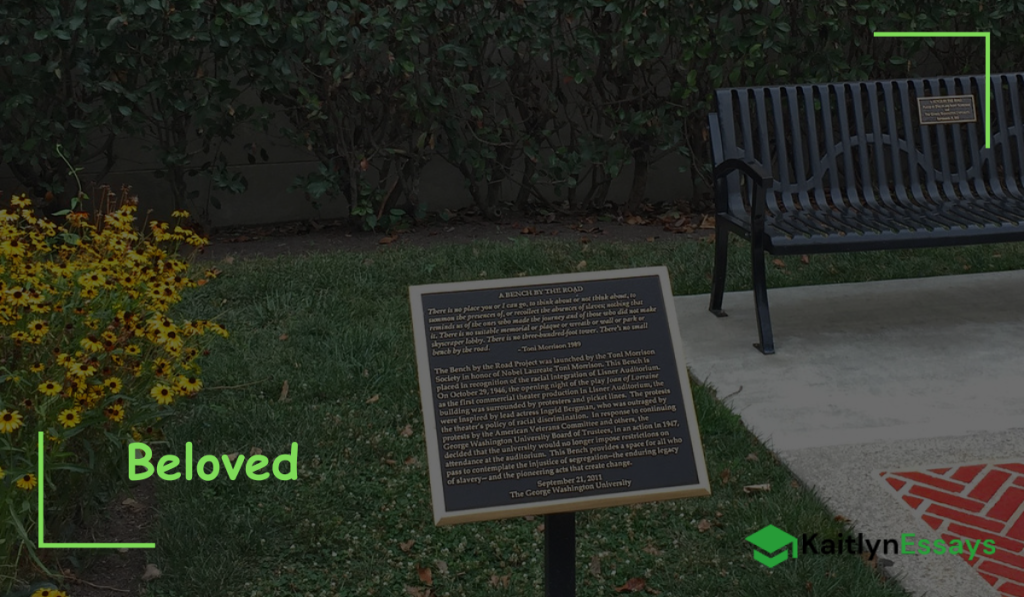
Toni Morrison’s Beloved is a groundbreaking novel that explores the enduring effects of slavery on individuals and families. Published in 1987, the story is set after the Civil War and follows Sethe, a formerly enslaved woman haunted by her past and the choices she made to protect her children. Through its vivid characters and complex narrative, the novel examines themes of memory, trauma, motherhood, and the struggle for identity and freedom.
Morrison uses rich symbolism and poetic language to bring the emotional and psychological scars of slavery to life, creating a story that is both deeply personal and historically significant. Beloved is not just a tale of survival but also a testament to the power of love and resilience in the face of unimaginable hardship. As one of Morrison’s most celebrated works, the novel continues to resonate with readers and spark important conversations about history and humanity.
Summary of Beloved
Introduction to the Story
The novel is set in 1873 in Cincinnati, Ohio, where Sethe, an escaped slave, lives in a house at 124 Bluestone Road with her daughter, Denver. The house is haunted by a malevolent spirit believed to be the ghost of Sethe’s dead child. This ghostly presence sets the stage for a story that intertwines the past and present, delving into Sethe’s traumatic history as a slave and her struggles to rebuild her life.
Learn more about the setting and tone of Beloved here.
Sethe’s Past and Escape from Slavery
Sethe’s backstory is revealed in fragments throughout the novel. She was a slave at Sweet Home, a Kentucky plantation, where she suffered unimaginable abuse. After escaping, she found refuge at 124 Bluestone Road with her mother-in-law, Baby Suggs. However, her freedom came at a high cost. Slave catchers tracked her down, forcing Sethe to make a desperate and harrowing decision: to kill her children rather than allow them to be returned to slavery. She succeeded in killing her infant daughter, whose tombstone bears the single word: Beloved.
The Arrival of Paul D
Paul D, a former slave from Sweet Home, arrives at 124 Bluestone Road and rekindles his relationship with Sethe. His presence begins to change the dynamics of the household, bringing a sense of hope and stability. However, Paul D struggles with his own memories of slavery and finds it difficult to confront Sethe’s past actions. His arrival forces the characters to face the buried traumas of their shared history.
The Manifestation of Beloved
One day, a mysterious young woman appears at 124 Bluestone Road, claiming to be Beloved, the reincarnation of Sethe’s dead daughter. Her arrival intensifies the haunting atmosphere of the house. Beloved’s presence is both a blessing and a curse: she offers Sethe an opportunity for redemption but also drags her deeper into her guilt and grief. The relationships among Sethe, Denver, and Beloved become increasingly complex as they navigate their shared pain.
Denver’s Growth and Independence
Denver, Sethe’s daughter, starts as a withdrawn and dependent young woman. However, Beloved’s arrival pushes her to step outside the confines of 124 Bluestone Road and engage with the broader community. Denver’s growth represents a glimmer of hope in the novel, as she breaks free from the isolation and fear that have defined her family’s life. Her decision to seek help from others marks a turning point in the story.
Climactic Confrontation
As Sethe becomes increasingly consumed by her guilt and devotion to Beloved, her health and spirit begin to deteriorate. Beloved grows more demanding and manipulative, symbolizing the weight of unresolved trauma. The community intervenes to help Sethe, staging a confrontation that ultimately drives Beloved away. This act of collective healing underscores the importance of community in overcoming personal and generational trauma.
Resolution and Final Reflections
In the aftermath of Beloved’s departure, Sethe begins to reclaim her sense of self, although she remains haunted by her past. Paul D returns, offering a possibility of healing and companionship. The novel ends with the poignant observation that “Beloved was not forgotten,” a reminder of the enduring impact of slavery on individuals and their descendants.
Check out the full exploration here.
Characters in Beloved
Sethe
Sethe is the protagonist of Beloved, a formerly enslaved woman who is haunted by the trauma of her past. Her defining act—killing her infant daughter to spare her from slavery—drives much of the novel’s plot and themes. Sethe is a fiercely protective mother, but her love is shaped by pain, guilt, and a longing for redemption. Her journey throughout the novel reflects her struggle to reconcile her past with her present and to find healing in a life defined by suffering.
For more about Sethe’s complexity and development, find more.
Beloved
Beloved, the mysterious young woman who arrives at 124 Bluestone Road, is the embodiment of Sethe’s dead daughter and a symbol of the inescapable grip of the past. She represents unresolved trauma and the lingering effects of slavery, growing increasingly demanding as she feeds off Sethe’s guilt and grief. Beloved’s presence is both physical and supernatural, blurring the lines between reality and metaphor.
To learn more about Beloved’s symbolic role, find more.
Denver
Denver is Sethe’s youngest living daughter, a young woman who begins the novel as isolated and dependent but grows into a symbol of hope and resilience. Denver’s relationship with her mother and Beloved is complicated by her desire for independence and her need to connect with the outside world. By stepping beyond the confines of 124 Bluestone Road, Denver breaks free from the cycle of trauma and paves the way for a better future.
To learn more about Denver’s transformation, find more.
Paul D
Paul D, a former slave from Sweet Home, arrives at 124 Bluestone Road seeking connection and a new beginning. He is a deeply wounded character, burdened by memories of slavery and his own struggles with masculinity and self-worth. His relationship with Sethe is both healing and challenging, as he forces her to confront her past while grappling with his own. Paul D represents the possibility of moving forward, even in the face of immense pain.
For a closer look at Paul D’s significance, find more.
Baby Suggs
Baby Suggs, Sethe’s mother-in-law, is a spiritual leader in the community and a source of wisdom and compassion. Her “holy” gatherings in the Clearing serve as moments of communal healing and self-affirmation for the formerly enslaved. Despite her strength, Baby Suggs becomes disillusioned after Sethe’s traumatic act, retreating into isolation. Her character underscores the importance of community and the devastating impact of slavery on familial and communal bonds.
To explore Baby Suggs’ role in the novel, find more.
The Schoolteacher
The Schoolteacher is the embodiment of cruelty and dehumanization in the novel. As the overseer of Sweet Home after the death of its original owner, he treats the enslaved individuals as mere objects, stripping them of their humanity. His presence in Sethe’s memories is a reminder of the horrors of slavery and the psychological scars it leaves behind.
For more on the Schoolteacher’s role as an antagonist, find more.
Halle
Halle, Sethe’s husband, is a tragic figure whose fate reflects the devastating toll of slavery on families. He is a kind and hardworking man who sacrifices much for his family, but he ultimately breaks under the weight of witnessing Sethe’s abuse. Halle’s absence in the novel’s present timeline leaves a void in Sethe’s life, symbolizing the lasting effects of loss and separation caused by slavery.
To understand Halle’s significance, find more.
Stamp Paid
Stamp Paid is a member of the community who plays a critical role in helping Sethe escape slavery. His name reflects his belief that he has “paid” his dues by sacrificing his wife to another man during slavery. Stamp Paid represents both guilt and redemption, acting as a mediator between Sethe and the community when tensions rise.
To explore Stamp Paid’s role and symbolism, find more.
Amy Denver
Amy Denver is a white woman who helps Sethe during her escape from slavery, nursing her back to health and assisting in the birth of Denver. Despite her background as an indentured servant, Amy demonstrates kindness and resilience, serving as a rare example of compassion across racial and social divides. Denver is named in her honor, symbolizing hope and survival.
For more about Amy Denver’s role, find more.
Themes in Beloved
The Trauma of Slavery
Morrison paints a harrowing portrait of slavery’s brutal legacy, showing how it leaves deep psychological scars on individuals and communities. The novel focuses on how Sethe, Paul D, and other formerly enslaved individuals carry the physical and emotional wounds of their experiences. Sweet Home, the plantation where Sethe lived, is depicted as a site of suffering disguised as civility, where inhumane treatment, sexual violence, and dehumanization were routine.
Sethe’s memory of the schoolteacher dehumanizing her and reducing her to an animalistic “specimen” highlights the psychological impact of such treatment. Paul D’s constant struggle to suppress his painful memories and his tendency to lock emotions away in a metaphorical “tin box” exemplify the lasting effects of trauma. Slavery in Beloved is not just a historical event but a living presence, shaping the lives of characters long after they achieve physical freedom.
To explore more about the traumatic legacy of slavery, find more.
Motherhood and Sacrifice
Motherhood is one of the most significant themes in the novel, explored through Sethe’s love for her children and the lengths she goes to protect them. Sethe’s decision to kill her infant daughter rather than allow her to be taken back into slavery is one of the most controversial and emotionally charged moments in the story. Morrison portrays this act as both horrific and deeply understandable, forcing readers to grapple with the moral complexities of Sethe’s choice.
Motherhood in Beloved is shaped by slavery, which deprives mothers of their autonomy and forces them to live in constant fear of losing their children. Baby Suggs, another key maternal figure, reflects on the pain of having her children sold away from her. The novel highlights the strength of maternal love but also its fragility under the oppressive forces of slavery.
For a deeper analysis of motherhood and sacrifice in the novel, find more.
Memory and the Past
Memory serves as both a burden and a source of identity for the characters in Beloved. Morrison structures the novel around fragmented recollections, mirroring the fragmented nature of traumatic memory. Sethe’s memories of Sweet Home and her escape from slavery intrude upon her present life, making it impossible for her to fully move forward.
Beloved herself is a physical manifestation of memory, representing Sethe’s unresolved guilt and grief. The novel suggests that while memory is painful, it is also necessary for healing. The process of confronting and reconciling with the past, as seen in Sethe’s journey, is portrayed as a key step toward personal liberation.
To look further into the theme of memory and its impact, find more.
Community and Isolation
Morrison emphasizes the importance of community in the lives of formerly enslaved individuals. Sethe’s family at 124 Bluestone Road is largely isolated from the surrounding Black community, a situation that exacerbates their struggles. The community’s initial rejection of Sethe stems from her actions and the stigma surrounding them, leaving her and Denver to fend for themselves against both physical and emotional hauntings.
However, the eventual intervention of the community to exorcise Beloved highlights the power of collective action and support. Morrison uses this theme to stress that healing from trauma is not an individual endeavor but one that requires communal acknowledgment and solidarity.
For an in-depth look at the tension between community and isolation, find more.
Haunting and the Supernatural
The supernatural elements in Beloved serve as metaphors for the psychological haunting caused by slavery. The ghost at 124 Bluestone Road and Beloved’s physical manifestation represent the lingering effects of past traumas that refuse to be buried. Beloved, as both a character and a symbol, forces Sethe and others to confront what they have repressed.
Morrison uses these haunting elements to illustrate how trauma can pervade every aspect of life, blurring the line between the physical and the psychological. The novel also raises questions about whether Beloved is truly a ghost or a projection of collective grief and guilt, adding layers of complexity to this theme.
To explore more about the role of haunting in the novel, find more.
Freedom and Identity
Beloved examines the complexities of freedom, both physical and psychological. While the characters are no longer enslaved, they struggle to define their identities outside the framework of oppression. Sethe’s fixation on her children and Paul D’s emotional detachment highlight the difficulties of creating a sense of self after enduring such dehumanization.
The novel also addresses the societal limitations that persist even after emancipation. Through its characters, Morrison explores how freedom is not just the absence of chains but also the ability to claim autonomy, individuality, and a future.
To understand the exploration of freedom and identity in greater detail, find more.
Healing and Redemption
The journey toward healing and redemption is central to the resolution of Beloved. Sethe’s path involves facing her guilt, seeking forgiveness, and learning to accept love. Denver’s growth into independence and her outreach to the community symbolize the possibility of renewal and resilience.
The collective act of the community in confronting Beloved and supporting Sethe highlights the importance of shared healing. Morrison portrays healing as a gradual process that requires facing painful truths but also relies on connection and compassion.
For more about the theme of healing in Beloved, find more.
Symbols in Beloved
124 Bluestone Road
The house at 124 Bluestone Road serves as a central symbol of the novel, representing both a sanctuary and a site of haunting. It is where Sethe and her family attempt to rebuild their lives after slavery, but it is also where the ghost of Sethe’s dead daughter lingers. The house becomes a physical manifestation of trauma, embodying the inability to escape the past.
The recurring description of the house as “spiteful” highlights its role in amplifying the characters’ unresolved pain and guilt. Over the course of the novel, 124 evolves from a place of isolation to one of communal healing, reflecting the journey of its inhabitants.
To learn more about the significance of 124 Bluestone Road, find more.
Beloved
Beloved herself is one of the most potent symbols in the novel. As a character, she represents the physical and emotional manifestations of Sethe’s guilt and grief. On a larger scale, she symbolizes the collective trauma of slavery and the unrelenting grip it holds on those who experienced it.
Beloved’s ambiguous nature—whether she is a ghost, a reincarnation, or a metaphor—reinforces the idea that trauma is deeply embedded and complex. Her presence forces the characters to confront their pasts, making her both a burden and a catalyst for healing.
For a deeper analysis of Beloved as a symbol, find more.
The Clearing
The Clearing, where Baby Suggs holds her gatherings, is a symbol of healing, freedom, and community. It is a space where formerly enslaved individuals come together to laugh, cry, and express their emotions without fear of judgment. Baby Suggs encourages her followers to love their bodies and reclaim their humanity in this sacred space.
The Clearing represents a temporary reprieve from the horrors of slavery and a place where individuals can begin to reconnect with their sense of self. However, after Sethe’s traumatic act, the Clearing’s role diminishes, reflecting the fragmentation of the community.
To explore the symbolic role of the Clearing, find more.
Milk and Breastfeeding
Milk and breastfeeding are recurring symbols in Beloved, representing motherhood, nurturing, and the bond between Sethe and her children. Sethe’s desperation to provide milk for her baby even as she escapes from Sweet Home underscores the sacrifices she makes as a mother.
The violation Sethe experiences when her milk is stolen by the schoolteacher’s nephews is one of the most harrowing moments in the novel, symbolizing the way slavery disrupts and defiles natural relationships. Milk becomes a symbol of both love and pain, encapsulating the complexities of motherhood under slavery.
For further insight into the symbolism of milk, find more.
Trees
Trees in Beloved serve as symbols of both comfort and suffering. For Sethe, the “chokecherry tree” scar on her back, caused by brutal whipping, is a lasting reminder of the physical pain inflicted by slavery. Yet, trees also symbolize refuge and resilience; Sethe gives birth to Denver under the cover of trees, and Paul D finds solace in nature during his journeys.
The dual symbolism of trees reflects the intertwined experiences of pain and survival, highlighting the novel’s exploration of the human capacity for endurance and growth.
To learn more about the symbolic meaning of trees, find more.
Colors
Morrison uses color imagery throughout the novel to convey emotions and themes. Red, in particular, is a recurring color symbolizing pain, violence, and passion. The red light that fills 124 when Beloved’s presence is felt reflects the lingering trauma and intensity of unresolved emotions.
Conversely, other colors, like Baby Suggs’ fixation on the colors of the world near the end of her life, symbolize a longing for beauty and freedom in a world overshadowed by suffering. Color serves as a reminder of the emotional spectrum of the characters’ experiences.
To examine the role of color symbolism in the novel, find more.
Water
Water appears in Beloved as a symbol of transition, renewal, and rebirth. Denver’s birth by the river signifies a new beginning for Sethe and her family, even amidst the hardships of their escape. Similarly, Beloved’s emergence from the water when she first arrives at 124 suggests her connection to the past and the cyclical nature of trauma.
Water’s dual symbolism—representing both life and the inescapable flow of memory—reinforces the novel’s themes of continuity and healing.
For a deeper exploration of water symbolism, find more.
The Chain and Bit
The chain and bit used to restrain enslaved individuals, including Paul D, symbolize the physical and psychological control exerted by slavery. Paul D’s memories of wearing the bit highlight the dehumanization and humiliation faced by enslaved people. Even after freedom, the memory of the bit lingers, representing the enduring impact of oppression.
This symbol underscores the novel’s exploration of the lingering effects of slavery and the struggle for liberation and self-worth.
For more on the chain and bit as symbols, find more.
Animals
Animal imagery is used throughout the novel to illustrate the dehumanization of enslaved individuals. The schoolteacher’s classification of enslaved people alongside animals exemplifies the reduction of human beings to mere property.
Paul D’s comparison of himself to a rooster and Sethe’s description of her milk theft emphasize the way slavery distorts identity and natural relationships. The animal symbolism in Beloved highlights the brutal conditions of slavery and its impact on self-perception.
To analyze the significance of animal symbolism in the novel, find more.
Literary Devices in Beloved
Symbolism
Symbolism is central to Beloved, with objects, characters, and events representing deeper meanings. For example, the character Beloved herself symbolizes the haunting legacy of slavery and the unresolved trauma of the past. The house at 124 Bluestone Road serves as a symbol of both refuge and imprisonment, reflecting the characters’ struggles with memory and identity. The tree-shaped scar on Sethe’s back symbolizes the brutality of slavery and the resilience required to survive it. To explore the rich symbolism in Beloved, click here for deeper insights.
Stream of Consciousness
Toni Morrison employs stream of consciousness to look into the inner thoughts and emotions of her characters. This technique allows readers to experience the fragmented and nonlinear nature of memory, particularly for characters like Sethe and Paul D, who are grappling with the trauma of slavery. The disjointed narrative mirrors the psychological impact of their past, creating a powerful and immersive reading experience. For a closer look at how stream of consciousness enhances the novel, discover more here.
Magical Realism
Magical realism is a key literary device in Beloved, blending the supernatural with the everyday. The presence of Beloved, who may be a ghost or a physical manifestation of Sethe’s guilt, challenges the boundaries between reality and imagination. This device allows Morrison to explore the ineffable horrors of slavery and the ways in which the past continues to haunt the present. To look into the role of magical realism in the novel, explore further here.
Foreshadowing
Foreshadowing is used to create suspense and hint at future events. Early references to Sethe’s “rough choice” and the haunting of 124 Bluestone Road prepare readers for the revelation of her decision to kill her child to spare her from slavery. This device builds tension and underscores the inevitability of confronting the past. For a deeper understanding of how foreshadowing shapes the narrative, click here to learn more.
Imagery
Vivid imagery is used throughout Beloved to evoke the physical and emotional landscapes of the characters’ lives. Descriptions of Sethe’s scar, the choking hold of slavery, and the oppressive heat of summer create a visceral reading experience. Morrison’s use of sensory details immerses readers in the world of the novel and amplifies its themes of pain, memory, and survival. To uncover how imagery enhances the story, discover more here.
Flashbacks
Flashbacks are a crucial narrative device in Beloved, as the characters’ pasts are revealed gradually through fragmented memories. These flashbacks provide insight into the horrors of slavery and the psychological scars it leaves behind. The nonlinear structure reflects the characters’ struggles to make sense of their trauma and reclaim their identities. For a closer look at how flashbacks contribute to the novel’s impact, explore further here.
Irony
Irony is used to highlight the contradictions and injustices of slavery. For example, Sethe’s act of killing her child to save her from slavery is both an act of love and a tragic consequence of the dehumanizing institution. The irony underscores the moral complexities of survival and the devastating effects of slavery on familial bonds. To look into the role of irony in the novel, click here for deeper insights.
Metaphor
Metaphors are used extensively to convey the emotional and psychological weight of the characters’ experiences. For instance, Sethe describes her memories as “rememory,” suggesting that the past is not just recalled but relived. This metaphor captures the inescapable nature of trauma and the ways in which history continues to shape the present. For a detailed analysis of metaphors in Beloved, discover more here.
Repetition
Repetition is used to emphasize key themes and ideas, such as the recurring phrase “Beloved” and the repeated references to Sethe’s scar. This device reinforces the cyclical nature of trauma and the persistence of memory. It also creates a rhythmic, almost incantatory quality to the prose, drawing readers deeper into the characters’ experiences. To explore how repetition enhances the novel’s themes, click here to learn more.
Allusion
Allusion is used to connect the novel to broader historical and cultural contexts. References to the Middle Passage, the Fugitive Slave Act, and the Reconstruction era ground the story in real historical events. These allusions enrich the narrative by highlighting the systemic nature of slavery and its enduring impact on African American communities. For a closer look at how allusion deepens the novel’s meaning, explore further here.
Key Quotes from Beloved
“124 was spiteful. Full of a baby’s venom.”
This opening line sets the tone for the novel, introducing the haunted house at 124 Bluestone Road as a central symbol. The personification of the house as “spiteful” and filled with “venom” reflects the lingering presence of Sethe’s deceased daughter and the trauma of the past. It immediately immerses readers in the novel’s themes of memory, loss, and the supernatural. To explore the significance of this quote, click here for deeper insights.
“Freeing yourself was one thing; claiming ownership of that freed self was another.”
This quote, spoken by Sethe, captures the central struggle of the characters in Beloved. While they have escaped physical slavery, the psychological and emotional scars remain, making it difficult to fully reclaim their identities. The line underscores the novel’s exploration of freedom, selfhood, and the long-lasting impact of trauma. For a closer look at how this quote reflects the novel’s themes, discover more here.
“She is a friend of my mind. She gather me, man. The pieces I am, she gather them and give them back to me in all the right order.”
Paul D’s description of Sethe highlights the healing power of love and connection. This quote reflects the novel’s emphasis on relationships as a means of reclaiming identity and finding wholeness after trauma. It also underscores the importance of community and support in overcoming the past. To learn more about the significance of this quote, explore further here.
“Anything dead coming back to life hurts.”
This quote, spoken by Amy Denver, encapsulates the pain of confronting and reviving buried memories. It reflects the novel’s exploration of the cost of remembering and the difficulty of healing from trauma. The line also foreshadows the return of Beloved and the emotional turmoil her presence brings. For a deeper understanding of this quote’s role in the story, click here to learn more.
“You your best thing, Sethe. You are.”
Paul D’s affirmation to Sethe serves as a powerful moment of self-realization and healing. It challenges Sethe to see her own worth and move beyond the guilt and pain that have defined her life. This quote underscores the novel’s message of self-love and the importance of reclaiming one’s identity. To explore the impact of this quote, discover more here.
“Me and you, we got more yesterday than anybody. We need some kind of tomorrow.”
This quote, spoken by Paul D, reflects the characters’ struggle to move forward despite the weight of their past. It highlights the tension between memory and hope, as well as the need to create a future beyond the trauma of slavery. For a closer look at how this quote shapes the narrative, explore further here.
“She threw them all away but you. The one from the crew she threw away on the island. The others from more whites she also threw away. You she kept.”
This quote, spoken by Beloved to Sethe, reveals the depth of Sethe’s guilt and the sacrifices she made to protect her children. It reflects the novel’s exploration of maternal love, loss, and the moral complexities of survival under slavery. To learn more about the significance of this quote, click here for deeper insights.
“Definitions belong to the definers, not the defined.”
This quote reflects the novel’s critique of power and oppression. It highlights how enslaved people were stripped of their identities and defined by their oppressors. The line underscores the characters’ struggle to reclaim their own narratives and assert their humanity. For a detailed analysis of this quote, discover more here.
“Love is or it ain’t. Thin love ain’t love at all.”
Sethe’s reflection on love contrasts the deep, unconditional love she feels for her children with the superficial “thin love” she experienced in her own life. This quote underscores the novel’s exploration of the complexities of love, particularly in the context of slavery and survival. To explore the significance of this quote, click here to learn more.
“It was not a story to pass on.”
This recurring line reflects the novel’s ambivalence about remembering and forgetting. While the story of Beloved is painful, it is also essential to confront and acknowledge. The quote encapsulates the tension between the need to remember the past and the desire to move forward. For a closer look at how this quote shapes the novel’s themes, explore further here.
Beloved Essays
How does Beloved help Denver gain an independent identity?
Toni Morrison’s Beloved is a haunting exploration of the enduring legacy of slavery and its devastating impact on the lives of those who survived it. Within this landscape of trauma, the relationship between Denver, the youngest daughter of Sethe, and the enigmatic Beloved, emerges as a pivotal force in shaping Denver’s identity. Beloved, both a literal and metaphorical manifestation of the past, acts as a catalyst, propelling Denver towards independence even as she simultaneously threatens to consume her. Through this complex and often fraught dynamic, Morrison not only illuminates the personal struggles of Denver but also offers a powerful commentary on how the weight of history can both cripple and empower subsequent generations.
Initially, Denver is defined by her isolation and insecurity. Growing up in the shadow of her mother’s trauma and the ghostly presence of her dead sister, she exists in a state of perpetual fear and dependence. She is sheltered, uneducated, and emotionally stunted. The arrival of Beloved, however, shatters this stagnant existence. For the first time, Denver feels seen, heard, and valued. Beloved’s single-minded devotion, her incessant need for Denver’s attention and company, acts as a potent form of validation. This attention, though ultimately demanding, initially provides Denver with a sense of purpose and importance she had never experienced. She becomes Beloved’s protector, her interpreter, and her confidante. This newfound responsibility, even though born from an unnatural circumstance, forces Denver to move beyond her passive state. She actively seeks out information for Beloved, she becomes her advocate, and in doing so, she begins to find a voice and a sense of agency.
As Beloved’s demands and dependence escalate, Denver’s transformation becomes even more pronounced. She recognizes the growing instability of their situation and understands the danger Beloved represents to herself and Sethe. This awareness is a crucial step in Denver’s journey towards independence. She moves from being a passive recipient of Beloved’s needs to actively seeking solutions. It is the responsibility of maintaining Beloved’s fragile existence that compels Denver to step out of her isolated world and seek help from the community. Her decision to find work to support them and to seek guidance from the Bodwins and Ella are acts of self-preservation, showcasing a blossoming sense of autonomy. This active engagement with the world, a stark contrast to her earlier passivity, marks a significant shift in her identity, solidifying her independence. Denver’s growth is not, however, divorced from the chilling presence of the past; instead, her burgeoning independence is born in direct reaction to it.
The dynamic between Beloved and Denver, far from being a singular, personal struggle, serves as a powerful metaphor for the effects of history on subsequent generations. Beloved embodies the trauma of slavery, the collective grief and rage of the stolen lives that haunt the present. She is a constant reminder of the unspeakable horrors that came before. Denver, as the child of a freed slave, represents a generation burdened by this history, one that must grapple with the scars of the past in order to forge their own future. Her initial reliance on Beloved can be seen as a yearning to understand the trauma that shaped her mother and her own existence, a desire to make sense of the pain that defines her family. Just as individuals can be drawn to the pain of their ancestors in a misguided attempt to heal it, Denver is consumed by Beloved. However, her eventual liberation mirrors the potential for future generations to move beyond the suffocating weight of history and carve out their own identities.
The relationship between Denver and Beloved highlights the complex and often contradictory nature of historical inheritance. The past, while undeniably present, does not have to determine the future. While Beloved’s return initially threatens to trap Denver in a cycle of trauma and dependence, it paradoxically provides her with the impetus to seek independence. This tension speaks to the complicated legacy of slavery; it is an undeniable force that continues to impact future generations, but it is also a catalyst for resilience and the fight for freedom. Denver’s journey reminds us that while the echoes of the past will always resonate, individuals have the agency to shape their own lives and forge their own path.
In conclusion, Beloved is far more than just a character in Morrison’s novel; she is a powerful force, a symbol of the lingering trauma of slavery. Through her relationship with Denver, Beloved becomes a catalyst for growth, forcing Denver to confront her isolation and develop an independent identity. By navigating the complexities of this relationship, Denver demonstrates the ability to transcend the confines of her family’s history. Her story, in turn, reveals a crucial truth about the legacy of trauma: while the past may haunt us, it does not define us. By confronting the echoes of history, subsequent generations, like Denver, have the potential to not just survive, but to thrive, forging their own paths and claiming their own identities, finally emerging from the long shadows cast by the past.
The Power of the Name: Reclaiming Identity Through Renaming in Beloved
Toni Morrison’s Beloved is a harrowing exploration of the lasting scars of slavery, and within this landscape of trauma, the act of naming and renaming emerges as a powerful act of resistance. For characters like Stamp Paid and Baby Suggs, whose identities were violently stripped away by the dehumanizing institution of slavery, choosing a new name represents a profound attempt to reclaim agency, reconstruct selfhood, and assert their humanity. These acts of renaming are not mere symbolic gestures, but rather potent expressions of self-determination, illuminating the resilience and transformative power of the human spirit in the face of brutal oppression. The names they choose speak volumes about the burdens they carry, the new roles they embrace, and the communities they seek to build.
In the brutal world of slavery, names were not neutral markers of identity; they were tools of dehumanization, imposed by slaveholders to denote ownership and strip away any sense of individuality. The act of renaming oneself, therefore, becomes a fundamental act of rebellion. It signifies a conscious rejection of the slave identity and an assertion of personal agency. It is an attempt to break free from the chains of the past and forge a new self untainted by the horrors of enslavement. Choosing a new name is a declaration that one is not merely property, but a person with the inherent right to define their own existence. This reclaiming of power is central to understanding the significance of renaming in Beloved.
Stamp Paid’s journey embodies this struggle with remarkable clarity. Originally named Joshua, he takes the name “Stamp Paid” after witnessing unspeakable violence done to his wife. This newly adopted name reflects a profound shift in his understanding of himself and his place in the world. “Stamp Paid” is a stark reminder of the price paid for freedom, both literally in the form of his wife’s suffering, and figuratively in the emotional and psychological trauma he now carries. The name suggests that he has paid a debt, not only to society, but to himself. He has paid for the right to be seen as a full person, not simply a piece of property, and the name becomes a public testament to his commitment to bearing witness to the horrors of slavery. Moreover, the name signifies a transactional exchange; a trading of his past self as “Joshua,” for a new self. This transactional nature speaks to the profound changes slavery had made in the lives of those affected, changes that required a similar level of change in their identities. Despite the origins of the name in trauma, the act of choosing “Stamp Paid” is an assertion of his own power. He is not passive, he is the agent of his own narrative and in his own name. Beyond his individual burden, Stamp Paid becomes an active participant in the community, offering help and seeking justice, his name serving as a mark of his commitment to service and solidarity among those who have also been marked by the past.
Baby Suggs’ experience with renaming further illustrates the transformative power inherent in this act. Formerly known as “Jenny,” a name bestowed upon her by her enslavers, Baby Suggs actively discards her slave name, choosing to be called “Baby Suggs.” This new name is rooted in her role as a mother, both literally, as a mother of her own children, and metaphorically, as a spiritual leader and nurturer of the larger community. The change from the dehumanizing “Jenny” to the maternal “Baby Suggs” marks a fundamental shift in her identity. It’s a deliberate break from her past and a declaration of her self-defined role. It’s an act of embracing motherhood, not merely as a biological function but as a sacred responsibility and a source of strength. Furthermore, it acknowledges the profound spiritual authority she possesses, which she uses to heal, comfort, and inspire those around her, all of whom are also marked by slavery. Her new name is a symbol of hope, a beacon of light in a world of darkness, representing the ability to not only reject the old but create something new, something that inspires healing and community.
The characters who engage in renaming in Beloved are characterized by a profound resilience in the face of unspeakable suffering. They understand the power of names and their ability to shape identity, and they possess the courage to take control of their own narratives. They are aware of the dehumanizing tactics of slavery and seek to counteract it by claiming their right to define themselves. Through the act of choosing their new names, they display a profound sense of hope, clinging to the belief that they can forge a better future despite the horrors of their past. Their new names become public testaments to their strength, offering a path toward self-determination and a connection to others who have shared similar experiences. Each act of renaming serves as a rejection of the role of victim and an embrace of personal agency and resilience.
In conclusion, the acts of renaming undertaken by Stamp Paid and Baby Suggs in Beloved are much more than mere name changes; they are profound acts of resistance and reclamation. Through their chosen names, they actively construct their own identities, rejecting the dehumanizing labels imposed upon them by slavery and embracing a new understanding of themselves as complex, resilient, and powerful individuals. These acts of naming and renaming are an affirmation of the human spirit’s ability to not only endure suffering, but to transform it, and a powerful demonstration of the enduring quest for self-definition in the face of dehumanization. The power they find in naming highlights the essential human need to define oneself and the profound strength found in shared experience, providing a vision of hope and perseverance in the face of unimaginable adversity.
The Supernatural Challenge to “Scientific” Truth in Beloved
Toni Morrison’s Beloved is a haunting exploration of the legacy of slavery, and woven into its fabric are seemingly supernatural phenomena that defy the rational, “scientific” worldview championed by characters like Schoolteacher. Baby Suggs’ premonitions, Stamp Paid’s mysterious auditory experiences, and, most significantly, the enigmatic nature of Beloved herself, all serve as potent challenges to the narrow, objectifying lens through which Schoolteacher attempts to understand the world. The novel’s oscillation between supernatural and mundane explanations for Beloved’s presence, coupled with Lady Jones’ skepticism, further complicates our understanding, forcing the reader to confront the limits of logic and the complex truths that reside beyond the realm of empirical observation. Through this intricate interplay, Morrison underscores the limitations of a purely scientific understanding of human experience, especially when confronted with the profound trauma of slavery.
Schoolteacher represents the epitome of a “scientific” approach to the world, one that seeks to categorize, measure, and dissect human beings, particularly those who are enslaved. He views the world as a series of data points, devoid of empathy or recognition of the profound emotional and spiritual dimensions of human experience. In his eyes, enslaved people are mere subjects of study, defined by their physical attributes and economic value. He teaches his students, including his nephews, to dissect and categorize people by what they produce, ignoring the internal lives and unique histories of the enslaved individuals he studies. This approach is starkly contrasted by the presence of supernatural events throughout the novel. Baby Suggs’ premonitions, for example, reveal a sensitivity to truths that lie beyond the reach of rational understanding. Her ability to sense impending danger, for instance, suggests a connection to a deeper spiritual realm that Schoolteacher’s scientific lens is utterly incapable of grasping. Stamp Paid’s mysterious auditory experiences further erode the notion of a purely objective world. These voices and whispers, often fragmented and unsettling, allude to the enduring trauma of the past and the deep psychic wounds left by slavery, suggesting a reality far more complex than Schoolteacher’s simplistic categories. In short, the presence of the supernatural challenges Schoolteacher’s authority by revealing the inadequacy of his methods to understand the full spectrum of human experience.
The character of Beloved is at the heart of this conflict between the rational and the irrational. She is initially presented as a ghost, a manifestation of the murdered baby, and a physical embodiment of the haunting past. Her strange behaviors, intense need for attention, and uncanny ability to absorb the memories and emotions of those around her all suggest a supernatural presence. However, the novel also offers alternative explanations, hinting that she might be a young woman who escaped a brutal captivity, her odd behaviors stemming from years of isolation and abuse. This “explanation” allows the novel to explore the long-term psychological damage of slavery and its intergenerational effects. It blurs the lines between the real and the spectral, forcing us to confront the ways in which trauma can manifest physically and psychologically, leaving scars so profound that they may seem otherworldly. Morrison’s decision to leave Beloved’s true origins ambiguous resists a simple explanation, emphasizing the inadequacy of both scientific and supernatural frameworks. It suggests that some wounds run too deep to be categorized, some experiences too traumatic to be fully understood, no matter what tools we employ.
Significantly, Lady Jones, a character who shares Schoolteacher’s faith in the rational world, also refutes the supernatural interpretation of Beloved. As a relatively educated and respected member of the Black community, she is critical of what she sees as the “superstitious” beliefs of the others. She is convinced that Denver has fabricated her stories about Beloved, seeing them as a product of ignorance and a lack of education. Lady Jones serves to emphasize a more practical, grounded view of the situation, one that values rationality and pragmatism. This skepticism, echoing a scientific worldview that disavows the irrational, casts a shadow of doubt on the supernatural interpretations of Beloved.
The effect of this ambiguity, and Lady Jones’ skepticism, on the reader is profound. Morrison deliberately avoids providing a definitive answer to the mystery of Beloved, leaving us suspended between the realm of the ghostly and the psychological. We are forced to grapple with the unreliability of our own perceptions and consider the possibility that the truth may lie somewhere between the concrete and the intangible. We, like the characters in the novel, are left to wrestle with the legacy of slavery, not only as a historical event, but as a force that continues to shape the present. This challenges our own desire for certainty and forces us to confront the limits of our own understanding. The reader, therefore, becomes active in the creation of the narrative, weighing the possibility of a ghost, or that of an individual traumatized beyond comprehension.
In conclusion, Beloved uses the interplay between the supernatural and the “scientific” to illuminate the profound limitations of a purely objective worldview. The novel’s embrace of supernatural phenomena challenges the rigid categories of Schoolteacher’s “scientific” approach, while the ambiguity surrounding Beloved’s origins, coupled with Lady Jones’ skeptical perspective, prevents us from settling into any easy conclusions. Instead, Morrison forces us to confront the complexities of trauma, the limits of human understanding, and the enduring legacy of slavery that haunts not only the characters within the novel, but the world beyond its pages. By highlighting the inadequacy of both scientific and supernatural explanations, Beloved compels us to look beyond the measurable to grapple with the intangible realities of human experience.
Schoolteacher’s Perspective on Sethe’s Infanticide in Beloved
Toni Morrison’s Beloved masterfully employs multiple perspectives, granting the reader intimate access to the inner lives of former slaves and their families, each voice adding depth to the story’s complex tapestry. Yet, in a jarring and deeply unsettling move, the climax of the novel—Sethe’s horrifying act of infanticide—is presented through the eyes of Schoolteacher, the very embodiment of the dehumanizing “scientific” gaze of slavery. This deliberate choice, to view Sethe’s tragedy through the lens of the oppressor, is a calculated narrative strategy, forcing the reader to confront the horrific logic of slavery, to grapple with the ways that the white gaze distorts and misinterprets Black experiences, and to question the limits of empathy in the face of unimaginable trauma. Morrison’s decision both complicates the narrative and influences the reader’s reaction to the tragedy in profound ways.
The power of Beloved largely lies in its ability to center the experiences and perspectives of those who were marginalized and silenced by the institution of slavery. Through the voices of characters like Sethe, Paul D, Stamp Paid, Baby Suggs, and even the enigmatic Beloved, the reader is immersed in the interior lives of Black individuals, their thoughts, their memories, their hopes, and their fears, all within the context of their lived experiences as former slaves and their descendants. These diverse viewpoints create a complex and often conflicting portrayal of reality. However, the choice to depict Sethe’s infanticide through Schoolteacher’s eyes abruptly disrupts this narrative strategy, placing a brutal and alien perspective at the heart of a tragedy born from the trauma of slavery.
Schoolteacher’s perspective is characterized by its cold, detached, and dehumanizing approach. He is incapable of seeing Sethe or any other Black person as anything more than a specimen for his “scientific” studies. His focus is not on understanding the emotional or spiritual complexities of human experience, but rather on cataloging, categorizing, and controlling the people he sees as mere property. In his eyes, Sethe’s act of infanticide is simply a matter of “bestial” behavior, a product of what he believes to be the inherent inferiority of Black people. He uses his scientific methods to explain her behavior, removing it from the realm of human tragedy and relegating it to data points. His narration lacks all empathy, offering a distorted and incomplete picture of the desperation that led to Sethe’s actions. By revealing the horror of Sethe’s actions through the perspective of Schoolteacher, Morrison places the reader in the uncomfortable position of viewing the act from the oppressor’s eyes.
This choice has a powerful effect on the reader’s reaction to the story. First, it exposes the brutal limitations of the “scientific” mindset and its inability to comprehend the depths of human experience, particularly within the context of slavery. We see how a worldview that denies the humanity of Black individuals can twist and distort even the most basic human emotions. Schoolteacher’s narration makes it clear how completely he fails to grasp the desperation, the fear, and the love that fueled Sethe’s actions. He cannot see her actions as a desperate attempt to protect her children from the horrors of enslavement; he simply sees her as an example of the supposed barbarity of the enslaved. By allowing us this glimpse into Schoolteacher’s thoughts, Morrison underscores how the very act of slavery, in addition to its physical violence, was a project of dehumanization that robbed enslaved people not only of their freedom, but of their very humanity in the eyes of their oppressors.
Second, Schoolteacher’s perspective challenges the reader to confront the ways in which racism and prejudice can distort perceptions and create an impenetrable wall between understanding. His narration highlights how even the most brutal act of human suffering can be completely misconstrued and misinterpreted by those who refuse to acknowledge the humanity of the victims. Morrison forces the reader to contend with the painful truth that the suffering of Black individuals is not always understood or validated, and that those in power often seek to dehumanize and pathologize the victims of oppression, as Schoolteacher does. This lack of empathy on his part emphasizes the systemic nature of the harm.
Finally, this perspective leaves the reader feeling disturbed and complicit. By placing us in this position, Morrison forces us to question our own biases and assumptions. It challenges us to be critical of the ways in which we interpret narratives of suffering, and to acknowledge the inherent limitations of a single perspective, particularly that of the oppressor. This use of perspective pushes the reader to acknowledge that narratives of the past and present, particularly those of marginalized peoples, must be listened to on their own terms, and that using the perspective of the oppressor can only lead to misunderstanding. It makes it impossible for the reader to remain detached from the story, and forces a reckoning with the ways that power shapes perception.
In conclusion, Morrison’s decision to depict Sethe’s infanticide through the perspective of Schoolteacher is a calculated narrative strategy that serves to expose the dehumanizing logic of slavery, reveal the limitations of the “scientific” worldview, and force the reader to confront their own biases and assumptions. By using Schoolteacher’s distorted lens, Morrison compels us to see the horrific tragedy not only as a personal catastrophe, but also as an indictment of the brutal system that stripped Sethe of her humanity and drove her to such desperate measures. The shock and discomfort provoked by this choice are essential to the novel’s larger project of confronting the uncomfortable truths about slavery and its lasting legacy, and forces the reader to participate in the work of grappling with the horrors depicted in the novel and to move beyond the simplistic and misleading conclusions often offered by dominant narratives.
Struggling with deadlines?
Let us handle your assignments while you focus on what matters most
FAQs
What is the main problem in Beloved?
The main problem in Beloved is the lingering trauma of slavery and its impact on the characters, particularly Sethe. Her decision to kill her child to spare her from slavery haunts her, manifesting as the ghostly presence of Beloved, which disrupts her life and relationships.
What is the significance of the title Beloved?
The title Beloved refers to the ghost of Sethe’s deceased daughter, who represents the painful legacy of slavery and the unresolved guilt and trauma of the past. It also symbolizes the complexity of love, as Sethe’s act of killing her child was both an act of desperation and profound love.
What does Beloved teach us?
Beloved teaches us about the enduring effects of slavery on individuals and communities, the importance of confronting the past, and the power of love and memory. It also highlights the resilience of the human spirit in the face of unimaginable suffering.
Why was Beloved killed?
Beloved was killed by her mother, Sethe, to save her from the horrors of slavery. Sethe believed that death was a better fate than a life of enslavement, making her decision an act of both desperation and love.