

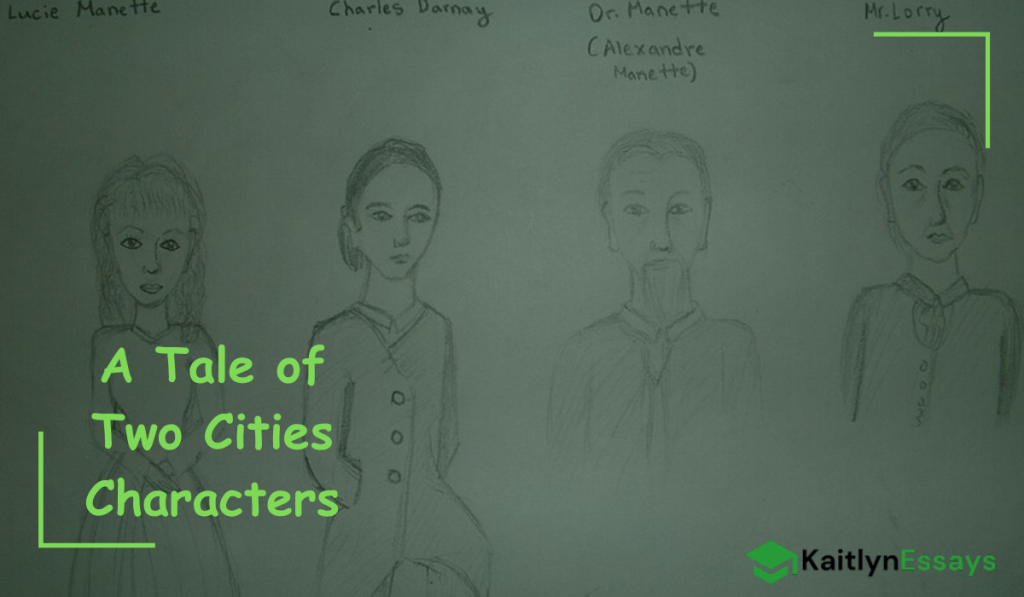
Charles Dickens’ “A Tale of Two Cities” brings to life a cast of memorable characters set against the backdrop of the French Revolution. From the virtuous Charles Darnay to the complex Sydney Carton, each person plays a crucial role in this story of love, sacrifice, and redemption. The characters in A Tale of Two Cities span social classes and national borders, offering a rich variety of human experiences and motivations. We encounter the noble Dr. Manette, scarred by years of imprisonment, and his devoted daughter Lucie, whose love touches the lives of those around her. The ruthless Madame Defarge embodies the revolution’s vengeful spirit, while her husband Ernest represents its more moderate elements.
Through these individuals and others, Dickens explores themes of identity, justice, and the impact of historical forces on personal lives. Their intertwined fates drive the narrative forward, creating a gripping tale that has captivated readers for generations.
Charles Darnay
Charles Darnay is a man of noble birth who renounces his aristocratic heritage to live a life of integrity and moral purpose. Born into the French aristocracy as the nephew of the cruel and oppressive Marquis St. Evrémonde, Darnay is deeply troubled by the injustices committed by his family. His decision to abandon his title and inheritance reflects his strong ethical convictions and his desire to distance himself from the tyranny that his name represents.
Darnay is portrayed as a man of honor and responsibility. He is willing to face the consequences of his choices, whether it means starting anew in England or returning to France during the height of the Revolution to help an old family servant, even at great personal risk. His actions demonstrate a deep sense of duty and compassion, particularly towards those who suffer under the yoke of the French aristocracy. This commitment to doing what is right, even when it endangers his life, underscores Darnay’s integrity and courage.
Despite his noble qualities, Darnay’s character is also marked by a degree of naivety. His idealism leads him to underestimate the dangers posed by the revolutionary fervor in France. He believes that his renunciation of his title and his good deeds will protect him from the wrath of the revolutionaries, failing to recognize the depth of their hatred for the aristocracy. This blind spot nearly costs him his life, as he is arrested and condemned to death despite his efforts to separate himself from his family’s legacy.
In his relationships, Darnay is depicted as loving and selfless. His marriage to Lucie Manette is built on mutual respect and affection, and he consistently puts her well-being above his own. His interactions with Dr. Manette, his father-in-law, further highlight his kindness and understanding, particularly when he patiently helps the doctor through his moments of psychological distress. Darnay’s respect for Dr. Manette’s past and his sensitivity to Lucie’s fears demonstrate his deep empathy and commitment to those he loves.
However, Darnay’s character is somewhat overshadowed by the more dynamic figures around him, such as Sydney Carton. While Darnay is noble and virtuous, he lacks the complexity and internal conflict that make Carton such a compelling character. Darnay is, in many ways, an idealized figure—honorable, brave, and steadfast—but his lack of significant personal flaws or internal struggles can make him appear less relatable or human compared to the flawed but ultimately redemptive Carton.
Sydney Carton
Sydney Carton is a man whose outward cynicism and apparent indifference mask a deep well of inner turmoil and unfulfilled potential. From the outset, Carton is introduced as a brilliant but dissolute lawyer, a man who is keenly aware of his own shortcomings and has resigned himself to a life of wasted opportunities. Despite his keen intellect, Carton is a man adrift, consumed by a profound sense of self-loathing and hopelessness, which he drowns in alcohol and apathy.
Carton’s cynicism is one of his most defining traits. He often downplays his abilities and mocks himself, particularly in contrast to his more successful and esteemed colleagues, such as his partner, Mr. Stryver. He refers to himself as a “jackal,” a term that reflects both his self-perception as a scavenger and his belief that he exists only to support others, never to achieve greatness on his own. This self-deprecation is a defense mechanism, shielding him from the pain of his perceived failures and the recognition of the potential he has squandered.
However, beneath this veneer of indifference lies a man capable of deep love and profound sacrifice. Carton’s love for Lucie Manette is the catalyst for his ultimate transformation. Though he knows that his feelings for her will never be reciprocated in the way he desires, his love for her inspires him to perform an act of ultimate selflessness. His decision to sacrifice his life for Charles Darnay, the man Lucie loves, is a testament to the depth of his character and the purity of his love. This act of redemption allows Carton to find meaning and purpose in his life, something he had long believed was beyond his reach.
Carton’s sacrifice is not only for Lucie but also for the possibility of a better future—one that he knows he can never be a part of but which he can help to create. His final moments are marked by a sense of peace and fulfillment that contrasts sharply with the despair that has defined much of his life. In choosing to die in Darnay’s place, Carton becomes a Christ-like figure, embodying the themes of resurrection and redemption that are central to the novel.
The complexity of Sydney Carton’s character lies in the tension between his self-destructive tendencies and his capacity for profound goodness. He is a man who has lived much of his life in the shadows, overshadowed by his own failures and the accomplishments of others. Yet, in the end, he emerges as one of the novel’s most heroic figures, not through conventional success, but through an act of love and sacrifice that gives his life meaning.
Lucie Manette
Lucie Manette embodies the qualities of compassion, loyalty, and quiet strength. As the daughter of Dr. Alexandre Manette, Lucie plays a crucial role in the lives of the novel’s characters, serving as a beacon of hope and stability in a world marked by chaos and violence. Her character is often seen as an idealized figure of goodness and virtue, representing the power of love and the capacity for human connection to bring healing and redemption.
Lucie’s defining characteristic is her unwavering compassion. From the moment she learns of her father’s existence after years of believing him dead, she dedicates herself to his care and recovery. Her gentle and patient nature helps to bring Dr. Manette back from the brink of madness, restoring his sense of self and giving him a reason to live. Lucie’s ability to soothe and support those around her extends beyond her father; she becomes a source of comfort and inspiration for her husband, Charles Darnay, and her friend Sydney Carton, both of whom are profoundly affected by her kindness and purity.
In her relationships, Lucie is characterized by her loyalty and selflessness. She marries Charles Darnay despite the dangers and difficulties associated with his past and the looming threat of the French Revolution. Throughout their marriage, Lucie remains steadfast and devoted, even in the face of extreme adversity. Her love for Darnay is unwavering, and she supports him without hesitation, demonstrating a quiet but profound inner strength that contrasts with the tumultuous events around her. This loyalty extends to Sydney Carton, who, despite his unrequited love for her, finds in Lucie a source of redemption and hope. Her gentle influence on Carton ultimately leads him to his noble sacrifice, underscoring the transformative power of her character.
While Lucie is often portrayed as an idealized figure, her character is not without depth. She experiences fear, grief, and anxiety, particularly as the Revolution threatens the lives of those she loves. However, she never allows these emotions to overwhelm her; instead, she channels them into a determination to protect and support her family. Her resilience in the face of personal and societal turmoil is a testament to her strength of character, even if it is expressed in quiet and traditionally feminine ways.
Lucie’s role in the novel also serves as a moral and emotional anchor for other characters. She represents the possibility of a better life, a future built on love, family, and stability. Her presence in the lives of Dr. Manette, Charles Darnay, and Sydney Carton provides them with the motivation and hope needed to overcome their struggles. In this way, Lucie can be seen as a symbol of light and life in a story dominated by themes of darkness and death.
Dr. Alexandre Manette
A man shaped by profound suffering, Dr. Manette embodies the themes of imprisonment, trauma, and resurrection that run throughout the novel. His character arc, from a broken man who has endured nearly two decades of wrongful imprisonment to a figure of strength and wisdom, reflects the profound impact of both physical and psychological captivity, as well as the possibility of recovery and redemption.
Dr. Manette’s character is initially introduced as a man who has been deeply scarred by his long imprisonment in the Bastille. His 18 years of solitary confinement have left him mentally and emotionally fragile, a shadow of the man he once was. This trauma manifests in his obsessive cobbling, a skill he learned in prison as a way to cope with the isolation and despair. The act of making shoes becomes a symbol of his psychological imprisonment, a reflexive return to the mental state of a prisoner whenever he is overwhelmed by stress or memories of his past.
However, Dr. Manette’s recovery is one of the novel’s most powerful examples of personal resurrection. Through the love and care of his daughter, Lucie, he gradually regains his sense of self and his place in the world. Lucie’s unwavering devotion provides him with the emotional support he needs to heal, allowing him to reclaim his identity as a doctor and a father. This transformation is a testament to the resilience of the human spirit and the healing power of love and connection.
Dr. Manette’s experience also grants him a unique perspective on justice and revenge. Having been a victim of the aristocratic system, he understands the deep-seated anger and desire for vengeance that fuel the French Revolution. Yet, his own suffering has made him wary of the destructive power of unchecked hatred. This is evident in his complex feelings toward Charles Darnay, the nephew of the man responsible for his imprisonment. While Dr. Manette initially struggles with the knowledge of Darnay’s heritage, he ultimately chooses forgiveness and embraces Darnay as his son-in-law, prioritizing love and family over the cycle of revenge.
Despite his recovery, Dr. Manette is not entirely free from his past. The psychological scars of his imprisonment linger, as seen when he temporarily relapses into his cobbling after Darnay’s arrest. This moment highlights the enduring impact of trauma and the fragility of his mental state, even after years of healing. It also underscores the novel’s exploration of the long-lasting effects of suffering and the difficulty of completely escaping one’s past.
In the broader context of the novel, Dr. Manette represents the possibility of renewal in a world marked by suffering and injustice. His journey from imprisonment to freedom, from madness to clarity, parallels the novel’s themes of sacrifice and redemption. He serves as a living reminder of the personal costs of oppression and the potential for recovery, even after the most profound suffering.
Madame Defarge
Madame Defarge is one of the most formidable and terrifying characters in Charles Dickens’ A Tale of Two Cities. As the wife of Ernest Defarge, a revolutionary leader, Madame Defarge is a central figure in the French Revolution, embodying the relentless and vengeful spirit that drives the uprising. Her character is complex, representing the darker aspects of human nature—especially the capacity for hatred, vengeance, and the destructive consequences of unchecked anger.
From the outset, Madame Defarge is portrayed as a woman of immense determination and steely resolve. She is constantly seen knitting, a seemingly innocuous activity that, in her hands, becomes a symbol of the deadly and methodical nature of her vengeance. Each stitch she makes in her knitting records the names of those who are marked for death by the revolutionaries, making her knitting a literal and metaphorical representation of the fates she weaves for her enemies. This cold, calculated approach to revenge highlights her unyielding commitment to the revolutionary cause and her desire to see the aristocracy brought to ruin.
Madame Defarge’s thirst for vengeance is deeply personal. Her hatred of the French aristocracy is rooted in a traumatic past—her family was destroyed by the abuses of the aristocrats, specifically by the Evrémonde family, to which Charles Darnay belongs. This personal history fuels her insatiable desire for retribution, making her one of the most relentless and unforgiving characters in the novel. Unlike other characters who seek justice or change, Madame Defarge is driven by a need to annihilate her enemies completely, with no room for mercy or forgiveness.
Her implacable nature and single-minded pursuit of vengeance make Madame Defarge a symbol of the destructive potential of hatred. While the French Revolution begins as a movement for justice and equality, characters like Madame Defarge demonstrate how such movements can be corrupted by personal vendettas and an insatiable desire for power and control. Her lack of compassion and her readiness to condemn even the innocent—such as Lucie Manette and her child—expose the dangers of allowing revenge to overshadow the original ideals of a cause.
Madame Defarge’s character also serves as a counterpoint to the novel’s themes of resurrection and redemption. While other characters, such as Sydney Carton and Dr. Manette, undergo transformations that lead to personal redemption, Madame Defarge remains unwavering in her commitment to vengeance until the very end. Her inability to move beyond her past and her refusal to consider any path other than destruction ultimately lead to her downfall. In her final confrontation with Miss Pross, Madame Defarge’s relentless pursuit of revenge backfires, resulting in her own death. This moment underscores the novel’s message about the self-destructive nature of hatred and the futility of vengeance.
Jarvis Lorry
Jarvis Lorry is a man of quiet strength, loyalty, and deep compassion. As an employee of Tellson’s Bank, Lorry is initially introduced as a man of business, characterized by his professionalism, pragmatism, and a strong sense of duty. However, as the novel progresses, it becomes clear that Lorry is much more than just a banker; he is a deeply caring and morally upright individual who plays a crucial role in the lives of the Manette family and others.
Lorry’s characterization as a “man of business” is established early in the novel. He prides himself on his work ethic, efficiency, and adherence to the values of the banking institution he serves. His sense of duty is unwavering, and he approaches his responsibilities with a seriousness that reflects the weight he places on his role. Yet, beneath this exterior of professional detachment lies a heart capable of great warmth and empathy. Lorry’s dedication to his work does not preclude his capacity for personal attachment, and his relationship with the Manette family reveals the depth of his character.
One of Lorry’s most significant qualities is his loyalty. He is deeply committed to Dr. Manette and his daughter, Lucie, from the moment he is tasked with bringing them together after Dr. Manette’s release from the Bastille. Lorry becomes a steadfast friend and protector, offering not only financial support but also emotional and moral guidance. His loyalty is evident in his tireless efforts to help the Manettes, whether by assisting in Dr. Manette’s recovery, aiding Charles Darnay during his trials, or providing stability and support in the face of the many challenges they face.
Lorry’s compassion is another defining feature of his character. Despite his initial self-description as “a machine,” Lorry repeatedly demonstrates his deep concern for the well-being of others. His compassion is particularly evident in his relationship with Lucie Manette, whom he regards almost as a daughter. Lorry’s care for Lucie is shown in his gentle handling of the news about her father, his ongoing concern for her happiness, and his willingness to go to great lengths to protect her family. This compassion extends beyond the Manettes; Lorry shows kindness and understanding to those around him, even in the harshest of circumstances.
While Lorry is not as central to the novel’s action as characters like Sydney Carton or Madame Defarge, his role is indispensable. He acts as a stabilizing force amidst the turmoil of the French Revolution, providing a sense of continuity and reliability. His wisdom and experience guide the other characters, and his presence offers a sense of security and order in a world that is often chaotic and unpredictable.
In many ways, Lorry represents the virtues of the older generation—a sense of duty, loyalty, and moral integrity that contrasts with the violence and upheaval of the revolutionary era. He is a character who believes in the importance of human connections and the responsibilities that come with them. His life is marked not by grand gestures or dramatic transformations, but by a steady, unwavering commitment to doing what is right and helping those he cares about.
Ernest Defarge
As the owner of a wine shop in the Parisian suburb of Saint Antoine and a former servant of Dr. Manette, Defarge is deeply involved in the revolutionary movement that seeks to overthrow the oppressive aristocracy. His character is marked by a blend of idealism, loyalty, and a growing ruthlessness, which reflect the broader themes of justice, vengeance, and the often brutal nature of social change.
Defarge’s loyalty is one of his most prominent traits. His connection to Dr. Manette, whom he served as a young man, is one of the key elements of his character. Despite the passage of time and the immense changes in both of their lives, Defarge remains dedicated to Dr. Manette, helping to secure his release from the Bastille and providing him with care and shelter in the early days of his recovery. This loyalty is not just personal; it also extends to the broader revolutionary cause, as Defarge sees the Revolution as a means of avenging the injustices done to people like Dr. Manette and himself.
However, as the Revolution progresses, Defarge’s character reveals the darker aspects of revolutionary zeal. Initially motivated by a sense of justice and a desire to create a better society, Defarge becomes increasingly hardened and ruthless as the Revolution escalates. His wine shop becomes a hub for revolutionary activity, and he plays a central role in organizing and leading the uprising in Saint Antoine.
As the violence intensifies, Defarge’s commitment to the cause begins to blur the line between justice and vengeance. He is willing to condone and even participate in acts of extreme brutality, such as the storming of the Bastille and the subsequent execution of aristocrats, driven by a belief that such actions are necessary to achieve the Revolution’s goals.
Defarge’s relationship with his wife, Madame Defarge, further complicates his character. While they are united in their revolutionary activities, there is a marked difference in their motivations and temperaments. Madame Defarge is consumed by an unrelenting desire for revenge, particularly against the Evrémonde family, whereas Ernest Defarge, though also driven by a sense of injustice, retains some measure of restraint and humanity.
This difference becomes more pronounced as Madame Defarge’s vendetta against Charles Darnay, an Evrémonde descendant, threatens to engulf even the innocent, like Lucie Manette and her child. Defarge’s internal conflict becomes apparent when he hesitates to fully endorse his wife’s more extreme actions, revealing that despite his revolutionary fervor, he has not entirely lost his capacity for compassion.
Defarge’s evolution throughout the novel serves as a reflection of the Revolution itself—what begins as a movement for justice and equality can quickly spiral into something more destructive and indiscriminate. Defarge, who once sought to protect and heal, finds himself increasingly caught up in the cycle of violence and retribution that the Revolution unleashes. His character illustrates the moral ambiguities and the potential for corruption inherent in even the most righteous causes.
The Marquis St. Evrémonde
As Charles Darnay’s uncle, the Marquis is a representative of the oppressive and callous nature of the upper class that ultimately contributes to the social upheaval and violence of the French Revolution. His character is marked by a sense of entitlement and a profound disregard for the suffering of others, embodying the themes of social injustice and moral decay that underpin the novel.
The Marquis is introduced as a wealthy and powerful aristocrat whose actions and attitudes epitomize the excesses and abuses of the French nobility. He is depicted as a man who is completely indifferent to the plight of the common people, viewing them as mere instruments for his own pleasure and convenience. This is vividly illustrated in the novel’s opening scenes, where the Marquis’s callousness is on full display. He runs over a child in the street with his carriage, and his response is to express a cold, dismissive attitude towards the child’s death, reflecting his complete lack of empathy.
The Marquis’s arrogance is further emphasized through his interactions with his servants and tenants. He treats them with contempt and cruelty, expecting them to serve his every whim without question. His disregard for the welfare of those beneath him is not just a personal failing but a reflection of the broader systemic issues of inequality and exploitation that fuel the revolutionary fervor. The Marquis’s disdain for the common people and his refusal to acknowledge their suffering make him a target for the revolutionary forces seeking to upend the established social order.
One of the key aspects of the Marquis’s character is his role in the oppressive Evrémonde legacy. The Marquis’s actions are directly linked to the suffering of Dr. Alexandre Manette, who was wrongfully imprisoned in the Bastille by the Evrémonde family. The Marquis’s cruelty is not only a personal trait but a continuation of a long history of injustice perpetrated by his family. This legacy of oppression and cruelty is passed down to Charles Darnay, who, despite his own attempts to distance himself from his family’s past, is ultimately associated with the very injustices that fuel the revolutionary anger.
The Marquis’s death at the hands of the revolutionaries is a direct consequence of his actions and attitudes. His murder, which is orchestrated by the vengeful Madame Defarge, symbolizes the retribution sought by those who have suffered under the aristocracy’s rule. His death is a moment of both justice and horror, reflecting the complexities of revolutionary justice and the moral ambiguities of seeking revenge against a deeply entrenched system of oppression.
Jerry Cruncher
As a porter for Tellson’s Bank and a part-time “resurrection man” (a grave robber), Cruncher embodies the moral ambiguities and contradictions present in the world Dickens depicts.
Cruncher’s role as a porter is characterized by his gruff exterior and his no-nonsense attitude. He is a working-class figure who, despite his rough demeanor, is deeply concerned about his family’s well-being. His job at the bank provides him with a modest income, but his involvement in grave robbing represents a darker side of his character. The practice of robbing graves to sell bodies for medical research is both illegal and morally dubious, reflecting the lengths to which some people will go to improve their financial situation. Cruncher’s dual life underscores the theme of hypocrisy and the hidden vices that lurk behind respectable facades.
One of the more distinctive aspects of Cruncher’s character is his superstitious belief in “resurrection” as a literal and mystical phenomenon. His wife, whom he refers to as “Flopper,” frequently prays for him and is depicted as a devout Christian, which contrasts sharply with Cruncher’s own beliefs and actions. Cruncher often grumbles about his wife’s prayers, attributing his personal misfortunes to them. This tension between Cruncher’s superstitions and his wife’s faith highlights the novel’s exploration of the intersection between personal belief systems and social behavior.
Cruncher’s involvement in the underworld of grave robbing also serves as a plot device that intersects with the larger narrative. His activities inadvertently lead to the discovery of important plot details, such as the identification of Dr. Manette’s imprisonment and the connection to Charles Darnay’s family. Cruncher’s role in these revelations illustrates Dickens’ use of seemingly minor characters to advance the plot and expose deeper truths about the society he is depicting.
Despite his flaws, Cruncher is not portrayed as purely villainous. His character evolves over the course of the novel, and he is depicted as capable of growth and change. His involvement in the novel’s climactic events, particularly the rescue of Charles Darnay, highlights his capacity for redemption. Cruncher’s eventual transformation, where he abandons his grave-robbing activities and seeks a more honest livelihood, underscores the novel’s themes of personal transformation and moral recovery.
Miss Pross
Miss Pross is a vital character in Charles Dickens’ A Tale of Two Cities, embodying themes of loyalty, sacrifice, and the strength of the working class. As Lucie Manette’s devoted governess and companion, Miss Pross plays a crucial role in the domestic and emotional life of the Manette family. Her character is marked by a fierce loyalty and a willingness to make personal sacrifices for those she loves.
Miss Pross is introduced as a loyal and protective figure, having served Lucie Manette since childhood. Her devotion to Lucie is unwavering, and she acts as a surrogate mother, providing both emotional and practical support. Her love for Lucie and her commitment to the family are evident in her actions, as she dedicates herself entirely to the well-being of Lucie and her family, often placing their needs above her own.
One of the most defining characteristics of Miss Pross is her strength of character. Despite her working-class background and the limited power she wields in society, she demonstrates a remarkable inner fortitude. Her determination to protect Lucie and her family is evident in the many challenges she faces, including the personal sacrifices she makes to ensure their safety and happiness. Miss Pross’s resilience is particularly highlighted in the novel’s climax, where she confronts Madame Defarge, ultimately demonstrating her courage and willingness to fight for those she loves.
Miss Pross’s confrontation with Madame Defarge is a pivotal moment in the novel. As Madame Defarge seeks to condemn Lucie and her family to death, Miss Pross stands resolute in her defense of them. In a dramatic and intense struggle, Miss Pross fights to protect Lucie’s home and her loved ones. This confrontation underscores Miss Pross’s bravery and her role as a protector, highlighting her unyielding commitment to the Manette family. Her actions in this scene are both heroic and tragic, marking a crucial turning point in the novel.
The emotional depth of Miss Pross’s character is also revealed through her relationship with Lucie. Their bond is portrayed as deeply affectionate and mutually supportive, with Miss Pross serving not just as a caretaker but as a beloved friend and confidante. This relationship adds a layer of emotional complexity to the novel, illustrating the strength of personal connections and the impact of love and loyalty.
In the broader context of the novel, Miss Pross represents the strength and dignity of the working class. Her character contrasts sharply with the aristocracy’s decadence and cruelty, embodying the virtues of loyalty, sacrifice, and steadfastness. Her willingness to fight for the safety and happiness of those she loves highlights the novel’s themes of personal sacrifice and the importance of selflessness.
Mr. Stryver
As a barrister and a professional counterpart to Sydney Carton, Stryver represents the competitive and often ruthless nature of the legal profession in Victorian England. His character contrasts sharply with Carton’s, highlighting themes of social mobility, personal ambition, and the moral dimensions of success.
Stryver is depicted as a successful and ambitious lawyer who is determined to climb the social ladder. His confidence and self-importance are evident in his interactions with others. He is portrayed as someone who is eager to take credit for his successes and to assert his superiority over those he views as his social inferiors. This ambition is central to his character, driving him to seek out high-profile cases and to make connections that will further his career.
One of Stryver’s defining characteristics is his arrogance. He often boasts about his achievements and his social status, showing little regard for the feelings or contributions of others. His confidence is often presented as overblown, and his self-assured demeanor masks a lack of genuine empathy or moral consideration. This arrogance is especially evident in his relationship with Sydney Carton, his junior colleague. Stryver views Carton as a useful but inferior associate, undervaluing his talents and contributions while taking credit for their joint successes.
Despite his professional success, Stryver’s personal life and relationships reveal a more superficial side to his character. His pursuit of marriage to Lucie Manette is a prime example of his opportunistic nature. Stryver’s interest in Lucie is driven more by her potential to enhance his social standing and complement his ambitions than by genuine affection. His proposal to Lucie is presented in a transactional manner, reflecting his belief that marriage should be a strategic move rather than a personal or emotional commitment. This contrasts sharply with the genuine, selfless love shown by Charles Darnay and Sydney Carton.
Stryver’s character also serves to highlight the theme of moral integrity versus ambition. While he is successful in his career and socially ambitious, his lack of genuine compassion and ethical considerations ultimately diminish his appeal. In contrast, Sydney Carton, who initially appears to be a failure by conventional standards, possesses a deep sense of moral integrity and personal sacrifice, qualities that are ultimately more valuable and redeeming.
In the latter parts of the novel, Stryver’s role diminishes as the focus shifts to the central characters and their dramatic developments. However, his presence throughout the story serves to illustrate the stark contrasts between different characters’ values and ambitions. Stryver’s ambitious and self-serving nature provides a foil to the more noble and self-sacrificial qualities exhibited by characters like Sydney Carton and Charles Darnay.
John Barsad
As a spy and informant, Barsad’s role in the narrative underscores themes of deceit, betrayal, and the corruption of personal integrity in the pursuit of self-interest. His character serves as a foil to the novel’s more virtuous characters and plays a critical role in advancing the plot through his duplicitous actions.
Barsad is introduced as a disreputable and unscrupulous individual who has a history of betrayal and deceit. Initially, he is presented as a seemingly respectable individual who works as a spy and informant for the revolutionary authorities. His role as a spy highlights his willingness to compromise his moral principles for personal gain. Barsad’s duplicity is revealed through his interactions with other characters, particularly his attempts to manipulate situations to his advantage while concealing his true nature.
One of Barsad’s most notable characteristics is his ability to assume different identities and roles. He is also known as Solomon Pross, the brother of Miss Pross, which further complicates his character and illustrates his deceitful nature. His dual identity allows him to navigate various social circles and gain access to sensitive information, making him a key player in the novel’s political intrigue.
Barsad’s role as a spy has a direct impact on the central characters of the story. He plays a crucial part in the legal proceedings against Charles Darnay, providing testimony that leads to Darnay’s imprisonment. His willingness to testify against Darnay underscores his lack of moral scruples and his readiness to betray others for personal gain. Barsad’s actions are driven by self-interest and a desire for financial and social advancement, rather than any genuine commitment to the revolutionary cause.
Despite his seemingly impenetrable exterior, Barsad is eventually revealed to be a morally bankrupt individual. His involvement in various schemes and his willingness to betray those who trust him highlight the novel’s exploration of personal integrity and the corrupting influence of power and self-interest. Barsad’s lack of genuine loyalty or ethical considerations makes him a symbol of the broader corruption and moral decay present in the society Dickens portrays.
In a dramatic turn of events, Barsad’s true nature is exposed during a key scene in the courtroom, where his credibility is undermined by the revelations about his past actions and his involvement in the revolutionary conspiracies. This exposure further illustrates the theme of deception and the consequences of living a life devoid of moral principles.
Roger Cly
Cly is introduced as a fellow spy and accomplice of John Barsad, and his actions play a role in the unfolding of the novel’s central conflicts.
Roger Cly is initially depicted as a shady and disreputable character involved in espionage and deceit. Like Barsad, Cly operates in the murky world of informants and spies, betraying his associates for personal gain. His involvement in revolutionary activities and his willingness to engage in treachery reflect the broader theme of moral corruption that pervades the novel.
Cly’s role in the story is most notably connected to his relationship with Barsad. The two men collaborate in their espionage activities, and their actions have significant consequences for the main characters, particularly Charles Darnay. Cly’s testimony and his role in the revolutionary tribunal contribute to the dangerous environment in which Darnay finds himself.
A crucial aspect of Cly’s character is his faked death. In a twist that underscores the theme of deception, it is revealed that Roger Cly did not actually die as initially reported. Instead, he staged his death as part of a plot to escape his past and avoid facing the consequences of his actions. This fake death is part of a larger scheme involving Barsad, who uses it to further manipulate situations to his advantage.
Cly’s ultimate fate is a reflection of his morally dubious character. His attempt to fake his death and evade responsibility for his actions reveals his lack of integrity and his willingness to deceive others for personal gain. This deception is ultimately exposed, highlighting the novel’s exploration of the consequences of living a life based on falsehood and betrayal.
Gabelle
Gabelle is the caretaker of the Evrémonde estate and serves as a representative of the struggles faced by the common people under the oppressive rule of the French aristocracy. Gabelle’s role in the novel is crucial in highlighting the themes of social injustice, the consequences of aristocratic neglect, and the personal impact of the French Revolution on those caught between opposing forces.
Gabelle is introduced as the steward responsible for managing the Evrémonde estate in the absence of its owners. He is depicted as a loyal and diligent servant who is deeply affected by the chaos and violence of the revolutionary period. Despite his position, Gabelle is not an aristocrat himself but a working-class individual who finds himself in a precarious situation due to the Revolution’s upheaval.
As the Revolution progresses, Gabelle becomes a victim of the revolutionary fervor and the anger directed towards the aristocracy. His predicament is exacerbated by the fact that he is seen as a representative of the Evrémonde family, which makes him a target for the revolutionary mobs seeking retribution against the former aristocrats. Gabelle’s plight reflects the broader theme of how ordinary people often suffer as a result of political and social upheaval that they did not instigate.
Gabelle’s situation takes a critical turn when he is imprisoned by the revolutionary authorities. His imprisonment underscores the idea that even those who are merely associated with the aristocracy, rather than being directly responsible for its abuses, can become collateral damage in the revolutionary zeal for justice. This aspect of Gabelle’s character highlights the novel’s exploration of the complexities and unintended consequences of revolutionary justice.
Charles Darnay, who is deeply concerned about Gabelle’s fate, becomes involved in efforts to secure his release. This involvement provides a significant link between Darnay’s personal story and the broader social issues addressed in the novel. Darnay’s concern for Gabelle, despite his own perilous situation, underscores his sense of moral responsibility and his commitment to justice for all, regardless of social class.
In the end, Gabelle’s fate is intertwined with the broader narrative of personal sacrifice and redemption. His plight serves to illustrate the personal cost of the Revolution and the ways in which individuals, both high and low, are affected by the sweeping changes of the time. Through Gabelle’s character, Dickens emphasizes the theme of social justice and the impact of political upheaval on ordinary lives.
The Seamstress
The seamstress, a minor character who appears near the end of the novel, plays a significant role in highlighting the human cost of the revolution. She is a young, innocent woman who is condemned to die alongside Sydney Carton, despite having done nothing to deserve her fate. Her appearance, particularly in the latter part of the novel, highlights themes of innocence, suffering, and the personal impact of political turmoil.
The Seamstress is introduced during a dramatic scene in the novel’s final chapters, when she is among the prisoners awaiting execution at the guillotine. Her presence serves to underscore the widespread nature of the revolutionary violence and the indiscriminate suffering inflicted upon ordinary people. Despite her seemingly minor role, her situation reflects the broader theme of how the Revolution, which began with high ideals of justice and equality, often devolved into a brutal and unforgiving system that targeted many innocents.
In the novel, the Seamstress is depicted as a young woman who faces her fate with a mixture of resignation and dignity. Her encounter with Sydney Carton in the prison cell where she is held is a key moment in the story. Carton, who is preparing to sacrifice his life for Charles Darnay, finds himself deeply moved by the Seamstress’s plight. Their brief interaction is marked by Carton’s compassion and empathy, as he comforts her and offers her reassurance in the face of her impending death.
The Seamstress’s presence in the novel highlights the personal tragedies that occur within the larger political upheaval. Her fate is intertwined with the broader narrative of sacrifice and redemption, as she becomes an emblem of the innocent lives affected by the Revolution’s excesses. Through her character, Dickens illustrates the human cost of political movements and the suffering endured by those who find themselves caught in the crossfire of ideological conflicts.
In the end, the Seamstress’s fate serves to deepen the emotional impact of Sydney Carton’s final act of self-sacrifice. Carton’s decision to take Darnay’s place at the guillotine and his final moments with the Seamstress are imbued with a sense of tragic nobility. The Seamstress’s presence and her interaction with Carton underscore the novel’s exploration of personal redemption and the possibility of finding meaning and compassion even in the face of profound injustice and suffering.
FAQs
What motivates Sydney Carton’s sacrifice at the end of the novel?
Sydney Carton’s ultimate sacrifice is motivated by his deep sense of personal redemption and his love for Lucie Manette. Carton feels he has squandered his own life and potential, and he sees the chance to sacrifice himself for the happiness of Lucie and her family as a way to achieve personal redemption. His act is also driven by a desire to provide a meaningful and selfless act of heroism that will give his life a purpose and significance.
How does Charles Darnay’s heritage impact his life and decisions?
Charles Darnay’s heritage as a member of the Evrémonde family significantly impacts his life and decisions. Although he rejects his aristocratic background and chooses to live as a common man, his connection to the Evrémonde family subjects him to scrutiny and danger, particularly during the French Revolution. His past haunts him, especially when the revolutionary authorities, including Madame Defarge, seek retribution against his family.
What role does Dr. Alexandre Manette’s imprisonment play in the novel?
Dr. Alexandre Manette’s imprisonment is central to the novel’s plot and themes. His wrongful incarceration in the Bastille for eighteen years represents the cruelty and injustice of the French aristocracy. The trauma he experiences during his imprisonment affects his mental health and personal relationships. His release and subsequent recovery are pivotal to the story, impacting his relationship with his daughter Lucie and influencing the lives of Charles Darnay and Sydney Carton.
How does Madame Defarge’s desire for revenge drive the plot of the novel?
Madame Defarge’s desire for revenge against the Evrémonde family is a major driving force in the novel. Her personal vendetta against the aristocracy, stemming from her own experiences of suffering and loss, leads her to seek retribution not only against Charles Darnay but also against his entire family. Her actions contribute to the escalating violence of the Revolution and create significant tension in the plot, culminating in her pursuit of vengeance that threatens innocent lives.