

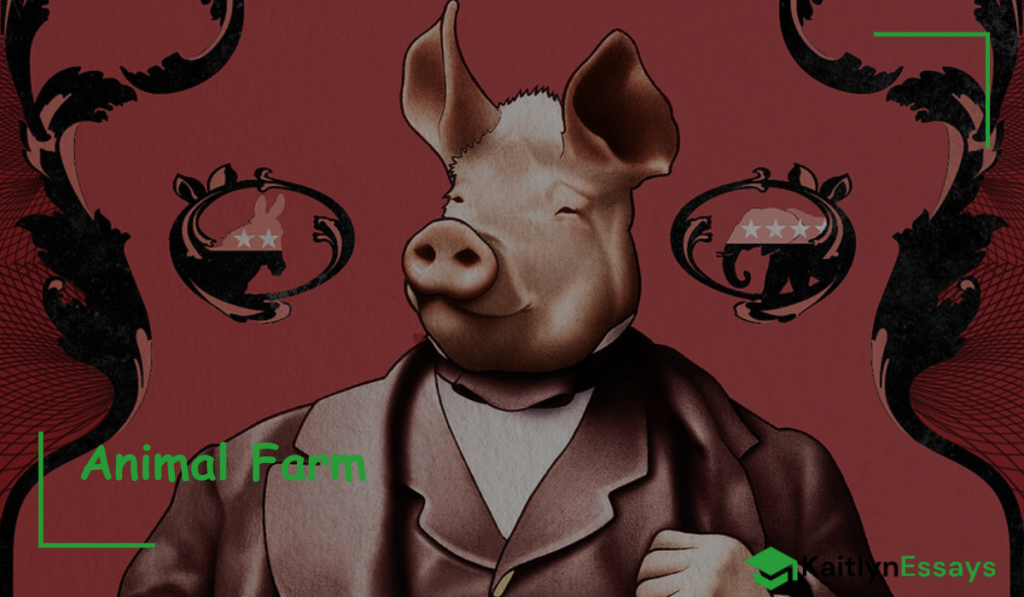
George Orwell’s Animal Farm is a compelling novella that uses the setting of a farm to explore themes of power, corruption, and human behavior. Published in 1945, it tells the story of animals who overthrow their human owner in pursuit of freedom and equality, only to find themselves under the rule of a new, oppressive leadership. The novella serves as a political allegory, reflecting events leading up to and during the Russian Revolution of 1917 and the rise of totalitarian regimes. Through its straightforward yet powerful storytelling, Animal Farm highlights how ideals can be manipulated and how power can corrupt even the noblest intentions. The book’s ability to simplify complex political ideas into a relatable narrative has made it an enduring classic. By examining the struggles and transformations of the animals, Orwell presents a timeless critique of authority and the challenges of achieving true equality.
Animal Farm Summary
The Genesis of the Rebellion
The story begins on Manor Farm, where the animals are subjected to oppressive conditions under the negligent farmer, Mr. Jones. Old Major, a wise and revered boar, delivers an impassioned speech about animal unity and the dream of an egalitarian society free from human exploitation. He introduces the concept of “Animalism,” a philosophy based on equality, and inspires the animals to revolt.
Old Major’s speech galvanizes the animals, planting the seeds of rebellion. Tragically, he dies shortly afterward, leaving the animals to carry forward his ideals. For a deeper dive into the pivotal role of Old Major’s vision, explore this analysis of his philosophy and its impact.
The Rebellion and Its Aftermath
Motivated by Old Major’s ideals, the animals unite and overthrow Mr. Jones in a spontaneous uprising. They rename the property “Animal Farm” and establish a set of principles, codified as the Seven Commandments, to govern their new society. Two pigs, Snowball and Napoleon, emerge as leaders, representing competing ideologies. Snowball is charismatic and innovative, while Napoleon is cunning and power-hungry.
The animals initially thrive under their newfound freedom. However, challenges soon arise, testing the unity of their utopia. To understand the complexities of their early governance, visit this exploration of Animal Farm’s first steps toward equality.
The Struggle for Power
Tensions between Snowball and Napoleon escalate as they vie for control of Animal Farm. Snowball proposes ambitious projects, including the construction of a windmill to improve the animals’ quality of life. Napoleon opposes the idea, and their rivalry culminates in Snowball’s expulsion. Napoleon seizes power, backed by his loyal enforcers, the fierce dogs he secretly trained.
Napoleon’s rise marks a turning point as he consolidates authority and dismantles the democratic ideals of the rebellion. Learn more about Napoleon’s tactics and their implications.
The Erosion of Ideals
Under Napoleon’s rule, the animals experience increasing hardships, including food shortages and grueling labor. The Seven Commandments are subtly altered to justify the pigs’ privileges, reflecting their gradual betrayal of Animalism. Meanwhile, Napoleon uses propaganda, disseminated by the pig Squealer, to manipulate the animals and maintain control.
The construction of the windmill becomes a symbol of the animals’ collective effort, but it is fraught with setbacks, including sabotage and natural disasters. Despite these challenges, Napoleon uses the project to rally the animals and divert attention from their deteriorating conditions. Explore the symbolism of the windmill in Animal Farm for a deeper understanding.
External Conflicts and Internal Struggles
As Napoleon tightens his grip, Animal Farm faces external threats from neighboring human farmers, who seek to exploit its instability. Internally, dissent is quashed through fear and violence. The animals are coerced into loyalty, even as they endure exploitation reminiscent of their days under Mr. Jones.
To learn more about the parallels between the animals’ struggles and historical political movements, visit this insightful comparison.
The Final Betrayal
The story reaches its climax as the pigs fully abandon the principles of Animalism. They adopt human traits, such as walking on two legs, and form alliances with humans, blurring the line between oppressor and oppressed. The iconic final scene depicts the animals observing a gathering of pigs and humans, unable to distinguish one from the other.
This chilling conclusion underscores the cyclical nature of tyranny and the fragility of revolutionary ideals. For an in-depth look at Animal Farm‘s ending and its implications, explore this detailed breakdown.
Characters in Animal Farm
Old Major: The Visionary Leader
Old Major is the catalyst for the revolution in Animal Farm. As a wise, elderly boar, he commands the respect of all the animals. His speech is a call to arms against oppression, delivering the foundational tenets of Animalism. Old Major warns of the tyranny of man, emphasizing the need for unity and equality among the animals. His vision of a utopian society, where animals work together for mutual benefit, is compelling and inspiring. However, Old Major dies shortly after sharing his dream, leaving his ideals to be interpreted—and ultimately corrupted—by the other pigs. Old Major represents Karl Marx and Vladimir Lenin, the ideological forefathers of communism, whose revolutionary principles were later distorted by their successors.
For a deeper look at Old Major’s role in the story and his historical parallels, visit this analysis of Old Major’s character.
Napoleon: The Ruthless Tyrant
Napoleon is the embodiment of authoritarianism in Animal Farm. A Berkshire boar, he starts as a seemingly equal leader alongside Snowball but quickly reveals his ambition and manipulative nature. Unlike Snowball, who values debate and innovation, Napoleon consolidates power through fear and violence. His training of the dogs as personal enforcers marks his shift from a revolutionary leader to a dictator. Napoleon systematically eliminates opposition, expelling Snowball and using propaganda to discredit him.
Napoleon’s rule is marked by hypocrisy and exploitation. Under his leadership, the principles of Animalism are eroded. The Seven Commandments are altered to justify the pigs’ privileges, and the animals’ lives become indistinguishable from their days under Mr. Jones. Napoleon’s character parallels Joseph Stalin, whose regime betrayed the ideals of the Russian Revolution.
Explore Napoleon’s leadership style and historical allegory to learn more about his character.
Snowball: The Charismatic Idealist
Snowball is Napoleon’s ideological counterpart, representing the more idealistic and intellectual side of leadership. He is a fervent advocate for progress and innovation, best exemplified by his proposal to build a windmill to improve productivity and reduce labor. Snowball is a skilled orator and earns the animals’ admiration for his dedication to the principles of Animalism. However, his focus on ideals over political strategy leaves him vulnerable to Napoleon’s machinations.
Snowball’s expulsion from Animal Farm marks a turning point, as Napoleon uses him as a scapegoat for all the farm’s troubles. This tactic not only consolidates Napoleon’s power but also undermines Snowball’s contributions. Snowball represents Leon Trotsky, a revolutionary leader who was exiled and vilified by Stalin.
Discover more about Snowball’s ideals and downfall in this in-depth character study.
Squealer: The Master of Propaganda
Squealer is a small pig with a silver tongue, serving as Napoleon’s propagandist. His ability to manipulate language and twist the truth is unparalleled, making him a crucial figure in maintaining Napoleon’s regime. Squealer’s justifications for the pigs’ actions often confuse and pacify the other animals, allowing Napoleon to rule unchallenged. He exploits the animals’ limited education and uses fear, particularly of Mr. Jones’s return, to suppress dissent.
To understand Squealer’s role in shaping public perception, visit this analysis of propaganda in Animal Farm.
Boxer: The Loyal Laborer
Boxer, a dedicated and strong cart-horse, symbolizes the working class. His mottos, “I will work harder” and “Napoleon is always right,” reflect his unshakable loyalty to the cause and his leader. Boxer’s immense physical strength and tireless work ethic make him indispensable to the farm’s success. However, his blind faith in Napoleon leads to his tragic demise.
When Boxer is injured and unable to work, Napoleon betrays him by selling him to the knacker. This act epitomizes the exploitation of the proletariat in totalitarian regimes. Boxer’s unwavering loyalty, even in the face of exploitation, underscores the tragic fate of the working class, whose labor sustains corrupt systems but who reap none of the benefits.
Read more about Boxer’s tragic arc in this detailed character study.
Clover: The Compassionate Observer
Clover, a gentle and maternal mare, represents the conscience of the working class. She is empathetic and caring, often comforting the other animals and questioning the pigs’ actions. Unlike Boxer, Clover has moments of doubt about Napoleon’s leadership, particularly when the Seven Commandments are altered. However, her inability to read prevents her from fully challenging the regime.
Clover’s character reflects the internal conflict of those who recognize injustice but feel powerless to oppose it. Her quiet disillusionment is a poignant reminder of the moral compromises made under oppressive systems.
For more about Clover’s role and struggles, explore this analysis of her character.
Benjamin: The Cynical Realist
Benjamin, the donkey, is one of the most intelligent animals on the farm but is also the most cynical. He remains skeptical of the rebellion from the start, believing that life will remain harsh regardless of who is in charge. While he recognizes the pigs’ betrayal, his apathy prevents him from taking action until it is too late. Benjamin’s passivity serves as a critique of those who refuse to act against oppression, even when they see its consequences.
Explore Benjamin’s perspective and significance in this character analysis.
Moses: The Spiritual Manipulator
Moses, the tame raven, is a symbolic representation of organized religion. He tells the animals about Sugarcandy Mountain, a utopian paradise where they will find eternal happiness after death. While his tales are dismissed by most animals as fantasy, they provide hope and distraction from their suffering. Napoleon eventually tolerates Moses, recognizing the value of his stories in pacifying the animals.
Learn more about Moses’ allegorical role in this detailed profile.
Mr. Jones: The Inept Oppressor
Mr. Jones is the negligent and cruel farmer who represents the old ruling class, particularly Tsar Nicholas II. His mismanagement and abuse of the animals lead to the rebellion. Despite his downfall, Mr. Jones serves as a reminder of the oppression that prompted the revolution.
For a closer look at Mr. Jones’ role and symbolism, visit this analysis.
The Dogs: The Enforcers of Tyranny
The dogs, trained by Napoleon, serve as his loyal enforcers. Their role is to intimidate and silence dissent, ensuring that Napoleon’s authority remains unchallenged. They are a representation of the secret police used in totalitarian regimes, such as Stalin’s NKVD. The dogs’ transformation from ordinary animals into violent tools of oppression reflects the corrupting influence of power and the use of fear to maintain control.
To understand the dogs’ symbolic significance, explore this character study.
The Sheep: The Mindless Followers
The sheep symbolize the masses who blindly follow authority without questioning it. Their constant chanting of simplistic slogans, such as “Four legs good, two legs bad,” exemplifies their role as tools of propaganda. They are easily manipulated by Napoleon and Squealer, reflecting the dangers of uncritical acceptance of authority.
For more on the sheep’s role in Animal Farm, read this analysis.
Minimus: The Poet Laureate of Tyranny
Minimus, a pig who writes propaganda songs and poems, represents the role of art in reinforcing authoritarian regimes. His compositions replace the original revolutionary anthem, “Beasts of England,” with songs that glorify Napoleon. Minimus’s character critiques the co-opting of art and culture by those in power to legitimize their rule.
Explore Minimus’ contributions to the story in this character analysis.
Themes in Animal Farm
The Corruption of Power
One of the central themes in Animal Farm is the corrupting influence of power. As the pigs rise to power after the rebellion, their ideals of equality and fairness give way to greed and authoritarianism. Napoleon, in particular, embodies the transformation from revolutionary leader to oppressive tyrant. The Seven Commandments, originally meant to guide the animals toward unity and justice, are systematically altered to justify the pigs’ privileges.
This theme highlights how power, when unchecked, inevitably leads to corruption. It also critiques the cyclical nature of oppression, where the new ruling class replicates the injustices of their predecessors. To learn more about how power corrupts in Animal Farm, visit this thematic analysis.
The Betrayal of Ideals
The initial vision of Animalism, inspired by Old Major’s speech, is one of equality and shared prosperity. However, these ideals are gradually betrayed as the pigs prioritize their self-interest over the welfare of the other animals. The manipulation of the Seven Commandments and the adoption of human behaviors by the pigs underscore this betrayal.
This theme serves as a commentary on how revolutionary ideals can be undermined when those in power prioritize control over principles. The betrayal of the animals’ trust mirrors the disillusionment experienced by those who lived through revolutions in the real world. Explore more about this theme in this detailed discussion.
Propaganda and Misinformation
Propaganda is a powerful tool in Animal Farm, used by the pigs to manipulate and control the other animals. Squealer, Napoleon’s propagandist, twists the truth to justify the pigs’ actions and maintain their authority. The sheep, with their mindless repetition of slogans, further reinforce the pigs’ narrative, drowning out dissenting voices.
This theme examines the role of propaganda in suppressing truth and maintaining power in authoritarian regimes. It also highlights the dangers of uncritical acceptance of information. To learn more about the role of propaganda in Animal Farm, visit this analysis.
The Abuse of Language
Language is both a tool and a weapon in Animal Farm. Squealer’s eloquence and manipulation of words ensure that the pigs’ actions are always seen as justified. The gradual alteration of the Seven Commandments, unnoticed by most animals due to their illiteracy, further illustrates how language can be weaponized to obscure truth and maintain control.
This theme critiques the misuse of language as a means of oppression and emphasizes the importance of education and critical thinking. Discover more about this theme in this thematic exploration.
The Dangers of Ignorance
The animals’ lack of education and critical thinking leaves them vulnerable to exploitation. Their inability to question the pigs’ decisions or remember the original commandments allows Napoleon and his followers to maintain control unchallenged. Boxer’s blind loyalty and Clover’s inability to read are key examples of how ignorance perpetuates oppression.
This theme underscores the importance of education and awareness in resisting tyranny. For a deeper understanding of this theme, explore this analysis.
Class Struggle and Exploitation
Orwell explores the dynamics of class struggle and the exploitation of the working class in Animal Farm. The animals overthrow Mr. Jones in the hope of creating a society based on equality. However, the pigs quickly establish themselves as a new elite class, exploiting the labor of the other animals while enjoying privileges.
This theme reflects the cyclical nature of class oppression and critiques the failure of revolutions to achieve true equality. For further insights into the theme of class struggle, visit this thematic analysis.
The Fragility of Freedom
The animals’ initial liberation from Mr. Jones represents a hard-won freedom, but this freedom is short-lived. Napoleon’s rise to power and the gradual erosion of the animals’ rights demonstrate how easily freedom can be lost when vigilance is not maintained. The theme serves as a warning about the fragility of liberty and the need for constant vigilance against tyranny.
For a detailed exploration of this theme, see this discussion on freedom in Animal Farm.
The Cyclical Nature of History
Animal Farm illustrates the cyclical nature of history, where one oppressive regime is replaced by another. The pigs’ transformation into the very oppressors they sought to overthrow mirrors historical revolutions that failed to bring lasting change. This theme emphasizes the need to learn from history to prevent repeating its mistakes.
To explore the historical parallels and this theme further, visit this thematic analysis.
Loyalty and Betrayal
Loyalty is a recurring theme in Animal Farm, seen in characters like Boxer and Clover, who remain devoted to the cause despite growing injustices. However, this loyalty is betrayed by the pigs, who exploit the animals’ trust for their gain. Boxer’s tragic fate exemplifies this theme, highlighting the exploitation of those who remain loyal to corrupt leaders.
Learn more about the interplay of loyalty and betrayal in this character-driven thematic study.
Hope and Disillusionment
The animals’ initial hope for a better future drives their rebellion, but this hope gradually gives way to disillusionment as the pigs betray their ideals. The return of hardship under Napoleon’s rule demonstrates the failure of the revolution to achieve its promises. This theme reflects the disillusionment experienced by those who see their aspirations crushed under corrupt systems.
For a deeper dive into the theme of hope and its loss, explore this thematic analysis.
Symbols in Animal Farm
The Farmhouse: A Symbol of Power and Privilege
The farmhouse in Animal Farm is a powerful symbol of authority and privilege. Initially associated with Mr. Jones’s oppressive rule, it is later occupied by the pigs, signifying their rise to power. As the pigs adopt human behaviors, such as sleeping in beds and drinking alcohol, the farmhouse becomes a symbol of the betrayal of the animals’ revolutionary ideals.
The contrast between the farmhouse and the rest of the farm emphasizes the growing inequality among the animals. To explore the deeper significance of the farmhouse, visit this analysis of the farmhouse’s symbolism.
The Windmill: A Symbol of False Promises
The windmill represents the manipulation of hope and labor in Animal Farm. Snowball initially proposes it as a means of improving life for all the animals, but after his expulsion, Napoleon uses it to exploit the animals’ labor while offering them false promises of progress.
Despite the animals’ hard work, the windmill repeatedly fails to deliver the prosperity they were promised. Its destruction and rebuilding symbolize the endless cycle of exploitation under Napoleon’s rule. To understand more about the windmill’s symbolic role, explore this detailed discussion.
The Seven Commandments: A Symbol of Corrupted Ideals
The Seven Commandments serve as the foundation of Animalism and symbolize the animals’ collective ideals of equality and fairness. However, as the pigs gain power, the commandments are gradually altered to justify their actions.
The final reduction of the commandments to “All animals are equal, but some animals are more equal than others” epitomizes the complete betrayal of the revolution. This transformation highlights the fragility of ideals when subjected to corruption. Learn more about the commandments’ symbolism in this analysis.
The Whip: A Symbol of Oppression
The whip, first used by Mr. Jones and later adopted by Napoleon, symbolizes the oppressive control wielded over the animals. Its use demonstrates the pigs’ transformation into the very oppressors they sought to overthrow.
The whip underscores the theme of the cyclical nature of power and oppression, showing how tools of subjugation persist regardless of who wields them. For more on the whip’s symbolic importance, visit this exploration.
The Flag: A Symbol of Unity and Betrayal
The green flag with a hoof and horn symbolizes the unity and shared purpose of the animals during the early days of the revolution. However, as the pigs consolidate power, the flag’s meaning is undermined. Its original ideals are forgotten, mirroring the betrayal of the revolution’s promises.
The flag serves as a poignant reminder of how symbols of hope can be co-opted and emptied of their original significance. To learn more about the flag’s symbolism, read this detailed discussion.
The Milk and Apples: A Symbol of Privilege
The milk and apples, reserved exclusively for the pigs, symbolize the growing inequality on the farm. Squealer’s justification for this privilege—claiming it is for the pigs’ “brainwork”—reflects the exploitation of resources by those in power.
This symbolism critiques the hypocrisy of leaders who prioritize their own comfort while claiming to act in the interest of the collective. Learn more about this symbol in this analysis.
The Dogs: A Symbol of Fear and Control
Napoleon’s trained dogs symbolize the use of violence and intimidation to maintain authority. Their unquestioning loyalty to Napoleon and their role as enforcers reflect the mechanisms of control employed by totalitarian regimes.
The dogs’ transformation into tools of oppression highlights the corruption of power and the betrayal of revolutionary ideals. For a deeper look at their symbolism, visit this character and symbol study.
The Sheep: A Symbol of Blind Obedience
The sheep, with their constant repetition of slogans like “Four legs good, two legs bad,” symbolize the masses who blindly follow authority without critical thought. Their mindless chanting drowns out dissent and reinforces Napoleon’s propaganda.
This symbol serves as a critique of uncritical conformity and the dangers of mob mentality. To explore the significance of the sheep, see this thematic analysis.
Sugarcandy Mountain: A Symbol of False Hope
Sugarcandy Mountain, the utopian paradise described by Moses, symbolizes the role of religion in pacifying the oppressed. While the animals dismiss Moses’s tales as fantasy, Napoleon allows him to stay on the farm, recognizing the value of false hope in maintaining control.
This symbol critiques the use of religion as a tool to distract and pacify the working class under oppressive regimes. For more insights, visit this analysis of Sugarcandy Mountain.
The Battle of the Cowshed: A Symbol of Revolutionary Struggle
The Battle of the Cowshed symbolizes the initial triumph of the animals’ revolution. It demonstrates their unity and strength in overcoming oppression. However, the battle’s memory is later manipulated by Napoleon, who uses it to rewrite history and consolidate his power.
This symbol reflects the distortion of revolutionary history to serve authoritarian narratives. To explore this further, read this analysis of the battle’s symbolism.
Literary Devices in Animal Farm
Allegory: A Representation of Real-World Politics
Animal Farm is an extended allegory that mirrors the Russian Revolution of 1917 and the rise of Soviet communism. Each character and event corresponds to historical figures or occurrences, such as Napoleon representing Joseph Stalin and Snowball symbolizing Leon Trotsky. The farm itself represents the state, with its transformation reflecting the cyclical nature of political revolutions.
This literary device enables Orwell to critique the corruption of revolutionary ideals in a universally accessible way. For a detailed exploration of Orwell’s use of allegory, visit this analysis of allegorical elements.
Satire: A Critique of Totalitarian Regimes
Orwell employs satire to ridicule the hypocrisy, manipulation, and cruelty of authoritarian leaders. The exaggeration of the pigs’ behaviors, such as Napoleon’s lavish lifestyle and Squealer’s absurd justifications, highlights the absurdities of propaganda and dictatorship.
This satirical approach makes Animal Farm a sharp critique of totalitarian regimes while maintaining its accessibility to a broad audience. To learn more about Orwell’s use of satire, check out this detailed discussion.
Irony: Highlighting Contradictions
Irony is a central device in Animal Farm, used to expose the contradictions between the pigs’ actions and their proclaimed ideals. For example, the transformation of the Seven Commandments into self-serving rules highlights the irony of a revolution that sought equality but resulted in tyranny.
Another example is the eventual indistinguishability between pigs and humans, emphasizing the betrayal of the revolution. For further analysis of irony in Animal Farm, visit this thematic breakdown.
Foreshadowing: Predicting Betrayal
Orwell uses foreshadowing to hint at the betrayal and corruption that will unfold. Early in the story, Old Major warns that humans are the root of the animals’ suffering. However, this speech indirectly predicts that the pigs, once in power, will become indistinguishable from their human oppressors.
This device builds tension and prepares readers for the inevitable outcome of the animals’ revolution. To explore more examples of foreshadowing, see this analysis.
Symbolism: Representing Complex Ideas
Symbolism is heavily utilized throughout Animal Farm, with elements like the windmill, the farmhouse, and the Seven Commandments representing broader ideas such as false promises, privilege, and corrupted ideals. These symbols enrich the narrative and allow Orwell to convey complex critiques of political systems.
To learn more about the symbolic elements of Animal Farm, explore this detailed guide to symbolism.
Personification: Bringing Concepts to Life
By anthropomorphizing the animals, Orwell creates relatable characters that embody human traits, ideals, and flaws. For instance, Napoleon’s cunning and ruthlessness mirror those of real-world authoritarian leaders, while Boxer’s loyalty and hard work reflect the struggles of the working class.
This device enhances the allegorical nature of the story, making its political commentary more impactful. Learn more about personification in Animal Farm through this character analysis.
Dramatic Irony: Amplifying Tension
Dramatic irony occurs when the audience knows more than the characters in the story. For example, the animals believe Napoleon is acting in their best interest, while the readers understand his actions are self-serving. This discrepancy creates tension and emphasizes the animals’ ignorance and vulnerability.
To explore how dramatic irony deepens the narrative, check out this thematic analysis.
Repetition: Reinforcing Key Messages
Repetition is used effectively in Animal Farm to emphasize propaganda and indoctrination. The sheep’s constant chanting of “Four legs good, two legs bad” drowns out dissent and reinforces conformity. Similarly, Squealer repeats lies to convince the animals of Napoleon’s infallibility.
This device illustrates the power of repetition in shaping beliefs and controlling thought. For a closer look at its use, visit this analysis of repetition in the story.
Imagery: Creating Vivid Depictions
Orwell’s use of imagery vividly depicts the harsh conditions of life on the farm, the brutality of the pigs’ rule, and the contrast between the animals’ labor and the pigs’ luxury. These descriptions evoke empathy and reinforce the themes of exploitation and inequality.
For a detailed discussion on Orwell’s use of imagery, explore this guide.
Paradox: Exposing Contradictions in Power
The paradoxical statement “All animals are equal, but some animals are more equal than others” epitomizes the hypocrisy of the pigs’ rule. This device highlights the absurdity of the pigs’ justification for inequality and critiques the manipulation of language to maintain control.
To analyze this paradox further, visit this exploration of paradox in Animal Farm.
Animal Farm Essays
The Windmill’s Shadow: A Turning Point in Animal Farm’s Struggle for Freedom
George Orwell’s Animal Farm, a chilling allegory of the Russian Revolution, meticulously charts the idealistic rise and tragic descent of a society seeking liberation. Within this narrative, the Battle of the Windmill stands out not merely as a physical conflict, but as a profound turning point, marking a critical juncture in the animals’ struggle for freedom. This battle, and its subsequent ramifications, expose the insidious nature of power, the fragility of ideals, and the tragic trajectory of revolution when principles are sacrificed at the altar of expediency. It is in the shattered remnants of the windmill, and the exhausted spirit of its defenders, that we witness the true cost of the pigs’ tyranny and the irreversible erosion of Animal Farm’s revolutionary aspirations.
Before the Battle of the Windmill, Animal Farm, despite its increasing inequalities, retained a semblance of its original revolutionary spirit. The construction of the windmill, initially conceived as a symbol of progress and communal effort, had become a driving force for the animals. It represented their collective ability to overcome adversity and build a better future, free from human exploitation. This shared purpose, however, masked the growing control exerted by the pigs, particularly Napoleon, who had begun to manipulate the farm’s affairs for his own benefit. The windmill, therefore, became a symbol of the farm’s duality: a beacon of hope and simultaneously, an instrument of the pigs’ ambition.
The invasion by Frederick and his men, prompted by Napoleon’s betrayal, shattered the illusion of harmony and highlighted the farm’s vulnerability. The battle itself, a brutal clash of brute force against the valiant but ultimately outmatched animals, serves as a stark reminder of the violence inherent in any struggle for power. The initial success of the animals, driven by their desperate desire to protect their home and the fruits of their labor, demonstrates the lingering power of their revolutionary zeal. Yet, this victory is bittersweet. The triumphant cheers quickly transform into mournful cries as the animals survey the devastation: the windmill, painstakingly built, is destroyed. The physical loss is devastating, but even more profound is the damage inflicted on the animals’ spirit. Their hard work, their shared dream, is reduced to rubble.
The aftermath of the battle marks a distinct shift in the narrative. The pigs, instead of acknowledging their failure in negotiation with Frederick, capitalise on the animals’ exhaustion and vulnerability. They declare a hollow victory, twisting the narrative to present themselves as triumphant heroes. They celebrate the bravery of the animals, but this serves to camouflage the reality that the windmill was destroyed by their poor leadership. This calculated manipulation of truth is a crucial turning point. It signifies the full transition from a revolution intended to bring equality to one where the pigs openly control the narrative, rewriting history to suit their agenda. The pigs’ blatant dishonesty erodes the animals’ capacity for critical thought and their ability to resist further oppression.
The Battle of the Windmill is also a turning point because it underscores the fragility of revolutionary idealism in the face of power. The pigs, initially claiming to be equal participants, have demonstrated their ruthlessness in their pursuit of absolute control. They use the animals’ sacrifices, including the loss of life, to consolidate their power, moving further away from the founding principles of Animalism. The subsequent rebuilding of the windmill, under increasingly harsh conditions and with less and less reward for the common animals, further highlights the pigs’ exploitative nature. The symbolic construction that once embodied hope now represents their unyielding grip on power.
In conclusion, the Battle of the Windmill is far more than a simple military engagement in Orwell’s Animal Farm. It is a pivotal moment that exposes the corrupting influence of power, the manipulation of truth, and the vulnerability of ideals in the face of oppression. The shattered remains of the windmill serve as a potent reminder of the price of revolution gone wrong and the tragic consequences of placing blind faith in self-serving leaders. The battle marks the point of no return for Animal Farm, where the fight for freedom morphs into a grim acceptance of tyranny, ultimately leaving the reader with a chilling warning about the inherent dangers of unchecked power and the importance of vigilance in safeguarding hard-won freedoms.
The Windmill’s Tumultuous Journey: Symbolism and the Animals’ Struggle in Animal Farm
In George Orwell’s allegorical masterpiece, Animal Farm, the windmill stands as a powerful and complex symbol, reflecting the shifting dynamics of the animals’ struggle for freedom and equality. Initially conceived as a beacon of progress and a testament to their collective ability to overcome human exploitation, the windmill’s tumultuous journey through the narrative mirrors the farm’s own tragic trajectory from revolutionary idealism to oppressive tyranny. Its construction, destruction, and eventual reconstruction serve not just as physical events but as potent symbols of the animals’ aspirations, their vulnerabilities, and the insidious nature of power.
At its inception, the windmill represents the animals’ utopian vision and their belief in the transformative power of collective effort. Inspired by Snowball’s progressive ideas, it embodies the potential for a self-sufficient, efficient, and prosperous future, free from the burdens of human labor. The animals, spurred by a shared sense of purpose, dedicate themselves to its construction with unwavering enthusiasm. The windmill, in this phase, symbolizes the animals’ revolutionary zeal and their hope for a better world. It is a concrete manifestation of their ability to transcend their perceived limitations and to build something magnificent through collaboration. The laborious process of its construction, punctuated by setbacks and challenges, reinforces the idea that progress requires perseverance and collective sacrifice. It is a symbol not just of physical progress but also of the animals’ nascent political and social consciousness.
However, the windmill’s symbolic significance undergoes a dramatic shift with the expulsion of Snowball and the subsequent rise of Napoleon’s totalitarian regime. The pigs, under Napoleon’s leadership, seize control of the project, transforming it into a tool for their own self-aggrandizement. The windmill now becomes a symbol of the pigs’ ambition and their ruthless exploitation of the other animals. The laborious work on the windmill becomes increasingly burdensome for the common animals, while the pigs enjoy the fruits of their labor. The animals, once driven by a shared vision, now labor under compulsion, their efforts contributing not to their own betterment but to the enrichment of the ruling elite. This transition highlights how even the most noble ideals can be perverted and co-opted to serve oppressive purposes. The windmill, once a symbol of hope, gradually becomes a symbol of the pigs’ growing power and the animals’ increasing subjugation.
The destruction of the windmill during the Battle of the Windmill is a devastating blow, symbolizing not just the loss of physical property but also the shattering of the animals’ dreams and the betrayal of their ideals. The battle reveals the farm’s vulnerability and exposes the pigs’ flawed leadership, highlighting the devastating consequences of their hubris and manipulation. The windmill, reduced to rubble, becomes a stark reminder of the fragility of progress and the ease with which hard-won gains can be undone by the forces of tyranny. This destruction signifies the loss of innocence and marks a crucial turning point in the farm’s decline, leaving the animals demoralized and more susceptible to the pigs’ manipulation.
The subsequent rebuilding of the windmill under Napoleon’s command further reinforces its symbolic complexity. The pigs, using their control of the narrative, twist the disaster into a victory, presenting themselves as heroic leaders who have overcome adversity. The rebuilt windmill, however, is not a symbol of hope or progress but rather a symbol of the pigs’ absolute control. The windmill, originally envisioned as a generator of electricity to ease the animals’ workload, is now used primarily for the benefit of the pigs and their cronies. This reinforces the idea that the revolutionary ideals have been completely perverted. It now represents the pigs’ exploitation of the animals’ labor for their own benefit, solidifying their control of the farm and effectively entrenching a new form of oppression. The windmill is no longer a testament to the animals’ collective power but an emblem of their enslavement.
In conclusion, the windmill in Animal Farm serves as a powerful and complex symbol that reflects the complex and tragic trajectory of the animals’ struggle. Initially a symbol of hope, collective effort, and revolutionary idealism, it is gradually transformed into a symbol of the pigs’ ambition, their exploitation of the animals, and the perversion of the farm’s original principles. Its construction, destruction, and reconstruction mirror the farm’s own descent from revolutionary zeal to totalitarian rule, highlighting the insidious nature of power and the fragility of idealistic aspirations. Through the symbolism of the windmill, Orwell masterfully illustrates the dangers of unchecked power and the tragic consequences of sacrificing principle for expediency, leaving the reader with a chilling warning about the potential for revolution to be corrupted and transformed into its very opposite.
Napoleon’s Role in Animal Farm
In George Orwell’s Animal Farm, the character of Napoleon stands as a chilling embodiment of the corrupting influence of power and a stark warning against the dangers of unchecked authority. From his initial, seemingly understated presence, Napoleon steadily consolidates his control, manipulating the revolutionary fervor of the animals to establish a totalitarian regime that ultimately betrays the very ideals it purported to champion. Through a critical analysis of his actions, motivations, and the power dynamics he engineers, we can see Napoleon not just as a fictional character but as a cautionary figure, a symbol of the insidious nature of absolute power and the fragility of revolutionary aspirations.
Initially, Napoleon is presented as a powerful but somewhat unremarkable boar, overshadowed by the charismatic Snowball. However, beneath this veneer of ordinariness, lies a cunning and ruthless ambition that gradually manifests itself. His initial strategy is subtle: He avoids open debate, opting instead to form a quiet opposition to Snowball’s more articulate and progressive proposals. He focuses on gaining the support of the loyal but unthinking masses, such as the sheep, using their unquestioning obedience to undermine Snowball and sow discord within the community. This manipulation reveals his cynical understanding of human, or in this case, animal psychology, and his willingness to exploit the vulnerabilities of his comrades to achieve his own ends.
Napoleon’s decisive act of seizing power is not achieved through reasoned argument or democratic process, but rather through brute force. His expulsion of Snowball, with the aid of his menacing pack of dogs, marks a pivotal moment in the narrative, revealing the true extent of his ruthlessness and his willingness to discard revolutionary principles to secure his dominion. With Snowball gone, Napoleon systematically dismantles the framework of collective governance, silencing dissent, suppressing opposing viewpoints, and rewriting history to solidify his grip on power. The weekly meetings, once a forum for open debate and collective decision-making, become empty charades used to rubber-stamp his decrees. This manipulation of democratic structures demonstrates Napoleon’s understanding that true power lies not merely in physical strength but in the control of information and the suppression of opposition.
One of Napoleon’s most insidious tactics is the gradual revision of the principles of Animalism to suit his own agenda. The Seven Commandments, originally intended as a guiding code of egalitarianism and animal unity, are subtly altered to justify the pigs’ increasingly privileged status. Phrases like “All animals are equal” are secretly appended with the caveat “but some animals are more equal than others,” revealing the cynical betrayal of the revolution’s original intent. Through this manipulation of language and propaganda, Napoleon constructs a narrative that legitimizes his tyranny, simultaneously gaslighting and disenfranchising the other animals. This reveals his mastery of psychological manipulation, turning the very principles of the revolution into instruments of oppression.
Napoleon’s leadership is further characterized by his use of fear and intimidation. The dogs, raised as his personal enforcers, are utilized to silence any dissenting voices and to maintain a climate of terror. Accusations of treachery, often fabricated, are used to justify the execution of animals who are perceived as threats to his power, demonstrating the ruthlessness with which he maintains his control. This oppressive environment of fear and violence highlights the tragic transformation of the farm into a totalitarian state where individual freedoms are sacrificed at the altar of the leader’s power. Napoleon’s methods mirror the techniques employed by totalitarian regimes, demonstrating the universality of the tactics of oppression.
Furthermore, Napoleon’s increasing adoption of human vices, such as sleeping in beds, drinking alcohol, and engaging in trade with humans, demonstrates the ultimate perversion of the revolution’s goals. He transforms himself from a leader ostensibly fighting against human exploitation into an exploitative tyrant who replicates the very behaviors he once condemned. His appropriation of these symbols of human power not only reveals his hypocrisy but also highlights the dangers of revolutionaries becoming what they initially sought to overthrow. His transformation represents the complete corruption of the original ideals and a devastating indictment of the power of absolute control to pervert even the most well-intentioned aspirations.
In conclusion, Napoleon’s role in Animal Farm is a chilling study in the corrupting nature of power and the fragility of revolutionary ideals. Through his cunning manipulation, his ruthless suppression of dissent, and his cynical rewriting of the principles of Animalism, Napoleon transforms a hopeful revolution into a nightmarish dictatorship. His rise to power serves as a stark warning against the dangers of unchecked authority and the insidious ways in which even the most noble aspirations can be perverted by those who seek to dominate. His story is a testament to the importance of vigilance in preserving freedom and the enduring need to resist the seductive allure of absolute power. Through the character of Napoleon, Orwell delivers a timeless message about the human susceptibility to tyranny and the crucial necessity of safeguarding the principles of equality and justice.
Power and Propaganda in Animal Farm
George Orwell’s Animal Farm is a chilling and enduring allegory that exposes the insidious relationship between power and propaganda, demonstrating how these two forces can be wielded to manipulate, control, and ultimately subjugate a population. Through the gradual transformation of Animal Farm from a revolutionary utopia into a totalitarian dystopia, Orwell meticulously illustrates how the pigs, led by the cunning Napoleon, utilize propaganda to solidify their power, rewrite history, and extinguish any dissenting voices. The novel serves as a powerful warning against the dangers of unchecked authority and the importance of critical thinking in safeguarding freedom and truth.
The foundation of the pigs’ power lies in their control over the narrative. From the outset, they establish themselves as the intellectual elite, responsible for interpreting and disseminating the principles of Animalism. While the other animals, driven by genuine revolutionary fervor, engage in physical labor, the pigs devote their time to shaping the ideology of the farm. This initial division of labor, seemingly harmless, subtly establishes a hierarchy that allows the pigs to dominate the discourse. This demonstrates how controlling the flow of information, even from the earliest stages, is crucial in establishing a power dynamic.
One of the most blatant examples of the pigs’ manipulation is the gradual revision of the Seven Commandments. As the pigs’ power grows, they subtly alter the tenets of Animalism to justify their increasing privileges and transgressions. Phrases like “No animal shall sleep in a bed” are quietly appended with “with sheets,” and “No animal shall drink alcohol” becomes “to excess.” These subtle alterations, often made in the dead of night, are a testament to the pigs’ insidious methods of propaganda. The other animals, often lacking the intellectual capacity or the time to closely scrutinize these changes, are gradually led to accept the pigs’ version of the truth. This illustrates the power of subtle manipulation and the importance of remaining critically engaged with information.
The use of slogans and simple rhetoric also plays a crucial role in the pigs’ propaganda strategy. Slogans like “Four legs good, two legs bad,” are initially used to unite the animals against their human oppressors. However, these simplistic pronouncements are later exploited by Napoleon to create a culture of unquestioning obedience. When the pigs begin to walk on two legs, the sheep are trained to bleat “Four legs good, two legs better,” highlighting the absurdity and malleability of truth when propaganda is employed. This illustrates how simplistic slogans can be used to manipulate emotions, stifle critical thought, and cultivate a culture of unquestioning acceptance.
The character of Squealer, the pigs’ chief propagandist, embodies the insidious nature of propaganda. With his persuasive rhetoric and his skill in twisting facts, Squealer is instrumental in legitimizing Napoleon’s actions and silencing any doubts among the other animals. He consistently uses complex language and logical fallacies to confuse and disarm his audience. When the animals question the pigs’ privileges, Squealer is always on hand to provide convoluted explanations, often backed by manufactured statistics and embellished historical narratives. His role reveals how propaganda relies on obfuscation and the manipulation of language to control perceptions and maintain power.
Furthermore, the pigs utilize the rewriting of history as a powerful tool of propaganda. Snowball, initially a hero of the revolution, is gradually demonized and portrayed as a traitor, while Napoleon’s role in the farm’s liberation is exaggerated. This manipulation of the past serves to legitimize Napoleon’s rule and to discredit any potential rivals. By controlling the narrative of past events, the pigs effectively control the present and future of the farm. This illustrates how the manipulation of history is a key tactic for regimes seeking to maintain absolute control.
The use of fear and scapegoating also forms a vital part of the pigs’ propaganda strategy. The fabricated threat of Snowball’s return is used to justify Napoleon’s increasingly draconian measures and to quell any unrest among the animals. Accusations of treachery are used to target dissenters, who are often brutally executed, creating a climate of terror and suppressing any potential resistance. This manipulation of fear demonstrates how propaganda often relies on creating an external threat to unite people behind a leader, even when that leader is oppressive.
In conclusion, Animal Farm serves as a chilling portrayal of the symbiotic relationship between power and propaganda. The pigs’ skillful manipulation of information, language, and history enables them to solidify their power, rewrite the revolution’s ideals, and ultimately transform Animal Farm into a totalitarian state. Orwell’s masterful depiction reveals the dangers of unchecked authority and the importance of maintaining a critical perspective in the face of manipulative rhetoric. The insidious duet of power and propaganda in Animal Farm serves as a timeless warning, urging us to be vigilant in protecting truth and resisting the seductive allure of authoritarianism.
FAQs
What was Animal Farm all about?
What is the main message of Animal Farm?
What are the 7 rules in Animal Farm?
Whatever goes upon two legs is an enemy.
Whatever goes upon four legs, or has wings, is a friend.
No animal shall wear clothes.
No animal shall sleep in a bed.
No animal shall drink alcohol.
No animal shall kill any other animal.
All animals are equal.
Over time, the pigs alter these rules to suit their interests, symbolizing the erosion of principles.