

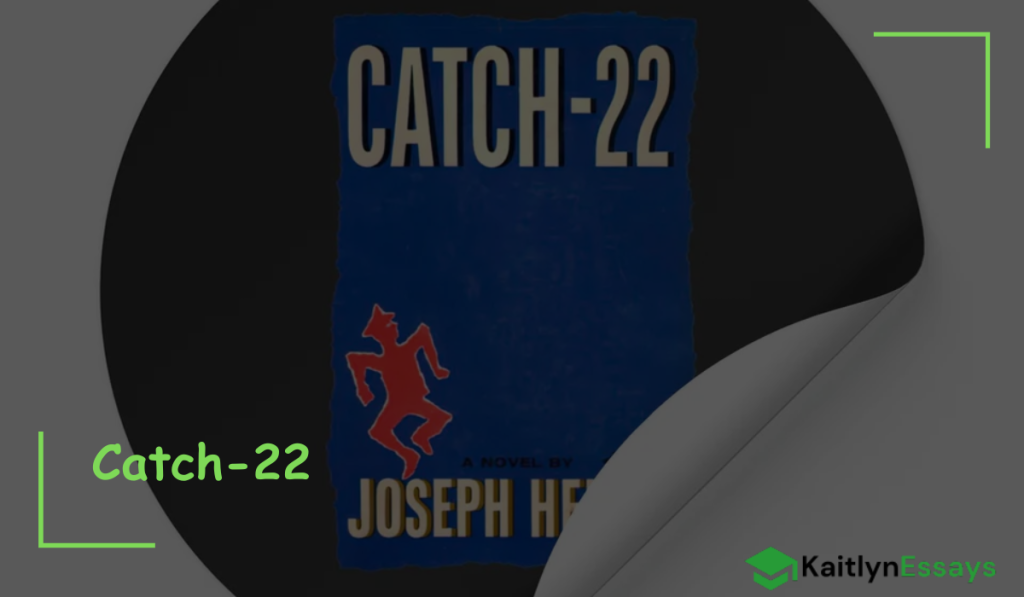
Joseph Heller’s Catch-22 is a timeless novel that captures the absurdity and chaos of war. Published in 1961, the book is set during World War II and follows Captain John Yossarian, a U.S. Army Air Force bombardier, as he struggles to survive both the perils of combat and the bureaucracy of the military. At the heart of the novel is the concept of “Catch-22,” a paradoxical rule that traps soldiers in impossible situations, forcing them to participate in missions they fear while denying them any logical escape. Heller’s work is a sharp critique of institutional systems, exploring themes like the dehumanization of individuals and the absurd logic of authority. Blending humor with tragedy, Catch-22 challenges readers to question accepted norms and think critically about the impact of war on humanity. This groundbreaking novel remains a powerful commentary on power, survival, and the contradictions of human behavior.
Summary of Catch-22
Introduction to Yossarian and the Catch-22
The novel begins with Yossarian feigning illness to avoid flying more dangerous bombing missions. He is stationed with the 256th squadron, where his primary objective is survival. The titular “Catch-22” is introduced early in the narrative, representing a bureaucratic absurdity: airmen can be grounded if they are insane, but requesting to be grounded proves they are sane, as it demonstrates concern for their safety. Thus, they are required to continue flying.
This paradox exemplifies the no-win situations that dominate the novel and underscores the illogical, oppressive nature of war bureaucracy.
The Squadron and its Members
Heller introduces a colorful cast of characters, each contributing to the novel’s chaotic and satirical tone:
- Colonel Cathcart, obsessed with increasing mission quotas to advance his career.
- Milo Minderbinder, the mess officer who turns war into a profitable business through his black-market syndicate.
- Doc Daneeka, the squadron’s medical officer, who refuses to ground Yossarian despite his valid fears.
These characters highlight the self-serving motives and absurdities of military hierarchy.
Yossarian’s Struggles with War
Yossarian is haunted by memories of a disastrous mission over Avignon, during which Snowden, a young gunner, dies in his arms. Snowden’s death symbolizes the senseless loss of life in war and deeply impacts Yossarian’s psyche.
As the mission quotas rise, Yossarian becomes increasingly disillusioned. He realizes the futility of his efforts and the indifference of his superiors, who prioritize their ambitions over the well-being of their men.
Milo’s Syndicate and the Corruption of War
Milo Minderbinder’s syndicate exemplifies the commodification of war. Milo trades goods with both Allied and Axis forces, driven solely by profit. His operations escalate to absurd levels, including bombing his own squadron for monetary gain, which he justifies as part of the syndicate’s success.
Milo’s actions reveal the moral decay and exploitation inherent in war, as soldiers’ lives are treated as expendable commodities.
The Escalation of Yossarian’s Defiance
As the novel progresses, Yossarian becomes increasingly defiant. He refuses to fly additional missions, going AWOL and attempting to escape the war’s madness. His rebellion is met with hostility from his superiors, who view him as a threat to their authority.
Yossarian’s interactions with Major Major Major Major, a hapless officer, and Chaplain Tappman, a spiritual guide struggling with his faith, highlight the pervasive absurdity and despair within the squadron.
The Tragedy of Snowden and Yossarian’s Epiphany
The climactic revelation of Snowden’s death occurs in a flashback, exposing the brutal reality of war. Snowden’s wounds are both physical and symbolic, with his entrails spilling out as a representation of human fragility and the senseless violence of war.
This moment cements Yossarian’s determination to survive at all costs, rejecting the notion of sacrificing himself for a cause he no longer believes in.
The Final Choice: Survival or Sacrifice
Colonel Cathcart and Colonel Korn offer Yossarian a deal: he can be sent home if he publicly endorses their leadership. Yossarian initially agrees but ultimately refuses, recognizing the moral compromise it entails. Instead, he decides to desert, inspired by the example of Orr, a friend who successfully escaped to Sweden.
Yossarian’s choice to flee represents a rejection of the absurd and oppressive system, embracing individual agency and the will to live.
Conclusion
Catch-22 concludes ambiguously, with Yossarian’s fate uncertain but his determination unwavering. The novel’s non-linear structure, dark humor, and satirical tone underscore its critique of war and bureaucracy, leaving readers with a powerful exploration of human resilience amidst chaos.
Discover how Heller’s narrative style deepens the impact of this satirical masterpiece here.
Characters in Catch-22
Captain John Yossarian
Yossarian is the protagonist of the novel, a bombardier determined to survive the war at all costs. His constant fear of death drives his attempts to escape the endless cycle of missions imposed by his superiors. Yossarian’s refusal to conform and his recognition of the absurdity of war make him a symbol of resistance and individuality.
Throughout the novel, Yossarian evolves from a self-serving survivor to a morally conscious rebel. His ultimate decision to desert highlights his rejection of the dehumanizing system that values bureaucracy over human life.
Explore the complexities of Yossarian’s character in this character-focused discussion.
Milo Minderbinder
Milo is the squadron’s mess officer and the embodiment of unchecked capitalism. His syndicate, which trades with both Allied and Axis forces, represents the moral corruption and profiteering inherent in war.
Despite his exploitation of the system, Milo is admired for his entrepreneurial skills, illustrating the absurd priorities of the military and society. His infamous bombing of his own squadron for profit underscores the novel’s critique of greed and moral decay.
Learn more about Milo Minderbinder’s role in the novel’s satire in this insightful analysis.
Colonel Cathcart
Colonel Cathcart is the ambitious and self-serving leader of the squadron. Obsessed with his reputation, he continually raises the mission quotas to gain favor with his superiors, disregarding the well-being of his men.
Cathcart’s incompetence and vanity make him a figure of ridicule, symbolizing the flaws of hierarchical systems and the dangers of blind ambition.
Explore how Colonel Cathcart’s character reflects military bureaucracy in this detailed breakdown.
Doc Daneeka
Doc Daneeka is the squadron’s cynical medical officer, responsible for enforcing the rules of “Catch-22.” While he sympathizes with Yossarian’s plight, he prioritizes his own comfort and survival over his duty to protect the airmen.
Doc Daneeka’s role highlights the hypocrisy and indifference of those tasked with safeguarding others, furthering the novel’s critique of institutional failure.
Learn more about Doc Daneeka’s moral dilemmas in this character analysis.
Orr
Orr is Yossarian’s eccentric tentmate, known for his odd behavior and knack for survival. His seemingly nonsensical actions, such as crash-landing his plane during every mission, are later revealed to be part of his calculated plan to escape to Sweden.
Orr’s success serves as a source of inspiration for Yossarian, illustrating the value of ingenuity and persistence in overcoming oppressive systems.
Discover the significance of Orr’s actions in this exploration of character.
Major Major Major Major
Major Major is a hapless and awkward officer whose authority is undermined by his men and superiors. Promoted to his rank due to his name, he becomes a figure of ridicule and isolation.
His inability to assert control or connect with others emphasizes the absurdity of the military hierarchy and the alienation it fosters.
Learn about Major Major’s role in Heller’s satire in this character breakdown.
Chaplain Tappman
The Chaplain is a kind and compassionate figure, struggling to reconcile his faith with the horrors of war. His moral and spiritual dilemmas make him one of the novel’s most relatable characters.
Through the Chaplain’s experiences, Heller explores themes of faith, doubt, and the human search for meaning in a chaotic world.
Discover the Chaplain’s journey and its significance in this character-focused analysis.
Lieutenant Scheisskopf
Lieutenant Scheisskopf is obsessed with parades and military pageantry, valuing form over substance. His blind adherence to rules and meaningless rituals makes him a caricature of bureaucratic inefficiency.
Scheisskopf’s character underscores the absurd priorities of military leaders, emphasizing the novel’s critique of institutional incompetence.
Learn more about Lieutenant Scheisskopf’s symbolic role in this analysis.
Nately and His Girlfriend
Nately is a young, idealistic soldier deeply in love with an apathetic Italian prostitute. His romanticism and naivety contrast with the cynicism of other characters, highlighting the futility of seeking meaning in a senseless world.
Nately’s tragic death serves as a turning point for Yossarian, deepening his resolve to escape the war.
Explore the significance of Nately’s relationships in this character-focused discussion.
Snowden
Snowden, a young gunner who dies in Yossarian’s arms, represents the human cost of war. His death, revealed in fragmented flashbacks, serves as a catalyst for Yossarian’s disillusionment and fear of death.
Snowden’s suffering and the chilling revelation of his mortality symbolize the senseless violence and fragility of life in war.
Discover the lasting impact of Snowden’s death in this character analysis.
Themes in Catch-22
The Absurdity of War
At the heart of Catch-22 lies the theme of war’s absurdity. The novel depicts the illogical and contradictory nature of military bureaucracy, exemplified by the titular “Catch-22.” Soldiers are caught in a paradox: to be declared insane and relieved from duty, they must request it, but making the request proves their sanity.
The relentless increase in mission quotas by Colonel Cathcart and the meaningless rituals enforced by Lieutenant Scheisskopf illustrate how war becomes a self-serving mechanism for those in power.
Explore how Heller uses satire to expose the absurdities of war in this thematic breakdown.
Bureaucracy and Dehumanization
Heller’s portrayal of military bureaucracy underscores its dehumanizing effects. The chain of command prioritizes efficiency and protocol over human lives, reducing soldiers to expendable resources. Characters like Colonel Cathcart and Milo Minderbinder exploit the system for personal gain, disregarding the moral consequences.
The oppressive rules, epitomized by “Catch-22,” trap individuals in a no-win scenario, stripping them of agency and humanity.
Learn how the theme of bureaucracy critiques institutional failure in this detailed analysis.
Survival and Self-Preservation
Yossarian’s primary goal is survival, reflecting the instinctive human desire to preserve life amidst chaos. His refusal to fly more missions and his eventual desertion highlight his rejection of the glorification of sacrifice.
This theme contrasts with characters like Nately, whose idealism and sense of duty lead to his tragic death. The novel questions the morality of self-preservation in the face of collective suffering.
Examine Yossarian’s journey as a lens for this theme in this insightful discussion.
The Corruption of Capitalism
Through Milo Minderbinder, Heller critiques the intersection of capitalism and war. Milo’s syndicate, which prioritizes profit over morality, exemplifies how economic interests corrupt ethical values.
Milo’s actions, including bombing his own squadron for monetary gain, expose the commodification of war and the exploitation of human lives for financial gain.
Discover the implications of capitalism in the context of war in this thematic exploration.
The Fragility of Human Life
Snowden’s death serves as a poignant reminder of the fragility of life and the senseless violence of war. His suffering and Yossarian’s inability to save him become central to the novel’s emotional core.
The recurring phrase, “Man is matter,” reflects the reduction of human beings to mere physical entities in the face of war’s brutality. This theme reinforces the novel’s anti-war message.
Learn more about Snowden’s symbolic significance in this thematic analysis.
Individualism vs. Conformity
Catch-22 highlights the tension between individuality and conformity. Yossarian’s rebellion against the system contrasts with characters like Colonel Cathcart, who conform to advance their careers.
Yossarian’s choice to desert signifies a victory for individual agency, rejecting the societal pressure to conform and sacrifice for an unworthy cause.
Explore the theme of individuality in Catch-22 in this character-focused discussion.
The Futility of Communication
The novel repeatedly portrays communication as futile, with misunderstandings and misinterpretations fueling the chaos. Orders are often nonsensical, and the language of bureaucracy is deliberately convoluted to obscure meaning and accountability.
This breakdown in communication emphasizes the absurdity of the system and the alienation experienced by the characters.
Learn more about the role of communication in Catch-22 in this analysis.
Faith and Doubt
Through the character of Chaplain Tappman, Heller examines the struggle between faith and doubt. The Chaplain’s attempts to find spiritual solace amidst the horrors of war highlight the challenges of maintaining belief in a chaotic, indifferent world.
His journey reflects the human search for meaning in the face of existential uncertainty.
Discover how the Chaplain embodies this theme in this thematic breakdown.
Mortality and Fear of Death
Yossarian’s fear of death drives much of the novel’s narrative. His encounters with death, particularly Snowden’s tragic demise, shape his worldview and fuel his determination to survive.
The omnipresence of death in Catch-22 underscores its inevitability and the futility of war, challenging societal notions of heroism and sacrifice.
Explore the theme of mortality and its impact on Yossarian in this insightful analysis.
The Absurdity of Heroism
Heller deconstructs the concept of heroism, portraying it as a construct used to manipulate soldiers into risking their lives. Yossarian’s refusal to embrace traditional heroism challenges the glorification of sacrifice, emphasizing the value of life over empty ideals.
Characters like Nately and Colonel Cathcart, who pursue heroism or impose it on others, reveal its futility in the face of war’s chaos.
Learn how Catch-22 critiques traditional notions of heroism in this thematic discussion.
Symbols in Catch-22
Catch-22
The titular “Catch-22” is the novel’s most prominent symbol, representing the absurd and contradictory rules that govern the characters’ lives. It encapsulates the illogical bureaucracy of war, where soldiers are trapped in a no-win situation: they must continue flying missions unless they are declared insane, but requesting to be grounded proves their sanity.
This symbol transcends the military context, reflecting broader societal systems that manipulate individuals under the guise of logic and order. The inescapability of Catch-22 embodies the loss of agency and the dehumanization inherent in modern institutions.
Explore the broader implications of Catch-22 in this symbolic analysis.
Snowden’s Death
Snowden’s tragic death is a haunting symbol of the fragility of life and the brutal reality of war. His death scene, revealed in fragmented flashbacks, serves as the emotional core of the novel. The phrase “Man is matter” underscores the dehumanization of soldiers, reducing them to physical entities in a system that values efficiency over humanity.
Snowden’s death is pivotal in shaping Yossarian’s disillusionment and fear of mortality, making it a symbol of the senseless violence and sacrifice demanded by war.
Learn more about Snowden’s symbolic significance in this in-depth discussion.
Milo Minderbinder’s Syndicate
Milo’s syndicate symbolizes the corruption and moral decay of capitalism in wartime. His willingness to trade with both sides of the conflict, even bombing his own squadron for profit, highlights the prioritization of wealth over human life.
The syndicate’s motto, “What’s good for M&M Enterprises is good for the country,” satirizes the justifications used to excuse unethical behavior in the name of economic gain.
Discover the critique of capitalism through Milo’s syndicate in this symbolic exploration.
Yossarian’s Flight
Yossarian’s decision to desert symbolizes resistance against oppressive systems. His flight represents a rejection of societal expectations that glorify sacrifice and conformity, emphasizing the value of individual freedom and survival.
This act challenges traditional notions of heroism, highlighting the absurdity of risking one’s life for arbitrary rules and goals.
Examine the significance of Yossarian’s flight in this character-focused analysis.
Major Major’s Office
Major Major’s office, where he only sees people when he’s not present, symbolizes the futility and alienation of bureaucracy. His absurd rule reflects the impersonal and illogical nature of hierarchical systems, where authority often serves to perpetuate confusion rather than provide clarity.
This symbol underscores the novel’s critique of leadership and the inefficiency of military and societal structures.
Learn more about Major Major’s symbolic role in this detailed breakdown.
The Parades
Lieutenant Scheisskopf’s obsession with parades symbolizes the prioritization of form over substance in military and bureaucratic systems. His focus on appearances and meaningless rituals highlights the absurdity of a system that values spectacle over practical outcomes.
This symbol serves as a critique of leaders who emphasize superficial displays of power rather than addressing the real needs of their subordinates.
Explore the thematic implications of the parades in this symbolic analysis.
The Soldier in White
The “soldier in white,” encased in a full-body plaster cast, symbolizes the complete dehumanization of soldiers in war. His anonymity and lack of identity reflect how individuals are reduced to mere numbers in a system that disregards their humanity.
The soldier’s eerie presence and eventual disappearance serve as a reminder of the impersonal and fleeting nature of life in wartime.
Discover the significance of the soldier in white in this symbolic exploration.
The Chaplain’s Whimsical Visions
The Chaplain’s visions, including the surreal encounter with a naked man in a tree, symbolize his inner conflict and the struggle to find meaning in a chaotic world. These visions blend absurdity with existential reflection, illustrating his search for faith and purpose amidst the horrors of war.
The whimsical and often nonsensical nature of these symbols highlights the dissonance between belief and reality.
Learn more about the Chaplain’s symbolic journey in this thematic discussion.
The Hospital
The hospital in Catch-22 symbolizes a refuge from the madness of war. Many characters, including Yossarian, feign illness to escape the dangers of flying missions. However, the hospital also reflects the absurdity of military bureaucracy, as soldiers are subjected to arbitrary rules and decisions even in supposed safety.
This dual symbolism emphasizes the pervasive nature of institutional absurdity.
Examine the symbolic role of the hospital in this detailed analysis.
Catch-22 as a Metaphor for Life
Beyond its immediate context, Catch-22 symbolizes the paradoxes and contradictions of modern existence. It reflects how individuals are often trapped by societal expectations and systems designed to perpetuate their own authority.
This overarching symbol reinforces the novel’s central message: the absurdity of life and the resilience of the human spirit in the face of oppression.
Explore the broader metaphorical implications of Catch-22 in this symbolic breakdown.
Literary Devices in Catch-22
Satire
Satire is the backbone of Catch-22, used to expose the absurdities of war and bureaucracy. Heller mocks the military’s illogical rules, as exemplified by “Catch-22,” and ridicules characters like Lieutenant Scheisskopf, who prioritizes parades over combat.
Through exaggerated scenarios and characters, Heller critiques the dehumanization and inefficiency inherent in institutional systems. The satire creates a balance between humor and serious commentary, making the novel’s critique both accessible and impactful.
Uncover how satire shapes the narrative in this literary analysis.
Irony
Irony permeates the novel, highlighting the contradictions and absurdities of war. The concept of “Catch-22” itself is a prime example, where the logic of the rule contradicts itself.
Situational irony abounds, such as Milo Minderbinder’s syndicate, which profits by bombing his own troops, and Yossarian’s attempts to preserve his life in an environment that demands self-sacrifice. These instances underscore the futility and hypocrisy of institutional systems.
Explore the layers of irony in Catch-22 in this insightful discussion.
Nonlinear Narrative
Heller’s fragmented narrative structure mirrors the chaos and disorientation of war. The novel shifts between past and present, often revealing key events out of sequence. This nonlinear approach immerses readers in the characters’ confusion and frustration, reinforcing the absurdity of their circumstances.
The disjointed timeline also allows Heller to juxtapose humor and tragedy, enhancing the novel’s emotional impact.
Learn more about the significance of the nonlinear structure in this literary breakdown.
Paradox
Paradoxes are central to the novel’s exploration of absurdity. The most famous example, “Catch-22,” encapsulates the contradictory logic governing the characters’ lives. Other paradoxes include Milo’s justification of unethical actions for the “greater good” and the military’s simultaneous glorification and disregard for soldiers.
These paradoxes reflect the illogical nature of institutional systems and the challenges of navigating them.
Discover how paradox shapes the novel’s themes in this literary analysis.
Symbolism
Heller uses symbolism to deepen the novel’s critique of war and bureaucracy. For example:
- The soldier in white symbolizes dehumanization and anonymity in war.
- Snowden’s death represents the fragility of human life and the horrors of combat.
- Milo’s syndicate critiques the corruption of capitalism.
Each symbol reinforces the novel’s central themes, creating layers of meaning.
Explore the role of symbolism in Catch-22 in this thematic exploration.
Black Humor
Black humor allows Heller to address serious topics in a way that is both engaging and unsettling. Characters like Doc Daneeka, who is declared dead despite being alive, and the absurd increase in mission quotas by Colonel Cathcart illustrate the novel’s darkly comedic tone.
This device underscores the absurdity of war while highlighting its tragic consequences, creating a unique emotional resonance.
Learn more about the use of black humor in Catch-22 in this detailed breakdown.
Characterization
Heller’s characters are often exaggerated archetypes, embodying specific flaws or traits that critique societal norms. For instance:
- Yossarian represents individuality and resistance to conformity.
- Milo symbolizes capitalist greed.
- Colonel Cathcart embodies ambition and incompetence.
Through these characters, Heller critiques the absurdity and corruption of institutional systems.
Learn more about Heller’s use of characterization in this character-focused analysis.
Repetition
Repetition emphasizes the cyclical and inescapable nature of the characters’ struggles. Phrases like “Catch-22” and “man is matter” recur throughout the novel, reinforcing its central themes.
This device also mirrors the monotonous and futile routines of military life, adding to the novel’s critique of war.
Examine the impact of repetition in Catch-22 in this literary discussion.
Juxtaposition
Heller juxtaposes humor and tragedy to highlight the absurdity of war. For instance, comedic scenes like Milo’s syndicate are placed alongside moments of intense violence and loss, such as Snowden’s death.
This contrast amplifies the emotional impact of the narrative, forcing readers to confront the grim realities beneath the humor.
Discover the role of juxtaposition in shaping Catch-22 in this thematic analysis.
Existentialism
The novel incorporates existentialist ideas, particularly through Yossarian’s struggle to find meaning in an absurd world. His eventual decision to desert reflects an embrace of individual agency and a rejection of societal expectations.
This philosophical dimension adds depth to the novel, encouraging readers to reflect on the human condition.
Explore the existential themes in Catch-22 in this literary breakdown.
Dark Allegory
Many elements of Catch-22 function as an allegory for broader societal issues. Milo’s syndicate, for example, serves as an allegory for unchecked capitalism, while the bureaucratic chaos symbolizes institutional failure.
These allegories enrich the novel’s critique of modern systems, making its messages timeless and universal.
Learn about the allegorical dimensions of the novel in this insightful discussion.
Wordplay and Puns
Heller’s use of wordplay adds a layer of wit to the narrative. Names like “Major Major Major Major” and absurd exchanges between characters emphasize the illogical nature of the military bureaucracy.
This device enhances the novel’s satirical tone, making its critique both sharp and entertaining.
Discover the role of wordplay in Catch-22 in this literary exploration.
Catch-22 Essays
Compare Yossarian and Doc Daneeka
In Joseph Heller’s satirical masterpiece, Catch-22, the lives of bombardier Yossarian and flight surgeon Doc Daneeka are inextricably intertwined, though their experiences and reactions to the absurdity of war differ significantly. While both are trapped within the illogical machinations of the military, they represent distinct responses to the suffocating bureaucracy and the omnipresent threat of death. Their relationship, often marked by cynical camaraderie, serves as a lens through which Heller examines the novel’s central themes of individual versus institution, the dehumanizing nature of war, and the corrosive power of bureaucratic logic.
Yossarian, the protagonist, embodies a fierce and often comical struggle for self-preservation. His primary motivation is to survive, and he refuses to accept the arbitrary rules and senseless violence that dominate his reality. His attempts to get out of flying bombing missions range from pretending to be crazy to declaring that he’s seen everything. Yossarian’s desperate, rebellious spirit is a direct reaction to the utter lack of logic he perceives in the world around him. He sees the inherent contradiction in a system that demands bravery and then punishes those who want to survive, embodied in the infamous “Catch-22.” He is a pragmatist, seeing the war for the horrific farce it is, and his actions, however erratic they seem, are driven by a desperate desire for self-preservation in a world determined to destroy him.
Doc Daneeka, on the other hand, represents a more passive form of compliance, a blind acceptance of the bureaucratic rules, even when they are demonstrably absurd. He is primarily concerned with his own comforts and advancement within the system, not with any larger moral or ethical questions. He’s an almost pathetic figure, more concerned with paperwork and staying on the good side of his superiors than with the actual well-being of the men under his care. Daneeka’s obsession with his own safety and comfort leads him to become a victim of the very system he so readily embraces. The absurdity of his “death” – being declared dead while he is very much alive, simply because his name was on a flight manifest – underscores the novel’s theme of bureaucratic dehumanization. His literal disappearance, despite still existing, illustrates the utter disregard for individuality within the military machine.
The relationship between Yossarian and Daneeka is one of a cynical, albeit sometimes exasperated, friendship. They are both trapped within the same illogical world, forced to interact daily, yet their fundamental approaches to this reality differ drastically. Yossarian often tries, and fails, to shake Daneeka out of his complacency, to make him see the absurdity of their shared predicament. For example, Yossarian attempts to warn him about the dangers of flying, but Daneeka, blinded by his faith in paperwork, dismisses these warnings. This dynamic emphasizes the novel’s central conflict: the individual’s struggle against an all-powerful, nonsensical system. Yossarian’s rebellion is a direct challenge to the system’s authority, while Daneeka’s passive acceptance demonstrates the system’s ability to swallow individuals whole.
Heller uses these characters to illuminate several of Catch-22‘s major themes. The contrast between Yossarian’s active resistance and Daneeka’s passive compliance throws into sharp relief the novel’s critique of blind obedience and unquestioning acceptance of authority. Yossarian’s obsession with survival, often manifesting as seemingly selfish or outrageous behavior, highlights the dehumanizing effects of war, where the basic instinct for self-preservation becomes a primary driver. Daneeka’s fate, swallowed by the bureaucracy and deemed dead while he lives, demonstrates the power of the system to erase individual identity and logic. Both characters, in their own ways, are victims of the dehumanizing forces of the military. Through them, Heller underscores the point that even those who attempt to play by the rules, like Daneeka, can be utterly destroyed by the illogic of the system.
Moreover, the relationship between Yossarian and Daneeka provides a complex commentary on the nature of sanity and madness in a world at war. Yossarian’s seemingly “crazy” acts are often the most sane and logical responses to the madness of war. In contrast, Daneeka, who adheres to the rules and regulations, is in many ways, more insane for blindly accepting the illogical. This reversal of societal expectations about sanity and madness is a key element of Heller’s satire, challenging the reader to reconsider conventional notions of normalcy.
In conclusion, Yossarian and Doc Daneeka are not just friends; they are essential foils within the narrative of Catch-22. Through their contrasting responses to the absurdity of war and the suffocating bureaucracy of the military, Heller illuminates the novel’s central themes of individual struggle, the dehumanizing effects of war, and the corrosive power of illogical systems. Yossarian’s fierce rebellion and Daneeka’s passive acceptance work in tandem to illustrate the multifaceted impact of a system that prioritizes bureaucratic procedures over human life. Together, they serve as a potent reminder of the importance of questioning authority and the dangers of blindly accepting the dictates of a system, no matter how absurd or self-destructive.
Depiction of War in Joseph Heller’s Catch-22
Joseph Heller’s Catch-22 is not a traditional war story. It eschews heroic narratives and valorous battle scenes in favor of a chaotic, satirical, and often darkly humorous portrayal of the absurdist nature of conflict. Through its fragmented timeline, unconventional characters, and relentless focus on bureaucratic madness, Catch-22 offers a searing critique of war, not just as a physical battlefield, but as a system that dehumanizes individuals and operates with a logic so twisted it becomes indistinguishable from insanity. Heller’s depiction of war is a deliberate subversion of romanticized notions, instead presenting it as a nightmarish farce where individual lives are disposable pawns in a game driven by self-interest and bureaucratic imperatives.
One of the most striking aspects of Heller’s depiction of war is its utter lack of heroism. Unlike traditional war narratives that often glorify soldiers’ bravery and sacrifice, Catch-22 presents a cast of characters primarily concerned with their own survival, often at the expense of others. Yossarian, the protagonist, is not a noble warrior driven by patriotism; he is a bombardier desperate to escape the endless cycle of bombing missions. His attempts to avoid combat, often through elaborate ruses, are not presented as cowardly but rather as a sane response to the senselessness of the war. This focus on self-preservation rather than patriotic duty subverts the traditional narratives surrounding war, emphasizing the individual’s desperate struggle against a system that treats lives as expendable resources. Other characters, like Milo Minderbinder, who prioritizes profit above all else, or Colonel Cathcart, who obsessively raises the number of missions to enhance his own career, further illustrate the self-serving motives that drive the war machine.
Furthermore, Heller’s depiction of war is characterized by a pervasive sense of absurdity and chaos. The structure of the novel, with its non-linear timeline and recurring events, mirrors the disjointed and illogical nature of the war itself. The infamous “Catch-22” encapsulates this absurdity, presenting a paradoxical rule that traps individuals in an inescapable cycle. To get out of flying missions, a soldier must be crazy; but to ask to be removed from duty shows a rational desire, and therefore indicates sanity. This catch highlights the illogical nature of the war, where reason and logic are completely subverted. The bureaucratic rules, often contradictory and nonsensical, govern every aspect of the soldiers’ lives, further contributing to the sense of chaos and futility. The constant raising of mission quotas, the bureaucratic hurdles, and the arbitrary nature of promotions and punishments all serve to reinforce the novel’s portrayal of war as a system devoid of logic or purpose.
Heller also underscores the dehumanizing effects of war. The characters are not just cogs in a machine; they are reduced to numbers, statistics, and commodities within the military system. The pilots are treated as interchangeable parts, their individual lives given little value. This dehumanization is evident in the bureaucratic language used to describe them – “combat crew,” “officer,” “bombardier” – that strips away individuality. The constant threat of death and the relentless pressure to perform erode the soldiers’ humanity, leaving them disillusioned, cynical, and often emotionally detached. The recurring scenes of carnage, often presented with dark humor, highlight the brutality of war and its devastating impact on the human psyche. The deaths of Snowden, Kid Sampson, and many others are not portrayed with sentimentalism but rather as senseless casualties of a war that cares nothing for human life.
Moreover, Catch-22 satirizes the military as an institution driven by self-preservation, ambition, and blind adherence to rules. The officers, from Colonel Cathcart to General Dreedle, are portrayed as incompetent, corrupt, and utterly detached from the realities of the war. Their primary concern is not the welfare of their men or the success of the mission, but rather their own careers and advancement within the military hierarchy. The constant pursuit of promotions and the endless jockeying for power further underscores the self-serving nature of the institution. The military’s focus on appearances and bureaucratic procedures, rather than genuine military effectiveness, highlights the absurdity of a system that prioritizes self-interest over any semblance of strategic purpose.
In conclusion, Joseph Heller’s Catch-22 presents a profound and unsettling portrayal of war that challenges traditional narratives and romanticized notions. It is not a story about bravery and patriotism, but rather a satirical and often darkly humorous exploration of the absurd, chaotic, and dehumanizing nature of conflict. Through its unconventional structure, its focus on individual survival, and its scathing critique of the military bureaucracy, Catch-22 offers a powerful indictment of war as a system that corrupts and destroys both individuals and the very institutions designed to conduct it. It stands as a timeless and relevant commentary on the futility of war and the importance of questioning authority in the face of senseless violence and bureaucratic madness.
How Catch-22 Manages to Feel Like it Comes Full Circle Without Actually Being Circular, Using the Analogy of a yo-yo
Imagine a yo-yo. It’s got a string, a central hub, and it goes up and down, spinning and seemingly repeating the same motion. On the surface, that’s how Catch-22 might feel at first glance. The narrative loops back on itself, revisiting scenes, characters, and absurd situations, much like a yo-yo going up and down. But, a key difference is that with every “down” and “up” in the novel, the reader’s understanding and the characters’ situations change, like a yo-yo that travels a little further each time it unspools.
The “String” of the Narrative: The string in our yo-yo analogy is the core experience of war and its absurdity. The novel constantly revolves around the bombing missions, the bureaucratic nonsense, the constant fear of death, and the selfish machinations of the higher-ups. These thematic threads are the ‘string’ that repeatedly pulls the narrative back to its core. The reader sees these events and their ripple effects on characters again and again, feeling like the narrative is looping.
The “Hub” of Recurring Characters and Events: The central hub is the base itself: the characters and core events that continually reappear. We revisit the hospital, the bombing runs, the various schemes of Milo Minderbinder, the antics of Colonel Cathcart, and the ongoing struggles of Yossarian. These familiar faces and scenarios give the illusion of circularity, similar to how the yo-yo comes back to the hand each time. But, like a yo-yo that doesn’t land in the exact same spot every time, each return to these familiar elements reveals new layers, changes in relationships, or highlights a different facet of the absurd.
The Up-and-Down Motion: Not a True Circle: This brings us to the essential point: while Catch-22 feels cyclical, it isn’t genuinely circular in the way that a circle loops back to the very same point. With a yo-yo, despite the repeated motion, the string gets longer each time, and the yo-yo travels a little further before returning. In Catch-22, similar to the yo-yo, the narrative is constantly moving. It’s a spiral, not a perfect circle.
Here’s how the spiraling nature unfolds in the novel, breaking the illusion of true circularity:
- Yossarian’s Growing Awareness: Yossarian, despite often seeming like he is in a repetitive cycle of trying to get out of flying, undergoes a journey of awareness and moral growth. His initial attempts to get out of flying missions are motivated by fear, but later his rebellion becomes more deliberate, fueled by a moral outrage at the senseless loss of life. This evolution is the key element that distinguishes each cycle. He’s still trying to survive, but his approach and motivation are progressively more profound.
- The Escalation of Absurdity: Each return to familiar scenarios reveals a new level of bureaucratic insanity. The number of bombing missions keeps increasing, Milo’s schemes grow more outrageous, and the callousness of the leadership becomes more apparent. It’s not just the same absurdity again; it is absurdity amplified with each loop. The yo-yo isn’t just going up and down; it’s reaching new heights of insanity.
- Shift in Perspective: Each repetition often provides a different perspective on the same events. We might see a scene initially through Yossarian’s eyes, then later hear about it from another character, revealing hidden ironies or motivations. This layering of perspectives prevents the narrative from becoming stale and circular. It’s like seeing the same landscape from different angles, each time revealing new details.
- Character Transformations (and Lack Thereof): While some characters like Yossarian evolve, others remain stubbornly fixed in their absurd patterns. Characters like Colonel Cathcart never learn, continuing to chase their ridiculous goals. This contrast reinforces the overall theme of the novel: the futility of trying to reason with the unreasonable. This lack of change also acts as a tether, reminding the reader of the overall absurdity of the system.
The “End” of the String: A Resolution (of Sorts): Finally, the yo-yo analogy stretches to the end of the novel. The “string” of war has become stretched thin. Yossarian, having witnessed so much senseless death and absurdity, finally decides to desert. This represents a move beyond the circularity of the war. While it might be seen as an act of self-preservation, it is also a step outside the system, an escape from the loop. It’s not a neat resolution, but it’s a breaking of the cycle, a stretching of the string to an endpoint outside the immediate confines of the camp. The yo-yo doesn’t come all the way back to the hand this time, but instead keeps going, the string is too long, and it’s flown.
In essence, Catch-22 masterfully uses repetition to enhance its themes of absurdity, the dehumanizing effects of war, and the individual’s struggle against a corrupt system. The looping structure creates the impression of a circle, but the shifting perspectives, character development, and escalation of absurdity within each loop ensure that the narrative spirals outwards, revealing new layers of meaning, rather than merely returning to the same starting point. It’s a yo-yo that explores further and further into a world of chaos, and it comes to a stop, not in the hand, but away from it. It’s not a circle; it’s a spiraling, ever-expanding critique of war.
Subjugation Under Supposed Freedom in Catch-22
Joseph Heller’s Catch-22 is a masterful exploration of paradox, and perhaps none is more central than the idea of subjugation under the guise of freedom. The novel is set within the confines of a military unit during World War II, a context seemingly defined by structure, rules, and a clear chain of command. However, Heller ingeniously reveals that the soldiers, ostensibly fighting for freedom, are in fact trapped within a system that strips them of their agency, individuality, and basic human rights. Through the relentless application of bureaucratic logic and the arbitrary nature of military authority, Catch-22 demonstrates how systems designed to protect freedom can become the very instruments of oppression.
The most obvious manifestation of this subjugation is the eponymous “Catch-22” itself. This paradoxical rule, which dictates that a man is considered sane if he wants to avoid combat, but that any man who wants to avoid combat is therefore sane and cannot be grounded, encapsulates the illogical nature of the entire system. It represents the ultimate form of double bind, where the pursuit of freedom – in this case, freedom from the threat of death – is precisely what ensures continued subjugation. The more fervently the soldiers seek relief from their duties, the more they prove their sanity and therefore their obligation to continue flying. The Catch-22 is not merely a military rule; it’s a symbol of the broader mechanisms of oppression that operate under the pretense of logic and necessity.
The constant raising of mission quotas further underscores the lack of true freedom within the military structure. Colonel Cathcart, driven by his own ambition and insecurities, repeatedly increases the number of missions required for soldiers to be sent home. This seemingly arbitrary escalation demonstrates the capriciousness of the power structure and the utter disregard for the well-being of the men under his command. Soldiers are not given freedom to determine their own destinies, instead they are subjected to the whims of superiors, who prioritize their own advancement over the lives of their men. This creates an environment of fear and frustration, highlighting the ways in which the institution, under the facade of discipline and order, actively suppresses individual agency.
Milo Minderbinder’s syndicate embodies another form of subjugation disguised as freedom. Milo’s relentless pursuit of profit, where he trades goods with both Allied and Axis forces, reveals the dehumanizing effects of capitalism and its capacity to override any moral considerations. While the soldiers are given access to the fruits of Milo’s enterprise – from food to entertainment – they are ultimately bound to his system, becoming complicit in a web of profiteering and moral compromise. His syndicate, built upon the freedom to trade, becomes a mechanism for enslaving all those involved in it, including its participants. He represents the way in which freedom, when devoid of any ethical or moral guidelines, can become a tool for exploitation and subjugation.
Furthermore, the novel’s portrayal of the military bureaucracy as a whole reveals how rigid rules and procedures can themselves become a means of control. Soldiers are not valued for their individuality or their human needs; they are reduced to numbers, statistics, and cogs in a machine. The constant emphasis on paperwork, the obsessive adherence to procedures, and the arbitrary nature of promotions and punishments all contribute to a system that depersonalizes its members and strips them of any meaningful autonomy. The soldiers are subject to the whims of bureaucratic processes that hold no genuine concern for their well-being. This is exemplified in the case of Doc Daneeka, who is declared dead simply because his name was on a flight manifest, further underscoring the way bureaucracy trumps individual reality.
Even the language used within the military serves to subjugate its members. Terms like “combat crew” and “officer” reduce individuals to their functional roles within the system, stripping away any sense of personal identity. The endless lectures about regulations and protocols serve to indoctrinate the soldiers into a mindset of unquestioning obedience, further limiting their freedom of thought and action. The military language, seemingly designed to clarify and order, instead serves to dehumanize and control, ensuring that the soldiers conform to the demands of the institution.
The novel also highlights the ironic juxtaposition of the stated goals of the war – fighting for freedom and democracy – and the reality of the soldiers’ experiences. These men, fighting against a totalitarian enemy, are themselves subjected to an oppressive system that demands absolute obedience and conformity. The absurdity of this situation is a central theme of Catch-22, underscoring the paradox that the fight for freedom can often lead to the very thing it seeks to eradicate. The soldiers are fighting for an abstract ideal while simultaneously being denied basic freedoms in their own lives.
In conclusion, Catch-22 presents a chilling depiction of subjugation operating under the banner of freedom. Through the eponymous catch, the arbitrary nature of military authority, the exploitative power of capitalism, and the dehumanizing effects of bureaucratic procedures, Heller exposes the insidious ways in which systems can claim to promote freedom while simultaneously suppressing individuality and agency. The novel serves as a stark reminder that true freedom requires constant vigilance and a willingness to question any system, no matter how seemingly logical or beneficial, that seeks to limit or control individual autonomy. The war, and the military itself, becomes a powerful metaphor for the inherent dangers of unquestioning obedience and the need to resist any form of oppression, even when it’s cloaked in the guise of liberation.
FAQs
What Does the Saying “Catch-22” Mean?
What Is an Example of a Catch-22 Situation?
In Heller’s novel, the iconic example is the military rule that states a pilot can be grounded if they are insane. However, requesting to be grounded because of insanity demonstrates rational thought, proving they are sane and thus ineligible to be grounded.