

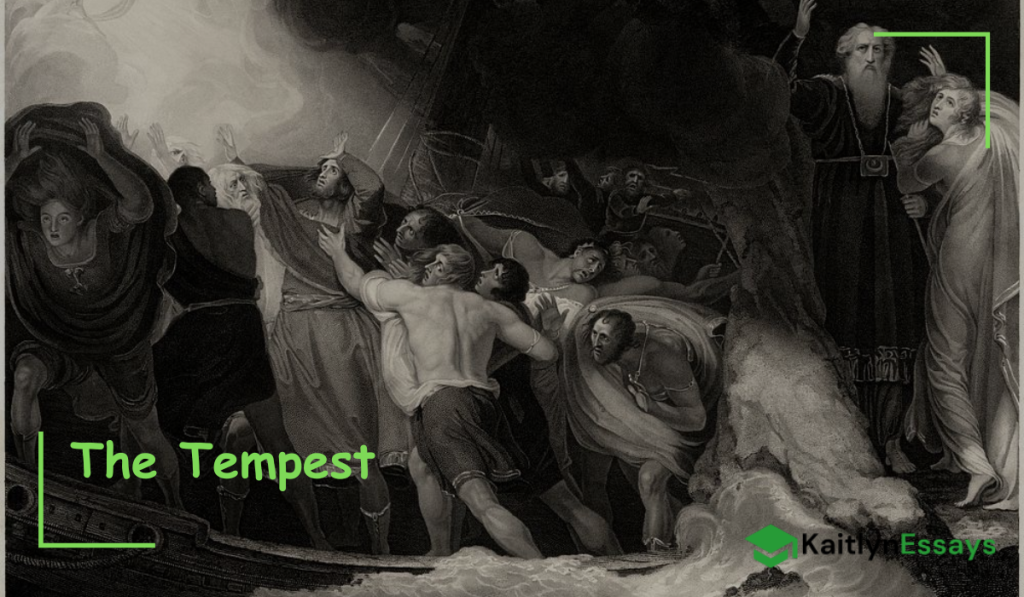
William Shakespeare’s The Tempest is a timeless play that combines themes of power, forgiveness, and the human spirit. Written in the early 17th century, it stands out as one of Shakespeare’s final works and offers a fascinating mix of magic, drama, and humor. Set on a remote island, the story follows Prospero, a deposed duke, who uses his command of sorcery to orchestrate events and seek justice. The play explores how individuals navigate betrayal, redemption, and reconciliation while examining the complexities of human relationships and authority. Through its vivid characters, such as the loyal Ariel and the rebellious Caliban, The Tempest captures the struggle for control and freedom.
Summary of The Tempest
Act I: The Storm and Its Consequences
The play begins with a powerful storm that threatens a ship carrying Alonso, the King of Naples, his son Ferdinand, Antonio, and other nobles. As the tempest rages, the ship appears to sink, leaving the passengers to fend for themselves on an unfamiliar island. Unbeknownst to them, the storm was not natural but conjured by Prospero, the former Duke of Milan, who now rules the island through his magical powers.
Prospero reveals his backstory to his daughter, Miranda, explaining how his brother, Antonio, usurped his dukedom. With the help of Alonso, Antonio had exiled Prospero and Miranda to this very island years ago. Through the assistance of the spirit Ariel, whom Prospero rescued from imprisonment, he has brought his enemies to the island. Prospero’s aim is to seek justice and reclaim his rightful place.
To uncover what happens next in this unfolding tale, find more here.
Act II: Strangers in a Strange Land
On the island, Alonso and his companions wander, believing Ferdinand to be lost. Antonio and Sebastian plot to kill Alonso and take his throne, but their plan is interrupted by Ariel’s magical intervention. Meanwhile, Ferdinand has survived and meets Miranda. The two instantly fall in love, much to Prospero’s satisfaction, as this union aligns with his ultimate plan.
Elsewhere, the drunken butler Stephano and the jester Trinculo encounter Caliban, Prospero’s resentful servant. Caliban, eager to overthrow Prospero, persuades the two to join his plot. This subplot adds comic relief while mirroring the larger themes of power and rebellion.
Learn about the deepening conflicts and alliances by exploring The Tempest’s Characters and Their Secrets Revealed.
Act III: Love, Schemes, and Magic
As Ferdinand proves his worth through labor assigned by Prospero, Miranda offers her love, and they secretly plan their future together. Their romance is pure and contrasts with the darker schemes unfolding elsewhere on the island.
Caliban, Stephano, and Trinculo press forward with their plan to kill Prospero, but Ariel cunningly disrupts them. He leads them into a trap, creating confusion and chaos among the would-be conspirators.
In another part of the island, Alonso and his entourage encounter a magical banquet. Ariel, in a dramatic display, accuses them of their past misdeeds against Prospero, deepening their feelings of guilt and remorse.
Discover more about the lovers’ fate and the mounting tension in The Tempest’s Turning Point.
Act IV: Prospero’s Grand Design
Prospero prepares to bless the union of Ferdinand and Miranda with a magnificent masque performed by spirits. This spectacle highlights harmony and joy, contrasting with the unrest elsewhere. However, Prospero abruptly halts the celebration, reminded of the ongoing conspiracy against him.
Caliban, Stephano, and Trinculo attempt to execute their plan, but they are led into a trap filled with glittering clothes meant to distract them. As they argue and fight over the spoils, Prospero easily thwarts their rebellion.
For a closer look at how Prospero tightens his control, here is more.
Act V: Reconciliation and Resolution
In the final act, Prospero brings all the characters together. He forgives Alonso, Antonio, and Sebastian for their betrayal, choosing to abandon his quest for vengeance. Ferdinand and Miranda’s engagement is revealed, uniting the two formerly estranged families.
As Prospero prepares to leave the island, he frees Ariel from servitude and pardons Caliban, reflecting his growth and newfound wisdom. Renouncing his magical powers, Prospero delivers a poignant epilogue, asking the audience for their applause to set him free.
Read about the play’s conclusion and its enduring legacy.
The Characters in The Tempest
Prospero
Prospero, the former Duke of Milan, is the mastermind behind the play’s events. His backstory reveals how his brother Antonio betrayed him, usurping his dukedom with the aid of Alonso, King of Naples. Prospero’s escape to the island with his daughter Miranda allowed him to hone his magical powers, which he now uses to control the island and its inhabitants.
Prospero is both a vengeful ruler and a compassionate father. His quest for justice often comes at a moral cost, as he manipulates characters to achieve his ends. However, by the play’s conclusion, Prospero’s humanity prevails as he chooses forgiveness over revenge. His final act of renouncing magic symbolizes his acceptance of mortality and the natural order.
Learn more about Prospero’s transformation and motives through an in-depth character analysis.
Miranda
Miranda, Prospero’s sheltered daughter, is a symbol of purity and untainted humanity. Having grown up on the island with limited exposure to other people, she embodies kindness and empathy. Her love for Ferdinand, the son of King Alonso, represents hope for a harmonious future. Miranda’s most famous line, “O brave new world,” reflects her wonder at discovering others beyond her secluded existence.
While Miranda is often portrayed as passive, her emotional depth and moral clarity influence those around her. Her relationship with Ferdinand is not only a personal triumph but also a political alliance that aids Prospero’s plans for reconciliation.
Understand Miranda’s role in the story through a detailed exploration of her character.
Ariel
Ariel, an ethereal being under Prospero’s command, is central to the play’s supernatural elements. Rescued by Prospero from imprisonment in a tree by the witch Sycorax, Ariel’s gratitude fuels their service. Ariel’s abilities enable Prospero to control the tempest, manipulate characters, and maintain order on the island.
Despite their loyalty, Ariel constantly seeks freedom. This dynamic adds tension to their relationship with Prospero, culminating in Prospero’s act of freeing Ariel at the play’s end. Ariel’s character embodies themes of liberation and servitude, showcasing the balance between duty and self-determination.
Discover Ariel’s impact on the play by visiting this insightful character study.
Caliban
Caliban, the son of the witch Sycorax, is the island’s original inhabitant and a complex figure. Resentful of Prospero’s rule, Caliban represents resistance to colonization and exploitation. His famous speech, describing the beauty of the island, contrasts with his crude actions and schemes, revealing his duality.
Caliban’s alliance with Stephano and Trinculo to overthrow Prospero is both tragic and comedic. While his rebellion reflects a desire for autonomy, it also highlights his vulnerability and naivety. By the play’s conclusion, Caliban is subdued but retains his dignity, leaving audiences to ponder his role as both victim and antagonist.
Explore Caliban’s significance in the play with a comprehensive character overview.
Ferdinand
Ferdinand, the noble son of King Alonso, exemplifies youthful courage and love. Stranded on the island, he quickly falls in love with Miranda, viewing her as a divine figure. His willingness to perform arduous tasks for Prospero to prove his love underscores his sincerity and honor.
Ferdinand’s romance with Miranda not only adds emotional depth to the play but also serves as a symbol of reconciliation between conflicting parties. Their union signifies the healing of old wounds and the possibility of a brighter future.
Read more about Ferdinand’s role in the narrative through a focused character breakdown.
Antonio and Sebastian
Antonio, Prospero’s ambitious brother, and Sebastian, Alonso’s cunning sibling, personify betrayal and greed. Antonio’s usurpation of Prospero’s dukedom set the story in motion, while Sebastian’s willingness to conspire against Alonso echoes this treachery.
Their schemes, however, are thwarted by Ariel’s intervention, which underscores the futility of their plots. Unlike other characters, Antonio and Sebastian show little remorse, making them stand apart as embodiments of unchecked ambition and moral decay.
Learn about Antonio and Sebastian’s treachery in this detailed analysis.
Alonso
Alonso, the King of Naples, begins the play weighed down by guilt for his role in Prospero’s exile. He is further devastated by the apparent loss of his son, Ferdinand, during the tempest. Alonso’s journey on the island leads to introspection and eventual redemption.
By the end of the play, Alonso is reunited with Ferdinand and reconciles with Prospero, symbolizing the healing of old wounds and the restoration of harmony. Alonso’s transformation underscores the theme of forgiveness and the potential for human change.
Examine Alonso’s transformation in this engaging character exploration.
Stephano and Trinculo
Stephano, a drunken butler, and Trinculo, a witty jester, provide comic relief in the play. Their alliance with Caliban to overthrow Prospero is marked by foolishness and greed, serving as a parody of more serious political conspiracies.
Despite their comedic roles, Stephano and Trinculo highlight the absurdity of power struggles and human folly. Their subplot underscores Shakespeare’s ability to blend humor with deeper themes, enriching the play’s narrative.
Dive into Stephano and Trinculo’s antics with a character-focused commentary.
Gonzalo
Gonzalo, a loyal and optimistic counselor, embodies wisdom and compassion. He secretly provided Prospero and Miranda with provisions during their exile, ensuring their survival. Throughout the play, Gonzalo remains a voice of reason and hope, offering philosophical reflections on justice, society, and human nature.
His unwavering integrity contrasts with the deceit of Antonio and Sebastian, highlighting the importance of virtue in a world of chaos.
Reflect on Gonzalo’s wisdom by exploring this character study.
Themes in The Tempest
Power and Control
Power is a central theme in The Tempest, driving the actions of nearly every character. Prospero’s magical abilities grant him control over the island and its inhabitants, reflecting his desire to reclaim the dukedom stolen by his brother, Antonio. Similarly, Antonio and Sebastian’s schemes highlight their ambition for political dominance.
The theme extends to the master-servant dynamic, as seen in Prospero’s relationships with Ariel and Caliban. While Ariel serves willingly for the promise of freedom, Caliban resists, symbolizing the complexities of power and resistance. Prospero’s eventual renunciation of magic underscores the limits of control, showing that true authority lies in compassion and reconciliation.
Explore the complex depiction of power in The Tempest through this thematic analysis.
Forgiveness and Redemption
The play’s resolution revolves around forgiveness and redemption. Prospero’s decision to forgive Antonio and Alonso rather than seek vengeance reflects his moral growth. Similarly, Alonso’s remorse for his role in Prospero’s exile and his joy at being reunited with Ferdinand signify personal redemption.
Even Caliban, despite his rebellion, is pardoned by Prospero. These acts of forgiveness emphasize the transformative power of mercy and the potential for healing even the deepest wounds.
Learn more about how forgiveness shapes the play’s resolution in this exploration of The Tempest’s themes.
Colonialism and Exploitation
Written during the age of exploration, The Tempest can be interpreted as a commentary on colonialism. Prospero’s rule over the island mirrors the dynamics of European colonization, with Caliban representing indigenous peoples subjugated and stripped of autonomy.
Caliban’s resentment toward Prospero, combined with his eloquent speeches about the island, underscores the tensions between colonizers and the colonized. This theme remains relevant, inviting modern audiences to reflect on historical and ongoing systems of exploitation.
Learn more about the colonial implications of The Tempest with a focused thematic discussion.
Nature vs. Nurture
The Tempest explores the influence of environment and upbringing on human behavior. Caliban, as the “natural man,” contrasts with the cultivated and virtuous Miranda, raising questions about whether behavior is shaped by innate qualities or external circumstances.
Prospero’s attempts to educate Caliban, coupled with his disdain for the latter’s resistance, highlight the tension between civilization and instinct. This theme invites audiences to consider the factors that define humanity and morality.
Discover more about this philosophical debate in The Tempest by visiting this detailed exploration.
Magic and the Supernatural
Magic pervades The Tempest, shaping its events and characters. Prospero’s sorcery is both a tool of control and a symbol of his intellectual superiority. Ariel’s ethereal powers and the island’s enchantments create a mystical atmosphere that blurs the line between reality and illusion.
The theme also addresses the ethical implications of wielding supernatural power. Prospero’s eventual renunciation of magic signifies his recognition of its limitations and his acceptance of human mortality.
Uncover the role of magic in The Tempest through an insightful analysis.
Revenge vs. Forgiveness
While the play begins with Prospero seeking revenge against those who wronged him, it ultimately transforms into a tale of forgiveness. The contrast between vengeance and mercy highlights the moral evolution of characters like Prospero and Alonso.
Prospero’s decision to forgive Antonio, despite his continued treachery, demonstrates the triumph of humanity over bitterness. This theme reinforces the importance of reconciliation in achieving true justice.
Explore this central theme in The Tempest through a thematic deep dive.
Freedom and Servitude
Freedom is a recurring theme, especially in the dynamics between Prospero and his servants. Ariel yearns for liberty, faithfully serving Prospero to earn it, while Caliban rebels against his subjugation. These contrasting responses highlight the complexities of servitude and the human desire for autonomy.
The theme extends to Prospero himself, whose relinquishment of magic represents his own liberation from the burdens of power and vengeance.
Understand the theme of freedom in The Tempest by reading this thematic analysis.
Love and Reconciliation
The love between Miranda and Ferdinand serves as a beacon of hope and unity in the play. Their relationship, free from the corruption and betrayal seen in other characters, symbolizes the possibility of reconciliation and a brighter future.
The union of the two families through their love reinforces the play’s overarching message of harmony and renewal.
Learn more about how love and reconciliation shape the play in this thematic exploration.
Illusion and Reality
The Tempest blurs the line between illusion and reality, challenging characters and audiences alike to discern truth. Prospero’s magical manipulations, Ariel’s tricks, and the island’s mystical nature create a world where appearances are deceiving.
This theme encourages reflection on the nature of perception and the role of art in shaping reality, as epitomized by Prospero’s epilogue.
Examine the interplay of illusion and reality in The Tempest with this detailed analysis.
Symbols in The Tempest
The Tempest (The Storm)
The storm at the play’s beginning symbolizes chaos and disruption, reflecting Prospero’s initial desire to exact revenge on his enemies. It is also a metaphor for transformation, setting the stage for the characters’ personal journeys and eventual reconciliation.
The tempest serves as a catalyst for the entire narrative, forcing the shipwrecked characters to confront their past actions and relationships. Its dual nature as both destructive and cleansing underscores the themes of renewal and redemption.
Learn more about the significance of the storm in The Tempest by reading this symbolic analysis.
The Island
The island represents isolation and self-discovery. For Prospero, it is a place of exile where he regains his power and control. For the shipwrecked nobles, the island becomes a setting for reflection and repentance.
The island’s magical qualities and untamed beauty also highlight the theme of nature versus nurture, as it shapes the actions and perspectives of those who inhabit it.
Discover how the island serves as a symbol of transformation in this detailed exploration.
The Masque
The masque Prospero stages for Ferdinand and Miranda symbolizes harmony and unity. It celebrates their love and foreshadows the reconciliation between their families. The masque also reflects the play’s broader themes of art and illusion, showcasing Prospero’s control over events through theatricality.
The abrupt end of the masque mirrors the transient nature of life and art, reminding both characters and audiences of the fleeting nature of human experience.
Read more about the masque’s symbolic importance in this insightful analysis.
Prospero’s Books
Prospero’s books symbolize knowledge and power. They are the source of his magical abilities and his control over the island’s inhabitants. At the same time, they represent his detachment from humanity, as his obsession with learning initially led to his political downfall.
By renouncing his books at the play’s end, Prospero embraces a life grounded in reality and relationships rather than isolation and control.
Explore the significance of Prospero’s books in this symbolic discussion.
The Chess Game
The game of chess played by Ferdinand and Miranda symbolizes strategy, foresight, and the careful negotiation of relationships. It reflects the calculated moves made by Prospero and others throughout the play to achieve their goals.
At a deeper level, the chess game signifies unity and partnership, as Ferdinand and Miranda engage in a symbolic representation of equality and mutual respect.
Learn more about the meaning behind the chess game in this thematic analysis.
Ariel’s Harpy Scene
When Ariel appears as a harpy to accuse Alonso, Antonio, and Sebastian of their sins, the harpy becomes a symbol of divine retribution. This supernatural intervention underscores the moral consequences of betrayal and highlights Ariel’s role as an agent of justice.
The harpy scene also serves as a turning point for Alonso, prompting his repentance and paving the way for reconciliation.
Discover the harpy’s symbolic role in The Tempest through this focused analysis.
The Ship
The ship, introduced in the opening scene, symbolizes human civilization and its fragility. The storm’s destruction of the vessel represents the breakdown of order, forcing characters into a state of chaos and introspection.
By the play’s conclusion, the ship is restored, mirroring the restoration of harmony and unity among the characters.
Explore the symbolic significance of the ship in this thematic breakdown.
Caliban’s Earthy Nature
Caliban’s association with the earth symbolizes a connection to the natural world. His speeches about the island’s beauty highlight his intimate relationship with nature, contrasting with Prospero’s more controlling approach.
This earthy symbolism also reflects Caliban’s complex character, embodying both raw instinct and a deep appreciation for the island’s magic.
Learn more about Caliban’s symbolism in this character-focused analysis.
Music and Sounds
Music and sounds in The Tempest symbolize enchantment and the supernatural. Ariel’s songs guide and manipulate characters, creating an ethereal atmosphere that blurs the line between reality and illusion.
The recurring use of music also reflects the play’s themes of harmony and discord, as characters move toward reconciliation and understanding.
Uncover the role of music in The Tempest with this symbolic exploration.
The Broken Staff
Prospero’s breaking of his staff symbolizes the end of his magical dominance and his acceptance of human limitations. It marks his transition from a vengeful sorcerer to a forgiving and humbled man.
This act of relinquishing power is central to the play’s resolution, symbolizing the triumph of humanity over hubris.
Learn about the deeper meaning behind Prospero’s staff in this thematic analysis.
Literary Devices in The Tempest
Imagery
Shakespeare uses vivid imagery throughout The Tempest to bring the island to life and enhance the play’s themes. Descriptions of the sea, storms, and the lush environment evoke a sense of wonder and mystery. For instance, Ariel’s account of the tempest conjures the chaos of the storm, while Caliban’s speeches about the island’s beauty provide a stark contrast, showcasing its natural enchantment.
Explore the use of imagery in The Tempest with this detailed analysis.
Symbolism
Symbols play a key role in conveying deeper meanings within the play. Prospero’s staff represents authority and magic, while the storm symbolizes disruption and transformation. The masque is another symbolic element, highlighting themes of unity and the fleeting nature of life.
Discover more about the symbols in The Tempest through this thematic breakdown.
Metaphor
Shakespeare frequently employs metaphors to enrich the text. The tempest itself serves as an extended metaphor for emotional turmoil and moral cleansing. Similarly, Ariel’s description of the enchanted island as “full of noises” metaphorically suggests the complexity of human emotions and experiences.
Learn more about the metaphors in The Tempest by visiting this literary analysis.
Dramatic Irony
Dramatic irony adds depth to the play, allowing the audience to understand aspects of the story that the characters cannot. For example, Alonso believes Ferdinand has drowned, unaware of his survival and burgeoning romance with Miranda. Prospero’s knowledge of the other characters’ actions also creates suspense and a sense of omniscience.
Explore how dramatic irony enhances The Tempest in this insightful discussion.
Personification
Shakespeare gives human qualities to abstract concepts and natural elements to deepen their emotional resonance. The storm is personified as a malevolent force, and Ariel’s songs imbue the island with a living, breathing quality. This device emphasizes the interplay between humanity and the supernatural in the play.
Discover the role of personification in The Tempest with this focused analysis.
Foreshadowing
Shakespeare uses foreshadowing to hint at future events and build tension. For instance, Prospero’s initial recounting of his betrayal foreshadows his eventual confrontation with Antonio. The early interactions between Ferdinand and Miranda also hint at their role in uniting the two families.
Learn about the foreshadowing techniques in The Tempest in this thematic exploration.
Allusion
The play is rich with allusions to mythology, history, and religion. Ariel’s role as a spirit echoes classical mythology, while Prospero’s character draws parallels to philosopher-kings in Renaissance thought. These allusions lend the text a timeless quality, connecting its themes to universal ideas.
Uncover the literary allusions in The Tempest by reading this comprehensive analysis.
Soliloquy
Prospero’s soliloquies provide insight into his thoughts and emotions, particularly in the epilogue where he reflects on his life and renounces his magic. These moments of introspection reveal his character’s transformation and serve as a bridge between the audience and the narrative.
Explore the significance of soliloquies in The Tempest with this literary breakdown.
Juxtaposition
Shakespeare frequently contrasts characters and ideas to highlight differences in values and perspectives. Prospero’s intellectual dominance is juxtaposed with Caliban’s primal nature, while Ariel’s loyalty contrasts with Antonio’s betrayal. These contrasts deepen the play’s exploration of power, morality, and human nature.
Learn more about the use of juxtaposition in The Tempest through this detailed analysis.
Blank Verse and Prose
The distinction between blank verse and prose in The Tempest reflects social status and emotional intensity. Nobles like Prospero and Alonso speak in poetic verse, while characters like Caliban and Trinculo often use prose. This stylistic choice reinforces themes of hierarchy and character dynamics.
Discover how Shakespeare uses blank verse and prose in The Tempest by reading this stylistic exploration.
Key Quotes from The Tempest
“We are such stuff as dreams are made on, and our little life is rounded with a sleep.” – Prospero, Act IV, Scene I
This iconic quote reflects the ephemeral nature of life and human endeavors. Spoken during the masque scene, Prospero acknowledges the transient beauty of the illusion he has created. The line is often interpreted as Shakespeare’s meditation on the nature of art, life, and mortality.
Prospero’s words suggest that life, like dreams, is fleeting and insubstantial, ending in the inevitability of death. The quote also encapsulates the play’s recurring theme of illusion versus reality, as Prospero orchestrates events that blur the boundaries between the two.
Explore more about this profound reflection on life and art in this detailed breakdown.
“O brave new world that has such people in’t!” – Miranda, Act V, Scene I
Miranda’s exclamation upon seeing the nobles reflects her innocence and wonder. She views the outside world with idealism, unaware of the corruption and flaws of human nature that these individuals embody.
The irony of this quote is significant. While Miranda marvels at the new world, the audience recognizes the imperfections of the people she admires. This contrast underscores the tension between perception and reality and highlights Miranda’s role as a symbol of hope and purity.
Learn more about Miranda’s perspective and its implications in this thematic exploration.
“The isle is full of noises, sounds, and sweet airs, that give delight and hurt not.” – Caliban, Act III, Scene II
Caliban’s poetic description of the island reveals his deep connection to its natural beauty. Despite his brutish reputation, this moment shows his sensitivity and appreciation for the magical environment.
This quote challenges stereotypes about Caliban, portraying him as a complex character capable of profound emotions. It also reflects the island’s duality as both a place of wonder and a site of conflict, symbolizing the tension between nature and civilization.
Discover Caliban’s depth and his bond with the island in this character-focused analysis.
“Hell is empty, and all the devils are here.” – Ariel (spoken by Ferdinand), Act I, Scene II
This line, attributed to Ferdinand’s perception of the storm, captures the chaos and fear of the tempest. Ariel’s manipulation heightens the dramatic tension, making the storm a metaphor for the moral corruption of the shipwrecked characters.
The phrase also suggests a critique of human behavior, implying that the true devils are not supernatural but rather the individuals who act with malice and betrayal. This aligns with the play’s exploration of morality and redemption.
Learn about the deeper meaning of this quote in this symbolic discussion.
“This thing of darkness I acknowledge mine.” – Prospero, Act V, Scene I
In this pivotal moment, Prospero takes responsibility for Caliban, recognizing his role in shaping the creature’s behavior. This admission reflects Prospero’s growth, as he moves from vengeance to forgiveness.
The line also raises questions about colonialism and the treatment of the “other.” By acknowledging Caliban as “mine,” Prospero confronts the consequences of his dominance and control over the island and its inhabitants.
Explore Prospero’s transformation and its significance in this comprehensive analysis.
“Now my charms are all o’erthrown, and what strength I have’s mine own.” – Prospero, Epilogue
Prospero’s final words in the epilogue symbolize his relinquishment of magic and acceptance of human limitations. He appeals to the audience for forgiveness, mirroring his own journey toward reconciliation and closure.
This line also serves as Shakespeare’s farewell to the stage, as The Tempest is believed to be his final solo-authored play. It blurs the line between character and playwright, inviting reflection on the power and limitations of art.
Discover the significance of Prospero’s epilogue in this thematic exploration.
“You taught me language, and my profit on’t is, I know how to curse.” – Caliban, Act I, Scene II
Caliban’s bitter remark to Prospero and Miranda highlights the complexities of their relationship. It reflects his resentment toward colonial oppression and the imposition of language as a tool of control.
This quote encapsulates the broader themes of power, education, and exploitation. Caliban’s mastery of language becomes both a symbol of his subjugation and a means of resistance, demonstrating the duality of cultural assimilation.
Learn more about Caliban’s role and resistance in this insightful analysis.
“What’s past is prologue.” – Antonio, Act II, Scene I
Antonio’s declaration justifies his plotting against Alonso, suggesting that past events merely set the stage for what comes next. The phrase reflects the play’s focus on destiny and the interplay between past actions and future consequences.
Ironically, Antonio’s manipulation contrasts with Prospero’s use of the past to seek resolution. This duality emphasizes the different ways characters interpret and act upon their histories.
Explore the implications of this famous line in this literary analysis.
“But release me from my bands with the help of your good hands.” – Prospero, Epilogue
In this closing line, Prospero directly addresses the audience, breaking the fourth wall. His appeal for applause becomes a metaphor for forgiveness and redemption, aligning with the play’s themes of reconciliation and humanity.
The audience’s role in granting this release underscores the collaborative nature of theater and the power of shared experience in achieving closure.
Discover the layered meaning behind this final plea in this focused exploration.
The Tempest Essays
Prospero’s Magic as a Catalyst for Narrative in The Tempest
Shakespeare’s The Tempest is a play saturated with the ethereal, where the boundaries between the natural and supernatural are constantly blurred. At the heart of this magical realm stands Prospero, the exiled Duke of Milan, wielding his potent sorcery not for personal aggrandizement, but as a meticulously orchestrated tool for achieving justice and redemption. A pivotal instance of Prospero’s power lies in his manipulation of the tempest itself, a dramatic opening that serves not just as a spectacle, but as the calculated means by which he draws his enemies – the mariners and their royal passengers – to his enchanted island. Through a careful examination of his magical agency, we can see how Prospero’s tempest is not merely a random act of nature, but a carefully constructed event designed to serve his overarching plan, making him not just a magician, but the very architect of his own narrative.
The play opens with a cacophony of chaos, the tempest roaring and threatening to engulf all in its path. This seemingly natural disaster is immediately revealed to be a product of Prospero’s magic through Ariel, his spirit servant, who reports, “Now on the beak, / Now in the waist, the deck, in every cabin, / I flamed amazement.” The language here, describing Ariel as a fiery presence “flaming amazement,” suggests a controlled and deliberate use of power, not the raw fury of an uncontrolled storm. The tempest, therefore, is not a random act of nature but an illusionary construct, a carefully crafted theatrical display directed by Prospero to achieve a specific outcome. He does not simply conjure a storm; he engineers one, molding its intensity and direction to his precise specifications.
Furthermore, Prospero’s control over the elements is not merely about raw power, but about precision and purpose. He instructs Ariel to “make the storm” but also to “be not afraid, for naught shall suffer.” This seemingly paradoxical command underscores the illusory nature of the tempest. The mariners and their passengers, including Prospero’s treacherous brother Antonio and the King of Naples, Alonso, are subjected to the terrifying experience of a shipwreck, yet their lives are ultimately protected. This carefully calibrated approach demonstrates Prospero’s commitment to justice, where retribution is intertwined with a sense of mercy. He wants to bring his enemies to the island, but not to their death. He needs them alive to face the consequences of their past actions.
The tempest, then, is not an end in itself, but a means to an end. It is the first piece in Prospero’s carefully orchestrated chess game. By manipulating the storm, he manipulates the narrative, bringing the key players of his past tragedy into a space where he can enact his plan for reconciliation. The arrival of the ship’s survivors, scattered across the island, sets the stage for a series of carefully arranged encounters, each designed to elicit remorse, forgiveness, and ultimately, a restoration of justice. The tempest, therefore, acts as a catalyst, propelling the narrative forward by positioning the characters within Prospero’s sphere of influence.
Moreover, Prospero’s magic, in its manipulation of the tempest, also highlights his own character development. His initial thirst for revenge, evidenced by the sheer force of the tempest he conjures, gradually gives way to a more detailed understanding of justice and forgiveness. He initially revels in the power he wields, demonstrating his control over life and death, but as the play progresses, he learns to temper his power with empathy. This transition is arguably prompted by his initial act of using magic to bring his enemies to his mercy. This initial manipulation is crucial in allowing the rest of his plan to unfold, thus allowing him to achieve not just revenge, but ultimately, self-redemption.
In conclusion, Prospero’s use of magic to bring the mariners to the island is more than just a spectacular display of sorcery. It is a deliberate, calculated act that sets the entire plot of The Tempest in motion. The storm he creates is not just a destructive force; it is a precise tool that allows him to bring his enemies to him and orchestrate the events that lead to forgiveness and reconciliation. Through this act of manipulation, Prospero not only reveals his magical power but also demonstrates his capacity for growth and his meticulous understanding of narrative itself. He does not merely use magic; he uses it to craft his own reality, transforming himself from a powerless exile into the architect of his own destiny and the restorer of justice. The tempest, therefore, stands as a potent symbol of Prospero’s transformative journey, underscoring the power of magic to shape both the world and the characters within it.
Hell is Empty and All the Devils Are Here: Exploring Human Nature and Moral Ambiguity in The Tempest
Shakespeare’s The Tempest is a play often lauded for its themes of magic, forgiveness, and reconciliation. However, beneath the surface of enchanting spells and harmonious resolutions lies a profound exploration of human nature, one that reveals a capacity for both great virtue and profound depravity. Through its diverse cast of characters, from the power-hungry usurpers to the vengeful magician, The Tempest posits that the true source of evil is not supernatural, but inherent within the human heart. The phrase, often attributed to Shakespeare himself, “Hell is empty and all the devils are here,” resonates deeply within the context of the play, highlighting the moral ambiguity that permeates the human condition and suggesting that the most potent forms of malevolence are not demonic, but human.
The play immediately introduces the corrupting influence of power through the characters of Antonio and Sebastian. Antonio, Prospero’s own brother, is the archetypal betrayer, having usurped his dukedom through treachery and cold-hearted ambition. His willingness to cast aside familial bonds and betray his own flesh and blood for political gain is a stark reminder of the darkness that resides within the human soul. His lack of remorse, his callous dismissal of his past actions, solidifies his status as a figure embodying earthly evil. Similarly, Sebastian, driven by his own desire for power, readily agrees to murder his brother, King Alonso, showcasing how easily ambition can corrupt even those of royal blood. These characters demonstrate that the pursuit of power, when divorced from morality, can lead to acts of unimaginable cruelty, effectively turning them into “devils” in their own right, devoid of any supernatural prompting.
Further complicating the picture is the character of Prospero himself. While he is presented as the wronged party, a victim of his brother’s treachery, his own actions are steeped in moral ambiguity. His mastery of magic and his manipulation of the other characters throughout the play raise questions about the nature of his justice. His initial desire for revenge, manifested in the tempest and the subsequent suffering of his enemies, is certainly understandable, yet it reveals a darker side to his character. While his goal is ultimately reconciliation, the methods he employs – the use of magic, the manipulation of others, and the instillation of fear – suggest that even the most virtuous can be tainted by the desire for control and retribution. Prospero, therefore, embodies the inherent human capacity for both good and evil, making him a complex character who challenges the idea of clear-cut morality.
The seemingly innocent characters in the play also contribute to this complex portrayal of human nature. Even the young lovers, Ferdinand and Miranda, are not immune to the flaws inherent in humanity. Miranda’s initial naivety and sheltered existence make her vulnerable, and while she is undoubtedly pure-hearted, her initial reaction to Caliban reveals an inherent prejudice. Similarly, Ferdinand’s initial infatuation with Miranda might be seen as a symptom of his own desires, highlighting that even love, often considered a pure emotion, is tinged with selfishness and personal agenda.
The character of Caliban, often portrayed as a monster, further complicates the play’s exploration of human nature. Despite his physical deformity and his portrayal as a savage, Caliban is also a victim of colonialism and exploitation. He possesses a deep connection to the island and views himself as its rightful owner. His resentment towards Prospero, while sometimes violent, can be understood as a response to the injustices he has endured. Caliban’s character forces the audience to question the nature of monstrosity and to consider whether true barbarity lies not in outward appearance, but in the capacity for cruelty and oppression that resides within human society. He serves as a reminder that what we often label as “other” may be the product of human actions, further cementing the notion that the “devils” are not external entities but creations of human behavior.
The Tempest suggests that the human heart is a battlefield, constantly warring between good and evil. The play emphasizes that morality is not a fixed entity, but rather a dynamic interplay of actions, motivations, and circumstances. The “devils” that plague humanity are not some otherworldly force, but rather the inherent flaws and desires that reside within each individual. The play, therefore, encourages a critical examination of our own nature, a recognition of our potential for both great good and profound wickedness. Through its exploration of these complexities, The Tempest ultimately suggests that true salvation lies not in escaping earthly temptations, but in confronting them, accepting our inherent flaws, and striving for a more just and compassionate world. The quote, “Hell is empty and all the devils are here,” then, stands as a stark reminder of the human capacity for both profound cruelty and the potential for redemption that lies within the same complex soul.
Power and Magic in The Tempest
Shakespeare’s The Tempest is a play deeply concerned with the nature of power, not just political authority, but also the potent forces of magic that can shape and manipulate reality. The play explores the intricate relationship between these two forms of influence, demonstrating how they intertwine, conflict, and ultimately contribute to the complex tapestry of human experience. Through the figure of Prospero and his command over the supernatural, the play raises fundamental questions about the responsibility that accompanies power, the corrupting nature of ambition, and the potential for both benevolent and malevolent applications of magical force. Ultimately, The Tempest presents a detailed understanding of power and magic, portraying them as intertwined and complex forces capable of both creation and destruction.
The play’s central character, Prospero, embodies the convergence of political power and magical prowess. He is not just a deposed Duke but also a powerful sorcerer, capable of conjuring storms, summoning spirits, and manipulating the very fabric of reality. His magic is not merely a theatrical spectacle; it is the very tool by which he exerts his control over the island and the characters within it. The tempest itself, a manifestation of his power, serves as the catalyst for the entire narrative, bringing his enemies to him and positioning them within his sphere of influence. This opening act showcases the sheer force of Prospero’s magic, highlighting its capacity to both disrupt and control the natural world.
However, Prospero’s magic is not purely destructive. It is also a tool for education and transformation. He uses his powers to teach lessons, to elicit remorse from his enemies, and to guide the young lovers, Ferdinand and Miranda, towards a fulfilling relationship. The masques and pageants he stages are not just displays of magical prowess but also carefully orchestrated performances designed to instruct and enlighten. This complex application of magic reveals a duality at the heart of the play; magic, like power itself, can be used for both benevolent and malevolent purposes.
The relationship between Prospero and his spirit servant, Ariel, further illuminates the complexities of power and magic. Ariel is a creature of pure magic, capable of performing astonishing feats, yet he is ultimately subject to Prospero’s will. This dynamic highlights the often exploitative nature of power, even in seemingly benign relationships. Prospero’s initial control over Ariel is a reminder of the oppressive forces inherent in hierarchical structures, and it underscores the ethical responsibilities that accompany the ability to wield influence over others, whether human or supernatural. The tension between Ariel’s longing for freedom and Prospero’s need for his services underscores the ethical challenges embedded in the exercise of power.
Contrasting with Prospero’s magical power are the forms of political power exemplified by Antonio and Sebastian. Antonio, in his ruthless ambition, usurps his brother’s dukedom, while Sebastian readily agrees to murder his own brother to seize the throne. Their quest for political power reveals the corrupting influence of unchecked ambition and the willingness of some to sacrifice moral principles in the pursuit of authority. Their actions highlight the darker side of power, the potential for betrayal and violence, demonstrating how the desire for worldly control can be just as potent, and perhaps even more destructive, than magical force. The contrast between Prospero’s carefully orchestrated manipulations and the raw, unprincipled ambitions of Antonio and Sebastian highlights the spectrum of human behavior when driven by power.
Moreover, Caliban, the indigenous inhabitant of the island, represents a different dimension of power dynamics. He is initially subjected to Prospero’s control, forced to labor and obey, a clear depiction of colonial subjugation. His resentment towards Prospero stems not only from his loss of autonomy but also from the perception that he has been robbed of his rightful place on the island. Caliban’s perspective highlights how power can be wielded to oppress and exploit, questioning the moral justification for Prospero’s magical dominion. His rebellious spirit and his eventual collaboration with Stephano and Trinculo reveal the potential for the powerless to challenge the established order, even if through flawed and sometimes comedic means.
Ultimately, The Tempest suggests that both magic and political power are ultimately transient. Prospero, at the end of the play, relinquishes his magic and his control over the island, choosing to return to Milan and re-enter the world of mortal affairs. This act underscores the limitations of both forms of power and the necessity of forgiveness and reconciliation. By giving up his magic, Prospero acknowledges the potential for its misuse and accepts the responsibilities of his own actions. His willingness to relinquish his magical authority demonstrates a crucial lesson; true power lies not in control but in the capacity for self-reflection and the ability to relinquish domination.
In conclusion, The Tempest presents a complex exploration of power and magic. Through the interplay of characters and their respective positions of influence, the play raises fundamental questions about responsibility, ambition, and the potential for both good and evil in the application of power. By showcasing the dual nature of magic as a force for both manipulation and transformation, The Tempest reveals the subtle dance between political control and supernatural influence, highlighting the transient nature of both and the ultimate need for human understanding and compassion. Ultimately, the play encourages audiences to consider the ethical dimensions of power in all its forms, urging us to approach its exercise with caution, empathy, and a profound sense of responsibility.
The Complex Portrayal of Caliban in The Tempest: Savage, Victim, and Symbol of the Other
Shakespeare’s The Tempest presents a complex and often contradictory portrayal of Caliban, the native inhabitant of Prospero’s enchanted island. He is a character who embodies both the “savage” and the “victim,” and through his complex representation, Shakespeare invites audiences to question the nature of monstrosity, the impact of colonialism, and the very definition of humanity itself. Caliban’s presentation is not static; it evolves throughout the play, revealing a figure who is simultaneously pitiable, repulsive, and, at times, surprisingly eloquent, making him one of the most compelling and debated characters in Shakespeare’s canon.
Initially, Caliban is introduced as a figure of monstrous physicality and crude behavior. He is described with derogatory epithets such as “slave,” “monster,” “savage,” and “demi-devil,” reflecting the prejudices of the colonizing characters who encounter him. His appearance is deliberately Othered – described as being of a “vile race,” and often depicted as having a deformed, fish-like or ape-like appearance. He is presented as lacking the refined manners and civility of the European characters, emphasizing the perceived gulf between the “civilized” and the “primitive.” Prospero’s constant accusations of ingratitude and his reminders of Caliban’s failed attempt to rape Miranda further solidify this initial portrayal as a brutish and untrustworthy being.
However, as the play progresses, a more complex portrait of Caliban begins to emerge. While his initial actions towards Prospero and Miranda are problematic, his resentment can be seen as a reaction to the injustices he has suffered. He reveals that he was once the rightful ruler of the island, a land that was stolen from him by Prospero. His poignant declaration, “This island’s mine, by Sycorax my mother, / Which thou tak’st from me,” highlights his sense of dispossession and the trauma of colonial subjugation. This revelation casts Caliban in a more sympathetic light, suggesting that he is not inherently monstrous but rather a victim of circumstance and the cruel realities of colonization.
Furthermore, Caliban’s connection to the natural world and his deep understanding of the island’s rhythms and secrets stand in stark contrast to Prospero’s manipulative magic. His descriptions of the island, such as, “I know how to show thee the crisp spring, / To pluck thee berries; I’ll fish for thee and get thee wood enough,” reveal an inherent knowledge and appreciation for the land that Prospero, despite his magical abilities, lacks. This contrast positions Caliban not just as a brute, but as a figure closely connected to the natural world, a perspective often marginalized by the colonizing forces. It suggests that true understanding and power come not from dominion but from a harmonious relationship with one’s environment.
Caliban’s language also challenges his initial portrayal as a simple savage. He demonstrates a surprising command of the English language, often speaking in poetic and evocative terms, revealing a level of intelligence and sensitivity that belies his outward appearance. His famous lines, “Be not afeard; the isle is full of noises, / Sounds and sweet airs, that give delight and hurt not,” reveal a profound understanding of the island’s beauty and mystery, a far cry from the crude animal he is often presented as. This linguistic ability further complicates his character, suggesting that he is not a mindless beast but a complex individual capable of expressing deep emotion and understanding.
The alliance between Caliban, Stephano, and Trinculo provides further insight into the complexities of Caliban’s character and his relationship with power. He willingly submits himself to Stephano, mistaking him for a god due to his possession of alcohol, demonstrating a vulnerability and a desire to be free of Prospero’s rule. This misguided pursuit of freedom highlights his desperation and his susceptibility to exploitation. However, his subsequent rebellion against Stephano and Trinculo, when they become drunk and tyrannical, reveals that Caliban is not merely a passive victim, but a figure capable of exercising his own agency. He eventually recognizes the folly of this alliance and shows a newfound understanding of the true source of power, a realization that comes from his own experiences of exploitation and rebellion.
In conclusion, Caliban’s presentation in The Tempest is far from one-dimensional. He is a figure of contradictions, simultaneously a savage brute, a victim of colonization, a poet of the island, and a symbol of the Other. Shakespeare’s portrayal challenges the audience to look beyond surface appearances and consider the human cost of colonization, the impact of prejudice, and the complex nature of power dynamics. Through Caliban’s complex character, the play ultimately explores the question of what it means to be human and invites us to confront our own biases and preconceived notions about the so-called “savage” and the “civilized.” His complex representation ensures that Caliban remains a compelling and thought-provoking character, central to the enduring power and relevance of The Tempest.