

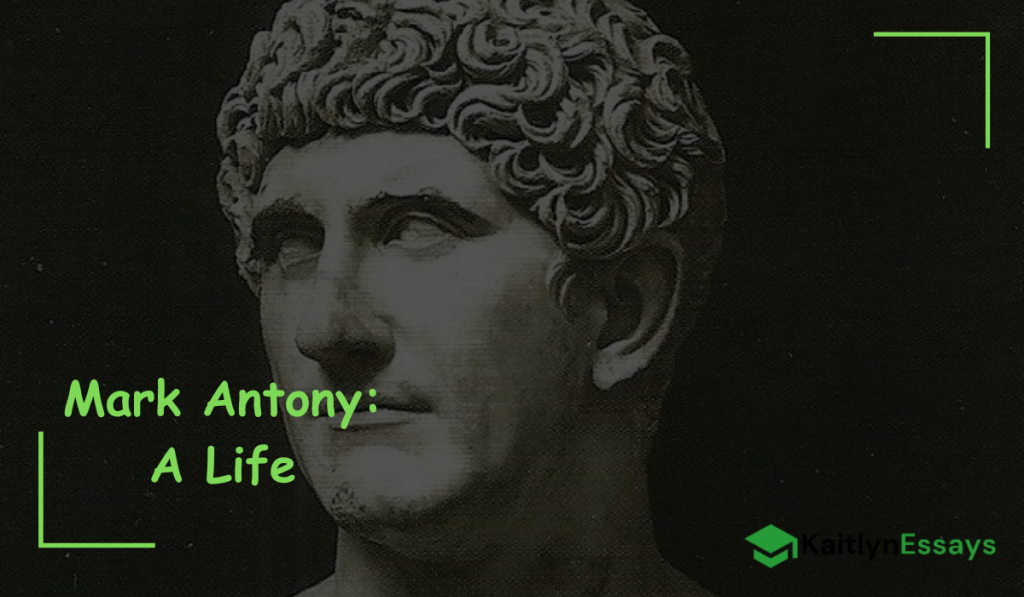
Mark Antony, one of ancient Rome’s most compelling figures, is best remembered for his political ambition, military prowess, and dramatic alliances. In Mark Antony: A Life, Patricia Southern explores the journey of this powerful yet controversial leader, bringing to life the man who stood at the heart of Rome’s transformation from republic to empire. From his close relationship with Julius Caesar to his famous partnership with Cleopatra, Antony’s story is filled with triumphs, betrayals, and personal struggles.
Southern presents a detailed and engaging portrait of Antony, examining his achievements and failures while placing him within the broader context of Roman history. The book not only captures the public figure but also sheds light on the personal motivations that shaped his decisions. This introduction offers readers an opportunity to better understand the complexities of Antony’s life and the enduring legacy of his role in history.
Summary of Mark Antony: A Life
Antony’s Early Life and Family Origins
Southern begins by delving into Mark Antony’s roots, emphasizing his upbringing in a politically ambitious yet scandal-ridden family. Born in 83 BCE, Antony was a descendant of the noble Antonia gens. However, his father’s failed military ventures and subsequent exile created a precarious family reputation. Southern explores how these early challenges forged Antony’s drive to restore his family’s honor.
During his youth, Antony was known for his physical prowess, charismatic presence, and indulgent lifestyle. His early exploits included associations with notorious figures and heavy debts, which Southern ties to his penchant for risk-taking and his pursuit of glory later in life. Antony’s military education under the Roman general Aulus Gabinius in campaigns in Egypt and Judea is portrayed as the foundation of his future success as a commander.
To understand Antony’s early influences and how they shaped his future, explore more here.
Military and Political Rise
Antony’s rise to prominence began with his association with Julius Caesar. Southern highlights how Caesar’s mentorship allowed Antony to transition from a reckless young nobleman to a disciplined military leader and skilled politician. As a key lieutenant, Antony played a crucial role in Caesar’s campaigns, particularly in Gaul, where his leadership and bravery were indispensable.
Southern also examines Antony’s role in the chaotic political landscape of Rome during Caesar’s ascendancy. After Caesar’s appointment as dictator, Antony served as his Master of the Horse, acting as his second-in-command and enforcing Caesar’s policies. His populist approach and ability to connect with the Roman masses bolstered Caesar’s agenda, but Southern notes that Antony’s brash demeanor often alienated Rome’s elites.
Learn more about Antony’s military and political achievements during Caesar’s reign here.
Caesar’s Assassination and the Aftermath
The assassination of Julius Caesar in 44 BCE was a turning point in Antony’s life. Southern vividly describes the chaos that followed and Antony’s role in navigating the power vacuum. Initially, Antony attempted to position himself as Caesar’s political heir, delivering the famous funeral oration that inflamed public opinion against the assassins.
However, Antony’s ambitions were challenged by Octavian, Caesar’s adopted son. Southern explores their uneasy alliance in forming the Second Triumvirate alongside Lepidus, a political move that allowed them to consolidate power and defeat their common enemies, Brutus and Cassius, at the Battle of Philippi. Antony’s leadership in these military campaigns demonstrated his strategic brilliance, even as tensions with Octavian simmered in the background.
For an in-depth look at Antony’s political maneuvering after Caesar’s death, read more here.
The Alliance with Cleopatra
One of the most compelling aspects of Antony’s life was his relationship with Cleopatra, Queen of Egypt. Southern provides a balanced analysis of their romantic and political alliance, emphasizing Cleopatra’s intelligence, political acumen, and mutual ambition with Antony. Far from being a one-sided affair, their partnership was strategic, aimed at consolidating power and resources in the eastern Mediterranean.
Antony’s decision to reside in Egypt and adopt elements of Egyptian culture sparked controversy in Rome, where he was accused of abandoning Roman traditions. Southern discusses how Roman propaganda, particularly from Octavian, painted Antony as a traitor under Cleopatra’s influence, a narrative that ultimately eroded his support in Rome.
Discover the details of Antony and Cleopatra’s alliance and its impact on Roman politics here.
The Rivalry with Octavian
Antony’s rivalry with Octavian forms the heart of Southern’s analysis. What began as a tenuous alliance unraveled into a bitter struggle for control of Rome. Southern examines the propaganda war between the two leaders, with Octavian portraying Antony as a debauched and un-Roman figure under Cleopatra’s spell.
The biography explores Antony’s military campaigns in the east, including his ill-fated Parthian campaign, which Southern critiques as a significant misstep. Antony’s overreliance on Cleopatra’s resources and his failure to secure a decisive victory weakened his position.
The rivalry culminated in the Battle of Actium in 31 BCE, where Antony’s fleet was decisively defeated by Octavian’s forces. Southern’s vivid account of the battle highlights Antony’s tactical errors and Cleopatra’s retreat, which sealed their fate.
To explore the conflict between Antony and Octavian in greater detail, learn more here.
Antony’s Downfall and Legacy
The final chapters of Southern’s biography focus on Antony’s tragic demise. After the defeat at Actium, Antony and Cleopatra fled to Alexandria, where they made a final stand against Octavian’s forces. Facing inevitable defeat, Antony committed suicide, followed shortly by Cleopatra.
Southern portrays Antony’s death as both a personal tragedy and a symbolic end to an era. His downfall marked the transition from the Roman Republic to the Roman Empire under Augustus (Octavian). Despite his flaws, Southern argues that Antony was a complex and capable leader whose legacy has been overshadowed by his association with Cleopatra and Octavian’s propaganda.
Learn more about Antony’s final days and his enduring legacy here.
Characters in Mark Antony: A Life
Mark Antony
Overview:
Mark Antony, the central figure of Southern’s biography, is portrayed as a man of immense charm, ambition, and contradictions. Known for his military prowess and charismatic leadership, Antony was equally defined by his indulgent lifestyle and susceptibility to personal passions. Southern examines his strengths as a commander and politician, juxtaposed with his impulsive decisions and eventual downfall.
Strengths and Weaknesses:
Antony’s ability to inspire loyalty among his troops was unmatched, as evidenced by his success in Caesar’s campaigns and later in the Battle of Philippi. However, Southern highlights Antony’s fatal flaw: his inability to balance his personal desires with political necessity. His relationship with Cleopatra, though strategically advantageous, became a liability in Roman politics, leading to his alienation from Rome’s elite.
Legacy:
Southern argues that Antony’s legacy has been unfairly overshadowed by Octavian’s propaganda. She presents him as a complex and capable leader whose contributions to Rome deserve recognition beyond his romantic entanglements with Cleopatra.
For a more in-depth look at Mark Antony’s character, read further here.
Cleopatra VII
Overview:
Cleopatra, Queen of Egypt, is portrayed as a brilliant and ambitious ruler who played a pivotal role in Antony’s life and career. Southern dismantles the reductive stereotypes of Cleopatra as a seductress, instead emphasizing her political acumen, linguistic skills, and strategic alliances.
Relationship with Antony:
Southern portrays Cleopatra and Antony’s partnership as mutually beneficial. Cleopatra provided Antony with the resources and support he needed to pursue his ambitions in the eastern Mediterranean. In turn, Antony’s alliance bolstered Cleopatra’s position as a sovereign ruler amidst the threats posed by Rome.
Impact on Antony’s Downfall:
Despite their strong partnership, Southern acknowledges that Cleopatra’s involvement in Antony’s military campaigns, particularly at Actium, contributed to their ultimate defeat. However, Southern refutes the notion that Cleopatra “controlled” Antony, emphasizing their shared agency in shaping their destinies.
To explore Cleopatra’s complex role in history, learn more here.
Octavian (Augustus)
Overview:
Southern paints Octavian as a shrewd and calculating political rival to Antony. The adopted son and heir of Julius Caesar, Octavian was methodical in consolidating power and undermining Antony’s position in Rome.
Rivalry with Antony:
Southern details the propaganda war waged by Octavian against Antony, portraying him as a debauched figure under Cleopatra’s influence. This campaign was instrumental in turning public opinion against Antony and justifying Octavian’s military actions against him.
Political Strategy:
Octavian’s ability to present himself as the champion of Roman tradition, contrasted with Antony’s “foreign” alliances, was a key factor in his eventual triumph. Southern highlights Octavian’s strategic brilliance, even as she critiques his ruthless methods.
Learn more about the rivalry between Octavian and Antony here.
Julius Caesar
Overview:
Julius Caesar is depicted as a mentor and political benefactor to Mark Antony. Their relationship was one of mutual respect, with Antony serving as a loyal lieutenant in Caesar’s military campaigns.
Influence on Antony:
Caesar’s mentorship profoundly shaped Antony’s political career, providing him with opportunities to demonstrate his military and administrative talents. Southern credits Caesar’s guidance as a key factor in Antony’s early successes.
Legacy:
After Caesar’s assassination, Antony’s efforts to avenge his mentor and preserve his legacy became a driving force in his political actions. Southern underscores how Antony’s association with Caesar both elevated his status and complicated his ambitions.
For a deeper exploration of Caesar’s influence on Antony, explore here.
Fulvia
Overview:
Fulvia, Antony’s third wife, is presented as a politically astute and ambitious figure in her own right. Southern explores her role in supporting Antony’s career, as well as her involvement in Roman politics during his absence.
Role in Roman Politics:
Fulvia’s leadership during the Perusine War against Octavian demonstrated her capability as a political actor. However, Southern notes that her aggressive tactics and unyielding nature may have strained her relationship with Antony and contributed to his difficulties in maintaining alliances.
To learn more about Fulvia’s role in Antony’s life, read further here.
Lepidus
Overview:
Lepidus, the third member of the Second Triumvirate, is portrayed as a minor but significant figure in Antony’s career. Southern describes Lepidus as a cautious and pragmatic politician who often served as a mediator between Antony and Octavian.
Role in the Triumvirate:
While Lepidus’s contributions were overshadowed by his more ambitious counterparts, Southern emphasizes his importance in maintaining the balance of power during the early days of the triumvirate. However, his eventual marginalization by Octavian marked the decline of his influence.
For an analysis of Lepidus’s role in Roman politics, find more here.
Themes in Mark Antony: A Life
Power and Ambition
Mark Antony’s life is a testament to the allure and peril of ambition. Southern explores Antony’s rise to power through his association with Julius Caesar and his role in the Second Triumvirate. His ambition drove him to achieve great military successes, such as his victories in Gaul and his leadership at Philippi.
However, Southern also highlights how Antony’s quest for power led to his downfall. His overreliance on Cleopatra’s resources and his failure to adapt to the shifting political landscape left him vulnerable to Octavian’s calculated attacks. This theme underscores the double-edged nature of ambition in the volatile world of Roman politics.
Learn more about Antony’s pursuit of power here.
Loyalty and Betrayal
Southern portrays loyalty as a defining trait of Antony’s character, especially in his unwavering support for Julius Caesar. Antony’s efforts to avenge Caesar’s assassination and uphold his legacy demonstrate his deep sense of loyalty. However, this loyalty also blinded him to the political realities of Rome, making him susceptible to betrayal.
Betrayal is another recurring theme, exemplified by Octavian’s machinations to discredit Antony. Southern also examines how Antony’s relationships with those closest to him, including Cleopatra and Fulvia, were strained by competing loyalties and political pressures.
For further insights into how loyalty and betrayal shaped Antony’s life, read here.
Love and Politics
Antony’s relationship with Cleopatra serves as a central theme in Southern’s biography, illustrating the intersection of love and politics. Their union was not only a personal partnership but also a strategic alliance aimed at consolidating power in the eastern Mediterranean.
Southern challenges traditional narratives that reduce their relationship to a romantic affair, emphasizing its political implications. However, the blending of personal and political motives proved to be Antony’s undoing, as Roman propaganda exploited their partnership to portray him as a traitor to Roman values.
Discover more about the interplay between love and politics here.
Propaganda and Public Perception
Southern thoroughly explores the role of propaganda in shaping Antony’s legacy. Octavian’s smear campaign against Antony, portraying him as a hedonistic and un-Roman figure under Cleopatra’s influence, was instrumental in turning public opinion against him.
This theme highlights the power of public perception in determining political success. Antony’s inability to counteract Octavian’s propaganda effectively left him vulnerable, despite his achievements as a military leader and statesman.
To learn more about the impact of propaganda on Antony’s life, explore here.
The Clash Between East and West
Antony’s alliance with Cleopatra and his focus on the eastern provinces brought him into direct conflict with Rome’s traditional power base in the west. Southern examines how this cultural and political divide influenced Antony’s decisions and ultimately contributed to his downfall.
The theme of east versus west also reflects broader tensions within the Roman Empire, as leaders grappled with balancing the demands of its diverse territories. Antony’s efforts to integrate eastern resources and traditions into his strategy were met with suspicion and hostility from Rome’s elite.
For a deeper analysis of this east-west dynamic, read more here.
Tragedy and Legacy
Antony’s life is framed as a classic tragedy, marked by great potential and devastating failure. Southern portrays him as a man who achieved remarkable successes but was undone by his personal flaws and external circumstances.
Despite his defeat, Antony’s legacy endures. Southern argues that his contributions to Roman history, particularly his role in shaping the empire’s transition from republic to autocracy, deserve recognition. This theme invites readers to reconsider Antony’s place in history beyond the narrative crafted by his rivals.
Learn more about Antony’s tragic legacy here.
Symbols in Mark Antony: A Life
The Laurel Wreath
The laurel wreath, traditionally a symbol of military victory and honor in Roman culture, represents Antony’s early achievements and ambitions. Southern often refers to Antony’s military successes, particularly in Gaul and during Caesar’s campaigns, as moments when he metaphorically “wore the laurel.”
However, as the biography unfolds, the laurel also becomes a symbol of unattainable glory. Antony’s failures in his Parthian campaign and his defeat at Actium signify how his ambitions ultimately fell short. The once-proud symbol of victory becomes a poignant reminder of his decline.
Uncover the story of Antony’s military highs and lows here.
Cleopatra’s Barge
Cleopatra’s ornate barge, described in Southern’s work, symbolizes the opulence and allure of Egypt, as well as the seductive power Cleopatra wielded. The barge represents Antony’s attraction to the eastern world and his ultimate decision to prioritize his alliance with Cleopatra over his obligations to Rome.
While the barge dazzled Antony, it also became a symbol of decadence in Roman propaganda. Octavian exploited this imagery to portray Antony as a man corrupted by eastern luxury and excess, contrasting sharply with Roman ideals of discipline and austerity.
For a deeper look at the symbolism of Cleopatra’s influence, explore here.
The Roman Forum
The Roman Forum, as Southern describes it, serves as a symbol of Antony’s public life and the political battles he fought within the heart of Rome. It was in the Forum that Antony delivered Caesar’s funeral oration, an act that showcased his rhetorical prowess and cemented his loyalty to Caesar.
However, the Forum also symbolizes Antony’s eventual estrangement from Rome. His increasing presence in Egypt and the eastern provinces highlights how his priorities shifted away from the Roman center of power, leading to his alienation from the Senate and the people.
Learn more about Antony’s connection to Rome here.
The Parthian Standards
The Parthian standards, lost during Crassus’s failed campaign and later recovered by Augustus, are a recurring symbol of Rome’s military pride and Antony’s ambitions. Southern discusses Antony’s ill-fated Parthian campaign as a critical turning point in his career.
The standards symbolize the fragile balance of power in Rome’s eastern territories. Antony’s inability to reclaim them during his campaign further damaged his reputation as a military leader, highlighting his shortcomings and Rome’s vulnerabilities.
Discover more about Antony’s Parthian campaign here.
The Triumvirate Seal
The seal of the Second Triumvirate, representing the political alliance between Antony, Octavian, and Lepidus, is a symbol of shared power and unity. Southern describes how this alliance temporarily stabilized Rome after Caesar’s assassination, with the triumvirate working to defeat Caesar’s assassins and restore order.
However, the seal also becomes a symbol of division and mistrust as the alliance unravels. Antony’s rivalry with Octavian intensifies, ultimately leading to civil war. The triumvirate’s dissolution symbolizes the fragile nature of political coalitions in a time of ambition and power struggles.
For a detailed exploration of Antony’s political alliances, read more here.
The Actium Battlefield
The battlefield at Actium, where Antony and Cleopatra faced Octavian’s forces, serves as a powerful symbol of Antony’s downfall. Southern describes Actium as the culmination of Antony’s political and personal missteps, marking the end of his ambitions and his eventual retreat to Egypt.
The battlefield represents both the decisive moment in Antony’s conflict with Octavian and the broader theme of fate versus free will. Antony’s decisions leading up to Actium reveal his vulnerabilities and the inevitability of his defeat.
Learn more about the symbolism of Actium here.
The Asp
While Southern focuses primarily on Antony, Cleopatra’s method of suicide via an asp serves as a symbolic link to Antony’s story. The asp represents loyalty, sacrifice, and the tragic intertwining of their fates. Cleopatra’s death solidifies Antony’s legacy as a tragic figure, inseparable from his alliance with her.
The asp also symbolizes resistance to Roman domination, as Cleopatra chose death over submission to Octavian. This act reinforces the themes of autonomy and defiance that resonate throughout the biography.
Explore the symbolism of Cleopatra’s role in Antony’s life here.
Literary Devices in Mark Antony: A Life
Imagery
Southern uses vivid imagery to transport readers into the ancient world, allowing them to visualize the grandeur and the decay of the Roman Empire, as well as the lush, exotic landscapes of Egypt. The description of Cleopatra’s barge, resplendent with its opulence, serves as a perfect example of how Southern uses imagery to draw a stark contrast between Roman austerity and the Eastern decadence that Antony embraced.
Imagery also enhances the portrayal of Antony’s military campaigns, with Southern’s descriptions bringing the battles to life. The bloodied, chaotic scenes of war, contrasted with the calm and calculated political maneuvering that Antony often engaged in, create a sense of tension throughout the narrative.
To explore how imagery is used to convey complex emotions and settings, read more here.
Irony
One of the most striking literary devices in Southern’s work is irony, which underscores the tragic elements of Antony’s life. Antony, who was once a celebrated general and a promising political figure, ultimately becomes a cautionary tale about the dangers of hubris and poor judgment. Southern highlights the irony of Antony’s life as he transitions from a loyal servant to Julius Caesar to a man who loses everything due to his own actions and alliances.
There is also situational irony in Antony’s relationship with Cleopatra. Despite their deep emotional connection and political alliance, it is this very partnership that accelerates Antony’s downfall, as Octavian uses it to tarnish his reputation. Southern’s exploration of irony challenges readers to reflect on the unpredictable nature of political power and personal choices.
For a deeper understanding of the irony in Antony’s story, explore more here.
Foreshadowing
Throughout the biography, Southern uses foreshadowing to hint at the inevitable downfall of Mark Antony. From the moment Antony’s alliance with Cleopatra begins to take shape, the signs of potential failure are present. Southern subtly alludes to the power struggle between Antony and Octavian, with hints at betrayal and conflict.
Foreshadowing is also employed in Antony’s military campaigns, where Southern mentions the challenges he faces, such as the defeat at Parthia and the failure at Actium. These events, which occur later in the biography, are subtly foreshadowed in the earlier chapters, giving readers a sense of impending doom.
To explore how foreshadowing creates tension and prepares readers for pivotal events, discover more here.
Characterization
Characterization is a key device that Southern employs to bring Mark Antony and other historical figures to life. Antony is portrayed as a complex character—brave yet flawed, loyal yet prone to betrayal. Southern reveals his inner conflicts, including his struggles to balance his personal desires with his political ambitions.
Antony’s characterization is further developed through his interactions with other key figures, such as Cleopatra, Octavian, and Julius Caesar. Each relationship is carefully crafted to highlight different aspects of Antony’s character. For example, his loyalty to Caesar is contrasted with his later rivalry with Octavian, which sheds light on Antony’s evolving sense of power and honor.
Learn more about how Southern develops Antony’s character here.
Symbolism
Symbolism is another key device used by Southern to deepen the reader’s understanding of Mark Antony’s life. The symbols of Roman power, such as the laurel wreath and the Roman Forum, carry significant weight throughout the biography. These symbols represent Antony’s military victories and his political rise, but they also reflect the eventual decay of his influence as his relationship with Cleopatra grows and his political power wanes.
Cleopatra’s barge and the Parthian standards serve as potent symbols, representing the dichotomy between Rome and the East, as well as Antony’s conflicting allegiances. These symbols are intricately woven into the narrative, emphasizing the central themes of loyalty, ambition, and downfall.
To dive deeper into how Southern uses symbolism to enhance the narrative, explore here.
Allusion
Southern often draws allusions to classical texts, historical events, and myths to deepen the reader’s understanding of Antony’s life. The references to Julius Caesar’s assassination, for example, evoke the complex political dynamics that Antony was thrust into following Caesar’s death. Southern also alludes to Roman gods and their influence over the lives of prominent figures, including Antony.
These allusions to classical mythology and Roman history serve as a backdrop for Antony’s personal struggles and highlight the larger forces at play in his rise and fall. They also provide context for understanding how Antony’s actions fit into the grand historical narrative of Rome.
Learn more about the role of allusion in shaping the biography here.
Juxtaposition
Southern uses juxtaposition to contrast the different aspects of Antony’s life. One notable example is the comparison between Antony’s Roman background and his interactions with Cleopatra, the queen of Egypt. The austere, disciplined Roman ideals are set against the opulent and politically charged environment of Egypt, creating a striking contrast that defines Antony’s character.
The juxtaposition of Antony’s political ambitions and his personal relationships further emphasizes the tension between his duties as a Roman leader and his desires for love and power. Southern uses this device to show how Antony’s dual loyalties ultimately contribute to his undoing.
For a deeper understanding of how juxtaposition shapes the biography, dive in here.
Motif
A recurring motif in Southern’s biography is the tension between personal desire and political duty. Throughout his life, Antony is faced with choices that pit his personal wants—whether it be his love for Cleopatra or his military ambitions—against his duties as a Roman statesman. This motif plays a significant role in illustrating Antony’s inner conflict and the consequences of his decisions.
This theme of competing desires is reflected in the book’s portrayal of Antony’s struggle to balance his loyalty to Rome with his passion for Cleopatra, providing readers with a detailed view of Antony’s personal and political life.
To explore more about this motif and how it influences Antony’s choices, read more here.
Quotes in Mark Antony: A Life
“The die is cast.” – Julius Caesar
This famous quote, attributed to Julius Caesar, occurs during his decision to cross the Rubicon and march on Rome. Southern references this moment to emphasize Antony’s own role in the turbulent political landscape following Caesar’s assassination. While Caesar’s crossing of the Rubicon marks a decisive moment in Roman history, Southern suggests that Antony’s actions also mirrored this sense of irreversible commitment, particularly his alliance with Cleopatra.
This quote captures the essence of Antony’s own fate—the realization that certain actions have irrevocable consequences. By referring to this moment, Southern underscores the weight of Antony’s decisions and his growing detachment from Rome.
To explore the significance of this quote further, learn more here.
“I am not a man of many words, but I speak when it matters.” – Mark Antony
This quote from Mark Antony illustrates his complex nature as a leader. Southern highlights Antony’s effectiveness as a military commander, contrasting it with his more controversial political and personal choices. Though not a man of grand speeches, Antony’s words carry weight when they do occur, especially in moments of political maneuvering or military leadership.
The quote also reflects Antony’s pragmatic approach to power—he is not interested in eloquence for its own sake but rather in decisive action. This attitude is significant when considering his relationship with Octavian, as his silence and measured responses often stand in stark contrast to Octavian’s rhetoric.
To learn more about the relationship between Antony and Octavian, click here.
“Let us have a war to see which of us shall be master.” – Mark Antony
This quote speaks to Antony’s boldness and competitive nature. Southern uses this statement to emphasize Antony’s drive to assert himself politically and militarily, often at the cost of long-term stability. The rivalry between Antony and Octavian, which ultimately leads to the Battle of Actium, is framed in this quote as a personal contest for dominance rather than a fight for the good of Rome.
Antony’s focus on personal glory and his desire to prove his superiority over Octavian becomes central to his downfall. This quote, therefore, exemplifies the internal conflict between Antony’s ambition and the Roman ideals of unity and service to the state.
For a deeper dive into Antony’s rivalry with Octavian, explore here.
“I am dying, Egypt, dying.” – Mark Antony
This poignant quote occurs during the final moments of Antony’s life, as he lies wounded and reflects on the consequences of his decisions. Southern uses this quote to underscore the tragedy of Antony’s life—his relationship with Cleopatra and his ambition led him down a path of destruction.
Antony’s acknowledgment of his fate symbolizes the collapse of his personal and political ambitions. The line is tragic not only because it marks his physical death but also because it symbolizes the death of his dreams of power and legacy. It reflects how he became entangled in a relationship that, while bringing him personal pleasure, ultimately led to his demise.
Learn more about Antony’s final moments, learn more here.
“The evil that men do lives after them; the good is oft interred with their bones.” – Julius Caesar
Though originally from Shakespeare’s Julius Caesar, Southern uses this quote in her biography to reflect the perception of Mark Antony in Roman history. The line speaks to the complex legacy of powerful figures like Antony, whose flaws and mistakes often overshadow their achievements.
Antony’s reputation, shaped by his rivalry with Octavian and his relationship with Cleopatra, largely focuses on his perceived failures. Southern suggests that while Antony’s military accomplishments and loyalty to Caesar are significant, it is his eventual defeat and betrayal that dominate the historical narrative. This quote captures the idea that history often remembers the bad more vividly than the good.
For a deeper look at Antony’s legacy and how history shaped his image, explore here.
“I will not be triumphed over.” – Cleopatra
While not a direct quote from Antony, Cleopatra’s declaration speaks to the deep connection between her and Antony. Southern highlights this moment to illustrate the powerful influence Cleopatra had over Antony, both personally and politically. This quote also symbolizes the broader themes of defiance and autonomy, with Cleopatra refusing to be subjugated by Octavian.
In Antony’s case, his refusal to be “triumphed over” by Octavian mirrors his own tragic end. Despite his mounting political and military failures, Antony remains defiant in the face of defeat, unable to relinquish his ambitions. The refusal to submit to Octavian symbolizes Antony’s downfall, as it prevents him from accepting the reality of his situation.
To explore more about the relationship between Antony and Cleopatra, read more here.
“I have lived long enough; my way of life is fallen into the sear, the yellow leaf.” – Macbeth (Shakespeare)
Although this quote is from Macbeth and not directly attributed to Antony, it encapsulates the sense of despair and hopelessness that Southern evokes in her portrayal of Antony’s final years. The line reflects the realization of a life lived with ambition, now in decline and with little hope for redemption.
Southern’s examination of Antony’s final moments parallels the sentiment in this quote, as Antony reflects on the ruin of his once-glorious career. This metaphorical “yellow leaf” represents the decaying remnants of Antony’s power and influence, marking the end of his era and the collapse of his dreams.
For further exploration of Antony’s downfall and reflections on his life, dive deeper here.
“The fault, dear Brutus, is not in our stars, but in ourselves.” – Julius Caesar (Shakespeare)
Southern uses this famous quote from Shakespeare’s Julius Caesar to explore the idea of personal responsibility in Antony’s rise and fall. This quote suggests that the course of events is not dictated by fate, but by individual actions and choices.
Antony’s story is a prime example of this principle—his decisions to align with Cleopatra, his rivalry with Octavian, and his refusal to adapt to political realities all contribute to his tragic end. Southern draws on this idea to emphasize that Antony’s downfall is a result of his own actions rather than external forces.
For a deeper analysis of Antony’s choices and their impact, learn more here.
Mark Antony and Cleopatra Through Southern’s Lens
Initial Encounters and Attraction (41 BC):
- Political Expediency: Southern emphasizes that the initial meeting between Antony and Cleopatra in Tarsus wasn’t purely a love affair. Antony, at this point, was one of the powerful Triumvirs governing Rome, responsible for the eastern provinces. Cleopatra, the queen of Egypt, desperately needed to maintain her kingdom’s independence and prosperity. Their meeting was, first and foremost, about political negotiation. Cleopatra strategically used her charm and intelligence to woo Antony, ensuring her kingdom’s continued autonomy and support from Rome.
- Mutual Needs: Antony needed access to Egypt’s wealth to fund his campaigns and consolidate his power. Cleopatra, in turn, needed the military might and political backing that Antony could offer. Their initial attraction was likely fueled by this mutual need and the promise of mutual benefit.
- Cleopatra’s Presentation: Southern highlights the elaborate staging of Cleopatra’s arrival in Tarsus. She understood the power of spectacle and used it to make a lasting impression on Antony. This wasn’t just about beauty; it was about power and the image of a powerful, wealthy, and independent queen.
Developing a Relationship: A Shared Vision?
- Shared Ambition and Vision: While love certainly played a role, Southern stresses the importance of shared ambitions. Both Antony and Cleopatra saw themselves as rulers of vast domains. They dreamed of empires, not just individual kingdoms. Cleopatra aimed to re-establish the Ptolemaic Empire, while Antony envisioned himself as a powerful ruler in the East. They seemed to envision a new world order, with themselves at the helm.
- Children as Political Tools: The birth of their twins, Alexander Helios and Cleopatra Selene, was not just a personal event, but a political statement. These children were symbolic of the alliance between Egypt and Rome’s eastern territories. The naming of their children further emphasizes their ambitions. “Helios” (Sun) and “Selene” (Moon) alluded to their belief in their divine right to rule.
- Antony’s “Eastern” Inclination: Southern points out that Antony, during his time in the East, began to embrace the more opulent and autocratic styles of rulership prevalent in the region. He was captivated by the grandeur of the Eastern courts, and Cleopatra’s kingdom provided him with the resources and setting to indulge in these tastes. This, Southern argues, further alienated him from the traditional Roman values and sensibilities that Octavian was championing.
- Mutual Support: Southern argues their alliance was not just a parasitic one, with Antony simply exploiting Egypt. Cleopatra supported Antony financially, providing resources and ships crucial for his military campaigns. This was a genuine partnership where they both benefited, albeit with Cleopatra perhaps having the most to lose.
The Tensions and the Downfall:
- The Roman Perception: Southern underscores how Antony’s relationship with Cleopatra, and his increasingly “eastern” behavior, was met with hostility and suspicion in Rome. Octavian, Antony’s rival, skillfully used this to his advantage, portraying Antony as a traitor who had abandoned his Roman values and was under the sway of a foreign queen.
- The Donations of Alexandria (34 BC): Southern highlights this as a crucial turning point. Antony publicly declared his children with Cleopatra (including Caesarion, Cleopatra’s son with Julius Caesar) to be his heirs to vast territories, effectively disinheriting his children with his Roman wife Octavia, Octavian’s sister. This act was a grave political error. It fueled Octavian’s propaganda, further alienating Antony from the Roman elite.
- The Battle of Actium (31 BC): Southern describes Actium not just as a military defeat for Antony but also as a consequence of the political blunders he had made. She presents a balanced picture, acknowledging that Antony did not betray Cleopatra at the Battle of Actium, and, in fact, his fleet followed the Egyptian fleet’s retreat, rather than the other way around as some historical accounts might suggest. Their shared defeat is a testament to their shared alliance, for better or for worse.
- Separate Suicides: Southern’s account emphasizes that while they both committed suicide, these acts were ultimately independent rather than a pact. Antony took his own life after hearing a false rumor of Cleopatra’s death. When Cleopatra learned of his death she understood the inevitability of capture by Octavian and took her own life. Her suicide was ultimately an act of self-preservation.
- Cleopatra as a Stateswoman: Southern is very clear that Cleopatra should not be reduced to simply a woman driven by love. She was a shrewd and powerful ruler who worked diligently to maintain her kingdom. Her alliance with Antony was a calculated move to protect Egypt’s interests, though it would ultimately end in tragedy.
Mark Antony and Caesar Through Southern’s Lens
Early Encounters and Initial Loyalty:
- Caesar as a Mentor (Indirectly): Southern doesn’t portray Caesar as an overtly “mentoring” figure to Antony in the early years. Rather, Antony’s military experience was predominantly under other Roman commanders. However, Caesar’s actions and reputation undoubtedly influenced Antony’s military ambitions and political understanding. Antony served under Caesar’s command, gaining valuable military experience that would shape his future career.
- Military Prowess and Reputation: Antony established a strong military reputation through his service, particularly during the Gallic Wars, and Caesar certainly recognized his abilities. Southern emphasizes that Antony was a courageous, effective, and popular commander, which is crucial in understanding his later trajectory.
- Caesar’s Trust and Favor: Caesar clearly held Antony in high regard. He recognized Antony’s loyalty, military prowess, and his ability to command troops. Southern notes that Caesar gave Antony key responsibilities and positions, solidifying their connection and giving Antony a platform for future advancement.
Shifting Dynamics and Political Intrigue:
- The Tribune of the Plebs: Southern examines Antony’s role as Tribune of the Plebs in 49 BC. She notes that Caesar strategically made Antony Tribune of the Plebs, granting him a key political position. While they were on the same side, it is the beginning of Antony navigating the complicated political world of Rome.
- Antony’s Defense of Caesar: When the Roman Senate turned against Caesar, Antony used his position as Tribune to defend him. Southern argues that while this act demonstrated Antony’s loyalty, it also showed his willingness to go against the established political order of the Republic, a characteristic that would mark much of his future career.
- Antony’s Impetuousness: While loyal, Antony was also impetuous and prone to rash actions. This sometimes created problems for Caesar, highlighting a key difference in their personalities. Caesar was meticulous and calculated, while Antony was more impulsive and charismatic.
- Caesar’s Dictatorship and Antony’s Role: Following Caesar’s victory in the Civil War, Southern analyzes Antony’s position as Master of the Horse, the second-highest position in the Roman hierarchy. This appointment showcased Caesar’s trust in Antony but also placed Antony firmly within Caesar’s regime.
The Aftermath of Caesar’s Assassination:
- Initial Shock and Disarray: Southern carefully outlines how, following the Ides of March, Antony was thrown into chaos. He was a prominent figure within Caesar’s regime and it was assumed he would want to avenge Caesar. She demonstrates the immediate shock and uncertainty that gripped Rome, and emphasizes that Antony had to quickly navigate a very volatile situation.
- Antony’s Calculated Response: While initially hesitant to confront the assassins directly, Southern emphasizes that Antony carefully maneuvered politically. He recognized that attempting to immediately seize power would be a dangerous move and instead opted for a more subtle approach.
- The Funeral Oration: Southern highlights the power of Antony’s speech at Caesar’s funeral as the turning point. His rhetoric, while seemingly conciliatory, skillfully turned the public against the assassins. It was a display of Antony’s persuasive skill, but also a calculated move to position himself as Caesar’s legitimate successor and avenge his assassination.
- The Power Struggle with Octavian: Southern outlines the rising power struggle between Antony and Octavian in the aftermath of Caesar’s death. Initially allies in the Second Triumvirate, their relationship quickly soured. Octavian, with Caesar’s name and wealth, was a powerful rival who would ultimately eclipse Antony. The relationship between Antony and Octavian was complicated by Caesar’s legacy and the competition for political power.
Octavian and Mark Antony
Initial Alliance: The Second Triumvirate (43 BC)
- Uneasy Partnership: Southern makes it clear that their initial alliance in the Second Triumvirate was born out of necessity and mutual self-interest, not genuine friendship or shared vision. They were united by their desire to avenge Caesar’s assassination and consolidate power, but their ambitions were inherently conflicting.
- Youth vs. Experience: Octavian, at the time, was a young and relatively inexperienced figure, whereas Antony was a seasoned military commander. This disparity initially gave Antony the upper hand but also fueled Octavian’s ambition to prove himself.
- The Need for Reconciliation: The Triumvirate was a pragmatic compromise designed to end civil strife following Caesar’s murder. Southern emphasizes that both men, along with Lepidus, recognized the need to present a unified front in the face of political chaos.
- The Proscriptions: Southern examines the brutal nature of the Triumvirate’s power grab, highlighting the proscriptions (the killing of political opponents) as a dark chapter in their early relationship. It showcases the ruthlessness with which both men pursued their goals.
Growing Tensions and Diverging Paths:
- Conflicting Ambitions: Southern emphasizes the clash between their ambitions as a key driver of their rivalry. Antony was focused on consolidating his power in the East, while Octavian was focused on establishing himself as the dominant figure in Rome and the West.
- Antony’s “Eastern” Inclinations: Southern notes how Antony’s increasingly close relationship with Cleopatra and his adoption of Eastern customs alienated him from the Roman political establishment. This contrast was cleverly exploited by Octavian.
- Octavian’s Propaganda: Southern highlights Octavian’s skill in manipulating public opinion. He used Antony’s relationship with Cleopatra and his perceived neglect of Rome to paint him as a traitor, undermining his support in Italy.
- The Treaty of Brundisium (40 BC): Southern outlines the temporary truce they reached after a period of conflict. This agreement demonstrated how easily tensions could rise between the two men, and highlighted their fundamental differences. It also included Antony’s marriage to Octavia, Octavian’s sister.
- Antony’s Marriage to Octavia: While politically expedient, this marriage provided Octavian with leverage over Antony. Southern stresses that this was a pragmatic arrangement, not one of genuine affection, and that it was ultimately short-lived.
The Final Break and the Road to Actium:
- The Donations of Alexandria (34 BC): Southern underscores how this event served as a propaganda coup for Octavian. Antony’s public acknowledgment of his children with Cleopatra as his heirs and his distribution of Roman territories enraged the Roman Senate and people, who saw it as an attempt to replace Rome with an Egyptian-based empire.
- The Propaganda War: Southern details the sophisticated propaganda campaign waged by Octavian against Antony. He successfully depicted Antony as a traitor who had abandoned Rome in favor of a foreign queen, turning public sentiment against him.
- The Battle of Actium (31 BC): Southern provides a balanced account of the battle, dispelling myths about Cleopatra’s betrayal. She emphasizes that both Antony and Cleopatra were defeated due to a combination of strategic miscalculations and Octavian’s superior forces, especially in naval power.
- Antony’s Downfall: Southern notes that Antony’s defeat at Actium was not just a military one, but a consequence of his own political errors and Octavian’s skillful manipulation of Roman public opinion.
Key Contrasts and Themes:
- Pragmatism vs. Romanticism: Southern emphasizes the contrasting styles of leadership between Octavian and Antony. Octavian was pragmatic, calculating, and adept at political maneuvering, while Antony was more charismatic, impetuous, and prone to emotional decisions.
- Rome vs. the East: The conflict between Octavian and Antony was framed, to some extent, as a clash between Roman and Eastern cultures. Octavian was seen as the defender of Roman values, while Antony’s “easternization” was seen as a threat to the Republic.
- The End of the Republic: Southern presents their rivalry as a major factor in the end of the Roman Republic and the rise of the Roman Empire. Their conflict was a power struggle that resulted in the final demise of the Republic, with Octavian emerging as the sole ruler.
- Manipulation and Propaganda: Southern highlights how both men were adept at political manipulation and propaganda, but Octavian was particularly skilled at using these tactics to undermine Antony.
- The Winner Takes All: Ultimately, their relationship was one of a zero-sum game. There could only be one victor, and Octavian’s ruthlessness and political skill proved decisive.
Southern’s Perspective in Summary:
Southern’s account emphasizes that the relationship between Octavian and Antony was a complex one, marked by ambition, rivalry, and ultimately, betrayal. It was not a simple struggle between good and evil, but a power struggle between two ambitious men vying for control of the Roman world. Southern highlights the political and cultural context that shaped their conflict, emphasizing the strategic calculations and propaganda that were critical to their eventual showdown. Her narrative provides a detailed view of this crucial relationship in Roman history, moving beyond the traditional romanticized view.
Mark Antony’s Speech
The Context:
- Chaos in Rome: Following Caesar’s assassination, Rome was in a state of chaos and uncertainty. The conspirators, led by Brutus and Cassius, had hoped to restore the Republic, but their actions had destabilized the political order.
- Antony’s Precarious Position: Antony was in a difficult position. As Caesar’s former right-hand man, he was a target for the assassins but also needed to avoid appearing as a ruthless tyrant who might seize power outright.
- The Funeral as a Stage: Southern emphasizes that the funeral wasn’t just a ceremony; it was a carefully orchestrated political event. The platform for a speech was a vital opportunity for Antony to influence public opinion.
- The Agreement with the Conspirators: Before the funeral, Antony had reached a fragile agreement with the assassins, granting them amnesty in exchange for recognizing Caesar’s acts. He had to walk a tightrope, appearing to be respectful of Caesar while not directly confronting the assassins.
Antony’s Speech: Strategic Brilliance:
Southern’s perspective would highlight these key aspects of Antony’s speech:
- Apparent Conciliation:
- “I come to bury Caesar, not to praise him.” Southern would emphasize that this opening was a carefully crafted maneuver to appear neutral. He acknowledged Caesar’s death, as per the agreement with the conspirators, but did so in a way that set the stage for what was to come.
- Praise for the Conspirators: Initially, Antony acknowledged that Brutus and others were “honorable men,” which served to lull the conspirators into a false sense of security.
- Gradual Emotional Shift:
- The Power of Memory: Antony strategically began recounting the good deeds Caesar had done for Rome. He reminded the crowd of Caesar’s compassion, his triumphs, and his generosity. Southern would emphasize that this was a calculated move to stir emotions.
- “Friends, Romans, countrymen, lend me your ears!”: This famous line is used to engage the crowd directly and create a sense of shared grief and outrage. Southern would point out how Antony masterfully took control of the situation, moving beyond just an observation.
- Subtle Innuendo: Southern would note that Antony, while carefully avoiding a direct condemnation of the conspirators, subtly planted seeds of doubt and suspicion in the minds of the audience. He used rhetorical questions and implied wrongdoing to slowly turn the crowd against them.
- Exploiting the Crowd’s Emotions:
- The Refusal to Read the Will (Initially): Southern would highlight the dramatic effect of Antony’s feigned reluctance to read Caesar’s will. He used this to build suspense and create a strong sense of anticipation.
- The Reading of the Will: When he finally revealed the will, which included a generous bequest to the Roman people, it cemented the image of Caesar as a benevolent leader. Southern would note how this moved the crowd with a mix of grief and generosity.
- The Body of Caesar: Finally, Antony exposed Caesar’s body, revealing the wounds inflicted by the assassins. This moment, according to Southern, was crucial, a carefully orchestrated theatrical display to incite the crowd into rage and action.
- Rhetorical Questions: Southern would note how Antony used rhetorical questions throughout the speech: he asked the crowd to consider if Caesar was ambitious, and to see the wounds in his body, asking if they were signs of treachery. These questions helped guide the crowd to their own conclusions, all of which were against the conspirators.
- Political Strategy:
- Securing His Position: Southern emphasizes that Antony’s speech was not just about mourning Caesar; it was about establishing himself as Caesar’s legitimate heir and taking control of the political narrative.
- Inciting the Mob: The speech was a deliberate attempt to turn the Roman people against the assassins, creating an environment that would allow Antony to take action without direct involvement.
- Laying the Foundation for the Triumvirate: The speech was essential for shifting public opinion in Antony’s favor, ultimately paving the way for the formation of the Second Triumvirate.
Southern’s Perspective on the Speech:
- Beyond Simple Emotion: Southern’s perspective would move beyond the simplistic interpretation of the speech as a purely emotional outburst. She would highlight the careful planning, subtle tactics, and calculated manipulation employed by Antony.
- Antony as a Master Orator: Southern would acknowledge Antony’s skill as a public speaker. She would emphasize his ability to connect with the Roman people, to understand their emotions, and to use rhetoric to sway their opinions.
- A Turning Point: Southern’s perspective would place the speech as a crucial turning point in the aftermath of Caesar’s assassination. It was the moment when Antony seized the initiative and began to position himself as a major power player in Roman politics.