

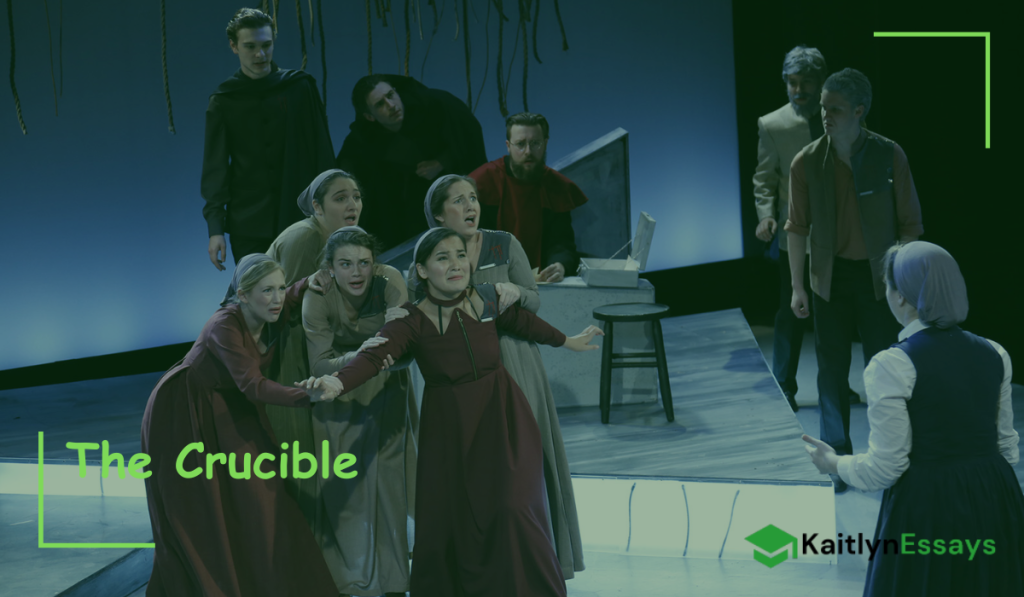
Arthur Miller’s The Crucible is a gripping play that explores themes of fear, power, and morality against the backdrop of the Salem witch trials. Set in 1692, the play follows a Puritan community caught in the throes of suspicion and paranoia as accusations of witchcraft spread like wildfire. Written during the 1950s, Miller used the Salem trials as an allegory for the anti-communist hysteria of McCarthyism, drawing parallels between historical and contemporary forms of social persecution.
The story focuses on key characters like John Proctor, Abigail Williams, and Reverend Hale, whose actions and decisions highlight the destructive potential of lies, unchecked authority, and mass hysteria. Beyond its historical context, The Crucible serves as a timeless reflection on the consequences of fear and the importance of integrity. This article examines the play’s major themes, its relevance to modern audiences, and the lessons it offers about human nature and society.
Summary of The Crucible
Act I: The Spark of Hysteria
The play opens in Reverend Parris’s home, where his young daughter, Betty, lies unconscious. Reverend Parris is distraught, fearing that her illness is caused by witchcraft. The audience learns that Betty, Abigail Williams (Parris’s niece), and several other girls were caught dancing in the woods, an activity forbidden in their Puritan community. Parris is concerned not just for his daughter but for his reputation, as whispers of witchcraft could destroy his standing.
Abigail denies any wrongdoing and claims the girls were merely dancing. However, suspicion arises when Betty awakens briefly, frightened, and accuses Abigail of drinking blood as part of a charm to kill Elizabeth Proctor, John Proctor’s wife. Abigail’s manipulative nature becomes evident as she intimidates the other girls into silence.
As fear of witchcraft spreads, several townspeople gather at Parris’s home, including the wealthy Thomas Putnam and his wife, Ann. Ann Putnam reveals that seven of her babies died in infancy, and she believes supernatural forces are to blame. The arrival of Reverend Hale, a self-proclaimed expert on witchcraft, escalates the tension. Abigail seizes the moment to accuse Tituba, Parris’s enslaved servant, of summoning spirits. Under duress, Tituba confesses and names others she claims are involved in witchcraft. Abigail and the other girls follow suit, crying out names in a frenzy.
For an expanded exploration of Act I’s key moments, full details are available: discover more.
Act II: Rising Tensions and Accusations
Act II shifts to the Proctor household, where John and Elizabeth Proctor struggle with their strained relationship. Elizabeth knows about John’s past affair with Abigail and mistrusts him, though he insists he has ended the relationship. Meanwhile, the Salem court, led by Judge Hathorne and Deputy Governor Danforth, grows increasingly powerful, as more people are accused and jailed for witchcraft.
Mary Warren, the Proctors’ servant and one of the girls involved in the accusations, returns from court and informs them that Elizabeth’s name has been mentioned. John, frustrated with the hysteria overtaking Salem, demands that Mary confess the truth about Abigail’s manipulation.
The tension escalates when Ezekiel Cheever arrives with a warrant for Elizabeth’s arrest. Abigail has accused Elizabeth of witchcraft, claiming she used a poppet (a small doll) to harm her. Mary reluctantly admits to making the poppet, but Elizabeth is taken away regardless. This act highlights the personal vendettas fueling the accusations, as Abigail’s actions are driven by her desire for John Proctor.
For a closer look at Act II’s developments and character dynamics, further insights are available: discover more.
Act III: The Courtroom Battle
Act III takes place in the Salem court, where John Proctor confronts the judicial system in a desperate attempt to expose Abigail’s lies. Reverend Hale begins to doubt the legitimacy of the trials as he witnesses the court’s reliance on spectral evidence (testimony about visions or spirits). Proctor brings Mary Warren to testify that the girls are pretending, but Abigail’s cunning manipulation once again turns the tide.
In a dramatic turn, Abigail and the girls feign possession, accusing Mary of witchcraft when she testifies against them. Terrified, Mary recants her confession and accuses Proctor of being in league with the devil. Proctor, in a last-ditch effort to discredit Abigail, confesses to his affair, calling her motives into question. However, when Elizabeth is brought in to verify the claim, she denies knowing about the affair to protect John’s reputation, inadvertently undermining his testimony.
The act ends in chaos, with Proctor arrested and Hale quitting the court in frustration. The courtroom scene epitomizes the themes of justice corrupted by fear and the destructive power of lies.
For an in-depth breakdown of the courtroom drama in Act III, discover more: discover more.
Act IV: Redemption and Tragedy
The final act takes place months later in the Salem jail. The town is in disarray, with crops rotting in the fields and livestock wandering unattended as the trials have consumed the community. Abigail has fled Salem with stolen money, leaving behind a trail of destruction.
John Proctor faces execution unless he confesses to witchcraft. He struggles with the moral dilemma of choosing between a false confession that would save his life and standing by the truth, which would cost him everything. In a deeply emotional scene, Proctor initially decides to confess but ultimately refuses to sign his name to a lie. His decision to die with integrity rather than live dishonestly is a powerful statement about personal honor.
Elizabeth, who is pregnant, supports John’s choice, acknowledging his need to restore his sense of goodness. The play concludes with Proctor’s execution, leaving the audience to reflect on the tragic consequences of mass hysteria and the resilience of the human spirit in the face of oppression.
For a comprehensive analysis of Act IV’s themes and emotional impact, additional insights are available: discover more.
Characters
John Proctor
John Proctor is a farmer in Salem and the central figure in The Crucible. He is depicted as a man of strong principles who is haunted by guilt over his affair with Abigail Williams. Proctor’s inner conflict—between his desire to protect his reputation and his need to act honorably—forms the backbone of the play.
At the beginning, Proctor seeks to distance himself from the hysteria consuming Salem, viewing the witch trials as absurd. However, when Elizabeth is accused, his resolve strengthens, and he becomes a vocal critic of the court. His ultimate decision to maintain his integrity by refusing to falsely confess, even at the cost of his life, solidifies him as a tragic hero.
Key traits: principled, passionate, flawed, courageous.
For a full exploration of John Proctor’s complex character and his heroic arc, discover more: discover more.
Abigail Williams
Abigail Williams, Reverend Parris’s niece, is the primary antagonist. She is manipulative, cunning, and driven by a mix of vengeance and desire. Abigail’s affair with John Proctor sparks her obsession with him, and her jealousy of Elizabeth Proctor leads her to accuse Elizabeth of witchcraft.
Abigail’s influence over the other girls in Salem is a critical driver of the hysteria. Her ability to feign innocence and her skill at exploiting the fears of those around her make her an exceptionally dangerous character. Abigail represents the destructive power of lies and unchecked ambition.
Key traits: manipulative, vindictive, charismatic, deceitful.
For a deeper understanding of Abigail Williams’s role in the Salem witch trials, further insights are available: discover more.
Elizabeth Proctor
Elizabeth Proctor, John’s wife, is a character of quiet strength and integrity. Her cold demeanor toward John early in the play reflects the strain caused by his affair with Abigail. Despite this, Elizabeth’s love for John becomes evident as she supports him in his fight against the court.
Elizabeth’s decision to lie about John’s affair—an act of selflessness meant to protect his reputation—ironically leads to his downfall. Her character arc underscores themes of forgiveness and the complexity of human relationships.
Key traits: virtuous, resilient, forgiving, stoic.
To explore Elizabeth Proctor’s moral journey and role in the play, more details are available: discover more.
Reverend Parris
Reverend Parris is the minister of Salem and a deeply self-serving character. His primary concern throughout the play is maintaining his authority and reputation. Parris’s fear of losing his position makes him a staunch supporter of the witch trials, even when evidence suggests their fallacy.
Parris’s paranoia and obsession with control contribute to the escalation of the trials, making him a symbol of the dangers of unchecked power and insecurity in leadership.
Key traits: self-serving, paranoid, authoritative, insecure.
For a comprehensive analysis of Reverend Parris’s influence on the events in Salem, discover more: discover more.
Reverend Hale
Reverend Hale begins the play as a confident and well-meaning expert on witchcraft. He is initially eager to root out the devil’s influence in Salem. However, as the trials unfold, Hale becomes increasingly aware of the injustice being carried out in the name of righteousness.
By the end of the play, Hale is a broken man who pleads with the accused to confess, not to save their souls, but to save their lives. His journey from certainty to doubt reflects the theme of moral awakening.
Key traits: intelligent, idealistic, compassionate, conflicted.
To look into Reverend Hale’s transformation and moral struggle, explore further: discover more.
Mary Warren
Mary Warren, the Proctors’ servant, is a young girl caught between fear and conscience. As one of Abigail’s followers, she is initially complicit in the accusations. However, she attempts to stand up to Abigail by confessing the truth in court.
Mary’s lack of resolve becomes evident when Abigail and the other girls turn on her, accusing her of witchcraft. Terrified, Mary abandons her confession and accuses John Proctor instead. Her actions illustrate the destructive impact of fear and peer pressure.
Key traits: timid, impressionable, conflicted, weak-willed.
For further analysis of Mary Warren’s role in the narrative, discover more: discover more.
Judge Danforth
Deputy Governor Danforth presides over the trials with an unwavering belief in their righteousness. He views any opposition to the court as a threat to its authority, refusing to reconsider evidence or admit errors in judgment.
Danforth’s rigid adherence to the law and his refusal to question the validity of the accusations make him a representation of the dangers of authoritarianism. His actions contribute significantly to the tragic outcomes of the trials.
Key traits: authoritarian, rigid, self-righteous, dogmatic.
To understand Judge Danforth’s critical role and ideology, full insights are available: discover more.
Rebecca Nurse
Rebecca Nurse is a respected elder known for her wisdom and virtue. Her accusation and execution for witchcraft highlight the irrationality of the trials and the loss of reason in Salem. Despite her tragic fate, Rebecca remains steadfast in her principles, refusing to confess to a crime she did not commit.
Key traits: virtuous, wise, resolute, compassionate.
To learn more about Rebecca Nurse’s character and symbolic role, explore further: discover more.
Giles Corey
Giles Corey is an outspoken farmer whose refusal to comply with the court’s demands makes him a symbol of resistance. His tragic death by pressing—refusing to plead guilty or not guilty—underscores his commitment to justice and his refusal to be complicit in the court’s corruption.
Key traits: courageous, principled, loyal, obstinate.
For a full account of Giles Corey’s actions and his symbolic defiance, discover more: discover more.
Themes in The Crucible
Hysteria and Mass Panic
Hysteria serves as the driving force behind the Salem witch trials. Fear spreads rapidly through the community, fueled by personal grievances, jealousy, and religious fervor. The townspeople’s irrational actions—executing neighbors, accusing friends, and betraying loved ones—demonstrate the destructive power of collective panic.
Miller uses the trials as a metaphor for McCarthyism, the anti-communist witch hunts of the 1950s, drawing parallels between the baseless accusations in Salem and the Red Scare. The theme of hysteria remains relevant, as it reflects how fear can distort judgment and provoke violence in any society.
For an extended analysis of how hysteria shapes the events of the play, explore further: discover more.
Reputation and Integrity
Reputation is a vital concern for many characters in the play, particularly John Proctor, Reverend Parris, and Abigail Williams. Proctor struggles with his own sense of honor, torn between confessing his sins publicly and protecting his name for the sake of his family. Ultimately, he chooses integrity over survival, refusing to provide a false confession.
In contrast, Reverend Parris prioritizes his social standing above all else, which blinds him to the suffering and chaos around him. Abigail manipulates others to maintain her own reputation, showcasing the extremes to which people will go to protect their image.
The play emphasizes that personal integrity is more important than public perception. Proctor’s famous line, “Because it is my name,” encapsulates the struggle for self-respect in a society that values appearances.
For a deeper exploration of reputation’s influence on the characters and plot, discover more: discover more.
Justice and Corruption
Miller critiques the justice system through the Salem court’s willingness to convict based on unreliable testimony and mass hysteria. Judge Danforth’s rigid belief in the infallibility of the court leads to numerous injustices. His refusal to reconsider evidence or pardon the accused reveals the dangers of an unyielding legal system.
The corruption of justice in Salem reflects the broader theme of how institutions can become instruments of oppression when they prioritize authority over truth. This critique remains relevant in modern discussions about the misuse of power within judicial and political systems.
For further analysis of the portrayal of justice and its failings in The Crucible, explore more: discover more.
The Role of Fear in Society
Fear operates as both a personal and communal force throughout the play. Individually, characters fear losing their lives, loved ones, or social standing. Collectively, fear becomes a weapon that fuels the accusations and trials. Abigail exploits this fear to manipulate the town, while the court uses it to maintain control.
The play highlights how fear can erode rationality and foster destructive behaviors. It also critiques societies that allow fear to govern decision-making, drawing direct parallels to the political climate during the McCarthy era.
To explore how fear shapes the characters and community in The Crucible, further insights are available: discover more.
The Power of Lies and Deception
Deception is a recurring theme in The Crucible, driving much of the conflict. Abigail’s false accusations serve her personal vendetta, and the other girls follow her lead, pretending to be afflicted by witchcraft to avoid punishment. The court accepts these lies as truth, leading to widespread tragedy.
Miller examines how lies, once believed, can take on a life of their own, consuming individuals and communities. The play underscores the devastating consequences of deceit and the moral responsibility to seek the truth.
For a detailed exploration of the role of deception in the play, discover more: discover more.
Religious Authority and Hypocrisy
The theocratic nature of Salem’s society intertwines religion with governance, creating an environment where dissent is equated with sin. Reverend Parris and the court leaders use religious rhetoric to justify their actions, often ignoring the core values of compassion and justice.
Miller critiques the misuse of religious authority to control and oppress, showing how dogma can lead to cruelty and hypocrisy. The play challenges audiences to consider the consequences of conflating faith with power.
To look deeper into the critique of religious authority in The Crucible, additional insights are available: discover more.
Forgiveness and Redemption
Forgiveness is a key theme in the personal arcs of John and Elizabeth Proctor. Their relationship begins fractured by John’s infidelity, but through the trials, they learn to reconcile and support one another. John’s ultimate act of redemption—choosing to die rather than tarnish his integrity—reflects the power of forgiveness to bring peace in the face of tragedy.
This theme reinforces the idea that redemption is possible even in the darkest of circumstances, offering a message of hope amidst the chaos.
For further analysis of forgiveness and redemption in The Crucible, explore more: discover more.
Individual vs. Society
The struggle between individual morality and societal expectations is a central conflict in The Crucible. Characters like John Proctor and Rebecca Nurse choose to stand by their principles, even when it means defying the court and facing death. In contrast, others succumb to societal pressure, betraying their morals to conform.
Miller uses this theme to explore the courage required to resist social injustice and the consequences of standing alone against the majority.
To examine the tension between individuality and conformity in The Crucible, further details are available: discover more.
Guilt and Responsibility
Several characters in the play grapple with guilt and their role in perpetuating the trials. John Proctor’s guilt over his affair motivates his actions, while Reverend Hale feels responsible for the innocent lives lost due to his initial involvement.
The theme of guilt highlights the importance of accountability and the moral weight of one’s actions. It also adds depth to the characters, making their struggles relatable and human.
For a comprehensive look at how guilt and responsibility shape the narrative, discover more: discover more.
Symbols in The Crucible
The Witch Trials
The Salem witch trials symbolize the destructive power of mass hysteria and the consequences of societal paranoia. As accusations spiral out of control, the trials reveal how fear can consume a community, leading to injustice and tragedy.
The trials also serve as an allegory for the McCarthy-era Red Scare, during which unfounded accusations ruined reputations and lives. Through this symbol, Miller critiques the dangers of scapegoating and the misuse of power.
For a detailed exploration of the witch trials as a symbol of societal fear, deeper insights are available: discover more.
The Poppet (Doll)
The poppet found in Elizabeth Proctor’s home is a key piece of “evidence” used to accuse her of witchcraft. This seemingly innocent object becomes a symbol of manipulation and the corruption of justice. Abigail Williams uses the poppet to frame Elizabeth, illustrating how easily truth can be twisted for personal gain.
Additionally, the poppet symbolizes the vulnerability of individuals in a society ruled by fear and suspicion. Its small size and harmless nature contrast sharply with the devastating consequences it triggers.
For a full analysis of the poppet’s role and symbolic meaning, explore further: discover more.
The Forest
In Puritan society, the forest represents the unknown, the untamed, and the dangerous. It is viewed as a place where the devil resides, making it a symbol of fear and moral corruption.
However, the forest also symbolizes freedom from societal constraints. It is where Abigail and the other girls express desires and engage in activities forbidden by Salem’s rigid norms. This dual symbolism highlights the conflict between repression and individual freedom.
For further insights into the symbolic significance of the forest, additional details are available: discover more.
The Crucible
The title itself is symbolic, representing a severe test or trial. Just as a crucible is used to purify metals by subjecting them to intense heat, the characters in the play are tested by the pressures of the witch trials.
For John Proctor, the crucible represents his journey toward redemption, as he undergoes moral purification through his decisions. On a broader level, the title symbolizes the way societies are tested during moments of crisis, revealing their true nature.
For an in-depth examination of the crucible as a central symbol, discover more: discover more.
The Noose
The noose is a recurring symbol of fear, oppression, and finality in the play. It represents the ultimate consequence of the trials: death. For those accused of witchcraft, the noose becomes a constant reminder of the fragile line between life and death in a society ruled by hysteria.
It also symbolizes the loss of reason and humanity, as innocent lives are sacrificed in the name of justice. The noose underscores the tragic inevitability of the events unfolding in Salem.
To explore the symbolic weight of the noose in The Crucible, further insights are available: discover more.
The Courtroom
The courtroom symbolizes both authority and corruption. While it is supposed to be a place of justice, it becomes a site of irrationality and moral compromise during the witch trials. Judge Danforth’s refusal to question the court’s decisions underscores its failure to uphold truth and fairness.
The courtroom also represents the intersection of personal vendettas and institutional power, where private grievances are transformed into public accusations.
For a comprehensive analysis of the courtroom as a symbol of flawed justice, explore further: discover more.
The Puritan Attire
The plain, somber clothing worn by the characters reflects the restrictive nature of Puritan society. It symbolizes conformity and the suppression of individuality, mirroring the community’s rigid moral code.
The attire also underscores the hypocrisy of Salem’s leaders, who outwardly adhere to Puritan values while engaging in deceit and injustice. This dual symbolism critiques the disconnect between appearance and reality.
For a full discussion on the symbolic meaning of Puritan attire in the play, discover more: discover more.
Light and Darkness
Throughout the play, light and darkness serve as contrasting symbols of truth and ignorance, good and evil. Darkness is often associated with deceit and sin, as seen in the secretive actions of Abigail and the girls. Conversely, light represents truth and revelation, as characters like John Proctor strive to expose the reality behind the accusations.
This symbolism reinforces the moral dichotomies central to the play’s themes.
For further analysis of light and darkness as symbolic elements, additional details are available: discover more.
The Books of Authority
Reverend Hale’s books on witchcraft symbolize knowledge and the weight of authority. At the start, Hale’s reliance on these books reflects his belief in the power of written knowledge to uncover truth. However, as the trials progress, the books come to symbolize the limitations of institutional knowledge when divorced from compassion and reason.
Hale’s eventual disillusionment with these texts mirrors his moral transformation.
For an exploration of the symbolic role of Hale’s books, discover more: discover more.
Literary Devices in The Crucible
Allegory
Miller uses The Crucible as an allegory for the McCarthyism era in the United States during the 1950s. The Salem witch trials mirror the anti-communist hysteria of the time, where baseless accusations led to fear, persecution, and ruined lives. Through this allegory, Miller critiques the dangers of conformity, scapegoating, and the misuse of power in any era.
For an in-depth analysis of The Crucible as an allegory, extended insights are available: discover more.
Dramatic Irony
Dramatic irony plays a significant role in heightening tension in the play. The audience knows key facts that the characters do not, such as Abigail Williams’ manipulation of the court and the falsehood of the witchcraft accusations.
For instance, when Elizabeth Proctor lies in court to protect John’s reputation, the audience knows she is unaware that John has already confessed to the affair. This creates a poignant moment of irony that underscores the tragic misunderstandings driving the plot.
For further exploration of dramatic irony’s impact on the narrative, discover more: discover more.
Symbolism
Miller incorporates rich symbolism to deepen the play’s themes. For example, the crucible itself symbolizes a severe test or trial, reflecting both the characters’ moral dilemmas and the societal pressures of Salem. The poppet, noose, and courtroom also serve as powerful symbols, conveying themes of justice, fear, and manipulation.
For a detailed exploration of symbolism in The Crucible, additional insights are available: discover more.
Foreshadowing
Foreshadowing is used throughout the play to build suspense and hint at future events. Early in the play, the audience learns about Abigail’s affair with John Proctor and her dismissal from the Proctor household. This foreshadows her later actions to eliminate Elizabeth Proctor and rekindle her relationship with John.
Similarly, Reverend Hale’s initial confidence in the court foreshadows his eventual disillusionment and moral conflict.
To examine how foreshadowing shapes the narrative, further insights are available: discover more.
Dialogue and Dialect
Miller’s use of authentic 17th-century dialect and biblical language lends historical accuracy to the play. Characters often speak in formal, religiously influenced phrases, reflecting the Puritan society of Salem. This stylistic choice immerses the audience in the period while reinforcing the themes of moral rigidity and religious authority.
For example, phrases like “I will cut off my hand before I’ll ever reach for you again” (John Proctor) highlight the characters’ emotional intensity and moral struggles.
For a deeper analysis of dialogue and its contribution to the play’s tone, discover more: discover more.
Tragic Hero and Tragedy
John Proctor exemplifies the characteristics of a tragic hero. He is a fundamentally good man with a fatal flaw—his pride and guilt over his affair with Abigail—which leads to his downfall. Proctor’s ultimate decision to sacrifice his life rather than tarnish his name provides a poignant conclusion to his arc, encapsulating the essence of classical tragedy.
Miller’s use of tragedy reflects broader themes of integrity, redemption, and moral courage.
For a comprehensive examination of John Proctor’s role as a tragic hero, further details are available: discover more.
Allusion
Miller incorporates allusions to the Bible and historical events to underscore the moral and religious undertones of the play. The constant references to the devil, hell, and biblical judgment mirror the characters’ Puritan worldview.
These allusions also connect the Salem witch trials to broader historical patterns of persecution and moral absolutism, emphasizing the cyclical nature of societal fear.
For an extended discussion of biblical and historical allusions in the play, explore further: discover more.
Stage Directions and Subtext
Miller’s detailed stage directions provide insight into characters’ emotions, motivations, and relationships. For example, the description of John Proctor as “a man in his prime, with a quiet confidence” contrasts with his internal guilt and moral struggle, adding depth to his character.
The subtext in the dialogue also reveals unspoken conflicts, such as Elizabeth’s restrained anger toward John or Abigail’s manipulative undertones.
For further exploration of stage directions and subtext, additional details are available: discover more.
Catharsis
The play’s climactic moments evoke a strong sense of catharsis, particularly in John Proctor’s final decision to accept execution rather than compromise his integrity. His death restores a sense of moral order and provides the audience with a poignant resolution to his arc.
Miller’s use of catharsis underscores the redemptive power of truth and personal integrity in the face of societal corruption.
To look deeper into the cathartic elements of The Crucible, discover more: discover more.
Hyperbole
Exaggeration is used throughout the play to reflect the hysteria and irrationality of the Salem witch trials. Abigail’s dramatic accusations, such as “She is sending her spirit on me!” heighten the emotional stakes and demonstrate the destructive power of lies.
Hyperbole underscores the absurdity of the trials while amplifying their tragic consequences.
For a detailed analysis of hyperbole and its dramatic impact, further insights are available: discover more.
Key Quotes in The Crucible
“Because it is my name! Because I cannot have another in my life!” — John Proctor
This quote is a turning point in the play, encapsulating John Proctor’s internal struggle and ultimate decision to preserve his integrity. Proctor’s refusal to falsely confess to witchcraft highlights his commitment to personal honor, even in the face of death. His name represents his identity, and he cannot bear to tarnish it for the sake of survival.
For a deeper exploration of the significance of this quote and its role in Proctor’s character arc, discover more: discover more.
“We are only what we always were, but naked now.” — John Proctor
Proctor’s recognition of the raw truth about his own sins is a poignant moment of self-realization. This quote reveals that, in the midst of the hysteria, the people of Salem are stripped of their social facades and exposed for what they truly are. Proctor’s acknowledgment of his guilt, alongside the hypocrisy of others, makes this a powerful reflection on human nature and moral accountability.
For further analysis of the meaning and significance of this quote, explore further: discover more.
“The Devil is loose in Salem, and we shall burn, we will burn together!” — Abigail Williams
Abigail’s words here illustrate her manipulation of fear to control others and further her personal vendettas. She uses the hysteria surrounding the witch trials to manipulate the court and gain power, ultimately leading to the chaos that consumes Salem. This quote also highlights the theme of fear’s destructive power and the way it can be weaponized for personal gain.
To examine Abigail’s role in the play and the impact of her manipulation, continue reading: discover more.
“I have given you my soul; leave me my name!” — John Proctor
In this emotional plea, Proctor demonstrates his ultimate sacrifice for the sake of his integrity. He refuses to sign a false confession, knowing that doing so would betray his beliefs and his personal honor. The theme of reputation and moral courage comes to the forefront here, as Proctor chooses to die rather than live with the shame of dishonesty.
For a detailed examination of the symbolism and emotional weight of this quote, discover more: discover more.
“Is the accuser always holy now? Were they born this morning as clean as God’s fingers?” — John Proctor
This quote critiques the unquestioning faith the people of Salem place in the accusations of the girls. Proctor’s rhetorical question exposes the hypocrisy and dangers of blind faith in authority. It serves as a critique of the Puritan community’s moral absolutism and the dangers of assuming that anyone in power is inherently virtuous.
For an in-depth analysis of how this quote challenges the authority and moral system in Salem, explore further: discover more.
“You are the children of God! I know it! And I will not take your name!” — Reverend Hale
Hale’s words in the play’s final act reflect his transformation from a firm believer in the court’s righteousness to a man who understands the tragic consequences of his actions. This quote is a moment of redemption for Hale, as he recognizes that the people he condemned were not witches but victims of the trials. Hale’s plea emphasizes his guilt and desire to save those who were wrongfully accused.
For a detailed look at Reverend Hale’s transformation and the thematic implications of this quote, continue reading: discover more.
“We burn a hot fire here; it melts down all concealment.” — Judge Danforth
Judge Danforth’s assertion that the court’s proceedings are meant to expose the truth is ironic, given that the court is in fact a place of injustice and falsehood. This quote is symbolic of the distorted sense of justice that pervades the Salem trials, as the so-called “truth” is manipulated by hysteria, personal grudges, and unchecked power.
For a comprehensive analysis of how Danforth’s words reflect the court’s failure to deliver justice, explore more: discover more.
“I do not judge you. The magistrate that sits in your heart judges you.” — John Proctor
Proctor’s statement here reflects his understanding that guilt is an internal, personal matter and that only one’s conscience can truly condemn a person. This quote speaks to the theme of personal responsibility and internal conflict, as Proctor’s sense of guilt is something he cannot escape, even in the face of external pressure and condemnation.
For further insights into how this quote reflects the theme of guilt and personal morality, discover more: discover more.
“There is a faction that is sworn to drive me from my pulpit. Do you understand that?” — Reverend Parris
Reverend Parris’ words reflect his paranoia and obsession with power. Throughout the play, Parris is more concerned with his own reputation and survival than with the spiritual well-being of his congregation. This quote reveals Parris’ fear of losing his position and the lengths to which he is willing to go to protect himself, even at the expense of justice.
For a detailed analysis of Parris’ character and the role of power and fear in shaping his actions, explore further: discover more.
“A minister may pray to God without having his prayer answered, but a minister may never pray for God’s answer to be wrong.” — John Proctor
This powerful quote reflects the moral conflict that defines John Proctor’s character. Proctor recognizes that the authority of the church is not infallible, and that blindly following authority can lead to injustice. It highlights Proctor’s growing skepticism of the witch trials and his belief in personal integrity over institutional dogma.
To explore the significance of this quote in shaping Proctor’s journey, discover more: discover more.
The Crucible Essays
Grief, Superstition, and the Lost Innocence of Ann Putnam in The Crucible
In Arthur Miller’s chilling allegory of the Salem witch trials, The Crucible, the characters are driven by a complex web of personal resentments, religious fervor, and deep-seated anxieties. Amongst them, Ann Putnam stands out as a tragic figure whose actions are fueled by the devastating loss of seven infants, a grief that curdles into a potent cocktail of superstition and accusation. Her desperate search for an explanation for her repeated misfortunes leads her to embrace the idea of witchcraft, exposing the destructive power of unacknowledged grief when mixed with societal paranoia. Through Mrs. Putnam, Miller poignantly illustrates how unchecked sorrow can transform individuals into agents of injustice, highlighting the dangers of interpreting misfortune through the lens of the supernatural.
Mrs. Putnam’s character is inextricably linked to her experience of loss. The play’s exposition reveals that she has given birth to eight children, but only one, Ruth, survives infancy. This repeated trauma is not simply a fact of her past; it permeates her present, coloring every interaction and influencing her decisions. She is consumed by the injustice of it, unable to find a rational explanation for why her babies were “snatched away” while others thrived. This constant ache of maternal loss is not merely sadness; it is a gnawing wound that festers in her soul, making her vulnerable to the comforting yet dangerous embrace of superstition. Unable to bear the weight of her own grief, she actively seeks external explanations, latching onto the possibility that her children were victims of something beyond natural causes.
The prevailing religious climate of Salem provides fertile ground for Mrs. Putnam’s theories. The Puritan worldview, with its emphasis on the Devil’s active presence in the world, readily offers a scapegoat for her suffering. She believes that her children were “murdered” by supernatural forces, specifically through the agency of witchcraft. This belief is explicitly revealed in Act One when she states, “There are wheels within wheels in this village, and fires within fires!” This pronouncement suggests a complex and clandestine web of demonic activity at play, and it’s a comfort for her to believe that her personal tragedy is part of a larger, sinister plot. This perspective effectively shifts responsibility for her losses from the inscrutable and often unforgiving forces of nature to tangible human actors, thereby giving her a semblance of control. Mrs. Putnam’s belief isn’t passive; it is active, driving her to consult with Tituba and seek out evidence of witchcraft, pushing her daughter Ruth into similar pursuits.
Furthermore, Mrs. Putnam’s grief is complicated by a simmering resentment towards those who have been spared her pain. She casts envious glances at Rebecca Nurse, a woman renowned for her piety and the mother of eleven healthy children, a stark contrast to her own barren history. This jealousy contributes to her willingness to believe accusations against the Nurse family, highlighting the potential of grief to distort one’s moral compass. In Act One, when Abigail accuses Rebecca of witchcraft, Mrs. Putnam is quick to support the accusation, a chilling example of how grief can warp judgment and foster an environment of fear and suspicion. She seeks a sense of justice, however misplaced, even if it comes at the cost of an innocent life. Her accusation isn’t simply about belief in witches, it’s about an attempt to equalize her own unfair fate, a subconscious desire to see others suffer as she has suffered.
Ultimately, Mrs. Putnam’s journey in The Crucible serves as a cautionary tale. She is a victim of her own grief, but it’s a tragedy that transforms her into a perpetrator of injustice. Miller masterfully portrays how the intersection of unchecked sorrow, religious extremism, and social paranoia can lead to the wholesale persecution of innocents. Mrs. Putnam’s belief in the demonic origins of her children’s deaths is not a sign of malevolence but rather a desperate attempt to make sense of an inexplicable pain. However, her inability to acknowledge the depth of her grief and to process it through healthier means ultimately contributes to the escalating hysteria of Salem, leaving a tragic testament to the destructive consequences of unexamined sorrow. By portraying Ann Putnam, Miller shows us how grief, when left to fester and mingle with superstition, can become a force as potent and destructive as the witches she believes plague her world.
Land, Resentment, and the Clash of Values Between Proctor and Putnam
In Arthur Miller’s The Crucible, the simmering tensions of a community gripped by fear are brought to a boil by the individual conflicts and ambitions of its inhabitants. The antagonism between John Proctor and Thomas Putnam is a particularly potent example of this dynamic, representing a clash not only of personalities but also of fundamental values and desires. Their disagreement is not rooted in a single incident but rather emerges from a complex interplay of land disputes, deep-seated resentments, and opposing moral compasses. By examining the complex nature of this conflict, Miller exposes the insidious ways in which personal grievances can be weaponized within a climate of social hysteria, ultimately contributing to the tragedy that unfolds in Salem.
At the heart of the conflict between Proctor and Putnam lies a persistent struggle over land ownership. Putnam, a man driven by ambition and a thirst for material wealth, is constantly seeking to expand his land holdings. He is depicted as a ruthless opportunist, willing to exploit any situation to his advantage. The historical context of Salem, where land disputes were common and fiercely contested, provides a fertile ground for this antagonism. Miller establishes that Putnam has a history of using questionable methods to acquire land, creating a sense of animosity among those who have suffered from his actions. Proctor, a farmer deeply connected to his land, represents a stark contrast. He is fiercely independent and refuses to be bullied or manipulated, making him a direct obstacle to Putnam’s expansionist ambitions. The specific disagreement over the lumber rights on a particular piece of land becomes a recurring point of tension, symbolizing their larger conflict over power and ownership. This dispute over land serves as a catalyst for the animosity that pervades their interactions, highlighting how material greed can corrupt individual character and sow the seeds of community division.
Beyond the tangible issue of land, personal resentments and social standing further fuel their antagonism. Putnam, born into a wealthy and influential family, views himself as superior to Proctor, a farmer of more modest means. This sense of social entitlement colors his perception of Proctor, whom he sees as an unyielding challenge to his authority. Proctor, however, holds Putnam in contempt for his hypocrisy and his willingness to exploit the legal system to his own advantage. He sees through Putnam’s facade of piety and recognizes him as a manipulative and power-hungry individual. This mutual disdain is evident in their interactions, marked by a lack of respect and a constant undercurrent of hostility. It is a clash of perceived social classes and personal resentments, where simmering animosity is masked behind the veneer of religious piety.
Furthermore, the fundamental differences in their moral codes and values significantly contribute to their conflict. Proctor is portrayed as a man of strong personal integrity, willing to acknowledge his own flaws and strive for honesty. He is deeply suspicious of Putnam’s motives, sensing his willingness to bend the truth for personal gain. Putnam, on the other hand, is more pragmatic and less concerned with moral principles, prioritizing his own interests above all else. This divergence in moral compasses is crucial in understanding their interactions. Proctor’s inherent decency and reluctance to become involved in the trials until the injustice becomes undeniable clashes with Putnam’s cynical opportunism. Their opposing values create an irreconcilable divide, making their conflict more profound than a mere dispute over land; it’s a battle between integrity and self-serving ambition.
As the witchcraft hysteria escalates, the existing tensions between Proctor and Putnam become even more pronounced. Putnam, seeing the chaos as an opportunity to settle old scores and further his land acquisitions, actively encourages the accusations, targeting those who have previously crossed him. In this climate of fear and paranoia, their personal feud becomes a dangerous weapon. Proctor, initially hesitant to participate, is eventually spurred into action by the injustice and the blatant misuse of power by figures like Putnam. His willingness to challenge the court and speak out against the lies puts him in direct opposition to Putnam’s agenda, highlighting the stark moral contrast between the two men. The witchcraft accusations thus amplify their existing conflict, revealing the dangerous potential of personal animosity within a community driven by fear.
In conclusion, the disagreement between Proctor and Putnam in The Crucible is not simply a matter of land disputes but a complex web of intersecting factors. It stems from the clash of social classes, the competition over resources, the accumulation of personal resentments, and, most importantly, the fundamental differences in their moral codes and values. Miller effectively demonstrates how these individual conflicts can fuel the broader social hysteria, ultimately contributing to the tragedy that unfolds in Salem. The antagonism between Proctor and Putnam serves as a powerful reminder of the destructive potential of unchecked ambition and the importance of upholding personal integrity in the face of societal pressures. Their conflict is a crucible of sorts, forging the tragic consequences that befall not only themselves but the entire community of Salem.
The Crucible of Fear: How Paranoia, Not Witchcraft, Consumes Salem
Arthur Miller’s The Crucible is not merely a historical drama about the Salem witch trials; it’s a profound exploration of the corrosive power of fear. While the play is ostensibly about the presence of witchcraft, Miller masterfully demonstrates that the real evil lies not in supernatural forces, but in the pervasive fear that grips the community, turning neighbors against neighbors and corrupting the very foundations of justice. Through the escalating paranoia and the tragic consequences that follow, The Crucible reveals that fear, unchecked and manipulated, becomes a self-perpetuating cycle of destruction, ultimately proving that fear is indeed something to be feared above all else.
The play’s opening scenes subtly introduce the concept of fear as a driving force. The mysterious illness afflicting Betty Parris and the other young girls instills a sense of unease and dread in Salem. This initial fear of the unknown quickly metastasizes into something more sinister: a fear of the supernatural and, specifically, of witchcraft. This fear is further exacerbated by the Puritan community’s strict religious beliefs, which promote a constant awareness of sin and the Devil’s influence. The residents of Salem are thus primed to interpret misfortune through the lens of demonic intervention, a mindset that makes them particularly susceptible to the manipulative forces that will soon take hold. The girls’ seemingly inexplicable symptoms ignite a spark of fear that quickly erupts into a wildfire of accusations, turning a simple ailment into a public crisis.
The fear of witchcraft is not just a religious fear; it’s also a social and political one. Miller portrays how fear becomes a tool for settling old scores and advancing personal agendas. Characters like Abigail Williams manipulate the hysteria to their advantage, using accusations to eliminate rivals and gain power. Thomas Putnam sees the trials as an opportunity to acquire land and settle disputes. The fear of being accused of witchcraft, of being ostracized and executed, compels individuals to turn on each other, fostering an environment of suspicion and paranoia where trust completely erodes. The fear of being labeled a witch is quickly overshadowed by the fear of not labeling someone else, leading to a cruel cycle of accusation and self-preservation. The play illustrates that fear, when manipulated by those seeking personal gain, can be far more dangerous than the supernatural forces it purports to combat.
The power of fear is evident in the breakdown of reason and logic within the court proceedings. The judges, blinded by their own fears and biases, are quick to accept the flimsy evidence presented by the girls. The fear of appearing to support witchcraft, and therefore potentially being accused themselves, leads many in positions of authority to blindly follow the accusations. The fear of questioning authority, fueled by the Puritan doctrine of absolute obedience, prevents any critical examination of the evidence. The legal process, designed to protect the innocent, is instead weaponized by fear and used to condemn anyone who dares to challenge the accusations. This perversion of justice highlights how fear can undermine even the most established structures of society.
John Proctor’s character arc underscores the devastating impact of fear. Initially, Proctor attempts to distance himself from the hysteria, hoping it will pass. However, when his wife Elizabeth is accused, his moral conscience is roused, and he is forced to confront the injustice. His ultimate act of defiance, in refusing to falsely confess, is a direct challenge to the power of fear. He chooses to face death rather than perpetuate the lies, demonstrating that courage and integrity can be found even in the most terrifying circumstances. Proctor’s sacrifice represents a powerful rejection of the fear-driven conformity that has consumed Salem, highlighting the individual’s potential to resist the forces of mass hysteria and moral corruption.
Ultimately, The Crucible serves as a potent warning against the dangers of fear. It is not the witches or demons that destroy Salem but the collective fear and paranoia that consumes its people, blinding them to reason and compassion. The play suggests that true evil lies not in external threats but in the internal vulnerabilities that allow fear to take root and spread. Through the tragic downfall of Salem, Miller shows that the most dangerous thing to fear is fear itself, emphasizing the necessity of critical thinking, courage, and integrity in the face of societal pressures and manufactured anxieties. By portraying the devastating consequences of unchecked fear, The Crucible remains a powerful and relevant commentary on the enduring threat of mass hysteria and the importance of resisting the forces of fear in any society.
Self-Reflection and Moral Courage in The Crucible
Arthur Miller’s The Crucible is a powerful drama that transcends its historical setting to explore profound questions of personal responsibility, self-reflection, and the nature of integrity. Set against the backdrop of the Salem witch trials, the play presents a stark portrait of a community consumed by fear and manipulated by power, forcing its characters to confront their own moral failings and to make difficult choices about the kind of people they will be. Through the journeys of characters like John Proctor, and to a lesser extent, Reverend Hale, Miller underscores the critical importance of self-reflection as a catalyst for personal growth and the enduring value of integrity in the face of societal pressures.
Self-reflection, or the lack thereof, is a key factor that differentiates those who perpetuate the injustice of the witch trials from those who seek to resist it. Many of the characters in The Crucible are driven by self-preservation or personal ambition, actively avoiding self-examination. Figures like Abigail Williams, driven by her own desires and resentments, are unable to acknowledge the devastating consequences of their actions. Their refusal to engage in any form of self-reflection allows them to perpetuate the cycle of accusations and violence without remorse. Thomas Putnam’s actions are similarly motivated by greed and a desire for power, with little concern for the suffering of others. The absence of self-reflection among these characters highlights how easily individuals can be swayed by selfish motives when they fail to confront their own inner flaws. They are not merely victims of the hysteria; they are active participants in its creation due to their lack of introspection.
In contrast, the characters who exhibit moments of self-reflection are often the ones who demonstrate moral courage and a willingness to challenge the status quo. Reverend Hale, initially a zealous believer in witchcraft, undergoes a significant transformation as he witnesses the devastating effects of the trials. He begins to question the validity of the accusations and grapples with his own role in the unfolding tragedy. Hale’s journey is marked by a growing awareness of his own fallibility, leading him to advocate for the condemned and even to plead with them to falsely confess in order to save their lives. While some might view his actions as a compromise of his initial beliefs, they represent a genuine attempt to rectify the damage he helped cause. His self-reflection, though painful, allows him to evolve from a rigid authority figure to a man humbled by the complexities of human nature and the fragility of justice.
John Proctor, however, stands as the most prominent example of the transformative power of self-reflection in The Crucible. Initially, he is portrayed as a flawed individual, grappling with his own past sin of adultery. However, as the trials progress, Proctor is forced to confront his own hypocrisy and the moral compromises he has made. He ultimately understands that his personal integrity and his name are worth more than his life. His decision to tear up his false confession in Act Four is a profound moment of self-affirmation, where he chooses to die with honor rather than live with the weight of a lie. Proctor’s journey is a testament to the fact that even flawed individuals can achieve moral greatness through the difficult process of self-reflection and a commitment to truth. His commitment to integrity, even at the cost of his life, serves as a powerful indictment of the moral corruption prevalent in Salem.
The concept of integrity, as demonstrated by Proctor, is not about being perfect or flawless; rather, it is about acting in accordance with one’s conscience and standing by one’s beliefs, even when it’s difficult or dangerous. It’s about recognizing one’s own capacity for both good and evil and choosing to act in the pursuit of truth and justice. Proctor’s journey also highlights the idea that integrity is often forged in the crucible of difficult choices and the acceptance of responsibility. It’s a quality that’s not inherent but rather earned through the struggle with one’s own failings and the willingness to uphold moral principles, even when it comes at great personal cost.
In conclusion, The Crucible emphasizes the inextricable link between self-reflection and integrity. Miller demonstrates that a lack of self-awareness can lead to acts of cruelty and injustice, while the willingness to confront one’s own flaws and make difficult choices is the path to moral growth and personal heroism. Through the tragic journeys of characters like Proctor and Hale, The Crucible underscores the enduring importance of integrity and the critical role of self-reflection in navigating complex moral landscapes. Ultimately, the play suggests that true strength and resilience lie not in blindly following authority or conforming to societal pressures, but in the courageous act of remaining true to one’s conscience and standing up for what is right, even in the face of overwhelming fear and opposition. The price of integrity, as The Crucible illustrates, may be high, but it is ultimately the only path to personal redemption and enduring moral value.
The Crucible Analysis
In Arthur Miller’s 1953 play The Crucible, which premiered during a time of intense fear and paranoia, the town of Salem becomes a backdrop for the hysteria surrounding accusations of practicing witchcraft. The play begins with John Proctor confronting the girls lying about dancing in the forest and murdering Ann Putnam’s babies. As the story unfolds, Proctor confesses to protect his name, revealing the revenge against John that is evident in the play.
Through characters like Francis Nurse and the manipulative actions of others in order to gain power, Miller wrote The Crucible as an allegory for the communist witch hunts led by Senator Joseph McCarthy. The video transcript from study.com provides a lesson summary that emphasizes how one’s reputation can become a weapon, leading to false accusations and the devastating consequences of being guilty of witchcraft.
Theme: The Importance of Reputations
In the crucible by arthur miller, published in 1953, the theme of reputation plays a crucial role. At the beginning of the play, John Proctor struggles with his own integrity as he faces the consequences of a society that expects to conform. When abigail accuses elizabeth of witchcraft, Proctor must save his wife while grappling with the fear of being labeled a liar. The group of girls uses this atmosphere of fear to their advantage, accusing other people to deflect attention from themselves.
As hale arrives and begins to question abigail, the tension escalates. Proctor learns that elizabeth is pregnant, intensifying his resolve. The local minister and the house un-american activities committee fuel the hysteria as they accuse those who dare to denounce the growing paranoia, leading to john is arrested for asserting the girls are lying. In a desperate attempt to protect himself, he is pressured to sign his confession, revealing the catastrophic impact of reputations in a society governed by fear and suspicion.
Throughout the play, Proctor’s internal struggle emphasizes the peril of a tarnished reputation. The contempt of congress faced by those accused of being communists mirrors the fate of the characters in Salem, as both groups navigate a landscape where the truth is obscured by lies. As Proctor confronts the court, the audience is left to ponder the lengths one must go to in order to maintain their honor in a world rife with deceit.
Role of Hysteria
The role of hysteria in Arthur Miller’s play, The Crucible in 1953, serves as a powerful lens through which societal tensions are magnified. When Proctor tells the court that the girls are merely accusing people of witchcraft to deflect blame, it highlights the chaos of the time. In order to protect her own reputation, Abigail takes Mary Warren aside and demands she breathes a word about their activities. This manipulation leads Elizabeth to be unfairly accused, demonstrating how hysteria can warp justice.
As the characters navigate this turmoil, they find themselves caught in a web of lies and fear. Abigail’s falsehoods tell Proctor that everyone must get practice tests to prove their innocence, yet the court remains blinded by the fervor of the mob. The play received mixed reviews upon its release in the U.S, but it ultimately serves as a cautionary tale about the dangers of mass hysteria and the fragility of truth.
Lesson Summary
In today’s lesson, we focused on the importance of active learning strategies. After the lecture, we took a quiz to assess our understanding of the material. This must certainly highlight areas where we need improvement. Additionally, Elizabeth found the interactive discussions particularly engaging, as they encouraged her to think critically about the concepts we covered. Overall, the session was informative and provided valuable insights for future studies.
Deadline Approaching?
We’ll handle your assignments, so you don’t have to stress about time.
FAQs
What lesson does The Crucible teach?
The Dangers of Mass Hysteria: The play vividly demonstrates how fear, paranoia, and unchecked emotions can lead to the persecution of innocent people. It shows how easily a community can be swept up in irrationality and how quickly accusations can escalate into violence. This serves as a warning against the dangers of mob mentality and the importance of critical thinking.
The Destructive Power of Intolerance: The Puritan society’s rigid religious beliefs and intolerance of dissent create the perfect breeding ground for the witch trials. The play highlights the dangers of religious extremism and the need for open-mindedness and tolerance in any society.
The Importance of Individual Integrity: The Crucible champions the value of personal integrity and moral courage. John Proctor’s struggle to remain true to himself and his eventual decision to die rather than lie exemplify the power of individual conscience in the face of overwhelming societal pressure.
The Abuse of Power: The play exposes how power can be abused and manipulated for personal gain. Characters like Abigail Williams and Thomas Putnam use the witch trials to settle personal scores and acquire land, demonstrating how unchecked ambition can corrupt institutions and individuals.
The Fragility of Justice: The Crucible illustrates how easily legal and social systems can be corrupted by fear and prejudice. The court proceedings are shown to be a farce, highlighting the dangers of blindly following authority and the need for due process.
The Enduring Relevance of History: By drawing parallels between the Salem witch trials and the McCarthy era, Miller suggests that the lessons of history are not limited to the past. He implies that human beings are capable of repeating the same mistakes if they don’t learn from the past. The play serves as a cautionary tale about the cyclical nature of injustice and the importance of vigilance against oppression in all its forms.
What is the climax of The Crucible?
Internal Conflict Resolved: Throughout the play, Proctor grapples with his past sin and his desire to do the right thing. He is initially reluctant to get involved but is compelled to act when his wife is accused. His initial attempt to save himself by confessing is a moment of weakness, but tearing up the confession signifies his resolute commitment to truth.
Challenge to Authority: By refusing to sign the confession, Proctor directly challenges the authority of the court and the corrupt system it represents. He understands that his integrity and name are worth more than his life.
Ultimate Act of Defiance: Tearing up the confession is a powerful act of defiance that not only condemns the court’s injustice but also demonstrates the potential of individual courage to resist oppression.
Moral Victory: Even though Proctor is led to execution, his choice represents a moral victory. He dies as an honorable man, having found redemption and stayed true to his conscience. This act is the most dramatic and emotionally impactful moment in the play and solidifies the play’s theme of integrity.
What are two key things Abigail says that tell us about her?
“I have been hurt, and so I will hurt. And you know there is something worse than that.” (Act 1, spoken to the girls in the woods): This line reveals Abigail’s vindictive nature and her capacity for cruelty. She’s not just a victim; she’s someone who actively seeks to inflict pain on others because she herself has been hurt. The “something worse” implies a capacity for malice and a willingness to go to extreme measures to get what she wants.
“I look for John Proctor that took me from my sleep and put knowledge in my heart! I never knew what pretense Salem was, I never knew the lying lessons I was taught by all these Christian women and their covenanted men! And now you bid me tear the light out of my eyes? I will not, I will not! ” (Act 3, during her breakdown): This speech reveals both her manipulative nature and her underlying desire and longing for John Proctor. She twists her relationship with him and her supposed “awakening” into a justification for her actions and an appeal to the court that she has suffered. Her language is designed to play on religious fervor and further her goals, painting herself as a victim while she continues to inflict harm.
These quotes illustrate Abigail’s manipulative nature, her vindictiveness, her desire for power, and her capacity for deceit.
Who is the most heroic character in The Crucible?
Moral Growth: Unlike many characters who remain static, Proctor undergoes a significant transformation throughout the play. He begins as a flawed individual but ultimately chooses to uphold his moral principles.
Defiance of Authority: He is one of the few characters who actively resists the injustices of the court and the prevailing hysteria of Salem. He challenges authority when others are too afraid to do so.
Commitment to Truth: Proctor is willing to sacrifice his own life rather than lie or compromise his integrity. His decision to tear up the confession is a powerful act of truth-telling.
Redemption: Although a flawed man, Proctor finds redemption through his courageous choice and unwavering commitment to his principles. His sacrifice highlights his transformation from a man burdened by guilt to a man of integrity.
Symbol of Resistance: Proctor’s final act serves as a powerful symbol of resistance against oppression and injustice. He is a heroic figure because he stands against the tide of societal pressure, ultimately choosing his integrity over his own life.
While other characters, like Giles Corey and Rebecca Nurse, also exhibit bravery and integrity, Proctor’s journey of self-reflection and his ultimate act of defiance make him the most heroic figure in the play.
thumb_up
thumb_down