

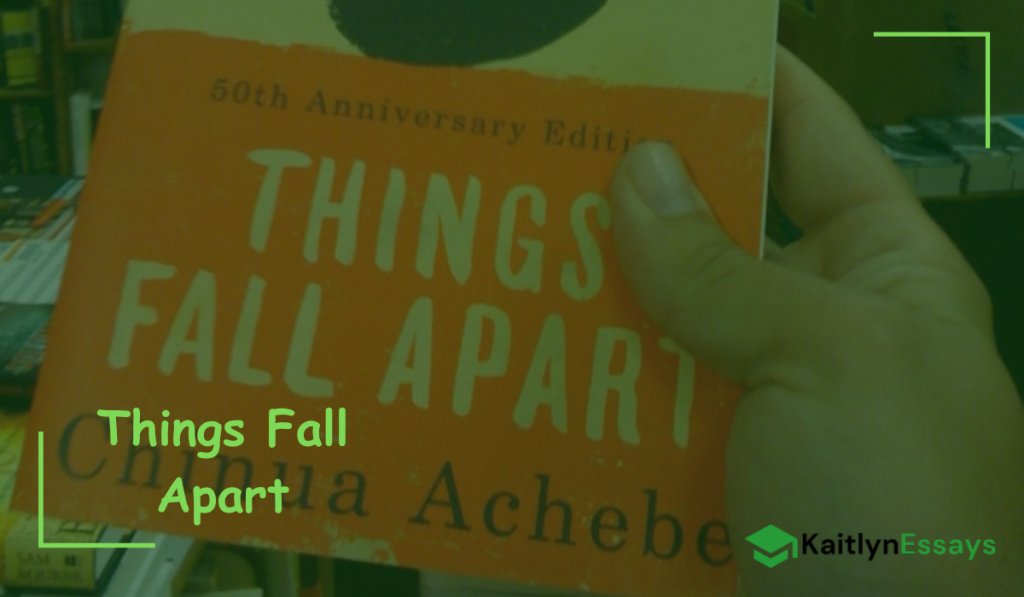
Things Fall Apart by Chinua Achebe is a groundbreaking novel that captures the clash between traditional Igbo society and the forces of colonialism in late 19th-century Nigeria. Through the story of Okonkwo, a respected leader in his village, Achebe explores themes of identity, change, and the struggle to maintain cultural heritage amidst external pressures. The novel provides a vivid portrayal of life in a pre-colonial African community, showcasing its customs, values, and challenges. At the same time, it highlights the devastating impact of colonial rule on individuals and societies. Achebe’s work is not just a powerful narrative but also a response to Western representations of Africa, offering a perspective rooted in African experiences. As one of the most widely studied African novels, Things Fall Apart continues to resonate with readers and serves as a vital commentary on cultural disruption and resilience.
Summary of Things Fall Apart
Part 1: The Genesis of Okonkwo’s World – Ambition and Tradition
Things Fall Apart plunges us into the heart of Umuofia, a vibrant and complex Igbo village in pre-colonial Nigeria. We are introduced to Okonkwo, a man driven by an intense fear of weakness and failure, a shadow cast by the perceived inadequacies of his father, Unoka. Unoka was a man of debts, music, and perceived laziness, qualities Okonkwo deeply despises and is determined to avoid. We witness Okonkwo’s ascent to power and prestige; he is a formidable wrestler, a successful yam farmer, and a respected warrior, embodying the Igbo ideals of hard work, strength, and adherence to tradition. His life is a testament to his relentless drive and the values he holds dear within the intricate social fabric of his community. He is a man of action, whose life is a constant battle against perceived weakness.
Intrigued by Okonkwo’s origins and the world that shaped him? Find out more here.
Part 2: A Fatal Mistake and the Weight of Custom – Exile and Reflection
Okonkwo’s meticulously constructed world begins to crumble when he accidentally kills a clansman during a funeral ceremony. This act, while unintentional, is a grave offense against the Earth goddess and the laws of his community. He is forced into exile for seven years to his mother’s village, Mbanta. This exile is more than a personal setback; it becomes a symbolic fracture in his life. While in Mbanta, we observe the communal support structures of the Igbo people and their complex relationships, but also the seeds of doubt that start to creep into Okonkwo’s rigid worldview. He struggles with the perceived loss of status and feels the sting of being removed from the world he had so carefully built. His experiences during exile provide critical insight into the interconnectedness of the Igbo society.
Curious to explore the aspects of Igbo law and the repercussions of accidental violence? Find out more here.
Part 3: The Winds of Change – The Arrival of Colonialism
While Okonkwo is in exile, a disruptive force enters the Igbo world: the arrival of white missionaries and colonial administrators. These newcomers bring with them a foreign religion, Christianity, and a radically different system of governance. Initially, many villagers are wary and dismissive of these outsiders and their strange beliefs, but gradually, some, drawn by the promise of a different social order or seeking refuge from the complexities of Igbo tradition, begin to convert. The missionaries build a church, and the colonial administration establishes a foothold, laying the foundation for a new power dynamic that directly challenges the authority of the traditional Igbo leadership, creating a growing sense of unease and instability. We witness the slow but steady erosion of the traditional ways.
Fascinated by the early days of colonial intrusion and the cultural clashes that ensued? Find out more here.
Part 4: The Unraveling – Resistance and Tragic Defiance
Upon his return to Umuofia after seven long years, Okonkwo is confronted with a village vastly different from the one he left behind. The white man’s influence has become deeply embedded, with many of his people embracing Christianity and the colonial order. He sees his people divided, his culture undermined, and his personal authority diminished. Unable to accept this new reality and consumed by a deep sense of hopelessness, Okonkwo attempts to rally his people to resist the encroaching colonial power. He believes he can restore the old order through force, but his efforts fall on deaf ears, revealing a community no longer united and willing to fight. In a final, desperate act of defiance, Okonkwo commits an act that ensures his tragic downfall. The novel ends on a poignant and heartbreaking note, illustrating the brutal impact of colonialism and the shattering of a once-proud society.
Eager to understand the devastating climax of this epic tragedy? Find out more here.
Characters
Okonkwo
Okonkwo is the protagonist, a powerful and respected leader in Umuofia whose life is dominated by a fear of weakness and a relentless pursuit of success, stemming from his disdain for his father, Unoka. He embodies the Igbo ideals of strength and hard work but struggles with compassion and the acceptance of change, ultimately leading to his tragic downfall. He’s a man whose internal conflicts are as intense as his external displays of power.
Understand Okonkwo’s complex psychology and his ultimately self-destructive path.
Unoka
Unoka, Okonkwo’s father, is presented as a debtor and a perceived failure in Igbo society, a man who valued music and socializing over material success, embodying the qualities Okonkwo desperately rejects, thus becoming the root of his son’s relentless ambition. He is a character that makes the reader reflect on the limitations of traditional measures of success.
Explore how Unoka’s life choices contrast with those of his son, Okonkwo.
Nwoye
Nwoye, Okonkwo’s eldest son, is a sensitive young man who struggles to conform to his father’s expectations of masculinity, ultimately finding solace in the new religion of Christianity, which alienates him from his family and tradition. His journey illustrates the impact of colonialism on the younger generation and the breakdown of family ties.
Investigate Nwoye’s transformation and the causes for his rejection of traditional Igbo ways.
Ezinma
Ezinma, Okonkwo’s favorite daughter, is an intelligent and spirited young woman who possesses a strength and independence often associated with male figures, earning her a special place in her father’s heart, despite being a woman in a patriarchal society. Her character challenges traditional gender roles and showcases the resilience of Igbo women.
Learn how Ezinma’s character challenges traditional gender roles and inspires admiration.
Obierika
Obierika, Okonkwo’s closest friend, serves as a voice of reason and a critical observer of his society, often questioning the rigid traditions and expressing concern over the growing influence of colonialism, providing the reader with a balanced view of the events. His role highlights the aspects of Igbo culture and the impact of colonial disruption.
Examine Obierika’s perspective on tradition and his role as a thoughtful guide for the reader.
Ikemefuna
Ikemefuna is a young boy from a neighboring village who comes to live with Okonkwo’s family as a peace offering; he forms a close bond with Nwoye and Okonkwo, but his tragic fate reveals the dark side of the Igbo customs. His presence and death are pivotal in the story’s progression, demonstrating a stark illustration of the rigid rules of the community.
Understand how Ikemefuna’s tragic story highlights the brutality of some Igbo traditions.
Mr. Brown
Mr. Brown is the first white missionary in Umuofia; he adopts a more gentle and understanding approach to conversion, seeking common ground with the Igbo people, establishing a school and hospital, before being replaced. He embodies a more subtle approach to cultural collision.
Explore how Mr. Brown’s methods of engagement differ from later colonial figures.
Reverend James Smith
Reverend James Smith replaces Mr. Brown, and unlike his predecessor, he is rigid and intolerant, demanding that converts reject all aspects of their traditional Igbo culture, thus intensifying the conflict between the church and the Igbo people. His actions demonstrate the destructive zeal of some missionaries.
See how Reverend Smith’s more aggressive tactics contribute to the increasing tension in Umuofia.
The District Commissioner
The District Commissioner represents the authority of the British colonial government, and he embodies a condescending and dismissive attitude toward the Igbo people and their culture, treating them as simple and primitive, thus revealing the exploitative nature of the colonial project. His actions and words underscore the power imbalance and cultural insensitivity of the colonial administration.
Examine the District Commissioner’s perspective and his role in the destruction of Igbo society.
Themes in Things Fall Apart
Masculinity and the Destructive Fear of Weakness
The novel explores the complex construction of masculinity within Igbo society, demonstrating how Okonkwo’s rigid adherence to a narrow definition of strength and his obsessive fear of appearing weak, traits he associates with his father, Unoka, become his tragic flaw. This theme exposes how societal pressures to conform to specific gender roles can lead to emotional repression, a lack of empathy, and ultimately, self-destruction, showing the dangers of denying vulnerability.
The Devastating Clash of Cultures and Colonial Impact
Things Fall Apart meticulously portrays the destructive impact of colonialism on the vibrant and complex Igbo society, detailing the collision between indigenous traditions and the imposition of Western values. The novel doesn’t shy away from showcasing how the arrival of missionaries and colonial administrators leads to the gradual erosion of Igbo customs, the undermining of traditional authority, and the fragmentation of cultural identity, leaving a legacy of trauma and loss.
The Complex Relationship Between Tradition and Necessary Change
The novel explores the intricate and often conflicting relationship between tradition and the need for adaptation, examining how the Igbo people grapple with the sudden arrival of the white man and the challenges to their time-honored customs, beliefs, and social structures. This theme prompts reflection on the value of preserving cultural heritage while also acknowledging the need for flexibility in the face of new realities, a tension that many societies constantly navigate.
The Interplay of Fate, Free Will, and Personal Responsibility
Things Fall Apart probes the philosophical question of fate versus free will, as Okonkwo’s life appears to be shaped by a series of fateful events and misjudgments that ultimately culminate in his tragic demise. The novel doesn’t offer easy answers, instead, it encourages reflection on how external forces interact with personal choices in shaping individual lives and exploring the degrees to which individuals are responsible for their destiny.
The Power of Language, Storytelling, and Cultural Preservation
The novel highlights the profound significance of oral tradition and storytelling within Igbo culture as vital tools for preserving history, transmitting cultural values, and fostering a sense of community and intergenerational connection. This theme underscores the cultural importance of language and its capacity to shape individual and collective identities while exploring the impact of losing these vital practices through colonialism.
The Fragility of Social Structures and Community
Things Fall Apart vividly illustrates the fragility of social structures and the delicate balance of power within any community, showing how the seemingly stable and unified Igbo society gradually unravels when faced with external pressures, internal divisions, and the erosion of its core values. This theme emphasizes that even strong social structures require careful maintenance and can be easily destabilized by forces both within and without.
The Tension Between Individual Ambition and Communal Responsibilities
The novel explores the inherent tension between individual ambition and communal responsibilities, as Okonkwo’s relentless drive for personal achievement and social status often clashes with the established norms and expectations of his society, leading to internal conflicts and ultimately, a sense of alienation. This theme shows the complex dynamics between personal desires and the social contracts that bind communities together.
The Destructive Nature of Fanaticism and Unyielding Ideologies
Things Fall Apart cautions against the dangers of fanaticism, demonstrating how the rigid adherence to any single ideology – be it Okonkwo’s uncompromising loyalty to tradition or Reverend Smith’s dogmatic religious zeal – can lead to destructive and ultimately tragic consequences. This theme reveals how a lack of flexibility and tolerance can destabilize communities and fuel conflict, and shows how these ideologies do not promote positive growth.
Symbols in Things Fall Apart
Yams
Yams are a powerful symbol in Things Fall Apart, representing masculinity, wealth, and hard work within the Igbo society. Okonkwo’s success as a yam farmer is directly tied to his status and reputation, showcasing how the cultivation and ownership of yams are deeply ingrained in the culture’s definition of manhood and prosperity. This symbol highlights the importance of agriculture and the deep connection to the land in Igbo life.
The Kola Nut
The kola nut is a significant symbol of hospitality, respect, and social connection within the Igbo community. Its ritualistic sharing signifies the bonds between individuals, the importance of welcoming guests, and the respect for elders and ancestors. This symbol underscores the value placed on community and social interaction in Igbo culture.
The Egwugwu
The egwugwu, masked figures representing ancestral spirits, symbolize the authority of tradition and the community’s legal and spiritual systems. Their appearance at trials and ceremonies demonstrates the deep-seated respect for the ancestors and the role of tradition in maintaining social order. They embody the power and mystery of the Igbo worldview.
Fire
Fire, appearing in various contexts, represents passion, both in its creative and destructive forms. It symbolizes Okonkwo’s intense drive and ambition, as well as the uncontrollable forces that ultimately lead to his downfall, and the explosive conflict between the old world and the new. This symbol reflects the volatile nature of human emotions and the potential for both good and harm.
The Locusts
The arrival of the locusts, initially seen as a welcome event, foreshadows the coming of the white man and represents the overwhelming and disruptive force of colonialism. The locusts, like the colonialists, arrive in great numbers, overwhelming and changing the landscape, ultimately consuming the land and its resources. This symbol acts as a premonition of the impending transformation of Igbo society.
Investigate how the locusts, as a symbol, foreshadow the transformative impact of colonial invasion.
The Chi (Personal God)
The concept of the chi, one’s personal god or guiding spirit, represents the belief in individual destiny and the role of personal fortune in shaping one’s life. Okonkwo often reflects on his chi, as both a source of his success and as a force that can bring about his downfall. This concept highlights the Igbo worldview’s understanding of fate and individual responsibility.
The Iron Horse (Bicycle)
The “iron horse” or bicycle, a new and foreign object introduced by the white man, symbolizes the disruptive forces of colonialism and the encroachment of Western technology and culture. This symbol highlights how new technologies both fascinate and disrupt traditional ways of life, often bringing about unintended consequences. It represents the beginnings of globalization in an insular society.
The Church
The church, established by the missionaries, serves as a potent symbol of the imposition of Western religion and the displacement of traditional Igbo beliefs and practices. It represents the allure of a new system of faith that is incompatible with the Igbo way of life and the devastating effects of religious conversion. It is a visible sign of cultural upheaval.
The Court/Government Building
The court or government building, established by the British colonial administration, is a symbol of the imposed political and legal systems that dismantle the traditional forms of Igbo governance. It represents the authority of the colonial power and the loss of self-determination, signifying a power imbalance and the subjugation of the local population.
Literary Devices Used in Things Fall Apart
Proverbs
Achebe masterfully incorporates Igbo proverbs throughout the novel, using them not merely as decorative language but as a means of conveying the culture’s wisdom, values, and beliefs. These proverbs often encapsulate complex social dynamics, moral lessons, and philosophical insights, providing a window into the Igbo worldview.
Analyze how the use of proverbs enriches the narrative and reflects Igbo cultural understanding.
Foreshadowing
Achebe employs foreshadowing to hint at the tragic events that are to come, creating a sense of unease and inevitability. Subtle clues and recurring motifs, like the accidental killing and the warnings against anger, prepare the reader for Okonkwo’s eventual downfall and the disintegration of his society.
Investigate how Achebe uses foreshadowing to create dramatic tension and a sense of impending doom.
Irony
Achebe utilizes irony to highlight the contradictions and complexities within both Igbo society and the colonial system. Situational irony arises from the unexpected outcomes of events, and dramatic irony creates a tension between what the characters understand and what the reader knows.
Symbolism
The novel is rich with symbolism, where objects, actions, and characters represent broader ideas and themes. Symbols like yams, the kola nut, fire, and the locusts enrich the narrative and add layers of meaning, prompting the reader to analyze the deeper significance of the events and settings.
Analyze the various symbols throughout the novel and how they contribute to its thematic depth.
Imagery
Achebe employs vivid imagery, using sensory details to bring the Igbo world to life for the reader. His detailed descriptions of village life, ceremonies, and natural surroundings create a strong sense of place and allow the reader to experience the novel’s setting with greater intimacy.
Explore how Achebe’s use of imagery creates a powerful and immersive reading experience.
Oral Tradition Techniques
Achebe incorporates elements of oral storytelling, such as repetition, direct address, and a conversational tone, to mimic the style of traditional Igbo narratives. This technique not only enhances the novel’s authenticity but also emphasizes the importance of oral tradition within the culture.
Investigate how the novel’s narrative style reflects the oral tradition of Igbo storytelling.
Contrast
Achebe uses contrast throughout the novel to highlight the differences between opposing ideas, cultures, and characters, such as the contrast between Okonkwo’s strength and his inner fears, or between traditional Igbo society and the encroaching colonial system. These juxtapositions serve to emphasize the novel’s central themes and conflicts.
Examine how Achebe employs contrast to highlight the tensions and transformations in the narrative.
Tragic Hero
Achebe presents Okonkwo as a tragic hero, a character with admirable qualities but also a significant flaw that leads to his downfall. Okonkwo’s hubris, his inability to adapt, and his fear of weakness contribute to his tragic destiny. This device prompts reflection on human limitations and the inevitability of tragedy.
Key Quotes from Things Fall Apart
“Things fall apart; the center cannot hold; Mere anarchy is loosed upon the world.” – W.B. Yeats (Epigraph)
This quote from Yeats’ poem “The Second Coming” acts as the epigraph for the novel and sets the stage for the story’s central theme of societal disintegration. It foreshadows the collapse of traditional Igbo society under the weight of colonialism and the chaos that ensues, providing a framework for understanding the narrative’s trajectory.
Analyze how this epigraph introduces the core themes of the novel and frames its tragic narrative.
“He had no patience with unsuccessful men. He had had no patience with his father.” (Chapter 2)
This quote reveals Okonkwo’s driving force: his intense disdain for weakness and his determination to be unlike his father, Unoka. It highlights the deep-seated fear that fuels his ambition and provides insight into the roots of his rigid personality and his relentless pursuit of success.
“A man who calls his kinsmen to a feast does not do so to save them from starving. They all have food in their own homes.” (Chapter 8)
This proverb, spoken by Obierika, underscores the importance of community and social interaction in Igbo culture. It reveals the purpose of social gatherings as celebrations of kinship and the strengthening of bonds, rather than mere practical necessity.
Investigate how this proverb illuminates the social and cultural practices of the Igbo community.
“The white man is very clever. He came quietly and peaceably with his religion. We were amused at his foolishness and allowed him to stay. Now he has won our brothers, and our clan can no longer act like one.” (Chapter 20)
This quote from Obierika reflects on the insidious nature of colonialism and how it undermines Igbo unity. It illustrates the gradual and often subtle way in which the white man’s influence takes hold, ultimately dividing the community and eroding its traditional power structures.
Examine how this quote reveals the impact of colonial strategies on the social cohesion of Umuofia.
“He could hear the voice of his chi telling him that he had been right to be firm. Perhaps his chi was not made for great things. He had been a man of action, a man of war. Without those qualities he would not be Okonkwo.” (Chapter 24)
This quote shows Okonkwo’s unwavering belief in his own chi and his inability to adapt to changing circumstances. It highlights his rigid adherence to a particular definition of manhood and how his inflexibility contributes to his tragic fate. It underscores how much his identity is defined by action and warfare.
“The white man has put a knife on the things that held us together and we have fallen apart.” (Chapter 24)
This powerful statement by Obierika summarizes the devastating impact of colonialism on Igbo society, portraying the introduction of foreign values as a violent act of separation and disintegration. It emphasizes the loss of cultural unity and the shattering of traditional bonds that sustained the community.
“Okonkwo knew that Umuofia would not go to war. He knew because they had let the other messengers escape. They had broken into the song of lamentation. They had accepted the white man’s religion.” (Chapter 25)
This quote illustrates Okonkwo’s despair and his growing realization of his community’s transformation. He observes how the people’s embrace of Christianity and their acceptance of colonial rule signifies a fundamental shift in their beliefs and values, leading to their passivity. It demonstrates the collapse of their traditional order.
“That man was one of the greatest men in Umuofia. You drove him to kill himself; and now he will be buried like a dog.” (Chapter 25)
This statement by Obierika, spoken to the District Commissioner, is a powerful indictment of the colonial system and its role in Okonkwo’s tragic demise. It highlights the disrespect and dehumanization inherent in colonialism, and the tragic consequences of cultural misunderstandings.
Proverbs from Things Fall Apart
- “Proverbs are the palm oil with which words are eaten.”
- This highlights the significance of proverbs in Igbo communication, enriching speech and giving it depth.
- “If a child washes his hands, he can eat with kings.”
- Hard work, discipline, and respect can elevate a person’s status in life.
- “A man who makes trouble for others is also making it for himself.”
- Causing harm to others often results in negative consequences for the troublemaker.
- “When the moon is shining, the cripple becomes hungry for a walk.”
- Opportunities or beauty can inspire action even in unlikely situations.
- “An old woman is always uneasy when dry bones are mentioned in a proverb.”
- People are sensitive to issues that affect or remind them of their vulnerabilities.
- “Looking at a king’s mouth, one would think he never sucked at his mother’s breast.”
- Great people often appear as though they were never ordinary, but everyone starts from humble beginnings.
- “Eneke the bird says that since men have learned to shoot without missing, he has learned to fly without perching.”
- This reflects adaptability and the need to adjust to changing circumstances to survive.
- “A child cannot pay for its mother’s milk.”
- This acknowledges the unrepayable debt of gratitude owed to one’s parents for their care and love.
- “As a man danced so the drums were beaten for him.”
- A person’s actions determine how others respond to them.
- “The sun will shine on those who stand before it shines on those who kneel under them.”
- Success or favor tends to reach those in higher positions or greater readiness first.
Things Fall Apart Essay Examples
The Inevitable Clash of Change and Tradition
Chinua Achebe’s seminal novel, “Things Fall Apart,” is a powerful exploration of the complexities of cultural collision. Set in pre-colonial Nigeria, the story centers on the tragic downfall of Okonkwo, a respected and fiercely traditional member of the Igbo society, as he and his community grapple with the encroaching forces of change brought by British colonialism. At its heart, the novel is a poignant study of the delicate balance between tradition and change, highlighting the inherent fragility of cultures facing external pressures and the devastating consequences when that balance is disrupted.
The novel opens by immersing the reader in the rich tapestry of Igbo life, showcasing the intricate social structures, customs, and beliefs that define Okonkwo’s world. Tradition is not merely a collection of quaint habits; it is the very fabric of their existence. From the elaborate yam farming practices and the sacred significance of the week of peace to the intricate social hierarchy and the powerful role of ancestral spirits, tradition provides a sense of order, identity, and spiritual connection. Okonkwo himself is a product of this tradition, embodying its virtues of hard work, strength, and a deep-seated fear of weakness and failure. His life is a testament to the power and pervasiveness of these cultural norms.
However, the narrative skillfully foreshadows the impending disruption. We see hints of internal contradictions and vulnerabilities within the Igbo society. The practice of sacrificing twins, the rigid caste system, and the unquestioning acceptance of some traditions suggest that while tradition provides stability, it can also be oppressive and inflexible. This rigidity ultimately makes the society vulnerable when faced with an external force that challenges its foundations.
The arrival of the white missionaries marks the beginning of the dramatic clash between tradition and change. The missionaries, with their new religion and institutions, offer a powerful alternative to the established order. While initially dismissed, their message of salvation and the promise of education begin to appeal to some within the Igbo community, particularly those marginalized by the traditional system, like the osu (outcasts) and those who are simply curious. This internal fracturing within the community highlights the allure and the disruptive potential of change.
Okonkwo, as a staunch defender of tradition, finds himself increasingly at odds with the shifting landscape. His inability to adapt and his reliance on violence, a tactic rooted in his understanding of traditional masculinity, render him increasingly irrelevant and isolated. His tragedy stems from his inability to reconcile his deep-seated reverence for the past with the realities of the changing present. His personal struggle mirrors the larger predicament of his community, which is being slowly and inexorably pulled away from its moorings.
The introduction of British governance further accelerates the breakdown of Igbo society. The establishment of a new legal system and the imposition of colonial authority undermine the traditional structures of power and erode the authority of the elders. The Igbo are forced to reconcile their traditional methods of conflict resolution with the colonial courts, creating a sense of confusion and disorientation.
Ultimately, the novel illustrates that change is an inevitable force that cultures must learn to navigate. While tradition provides a sense of identity and stability, an unwavering adherence to the past can lead to rigidity and vulnerability. The Igbo’s failure to adapt to the changing circumstances, coupled with the brutal imposition of colonial rule, ultimately leads to the “things falling apart,” a disintegration not only of their society but also of Okonkwo’s personal world.
“Things Fall Apart” is not merely a lament for a lost way of life but a complex exploration of the challenges of cultural interaction. It highlights the importance of understanding both the value of tradition and the need to adapt to change. In this regard, Achebe’s novel remains remarkably relevant, serving as a poignant reminder of the delicate balance required to maintain cultural identity in the face of an ever-evolving world. It is a story that compels us to reflect on our own relationship with tradition and the inevitable forces of change that shape our lives and societies.
Portrayals of Women in “Things Fall Apart”
Chinua Achebe’s “Things Fall Apart” offers a complex portrayal of Igbo society in pre-colonial Nigeria. While the narrative primarily focuses on the experiences and struggles of men, the women of Umuofia play a vital, albeit often understated, role in shaping the cultural landscape and influencing the course of events. Though often relegated to the domestic sphere and subjected to patriarchal norms, the women in the novel are not mere passive figures; they possess a subtle strength, resilience, and influence that permeates the very fabric of Igbo life. By examining the lives of characters like Ekwefi, Nwoye’s mother, and the priestess Chielo, we gain a deeper understanding of the intricate and often paradoxical position of women within this traditional society.
On the surface, the women in “Things Fall Apart” seem to occupy a subordinate position. The Igbo society, as depicted by Achebe, is undeniably patriarchal, with men holding the majority of the political, economic, and social power. Women are largely confined to the domestic sphere, responsible for tending to the home, cultivating crops, and raising children. Their primary worth is often measured by their ability to bear sons, a crucial factor in maintaining the lineage and strength of the clan. The novel often highlights this societal expectation through the emphasis placed on Okonkwo’s desire for male offspring and the harsh judgment faced by those who fail to produce them. This reinforces the notion of women’s value being tied to their reproductive capabilities.
However, a closer reading of the text reveals a more detailed picture. The women, despite their seemingly limited roles, possess significant influence within the community. Their nurturing and emotional labor are essential to the well-being of their families and the cohesion of the clan. The act of preparing meals, maintaining the home, and raising children are not simply mundane tasks; they are integral to the survival and continuation of the culture. The women are the keepers of traditions, passing down stories, songs, and customs from one generation to the next. This quiet power is often overlooked but forms a vital part of the Igbo cultural heritage.
Ekwefi, Okonkwo’s second wife, exemplifies the complexity of women’s experiences. Her fierce devotion to her daughter, Ezinma, shows that women are capable of intense love and deep emotional investment. Ekwefi’s rebellious spirit, stemming from her initial defiance of societal expectations, is apparent in her unwavering dedication to protecting Ezinma, highlighting a strength and determination that defies the patriarchal norms. This defiance, while sometimes subtle, indicates a refusal to be completely subdued by societal expectations.
Similarly, Nwoye’s mother, despite her seemingly passive demeanor, provides emotional support and stability to her family. Though she is largely silent and obedient, she is not devoid of agency. Her role in nurturing Nwoye and her quiet strength in dealing with the violence in her household highlights the resilience and internal fortitude often present in the women. This subtle power reveals the complexities of women’s experience within a patriarchal society.
The portrayal of Chielo, the priestess of Agbala, offers yet another dimension of women’s role. As a woman possessed by the spirit of a powerful deity, she transcends traditional gender roles and wields considerable influence within the spiritual realm. Her authority is a testament to the spiritual significance of women within the Igbo belief system. She highlights the possibility for women to command respect and influence through spiritual connections and knowledge.
However, it is crucial to acknowledge that the novel also acknowledges the limitations faced by women within the Igbo society. They are often marginalized in political and social discourse and are subject to patriarchal control and abuse. They are not immune to the violence and societal pressures prevalent within this patriarchal system. The novel, therefore, does not shy away from depicting the harsh realities of women’s lives under male dominance.
In conclusion, “Things Fall Apart” presents a complex portrayal of women. While the novel does not shy away from depicting the patriarchal structure of Igbo society and the limitations imposed on women, it also reveals their essential contributions to the cultural, social, and emotional fabric of their community. Women are not merely passive recipients of tradition, but rather active agents in their own lives, possessing a quiet strength and resilience that is often overlooked. Through the complex portrayals of characters like Ekwefi, Nwoye’s mother, and Chielo, Achebe highlights the complexity of women’s experiences within a traditional setting, reminding us that power and influence can often manifest in subtle and unexpected ways. The subdued strength of these women is a crucial element in understanding the complexities of Igbo culture and serves as a powerful commentary on the human condition within any society defined by rigid patriarchal norms.
Repression and the Inevitable Tragedy in Achebe’s “Things Fall Apart”
Chinua Achebe’s “Things Fall Apart” is a profoundly moving and ultimately tragic tale that explores the devastating consequences of societal pressures and the repression of individual desires within a rapidly changing world. Set in pre-colonial Nigeria, the novel meticulously depicts the intricate social structures and traditional values of the Igbo people, but it also lays bare the inherent vulnerabilities and tragic ironies that arise from the rigid adherence to these norms. The story of Okonkwo, a man driven by a desperate need to avoid the perceived weakness of his father, becomes a powerful exploration of how repression, both internal and external, can lead to personal and societal tragedy.
At the heart of the novel is Okonkwo’s relentless struggle against any hint of weakness. He is a man defined by his fear of resembling his father, Unoka, who is depicted as lazy, improvident, and ultimately unsuccessful. This fear drives Okonkwo’s every action, motivating his unwavering commitment to hard work, strength, and aggression. He represses any display of tenderness or vulnerability, viewing such emotions as signs of femininity and weakness. This internal repression shapes his relationships with his family, particularly with his son, Nwoye, who finds himself alienated by his father’s constant demand for rigid conformity.
Okonkwo’s obsession with strength and his suppression of his own emotional needs creates a cycle of violence that permeates his life. His impulsive actions, such as beating his wives and even killing Ikemefuna, demonstrate his inability to manage his emotions in a healthy or constructive way. This repressed emotional life, fueled by a deep-seated fear of being perceived as weak, not only causes suffering for those around him but also contributes to his own inner turmoil. The tragic irony is that, in his desperate attempt to avoid resembling his father, he inadvertently perpetuates a cycle of violence and emotional distance that further isolates him.
The Igbo society itself, while rich in tradition and community, also plays a significant role in fostering an environment of repression. While the community is characterized by strong bonds and shared values, there is also a rigid adherence to traditional roles and expectations, leaving little room for individual expression or deviation. This is particularly evident in the expectations placed upon men, who are expected to be stoic, strong, and providers for their families. Any sign of weakness or vulnerability is viewed with disdain, creating a culture where emotional repression becomes a norm. This communal pressure to conform contributes to Okonkwo’s inability to express himself openly and seek help when needed.
Furthermore, the arrival of the white missionaries and the subsequent imposition of colonial rule introduce a new form of external repression. The missionaries, with their new religion and institutions, challenge the traditional values and beliefs of the Igbo people. The establishment of colonial courts and the undermining of the traditional power structures force the Igbo to confront a reality that is alien to their deeply ingrained cultural norms. This external pressure to conform to a new order further compounds the internal pressures already present within the Igbo society.
The collision between Okonkwo’s internal struggles and the external forces of change ultimately leads to tragedy. His inability to adapt and his rigid adherence to tradition make him increasingly irrelevant in the face of the changing times. His final act of defiance, the killing of a messenger of the colonial government, is a desperate attempt to reclaim his lost power and status. But it is also an act of futility, as it highlights his isolation and inability to cope with the new realities. His eventual suicide represents not only a personal tragedy but also the tragic downfall of a society struggling to adapt to the forces of change.
In conclusion, “Things Fall Apart” is a powerful portrayal of the devastating impact of repression. Okonkwo’s tragic journey is a testament to the destructive consequences of internal repression, driven by a fear of weakness and a desperate need to adhere to societal expectations. The novel also highlights the external forms of repression faced by the Igbo people due to the rigid adherence to tradition and the imposition of colonial rule. Ultimately, the story serves as a cautionary tale, demonstrating how the repression of individual desires and the inability to adapt to change can lead to personal and societal tragedy. Through Okonkwo’s downfall, Achebe compels us to reflect on the complex interplay between individual agency, cultural norms, and the inevitable forces of change that shape our world.
Achebe’s Aims in “Things Fall Apart”
Chinua Achebe’s “Things Fall Apart” is more than just a compelling narrative; it is a powerful literary intervention aimed at reshaping perceptions of Africa and its people. Written in response to the often stereotypical and dehumanizing portrayals of Africans in colonial literature, Achebe’s novel serves as a deliberate and complex project with several key aims. These include reclaiming the narrative of African history and culture, challenging the dominant Western perspective, illuminating the complexities of Igbo society, and exploring the devastating consequences of colonialism. By examining these aims, we gain a deeper appreciation for the enduring relevance and significance of “Things Fall Apart.”
One of Achebe’s primary aims was to challenge the prevailing Western stereotypes of Africa as a primitive and uncivilized continent. Colonial literature often depicted Africans as barbaric savages lacking history, culture, or sophisticated social structures. Achebe sought to counter this dehumanizing portrayal by presenting a complex and detailed portrait of Igbo society in pre-colonial Nigeria. He meticulously depicts the rich traditions, complex social hierarchies, intricate belief systems, and sophisticated agricultural practices of Umuofia, demonstrating that the Igbo were far from the primitive caricatures presented by colonial writers. By offering this authentic and detailed perspective, Achebe reclaimed the narrative of African history and culture, giving voice to a people whose stories had been largely ignored or misrepresented.
Furthermore, Achebe’s aim was to critique and subvert the dominant Western perspective on history and culture. He challenges the idea that Western civilization is inherently superior to other cultures by highlighting the flaws and vulnerabilities of the colonizers’ worldview. He exposes the hypocrisy and moral failings of the missionaries and the colonial administrators, depicting them not as benevolent saviors but as agents of cultural destruction. Achebe demonstrates that colonialism is not a civilizing force but rather a destructive one that disrupts and dismantles existing social structures and belief systems. By inverting the traditional power dynamic and presenting the colonizers through the lens of the colonized, Achebe forces readers to question their assumptions about progress, civilization, and the validity of Eurocentric perspectives.
Another key aim of Achebe was to illuminate the complexities and contradictions of Igbo society itself. While he celebrates the richness and resilience of Igbo culture, he does not present an idealized or romanticized vision. He portrays both the strengths and weaknesses of the traditional system, acknowledging its internal tensions and inequalities. He shows that while the Igbo society is characterized by strong community bonds and shared values, it is also marked by rigid adherence to tradition, gender inequality, and a capacity for violence. By depicting the complexities of the society, Achebe avoids creating a simplistic or monolithic view of African culture, highlighting that like all societies, Igbo culture is diverse, complex, and ever-evolving.
Achebe also aimed to explore the devastating consequences of colonialism on both individual lives and entire communities. The novel charts the slow disintegration of Igbo society as a result of the imposition of colonial rule. The introduction of a new legal system, the undermining of traditional authority, and the erosion of their cultural identity all contribute to the “things falling apart.” By depicting the social and psychological impact of colonialism, Achebe underscores the destructive effects of cultural imposition and the enduring legacy of injustice. He also highlights the internal divisions and conflicts that arise within the Igbo community as a result of the forces of change, demonstrating that colonialism doesn’t just destroy a culture from the outside, but also from within.
Finally, through the tragic figure of Okonkwo, Achebe also aimed to explore the complexities of human nature and the universal themes of ambition, fear, and the struggle to adapt to change. Okonkwo’s downfall is not simply a result of colonial intervention but also the product of his own personal flaws and limitations. His unwavering adherence to tradition and his inability to reconcile his deep-seated fears with the changing realities ultimately lead to his demise. In this way, Achebe presents a complex and human story that goes beyond the specific historical context, exploring the universal challenges that all societies face when confronted with the forces of change.
In conclusion, the aims of Achebe in writing “Things Fall Apart” are complex and profound. He sought to challenge Western stereotypes of Africa, reclaim the narrative of African history and culture, critique the dominant Western perspective, illuminate the complexities of Igbo society, and explore the devastating consequences of colonialism. Through his masterful storytelling and complex characters, Achebe achieves these aims and leaves a lasting impact on readers. His novel remains a powerful testament to the importance of cultural understanding, the need for diverse perspectives, and the enduring power of literature to shape our understanding of the world.