

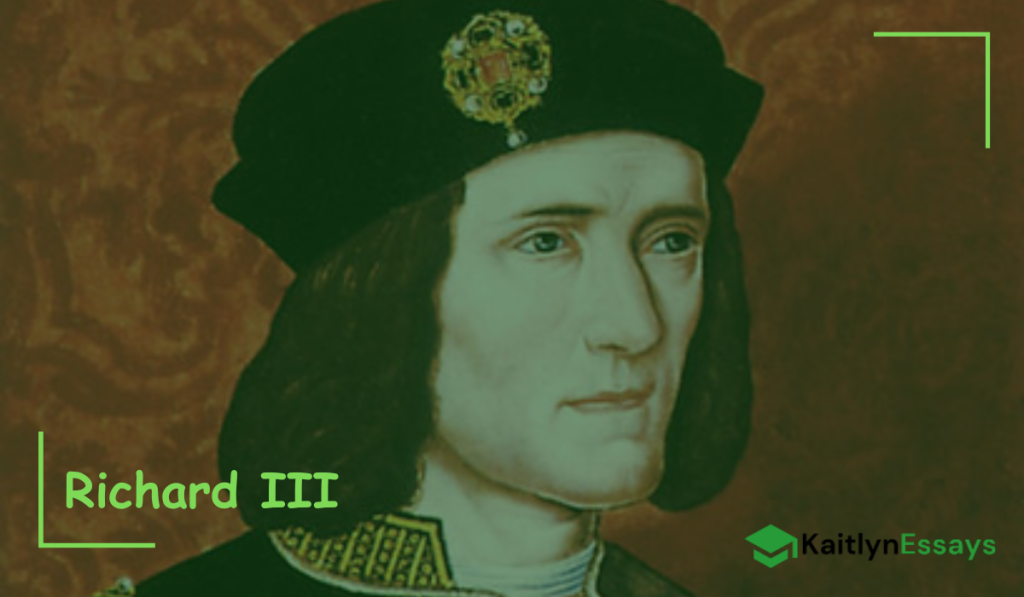
Richard III is a famous play by William Shakespeare that tells the story of Richard, Duke of Gloucester, and his rise to power as King of England. It was written around 1592 and is part of Shakespeare’s history plays. The play focuses on Richard, a cunning and ruthless character who stops at nothing to achieve his goals. He uses lies, betrayal, and even murder to remove anyone standing in his way. The story shows how ambition and greed can lead to destruction, both for the person seeking power and for those around them. Despite his evil deeds, Richard’s cleverness and boldness make him one of Shakespeare’s most interesting characters.
The play also explores the effects of war, family conflict, and the struggle for control. Richard III remains a powerful story about how unchecked ambition can cause great harm. It continues to captivate audiences today.
Summary
Act I: Seeds of Discontent
The play opens not with action, but with a chilling soliloquy by Richard, Duke of Gloucester. He announces his ambition to seize the throne, a desire born from his physical deformities and his perception that he is ill-suited for peacetime pursuits. He’s a master manipulator, laying bare his cynical view of the world and his intention to exploit those around him. He frames himself as a victim of his family’s success and vows to disrupt their harmony. We see him actively plotting against his brothers, Clarence and King Edward IV. He orchestrates Clarence’s imprisonment by manipulating King Edward, playing on the King’s distrust and insecurity.
Then, using subtle lies and insinuations, he turns the very people who might have protected Clarence against him, leading to his brother’s murder in the Tower of London. Richard also woos Anne Neville, whose husband he killed only days prior, displaying a remarkable ability to sway emotions and exploit grief. This act establishes Richard’s ruthless nature, his manipulative brilliance, and his unwavering determination to achieve his ambition, no matter the cost.
Want to uncover more about Richard’s early machinations and the play’s complex characters? Learn more.
Act II: The Web Tightens
As the act begins, the consequences of Richard’s manipulations unfold. King Edward IV dies, seemingly from a sudden illness, and the kingdom is thrown into disarray. Richard steps into the role of protector of Edward’s young sons, Prince Edward and Richard, who are the rightful heirs. He subtly undermines the authority of the Queen and her family, the Woodvilles, and paints them as ambitious and self-serving. He cunningly uses fear and misinformation to turn the public against them, resulting in the execution of Lord Hastings, a loyal supporter of the young princes, for supposed treason.
Richard then begins to tighten his grip, arresting and imprisoning the young princes in the Tower of London under the guise of ensuring their safety. This act showcases Richard’s ability to use the letter of the law and the structures of governance to achieve his wicked ends, demonstrating the fragility of justice in the face of determined evil. The act ends with the chilling realization that Richard’s power is growing and his manipulations are increasingly effective.
Intrigued by the increasing intensity of Richard’s plotting and the vulnerability of the young princes? Discover more.
Act III: The Throne Within Reach
Richard’s climb to power accelerates in this act. He continues to orchestrate events to make himself the obvious choice as the next King. He stages a public display of reluctance, showing that he is only accepting the crown under the will of the people, whilst the true reality is his own ambition. He has the Lord Mayor of London and other citizens manipulated to ask him to become King. Richard has been manipulating and orchestrating these events from behind the scenes with his powerful and clever network. He also ruthlessly eliminates the people who might pose a threat.
He arranges for the assassination of Lord Rivers, Lord Grey, and Sir Thomas Vaughan, all of whom were closely related to the young princes. The act culminates with the coronation of Richard as King, officially marking his ascendance to the throne. This act is characterized by the blatant audacity of Richard’s deceit and the speed at which he is able to dismantle any opposition to his aims. It portrays him as a master strategist and actor, capable of manipulating both individuals and institutions to his benefit.
Want to know more about the plotting and the moral decay at the heart of the play? Explore more.
Act IV: Reign of Terror and Growing Unease
Now King, Richard’s reign begins to show cracks. While he initially enjoyed the manipulation and control he is growing more paranoid as he has to deal with the daily running of the kingdom. The act is characterized by a series of brutal actions intended to solidify his rule. The young princes, Edward and Richard, are brutally murdered in the Tower, a shocking act that shows the full extent of Richard’s cruelty and his determination to eliminate any threat to his position. The news of their murder spreads horror and disgust across the land.
Richard’s reign grows increasingly oppressive, leading to growing unease amongst the nobility. His grip begins to falter, even his ally Buckingham begins to turn against him. Richard’s actions create enemies and foster a widespread desire for revenge. The act demonstrates that while Richard may have achieved power, he is finding it increasingly difficult to maintain. There is a growing sense of fear and mistrust which erodes the foundations of his kingdom.
Are you captivated by the moral decay of Richard’s reign and the gathering resistance against him? Find out more.
Act V: The Price of Ambition
The final act sees the culmination of all the previous actions and the final downfall of Richard III. The act is dominated by the battle of Bosworth Field, where Richard’s forces face off against the rebel army led by Henry Tudor. We see a different side to Richard. During the night prior to the battle, Richard is haunted by the ghosts of those he has murdered, suggesting the guilt he has kept buried is finally rising to the surface.
This signifies his internal struggle with the morality of his actions. Richard fights with desperate courage, but the forces against him are too great. In a dramatic final scene, he is killed, and Henry Tudor becomes King Henry VII, marking the end of the York dynasty and the beginning of the Tudor era. This act provides a powerful sense of justice, revealing that even those who rise through the most extreme treachery and violence will be bought to account. It brings about a return to order and stability.
Eager to understand the tragic fate of Richard and the play’s ultimate message? Discover more.
Characters
Richard, Duke of Gloucester/Richard III:
Richard is the central figure and the engine of the play’s plot. He is physically deformed, with a hunchback and a withered arm, which he uses as a justification for his villainy. From the beginning, he declares his ambition to be king, a goal he pursues with ruthless efficiency. He is a master manipulator, able to charm, lie, and use others to achieve his ends.
He is incredibly intelligent, possessing a sharp wit and a profound understanding of human psychology. He often speaks directly to the audience, sharing his plans and intentions, making him an unusually engaging antagonist. He is completely amoral, unburdened by conscience or loyalty, driven solely by his lust for power. His character is complex, a mix of calculated brutality and dark charisma that is both horrifying and compelling. Ultimately, Richard’s ambition consumes him, leading to his own demise.
Want to explore Richard’s complex nature and motivations further? Learn more.
King Edward IV:
Edward is Richard’s older brother and the reigning King at the start of the play. He is portrayed as a somewhat passive ruler, more interested in pleasure than in politics. He is easily manipulated by Richard, who exploits his insecurities and distrust of those around him. Edward’s weakness and inability to see through Richard’s schemes pave the way for the tragedy that unfolds. His death is a key event, allowing Richard to seize the opportunity to pursue his own ambitions. While not a major figure, he’s important because his ineffective rule creates the vacuum that Richard fills.
Interested in the significance of Edward’s actions and their consequences? Learn more.
George, Duke of Clarence:
Clarence is another of Richard’s brothers and, initially, a target of Richard’s scheming. He’s a weak man, easily swayed by the words of others. Richard manipulates him into distrusting the King and then, later, manipulates the King into ordering his execution. Clarence’s murder marks the first major act of violence orchestrated by Richard on his path to the throne. He serves as an example of Richard’s ruthlessness and his ability to destroy those close to him. His dream sequence just before his death suggests that he has an awareness of his impending fate.
Curious to know more about Clarence’s vulnerability and the impact of his demise? Learn more.
Queen Elizabeth:
Elizabeth is the wife of King Edward IV and mother of the young princes. She is a strong and protective mother, fiercely devoted to her children’s safety and rights to the throne. She distrusts Richard from the start and is consistently fearful of his influence. She is helpless as she watches Richard systematically dismantle her family’s power and ultimately have her sons killed. She represents innocence and maternal anguish in the face of Richard’s villainy. Her grief is a powerful reminder of the human cost of Richard’s actions.
Intrigued by Elizabeth’s struggles and the impact of her experience? Learn more.
Lady Anne Neville:
Anne is the widow of Edward, Prince of Wales, and Richard’s former sister-in-law. Richard woos her shortly after killing her husband, demonstrating his manipulative skills and audacity. Anne is initially repulsed by Richard, but she is gradually swayed by his words. However, her relationship with him is never portrayed as a loving one, and she eventually becomes a prisoner of his ambition. She serves as a victim of Richard’s machinations, representing the vulnerable women caught in his web of deceit and violence.
Do you find Anne’s tragic fate and her relationship with Richard compelling? Learn more.
Duke of Buckingham:
Buckingham is initially Richard’s most loyal supporter and a key figure in his rise to power. He is intelligent and ambitious himself, assisting Richard in his schemes. However, he begins to question Richard’s actions and eventually turns against him. This shift in loyalty highlights the growing opposition to Richard. His rebellion, however short lived, demonstrates that even Richard’s allies cannot stomach his brutality indefinitely.
Want to understand the complexities of Buckingham’s shifting loyalties? Learn more.
Earl of Richmond/Henry Tudor:
Henry Tudor is the leader of the rebel forces who oppose Richard at the battle of Bosworth Field. He is presented as the virtuous alternative to Richard’s tyranny. He is a symbol of hope and the promise of a new, more just reign. His victory over Richard marks the end of the play and a transition to a new era in English history. He serves as the catalyst for the downfall of Richard and the restoration of order.
Are you interested in how Henry’s character represents the end of Richard’s reign? Learn more.
Themes in Richard III
Ambition
Richard’s ambition isn’t simply a desire for power; it’s a consuming fire that drives him, warping his morality and ultimately leading to his self-destruction. The play doesn’t just show that he’s ambitious; it explores how ambition can become a pathology. We see how Richard’s perception of his physical deformities fuel his ambition, creating a warped sense of entitlement. He feels cheated by nature and, therefore, believes he is justified in taking what he desires. This is not just about political power, but about proving himself, to compensate for what he sees as his shortcomings.
His ambition blinds him to empathy and humanity and ultimately makes him isolate himself from those that may have helped him. The play also makes us question if ambition has an inherently corrupting influence, or if Richard’s own evil nature simply makes it so. We can see that whilst power is an obvious aim, Richard’s ambition becomes less about that and more about how he can demonstrate his cunning and cleverness. The theme isn’t just a statement about the dangers of ambition, but a profound exploration of its psychological depths.
Want to explore the psychological depths of Richard’s ambition further? Learn more.
Deception and Manipulation
The deception in Richard III is not just simple lying; it’s a sophisticated form of psychological manipulation. Richard doesn’t just tell untruths; he crafts narratives that exploit the fears and prejudices of others, twisting events to suit his aims. His skill lies in his ability to understand how people think, to identify their weaknesses and use them against them. The play demonstrates how easily individuals and even whole groups can be manipulated when trust is fractured and emotions run high.
Richard uses different techniques on different characters, which shows how he understands each person. His wooing of Anne is an obvious example, however, he also uses fear against the citizens and lies to the lords. The theme highlights the fragility of truth in the face of determined deceit and raises questions about the responsibility of the listener to discern reality from manipulation. We are made to question how do we know what is real? The prevalence of this manipulation creates a climate of suspicion which destabilizes any form of trust.
Interested in how Richard’s manipulation shapes political events and personal relationships? Learn more.
The Nature of Evil
Shakespeare doesn’t present Richard as a simple caricature of evil. He is a complex character, capable of charm, wit, and even a perverse kind of charisma. This makes his evil all the more disturbing. The play asks if evil is an inherent trait or a result of environment, circumstance, and perhaps even a choice. The psychological insights into Richard’s motives allow us to see how an individual can become monstrous. We may even see some reasons why he sees himself as a victim of circumstance which, however twisted, could be part of his rationale for his actions.
The play explores the seductive nature of evil as we, the audience, are often drawn to Richard’s clever plotting and his soliloquies. It’s not just about the horrors of evil, but its seductive power and how it can corrupt not just the individual who embodies it, but also those around him. The play shows us that even human monsters are still, fundamentally, human.
Want to understand the complexities of Richard’s evil nature and its effect on those around him? Learn more.
Appearance vs. Reality
The theme of appearance versus reality extends beyond Richard’s own deceit. The play emphasizes how readily people are fooled by surfaces and outward displays. Characters frequently misjudge others, focusing on appearances rather than true motives. We see people trust those who they should suspect and distrust the loyal. This theme highlights the importance of discernment and the dangers of taking things at face value. Richard is not alone in the use of this theme as we see the characters in the play often use appearances to hide their own true motives and actions.
This further serves to muddy the waters of trust and reality. This theme forces the audience to question their own assumptions and to see the world beyond superficial understanding. The political system itself is also shown as an appearance, being used by Richard for his own benefit, which highlights the danger when the truth is no longer valued or sought after.
Curious to know more about the deceptive nature of appearances and its consequences within the play? Learn more.
Fate and Free Will
The question of whether Richard is a free agent or a pawn of fate is a central tension in the play. While initially, he appears to orchestrate his own destiny, he later becomes haunted by the ghosts of his victims, indicating that his actions have consequences. This raises the question: Are we controlled by fate, or are we responsible for the choices we make?
The play shows how Richard initially sees the world as a series of hurdles for him to overcome with his skill and cunning. It is only in the final act that he starts to seem to consider that maybe he is not the master of his own destiny. His dream the night before battle suggests that his past actions are now taking control over him. It also raises questions about whether past sins can be atoned for or if individuals must inevitably bear the burden of their choices.
Interested in the play’s exploration of human agency and the forces that shape our lives? Learn more.
Justice and Retribution
The theme of justice in Richard III is not simply about legal punishment; it’s about a deeper sense of moral order being restored. While Richard achieves his goals through injustice and brutality, the play ultimately demonstrates that his actions will not go unpunished. This is achieved in several ways, but the most obvious is through his death at the hands of Richmond and the end of his tyranny.
The haunting by the ghosts represents the idea that his own actions and conscience are coming to bear on him. The play highlights the importance of accountability and the need for moral consequences to follow evil actions, even if those consequences are delayed. This is further highlighted by the contrast between the horror of Richard’s rule, and the hope of the new Tudor era.
Want to see how justice is ultimately achieved and order is restored within the play’s universe? Learn more.
The Power of Language
Language in Richard III is more than just communication; it’s a tool for power, manipulation, and deceit. Richard uses language to charm, deceive, and persuade. His soliloquies reveal his true intentions and invite the audience into his twisted mind. The play emphasizes the power of words to create, destroy, and distort reality. We see that not all characters are so adept at using language and that those who have the skill have the power. The play also highlights the importance of understanding that language can be used for good or ill. It is only through Richard’s careful use of language that he is able to manipulate and control events and people to his own advantage.
Do you want to understand the power of words to shape reality within the play? Learn more.
Symbols in Richard III
Richard’s Physical Deformity
Richard’s hunchback, withered arm, and other physical deformities are not merely physical traits; they are powerful symbols of his inner corruption and moral depravity. In the Elizabethan era, physical imperfection was often associated with moral failing. Richard himself uses his deformity as justification for his villainy, claiming that nature has cheated him and, therefore, he is entitled to seek power by any means necessary.
His deformed body becomes a symbol of his twisted soul and his warped perception of the world. It signifies that outwardly he is different which allows him to justify his internal desire to become something he is not. However, the play also raises questions about whether this is a real cause for his actions or just an excuse for his evil nature.
Want to explore how Richard’s physical appearance is tied to his moral character? Learn more.
The Crown
The crown is a potent symbol of power and legitimacy. Throughout the play, it is the object of Richard’s relentless pursuit and represents his overwhelming ambition. The crown is not just a piece of headwear, but a symbol of authority, status, and the right to rule. For Richard, obtaining the crown is not about serving the kingdom; it’s about satisfying his own desire for control and dominance. The symbol changes throughout the play, representing legitimacy under Edward, an object of desire for Richard, and finally, an unachievable aim for the defeated king. It also symbolizes the fragile nature of power, as it passes through many different hands, finally coming to rest on Henry Tudor’s head.
Interested in understanding the shifting symbolic meaning of the crown in the play? Learn more.
The Tower of London
The Tower of London is not just a location in the play; it’s a symbol of imprisonment, treachery, and death. It is where Clarence is murdered, where the young princes are held captive, and where many other characters meet their demise. It becomes a place of fear and dread. The tower represents the arbitrary nature of power and the dangers of political intrigue. It’s a symbol of the brutal reality of Richard’s reign and his willingness to imprison or destroy anyone who stands in his way. The tower becomes a metaphor for the dark heart of Richard’s rule, where innocence is sacrificed for power.
Curious to explore the symbolism of the Tower as a site of fear and oppression? Learn more.
Dreams and Ghosts
Dreams and ghosts in the play are not just supernatural elements; they are symbolic of the characters’ internal struggles, their guilt, and the consequences of their actions. The ghosts of Richard’s victims haunt him on the eve of battle, revealing his repressed guilt and foreshadowing his imminent downfall. The dreams of Clarence and others foretell the coming tragedies. They are a reminder that past actions will always have repercussions, highlighting the burden of a guilty conscience. They become a symbol of the moral universe asserting its own order, showing that evil actions will always have consequences.
Want to understand the symbolic importance of dreams and ghosts in revealing internal conflicts? Learn more.
The White Rose and the Red Rose
The white rose, the symbol of the House of York, and the red rose, the symbol of the House of Lancaster, represent the ongoing conflict and political instability that plague the play’s world. These flowers aren’t just emblems; they represent the divided loyalties and historical feuds that fuel the power struggles in the play. Richard exploits this division to his own advantage, further emphasizing the destructive consequences of conflict. The red and white roses represent the different sides of the conflict which will, eventually, be united through the marriage of Richmond and Elizabeth.
Interested in the significance of these flowers within the wider context of English history? Learn more.
Animal Imagery
Throughout the play, characters are often compared to animals, which provides symbolism through this imagery. Richard is often likened to a boar, a creature associated with ferocity, cunning, and brutality. This animalistic imagery reinforces his villainous nature. Other characters are described as wolves, sheep, or birds, reflecting their roles as predators, victims, or innocents. The imagery creates a sense of the characters being caught in a struggle for survival which adds to the brutality of the play and reinforces the predatory nature of Richard’s actions.
Want to learn about how animal imagery enhances the depiction of the characters? Learn more.
The Stage Itself
The stage itself can be seen as a symbol of the world, where individuals act out their roles, sometimes knowingly, sometimes not. Richard, in particular, is aware of the performative aspect of his life, often speaking directly to the audience and revealing his manipulative strategies. This blurs the lines between performance and reality and emphasizes the idea that life is a kind of play, with its own share of drama, tragedy, and comedy.
The stage becomes a metaphor for the political world, where power struggles are played out before an audience. The very act of watching the play makes us into observers of these machinations and highlights the idea that the audience plays an important role in this moral universe.
Curious about how the play uses the stage as a symbol of life and performance? Learn more.
Literary Devices in Richard III
Soliloquy
The soliloquy is a hallmark of Shakespearean drama, and Richard is a master of this device. Through his soliloquies, Richard speaks directly to the audience, revealing his inner thoughts, plans, and motivations. This allows us to understand his character on a deep level and become complicit in his schemes. These speeches create a sense of dramatic irony, as we know what he is planning while other characters remain in the dark. The soliloquies give us a unique insight into Richard’s psychology, making him a compelling and fascinating character even as he commits atrocious acts. This technique also serves to engage the audience, positioning us as confidantes in his evil plot.
Want to explore how soliloquies reveal Richard’s character and drive the drama? Learn more.
Dramatic Irony
Dramatic irony is abundant throughout Richard III. We, the audience, often know more than the characters on stage, creating a sense of suspense and unease. We are aware of Richard’s true intentions, his lies, and his plans, while other characters remain oblivious. This disparity between the audience’s knowledge and the characters’ ignorance heightens the tension and makes the tragic events all the more poignant. This irony makes the audience a knowing participant in the events that unfold and therefore highlights the importance of their view on the morality being presented.
Interested in the play’s use of dramatic irony and its effect on the audience’s experience? Learn more.
Aside
Similar to the soliloquy, the aside is a short remark delivered by a character directly to the audience, while other characters on stage are presumed not to hear. This device allows Shakespeare to provide commentary, reveal secret thoughts, or give a character’s true view. Asides in Richard III enhance our understanding of the characters and allow us to see the duality between what is said publicly and what is thought privately. This allows us to see the extent of Richard’s manipulation as we become privy to his true intentions.
Curious to know more about the impact of asides on revealing character intentions and secrets? Learn more.
Metaphor and Simile
Shakespeare makes extensive use of metaphor and simile in Richard III to create vivid imagery and enhance the play’s thematic concerns. Characters are often compared to animals, such as Richard being likened to a boar or a spider, which reinforces their nature or behavior. These comparisons not only enhance the visual aspect of the language but help to highlight the key characteristics of the characters, as well as the violent and predatory nature of Richard’s world. Metaphors allow Shakespeare to go beyond a literal telling of the story and add a level of depth and meaning.
Want to see how Shakespeare’s use of figurative language enhances the play’s themes? Learn more.
Foreshadowing
Shakespeare uses foreshadowing throughout the play to hint at future events and create a sense of impending doom. Prophetic dreams, curses, and other ominous signs suggest the tragic fate of various characters and the ultimate downfall of Richard. This technique creates suspense and adds a layer of inevitability to the unfolding events. The use of foreshadowing also helps to emphasize that this is not just a random series of unfortunate occurrences, but a logical consequence of actions, and that there are always repercussions for evil actions.
Interested in how Shakespeare uses foreshadowing to build suspense and hint at tragic events? Learn more.
Imagery (particularly light and dark)
Shakespeare uses vivid imagery, particularly light and dark, to create mood and atmosphere within the play. Light is often associated with goodness and purity, while darkness is associated with evil and corruption. Richard, as a force of evil, is often associated with darkness and shadows. The imagery creates a visual representation of the moral conflict and the struggle between good and evil that lies at the heart of the play. This not only allows the audience to visualize the play but helps them to understand the themes and moral nature.
Want to understand how light and dark imagery are used to convey the play’s moral landscape? Learn more.
Irony (situational and verbal)
Beyond dramatic irony, Shakespeare employs both situational and verbal irony. Situational irony is evident in events where the outcome is contrary to what is expected, often highlighting the unpredictable nature of power and fortune. Verbal irony is used frequently by Richard, where he says one thing but means the opposite, adding to his manipulative character. The use of irony highlights the dangers of appearances and demonstrates how easily truth can be obscured and twisted. It also serves to make the audience question what is actually being communicated.
Curious about the various ways Shakespeare uses irony to enhance the play’s meaning? Learn more.
Rhetorical Questions
Characters, particularly Richard, often employ rhetorical questions, not to seek answers but to persuade, provoke, or challenge. Richard uses this device to manipulate his audience and to justify his own actions. The use of these questions makes the characters, particularly Richard, seem like they are engaging in a dialogue with the audience and highlights their capacity to use language to affect how others see the world.
Do you want to learn about the ways that rhetorical questions are used by the characters and what effect they have on the audience? Learn more.
Key Quotes in Richard III
“Now is the winter of our discontent / Made glorious summer by this sun of York.” – Richard, Act I, Scene 1:
This famous opening line introduces Richard’s cynical view of the world. He uses the metaphor of winter turning to summer to describe the political climate, with his brother Edward IV’s reign bringing peace (the “sun of York”). However, we immediately know this is not Richard’s true feeling, as he will spend the rest of the play causing chaos. It highlights his manipulative nature, using the image of peace to introduce his desire for disruption. The line is also ironic as this “sun of York” will become the winter of Richard’s discontent. This quote introduces Richard’s ambition and establishes the play’s central conflict.
Want to explore how this opening line sets the stage for the rest of the play? Learn more.
“I am not made of stone, but penetrable to your kind entreaties.” – Richard, Act I, Scene 2:
Richard says this to Anne while wooing her over the coffin of her husband whom he killed. It’s a masterful act of deception. Richard pretends to be affected by her grief and resistance, while we know he is completely unmoved. He uses the phrase “penetrable” in a way that allows Anne to think it means that she has had an effect on him, when it in fact means he is open to manipulation. This quote reveals his manipulative skill and his ability to twist words to achieve his ends. This quote highlights Richard’s ability to use language as a tool of deception.
Interested in Richard’s manipulative tactics and how he uses language to achieve his goals? Learn more.
“A horse! a horse! my kingdom for a horse!” – Richard, Act V, Scene 4:
This desperate cry, uttered during the Battle of Bosworth Field, encapsulates Richard’s final downfall. He is no longer in control, his power is slipping, and all that matters is survival. He is willing to give up everything he fought for, his kingdom, in exchange for a horse to escape. This quote signifies the fragility of power and the ultimate futility of Richard’s ambition. It highlights the contrast between his ruthless confidence at the start of the play and his final desperation.
Curious about how this iconic line represents the tragic downfall of Richard? Learn more.
“I have no brother, I am like no brother; / And this word ‘love’, which greybeards call divine, / Be resident in men like one another / And not in me: I am myself alone.” – Richard, Act III, Scene 1:
This quote from early in the play emphasizes Richard’s isolation and his lack of familial bonds, showing us he is not like others. He dismisses the concept of brotherly love, indicating his amoral nature. He views himself as unique, separate from ordinary human connections. This highlights his self-centeredness and the emptiness at the heart of his ambition. It also serves to justify his actions in seeking his own ends at the expense of all others.
Want to see how Richard’s view of himself sets him apart from the others in the play? Learn more.
“O, coward conscience, how dost thou afflict me!” – Richard, Act V, Scene 3:
This line, spoken after Richard is haunted by the ghosts of his victims, reveals a crack in his facade of cold-blooded villainy. It shows the moral cost of his crimes and the internal torment that he has long kept buried. The fact that his “conscience” is “cowardly” and affects him now, suggests that it has always been there. This serves to make us question if he is inherently evil or if his circumstances pushed him this way. This quote is important as it shows us that his humanity is still there, however suppressed. It also signifies his final downfall, as this is the first time we have seen Richard show remorse.
Interested in how this quote demonstrates Richard’s internal struggle and the influence of guilt? Learn more.
“The world is grown so bad, / That wrens make prey where eagles dare not perch.” – Queen Elizabeth, Act II, Scene 4:
This lament by Queen Elizabeth reflects her despair at the changing political landscape and the growing power of Richard. She uses the metaphor of small birds preying where eagles would be too afraid to go to suggest the disruption of the natural order. This quote highlights the corruption and instability of the kingdom under Richard’s rule and the ways that those without the most power are able to take what they can. It shows us the reversal of the natural political order and the growing chaos of the realm.
Want to explore the symbolism of this quote in relation to the disorder in the kingdom? Learn more.
“So wise so young, they say, do never live long.” – Richard, Act III, Scene 1:
Richard says this about young Prince Edward, after he has been given a display of his cleverness. It’s a chillingly ironic and foreshadowing remark. This line highlights Richard’s cynical view and his ruthless willingness to eliminate anyone who poses a threat, no matter how young or innocent. It also serves to emphasize the fragility of childhood and innocence in the face of Richard’s evil.
Curious about the ways that Richard’s callous remarks foreshadow tragic events? Learn more.
“Was ever woman in this humour woo’d? / Was ever woman in this humour won?” – Richard, Act I, Scene 2:
This is Richard’s comment to himself after having successfully manipulated Anne. This line shows Richard’s complete self-assurance and his disbelief that his manipulation actually worked. He sees this victory as an impressive achievement and is proud of his own cleverness. He is also clearly aware that his actions have been unorthodox and that he has achieved what others would have deemed impossible. It also serves to highlight his view of women and his ability to exploit their vulnerability.
Do you want to understand how Richard’s view of women adds to the overall themes of the play? Learn more.
Richard III Essay Examples
Al Pacino’s Looking for Richard: Deconstructing a Classic
Al Pacino’s Looking for Richard is not simply a filmed performance of Richard III. Instead, it’s a hybrid documentary-drama, a layered investigation into Shakespeare’s text, the process of acting, and the enduring power of the Bard. Pacino’s approach is consciously deconstructive, breaking down the barriers between the play, the actors, and the audience. He acts as a guide, a fellow traveler through the treacherous landscape of Richard’s ambition, inviting us to share his struggles and discoveries. This meta-narrative framework is crucial to understanding the film’s ambition and its commentary on both the play and its relevance today.
The film opens not with the pomp and circumstance we might expect from a historical drama, but with Pacino walking the streets of New York, asking everyday people about their knowledge of Shakespeare. This opening immediately establishes the central question driving the film: “Why is Shakespeare so difficult?” The bewildered responses from passersby highlight the perceived distance between contemporary audiences and the Elizabethan language and themes. This sets the stage for Pacino’s mission: to dismantle that distance and make Shakespeare accessible.
Looking for Richard employs a fluid and often disorienting structure. The film seamlessly transitions between documentary footage of Pacino rehearsing with his cast (including notable actors like Kevin Spacey, Winona Ryder, and Alec Baldwin), interviews with Shakespearean scholars, and dramatic scenes from Richard III. This juxtaposition of elements serves to demystify the process of staging Shakespeare. We witness the actors grappling with complex lines, discussing character motivations, and struggling to find the right tone. This raw, behind-the-scenes approach humanizes the characters and the actors, making the play feel less like a relic of the past and more like a living, breathing drama.
Pacino’s own performance as Richard is fascinating. He doesn’t attempt a grandiose, overly theatrical villain; rather, he presents a Richard that is more grounded and psychologically complex. We see him as a calculating, charming, and undeniably charismatic figure, whose deformity is less a monstrous birthmark and more of a driving force behind his insatiable ambition. By humanizing Richard, Pacino makes him all the more unsettling. We recognize in him a chilling reflection of the darker aspects of human nature, the lust for power and the willingness to manipulate and destroy to achieve it.
The film’s fragmented structure also forces us to actively engage with the text. By cutting between different interpretations of key scenes, Pacino challenges the notion of a singular, definitive performance. We see multiple versions of the same speech, each inflected with different aspects, emphasizing the mutability of meaning and the power of acting to shape our understanding of a character. This underscores the ongoing process of interpretation that is central to any engagement with a work of art.
Furthermore, Pacino uses visual techniques to blur the lines between the play and the present. The often-grainy footage, the use of handheld cameras, and the sudden shifts between rehearsal spaces and performance stages all contribute to a sense of immediacy and intimacy. We are invited into the process of creation, becoming active participants rather than passive observers. This technique reinforces the film’s central message: Shakespeare is not something to be admired from afar; it is something to be explored, questioned, and brought to life.
However, Looking for Richard isn’t without its critiques. Some may argue that its fractured narrative and emphasis on the “making of” often detract from the play itself. It could be seen as a self-indulgent exercise, focusing more on Pacino’s journey than on a faithful adaptation of the source material. Furthermore, the film’s reliance on close-ups and intimate moments may feel at odds with the grand scale of Shakespearean tragedy.
Despite these potential drawbacks, Looking for Richard remains a compelling and innovative piece of cinema. By actively deconstructing Richard III, Pacino offers a fresh perspective on a classic text. He reveals the challenges of translating Shakespeare for modern audiences, highlights the power of acting, and ultimately demonstrates the enduring relevance of the play’s themes of ambition, power, and the corrosive nature of evil. This isn’t a definitive adaptation but rather a profound meditation on the nature of theatre, the human condition, and the ongoing dialogue between the past and the present. Ultimately, Looking for Richard encourages us not just to watch Shakespeare but to participate in its ongoing reinvention.
Prophecy as a Tool of Suspense in Richard III
Prophecies in Richard III are not merely predictions of future events; they are potent dramatic tools that amplify suspense, influence character motivations, and contribute to the play’s overall sense of unease. Shakespeare employs them strategically, weaving them into the narrative to create a palpable atmosphere of foreboding and to keep the audience constantly anticipating the unfolding of Richard’s dark destiny.
One of the most significant prophecies is the one delivered early in the play by the dying King Henry VI. This is crucial not just for its specific content but also for establishing the play’s pervasive tone of doom. Henry, as he is being murdered, curses Richard and prophesizes his evil nature:
“…the midwife wonder’d, and the women cried,’O, Jesus bless us, he is born with teeth!’And so I was; which plainly signifiedThat I should snarl, and bite, and play the dog.Then, since the heavens have shaped my body so,Let hell make crook’d my mind to answer it.”
This isn’t a subtle suggestion; it’s an outright declaration of Richard’s villainy. It establishes him as a figure marked from birth, fulfilling a sinister prophecy. It immediately colors the audience’s perception of Richard and casts a shadow over everything he does, fostering an atmosphere of suspense from the outset. We know, from this early moment, that Richard is capable of immense evil, and this knowledge fuels our anticipation of his future acts. This prophecy does not reveal what he will specifically do, but it establishes his character as a ‘crooked’ one that is capable of terrible things.
The prophecies surrounding the princes in the tower are also pivotal in driving suspense. Richard himself manipulates and uses these prophecies to justify his actions. The prophecy that “G will be king” is initially interpreted as referring to George, Richard’s brother, Duke of Clarence. However, through Richard’s manipulation, Clarence is murdered, and it becomes clear that ‘G’ is not Clarence. This clever misdirection creates a sense of dread, as the audience witnesses the calculated way in which Richard uses prophecy to his advantage and eliminates his enemies.
When Richard is about to murder the Princes, he says, “So, now I am going to dispatch these little brothers of mine to a better place,” using his knowledge of these prophecies to calm himself and his agents as he commits this heinous act.
As the play progresses, these prophecies don’t just foreshadow events; they actively shape characters’ fears and motivations. Queen Margaret, a constant presence throughout the play, embodies the role of the prophetic voice of retribution. She is always speaking in curses and prophecies, reminding Richard that he will not win. She is almost a Greek chorus, and her words amplify the sense of inevitable disaster. Margaret’s lamentations and curses serve as a constant reminder of the karmic justice that awaits Richard. She is the living embodiment of the consequences of his deeds, and her prophetic pronouncements contribute significantly to the suspense. Her prophecies are delivered with a certainty that unnerves the other characters and the audience alike.
Moreover, the prophecies in Richard III often carry a double meaning, adding to the play’s layers of ambiguity and suspense. This ambiguity is crucial because it keeps the audience guessing about the exact form the prophecy’s fulfillment will take. For example, the curse of “Bloody Richard” hangs over the play, but precisely how and when Richard will meet his doom is left in suspense until the very end. This uncertainty creates a sense of dramatic tension, and audiences must watch carefully as events unfold to see how the prophesied fate will ultimately be realised.
Finally, it is important to note that not all the prophecies are strictly supernatural. Some are based on the practical experience of characters who recognize Richard’s evil nature. Their predictions, although not derived from supernatural sources, have the same impact on the play’s atmosphere of suspense. This blending of supernatural and natural predictions creates a world where Richard seems destined for both glory and destruction, adding another layer of complexity to his character and the play’s dramatic effect.
In conclusion, Shakespeare’s use of prophecies in Richard III is a masterclass in building suspense. They are not merely passive predictions; they actively shape the narrative, influence characters’ decisions, and create a powerful sense of impending doom. The prophecies provide a framework for understanding Richard’s ambition and ultimate downfall, ensuring that the audience remains captivated by his story, even as they are aware of his tragic end. By strategically employing these devices, Shakespeare crafts a tense and engaging theatrical experience that explores the dark side of human nature and the consequences of unchecked ambition.
Flattery, Treachery, and Deceit in Richard III
Richard III is a study in the corrupting power of ambition, and Shakespeare skillfully uses the interconnected themes of flattery, treachery, and deceit to portray the devastating consequences of unchecked desire. Richard is a virtuoso manipulator, employing these strategies with chilling precision to rise to power, leaving behind a trail of broken promises, betrayed loyalties, and shattered lives.
Flattery as a Weapon:
Richard’s use of flattery is not merely a social nicety; it’s a calculated weapon in his arsenal of deception. He understands that people are vulnerable to praise, and he exploits this vulnerability mercilessly. He tailors his flattery to the specific needs and desires of his targets, making them feel valued and important even as he is plotting their downfall. This skill is evident in his interactions with Lady Anne, whom he woos despite her recent mourning of her husband, who Richard himself murdered. His flattery is a calculated performance:
“Was ever woman in this humour woo’d?Was ever woman in this humour won?”
He is actively aware of the absurdity of his position but persists through his masterful use of language and calculated flattery. He convinces her of his love and devotion, and her acceptance is a chilling testament to the power of persuasive language.
He also uses flattery to manipulate those in positions of power, such as the Lord Mayor and the citizens of London. He feigns humility and reluctance, making them believe he is a reluctant and virtuous candidate for the throne. This carefully crafted persona of a noble, God-fearing man is completely at odds with his true nature, highlighting the duplicity that lies beneath the surface.
Treachery as a Means to an End:
Treachery is the core of Richard’s methods. He has no qualms about betraying anyone who stands in his way. His treachery extends to family members, close allies, and even innocent children. Richard’s treachery begins right from the start, with the manipulation of his brother, Clarence, leading to his imprisonment and death. This sets the tone for the rest of the play. He is not only deceitful but actively dangerous.
His betrayal of Hastings, a man he had previously flattered and relied upon, underscores his ruthlessness and highlights the precarious nature of being on his side. The famous “Off with his head!” line showcases the sudden and violent way in which Richard eliminates anyone he perceives as a threat. This act of treachery is particularly striking because it’s presented as a swift, brutal, and completely unwarranted betrayal. The speed with which he moves from flattery to violent action emphasizes his sociopathic nature and his disregard for human life.
The murder of the young princes in the Tower is perhaps the most horrific example of his treachery, a brutal act that underscores his willingness to sacrifice anything and anyone to secure his power. He violates the bonds of family, innocence, and morality to achieve his ambitions.
Deceit as a Pervasive Force:
Deceit is not just one of Richard’s strategies; it’s the very atmosphere in which the play unfolds. Richard’s ability to manipulate others is rooted in his ability to hide his true intentions, a skill that makes him a formidable antagonist. He understands the power of appearances, and he carefully crafts an image of piety and good intentions, while plotting his next move. He’s a master of deception and a skilled performer.
His calculated act of feigning grief at the deaths he himself orchestrated is a classic example of his deceit. He uses public displays of sorrow to mask his villainy and to garner sympathy and support. He lies and misrepresents himself continually, creating confusion and uncertainty in those around him. He uses language as a tool for deception, twisting words and promises to suit his own needs. He plays many different roles throughout the play – the loving brother, the righteous citizen, and the dutiful leader – all while masking his true nature.
The play’s very structure, with its asides and soliloquies, reinforces the theme of deceit. The audience is privy to Richard’s true thoughts and motivations, creating a dramatic irony that heightens the tension and highlights the gulf between his public image and his private self. We watch him deceive and betray those around him, making us complicit in his game.
The Interplay of Flattery, Treachery, and Deceit:
The power of these three themes lies in their interconnectedness. Richard uses flattery to gain the trust of his victims, which he then betrays through acts of treachery. His deceits maintain the façade he has created. It is this carefully planned cycle of manipulation that enables him to rise to the throne, and it is this cycle that ultimately leads to his downfall. The audience witnesses firsthand how these elements are used in conjunction. This constant interplay creates a sense of profound unease and emphasizes the corrupting nature of power.
In conclusion, flattery, treachery, and deceit are not just themes within Shakespeare’s Richard III; they are the driving forces of the play. Richard’s masterful use of these strategies reveals the dark side of ambition and the devastating consequences of unchecked power. He shows us how readily people can be manipulated, and the fragility of trust. The play becomes a cautionary tale about the corrupting influence of power and the dangers of unchecked ambition. The world of Richard III is a deeply disturbing and morally complex one, where appearances can be deceiving, and the line between truth and falsehood is dangerously blurred.
Maternity, Power, and History: Interwoven Threads in Richard III
Shakespeare’s Richard III is not just a story of a ruthless villain; it’s also a play that grapples with the complexities of motherhood, the corrupting nature of power, and the way history shapes our understanding of events. By examining these interconnected themes, we gain a deeper appreciation for the play’s enduring relevance.
Maternity: A Site of Grief, Loss, and Prophecy:
Maternity in Richard III is not presented as a nurturing or protective force; rather, it is portrayed as a source of immense suffering, loss, and ultimately, a prophetic voice against Richard’s tyranny. The mothers in the play, most prominently Queen Elizabeth and the Duchess of York, are largely powerless figures who bear the brunt of Richard’s cruelty. They are witnesses to the loss of their children, their husbands, and their peace, and their suffering becomes a powerful indictment of Richard’s actions.
Queen Elizabeth, the mother of the young princes, embodies this maternal anguish. Her grief over the murder of her sons is a recurring and heartbreaking motif. She is a constant reminder of the innocent lives that have been destroyed by Richard’s ambition. Her lamentations and pleas for justice are poignant, and they highlight the deep personal cost of Richard’s rise to power.
The Duchess of York, Richard’s own mother, also provides a powerful maternal perspective. She is initially blind to her son’s monstrous nature, but when she recognizes it, her curses and despair are particularly cutting. Her perspective as a mother makes her condemnation of Richard even more powerful. She laments having birthed a creature who brings so much suffering to the world. Her maternal perspective provides a unique critique of the corrupting nature of ambition and the tragedy of a mother’s grief.
Moreover, the collective mourning of the women, including Queen Margaret, becomes a potent force against Richard. Their laments, curses, and prophecies act as a kind of female chorus, embodying the moral outrage against his actions. The female perspective provides an emotional and ethical critique of the ruthless masculinity that Richard embodies. The women’s grief, therefore, is not simply personal; it becomes a powerful force of resistance and prophecy.
Power: A Corrupting and Consuming Force:
The play explores the corrupting nature of power through the lens of Richard’s relentless ambition. Richard’s thirst for power is all-consuming, and he is willing to sacrifice anything and anyone to achieve his goals. He demonstrates that unchecked ambition can transform a man into a monster. He embodies the idea that power can corrupt absolutely.
Richard’s rise to power is not just about political maneuvering; it’s about the deliberate erasure of morality and humanity. He manipulates, betrays, and murders his way to the throne, leaving behind a trail of destruction and despair. His actions serve as a stark warning against the allure of absolute power and the dangers of prioritizing personal ambition over the welfare of others.
Furthermore, the play highlights how the pursuit of power can lead to a complete detachment from human emotions. Richard’s ability to lie, betray, and murder without remorse showcases the dehumanizing effects of his desire for power. He demonstrates that power not only corrupts those who wield it but can also dehumanize them.
The play also explores the instability of power. Despite Richard’s ruthless pursuit of the crown, his reign is short-lived, and his power eventually crumbles. This underscores the idea that power achieved through deceit and violence cannot endure. The play ultimately shows the futility of Richard’s actions and the inevitable consequences of his hubris.
History: A Reimagining of the Past:
Richard III is a history play, which means it grapples with the past and seeks to interpret historical events through a dramatic lens. Shakespeare uses historical figures and events from the Wars of the Roses to create a narrative that resonates with his contemporary audience. However, it’s important to note that Shakespeare takes liberties with historical fact, often exaggerating Richard’s villainy for dramatic effect.
Through his portrayal of Richard, Shakespeare creates a moral lesson about the dangers of tyranny and the importance of just and righteous leadership. The play’s historical context is also intertwined with the themes of divine right and providence. Richard’s tyrannical reign is presented as a violation of God’s order, which ultimately leads to his downfall.
The play also demonstrates how history can be interpreted and reinterpreted to serve political ends. Richard attempts to rewrite the history of his family to legitimize his claim to the throne. His manipulation of events highlights the subjectivity of history and the ways in which it can be used as a tool of propaganda.
By dramatizing these historical events, Shakespeare invites his audience to engage with the past in a critical way. The play encourages us to question the narratives we are presented with and to recognize the political and social forces that shape our understanding of history. Shakespeare uses historical events not just to tell a story but to explore the nature of good and evil, justice and tyranny, and the enduring impact of power on individuals and societies.
Conclusion:
Through the lenses of maternity, power, and history, Richard III emerges as a rich and complex work that continues to resonate with audiences today. The play’s portrayal of grieving mothers, the corrupting nature of ambition, and the subjective nature of history all contribute to its enduring relevance. These interwoven themes highlight the devastating consequences of unchecked power, the importance of female voices, and the enduring need for a critical understanding of our past. By examining these concepts, we gain a deeper appreciation for the power of Shakespeare’s work and its ability to illuminate the complexities of the human condition.