

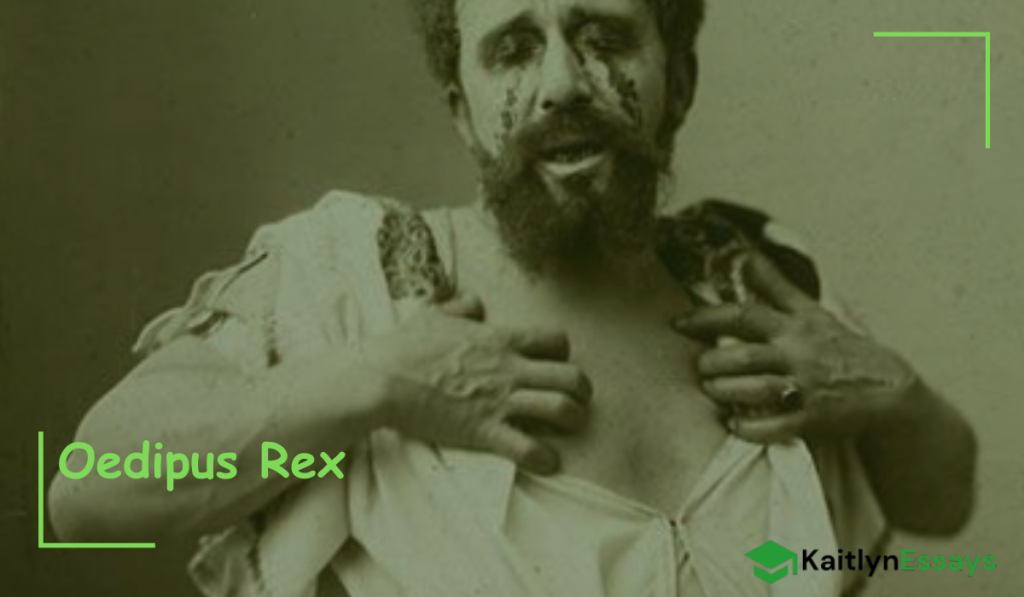
Oedipus Rex, a tragic play by the ancient Greek dramatist Sophocles, stands as a cornerstone of Western literature. Written around 429 BCE, it tells the haunting story of Oedipus, a king who unknowingly fulfills a dire prophecy by killing his father and marrying his mother. The play explores themes of fate, free will, and the limits of human knowledge. As Oedipus unravels the mystery of his own identity, he becomes both detective and criminal, victim and perpetrator.
Sophocles’ masterful storytelling keeps audiences on edge, even when they know the outcome. The play’s influence extends far beyond its time, inspiring countless adaptations and interpretations. It has also profoundly impacted fields like psychology, with Sigmund Freud famously using the Oedipus myth to develop his theories. Today, Oedipus Rex continues to captivate readers and theatergoers, prompting reflection on the nature of destiny and self-discovery.
Summary of Oedipus Rex
The City of Thebes in Crisis
The play begins with the city of Thebes in a state of turmoil. A plague has struck the people, and they are suffering immensely. Oedipus, the king, is determined to find the cause of the plague and end the city’s suffering. He sends Creon, his brother-in-law, to consult the Oracle of Delphi, which reveals that the plague will only end when the murderer of the former king, Laius, is found and punished. Oedipus vows to solve this mystery and bring justice to the city, unaware that he is, in fact, the culprit.
For further exploration of how this mystery unfolds, full details can be accessed: read more.
Oedipus’ Investigation Begins
Oedipus consults the blind prophet Tiresias, who reluctantly reveals that Oedipus himself is the murderer of King Laius. Furious, Oedipus accuses Tiresias and Creon of plotting against him, refusing to believe that he could be guilty of such a crime. His refusal to accept the truth begins his tragic downfall, as Oedipus’ relentless pursuit of knowledge only leads him closer to the devastating realization of his true identity.
To look deeper into Oedipus’ confrontation with Tiresias, more insights are available: discover more.
The Truth Unfolds
As Oedipus continues his investigation, he uncovers a series of revelations that hint at his true lineage. He learns from a messenger that he was not the biological son of Polybus, the King of Corinth, but was found as an infant on the slopes of Mount Cithaeron. Bit by bit, Oedipus pieces together the story: he was the abandoned son of Laius and Jocasta, the former king and queen of Thebes, and he has, in fact, killed his father and married his mother, unknowingly fulfilling the prophecy that he had tried to avoid.
For a detailed account of Oedipus’ discovery of his origins, the complete narrative is available: read more.
The Tragic Realization
Jocasta, upon realizing the truth before Oedipus does, pleads with him to stop his investigation. She understands that her worst fears have come true and cannot bear the weight of the revelations. Despite her warnings, Oedipus presses forward, determined to uncover everything. When the final piece of evidence comes from a shepherd who confirms Oedipus’ true parentage, the horrific reality sinks in. Jocasta, devastated by the knowledge, hangs herself, and Oedipus, in a fit of anguish, blinds himself with pins from her dress, condemning himself to a life of suffering.
To understand the emotional impact of this tragic climax, more details are shared: discover more.
The Aftermath
The final act of the play sees Oedipus blinded and broken. He begs Creon to banish him from Thebes, as he can no longer bear the sight of the world he has ruined. Creon, now the ruler of Thebes, agrees, and Oedipus is exiled, leaving his children behind. His story serves as a warning of the power of fate and the destructive consequences of trying to escape it. Despite his efforts to defy destiny, Oedipus becomes the very thing he feared.
For an in-depth analysis of Oedipus’ exile and its implications, more exploration is available: learn more.
Characters in Oedipus Rex
Oedipus
Oedipus, the protagonist and king of Thebes, is a man of great intelligence, bravery, and determination. His strength lies in his commitment to his people, demonstrated by his desire to rid Thebes of the plague that devastates the city. Oedipus is also known for solving the riddle of the Sphinx, which earned him the throne of Thebes and the hand of Queen Jocasta. However, his greatest flaw is his hubris—his excessive pride and confidence—which leads him to ignore warnings and dismiss the possibility that he might be the cause of Thebes’ suffering. Oedipus’ tragic journey of self-discovery leads to his downfall as he uncovers the devastating truth that he has killed his father and married his mother.
For a detailed analysis of Oedipus’ character and his tragic flaws, continue exploring: learn more.
Jocasta
Jocasta is both the wife and, unknowingly, the mother of Oedipus. She is a complex character who represents both maternal affection and regal authority. Jocasta initially tries to comfort Oedipus by dismissing the prophecies, urging him not to place too much faith in oracles. However, as the truth gradually comes to light, she begins to realize that Oedipus is indeed her son. Her inability to face this horrifying truth leads her to take her own life. Jocasta is a tragic figure caught in the web of fate, symbolizing the limitations of human knowledge and the consequences of defying destiny.
To look deeper into Jocasta’s role in the tragedy, the full character analysis is available: discover more.
Creon
Creon is Oedipus’ brother-in-law and a loyal advisor. He plays a critical role in the events of the play, being the one who brings back the oracle’s message that Thebes can only be saved by finding Laius’ murderer. Creon is portrayed as a rational and level-headed figure, contrasting with Oedipus’ impulsive nature. Although Oedipus accuses him of treason and conspiracy, Creon remains calm and logical, defending himself against these baseless accusations. In the end, Creon takes over as ruler of Thebes after Oedipus’ fall, illustrating his steady and pragmatic leadership.
For a closer look at Creon’s significance and his relationship with Oedipus, further details are available: read more.
Tiresias
Tiresias is the blind prophet who reluctantly reveals the truth to Oedipus. Despite his physical blindness, Tiresias possesses the inner vision and knowledge that Oedipus lacks. When Oedipus demands that he reveal the murderer of Laius, Tiresias eventually tells him that Oedipus himself is the guilty party. Oedipus reacts with anger, accusing Tiresias of conspiracy, but the prophet remains firm in his knowledge of the truth. Tiresias symbolizes the theme of sight versus blindness in the play, highlighting the irony that Oedipus, though sighted, is blind to his own fate, while Tiresias, though blind, sees the truth clearly.
For an exploration of Tiresias’ role as the bearer of truth, more insights are available: learn more.
Laius
Although Laius, the former king of Thebes and Oedipus’ father, is dead before the play begins, his presence looms large over the events of the narrative. His attempt to defy the prophecy by abandoning his son sets the tragedy in motion. Laius’ actions reveal the human desire to control fate, even when the gods have decreed otherwise.
Laius’ murder at the hands of Oedipus, though it happens off-stage, is the pivotal event that triggers the discovery of Oedipus’ true identity. His death represents the inescapable nature of fate and how the attempts to avoid it only bring it closer.
The Shepherd
The shepherd plays a crucial role in revealing Oedipus’ true identity. He was the one tasked with abandoning the infant Oedipus on Mount Cithaeron to avoid the prophecy that he would one day kill his father and marry his mother. However, instead of leaving the child to die, the shepherd gave Oedipus to a messenger who took him to Corinth. When Oedipus confronts the shepherd, he confirms the horrifying truth about Oedipus’ origins. The shepherd serves as the final piece in the puzzle of Oedipus’ identity, bringing the tragic realization to its climax.
For a deeper understanding of the shepherd’s role in the tragedy, the complete analysis is available: discover more.
The Messenger
The messenger from Corinth arrives to inform Oedipus of the death of King Polybus, Oedipus’ adoptive father. He believes he is bringing good news, as this seems to suggest that the prophecy—that Oedipus would kill his father—was false. However, the messenger inadvertently reveals the truth of Oedipus’ origins, as he is the one who took Oedipus from the shepherd as a baby and brought him to Corinth. The messenger’s revelation sets in motion the chain of events that leads to Oedipus’ tragic realization.
To explore the role of the messenger in revealing key truths, more information is available: read more.
Chorus
The chorus in Oedipus Rex represents the voice of the people of Thebes, providing commentary on the unfolding events and reflecting the audience’s reaction to the tragedy. They offer insight into the moral and philosophical questions raised by the play, such as the role of fate, the nature of truth, and the consequences of human pride. The chorus also serves to heighten the emotional intensity of the play, lamenting the suffering of Oedipus and the city of Thebes.
For an analysis of the chorus’ role in shaping the narrative, full insights are available: discover more.
Themes in Oedipus Rex
Fate vs. Free Will
One of the most prominent themes in Oedipus Rex is the tension between fate and free will. From the outset, Oedipus is a man trapped by destiny. The prophecy that foretold he would kill his father and marry his mother drives the entire plot. Despite his and his parents’ attempts to avoid this grim fate, their actions only lead to its fulfillment.
This raises the question: Are our lives governed by fate, or do we have control over our destinies? Oedipus believes in free will, shown by his decision to flee Corinth in an effort to avoid killing Polybus, the man he believes to be his father. However, the tragedy of Oedipus lies in the revelation that fate is inescapable, regardless of the choices he makes. The play ultimately suggests that while humans may exercise free will, they cannot alter the predetermined course of their lives.
For a deeper look into how Sophocles explores the conflict between fate and free will, further insights are available: discover more.
The Quest for Knowledge and Truth
Another central theme in Oedipus Rex is the pursuit of knowledge and truth. Oedipus’ journey is, in essence, a search for truth—about his past, his identity, and the cause of the plague in Thebes. His determination to uncover the truth, even at the cost of his own suffering, is one of the defining traits of his character.
However, the pursuit of knowledge in the play comes with dire consequences. As Oedipus looks deeper into the mystery of Laius’ murder, he unknowingly unearths the truth of his own origins. This reveals a paradox: while knowledge is often seen as virtuous, in Oedipus Rex, it leads to tragedy and despair. The play poses the difficult question of whether ignorance might sometimes be preferable to the harsh reality of the truth.
To explore more on the devastating consequences of Oedipus’ relentless search for the truth, complete the full analysis: discover more.
Sight and Blindness
The motif of sight and blindness recurs throughout Oedipus Rex and serves as a metaphor for knowledge and ignorance. Tiresias, the blind prophet, is a key figure in this theme. Although physically blind, he has insight into the truth of Oedipus’ fate. In contrast, Oedipus, who has perfect physical sight, is blind to the reality of his situation.
As the play progresses, this metaphor becomes literal when Oedipus blinds himself after discovering the horrifying truth. His self-inflicted blindness represents the shift from ignorance to knowledge, and the painful burden that comes with it. Sophocles uses this theme to explore the idea that true insight comes not from physical sight, but from understanding and accepting the truth, no matter how painful it may be.
For more on how Sophocles intertwines sight and blindness to enhance the play’s thematic depth, additional insights are available: discover more.
Guilt and Shame
Guilt and shame are significant emotional and psychological themes in Oedipus Rex. Oedipus, who prides himself on being a moral and just ruler, is confronted with the unbearable reality that he has committed patricide and incest—crimes that bring immense guilt and shame. His punishment, blinding himself and going into exile, reflects his overwhelming sense of guilt and his desire to atone for his actions.
The theme of guilt is closely linked to the concept of fate. Oedipus did not consciously choose to kill his father or marry his mother, yet he still bears the weight of these sins. This raises a complex moral question: can a person be held accountable for actions they were fated to commit?
For a deeper exploration of how guilt and shame shape Oedipus’ character and the overall tragedy, more insights are available: discover more.
The Power of the Gods
The gods’ influence is a pervasive theme in Oedipus Rex, highlighting the notion that the lives of humans are subject to the whims of divine forces. The prophecy from Apollo’s oracle at Delphi serves as the catalyst for the events in the play. Oedipus and his parents attempt to defy the gods’ will, but their efforts are futile, as the gods’ decree ultimately comes to pass.
Sophocles suggests that the gods’ power is absolute, and human beings are powerless to escape their control. The tragic outcome of Oedipus’ life reinforces the idea that no matter how hard one tries to alter their fate, the gods’ will is inevitable and beyond human comprehension.
For a fuller discussion of how divine power is portrayed in Oedipus Rex, extended insights are available: discover more.
Hubris and the Tragic Hero
Hubris, or excessive pride, is another defining theme of Oedipus Rex. Oedipus’ downfall is, in part, a result of his own hubris. His belief that he can outsmart the gods and defy the prophecy demonstrates his overconfidence. Throughout the play, Oedipus displays arrogance in his dealings with others, particularly with Tiresias and Creon, refusing to consider that he might be wrong.
This excessive pride is a classic trait of the tragic hero in Greek drama, and Oedipus embodies this archetype. His refusal to listen to reason, coupled with his belief in his own ability to control his fate, leads to his tragic downfall. In the end, his hubris is shattered when he realizes that he is not above the will of the gods.
To explore how Oedipus’ hubris contributes to his tragic destiny, further analysis is available: discover more.
The Role of the Chorus
The chorus in Oedipus Rex serves not only as a commentator on the unfolding events but also as a moral and philosophical guide for the audience. The chorus reflects the collective voice of Thebes, expressing fear, pity, and reverence for the gods. Their reflections on fate, the gods, and human suffering provide important context for understanding the deeper themes of the play.
The chorus also helps to heighten the emotional impact of the tragedy. As they witness Oedipus’ rise and fall, their reactions serve as a mirror to the audience’s own emotions, guiding them through the play’s complex moral landscape.
For an analysis of the chorus’ role in shaping the narrative, full insights are available: discover more.
Symbols in Oedipus Rex
Sight and Blindness
One of the most prominent symbols in Oedipus Rex is the contrast between sight and blindness. Throughout the play, physical sight and insight, or knowledge, are intertwined as metaphors. Tiresias, the blind prophet, symbolizes the paradox of having insight without physical sight, as he knows the truth about Oedipus’ fate despite being blind. In contrast, Oedipus, who has physical sight, is blind to the truth about his identity and past.
When Oedipus finally discovers the truth, he blinds himself in an act of symbolic self-punishment. His physical blindness at the end of the play represents his newfound insight into his tragic fate, suggesting that true vision lies in understanding and acceptance rather than merely seeing the world. This recurring symbolism emphasizes the theme of ignorance and knowledge and reflects the play’s moral complexity.
For further interpretation of the sight-blindness symbolism, more insights are available: discover more.
The Crossroads
The crossroads where Oedipus unknowingly kills his father, King Laius, is another important symbol in the play. It represents fate and the inescapable consequences of human choices. A crossroads is typically a place of decision, where multiple paths converge, symbolizing choice and free will. However, in Oedipus’ case, his encounter at the crossroads signifies the point at which his fate, as foretold by the oracle, becomes sealed.
This moment serves as a powerful metaphor for the theme of fate versus free will in the play. While Oedipus believes he can control his own destiny by fleeing Corinth to avoid the prophecy, the event at the crossroads shows that his fate was predetermined, regardless of the choices he thought he was making. The crossroads symbolizes the intersection of fate, chance, and personal decisions, all converging in Oedipus’ tragic destiny.
For a deeper understanding of how the crossroads symbolize fate and choice, explore further: discover more.
The Plague in Thebes
The plague that strikes Thebes at the beginning of the play is a symbolic manifestation of the city’s moral and political corruption. It represents the pollution or miasma caused by the unresolved crime of Laius’ murder. The plague serves as both a literal and symbolic disease, one that can only be cured by uncovering the truth about the king’s death and Oedipus’ involvement.
The physical devastation wrought by the plague reflects the moral disorder in Thebes, as the city is suffering under the reign of a man who, unbeknownst to him, has fulfilled a horrific prophecy. The symbol of the plague reinforces the idea that the sins of the past must be revealed and dealt with in order for the community to heal.
For a more detailed analysis of the plague’s symbolic role in the play, additional insights are available: discover more.
Oedipus’ Swollen Foot
The name “Oedipus” itself is symbolic, as it means “swollen foot” in Greek. Oedipus’ swollen foot is a physical reminder of his abandonment as a baby, when his feet were pierced and bound by his parents in an attempt to thwart the prophecy. This mark of injury symbolizes his fate and the inescapable prophecy that he is born to fulfill.
Throughout the play, the swollen foot becomes a symbol of Oedipus’ identity, linking him to the prophecy that foretold his tragic life. It also represents the physical and emotional scars that result from trying to avoid one’s destiny. The mark on Oedipus’ foot serves as a constant reminder of the limitations of human control over fate.
For a closer look at how the symbol of the swollen foot ties into Oedipus’ identity, full insights are available: discover more.
The Oracle of Delphi
The Oracle of Delphi is another symbolic element in Oedipus Rex. As the voice of the gods, the oracle symbolizes the divine will and the inescapable nature of fate. The prophecies delivered by the oracle drive the entire plot of the play, as both Laius and Oedipus attempt to avoid their foretold destinies, only to bring about the very outcomes they sought to evade.
The oracle represents the power of prophecy and the belief that the gods control human lives. It symbolizes the limitations of human understanding and the futility of trying to resist or change the course of fate. The Oracle of Delphi is not just a plot device but a profound symbol of the role of the divine in determining the fate of individuals and cities alike.
For more on how the oracle functions as a symbol of divine power and fate, further insights are available: discover more.
The Three Roads
The three roads at the crossroads where Oedipus kills Laius also carry symbolic significance. The roads represent the past, present, and future, with Oedipus’ actions at the crossroads marking a moment where all three collide. The symbolism of the three roads is tied to the play’s exploration of time and fate—how past actions inevitably shape the present and future.
In a broader sense, the three roads symbolize the complexity of fate and choice in human life. Just as Oedipus finds himself at a literal crossroads, he is also at a figurative one, caught between his past actions, present ignorance, and future revelation. The image of the three roads adds depth to the themes of destiny and moral choice in the play.
To explore how the symbolism of the three roads adds to the tragic tension, discover more insights: discover more.
Oedipus’ Self-Blinding
Oedipus’ act of blinding himself is one of the most striking symbols in the play. This act represents Oedipus’ shift from ignorance to knowledge—he blinds himself after discovering the truth about his origins. His self-inflicted blindness is a symbolic acknowledgment of the darkness and ignorance in which he has been living, and it also signifies his acceptance of his fate.
This act of blinding himself can also be interpreted as Oedipus taking control of his own fate for the first time. While he could not escape the prophecy, in choosing to blind himself, Oedipus makes a conscious decision to punish himself for his crimes, rather than having the gods or the people do it. His blindness is thus a symbol of both his newfound insight and his desire to take responsibility for his actions.
For a more detailed interpretation of Oedipus’ self-blinding as a symbol of knowledge and responsibility, discover more: discover more.
Literary Devices in Oedipus Rex
Dramatic Irony
Perhaps the most famous literary device used in Oedipus Rex is dramatic irony. This occurs when the audience knows something that the characters do not. Throughout the play, the audience is aware of Oedipus’ true identity and the fulfillment of the prophecy long before Oedipus himself realizes it. The irony lies in Oedipus’ determination to uncover the truth, unaware that he is both the murderer he seeks and the son of the parents he has wronged.
Dramatic irony intensifies the tragedy, as the audience witnesses Oedipus’ relentless pursuit of knowledge, all the while knowing that his discoveries will lead to his ruin. His confident assertions, such as when he curses the murderer of Laius, are steeped in irony because the audience understands that he is, in fact, cursing himself.
For more on how dramatic irony shapes the emotional impact of the play, deeper insights are available: discover more.
Foreshadowing
Sophocles masterfully uses foreshadowing to hint at the tragic events to come. Throughout the play, there are numerous subtle references to Oedipus’ true identity and the fulfillment of the prophecy. For instance, Oedipus’ name, which means “swollen foot,” foreshadows the revelation of his origins, as his swollen feet are the result of his abandonment as a baby.
Tiresias’ early accusations also serve as foreshadowing. Although Oedipus dismisses the blind prophet’s warnings, Tiresias clearly hints that Oedipus himself is the cause of Thebes’ suffering. Even the plague that afflicts the city at the start of the play foreshadows the revelation that Oedipus’ hidden past is the root of the city’s woes.
For a closer look at how Sophocles uses foreshadowing to build suspense and tension, more insights are available: discover more.
Symbolism
Symbolism plays a key role in reinforcing the themes of Oedipus Rex. Objects, characters, and actions throughout the play carry symbolic meaning, often reflecting deeper philosophical ideas. For example, sight and blindness serve as powerful symbols for knowledge and ignorance. Tiresias, though physically blind, can “see” the truth, while Oedipus, who has physical sight, remains blind to his own fate.
The crossroads where Oedipus kills his father is another important symbol, representing the inescapable nature of fate and the illusion of choice. These symbols enrich the play by adding layers of meaning to the actions and decisions of the characters.
To explore the use of symbolism in greater detail, discover more insights: discover more.
Peripeteia
Peripeteia, or the sudden reversal of fortune, is a central device in Oedipus Rex. This moment occurs when Oedipus, who has spent the entire play believing he is in control of his destiny, suddenly learns the truth of his origins and the role he played in fulfilling the prophecy. The shift from his confident search for the murderer of Laius to the horrific realization that he is the very criminal he seeks is a prime example of peripeteia.
The peripeteia in Oedipus Rex is particularly impactful because it is not just a reversal of Oedipus’ fortune, but also a reversal of his understanding of himself and the world around him. The moment when he realizes the truth marks a turning point that leads directly to his tragic downfall.
For more on how peripeteia heightens the dramatic tension in the play, extended analysis is available: discover more.
Catharsis
The concept of catharsis—a release of emotional tension—is an important part of Greek tragedy, and Oedipus Rex is no exception. The play evokes feelings of pity and fear in the audience, as they watch Oedipus’ journey from a powerful, respected king to a man destroyed by the revelation of his own guilt. The emotional intensity of the play builds to the moment of catharsis, when Oedipus blinds himself and accepts his fate.
This emotional release allows the audience to experience the purification of these emotions, fulfilling the Aristotelian purpose of tragedy. The catharsis in Oedipus Rex is particularly potent because the audience has been privy to Oedipus’ fate all along, making his ultimate realization and self-punishment all the more powerful.
To gain more insights into how catharsis functions within the tragedy, further details are available: discover more.
Hamartia
Hamartia, or the tragic flaw, is a critical device in shaping Oedipus’ character and his downfall. Oedipus’ hamartia is often interpreted as his excessive pride (hubris) and his determination to defy the prophecy. His belief that he can outsmart the gods and his refusal to heed warnings from figures like Tiresias lead him down the path of destruction.
However, some interpretations suggest that Oedipus’ hamartia may not be a moral failing, but rather a tragic limitation of human understanding. His desire for truth and justice, typically seen as virtues, ultimately lead to his undoing. The ambiguity of Oedipus’ hamartia adds to the complexity of his character and the play’s exploration of fate and free will.
For a deeper exploration of Oedipus’ hamartia and its role in his tragic downfall, additional analysis is available: discover more.
Anagnorisis
Anagnorisis—the moment of recognition or discovery—is another key literary device in Oedipus Rex. This occurs when Oedipus finally realizes the full truth of his birth and his role in the prophecy. The anagnorisis in Oedipus Rex is particularly devastating because it comes after Oedipus has spent the entire play confidently denying any possibility of his involvement in the crimes.
This moment of revelation brings about the peripeteia and leads directly to the play’s cathartic conclusion. The anagnorisis is a hallmark of Greek tragedy, and in Oedipus Rex, it serves as the climax of the play, marking the point at which the hero’s ignorance is shattered, and the tragic consequences of his actions are fully realized.
To examine the significance of anagnorisis in more detail, discover further insights: discover more.
Pathos
Pathos, the emotional appeal, is central to the tragedy of Oedipus Rex. Sophocles evokes deep feelings of pity and compassion for Oedipus, a man who, despite his best efforts to avoid his fate, ends up fulfilling the prophecy in the most tragic way. The audience’s emotional response is heightened by the dramatic irony, as they understand the truth long before Oedipus does, and they are helpless to stop his inevitable downfall.
The pathos of Oedipus’ suffering—both physical and emotional—culminates in his self-inflicted blindness and exile, leaving the audience to grapple with profound feelings of sorrow and empathy for his tragic fate.
For a more in-depth exploration of how pathos contributes to the emotional intensity of the play, further analysis is available: discover more.
Chorus as a Narrative Device
The chorus in Oedipus Rex functions not only as a commentator on the action but also as a narrative device that helps guide the audience’s emotional and intellectual response to the play. The chorus reflects the voice of the Theban people, expressing collective fear, confusion, and moral judgment. Their reflections often serve to underscore the play’s themes, such as the role of fate and the power of the gods.
The chorus also provides a bridge between the audience and the action on stage, interpreting events and offering philosophical insights into the nature of human suffering. Their reactions to Oedipus’ plight mirror the audience’s own responses, enhancing the cathartic experience of the tragedy.
For further discussion on how the chorus functions as a literary device in Oedipus Rex, additional insights are available: discover more.
Quotes in Oedipus Rex
“The truth must be made known.” — Oedipus
This statement by Oedipus exemplifies his unwavering commitment to uncovering the truth, no matter the consequences. Throughout the play, Oedipus is driven by a relentless desire to solve the mystery of King Laius’ murder and rid Thebes of the plague. Ironically, his pursuit of the truth leads to his own downfall as he uncovers the horrifying reality of his birth and his role in fulfilling the prophecy.
Oedipus’ determination to seek the truth, while seemingly virtuous, reveals the tragic flaw of hubris. His belief that he can control and manipulate fate through knowledge ultimately brings about his ruin, highlighting the play’s central theme of the limitations of human understanding.
For further interpretation of this quote and its implications, discover more: discover more.
“You are the curse, the corruption of the land!” — Tiresias
This quote is spoken by the blind prophet Tiresias when he confronts Oedipus with the truth of his actions. Tiresias knows that Oedipus is the murderer of Laius and the cause of the plague in Thebes. Oedipus, however, is blind to this knowledge and reacts angrily, accusing Tiresias of treason.
The statement serves as a moment of dramatic irony, as the audience knows that Tiresias is speaking the truth, while Oedipus, who prides himself on his wisdom, remains ignorant. The quote also touches on the theme of sight and blindness, as Tiresias, though physically blind, can see the truth, while Oedipus, despite having sight, is metaphorically blind to his fate.
To dive deeper into the significance of Tiresias’ warning, more insights are available: discover more.
“Let me grant your prayers. I’ll rid you of this disease.” — Oedipus
At the beginning of the play, Oedipus addresses the people of Thebes, vowing to solve the mystery of Laius’ murder and end the plague. His confidence and willingness to act for the good of the city are evident here, and he positions himself as a protector of Thebes. However, this quote foreshadows the tragic events to come, as Oedipus will later discover that he is the cause of the city’s suffering.
The irony of this promise lies in the fact that Oedipus believes he can fix the situation without knowing that he is the root of the problem. His words reflect his good intentions but also his hubris, as he underestimates the power of fate.
For an analysis of this quote and how it foreshadows Oedipus’ downfall, full insights are available: discover more.
“How terrible—to see the truth when the truth is only pain to him who sees!” — Tiresias
Tiresias’ lament about the painful nature of truth encapsulates the central tension in the play between knowledge and suffering. While Oedipus is desperate to uncover the truth, Tiresias understands that some truths bring only pain and destruction. This quote reflects the tragic irony of Oedipus’ situation—his quest for knowledge will ultimately lead to his undoing.
Tiresias’ reluctance to reveal the truth contrasts sharply with Oedipus’ eagerness to learn it, suggesting that there is wisdom in knowing when to withhold painful knowledge. The theme of sight and blindness is also reinforced here, as Tiresias implies that seeing the truth is not always desirable.
For a deeper understanding of this quote’s philosophical implications, further details are available: discover more.
“Time, which sees all things, has found you out.” — Chorus
The Chorus speaks these words after Oedipus discovers the truth about his parentage and his involvement in Laius’ murder. This quote highlights the inevitability of fate, suggesting that no matter how much Oedipus tries to escape his destiny, time—and by extension, fate—will always reveal the truth. The Chorus often serves as the moral and philosophical voice of the play, and this statement reinforces the theme that fate is inescapable.
The idea that time exposes all things is central to the tragedy, as Oedipus’ past, which he has tried to run from, comes to light despite his best efforts. The Chorus’ words reflect the inevitability of the tragic outcome, further emphasizing the theme of fate versus free will.
For more on the role of the Chorus and the meaning of this quote, extended analysis is available: discover more.
“It’s mine alone, my destiny—I am Oedipus!” — Oedipus
This quote captures the essence of Oedipus’ tragic realization. After uncovering the truth about his identity and the fulfillment of the prophecy, Oedipus acknowledges that his fate is his own and that he cannot escape it. His declaration “I am Oedipus” symbolizes his acceptance of his tragic destiny, even though it brings him immense suffering.
Oedipus’ recognition of his fate, rather than trying to fight or deny it, is what elevates him as a tragic hero. This moment of anagnorisis (recognition) is crucial in Greek tragedy, as the hero comes to understand the full scope of their tragic situation.
For further exploration of Oedipus’ moment of realization and how it defines his character, discover more: discover more.
“I have no desire to suffer twice, in reality and then in retrospect.” — Oedipus
This quote reflects Oedipus’ complex relationship with the truth. While he spends much of the play actively seeking the truth, by the end, he understands the pain that comes with it. He recognizes that reflecting on his past mistakes and the truth of his origins will only deepen his suffering, suggesting that some truths are too painful to revisit.
This line speaks to the broader theme of knowledge and its consequences. It raises questions about whether it is better to live in ignorance or face the harsh reality of one’s actions, even if it brings more suffering.
For a more detailed interpretation of this quote and its thematic significance, full insights are available: discover more.
“No man can be fully known, in his character, until he’s tested by the laws.” — Creon
Creon’s words reflect the Greek ideal of wisdom and justice, emphasizing the importance of actions over appearances. Creon suggests that a person’s true character is revealed only when they are tested by difficult circumstances. This quote speaks to the broader theme of human nature in the play, as Oedipus’ true character is revealed through his response to the prophecy and the truth of his identity.
Creon’s perspective on character and testing also foreshadows his own role in the play’s later events, as he must navigate the moral and political complexities left in the wake of Oedipus’ downfall.
For further analysis of Creon’s role and philosophy in Oedipus Rex, additional insights are available: discover more.