

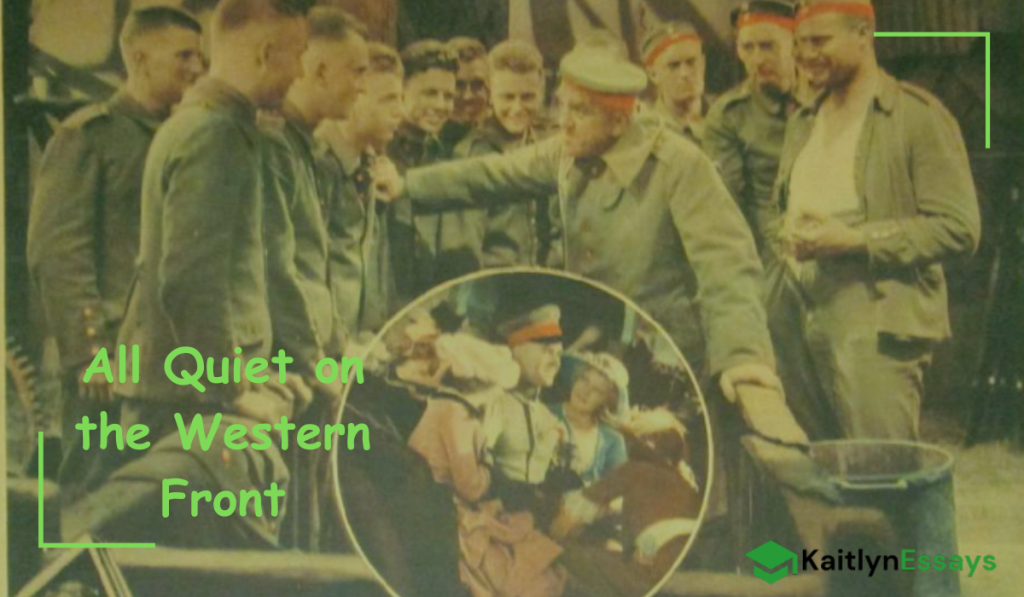
All Quiet on the Western Front, written by Erich Maria Remarque, is a harrowing novel that captures the brutal realities of World War I through the eyes of a young German soldier, Paul Bäumer. The book provides an unflinching portrayal of the physical and emotional toll that warfare imposes on individuals, showcasing the futility and destruction inherent in the conflict. As Paul and his comrades navigate the horrors of the battlefield, their youthful innocence is shattered, replaced by a profound sense of despair and disillusionment.
Plot Overview
Enlistment and Training
The story begins with Paul Bäumer and his classmates being encouraged by their teacher, Kantorek, to enlist in the German army. Filled with patriotic fervor and idealism, they join up and are sent to basic training. However, their romantic notions of war are quickly shattered by the harsh realities of military life.
Discover more about the historical context
Life on the Front
As Paul and his friends are deployed to the Western Front, they experience the full horror of trench warfare. The novel vividly describes the constant danger, the terrible living conditions, and the psychological toll of combat. The soldiers face artillery bombardments, gas attacks, and hand-to-hand combat, all while struggling with hunger, disease, and vermin infestation.
Read about trench warfare tactics
Camaraderie and Loss
Throughout their ordeal, Paul and his comrades form strong bonds of friendship. They support each other through the horrors of war and find moments of humor and humanity amidst the chaos. However, as the war drags on, Paul watches his friends die one by one, each death chipping away at his hope and sanity.
Explore themes of friendship in war literature
Home Leave
Midway through the novel, Paul is granted leave to visit his family. However, he finds himself unable to connect with civilian life. The stark contrast between the horrors he has experienced and the relative normalcy at home leaves him feeling alienated and disconnected from his former life.
Understand the psychological impact of war
Return to the Front and Final Days
Paul returns to the front, where he continues to fight and witness the senseless destruction of war. As Germany’s situation becomes increasingly desperate, Paul becomes the last surviving member of his original group of classmates. The novel concludes with Paul’s death in the final months of the war, on a day described as so quiet that the army report simply states, “All quiet on the Western Front.”
Learn about the final stages of World War I
Characters
Paul Bäumer
Paul Bäumer, the protagonist and the novel’s narrator, offers readers an intimate perspective on the trauma and disillusionment of young soldiers. Initially, Paul is filled with patriotism and a sense of duty to his country, but this quickly fades as he experiences the grim reality of life on the front lines. Throughout the novel, Paul grapples with the loss of innocence, the disconnect between the ideals of civilian life and the soldier’s reality, and the difficulty of finding meaning amidst chaos. His development from a hopeful youth to a war-weary soldier is central to the novel’s message.
To explore Paul Bäumer’s journey more deeply, take a look at this detailed analysis Paul’s transformation in the novel.
Stanislaus Katczinsky
Stanislaus “Kat” Katczinsky is a key figure in Paul’s life during the war. As an older, experienced soldier, Kat acts as a mentor to Paul and the other younger recruits. He is resourceful, often finding food and supplies in the most unlikely of places, and serves as a stabilizing force for his comrades. Kat’s pragmatic view of the war contrasts with Paul’s initial idealism, and his relationship with Paul underscores the theme of camaraderie that permeates the novel. Kat’s death is one of the most heartbreaking moments in the book, symbolizing the fragility of life amidst constant danger.
For a more in-depth look at Kat’s role as a mentor, read further on Kat’s leadership and influence.
Albert Kropp
Albert Kropp is another soldier and one of Paul’s closest friends in the novel. His keen intellect and critical view of the war differentiate him from the other characters. Kropp often engages in philosophical discussions about the purpose of war, questioning the decisions made by those in power. His injury and subsequent amputation signify the physical and emotional toll of the war. Kropp’s arc emphasizes the senselessness of the conflict, as even those with a sharp mind and reason cannot escape the brutal consequences of warfare.
Learn more about Kropp’s intellectual reflections on war in this detailed discussion.
Tjaden
Tjaden, a fellow soldier in Paul’s unit, is known for his insubordination and rebellious nature. Unlike Paul and Kropp, Tjaden does not ponder the philosophical implications of the war but instead focuses on surviving day-to-day. His humor and defiance provide a temporary relief from the horrors of combat, but he, too, is not immune to the trauma of war. His characterization highlights the varied ways soldiers cope with their surroundings, using humor as a shield against the overwhelming terror.
Discover more about Tjaden’s unique role in this character exploration.
Müller
Müller, another close companion of Paul, is both pragmatic and idealistic. He frequently talks about what he’ll do after the war, dreaming of future plans while still grounded in the harsh reality of their current situation. Müller’s focus on practicalities, such as his obsession with obtaining better boots, illustrates how the war reduces life to simple necessities. However, his dreams of a future beyond the battlefield also symbolize the lingering hope many soldiers cling to, even in the darkest times.
To look into Müller’s complexity, read further on his practical dreams and desires.
Franz Kemmerich
Franz Kemmerich is one of the first characters to die in the novel, but his death leaves a lasting impression on both Paul and the reader. His slow demise from a leg injury, and the subsequent fight over his boots, symbolizes the dehumanizing effects of war. Kemmerich’s youth and vulnerability serve as a poignant reminder of the many young lives lost too soon. His death is particularly difficult for Paul, marking the beginning of his emotional detachment and the loss of his own innocence.
Learn more about Kemmerich’s tragic role in this deeper character analysis.
Detering
Detering is a farmer with a strong connection to his home and land. Unlike the other characters, who seem to have become resigned to their fate as soldiers, Detering frequently expresses his desire to return home to his farm and family. His sensitivity to the suffering of animals, particularly the horses, highlights his deep compassion, which contrasts with the brutality surrounding him. Eventually, Detering’s longing for home becomes overwhelming, and he attempts to desert the army—a decision that ultimately leads to his arrest and presumed death.
For an exploration of Detering’s motivations and tragic fate, read more on his internal conflict.
Himmelstoss
Corporal Himmelstoss represents the abusive authority figures that many of the soldiers come to despise. As the training officer for Paul and his friends, Himmelstoss is notorious for his harsh and unnecessary punishments. However, once he experiences life on the front lines, he undergoes a transformation, showing fear and vulnerability like the rest of the soldiers. His character illustrates the theme of power and authority in the novel, as well as the humbling effect of shared suffering in war.
To explore Himmelstoss’s transformation, read more about his complex relationship with authority.
Haie Westhus
Haie Westhus is one of the larger-than-life figures in Paul’s group of friends, known for his size and physical strength. A peat digger by trade, Haie is fiercely loyal to his comrades and seems almost invincible. Despite his imposing stature, Haie is not immune to the dangers of war. His death, caused by a fatal wound during an assault, once again underscores the indiscriminate nature of the violence in the trenches.
For a closer examination of Haie Westhus’s loyalty and fate, read further on his journey in the war.
The Schoolmaster Kantorek
Kantorek, the schoolmaster who encouraged Paul and his classmates to enlist, represents the misguided patriotism that led so many young men to their deaths. His speeches glorifying war and service to the Fatherland are later seen as empty rhetoric in light of the brutal realities of combat. Kantorek’s influence on Paul and the others is a critical commentary on how propaganda and societal pressures contributed to the destruction of a generation.
To explore Kantorek’s role as a false patriot, see more about his influence on the soldiers.
Themes in All Quiet on the Western Front
1. The Horror and Futility of War
One of the most prominent themes in “All Quiet on the Western Front” is the sheer horror and futility of war. Remarque strips away any notions of glory or heroism associated with combat, instead presenting a raw and unflinching look at the brutal realities faced by soldiers on the front lines.
Graphic Depictions of Violence
The novel doesn’t shy away from depicting the violence and carnage of warfare. From artillery bombardments to gas attacks, Remarque describes in vivid detail the various ways in which soldiers are killed or maimed. These graphic scenes serve to underscore the inhumane nature of modern warfare and its devastating effects on the human body.
Psychological Trauma
Beyond the physical violence, Remarque also explores the deep psychological trauma inflicted by war. The constant threat of death, the loss of comrades, and the dehumanizing nature of combat all take a severe toll on the mental health of the soldiers. The protagonist, Paul Bäumer, and his fellow soldiers often struggle with nightmares, anxiety, and a sense of detachment from their former selves.
Explore the psychological impacts of war
Senselessness of Conflict
Throughout the novel, there’s a pervasive sense of the senselessness of the conflict. The soldiers often find themselves unable to articulate why they’re fighting or what they’re fighting for. The arbitrary nature of who lives and who dies further emphasizes the futility of war. This theme is perhaps best encapsulated in the novel’s famous line: “We were soldiers, and now we are nothing but human wrecks.”
2. Loss of Innocence
Another central theme in the novel is the loss of innocence experienced by the young soldiers. Paul and his classmates enlist in the army as idealistic teenagers, only to have their youth and innocence brutally stripped away by the realities of war.
Shattered Idealism
At the beginning of the novel, Paul and his friends are filled with patriotic fervor, encouraged by their teacher to enlist and fight for their country. However, their romantic notions of war are quickly shattered by the harsh realities they encounter. The contrast between their initial enthusiasm and their subsequent disillusionment is stark and poignant.
Premature Aging
The war forces these young men to grow up far too quickly. They are thrust into situations of extreme violence and forced to make life-or-death decisions. Remarque often describes how the soldiers, though barely out of their teens, have the eyes and expressions of much older men.
Discover more about the theme of lost youth in war literature
Loss of Future
Perhaps most tragically, the war robs these young men of their futures. Many die before they’ve had a chance to truly live, while those who survive find themselves unable to imagine a life beyond the trenches. The loss of innocence is not just about the horrors they’ve witnessed, but also about the normal lives and experiences they’ll never have.
3. Alienation and Disconnection
A significant theme in “All Quiet on the Western Front” is the sense of alienation and disconnection experienced by the soldiers, both on the front lines and when they return home.
Alienation from Civilian Life
When Paul returns home on leave, he finds himself unable to connect with his family or his former life. The stark contrast between the horrors he has experienced and the relative normalcy at home leaves him feeling isolated and misunderstood. This alienation highlights the profound impact of war on the soldier’s psyche and the difficulty of reintegrating into civilian society.
Generational Divide
The novel also explores the disconnect between the younger generation of soldiers and the older generation who sent them to war. Paul and his comrades feel betrayed by their elders – teachers, parents, and authority figures – who encouraged them to enlist with romanticized notions of patriotism and glory. This generational divide underscores the theme of the failure of the older generation to protect and guide the younger.
Detachment as a Coping Mechanism
In the face of constant danger and loss, many soldiers in the novel develop a sense of emotional detachment as a coping mechanism. This detachment, while necessary for survival on the front, further alienates them from their humanity and their former selves.
Read about war’s impact on social relationships
4. Comradeship and Brotherhood
Despite the overwhelming negativity of war, one positive theme that emerges in the novel is the deep bonds of comradeship formed between soldiers.
Solidarity in Suffering
The shared experience of warfare creates an intense bond between the soldiers. Paul and his comrades rely on each other for physical and emotional survival, forming a brotherhood that transcends their civilian relationships. This comradeship provides moments of humanity and comfort amidst the chaos and brutality of war.
Kat as a Father Figure
The character of Stanislaus Katczinsky (Kat) embodies this theme of comradeship. As an older, more experienced soldier, Kat becomes a mentor and father figure to Paul and the other young soldiers. His practical skills and wisdom help them navigate the challenges of life on the front.
Loss of Comrades
The strength of these bonds is further emphasized by the devastating impact when comrades are lost. Each death is felt keenly by the surviving soldiers, chipping away at their resilience and hope. The loss of Kat, in particular, is a crushing blow to Paul, highlighting how central these relationships become in the context of war.
Explore the role of friendship in war narratives
5. The Physical and Psychological Impact of Modern Warfare
Remarque’s novel provides a detailed exploration of the devastating effects of modern, industrialized warfare on both the body and mind of soldiers.
Physical Toll of War
The novel graphically depicts the various ways in which war destroys the human body. From the immediate violence of combat to the longer-term effects of malnutrition, disease, and exposure, the physical toll of war is ever-present. The descriptions of wounded and maimed soldiers serve as a stark reminder of the human cost of conflict.
Psychological Trauma
Equally important is the novel’s portrayal of the psychological impact of war. Paul and his comrades suffer from what we would now recognize as post-traumatic stress disorder (PTSD). They experience nightmares, flashbacks, and severe anxiety. The constant stress of life on the front line, coupled with the trauma of witnessing death and experiencing near-death situations, profoundly alters their mental state.
Dehumanization
A key aspect of modern warfare depicted in the novel is its dehumanizing effect. The soldiers often feel reduced to mere survival machines, stripped of their individuality and humanity. This dehumanization is portrayed as a necessary coping mechanism for survival, but it comes at a great psychological cost.
Learn about PTSD in war veterans
6. The Failure of Authority and Institutions
Another significant theme in “All Quiet on the Western Front” is the critique of authority figures and institutions that led young men into war.
Criticism of Patriotic Rhetoric
The novel is highly critical of the patriotic rhetoric used to encourage young men to enlist. The character of Kantorek, the schoolmaster who urged his students to join the army, represents the older generation who sent young men to war with unrealistic notions of patriotism and glory. The contrast between his lofty speeches and the brutal reality faced by his former students is stark and damning.
Disillusionment with Military Leadership
As the war progresses, the soldiers become increasingly disillusioned with military leadership. The seemingly arbitrary and often foolish decisions made by those in command, which cost countless lives, are a source of bitter resentment among the front-line soldiers.
Critique of Nationalism
Through its portrayal of the common experiences of soldiers on both sides, the novel offers a critique of nationalist ideologies that fuel warfare. Paul’s realization that the enemy soldiers are not so different from himself and his comrades undermines the nationalist rhetoric used to justify the war.
Discover more about anti-war literature
7. The Fragility of Human Life
Throughout the novel, Remarque emphasizes the fragility and randomness of life and death in wartime.
Arbitrary Nature of Survival
One of the most unsettling aspects of the war as portrayed in the novel is the seemingly arbitrary nature of who lives and who dies. Experienced soldiers and new recruits alike can be killed in an instant, often by random chance rather than any action on their part. This randomness underscores the futility of war and the powerlessness of the individual soldier.
Value of Life
The constant presence of death forces the characters to grapple with the value of human life. In the face of mass casualties, individual deaths can seem insignificant, yet the loss of each comrade is deeply felt. This tension between the statistical reality of war and the personal experience of loss is a recurring theme.
Struggle for Survival
Despite the omnipresence of death, the novel also portrays the fierce human instinct for survival. Even in the most horrific circumstances, Paul and his comrades fight to stay alive, clinging to whatever scraps of life and humanity they can find.
Explore philosophical perspectives on war and mortality
8. The Contrast Between Front Line and Home Front
The stark contrast between life on the front lines and life at home is another key theme in the novel.
Disconnection from Civilian Life
When Paul returns home on leave, he finds himself unable to connect with his family or his former life. The gulf between his experiences in the war and the relative normalcy of life at home is too great to bridge. This disconnection highlights the profound and lasting impact of war on soldiers.
Ignorance of Those at Home
The novel portrays civilians at home as largely ignorant of the true nature of the war. Their continued belief in patriotic ideals and their inability to comprehend the realities faced by the soldiers create a sense of isolation for Paul and his comrades.
Inability to Readjust
The difficulty of readjusting to civilian life is a theme that resonates beyond Paul’s brief visit home. The novel suggests that the experience of war so fundamentally changes a person that returning to normal life becomes impossible.
Read about veterans’ reintegration challenges
All Quiet on the Western Front: Symbols
The Iron Youth
The concept of the “Iron Youth” serves as a central symbol in Remarque’s novel, representing the generation of young men who were sent to fight in World War I. This term, initially used with pride and enthusiasm, quickly becomes ironic as the realities of war unfold. The “Iron Youth” symbolizes the stark contrast between the idealized notion of heroic soldiers and the harsh truth of their vulnerability and mortality.
As the story progresses, we witness the transformation of these young men from eager, patriotic volunteers to disillusioned and broken individuals. The iron, once a symbol of strength and invincibility, becomes a metaphor for the rigid and unyielding nature of military life that crushes their spirits and humanity.
To explore a deeper analysis of the “Iron Youth” symbol and its evolution throughout the novel, access our comprehensive guide.
Boots
In “All Quiet on the Western Front,” boots emerge as a complex symbol, representing both the soldiers’ connection to the military and the cycle of life and death on the battlefield. The protagonist, Paul Bäumer, inherits a pair of boots from a dying comrade, Kemmerich. These boots then pass from soldier to soldier, serving as a grim reminder of the transient nature of life in wartime.
The boots also symbolize the dehumanizing aspect of war, as soldiers are reduced to mere commodities, easily replaced and discarded. The focus on this mundane item highlights the absurdity of war, where survival often depends on such basic necessities.
For an in-depth exploration of the symbolism of boots in the novel, read our detailed analysis.
The Butterfly
In a moment of rare beauty amidst the chaos of war, Paul observes a butterfly landing on a skull in No Man’s Land. This fleeting image serves as a powerful symbol of the contrast between life and death, beauty and horror, peace and war. The delicate butterfly, representing hope, innocence, and the natural world, is juxtaposed against the stark reality of mortality symbolized by the skull.
This symbol encapsulates the novel’s broader theme of the destruction of innocence and the natural order by the machinery of war. It also highlights the soldiers’ longing for the peace and beauty of civilian life, now seemingly unreachable from the trenches.
To uncover more about the significance of the butterfly symbol, examine our comprehensive interpretation.
The Earth
Throughout the novel, the earth takes on a symbolic role that evolves with the characters’ experiences. Initially, it represents home and safety, as the soldiers seek shelter in trenches and foxholes. The earth becomes a mother figure, offering protection from the dangers above ground.
However, as the war progresses, the earth’s symbolism becomes more complex. It transforms into a place of death and decay, swallowing up the bodies of fallen soldiers. The once-nurturing ground becomes a source of mud, filth, and disease, mirroring the degradation of the soldiers’ physical and mental states.
For a more detailed analysis of the earth’s changing symbolism, review our extended commentary.
The Kaiser’s Image
The portrait of Kaiser Wilhelm II, which appears in the novel, serves as a potent symbol of the disconnect between the political leaders and the soldiers on the front lines. The idealized image of the Kaiser contrasts sharply with the grim realities faced by the troops, highlighting the absurdity of blind patriotism and unquestioning obedience to authority.
As the soldiers’ disillusionment grows, their attitude towards the Kaiser’s portrait shifts from reverence to mockery and contempt. This symbol encapsulates the novel’s critique of the political and social systems that perpetuate war and sacrifice young lives for abstract ideals.
To gain further insights into the symbolism of the Kaiser’s image, peruse our detailed examination.
Gas Masks
Gas masks feature prominently in the novel as a symbol of the dehumanizing nature of modern warfare. These protective devices, while necessary for survival, transform soldiers into faceless, machine-like entities. The gas masks blur the line between man and machine, reflecting the industrialized nature of World War I and its capacity to strip away individuality and humanity.
Moreover, the gas masks symbolize the suffocating atmosphere of war, both literally and figuratively. They represent the constant state of fear and alertness that the soldiers must maintain, as well as the toxic environment—both physical and psychological—in which they are forced to exist.
For a more comprehensive analysis of the gas mask symbolism, study our in-depth exploration.
Horses
The horses in “All Quiet on the Western Front” serve as powerful symbols of innocence and the senseless suffering caused by war. These animals, like the young soldiers, are unwilling participants in the conflict, forced to endure terrible pain and death. Their anguished cries on the battlefield deeply affect the soldiers, reminding them of their own vulnerability and the shared experience of suffering.
The horses also represent a connection to a simpler, more peaceful past—a time before the mechanized horror of modern warfare. Their presence in the novel highlights the contrast between the natural world and the man-made destruction of war, emphasizing the conflict’s violation of the natural order.
To look deeper into the symbolism of horses in the novel, access our comprehensive analysis.
The Hospital
The hospital in Remarque’s novel serves as a complex symbol, representing both hope and despair. On one hand, it offers the possibility of healing and a temporary escape from the front lines. On the other, it is a place of suffering, mutilation, and death, where soldiers confront the full extent of war’s physical and psychological toll.
The hospital also symbolizes the inefficiency and inadequacy of the support systems meant to care for the soldiers. The overwhelmed medical staff and limited resources mirror the broader failures of society to address the true costs of war.
For an in-depth exploration of the hospital’s symbolic significance, review our detailed interpretation.
Leave Papers
The leave papers in the novel symbolize the tenuous connection between the soldiers and their former lives. These documents represent a brief respite from the horrors of war and the possibility of returning to normalcy. However, as Paul discovers during his leave, the gap between civilian life and the reality of the front has become unbridgeable.
The leave papers ultimately symbolize the impossibility of truly escaping the war’s impact. They highlight the permanent changes wrought upon the soldiers, who find themselves alienated from their families and former selves.
To gain more insights into the symbolism of leave papers, examine our comprehensive analysis.
The Trench
The trench serves as a complex symbol throughout the novel, representing both protection and confinement. It is a place of relative safety from enemy fire, yet also a claustrophobic, dehumanizing environment that strips away the soldiers’ individuality and connection to the outside world.
The trench symbolizes the static nature of the war, where vast human sacrifices result in minimal territorial gains. It also represents the psychological state of the soldiers, trapped in a limbo between life and death, unable to move forward or backward.
For a more detailed exploration of the trench symbolism, peruse our in-depth examination.
Literary Devices in All Quiet on the Western Front
1. Imagery
One of the most compelling aspects of Remarque’s novel is his masterful use of imagery. By vividly describing the battle scenes, the trenches, and the soldiers’ emotions, Remarque immerses readers into the harrowing realities of war. His graphic depictions of death, injuries, and the decaying environment serve to highlight the physical and emotional toll that war exacts on soldiers. For instance, the detailed description of a soldier’s fatal wound or the endless bombardment of artillery creates a visceral experience that mirrors the characters’ suffering.
The imagery in this novel is not merely descriptive; it serves to underscore the dehumanizing aspects of war. As Remarque paints a bleak picture of the battlefield, he juxtaposes moments of peace and quiet with sudden bursts of violence, emphasizing the unpredictability of life on the front lines. These stark contrasts further illustrate the psychological turmoil experienced by the soldiers.
Explore the vivid imagery in All Quiet on the Western Front
2. Symbolism
Symbolism plays a crucial role in Remarque’s narrative, providing readers with deeper insights into the novel’s themes and characters. One of the most prominent symbols is the boots passed between soldiers, representing the indiscriminate nature of death. The boots, worn by multiple characters as they die one by one, symbolize the inevitability of death on the battlefield. They are a poignant reminder of the fragility of life in war, where survival is uncertain and often arbitrary.
Another key symbol is the earth itself, which serves as both a protector and a destroyer. Throughout the novel, soldiers dig into the ground for cover, seeking refuge from enemy fire. The earth provides safety, but it is also where the dead are buried, embodying both life and death. This duality reflects the soldiers’ complex relationship with the world around them—nature, once a source of comfort, becomes a battleground in its own right.
Discover the powerful symbols in All Quiet on the Western Front
3. Irony
Remarque’s use of irony is another prominent literary device that underscores the futility and senselessness of war. Throughout the novel, he portrays the disconnect between the ideals of patriotism and the gruesome realities of combat. The young soldiers, including the protagonist Paul Bäumer, initially enlist with dreams of honor and glory, only to be confronted with the brutal truth that there is nothing heroic about war. The irony of their situation becomes evident as their youthful enthusiasm is quickly replaced by disillusionment and despair.
Additionally, Remarque employs situational irony to reveal the absurdity of war’s bureaucratic and hierarchical nature. Soldiers follow orders without understanding their purpose, and often, the decisions made by superiors result in unnecessary suffering and death. This irony reflects the broader theme of dehumanization, where individual lives are reduced to mere numbers in a senseless machine of destruction.
Examine the irony in All Quiet on the Western Front
4. Point of View
The novel is written from the first-person point of view of Paul Bäumer, a young German soldier. This perspective allows readers to intimately experience the war through Paul’s eyes, creating a sense of immediacy and personal connection. The first-person narrative is especially effective in conveying the emotional and psychological impact of the war on individual soldiers. As Paul reflects on his experiences, readers gain insight into his internal struggles, his fears, and his moments of hope and despair.
This point of view also serves to humanize the soldiers, offering a counter-narrative to the glorified depictions of war that were common at the time. By focusing on Paul’s personal thoughts and feelings, Remarque emphasizes that soldiers on both sides of the conflict share a common humanity, even as they are forced to fight one another.
Uncover the significance of the first-person narrative in All Quiet on the Western Front
5. Theme of Lost Generation
A recurring theme in All Quiet on the Western Front is that of the “Lost Generation”—the young men who were irrevocably damaged by their experiences in World War I. The novel explores the idea that the war not only took lives but also destroyed the futures of those who survived. The soldiers, once filled with hopes and dreams, are left emotionally scarred, unable to reintegrate into society after the horrors they have witnessed.
Through Paul’s reflections, Remarque highlights the deep sense of alienation and disillusionment felt by the soldiers. They no longer recognize the world they left behind, and their former lives seem distant and irrelevant. This theme is central to the novel’s anti-war message, as it portrays war not as a path to glory but as a destructive force that robs an entire generation of its potential.
Analyze the Lost Generation theme in All Quiet on the Western Front
6. Juxtaposition
Juxtaposition is another powerful literary device used by Remarque to highlight the stark contrasts in the lives of the soldiers. Throughout the novel, moments of calm and beauty are set against scenes of violence and devastation. For instance, Paul reflects on the beauty of nature even as he witnesses death and destruction all around him. These juxtapositions serve to emphasize the contradictions inherent in war—how life and death, peace and chaos, coexist side by side on the battlefield.
Remarque’s use of juxtaposition also illustrates the emotional complexity of the soldiers’ experiences. The soldiers long for moments of normalcy and peace, but they are constantly reminded of the ever-present threat of death. This contrast between their inner desires and external reality heightens the emotional impact of the novel.
Explore the use of juxtaposition in All Quiet on the Western Front
7. Tone and Mood
The tone of All Quiet on the Western Front is predominantly somber and reflective, fitting for a novel that deals with the devastating effects of war. Through Paul’s narrative voice, Remarque conveys a sense of resignation and weariness, as the soldiers are ground down by the relentless violence and loss. The mood of the novel shifts between moments of despair and fleeting glimpses of hope, reflecting the emotional rollercoaster experienced by the soldiers.
The subdued tone also reinforces the novel’s anti-war message. Rather than glorifying combat, Remarque presents it as a soul-crushing ordeal that leaves soldiers physically and mentally broken. This tone invites readers to reflect on the moral and ethical implications of war and to question the societal values that promote violence.
Understand the tone and mood in All Quiet on the Western Front
Quotes from All Quiet on the Western Front
1. “We are forlorn like children, and experienced like old men, we are crude and sorrowful and superficial—I believe we are lost.”
This quote perfectly encapsulates the theme of the “Lost Generation.” The soldiers, many of whom enlisted as teenagers, are forced to mature quickly in the face of unimaginable horrors. They become both childlike in their innocence and old men in their weariness, embodying the paradox of youth stolen by war. This reflection by Paul speaks to the emotional dislocation that characterizes the experiences of soldiers, as they struggle to find meaning in a world shattered by violence.
2. “This book is to be neither an accusation nor a confession, and least of all an adventure, for death is not an adventure to those who stand face to face with it.”
Remarque begins his novel with this sobering line, setting the tone for the rest of the narrative. This quote serves as a stark reminder that the novel is not a glorification of war, but rather a condemnation of its horrors. It highlights the contrast between the romanticized view of war and the grim reality faced by soldiers. By framing the book in this way, Remarque challenges the reader’s preconceived notions of heroism and adventure in warfare.
3. “We have so much to say, and we shall never say it.”
This poignant quote reflects the isolation and alienation that soldiers feel after returning from the front. The experiences they have endured are so traumatic and life-altering that they cannot be adequately expressed in words. This sense of inarticulateness symbolizes the deep emotional scars left by the war, as soldiers struggle to reintegrate into a society that cannot understand their pain. The quote also speaks to the broader theme of communication breakdown in times of war, where even the most profound experiences are rendered meaningless by the violence around them.
4. “The war has ruined us for everything.”
In just six words, this quote captures the devastating impact that war has on the soldiers’ lives. It’s not only the physical toll that war takes but the emotional and psychological damage that leaves them unable to return to their former selves. This statement reflects the pervasive sense of hopelessness and disillusionment felt by the soldiers, who come to realize that the war has irreversibly altered their futures. Paul’s observation that war has ruined them “for everything” echoes the novel’s broader critique of how conflict destroys not only bodies but also minds and souls.
5. “I am young, I am twenty years old; yet I know nothing of life but despair, death, fear, and fatuous superficiality cast over an abyss of sorrow.”
Paul’s lament in this quote reveals the profound disillusionment that defines his generation. At just twenty years old, he has been exposed to the very worst of humanity and feels that his youth has been stolen by the war. Instead of experiencing the joys and milestones of life, he has been thrust into a world of despair and death. The contrast between his age and his experiences serves as a critique of how war robs young people of their futures and leaves them with nothing but sorrow.
6. “To me, the front is a mysterious whirlpool. Though I am in still water far away from its centre, I feel the whirl of the vortex sucking me slowly, irresistibly, inescapably into itself.”
This quote conveys the inexorable pull of war and its omnipresence in the soldiers’ lives. Even when Paul is away from the front, he feels the constant pressure and inevitability of being drawn back into the conflict. The metaphor of the whirlpool suggests that war is an uncontrollable force that sweeps individuals away, leaving them powerless to resist. This sense of inevitability contributes to the novel’s fatalistic tone, as Paul and his comrades are caught in a cycle of violence from which there is no escape.
7. “We are not youth any longer. We don’t want to take the world by storm. We are fleeing. We fly from ourselves. From our life.”
This quote reflects the profound disillusionment felt by Paul and his comrades. Once full of youthful ambition, they are now reduced to mere survivors, fleeing from the horrors of war. The war has stripped them of their desire to “take the world by storm” and left them running from their own lives and identities. This theme of loss—of youth, of dreams, of identity—runs throughout the novel and is encapsulated in this powerful reflection.
8. “A man has to lie often enough as it is; why should he lie in his sleep too?”
This brief yet impactful quote captures the absurdity and dishonesty inherent in the life of a soldier. Forced to constantly lie about their emotions, motivations, and even their own fear in order to survive, the soldiers become accustomed to a world of deception. Paul’s wry observation that a man should not have to lie even in his sleep highlights the emotional toll this constant dishonesty takes on him. It’s a moment of dark humor that underscores the psychological strain of living in an environment where truth and reality are constantly distorted.
9. “I breathe deeply and say over to myself: ‘You are at home; you are at home.’ But a sense of strangeness will not leave me.”
This quote captures the profound alienation that Paul feels upon returning home from the front. Despite being in a familiar place, he no longer feels at ease. The war has changed him so deeply that he can no longer relate to his old life, and home feels like a distant memory rather than a place of comfort. This sense of dislocation is central to the novel’s depiction of the psychological effects of war, as soldiers find themselves unable to return to their former selves after experiencing such trauma.
Discover more memorable quotes from All Quiet on the Western Front