

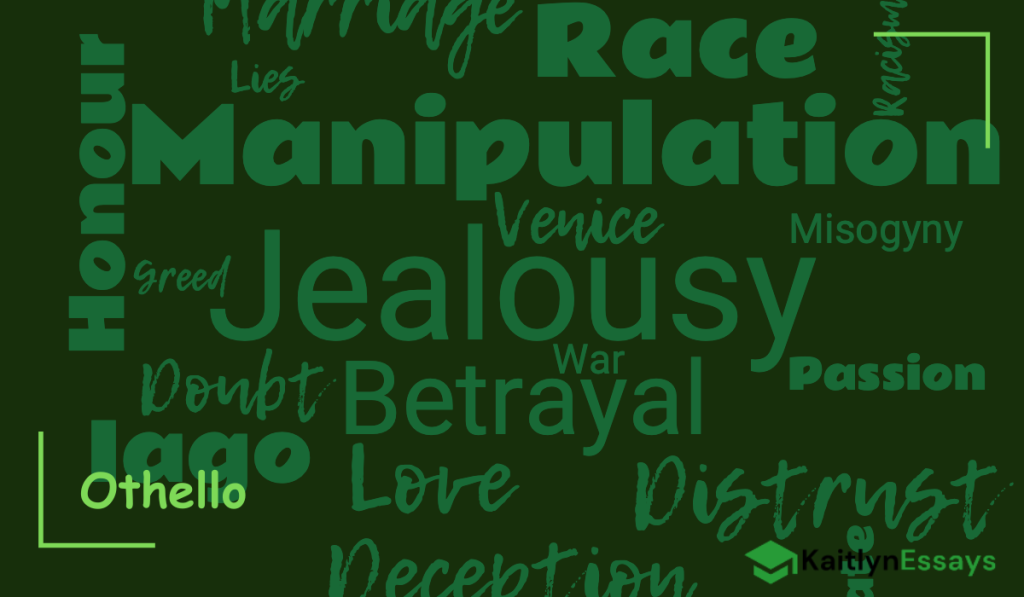
William Shakespeare’s Othello is a timeless tragedy that explores themes of jealousy, love, betrayal, and race. Set in Venice and Cyprus, the play follows the downfall of Othello, a Moorish general in the Venetian army, who is manipulated by his envious subordinate, Iago. Through cunning deceit and manipulation, Iago fuels Othello’s insecurities, leading him to distrust his wife, Desdemona, with devastating consequences.
The play is renowned for its intense emotional depth and its portrayal of the destructive power of jealousy. Othello raises questions about trust, honor, and the impact of societal prejudice, making it relevant even today. Through Shakespeare’s masterful language and unforgettable characters, the play continues to captivate audiences and offer insights into the darker sides of human nature.
Summary of Othello
Act 1: The Venetian Conflict The play opens in Venice, where Iago, upset about being passed over for promotion, conspires with Roderigo, who is infatuated with Othello’s wife, Desdemona. They inform Desdemona’s father, Brabantio, of her secret marriage to Othello, hoping to stir trouble. However, Othello confidently faces Brabantio’s accusations, winning the Duke’s approval as he explains his love for Desdemona. Discover the rest
Act 2: Arrival in Cyprus The setting shifts to Cyprus, where Othello is sent to defend the island from the Turks. Desdemona, Iago, and other characters arrive shortly after him. Iago begins planting seeds of doubt in Othello’s mind about Desdemona’s fidelity, manipulating situations to suggest she is having an affair with Cassio, Othello’s lieutenant. Iago’s plan starts to take shape. Explore further
Act 3: The Green-Eyed Monster By this point, Iago’s influence has taken hold. He continues to deceive Othello by suggesting Cassio and Desdemona are romantically involved. Othello’s jealousy is ignited, and he demands proof. Iago orchestrates a scene involving a handkerchief, a significant token from Othello to Desdemona, making it appear as though she gave it to Cassio. Othello’s trust in Desdemona falters. Learn more
Act 4: The Fall of Othello Othello becomes consumed by jealousy, and his behavior towards Desdemona grows abusive. He confronts her multiple times, yet she remains innocent and confused by his accusations. Iago continues to fuel Othello’s rage, urging him to take action against Desdemona. The tragic climax approaches as Othello decides on a grim course of action. Find out more
Act 5: The Tragic Conclusion In the final act, Iago’s manipulation comes to a head. Othello, overwhelmed by jealousy, kills Desdemona, believing her to be unfaithful. However, the truth of Iago’s treachery is soon revealed, and Othello is devastated by the realization of his irreversible actions. The play ends in tragedy, with Othello taking his own life and Iago arrested, though his ultimate fate remains uncertain. Continue reading
Characters in Othello
Othello
Othello is the titular character of the play, a Moorish general in the Venetian army. He is a skilled and honorable leader, yet his downfall comes as a result of his deep-seated insecurities and his susceptibility to jealousy. Othello’s tragic flaw is his unquestioning trust in Iago, which ultimately leads to his demise. He struggles with his identity as an outsider and feels vulnerable due to his race and the perception of his background, despite his success in Venetian society.
Throughout the play, Othello transforms from a confident and loving husband into a man consumed by jealousy and rage, driven by false information. His intense love for his wife, Desdemona, tragically turns into suspicion, pushing him to make irreversible decisions. This journey from nobility to despair is the cornerstone of Shakespeare’s tragic narrative.
More on Othello’s journey and his complex character development.
Desdemona
Desdemona, Othello’s wife, is the embodiment of purity and loyalty. She is depicted as a strong, independent woman who defies societal norms by marrying Othello, a Moor, despite her father’s disapproval. Her love for Othello is unwavering, and her faithfulness stands in stark contrast to the lies and deceit that surround her.
Desdemona’s tragic fate is sealed when Othello, manipulated by Iago, begins to suspect her of infidelity. She remains steadfast in her love and devotion to Othello, even as he grows increasingly distant and violent. Desdemona’s innocence and purity serve as a tragic counterpoint to the darker elements of the play, particularly Othello’s irrational jealousy.
Get an in-depth analysis of Desdemona’s role and tragic end.
Iago
Iago is one of Shakespeare’s most infamous villains. He is a manipulative and cunning character, driven by a deep sense of resentment and jealousy. Iago is Othello’s ensign, but he harbors a grudge against him for promoting Cassio instead of him. This slight, combined with rumors that Othello has had an affair with his wife, drives Iago to destroy Othello’s life.
Iago’s manipulation is masterful. He deceives almost every character in the play, especially Othello, by planting seeds of doubt and suspicion. His ability to appear trustworthy while weaving a web of lies is central to the tragedy of Othello. His motivations remain ambiguous, with scholars often debating whether Iago is driven by personal grievances or sheer malice. Iago’s manipulation and treachery are pivotal to the play’s themes of trust and betrayal.
Get a closer look at Iago’s manipulations and his motivations.
Cassio
Cassio is Othello’s loyal lieutenant and a soldier of high reputation. His promotion to this position over Iago is one of the key motivations behind Iago’s vengeful plot. Cassio is honorable, charming, and admired by many, but he is also naive to the manipulations happening around him.
Despite being a faithful servant to Othello, Cassio becomes an unwitting pawn in Iago’s plan. Iago’s deceitful machinations lead Othello to believe that Cassio is having an affair with Desdemona, despite Cassio’s genuine loyalty. His downfall, orchestrated by Iago, comes when he is disgraced after a drunken brawl, leading to his temporary dismissal from Othello’s service.
Cassio’s role is central to the unfolding of Iago’s schemes, and his character offers a glimpse into the devastating effects of jealousy and suspicion. More on Cassio’s role in Othello.
Emilia
Emilia is Iago’s wife and Desdemona’s maid. She is a sharp and practical woman, but her loyalty to Iago blinds her to his true nature until it is too late. Throughout the play, Emilia serves as a contrast to Desdemona’s innocence, often offering cynical and worldly advice on the nature of men and relationships.
Emilia’s role becomes crucial in the play’s climax when she realizes that Iago has manipulated everyone around him. She bravely confronts him, exposing his lies to Othello and the others, but tragically, this revelation comes at the cost of her life. Emilia’s actions and ultimate sacrifice highlight themes of loyalty, truth, and the consequences of deceit.
More on Emilia’s pivotal role and her tragic end.
Roderigo
Roderigo is a wealthy Venetian who is infatuated with Desdemona. His love for her is unrequited, and he becomes an easy target for Iago’s manipulations. Roderigo blindly follows Iago’s schemes, believing that Iago will help him win Desdemona’s love. However, Roderigo is merely a pawn in Iago’s larger plot, and he eventually meets his demise when he realizes too late that he has been used.
Roderigo’s gullibility and blind passion make him a tragic figure in the play. His character serves as a commentary on the dangers of obsession and the ease with which people can be manipulated when they are desperate.
More on Roderigo’s tragic role and downfall.
Brabantio
Brabantio is Desdemona’s father and a Venetian senator. He is deeply offended when he learns of his daughter’s secret marriage to Othello, a Moor. Brabantio’s disapproval of Othello is rooted in both racial prejudice and his possessiveness over Desdemona. His disapproval is a reflection of the racial and social tensions that permeate the play.
Brabantio’s role, though limited, sets the stage for much of the conflict that follows in Othello. His rejection of Othello and his belief that Othello used witchcraft to win Desdemona’s heart underscore the deep-seated biases that fuel the tragedy.
Get an exploration of Brabantio’s role and his impact on the play.
Bianca
Bianca is a courtesan in love with Cassio, and her role, though minor, adds another layer to the play’s exploration of jealousy. Bianca is jealous of Cassio’s affections, believing that he is unfaithful to her. Though her suspicions are unfounded, they mirror Othello’s own irrational jealousy toward Desdemona.
Bianca’s character, while not as developed as others, serves to highlight the destructive nature of jealousy and suspicion in relationships. Her interactions with Cassio and the handkerchief, a key symbol in the play, help to drive the plot toward its tragic conclusion.
More on Bianca’s character and her role in the play.
Themes in Othello
Jealousy: The Green-Eyed Monster
Jealousy is one of the most prominent themes in Othello, often referred to as the “green-eyed monster” within the play. This destructive emotion drives much of the plot, particularly Othello’s tragic downfall. The characters’ lives are consumed by jealousy—Othello is driven to madness by his belief that Desdemona has been unfaithful, while Iago’s jealousy of Cassio’s promotion and Othello’s success motivates his manipulative schemes.
Othello’s jealousy turns him from a noble general into a man consumed by doubt and paranoia, leading him to commit heinous acts. Iago skillfully plays on this emotion, stoking Othello’s insecurities and fanning the flames of suspicion. The theme of jealousy reveals the destructive power of unchecked emotions and the way they can cloud judgment and lead to devastating consequences.
Get a deeper understanding of how jealousy shapes the play and the characters’ fates.
Betrayal: The Web of Deceit
Betrayal is another central theme in Othello, affecting almost every character in the play. At its heart is Iago’s betrayal of Othello’s trust. Iago’s duplicity is the engine that drives the tragedy, as he manipulates those around him for his own gain. His betrayal is all-encompassing, as he deceives not only Othello but also his wife Emilia, Roderigo, and Cassio.
Othello’s belief in Iago’s lies leads him to betray the one person who remains loyal to him—Desdemona. This theme underscores the fragility of trust and the way betrayal can unravel relationships, turning love into hatred and loyalty into suspicion.
Explore the layers of betrayal in Othello and its impact on the characters’ downfall.
Love and Destruction
Love is another pivotal theme in Othello, particularly the love between Othello and Desdemona. Their love, which begins as a powerful and passionate force, becomes tainted by jealousy and insecurity. The intensity of Othello’s love for Desdemona makes his eventual belief in her betrayal all the more tragic. Instead of being a source of strength, Othello’s love turns into an obsessive need for control, leading to the destruction of the very person he cherishes.
Shakespeare contrasts romantic love with other forms of affection, such as Emilia’s more pragmatic view of marriage and Iago’s lack of genuine affection for anyone. The theme of love in Othello is ultimately a tragic one, demonstrating how love, when corrupted by doubt and jealousy, can lead to ruin.
Get a detailed exploration of how love intertwines with destruction in the play.
Race and Identity
The theme of race is crucial to understanding the societal and personal struggles in Othello. Othello, as a Moor, is constantly aware of his outsider status in Venetian society. Although he is a respected general, his race sets him apart, and this difference becomes a source of insecurity, which Iago exploits to manipulate him. Othello’s internal conflict with his identity and his desire for acceptance within a predominantly white society make him vulnerable to the doubts Iago sows.
The theme of race not only addresses Othello’s feelings of otherness but also exposes the prejudices held by other characters, such as Brabantio, who is initially outraged by his daughter’s marriage to a Moor. Shakespeare’s treatment of race in Othello offers a profound commentary on the destructive effects of racism and how it shapes identity and self-worth.
Get a comprehensive look at how race and identity play a central role in Othello.
Manipulation and Control
Manipulation is a driving force in Othello, with Iago serving as the master manipulator. His ability to control the actions and perceptions of those around him demonstrates the dangerous power of deceit. Iago carefully orchestrates events to make Othello doubt Desdemona’s fidelity, using subtle suggestions and fabricated evidence to manipulate Othello’s emotions.
Manipulation extends beyond Iago’s actions, as characters like Roderigo are also used as pawns in Iago’s schemes. The theme of manipulation shows how easily trust can be exploited and how one individual’s desire for power and control can devastate the lives of others.
Appearance vs. Reality
The distinction between appearance and reality is a recurring theme in Othello. Many characters in the play hide their true intentions and emotions, creating a disconnect between what is perceived and what is real. Iago’s outward appearance as an honest and loyal ensign contrasts starkly with his true nature as a deceitful and vengeful villain.
Othello’s failure to distinguish between appearance and reality is key to his tragic downfall. He is easily misled by Iago’s lies and the appearance of evidence, such as Desdemona’s handkerchief, without seeking the truth. The theme emphasizes how appearances can be deceiving and warns of the dangers of accepting things at face value.
Get a more detailed analysis of how appearance vs. reality is portrayed in the play.
Honor and Reputation
Honor and reputation play a significant role in Othello, particularly in the male characters’ perceptions of themselves and others. Othello’s sense of honor is deeply tied to his role as a military leader and his status in Venetian society. However, once his honor is called into question by Iago’s manipulations, he becomes consumed with the need to restore it, leading him to take drastic measures.
Cassio’s concern with his reputation is also evident when he laments his disgrace after the drunken brawl that results in his demotion. Iago’s understanding of how much these men value their honor allows him to manipulate them more easily. The theme highlights how societal expectations and the pressure to maintain a certain image can drive individuals to destructive actions.
More on the theme of honor and its importance in the play.
Gender Roles and Misogyny
Gender roles and the treatment of women are central to the dynamics in Othello. The play portrays women as being subjected to the control and judgment of the male characters. Desdemona’s loyalty and innocence are questioned solely based on the suspicions of Othello and Iago, with little regard for her own voice or agency. Emilia’s candid observations about the unequal power dynamics between men and women provide a sharp critique of the misogyny present in the society of the play.
The theme of gender also explores the expectations placed on women to be obedient and chaste, and how failing to meet these expectations, even falsely, can lead to dire consequences. Misogyny manifests in both Othello’s treatment of Desdemona and Iago’s view of women as deceitful and manipulative, further deepening the play’s tragic elements.
Explore how gender roles and misogyny are portrayed in Othello.
Symbols in Othello
The Handkerchief
The handkerchief in Othello is one of the most important symbols in the play, representing love, fidelity, and betrayal. Given to Desdemona by Othello as a token of his love, the handkerchief becomes a key piece of “evidence” that convinces Othello of Desdemona’s alleged infidelity. When Desdemona accidentally loses it, Emilia picks it up and gives it to Iago, who plants it in Cassio’s possession to further his plot against Othello.
This simple piece of cloth takes on immense symbolic weight, representing Othello’s love for Desdemona but also becoming a tool for her undoing. It symbolizes how fragile trust and love can be when manipulated by jealousy and deception.
Explore more about the significance of the handkerchief and its role in Othello’s downfall.
The Willow Song
The willow song, sung by Desdemona in Act 4, Scene 3, serves as a symbol of foreboding and sorrow. The song is about a woman who has been abandoned by her lover, which foreshadows Desdemona’s tragic fate. As she prepares for bed, she sings the song, expressing a subconscious awareness of the doom that awaits her.
The willow tree itself is often associated with sadness, mourning, and unrequited love, making the song a powerful symbol of Desdemona’s inner turmoil and the impending tragedy. Through this symbol, Shakespeare heightens the tension and dramatic irony, as the audience knows Desdemona’s fate, even as she remains unaware of the danger she is in.
More about how the willow song foreshadows Desdemona’s tragic end.
The Candle (Light)
In the final act, as Othello prepares to kill Desdemona, he refers to her as a light that can be extinguished. The candle he carries becomes a symbol of life itself, fragile and easily snuffed out. Othello’s act of blowing out the candle mirrors his decision to take Desdemona’s life, believing that, like the candle’s flame, once extinguished, she cannot be relit.
This image of the candle underscores the permanence of death and the irreversible nature of Othello’s actions. The candlelight also symbolizes innocence and purity, which is tragically lost when Othello murders Desdemona based on false accusations.
Get a deeper analysis of how the candle symbolizes life and death in Othello.
Animals
Throughout Othello, animal imagery is used by Iago to dehumanize Othello and other characters, often invoking racial and prejudicial undertones. Iago refers to Othello as a “black ram” and compares the act of love between Othello and Desdemona to the behavior of animals. This imagery not only reflects Iago’s contempt for Othello but also reveals the racial tensions and societal prejudices that exist within the play.
The use of animals as symbols serves to strip the characters of their humanity, particularly Othello, who is often viewed as an outsider due to his race. This dehumanization helps to further isolate Othello, making him more vulnerable to Iago’s manipulations.
Learn more about the significance of animal imagery in Othello.
The Wedding Sheets
Desdemona’s request to have her wedding sheets laid on her bed the night before her death is a poignant reminder of her innocence and the sanctity of her marriage to Othello. The wedding sheets symbolize the purity of their union and Desdemona’s fidelity, which stands in stark contrast to Othello’s misguided belief that she has been unfaithful.
In requesting the sheets, Desdemona attempts to remind Othello of their love and the vows they made to one another, making her death all the more tragic when Othello, blinded by jealousy, ignores this symbol of her innocence.
Further examination of how the wedding sheets symbolize marriage and innocence in the play.
The Storm
The storm that occurs at the beginning of Act 2, which destroys the Turkish fleet and delays the arrival of Othello and his soldiers, serves as a symbolic force of chaos and change. The storm mirrors the emotional turbulence that will unfold between the characters, particularly Othello, Desdemona, and Iago. It represents the disorder that Iago will bring into Othello’s life, disrupting the harmony of Othello’s marriage and his status as a respected general.
The storm also symbolizes the unpredictable and destructive forces of nature, foreshadowing the internal storms of jealousy and rage that will ultimately consume Othello.
Explore how the storm serves as a symbol of chaos and change in Othello.
Poison
Though poison is not physically present in Othello, it serves as a symbolic representation of Iago’s influence. Iago frequently refers to his plan to “poison” Othello’s mind, gradually corrupting his thoughts and filling him with doubt and jealousy. The imagery of poison reflects how Iago’s words slowly erode Othello’s trust in Desdemona, leading to the destruction of their relationship.
This metaphorical poison spreads not only to Othello but to other characters as well, as Iago’s manipulations set off a chain reaction of lies, deceit, and death. The use of poison as a symbol emphasizes the insidious nature of Iago’s schemes and the irreversible damage they cause.
Get an in-depth look at how poison symbolizes corruption in Othello.
Literary Devices in Othello
Dramatic Irony
Dramatic irony occurs when the audience knows something that the characters do not. In Othello, Shakespeare masterfully uses this device to increase the tension and highlight the tragic nature of the play. One of the most prominent examples of dramatic irony is Othello’s trust in Iago, believing him to be honest and loyal, while the audience knows that Iago is manipulating him.
This irony heightens the tragedy as Othello, unaware of Iago’s true nature, gradually destroys his life and the lives of those around him. The audience’s awareness of Iago’s deceit makes Othello’s ultimate downfall all the more heartbreaking.
Explore more about how dramatic irony intensifies the tragedy in Othello.
Foreshadowing
Shakespeare uses foreshadowing throughout Othello to hint at the dark events that will unfold. One example is Desdemona’s singing of the willow song in Act 4, which foreshadows her impending death. Additionally, Othello’s remark about how he would rather live in a world without love than be betrayed serves as a forewarning of the jealousy that will consume him.
Through foreshadowing, Shakespeare builds suspense and prepares the audience for the inevitable tragedy, making the emotional impact of the climax even more powerful.
More foreshadowing elements in Othello.
Symbolism
Symbolism plays a vital role in Othello, with objects like the handkerchief and the candle representing larger themes such as love, loyalty, and death. For instance, the handkerchief, a token of Othello’s love for Desdemona, becomes a symbol of betrayal when it is used by Iago to convince Othello of Desdemona’s infidelity.
These symbols enrich the narrative by providing a deeper understanding of the characters’ emotions and the tragic consequences of their actions.
Get a closer look at the symbolic devices in Othello and their significance.
Metaphor
Shakespeare frequently uses metaphors to illustrate the inner conflict of his characters, especially Othello. One of the most notable metaphors is Othello’s comparison of Desdemona to a rose that he must pluck before she withers. This metaphor not only reflects Othello’s belief in her infidelity but also demonstrates the fragility of their relationship.
Metaphors like these help the audience to visualize the emotional struggles of the characters and understand the complexities of their relationships.
Explore more of the powerful metaphors in Othello.
Soliloquy
Soliloquies in Othello serve as windows into the minds of characters, especially Iago and Othello. Through soliloquies, the audience gains access to Iago’s plotting and Othello’s growing jealousy. Iago’s soliloquies, in particular, reveal his motivations and manipulative tactics, while Othello’s soliloquies show his descent into jealousy and rage.
The soliloquies provide crucial insight into the characters’ inner worlds, allowing the audience to fully grasp the psychological and emotional depth of the play.
Get a deeper analysis of the soliloquies and their role in Othello.
Irony
Verbal irony, where a character says something but means the opposite, is frequently used by Iago to deceive other characters. For example, Iago is often referred to as “honest Iago,” an ironic phrase given his duplicitous nature. This use of irony underscores the themes of deception and betrayal that run throughout the play.
Shakespeare’s use of irony also allows Iago to manipulate Othello and other characters, furthering the tragic outcome of the story.
Learn more about how irony functions as a key literary device in Othello.
Personification
Shakespeare often uses personification to give human characteristics to abstract concepts like jealousy and love. In Othello, jealousy is described as a “green-eyed monster,” a vivid metaphor that conveys its destructive power. This personification allows the audience to understand jealousy not just as an emotion but as a driving force that consumes and destroys.
Through personification, Shakespeare transforms emotions into powerful, almost tangible entities that shape the course of the narrative.
Explore more examples of personification in Othello.
Allusion
Shakespeare frequently uses allusions to classical and biblical texts to add depth to the characters and themes in Othello. For instance, Iago’s reference to Janus, the Roman god with two faces, reflects Iago’s duplicitous nature. These allusions help to create a richer, more layered narrative, drawing connections between Othello and wider cultural and religious contexts.
The use of allusion enhances the play’s intellectual complexity and allows Shakespeare to comment on timeless human experiences, such as betrayal and love.
More about the allusions used in Othello and their meanings.
Imagery
Shakespeare’s use of vivid imagery in Othello helps to create strong emotional responses from the audience. He uses animal imagery, for example, to degrade Othello and evoke a sense of racial prejudice. Iago often uses this type of imagery to provoke Othello’s insecurities about his race and status. This imagery creates a stark contrast between Othello’s noble character and the base instincts Iago tries to associate with him.
The rich visual descriptions found in Shakespeare’s imagery help to immerse the audience in the emotional and psychological world of the play.
Discover more about how imagery is used to enhance the story in Othello.
Hyperbole
Hyperbole, or deliberate exaggeration, is used in Othello to amplify the characters’ emotions and the dramatic tension of the play. Othello often speaks in hyperbolic terms when expressing his love for Desdemona or his feelings of betrayal. His declaration that he would “tear [Desdemona] to pieces” after believing in her infidelity is an example of how hyperbole is used to convey the depth of his emotional turmoil.
Shakespeare’s use of hyperbole helps to intensify the emotional stakes, making Othello’s tragedy more impactful.
Further insight into the use of hyperbole in Othello.
Quotes in Othello
“O, beware, my lord, of jealousy! It is the green-eyed monster which doth mock the meat it feeds on.”
This famous line is delivered by Iago as he warns Othello about the dangers of jealousy. While pretending to be concerned for Othello, Iago is actually planting the seed of doubt about Desdemona’s fidelity. The metaphor of jealousy as a “green-eyed monster” is one of the play’s most memorable images and perfectly captures the destructive nature of this emotion.
This quote highlights Iago’s manipulation and foreshadows Othello’s tragic downfall. Jealousy becomes the driving force that leads to the play’s tragic conclusion.
“Reputation, reputation, reputation! O, I have lost my reputation! I have lost the immortal part of myself, and what remains is bestial.”
Cassio laments the loss of his reputation after being disgraced in a drunken brawl. In this moment, Cassio expresses the importance of honor and reputation in Venetian society. His words also reflect a recurring theme in the play: the conflict between appearance and reality. This loss of reputation is what allows Iago to further manipulate Cassio, using his vulnerability to drive a wedge between him and Othello.
This quote underscores the theme of honor and its significance in the social and personal identity of the characters in Othello.
“I am not what I am.”
This cryptic and chilling statement from Iago reveals his duplicitous nature. He openly admits that he hides his true intentions, making him one of Shakespeare’s most enigmatic and deceptive villains. Iago’s manipulation and deceit run throughout the play, and this quote encapsulates his ability to present one face to the world while secretly plotting Othello’s destruction.
The line also plays on the biblical phrase “I am that I am,” highlighting Iago’s inversion of moral and religious values. His character is defined by the gap between appearance and reality.
“My noble Moor is true of mind, and made of no such baseness as jealous creatures are.”
In this line, Desdemona expresses her faith in Othello’s loyalty and integrity. Tragically, her trust in him is misplaced, as Othello’s mind has already been poisoned by Iago’s insinuations about her infidelity. This moment is filled with dramatic irony, as the audience knows that Othello’s jealousy is already growing, despite Desdemona’s belief in his honesty.
This quote reflects Desdemona’s innocence and loyalty, making her eventual fate all the more tragic.
“I will wear my heart upon my sleeve for daws to peck at; I am not what I am.”
Here, Iago speaks of his disdain for showing his true feelings. By saying he won’t “wear his heart upon [his] sleeve,” Iago reveals his philosophy of emotional concealment and manipulation. He refuses to be vulnerable, choosing instead to mask his true feelings with lies and deceit.
This line encapsulates Iago’s cynical view of the world, where emotions are to be hidden and manipulated for personal gain.
“She loved me for the dangers I had passed, and I loved her that she did pity them.”
In this quote, Othello explains the origins of his relationship with Desdemona, highlighting the mutual admiration and affection that brought them together. Desdemona was moved by Othello’s tales of bravery and hardship, while Othello was drawn to her compassion and empathy. This line encapsulates the romantic foundation of their relationship, which will later be undermined by jealousy and insecurity.
This moment captures the vulnerability of Othello, who views Desdemona’s love as a validation of his worth in a society that often judges him for his race.
“Put out the light, and then put out the light.”
As Othello prepares to kill Desdemona, he uses this haunting metaphor. The first “light” refers to the candle in the room, while the second “light” refers to Desdemona’s life. The metaphor reflects Othello’s inner turmoil as he grapples with the decision to end the life of the woman he once loved. The imagery of extinguishing a light underscores the irreversible nature of his actions and the finality of death.
This quote is a powerful moment in the play, symbolizing the tragic end of Othello and Desdemona’s love.
“I kissed thee ere I killed thee: no way but this; killing myself, to die upon a kiss.”
In Othello’s final moments, he reflects on the love he once had for Desdemona, kissing her as he takes his own life. This line is both a confession of guilt and an expression of his enduring love for Desdemona, even in death. The juxtaposition of love and death in this quote highlights the tragic complexity of Othello’s emotions and the irreversible consequences of his jealousy.
This final act of remorse and self-punishment brings the tragedy to a poignant close.
“But I do think it is their husbands’ faults if wives do fall.”
Emilia speaks these words in a moment of profound insight into the nature of marriage and gender roles. She argues that men are often responsible for the infidelity or moral downfall of their wives, pointing to the double standards and power imbalances in relationships. Emilia’s speech offers a feminist critique of the social norms that govern women’s behavior, making her one of the play’s most compelling voices.
This quote also foreshadows Emilia’s own defiance when she exposes Iago’s treachery, making her a key player in the play’s resolution.
Get a deeper analysis of quotes and their roles in Othello
The Villain in Othello
In Othello, the villain is Iago, one of Shakespeare’s most complex and manipulative characters. He serves as Othello’s ensign but harbors deep resentment towards him. Iago’s motives are multifaceted, driven by jealousy, ambition, and possibly racism. His ability to deceive and manipulate those around him, especially Othello, makes him the primary antagonist of the play.
Iago’s Manipulation
Iago is a master manipulator who carefully orchestrates Othello’s downfall by exploiting the general’s insecurities. His cunning lies convince Othello that Desdemona, Othello’s wife, has been unfaithful with Cassio. Through insinuations and the strategic planting of false evidence, Iago feeds Othello’s growing jealousy. His manipulation is not limited to Othello; he also deceives Roderigo, Emilia (his wife), and Cassio, making them all pawns in his malicious plot.
Iago’s Motives
Iago’s motives are ambiguous and debated by scholars. He expresses jealousy over Cassio’s promotion, which he feels he deserved. He also suggests that Othello may have been involved with his wife, Emilia, though there is no evidence to support this. Additionally, his blatant racism towards Othello, a Moor, may also be a factor driving his hatred. However, some argue that Iago’s true motive is his enjoyment of manipulation and destruction for its own sake, as he often takes pleasure in watching others suffer.
Iago’s Villainy
What makes Iago such a compelling villain is his ability to hide his true nature. While he is deceiving everyone around him, he presents himself as honest and loyal, even earning the nickname “Honest Iago.” His skillful manipulation leads to the tragic deaths of Desdemona, Othello, and others, and his true nature is only revealed in the final moments of the play.
Iago’s villainy stands out because of his cold, calculating nature and his ability to turn even the most innocent actions into reasons for mistrust and chaos. His lack of remorse and his refusal to explain his actions at the end of the play cement his role as one of Shakespeare’s greatest villains.