

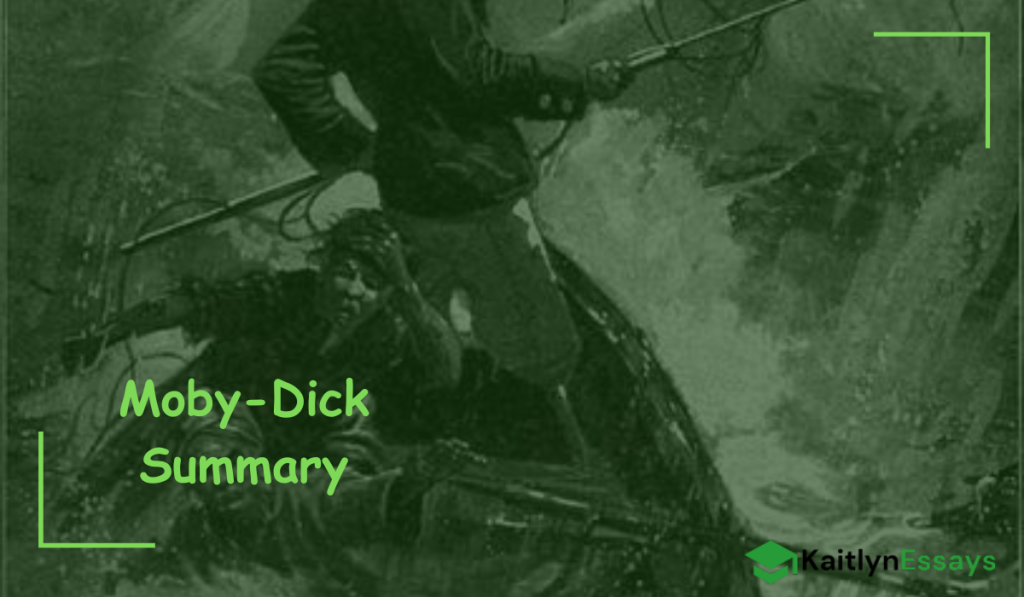
Herman Melville’s “Moby-Dick” is a classic American novel that explores the obsessive quest of Captain Ahab to hunt down a massive white whale. Published in 1851, the book follows Ishmael, a sailor who joins the crew of the whaling ship Pequod. As the journey unfolds, readers are drawn into a world of maritime adventure, philosophical musings, and human nature’s darker aspects.
The novel weaves together themes of fate, good versus evil, and humanity’s relationship with nature. Melville’s rich prose and detailed descriptions of whaling life paint a vivid picture of 19th-century seafaring. Through its complex characters and symbolism, “Moby-Dick” offers a deep look at ambition, revenge, and the human spirit.
Summary
Chapter 1: Loomings
The novel begins with the narrator, Ishmael, introducing himself and explaining his desire to go to sea. He reflects on how going to sea is a way for him to manage his melancholic feelings and avoid despair. Ishmael suggests that the sea is a remedy for the troubles of life, offering a way to escape the burdens of society. He decides to join a whaling expedition, driven by a sense of adventure and curiosity about the mysterious world of whales.
Chapter 2: The Carpet-Bag
Ishmael arrives in New Bedford, Massachusetts, a bustling whaling port, and needs a place to stay. He enters a crowded inn called the Spouter-Inn, where he is informed that he will have to share a bed with another guest. Although uncomfortable with the idea at first, Ishmael agrees. The innkeeper warns him that his bedfellow is a strange and potentially dangerous man.
Chapter 3: The Spouter-Inn
Inside the inn, Ishmael is confronted with a grim, eerie atmosphere, and he is unnerved by the strange decor, including a large, confusing painting and a collection of whaling implements. Later, he meets his bedfellow, a harpooner named Queequeg, who initially frightens Ishmael with his heavily tattooed body and unfamiliar customs. However, Queequeg proves to be kind and friendly, and the two men quickly become friends. They agree to join the same whaling ship, cementing their companionship.
Chapter 4: The Counterpane
Ishmael wakes up the next morning to find Queequeg’s arm draped over him. At first, he is startled, but he soon feels comforted by Queequeg’s presence. The two men share breakfast, and Ishmael begins to see Queequeg in a more positive light, appreciating his unique qualities and skills as a harpooner.
Chapter 5: Breakfast
Ishmael observes the diverse group of men who come to breakfast at the Spouter-Inn. The meal is a silent affair, with everyone focused on eating. Ishmael notes the quiet and disciplined nature of these whalemen, who have a sense of purpose and seriousness about them. This scene further immerses Ishmael in the world of whaling.
Chapter 6: The Street
Ishmael takes a walk around New Bedford, observing the bustling streets filled with sailors, whalers, and townspeople. He reflects on the town’s connection to the whaling industry, noting the wealth it has brought to some, as well as the rough, adventurous spirit of the men who go to sea. The sights and sounds of the town reinforce Ishmael’s excitement about the voyage ahead.
Chapter 7: The Chapel
Ishmael visits a whaleman’s chapel, where he sees memorial plaques dedicated to sailors lost at sea. The plaques remind him of the dangers of whaling and the fleeting nature of life. The sermon delivered by Father Mapple, a former whaleman, speaks of the courage and faith required to face such perilous work. This experience deepens Ishmael’s contemplation of life, death, and the journey he is about to embark on.
Chapter 8: The Pulpit
Ishmael describes the pulpit in the whaleman’s chapel, likening it to the bow of a ship. He admires the dramatic way in which Father Mapple ascends to the pulpit, using a rope ladder, symbolizing the preacher’s dedication and readiness to confront spiritual challenges. Ishmael reflects on the pulpit’s significance, seeing it as a place from which the preacher navigates the spiritual lives of his congregation, much like a captain steers a ship.
Chapter 9: The Sermon
Father Mapple delivers a powerful sermon based on the biblical story of Jonah and the whale. He emphasizes the themes of sin, repentance, and obedience to God’s will, using Jonah’s tale as a cautionary lesson for the whalemen. Father Mapple’s sermon warns of the consequences of fleeing from duty and the importance of accepting divine punishment with humility. The sermon leaves a strong impression on Ishmael, deepening his understanding of the moral and spiritual aspects of whaling.
Chapter 10: A Bosom Friend
Ishmael and Queequeg’s friendship grows stronger as they spend more time together. Ishmael learns more about Queequeg’s background as the son of a South Sea island king and his decision to leave home to explore the world. Despite their cultural differences, the two men develop a deep bond. They share a pipe, symbolizing their unity and mutual respect. Ishmael begins to see Queequeg as a “bosom friend,” someone he trusts and values deeply.
Chapter 11: Nightgown
Ishmael and Queequeg continue to share a close friendship. One night, as they lie in bed, Ishmael reflects on how comfortable he feels around Queequeg, despite their initial differences. They talk late into the night, and Ishmael admires Queequeg’s wisdom and calm demeanor. The chapter highlights the growing bond between the two, emphasizing their companionship and mutual respect.
Chapter 12: Biographical
Queequeg shares more of his life story with Ishmael, recounting his experiences as the son of a king from the island of Kokovoko. He explains how he left his home to see the world and learn from different cultures. Queequeg had wanted to bring back knowledge to his people, but he now feels that the world he left behind may no longer need him. Ishmael appreciates Queequeg’s adventurous spirit and understands his sense of alienation in a foreign land.
Chapter 13: Wheelbarrow
As Ishmael and Queequeg prepare to leave New Bedford for Nantucket, they encounter some cultural misunderstandings. Queequeg, unfamiliar with certain Western customs, uses a wheelbarrow incorrectly, causing amusement among bystanders. However, Queequeg’s good nature and impressive physical abilities quickly earn their respect. Later, on the ferry to Nantucket, Queequeg saves a man from drowning, further proving his bravery and competence.
Chapter 14: Nantucket
Ishmael describes the island of Nantucket, the whaling capital of the world. He reflects on the island’s history, noting how its residents transformed it from a barren place into a thriving whaling hub. Ishmael admires the islanders’ hardiness and seafaring skills, recognizing Nantucket as the center of the whaling industry. This chapter sets the stage for the upcoming journey, as Ishmael and Queequeg prepare to join a whaling ship.
Chapter 15: Chowder
Ishmael and Queequeg arrive in Nantucket and search for lodging. They find a cozy inn called the Try Pots, famous for its chowder. The innkeeper, Mrs. Hussey, offers them a choice between clam and cod chowder, and they eagerly accept both. The meal is hearty and satisfying, providing a warm welcome to the island. Ishmael comments on the importance of food and hospitality in a seafaring life, appreciating the simple pleasures before embarking on their perilous journey.
Chapter 16: The Ship
Ishmael and Queequeg begin their search for a whaling ship to join. They come across three ships readying to depart: the Pequod, the Devil-Dam, and the Tit-bit. The Pequod catches Ishmael’s attention, described as an old, weathered ship with a grim, determined character. They meet Captain Peleg and Captain Bildad, the ship’s owners, who interview Ishmael and Queequeg. After some negotiation, they agree to sign on with the Pequod, despite the mysterious absence of the ship’s captain, Ahab, whom they have yet to meet.
Chapter 17: The Ramadan
Queequeg observes a day of fasting and meditation, following the customs of his religion. He isolates himself in their room, refusing to eat or speak for an entire day. Ishmael is initially puzzled by Queequeg’s behavior and becomes concerned when Queequeg remains locked in his ritual for an extended period. When Queequeg finally emerges, weakened but spiritually renewed, Ishmael respects his devotion and learns to appreciate the significance of Queequeg’s beliefs, despite their differences.
Chapter 18: His Mark
Captain Peleg and Captain Bildad express concern over Queequeg’s background, questioning his religious beliefs and customs. They initially hesitate to allow him aboard the Pequod, fearing he may be a liability. However, Queequeg impresses them with a demonstration of his harpoon skills, proving his worth as a valuable crew member. Ultimately, Peleg and Bildad agree to sign Queequeg on, acknowledging his exceptional talent. Ishmael also officially signs the ship’s papers, solidifying their commitment to the voyage ahead.
Chapter 19: The Prophet
As Ishmael and Queequeg leave the wharf after signing onto the Pequod, they encounter a mysterious, ragged man named Elijah. He cryptically warns them about Captain Ahab, suggesting that there is something ominous and cursed about him and the voyage they are about to embark on. Elijah’s unsettling remarks leave Ishmael uneasy, but he tries to dismiss the man as a lunatic. Despite the encounter, Ishmael and Queequeg proceed with their plans to join the Pequod.
Chapter 20: All Astir
The day of departure approaches, and the Pequod is bustling with activity as the crew prepares the ship for its long voyage. Ishmael and Queequeg observe the final preparations, including loading the ship with supplies and making sure everything is in order. Captain Peleg and Captain Bildad, who are overseeing the process, display their deep knowledge and experience in whaling. Despite the excitement and busyness, Captain Ahab remains unseen, adding to the air of mystery surrounding him.
Chapter 21: Going Aboard
On Christmas morning, Ishmael and Queequeg board the Pequod, ready to set sail. They notice that the ship is quiet and almost eerie, with no sign of Captain Ahab. The crew is made up of a diverse group of men, each with their own unique background and story. As they settle in, Ishmael and Queequeg sense the gravity of the journey ahead. Despite the festive day, there is a somber mood on board, heightened by the continued absence of Ahab.
Chapter 22: Merry Christmas
The Pequod finally sets sail from Nantucket on Christmas Day, with Captain Peleg and Captain Bildad remaining on shore to see them off. As the ship moves out to sea, Captain Peleg offers a final prayer for the crew’s safety. The two captains then leave the ship in the hands of its officers and return to shore. Ishmael reflects on the solemnity of the departure, feeling a mix of excitement and foreboding. The voyage begins in earnest, with the crew now fully under the command of the mysterious and unseen Captain Ahab.
Chapter 23: The Lee Shore
Ishmael reflects on the character of Bulkington, a tall, mysterious sailor who is part of the crew. Bulkington had just returned from a long sea voyage but quickly joined the Pequod for another, displaying a deep yearning for the sea despite its dangers. Ishmael admires Bulkington’s courage and determination, seeing him as a symbol of the relentless drive of sailors who choose the perilous life at sea over the comfort and safety of the land. The chapter serves as a meditation on the inherent risks and allure of the seafaring life.
Chapter 24: The Advocate
Ishmael offers a defense of the whaling industry, arguing that whalemen are often undervalued and misunderstood by society. He points out that whalemen play a crucial role in providing oil, which was essential for lighting and industry at the time. Ishmael praises the bravery and skill of whalemen, emphasizing the nobility of their work. He challenges the negative perceptions of whaling, asserting that it is a vital and honorable profession deserving of respect.
Chapter 25: Postscript
In a brief postscript, Ishmael continues to defend the honor of whalemen by highlighting their contributions to global knowledge and exploration. He mentions that many significant geographic discoveries were made by whalers who ventured into uncharted waters. Ishmael also notes that whalemen often possess a wide range of skills and knowledge, gained through their diverse experiences at sea. He reinforces the idea that whalemen should be regarded as more than mere laborers—they are adventurers and pioneers.
Chapter 26: Knights and Squires
Ishmael introduces the officers of the Pequod, starting with Starbuck, the first mate. Starbuck is described as a thoughtful, cautious man who approaches whaling with a deep sense of responsibility. He is religious and moral, yet also pragmatic and brave, embodying the qualities of a true leader. Ishmael contrasts Starbuck’s calm, rational demeanor with the more reckless nature of other whalemen, suggesting that Starbuck’s temperance and wisdom make him well-suited for his role. The chapter highlights the significance of leadership and the complex personalities of the crew.
Chapter 27: Knights and Squires (Continued)
Ishmael continues to introduce the key officers of the Pequod. He describes Stubb, the second mate, as a cheerful, easygoing man who approaches danger with a sense of humor and a pipe always in hand. Stubb’s lightheartedness contrasts with Starbuck’s seriousness. Next, Ishmael introduces Flask, the third mate, a short, stout man with a relentless, almost aggressive attitude towards whaling.
Flask treats the hunting of whales as a battle, driven more by instinct than thought. Each of these officers is paired with a harpooner: Starbuck with Queequeg, Stubb with Tashtego, a Native American, and Flask with Dagoo, a towering African man. Ishmael notes the diversity of the crew, emphasizing the mix of cultures and backgrounds on board.
Chapter 28: Ahab
Captain Ahab finally makes his first appearance on deck, and Ishmael observes him closely. Ahab is described as a tall, gaunt figure with a white scar running down his face, giving him a striking and intimidating presence. His leg, lost in an encounter with the great white whale Moby-Dick, has been replaced by a whalebone prosthetic. Ahab’s grim demeanor and intense, brooding nature immediately set him apart from the rest of the crew. Ishmael senses that Ahab is consumed by something dark and powerful, although the captain remains silent and aloof.
Chapter 29: Enter Ahab; to Him, Stubb
Ahab’s commanding presence is felt throughout the ship, as he starts to take control of the Pequod’s operations. Stubb, who usually treats everything with a sense of humor, becomes unnerved by Ahab’s stern and intense manner. When Stubb inadvertently laughs in Ahab’s presence, the captain rebukes him sharply, making it clear that he tolerates no levity or disrespect. Stubb is left feeling uneasy and shaken by Ahab’s forceful personality. This interaction demonstrates Ahab’s absolute authority on board and his deep-seated seriousness about the journey ahead.
Chapter 30: The Pipe
Ahab attempts to find some peace by smoking his pipe, a habit he once enjoyed. However, he quickly becomes restless and frustrated, realizing that the act no longer brings him any comfort. Ahab angrily throws the pipe overboard, symbolizing his rejection of simple pleasures and his complete focus on his obsession with Moby-Dick. This chapter underscores Ahab’s internal torment and his inability to find solace in anything other than his pursuit of the whale.
Chapter 31: Queen Mab
Stubb reflects on a disturbing dream he had after his confrontation with Ahab. In the dream, a merman-like figure, resembling a mysterious old man, commands Stubb to submit to Ahab’s authority. Stubb tries to shake off the dream as nonsense, but it leaves him with a lingering sense of unease. He shares the dream with Flask, who dismisses it, but Stubb remains troubled. The dream hints at the deep, almost supernatural influence Ahab has over the crew and foreshadows the dark path they are on.
Chapter 32: Cetology
Ishmael presents a detailed, somewhat humorous classification of different types of whales, which he refers to as “books” within the larger “library” of whales. He categorizes them based on their size and characteristics, from the enormous sperm whale to the smaller porpoise. Ishmael’s discussion is part scientific, part philosophical, as he attempts to impose order on the vast, mysterious world of whales. The chapter showcases Ishmael’s curiosity and his effort to understand the creatures that will be the focus of their voyage, while also revealing the limits of human knowledge in the face of nature’s complexity.
Chapter 33: The Specksnyder
Ishmael explains the role of the “specksnyder” (chief harpooner) on a whaling ship, a position that involves both the physical task of harpooning whales and assisting in the navigation and management of the crew. On the Pequod, this role is largely symbolic, as Captain Ahab holds absolute authority and controls every aspect of the ship. Ishmael reflects on the unique hierarchy aboard whaling ships, where traditional roles can shift depending on the captain’s personality and leadership style.
Chapter 34: The Cabin-Table
Ishmael describes the strict dining hierarchy in the Pequod’s cabin, where the officers eat in a formal setting, while the harpooners eat later in a more relaxed environment. Captain Ahab dines alone, emphasizing his separation from the crew. The scene at the table reflects the rigid social structure on board, where the captain’s authority is unquestioned, and the officers are careful to maintain decorum in Ahab’s presence. This chapter further illustrates Ahab’s isolation and the sense of distance he maintains from those under his command.
Chapter 35: The Mast-Head
Ishmael discusses the job of the lookout, or mast-head watch, on a whaling ship. Positioned high above the deck, the lookout scans the horizon for whales. Ishmael reflects on the introspective nature of this task, which often leads the lookout into deep thought and contemplation, sometimes at the risk of missing a sighting. The chapter takes on a philosophical tone as Ishmael considers the connection between the physical act of watching and the mental space it opens up for broader reflections on life and the universe.
Chapter 36: The Quarter-Deck
Captain Ahab finally reveals his true purpose to the crew: his obsessive quest to hunt and kill Moby-Dick, the great white whale that took his leg. Ahab gathers the crew on the quarter-deck and, in a dramatic speech, offers them a gold doubloon as a reward for the first man to sight the whale. The crew is initially taken aback by Ahab’s intensity, but they are soon swept up in his passion. Even Starbuck, who senses the madness in Ahab’s quest, is unable to resist the captain’s will. This chapter marks a turning point in the novel, where the crew becomes bound to Ahab’s singular, vengeful mission.
Chapter 37: Sunset
This chapter presents a glimpse into Ahab’s private thoughts as he stands alone at the helm, watching the sunset. Ahab reflects on his deep, unyielding obsession with Moby-Dick and the way it has consumed him, leaving no room for anything else in his life. He acknowledges the darkness within himself and the futility of trying to escape it. Ahab’s inner monologue reveals the depth of his torment and the extent to which he is driven by his desire for revenge, even as he recognizes the potential consequences of his actions.
Chapter 38: Dusk
Starbuck, the first mate, contemplates his feelings of dread and foreboding as the sun sets. Unlike Ahab, Starbuck is deeply conflicted about the journey ahead. He senses the madness in Ahab’s quest and fears for the safety of the crew, yet he feels powerless to oppose the captain. Starbuck’s internal struggle highlights his moral and religious values, as he grapples with the tension between his duty to follow orders and his awareness of the dangerous path they are on. This chapter contrasts with Ahab’s resolve, emphasizing Starbuck’s role as the moral conscience of the voyage.
Chapter 39: First Night-Watch
Stubb takes his turn at the night watch, reflecting on the day’s events and the intensity of Captain Ahab’s quest. Stubb’s easygoing nature allows him to brush off much of the tension, but he cannot completely escape the unsettling atmosphere aboard the Pequod. He muses on the madness of their mission, yet he tries to maintain his characteristic humor and lightheartedness, even in the face of Ahab’s growing obsession. The chapter emphasizes the different ways the crew members cope with the mounting pressure of the voyage.
Chapter 40: Midnight, Forecastle
This chapter presents a lively and chaotic scene on the forecastle deck, where the diverse crew of the Pequod mingles, sings, and debates under the moonlight. The sailors come from various backgrounds and speak different languages, highlighting the global nature of whaling crews. Despite their differences, they share a common bond as they face the dangers of the sea together. As the night wears on, the mood shifts from camaraderie to tension, with the men expressing their fears and doubts about Ahab’s quest. The chapter captures the mix of unity and unease among the crew.
Chapter 41: Moby Dick
Ishmael provides a detailed account of Moby-Dick, the legendary white whale that haunts Captain Ahab. He describes the whale’s physical characteristics, including its unusual whiteness and massive size, as well as the fear and awe it inspires among whalemen. Moby-Dick is rumored to be intelligent and malevolent, often attacking ships and eluding capture. Ishmael reveals the full extent of Ahab’s obsession, driven by his desire for revenge after losing his leg to the whale. The chapter sets up Moby-Dick as both a literal and symbolic antagonist, embodying the mysterious and uncontrollable forces of nature.
Chapter 42: The Whiteness of the Whale
Ishmael explores the symbolism of the whale’s whiteness, a color that traditionally represents purity and innocence but also evokes fear and dread. He reflects on how whiteness can be associated with the unknown and the terrifying aspects of the natural world. Ishmael explores various cultural and religious interpretations of whiteness, suggesting that Moby-Dick’s color adds to its mystique and power. The chapter is a philosophical meditation on the duality of whiteness, linking it to the broader themes of the novel, such as the ambiguity of good and evil.
Chapter 43: Hark!
During a quiet moment on board, a mysterious sound is heard coming from below deck. The crew is momentarily spooked, but they quickly dismiss it, attributing the noise to the natural creaks and groans of the ship. However, the incident adds to the growing sense of unease and tension on the Pequod. Ishmael notes that the crew is becoming increasingly jumpy as they continue their journey, with the strange sound serving as a reminder of the unknown dangers that lie ahead.
Chapter 44: The Chart
This chapter focuses on Captain Ahab as he obsessively studies his charts and maps, trying to predict where Moby-Dick might be found. Ahab’s knowledge of the whale’s migratory patterns and habits is extensive, and he uses this information to plan the Pequod’s course. The charts become a symbol of Ahab’s attempt to impose order and control over the unpredictable and chaotic forces of nature. Despite the vastness of the ocean and the uncertainty of their mission, Ahab’s determination remains unshaken. The chapter highlights the captain’s intense focus and the lengths to which he will go to achieve his goal.
Chapter 45: The Affidavit
Ishmael addresses the reader directly, providing a defense of the novel’s realism. He acknowledges that some of the stories about whales and whaling may seem incredible, but he insists that they are based on true events. Ishmael offers several examples of real-life encounters with large, dangerous whales, citing historical records and firsthand accounts. This chapter serves to validate the narrative’s authenticity and emphasizes the genuine peril faced by whalemen.
Chapter 46: Surmises
Ishmael reflects on Ahab’s cunning and strategic thinking as the captain continues to conceal his true intentions from the crew. Ahab is careful not to reveal the full extent of his obsession with Moby-Dick, instead allowing the men to believe that they are on a standard whaling voyage. Ishmael notes that Ahab’s manipulation of the crew is part of his larger plan to achieve his goal, showcasing the captain’s calculating nature. The chapter examines Ahab’s psychological complexity, highlighting his ability to mask his true motives.
Chapter 47: The Mat-Maker
Ishmael and Queequeg are weaving a sword-mat, a kind of protective covering for the whale lines, when they spot a school of whales in the distance. The peaceful, almost meditative act of mat-weaving is suddenly interrupted by the excitement of the chase. The chapter uses the image of the mat, with its intertwining threads, as a metaphor for fate and the interconnectedness of life. Ishmael reflects on how fate, chance, and free will are all woven together, much like the threads of the mat.
Chapter 48: The First Lowering
The Pequod engages in its first whale chase, with the crew lowering the boats into the water to pursue the whales. Ishmael joins Starbuck’s boat, experiencing the adrenaline and chaos of the hunt for the first time. As the men close in on a whale, Ahab’s fanatical determination becomes apparent. However, the chase is interrupted when a mysterious figure, Fedallah, emerges from Ahab’s boat, revealing that Ahab has secretly brought along his own private crew. This unexpected twist adds to the sense of mystery and tension on the Pequod.
Chapter 49: The Hyena
After the harrowing experience of the first whale chase, Ishmael reflects on the dangers of whaling and the precarious nature of life at sea. He compares a whaleman’s life to a “hyena’s,” always facing death and uncertainty. Despite the risks, Ishmael decides to draw up a will, a practical step that acknowledges the constant threat of death. This chapter highlights the grim realities of whaling and the acceptance of mortality that comes with the profession.
Chapter 50: Ahab’s Boat and Crew. Fedallah
Ishmael provides more information about Fedallah, the mysterious figure revealed in the previous chapter. Fedallah is an enigmatic Parsee, or Zoroastrian, with a striking appearance and an aura of mysticism. He is the leader of Ahab’s secret crew, all of whom are loyal only to Ahab. Ishmael notes that Fedallah and his men remain separate from the rest of the crew, adding to their otherworldly presence. The chapter deepens the sense of unease surrounding Ahab’s obsession with Moby-Dick and suggests that there may be dark, supernatural forces at play.
Chapter 51: The Spirit-Spout
As the Pequod continues its journey, the crew begins to notice a strange spout of water on the horizon that appears at night. The spout seems to glow eerily in the dark, and it appears and disappears in an almost supernatural manner. The crew becomes increasingly unnerved by the mysterious spout, which they come to believe is a sign of Moby-Dick. The sighting of this “spirit-spout” adds to the ominous atmosphere on board, and Ahab’s obsession with finding the white whale intensifies. The crew is both fascinated and fearful of the spout, viewing it as a portent of the challenges that lie ahead.
Chapter 52: The Albatross
The Pequod encounters another whaling ship, the Albatross, as it sails through the Pacific Ocean. As the two ships pass each other, Captain Ahab tries to speak with the captain of the Albatross, asking if they have seen Moby-Dick. However, the communication is disrupted when the other ship’s speaking trumpet falls into the sea. The encounter is brief and ends without any useful information about Moby-Dick. The incident reinforces the isolation of the Pequod and the sense that Ahab’s quest is taking the ship deeper into unknown and potentially dangerous waters. The image of the Albatross, a bird often seen as a symbol of bad luck or a cursed fate, adds to the foreboding mood.
Chapter 53: The Gam
Ishmael explains the practice of a “gam,” a social meeting between two whaling ships at sea. During a gam, the captains and crew members exchange news, letters, and stories, providing a rare opportunity for social interaction in the vast loneliness of the ocean. Ishmael reflects on the importance of these encounters for maintaining morale and sharing valuable information. He notes that gams are a cherished tradition among whalemen, serving as a reminder of their shared experiences and the camaraderie of life at sea. However, Ahab is usually uninterested in participating in gams, as his focus remains solely on the pursuit of Moby-Dick.
Chapter 54: The Town-Ho’s Story
During a gam with the ship Town-Ho, Ishmael hears a dramatic story about an encounter with Moby-Dick. The tale is told by one of the crew members and involves a mutiny and the mysterious appearance of the white whale. The story begins with a conflict between Radney, a mate on the Town-Ho, and Steelkilt, a rebellious sailor. The tension between them escalates until Steelkilt and his supporters are locked in the ship’s hold.
Eventually, the ship is attacked by Moby-Dick, and in the chaos, Radney is killed by the whale. The story is seen as a cautionary tale about the dangers of angering the great white whale. This chapter is notable for its narrative-within-a-narrative structure, adding depth to the legend of Moby-Dick.
Chapter 55: Of the Monstrous Pictures of Whales
Ishmael critiques the inaccurate and fantastical depictions of whales in art and literature. He points out that many artists and writers have never actually seen a whale, leading to exaggerated and misleading portrayals. Ishmael takes a humorous and sarcastic tone as he describes various erroneous illustrations, such as whales with overly large heads or dragon-like features. He emphasizes the importance of firsthand experience in understanding the true nature of whales, and he expresses frustration at the persistence of these misconceptions. The chapter serves as both a critique of artistic representation and a reflection on the challenges of capturing the reality of the natural world.
Chapter 56: Of the Less Erroneous Pictures of Whales, and the True Pictures of Whaling Scenes
Continuing from the previous chapter, Ishmael examines more accurate depictions of whales and whaling, offering praise to artists who have managed to capture the true essence of these creatures. He acknowledges that while some errors remain, these portrayals are closer to reality and help to educate the public about whales. Ishmael also discusses the importance of whaling scenes in art, noting that they can convey the drama and danger of the hunt.
He appreciates the efforts of those who strive to depict whales and whaling with authenticity, and he suggests that such images contribute to a better understanding of the whaleman’s life and the challenges they face.
Chapter 57: Of Whales in Paint; in Teeth; in Wood; in Sheet-Iron; in Stone; in Mountains; in Stars
Ishmael continues his exploration of whale imagery, discussing how whales have been represented in various forms of art and craft beyond traditional paintings. He describes intricate carvings on whale teeth (scrimshaw), wooden sculptures, and even the depiction of whales in natural formations like mountains and constellations. Ishmael marvels at humanity’s fascination with whales, noting that they have been immortalized in so many different ways across cultures and histories. This chapter highlights the enduring symbolic power of whales and the myriad ways they have been interpreted by humans.
Chapter 58: Brit
The Pequod sails through vast areas of the ocean covered in “brit,” a type of small, yellowish krill that serves as food for many species of whales, including the right whale. Ishmael reflects on the significance of brit, observing the way it attracts whales and creates a bustling, lively ecosystem. He also ponders the contrast between the seemingly peaceful, golden fields of brit and the deadly, predatory nature of whaling. This chapter explores the delicate balance of the marine environment and the role that whales play in it, as well as the irony of how something as small and innocuous as brit sustains such enormous creatures.
Chapter 59: Squid
While searching for whales, the crew of the Pequod encounters a giant squid, a creature that is rarely seen and often considered an ill omen by sailors. The sight of the squid unsettles the crew, as they believe it could be a sign of Moby-Dick’s presence. The squid’s appearance is described in vivid detail, emphasizing its monstrous size and eerie, ghostly form. Ishmael notes that while the giant squid is a formidable creature, it is relatively harmless to humans, unlike the whales they hunt. The chapter builds on the theme of the ocean as a place of mystery and fear, where strange and powerful creatures lurk beneath the surface.
Chapter 60: The Line
Ishmael describes the whaling line, a long rope that is attached to the harpoon and used to secure the whale once it is struck. He details the dangers associated with the line, which can quickly entangle the whalemen and cause serious injury or death if it snaps or is pulled too tightly. The chapter serves as a technical explanation of the equipment used in whaling, but it also carries symbolic weight, representing the perilous connection between man and whale. The line is a physical manifestation of the bond between hunter and hunted, as well as a reminder of the ever-present risks involved in the pursuit of whales.
Chapter 61: Stubb Kills a Whale
The Pequod finally has a successful whale hunt, with Stubb, the second mate, leading the charge. After a tense and challenging chase, Stubb’s boat manages to harpoon a sperm whale, and Stubb personally delivers the killing blow. The scene is filled with action and drama, showcasing the skill and bravery required in whaling. Stubb’s triumph is celebrated by the crew, but the chapter also emphasizes the brutality of the hunt and the immense power of the whale as it fights for its life. The successful kill brings a sense of accomplishment to the crew, but it also foreshadows the ongoing dangers they will face.
Chapter 62: The Dart
Ishmael explains the use of the “dart,” a smaller, second harpoon that is thrown after the first to ensure the whale is securely fastened. The dart is typically used by the harpooner, who must be skilled in throwing it with precision while the whale is still in motion. Ishmael describes the harpooner’s role as both physically demanding and highly dangerous, requiring strength, courage, and accuracy. The chapter highlights the harpooner’s importance in the success of a whale hunt, as well as the critical nature of every step in the whaling process. It underscores the teamwork and coordination needed to take down such a massive and powerful creature.
Chapter 63: The Crotch
Ishmael details the “crotch,” a forked stick or piece of wood placed near the bow of the whaleboat, used to hold the harpoon and its accompanying lance in place. The crotch keeps these weapons ready for the harpooner to grab and throw during the chase. Ishmael emphasizes the importance of the crotch in the whaling process, as it allows for quick and efficient action during the critical moments of the hunt. The chapter, while technical, underscores the precision and preparation required in whaling, where even small details can be crucial to success.
Chapter 64: Stubb’s Supper
After Stubb kills the whale, the crew begins the process of stripping it. Stubb, in a humorous and somewhat macabre scene, requests that the whale’s steak be cooked for his supper. The cook, an old black man named Fleece, struggles to meet Stubb’s demands, leading to a comical exchange between the two. Stubb lectures Fleece on how to cook the whale steak properly, all the while displaying a mix of good-natured humor and casual cruelty. This chapter provides a moment of levity in the narrative, while also highlighting the strange and often brutal realities of life on a whaling ship.
Chapter 65: The Whale as a Dish
Ishmael reflects on the use of whale meat as food, discussing its history and cultural significance. He notes that while whale meat was once considered a delicacy in certain parts of the world, it has fallen out of favor in most places, particularly in America. Ishmael describes various ways whale meat has been prepared and consumed, often with mixed results. The chapter also touches on the broader theme of how different cultures and societies view whales, both as a source of sustenance and as symbols. Ishmael’s musings illustrate the complex relationship between humans and whales, where the line between reverence and exploitation is often blurred.
Chapter 66: The Shark Massacre
As the crew begins to strip the whale of its valuable blubber, sharks swarm around the ship, drawn by the scent of blood. The crew engages in a frantic and brutal battle to keep the sharks at bay, using whatever weapons they have on hand. The scene is chaotic and violent, emphasizing the relentless nature of life at sea, where danger can come from many directions. The sharks are portrayed as both formidable adversaries and scavengers, and the chapter captures the raw, savage energy of the whaling industry. The crew’s struggle against the sharks serves as a reminder of the constant threats that whalemen face from the natural world.
Chapter 67: Cutting In
The crew begins the laborious process of “cutting in,” which involves stripping the whale of its blubber. This is a crucial step in whaling, as the blubber is rendered into oil, the primary commodity sought by whalemen. Ishmael describes the process in detail, from the initial cutting to the hoisting of the blubber onto the ship’s deck.
The work is grueling and dangerous, requiring the crew to balance on the slippery carcass of the whale while wielding large, sharp tools. The chapter emphasizes the physical demands of whaling and the expertise required to extract the valuable blubber. It also highlights the harsh reality of the industry, where every part of the whale is utilized to maximize profit.
Chapter 68: The Blanket
Ishmael reflects on the whale’s blubber, which he calls its “blanket.” He describes how this thick layer of fat insulates the whale from the cold waters of the ocean and provides buoyancy. Ishmael marvels at the blubber’s effectiveness as a natural defense and its role in the whale’s survival. The chapter looks into the biology and function of the whale’s blubber, portraying it as a marvel of nature’s design. Ishmael’s admiration for the whale’s “blanket” contrasts with the brutal process of stripping it away, highlighting the paradox of whaling, where beauty and brutality coexist.
Chapter 69: The Funeral
After the crew has stripped the whale of its valuable blubber, the remaining carcass is set adrift in the sea. Ishmael compares this process to a funeral, reflecting on the whale’s dignity even in death. The chapter explores the theme of mortality, as Ishmael ponders the transitory nature of life and the inevitability of death. The image of the discarded carcass floating away symbolizes the finality of death and the cycle of life in the ocean. The “funeral” of the whale contrasts with the earlier violence of the hunt, offering a moment of somber reflection on the whalemen’s actions.
Chapter 70: The Sphynx
As the whale’s head is hoisted onto the deck of the Pequod for further processing, Ishmael muses on its massive size and mysterious expression. He likens the whale’s head to the Sphinx, a symbol of ancient wisdom and enigma. Ishmael contemplates the inscrutable nature of the whale, suggesting that despite all their efforts to dominate and exploit these creatures, humans can never fully understand them. The chapter explores themes of mystery and the limits of human knowledge, as the whale’s head becomes a powerful symbol of the unknown.
Chapter 71: The Jeroboam’s Story
The Pequod encounters another whaling ship, the Jeroboam, whose crew is plagued by a mysterious disease. The captain of the Jeroboam tells a strange tale about one of his crew members, Gabriel, a fanatic who believes himself to be a prophet. Gabriel had warned the crew against hunting Moby-Dick, claiming that the whale was a manifestation of divine wrath. When the Jeroboam’s crew encountered Moby-Dick, Gabriel’s warnings seemed to come true, as the whale caused great damage to their ship. The story heightens the sense of Moby-Dick as a supernatural force, and it further fuels Ahab’s obsession.
Chapter 72: The Monkey-Rope
During the process of cutting in the whale’s blubber, Queequeg is lowered over the side of the ship, tied to a “monkey-rope” for safety. Ishmael holds the other end of the rope, effectively tying their fates together. Ishmael reflects on the deep trust required in this situation, as Queequeg’s life is literally in his hands. The monkey-rope becomes a metaphor for the interconnectedness of the crew, where each man’s survival depends on the others. The chapter explores themes of camaraderie and mutual dependence, illustrating the bond between Ishmael and Queequeg, as well as the broader brotherhood among the whalemen.
Chapter 73: Stubb and Flask Kill a Right Whale; and Then Have a Talk Over Him
Stubb and Flask, two of the Pequod’s mates, kill a right whale, which is considered less valuable than the sperm whale due to its lower-quality oil. As they prepare to process the whale, Stubb and Flask have a conversation about the nature of whales and their own views on whaling. The dialogue between the two mates is marked by humor and pragmatism, contrasting with the more philosophical reflections of Ishmael.
Stubb and Flask’s casual attitude toward the hunt highlights the different ways the crew members cope with the brutal realities of their work. The chapter underscores the practical, business-like approach to whaling, where even less valuable catches are seen as part of the overall profit.
Chapter 74: The Sperm Whale’s Head—Contrasted View
Ishmael offers a detailed description of the sperm whale’s head, comparing it to various architectural and artistic forms. He contrasts the sperm whale’s head with that of the right whale, noting the differences in shape, structure, and function. The chapter examines the biology and anatomy of the sperm whale, exploring how its head is uniquely adapted to its environment and lifestyle. Ishmael’s admiration for the sperm whale’s head is evident, as he marvels at its design and complexity. This chapter continues the theme of the whale as a majestic and awe-inspiring creature, worthy of both respect and study.
Chapter 75: The Right Whale’s Head—Contrasted View
Ishmael provides a detailed description of the right whale’s head, comparing it to the sperm whale’s head, which was described in the previous chapter. He notes that the right whale’s head is more rectangular and less symmetrical, with a large, flat surface on top. Ishmael points out the different anatomical features, such as the baleen plates used for filtering food from the water. The chapter highlights the differences between the two species, both in appearance and in the way they interact with their environment. Ishmael uses the comparison to reflect on the diversity of life in the ocean and the specialized adaptations of each species.
Chapter 76: The Battering-Ram
This chapter focuses on the sperm whale’s head, particularly the massive, solid section known as the “battering-ram.” Ishmael explains how this part of the whale’s head is composed of a dense mass of bone and muscle, making it incredibly strong and capable of delivering powerful blows. The sperm whale uses this battering-ram both as a weapon against its enemies and as a tool for navigating through obstacles in the ocean. Ishmael marvels at the strength and design of this feature, seeing it as a testament to the whale’s power and dominance in the marine world. The chapter emphasizes the whale’s physical might and the evolutionary adaptations that make it such a formidable creature.
Chapter 77: The Great Heidelberg Tun
Ishmael continues his exploration of the sperm whale’s head by describing the “case,” a large cavity inside the head that contains a valuable substance called spermaceti. He compares this cavity to the Great Heidelberg Tun, a massive wine cask in Germany, highlighting its size and importance. The spermaceti is a highly prized commodity, used in making candles and other products. The chapter looks into the process of extracting the spermaceti from the whale’s head, emphasizing the wealth that can be obtained from a single whale. Ishmael’s description blends technical detail with a sense of wonder at the abundance contained within the whale.
Chapter 78: Cistern and Buckets
In this chapter, Ishmael describes the process of retrieving spermaceti from the whale’s head. The crew uses a series of buckets to scoop the spermaceti out of the case and transfer it to barrels for storage. The work is arduous and requires careful coordination to avoid accidents, as the whale’s head is suspended precariously above the deck. Ishmael reflects on the strange and almost surreal nature of this task, where the men are essentially dipping into a giant natural cistern to harvest a valuable substance. The chapter highlights the mixture of danger and monotony in whaling, where even routine tasks carry risks.
Chapter 79: The Prairie
Ishmael turns his attention to the sperm whale’s eyes, which are located on opposite sides of its head, giving the whale a wide field of vision but limited depth perception. He compares the whale’s view of the world to that of a prairie, where everything is spread out and visible, but details can be difficult to discern. Ishmael reflects on the whale’s unique perspective, imagining how it experiences the vastness of the ocean. This chapter examines the theme of perception, both literal and metaphorical, as Ishmael considers how the whale’s vision shapes its understanding of its environment.
Chapter 80: The Nut
Ishmael describes the sperm whale’s brain, which is housed in a relatively small cavity within the massive head. Despite the whale’s enormous size, its brain is surprisingly small, leading Ishmael to ponder the relationship between brain size and intelligence. He notes that while the sperm whale may not be the most intelligent creature by human standards, it possesses a different kind of wisdom suited to its life in the ocean. Ishmael uses the metaphor of a nut, with its small kernel inside a hard shell, to illustrate the idea that outward appearances can be deceptive. The chapter explores themes of intelligence, perception, and the mysteries of the natural world.
Chapter 81: The Pequod Meets the Virgin
The Pequod encounters a German whaling ship called the Jungfrau (or Virgin). The German captain, Captain Derick De Deer, requests oil from Captain Ahab, as his ship is running low. Ahab refuses, and soon after, both ships spot a large pod of sperm whales. A race ensues to see who can harpoon the whales first. Despite the German crew’s eagerness, the Pequod’s crew, led by Stubb, successfully kills a whale, while the Jungfrau struggles and fails. The chapter highlights the competitive nature of whaling and the skill of the Pequod’s crew. It also subtly mocks the inexperienced German crew, contrasting them with the more seasoned whalemen aboard the Pequod.
Chapter 82: The Honor and Glory of Whaling
Ishmael reflects on the nobility and grandeur of the whaling profession, arguing that whalemen deserve more respect than they typically receive. He cites examples from history, literature, and religion to support his claim, mentioning figures like Perseus, who slew the sea monster, and the biblical story of Jonah. Ishmael asserts that whaling is a heroic and honorable occupation, contributing to human knowledge and industry. The chapter serves as a defense of whaling, presenting it as a noble pursuit despite its dangers and hardships.
Chapter 83: Jonah Historically Regarded
Ishmael examines the story of Jonah and the whale from the Bible, questioning whether it should be taken literally or metaphorically. He discusses various interpretations of the story, considering the historical and religious significance of Jonah’s experience. Ishmael also critiques the skepticism of those who doubt the story’s authenticity, pointing out that the ocean is full of mysteries and wonders that defy human understanding. This chapter explores themes of faith, belief, and the interplay between myth and reality, as Ishmael explores the enduring power of the Jonah narrative.
Chapter 84: Pitchpoling
In this chapter, Ishmael describes the technique of pitchpoling, a method used by whalemen to kill a whale that has been harpooned but is still alive and struggling. The pitchpole is a long, slender lance that is thrown like a spear to pierce the whale’s vital organs from a distance. Ishmael explains the skill and precision required to pitchpole effectively, as the whalemen must strike the whale in just the right spot to ensure a quick and humane death. The chapter highlights the technical aspects of whaling, as well as the constant danger faced by the crew in their efforts to subdue such a powerful creature.
Chapter 85: The Fountain
Ishmael turns his attention to the spout of the sperm whale, which he compares to a fountain. He describes the spout as a mixture of air and water vapor expelled from the whale’s blowhole, noting that it often appears as a misty spray. Ishmael reflects on the significance of the whale’s spout, considering it a symbol of the whale’s life force and connection to the ocean. He also muses on the poetic and mystical qualities of the spout, seeing it as a natural wonder that inspires awe and contemplation. The chapter explores the beauty and mystery of the whale’s existence, as Ishmael continues to marvel at the complexities of these majestic creatures.
Chapter 86: The Tail
Ishmael offers a detailed description of the sperm whale’s tail, or flukes, emphasizing its power and grace. He marvels at the tail’s ability to propel the massive whale through the water with incredible speed and force. Ishmael also reflects on the symbolic significance of the whale’s tail, seeing it as a representation of the whale’s strength and majesty. He describes various ways the whale uses its tail, from navigating the ocean depths to defending itself against predators. The chapter is a tribute to the whale’s physical prowess, as Ishmael admires the tail’s design and functionality, viewing it as a masterpiece of nature.
Chapter 87: The Grand Armada
The Pequod sails into a calm area of the ocean known as the “Grand Armada,” where they encounter a large pod of sperm whales surrounded by hundreds of smaller whales and calves. The crew lowers the boats to chase the whales into a tight circle, known as a “fast fish” situation. As the men enter the pod’s inner circle, they witness an astonishing sight: a serene, almost idyllic scene where the whales swim peacefully with their young, despite the chaos around them.
The crew manages to harpoon several whales, but the pod eventually breaks apart, and the Pequod’s boats are caught in a perilous situation as the whales stampede. The chapter highlights the contrast between the violence of whaling and the natural beauty of the whales’ world, offering a moment of unexpected tranquility amidst the hunt.
Chapter 88: Schools and Schoolmasters
Ishmael discusses the social structure of sperm whale pods, dividing them into two categories: “schools” of females and their young, and solitary or bachelor males, known as “schoolmasters.” The chapter explains that the schoolmasters often accompany the schools of females, acting as protectors or dominant males. Ishmael notes the hierarchical nature of whale society, where the strongest males assert their dominance over the others. The chapter reflects on the parallels between human and whale societies, particularly in terms of social organization and the roles of males and females.
Chapter 89: Fast-Fish and Loose-Fish
In this chapter, Ishmael explores the whaling industry’s legal and ethical practices regarding ownership of captured whales. He explains the distinction between “fast-fish” (whales that are secured by a harpoon or otherwise claimed by a ship) and “loose-fish” (whales that are free-floating and unclaimed). The chapter looks into the rules governing these classifications, illustrating how disputes over whale ownership are resolved among whalemen. Ishmael uses this concept as a metaphor for various aspects of human life, suggesting that much of the world operates on the principle of “fast-fish and loose-fish,” where possession often determines rights and power.
Chapter 90: Heads or Tails
Ishmael continues his exploration of whaling laws and customs, this time focusing on the division of a whale’s body between different claimants. He describes how the head of a whale often goes to the ship that first spotted or harpooned it, while the tail and other parts may be claimed by other ships involved in the capture. The chapter provides insight into the complex and often contentious nature of whaling, where multiple parties may have competing claims to the same whale. Ishmael reflects on the arbitrary and sometimes absurd nature of these divisions, drawing a parallel to the ways humans divide up resources and property in broader society.
Chapter 91: The Pequod Meets the Rose-Bud
The Pequod encounters a French whaling ship called the Bouton de Rose (or Rose-Bud), which is dealing with two sick and dying whales that are fouling the air around the ship. The French crew, unfamiliar with the value of ambergris (a valuable substance found in the intestines of some whales), is about to discard the whales. Stubb, realizing the opportunity, tricks the French captain into abandoning the whales, allowing the Pequod to claim the ambergris for themselves. Stubb’s cunning and opportunism are on full display in this chapter, showcasing the resourcefulness and sometimes ruthless nature of whalemen. The chapter also highlights the differences in knowledge and practices between different whaling cultures.
Chapter 92: Ambergris
Following the events with the Rose-Bud, Ishmael provides a detailed explanation of ambergris, the valuable substance found in the intestines of some sperm whales. He describes ambergris as a waxy, grayish material with a sweet, earthy scent, highly prized for use in perfumes and medicines. Ishmael reflects on the paradox of ambergris, which comes from a creature as massive and violent as the sperm whale, yet produces something so delicate and refined. The chapter explores the idea that valuable treasures can often be found in the most unexpected and unglamorous places, drawing a connection between the physical substance of ambergris and the broader themes of beauty and brutality in the novel.
Chapter 93: The Castaway
This chapter tells the story of Pip, a young Black cabin boy aboard the Pequod. During a whale hunt, Pip is assigned to one of the whaleboats as a replacement oarsman. When a whale is harpooned, Pip becomes terrified and jumps out of the boat. Although he is initially rescued, he is warned not to do it again. On a subsequent hunt, Pip panics again and is left behind in the ocean as the crew pursues the whale.
After floating alone in the vast sea for some time, Pip is eventually rescued, but the experience leaves him mentally shattered. The chapter explores the themes of isolation, fear, and the psychological impact of being adrift in the immense, indifferent ocean.
Chapter 94: A Squeeze of the Hand
In this chapter, Ishmael describes the process of squeezing lumps of spermaceti back into a liquid form after it has congealed in the barrels. The task involves all the crew members working together, with each man squeezing the lumps with his hands. As they work, Ishmael becomes almost euphoric, lost in the camaraderie of the moment. He reflects on the experience as a rare moment of unity and shared joy among the men, where social barriers and personal differences dissolve. The chapter is filled with sensory imagery and conveys a sense of warmth and connection, contrasting with the often harsh and isolating environment of the whaling ship.
Chapter 95: The Cassock
Ishmael discusses the process of cutting the whale’s blubber into thin strips called “blanket pieces,” which are then further processed into smaller chunks. The chapter focuses on the “cutting-in” stage, where the crew uses long knives and cutting tools to strip the blubber from the whale’s carcass. Ishmael describes how the blubber is peeled off in one continuous sheet, like a cassock (a long robe worn by priests).
He reflects on the strange, almost ritualistic nature of the task, where the crew’s actions take on a symbolic, ceremonial quality. The chapter highlights the transformation of the whale from a living creature into a series of useful products, emphasizing the efficiency and brutality of the whaling process.
Chapter 96: The Try-Works
This chapter details the operation of the try-works, large iron pots on the deck of the ship where the blubber is boiled down into oil. Ishmael describes the try-works as the “devilish” heart of the whaling ship, with their flames and smoke creating a hellish atmosphere. The process is dangerous and exhausting, as the crew must work through the night to keep the fires burning and the oil flowing. Ishmael reflects on the surreal experience of working in the try-works, where the line between reality and nightmare seems to blur. The chapter explores the themes of transformation and destruction, as the whale is reduced to its essential elements in the fiery cauldrons.
Chapter 97: The Lamp
In this brief chapter, Ishmael discusses the importance of whale oil as a source of light. He notes that every whaleman on board the Pequod has his own small lamp, filled with oil from the whales they catch. The lamps provide light and warmth in the otherwise dark and cold environment of the ship. Ishmael reflects on the irony that the very substance extracted from the whales is what allows them to navigate the treacherous seas and survive the long nights. The chapter highlights the essential role that whale oil plays in the lives of the whalemen, both practically and symbolically.
Chapter 98: Stowing Down and Clearing Up
After the whale oil has been rendered in the try-works, it must be stored in barrels and stowed away in the ship’s hold. This chapter describes the process of stowing the oil, a labor-intensive task that involves carefully packing the barrels to maximize space and ensure the ship’s stability. Ishmael describes how the crew works methodically to clear the deck and prepare the ship for the next hunt. The chapter emphasizes the relentless nature of whaling, where one hunt leads immediately to preparations for the next, with little time for rest. It also reflects on the continuous cycle of work and the crew’s unwavering focus on their goal.
Chapter 99: The Doubloon
In this chapter, Captain Ahab nails a gold doubloon to the mainmast of the Pequod, declaring that the first man to spot Moby Dick will win the coin. The doubloon becomes an object of fascination for the crew, each man interpreting the coin’s symbols in his own way. Ahab sees it as a symbol of his quest, Starbuck interprets it through his Christian faith, Stubb views it with a practical, humorous outlook, and Flask sees it as just another piece of money. The chapter explores how different characters project their own beliefs and desires onto the same object, highlighting the theme of subjective perception.
Chapter 100: Leg and Arm—The Pequod, of Nantucket, Meets the Samuel Enderby, of London
The Pequod encounters the Samuel Enderby, a British whaling ship. Captain Ahab boards the ship to speak with its captain, who has also encountered Moby Dick. The British captain, Captain Boomer, shows Ahab his prosthetic arm, which was bitten off by Moby Dick. Unlike Ahab, Captain Boomer is content to leave the whale alone, viewing his encounter with Moby Dick as a close call rather than an ongoing vendetta. The contrast between the two captains highlights Ahab’s obsessive nature, as he remains fixated on his revenge, while Boomer represents a more reasonable and resigned attitude.
Chapter 101: The Decanter
Ishmael gives a detailed account of the Samuel Enderby, focusing on the ship’s storied history and the camaraderie among its crew. He describes how the British whalemen share their experiences and stories over drinks, in a tradition that fosters a sense of community and mutual respect among seafarers. Ishmael contrasts this jovial atmosphere with the more somber and tense environment aboard the Pequod, where Ahab’s obsession casts a shadow over the crew. The chapter emphasizes the importance of fellowship and storytelling in the whaling profession, serving as a counterpoint to the darker elements of Ahab’s quest.
Chapter 102: A Bower in the Arsacides
In this chapter, Ishmael reflects on a visit he once made to the Arsacides, a group of islands in the South Pacific. There, he encountered a massive skeleton of a sperm whale that the islanders had preserved and erected as a kind of monument. Ishmael describes how he measured the skeleton, providing detailed dimensions and observations about the whale’s anatomy. He uses this account to look into the scientific aspects of whaling, while also contemplating the whale’s grandeur and the islanders’ reverence for the creature. The chapter blends natural history with a sense of awe and respect for the whale as a majestic being.
Chapter 103: Measurement of the Whale’s Skeleton
Continuing from the previous chapter, Ishmael provides a more detailed analysis of the sperm whale’s skeleton, based on his measurements from the Arsacides. He discusses the whale’s vertebrae, ribs, and skull, emphasizing the massive size and strength of the creature. Ishmael uses the whale’s skeleton as a starting point to explore broader themes, such as the relationship between form and function in nature, and the ways in which humans seek to understand and categorize the natural world. The chapter underscores the scientific curiosity that drives Ishmael, as well as his ongoing fascination with the whale’s physical and symbolic presence.
Chapter 104: The Fossil Whale
Ishmael turns his attention to the fossil record, discussing the discovery of ancient whale bones and what they reveal about the history of these creatures. He traces the lineage of modern whales back to prehistoric times, noting the similarities and differences between extinct species and those still living. Ishmael reflects on the persistence of whales throughout geological time, viewing them as enduring symbols of the earth’s natural history.
The chapter highlights the tension between the transient nature of human existence and the long, slow processes of evolution and extinction that shape life on earth. Ishmael’s musings on the fossil whale serve as a reminder of the whale’s ancient and mysterious origins, deepening the novel’s exploration of time and the natural world.
Chapter 105: Does the Whale’s Blubber Deteriorate?
Ishmael investigates the question of whether whale blubber deteriorates over time. He discusses various factors that can affect the quality of the blubber, such as the whale’s age, diet, and environmental conditions. Ishmael provides examples from past whaling expeditions and contemporary observations to support his analysis. He concludes that while blubber can deteriorate under certain conditions, proper processing and storage techniques can preserve its quality. The chapter highlights the practical considerations of whaling and the importance of understanding the properties of whale blubber for maximizing its value.
Chapter 106: “Ahab’s Leg”
This chapter recounts the story of how Ahab lost his leg to Moby Dick and how the incident affected him. Ahab’s ivory leg, made from a whale’s jawbone, serves as a constant reminder of his vendetta. The chapter also discusses how Ahab was injured again when he used the leg to stand during a squall, which further fueled his obsession with the white whale.
Chapter 107: “The Carpenter”
Ishmael describes the ship’s carpenter, who is responsible for maintaining the Pequod. The carpenter is depicted as a practical, no-nonsense craftsman, who approaches his work with a mechanical efficiency. He is tasked with creating a new ivory leg for Ahab after the previous one was damaged.
Chapter 108: “Ahab and the Carpenter”
Ahab interacts with the carpenter as he oversees the crafting of his new leg. The chapter highlights Ahab’s impatience and obsession, as he demands perfection in the creation of his new limb. The carpenter, though bemused by Ahab’s intensity, complies with his requests.
Chapter 109: “Ahab and Starbuck in the Cabin”
Starbuck confronts Ahab in his cabin, urging him to abandon the pursuit of Moby Dick for the safety of the crew and the success of the voyage. Ahab, however, remains resolute in his quest, dismissing Starbuck’s concerns. The tension between duty and obsession is palpable in their exchange.
Chapter 110: “Queequeg in His Coffin”
Queequeg falls seriously ill and, believing he is going to die, orders a coffin to be made for himself. However, after the coffin is completed, Queequeg experiences a sudden recovery and decides to continue living. He repurposes the coffin as a sea chest, highlighting the themes of life, death, and fate.
Chapter 111: “The Pacific”
Ishmael describes the Pacific Ocean as a vast, serene, and mysterious body of water. He reflects on its calming influence, which contrasts sharply with Ahab’s turbulent state of mind. Ishmael muses on the beauty and tranquility of the Pacific, emphasizing its grandeur and the sense of awe it inspires in those who traverse it. This chapter serves as a moment of quiet contemplation amid the tension of the narrative, highlighting the peaceful nature of the ocean that belies the danger lurking beneath its surface.
Chapter 112: “The Blacksmith”
The blacksmith of the Pequod, an elderly man named Perth, is introduced in this chapter. Perth’s life has been marked by personal tragedy; he lost his family to illness and misfortune. Seeking solace and purpose, he joined the whaling ship. Ishmael portrays Perth as a skilled but sorrowful craftsman, who channels his grief into his work. The chapter explores Perth’s backstory, revealing his deep despair and how he finds some semblance of redemption in the toil of his trade. Perth’s work, particularly in forging Ahab’s harpoon, symbolizes the intersection of human suffering and the relentless pursuit of vengeance.
Chapter 113: “The Forge”
In this chapter, Ahab commissions Perth to forge a special harpoon that he intends to use to kill Moby Dick. The scene is heavy with symbolism as Perth works at the forge, hammering out the harpoon in the heat of the fire. Ahab insists that the iron be tempered not with water, but with the blood of the ship’s mates, calling on Queequeg, Tashtego, and Dagoo to contribute their blood for the ritual. This macabre act underscores Ahab’s fanaticism and the dark, almost sacrilegious nature of his mission. The harpoon becomes a physical embodiment of Ahab’s wrath and determination to destroy the white whale.
Chapter 114: “The Gilder”
Ishmael reflects on the deceptive beauty of the ocean, particularly in calm weather. He describes how the sun’s light can create a golden, gilded appearance on the water’s surface, giving it an almost magical quality. However, Ishmael cautions that this beauty is superficial, as the ocean still harbors dangers beneath. This chapter explores the duality of nature, where beauty and peril coexist, much like Ahab’s own duality of being both a charismatic leader and a man consumed by vengeance. Ishmael philosophizes about life’s fleeting pleasures and the inevitable hardships that follow, using the gilded sea as a metaphor.
Chapter 115: “The Pequod Meets the Bachelor”
The Pequod encounters a whaling ship called the Bachelor, which is returning home to Nantucket with a full cargo of oil. The Bachelor is in a festive mood, its crew celebrating a successful voyage. In contrast to the grim and obsessive atmosphere aboard the Pequod, the Bachelor’s crew is joyful and carefree, having avoided the perils that have plagued Ahab’s ship. The captain of the Bachelor invites Ahab and his crew to join in the festivities, but Ahab, fixated on his quest, declines. The encounter highlights the stark difference between the two captains and their respective approaches to life and whaling. The chapter underscores Ahab’s isolation and the dark path he has chosen, refusing any joy or respite.
Chapter 116: “The Dying Whale”
The Pequod harpoons a whale, and Ishmael describes the process of the creature’s slow and agonizing death. The chapter is rich in detail, portraying the whale’s thrashing and the blood-stained sea. Ishmael reflects on the tragic and violent nature of whaling, juxtaposing the majestic beauty of the whale with the brutal reality of its demise. He describes the whale’s final moments with a mixture of respect and sorrow, acknowledging the immense suffering involved in the hunt. The chapter serves as a somber reminder of the cost of human endeavor and the inevitable destruction that accompanies the pursuit of profit and glory in the whaling industry.
Chapter 117: “The Whale Watch”
In this chapter, Ahab stands alone at the helm of the Pequod during a night watch. The night is calm, and the ship sails smoothly through the dark waters. Ahab, however, is consumed by his thoughts of Moby Dick. He is haunted by visions and the sense that the white whale is always present, lurking just beyond his reach. The chapter explores Ahab’s inner turmoil, revealing the depth of his obsession and the toll it has taken on his mind.
His solitude on the deck mirrors his emotional and psychological isolation from the rest of the crew. Ahab’s fixation on Moby Dick is so intense that it blurs the line between reality and delusion, leaving him in a perpetual state of tension.
Chapter 118: “The Quadrant”
Ahab takes out a quadrant, an instrument used to measure the angle of celestial bodies, to determine the ship’s latitude. However, in a fit of rage, he declares that the quadrant is useless to him since it cannot show him the location of Moby Dick. He dramatically smashes the instrument on the deck, rejecting the tools of navigation and reason in favor of his own instincts and desires. This act symbolizes Ahab’s rejection of conventional wisdom and his descent into madness. He is determined to rely solely on his own will to find the white whale, even if it means disregarding the guidance of science and nature.
Chapter 119: “The Candles”
As the Pequod sails through a storm, St. Elmo’s fire—a weather phenomenon where luminous plasma is created by a strong electric field—appears on the ship’s masts. The crew is both awed and terrified by the eerie flames, which they interpret as a supernatural omen. Ahab, however, sees the flames as a sign of his power and destiny. He exults in the spectacle, addressing the flames directly and declaring that they have no power over him.
The chapter highlights Ahab’s increasing megalomania and his belief that he is in control of his own fate, even in the face of nature’s most terrifying displays. The storm and the flames also serve as a dramatic backdrop to Ahab’s defiance of both the natural and the divine.
Chapter 120: “The Deck Towards the End of the First Night Watch”
This chapter returns to the night watch, where Starbuck finds Ahab asleep on the deck. The first mate is deeply troubled by the captain’s behavior and the course they are on. He contemplates the possibility of killing Ahab while he sleeps, seeing it as a way to save the crew and himself from the inevitable doom that Ahab’s obsession seems to be leading them towards.
Starbuck’s internal struggle is intense, as he weighs his moral convictions against the survival of the ship. However, he ultimately decides against it, unable to bring himself to commit murder, even in the name of self-preservation. The chapter underscores the tension between duty and conscience, as Starbuck grapples with the responsibility of serving under a captain he believes to be mad.
Chapter 121: “Midnight—The Forecastle Bulwarks”
The chapter shifts to the perspective of the crew, who are gathered on the forecastle, discussing their fears and the ominous events that have taken place. They are aware of Ahab’s obsession with Moby Dick and the dangers it poses to all of them. The crew members, particularly Queequeg, Tashtego, and Dagoo, reflect on their fates and the foreboding atmosphere that hangs over the ship. Despite their fears, they are resigned to their roles and the perilous journey ahead. The chapter explores the camaraderie among the crew, as well as the sense of fatalism that has settled over them as they follow Ahab on his relentless quest.
Chapter 122: “Midnight Aloft—Thunder and Lightning”
This chapter returns to Ahab, who is again alone on the deck, this time during a thunderstorm. The storm is fierce, with lightning flashing and thunder roaring, but Ahab is unmoved by the chaos around him. He remains focused on his pursuit of Moby Dick, staring into the storm as if challenging the elements themselves. The storm serves as a metaphor for Ahab’s inner turmoil and the destructive path he is on.
Despite the violent weather, Ahab stands resolute, a lone figure defying the forces of nature. His determination to confront and kill Moby Dick is unwavering, even as the world around him seems to be falling apart. This chapter emphasizes the intensity of Ahab’s obsession and his complete disregard for anything that stands in the way of his goal.
Chapter 123: “The Musket”
This chapter returns to the tension between Starbuck and Ahab. Starbuck, deeply disturbed by Ahab’s increasingly reckless behavior, goes to the captain’s cabin while Ahab is asleep. Starbuck finds Ahab’s musket and briefly considers using it to kill Ahab, believing it to be the only way to save the crew from the doom Ahab is leading them towards. However, Starbuck is overcome with guilt and fear, and he ultimately decides not to act on his impulse. He leaves the cabin, conflicted but resigned to his fate. The chapter highlights Starbuck’s moral dilemma and the pervasive sense of foreboding that hangs over the ship.
Chapter 124: “The Needle”
After the storm, Ahab realizes that the ship’s compass needles have been affected by the lightning, causing them to point in the wrong direction. Unperturbed, Ahab quickly uses a steel lance to magnetize a new needle and corrects the compass. His calm and confident handling of the situation further cements his authority over the crew, who are awed by his seemingly supernatural ability to control the ship’s direction even after such a powerful storm. This chapter emphasizes Ahab’s mastery over both man and nature, reinforcing his belief that he can bend the world to his will in his quest for Moby Dick.
Chapter 125: “The Log and Line”
The Pequod’s crew attempts to use a log and line to measure the ship’s speed, but they find that the log has rotted, rendering it useless. The decayed log symbolizes the deteriorating state of the ship and its mission, as the tools traditionally used for navigation and safety begin to fail. Ahab’s disregard for the log mirrors his rejection of other navigational tools like the quadrant, further illustrating his reliance on his own instincts over conventional methods. The chapter also reflects the theme of decay and impending doom, as the Pequod continues on its cursed voyage.
Chapter 126: “The Life-Buoy”
After the log and line fail, a sailor falls overboard during the night. The crew attempts to throw him a life-buoy, but it too fails—it was the coffin that Queequeg had repurposed earlier. The coffin, symbolizing death, is now ironically the only available life-buoy. The sailor drowns, and the chapter emphasizes the futility of the crew’s efforts to preserve life in the face of the ship’s cursed journey. Queequeg’s coffin being used as a life-buoy underscores the morbid and ironic themes of life, death, and fate that pervade the novel. The chapter is a stark reminder of the constant presence of death on the Pequod.
Chapter 127: “The Deck”
Ahab orders the carpenter to refashion Queequeg’s coffin into a proper life-buoy, further driving home the grim irony of the situation. The carpenter obeys, but the task is filled with a sense of foreboding. The crew watches uneasily as the coffin is transformed, recognizing the dark symbolism it carries. Ahab’s command to turn a symbol of death into one of life reflects his defiance of fate and his determination to continue his pursuit of Moby Dick at any cost. The chapter highlights Ahab’s obsessive control over every aspect of the ship, even as the signs of impending disaster grow more apparent.
Chapter 128: “The Pequod Meets the Rachel”
The Pequod encounters another whaling ship, the Rachel, whose captain, Gardiner, is in a desperate state. Gardiner explains that his ship recently engaged Moby Dick, and in the chaos, his son was lost at sea. He begs Ahab to help search for his missing boy, offering a reward and pleading as a father. Ahab, however, refuses, driven by his single-minded obsession with Moby Dick.
The contrast between Gardiner’s paternal love and Ahab’s cold, unyielding resolve is stark. The chapter underscores the tragedy of Ahab’s monomania, as he ignores the humanity and suffering of others in favor of his relentless pursuit of vengeance. Gardiner’s plea and Ahab’s refusal deepen the sense of impending doom as the Pequod continues its fateful journey.
Chapter 129: “The Cabin”
This chapter focuses on the aftermath of Ahab’s encounter with Captain Gardiner of the Rachel. Ahab retreats to his cabin, where he grapples with his conscience. He is momentarily troubled by Gardiner’s plea and the memory of his own lost leg, which brings back thoughts of his family. However, these thoughts are quickly overtaken by his obsession with Moby Dick. Ahab’s internal struggle is evident as he briefly considers the possibility of abandoning his quest, but his resolve quickly hardens. He dismisses his doubts and recommits himself to his pursuit of the white whale. The chapter highlights Ahab’s deep inner conflict and the ultimate triumph of his monomania over any remaining traces of humanity or empathy.
Chapter 130: “The Hat”
In this chapter, Ahab takes his place at the helm of the ship, wearing a hat that symbolizes his command. He orders the crew to maintain a constant lookout for Moby Dick. Ahab’s physical appearance is described as gaunt and spectral, reflecting his deteriorating mental state. The crew, though weary and anxious, obeys his orders without question, fully aware that their captain’s obsession is driving them toward an inevitable and dangerous confrontation. The chapter emphasizes Ahab’s authoritative and increasingly tyrannical presence on the ship, as well as the crew’s resigned acceptance of their fate under his command.
Chapter 131: “The Pequod Meets the Delight”
The Pequod encounters another whaling ship, the Delight, which has recently had a disastrous encounter with Moby Dick. The Delight is mourning the loss of several crew members, and the ship is in a state of disrepair. The captain of the Delight, seeing the Pequod, tries to warn Ahab of the dangers of pursuing the white whale. He shows Ahab the body of one of his men, killed by Moby Dick, being prepared for burial at sea. Ahab, however, is unmoved by the warning and remains resolute in his quest. The chapter serves as a foreshadowing of the destruction that awaits the Pequod, as the Delight’s tragic fate mirrors what may soon befall Ahab and his crew.
Chapter 132: “The Symphony”
In a rare moment of vulnerability, Ahab reflects on his life and the choices that have led him to this point. He listens to the sounds of the sea, which he likens to a symphony, evoking memories of his youth, his wife, and his child. Ahab is momentarily overcome with regret and sadness, contemplating the possibility of turning back and abandoning his vengeful pursuit.
Starbuck, sensing Ahab’s inner turmoil, tries to persuade him to return home, appealing to his sense of duty to his family. However, Ahab ultimately suppresses these emotions, reaffirming his commitment to kill Moby Dick. The chapter is a poignant exploration of Ahab’s inner conflict, highlighting the human side of a man who has become consumed by his own obsession.
Chapter 133: “The Chase—First Day”
The long-awaited encounter with Moby Dick finally begins. The crew spots the white whale, and Ahab orders the boats to be lowered for the chase. Moby Dick is described as a massive, awe-inspiring creature, moving with incredible power through the water. The first day of the chase is chaotic and intense, with the whale demonstrating its strength and intelligence by evading the harpoons and attacking the boats.
Ahab’s obsession reaches a fever pitch as he becomes increasingly desperate to strike the whale. The chapter ends with the boats being damaged and the crew retreating back to the Pequod, preparing to resume the chase the next day. The first day of the chase sets the stage for the epic final confrontation between Ahab and Moby Dick.
Chapter 134: “The Chase—Second Day”
The chase continues as Ahab and the crew pursue Moby Dick with renewed determination. The white whale displays even more cunning and ferocity, leading the crew on a dangerous and exhausting pursuit. Ahab becomes more reckless, endangering himself and his men in his single-minded focus on killing the whale. During the chase, Moby Dick attacks the Pequod itself, ramming the ship with its massive head, causing significant damage.
Despite the danger and the increasing toll on the crew, Ahab remains undeterred, refusing to give up the chase. The chapter is marked by high tension and escalating danger, as the conflict between Ahab and Moby Dick reaches its peak. The relentless pursuit of the whale is portrayed as both a physical and psychological battle, with Ahab’s obsession pushing him and his crew to the brink of destruction.
Chapter 135: “The Chase—Third Day”
On the third day of the chase, Ahab’s obsession with Moby Dick reaches its climax. The Pequod’s crew is exhausted, but Ahab pushes them to continue the pursuit. Moby Dick surfaces again, and the final, fatal confrontation begins. Ahab’s boat closes in on the whale, and he hurls his harpoon, striking Moby Dick. However, the whale retaliates with immense power, destroying Ahab’s boat and killing several crew members. Despite the overwhelming danger, Ahab refuses to give up. He orders the remaining boats to attack again.
In a dramatic and tragic moment, Moby Dick charges at the Pequod itself, smashing the ship’s hull with its massive body. The Pequod begins to sink, and the crew is thrown into chaos. As the ship goes down, Ahab, entangled in the harpoon line, is pulled into the sea by the whale. His final moments are marked by a mixture of defiance and acceptance, as he is dragged to his death by the very creature he sought to destroy.
Epilogue
The epilogue reveals that Ishmael, who had been thrown from the ship during the final confrontation, is the sole survivor of the Pequod’s tragic voyage. Clinging to Queequeg’s coffin, which had been repurposed as a life-buoy, Ishmael floats in the open sea. He is eventually rescued by the Rachel, the same ship whose captain had earlier pleaded with Ahab to help find his lost son.
The epilogue provides a somber conclusion to the novel, underscoring the themes of fate, obsession, and the destructive consequences of Ahab’s monomania. Ishmael, who survives by a twist of fate, is left to tell the tale of the doomed Pequod and its captain, forever marked by the tragic events he witnessed.