

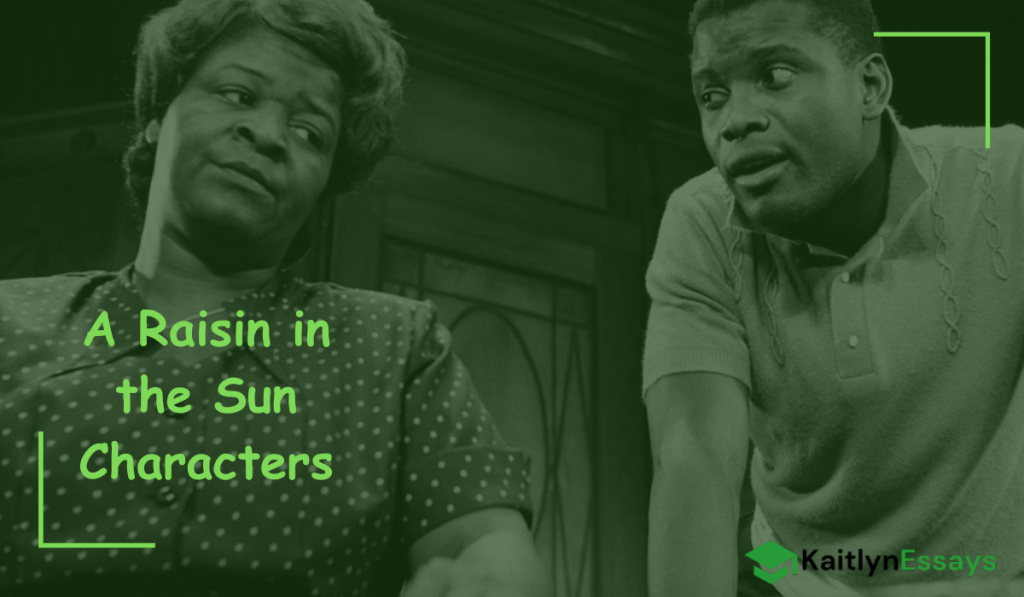
“A Raisin in the Sun,” Lorraine Hansberry’s groundbreaking play, introduces us to the Younger family, a group of unforgettable characters whose dreams and struggles resonate across generations. Set in Chicago’s South Side during the 1950s, the play explores themes of racial discrimination, family dynamics, and the pursuit of the American Dream through its richly drawn protagonists. At the heart of the story is the determined matriarch Lena Younger, her ambitious son Walter Lee, his supportive yet frustrated wife Ruth, and Walter’s sister Beneatha, a young woman seeking her identity and purpose.
Each character struggles with their own aspirations and the harsh realities of life in a segregated society. As they debate the best use of a life insurance payout, their individual hopes and conflicts intertwine, creating a powerful narrative that challenges societal norms and examines the complexities of African American life in mid-20th century America. A Raisin in the Sun characters are not merely fictional creations but vivid representations of the human spirit in the face of adversity, making them enduringly relevant and deeply impactful.
Facing a tight deadline for your literature review assignment?
Our skilled writers can deliver high-quality work fast
Walter Lee Younger
Walter Lee Younger is a central character in the play. At the beginning of the play, Walter is a 35-year-old chauffeur who dreams of a better life for himself and his family. He feels trapped in his current job and is frustrated by his financial struggles and lack of opportunities. His dream is to invest in a liquor store, believing this business venture will solve his problems and elevate his family’s social and economic status. Walter’s focus on money and his relentless pursuit of his dream lead to tension within his family, particularly with his wife Ruth, his sister Beneatha, and his mother, Lena (Mama).
Walter’s frustration grows as he feels his dreams are not taken seriously by his family. Mama, who controls the $10,000 insurance check from her deceased husband, is hesitant to invest in the liquor store, as she disapproves of the nature of the business and fears the risks involved. This conflict highlights Walter’s desire for control and validation as the man of the house. He yearns for respect and acknowledgment of his aspirations, feeling emasculated by his inability to provide a better life for his family.
Walter’s character reaches a turning point when Mama entrusts him with a portion of the insurance money, instructing him to save part of it for Beneatha’s education and invest the rest as he sees fit. Tragically, Walter loses the entire sum to a deceitful business partner. This devastating loss forces Walter to confront the consequences of his actions and his responsibilities to his family.
In the play’s climax, Walter faces a moral dilemma when Mr. Lindner, a representative from the white neighborhood where the Youngers plan to move, offers to buy them out to prevent them from integrating the community. Initially, Walter considers accepting the offer, seeing it as a way to recover financially. However, he ultimately rejects Mr. Lindner’s proposal, choosing family pride and dignity over money. This decision marks Walter’s growth and maturity, as he recognizes the importance of his family’s dreams and values over his own materialistic desires.
By the end of the play, Walter emerges as a more mature and responsible individual. He has learned the value of pride, integrity, and family unity. His rejection of Mr. Lindner’s offer symbolizes a newfound strength and a commitment to a future built on mutual respect and shared aspirations. Walter’s journey reflects the broader themes of the play, including the struggle for identity, the importance of dreams, and the resilience of the human spirit in the face of adversity.
Character Analysis
- Ambition: Walter’s ambition is a driving force in the play. He dreams of owning a liquor store, seeing it as his ticket out of poverty and into the middle class. This ambition reflects the aspirations of many African Americans during the Great Migration, seeking better opportunities in northern cities. However, Walter’s focus on material success also highlights the capitalist values that have seeped into his vision of the American Dream.
- Frustration: Walter’s job as a chauffeur is a constant source of frustration. He feels trapped in a subservient role, driving a wealthy white man around while his own dreams remain out of reach. This frustration manifests in his behavior at home, where he often lashes out at his family. His resentment is not just personal but represents the broader frustrations of Black men in a society that systematically limits their opportunities.
- Conflict with family: The tension between Walter and his mother Lena (Mama) is central to the play’s conflict. While Mama wants to use the insurance money to buy a house and secure the family’s future, Walter sees the liquor store as a faster route to prosperity. This conflict represents a generational divide in approaches to advancement and security. Walter’s relationship with his wife Ruth is also strained, as his dreams and frustrations impact their marriage.
- Masculinity and pride: Walter’s sense of masculinity is deeply tied to his role as a provider. His inability to financially support his family in the way he desires leads to a crisis of identity. This struggle reflects broader societal pressures on men, particularly Black men, to prove their worth through economic success. His feelings of emasculation drive many of his actions and outbursts throughout the play.
- Growth: Walter’s character arc is one of the most profound in the play. He begins as a man focused solely on material gain, willing to compromise his values for money. However, by the end, he makes a moral stand against Mr. Lindner and the racist housing association, choosing dignity and self-respect over financial gain. This growth demonstrates the play’s theme of finding one’s identity and worth beyond monetary value.
- Complexity: Walter is not a simple character to categorize. He can be selfish, making decisions that hurt his family, like losing the insurance money. Yet he’s also capable of great love, seen in his interactions with his son Travis. His dreams, while often misguided, come from a place of wanting better for his family. This complexity makes him a realistic and relatable character, reflecting the complex nature of human experience.
Lena Younger (Mama)
Lena Younger, known as Mama, starts the play as the strong, moral center of the Younger family. She is a deeply religious woman in her early sixties, determined to use her late husband’s $10,000 insurance check to improve her family’s living conditions. Mama dreams of buying a house with a garden, fulfilling a long-held aspiration of homeownership and providing stability for her family.
Early in the play, Mama clashes with her son Walter over how to use the insurance money. Walter wants to invest in a liquor store, but Mama disapproves, believing the business is morally wrong and too risky. Despite this, she supports her family’s dreams and desires.
Mama decides to use part of the insurance money to buy a house in a predominantly white neighborhood, aiming to provide her family with a better home. This decision is met with mixed reactions from her family, but Mama believes it’s the best way to secure their future. She gives the remaining money to Walter, entrusting him to manage it wisely and set aside a portion for Beneatha’s education.
When Walter loses all the money to a deceitful business partner, Mama is heartbroken but forgives him, understanding his desperation and the pressures he faces. She emphasizes the importance of family unity and moral integrity.
Mama’s strength and dignity shine through when Mr. Lindner, a representative from the white neighborhood, offers to buy them out to prevent them from moving in. Walter initially considers accepting the offer, but Mama’s values and the family’s pride lead him to reject it.
By the end of the play, Mama’s dream of owning a house becomes a reality. She physically moves a plant she has cared for, symbolizing her hope and resilience, into the new home. Mama’s character progresses from struggling with financial hardship to achieving a long-desired dream, highlighting her unwavering faith, love for her family, and determination to provide them with a better future.
Character Analysis
- Moral compass: Lena serves as the moral anchor for the Younger family. Her strong sense of ethics, rooted in her life experiences and religious beliefs, guides her decisions and influences her children. She often acts as the voice of conscience, reminding her family of their values and dignity in the face of adversity. This is particularly evident in her disapproval of Walter’s liquor store plan and her insistence on using the insurance money in a way that aligns with her late husband’s values.
- Religious faith: Mama’s Christian faith is a cornerstone of her character. It informs her worldview, her decision-making, and her interactions with others. Her faith is not merely superficial; it’s deeply ingrained in her identity and manifests in her actions, such as her nurturing of the struggling houseplant (often seen as a symbol of her care for her family in harsh conditions). Her religious convictions sometimes put her at odds with the younger generation, particularly Beneatha’s questioning of God’s existence.
- Family-oriented: Lena’s primary focus is the welfare and unity of her family. Every decision she makes is with her children and grandchild in mind. This is exemplified in her choice to use the insurance money to buy a house in a better neighborhood, despite knowing the challenges they might face. Her love for her family is unconditional, but she’s not afraid to be stern when she feels they’re straying from their values, as seen in her confrontation with Walter about his behavior.
- Connection to the past: Lena represents a direct link to the family’s Southern roots and the historical struggles of African Americans. Her experiences with racism and poverty in the South shape her perspective and drive her desire for a better life for her children. This connection to the past sometimes creates tension with her children, who have different experiences and aspirations growing up in the urban North.
- Dream of homeownership: Lena’s desire to own a home is more than just a personal goal; it represents her hope for stability, dignity, and a better future for her family. The house in Clybourne Park symbolizes progress and the fulfillment of a long-held dream shared with her late husband. This dream puts her in conflict with Walter’s desire to invest in a business, highlighting the generational differences in defining success and security.
- Adaptability: Despite her traditional values and strong convictions, Lena demonstrates an ability to adapt and understand changing times. This is particularly evident in her eventual acceptance of Beneatha’s independence and questioning nature, and her willingness to entrust Walter with responsibility for the remaining insurance money. Her adaptability shows that while she’s rooted in tradition, she’s not inflexible or close-minded.
Ruth Younger
Ruth Younger starts the play as a weary, 30-year-old domestic worker, struggling to keep her family together amid financial difficulties. She wakes up early to make breakfast for her family and juggles household chores with her job. She supports her husband Walter’s dream of a better life but is often skeptical of his business plans.
Early in the play, Ruth discovers she is pregnant and considers having an abortion because she believes they cannot afford another child. She goes to a doctor to put a down payment on the abortion but later decides against it.
Ruth is overjoyed when Mama announces the purchase of a new house in a predominantly white neighborhood, seeing it as a fresh start and a way out of their cramped apartment. Her excitement about the new house signifies her hope for a better future for her family.
Throughout the play, Ruth shows support for her husband despite his flaws. When Walter loses the insurance money to a deceitful business partner, Ruth stands by him. She also supports his decision to reject Mr. Lindner’s offer to buy them out, a decision that marks a turning point for the family’s pride and unity.
Character Analysis
- Pragmatism: Ruth’s practical nature is a defining trait. She’s acutely aware of the family’s financial struggles and the realities of their situation. This pragmatism often puts her at odds with Walter’s grand dreams and schemes. While she doesn’t discourage his ambitions entirely, she’s more focused on immediate needs like paying bills and keeping the household running. Her practicality is also evident in her initial reluctance to support the move to Clybourne Park, as she’s concerned about the potential backlash and difficulties they might face.
- Endurance: Ruth’s capacity for endurance is remarkable. She works as a domestic servant, faces the daily grind of poverty, and deals with the stress of a troubled marriage, all while maintaining her composure. Her resilience is particularly evident in how she handles her pregnancy, continuing to work and care for her family despite physical and emotional strain. Ruth’s endurance represents the quiet strength of many Black women of her time who bore the weight of both racial discrimination and gender expectations.
- Conflicted motherhood: The discovery of her pregnancy forces Ruth to confront difficult choices. Her consideration of abortion, which was illegal and dangerous at the time, underscores the desperation of her situation. This internal conflict reveals the depth of her character and the complex realities faced by women in her position. Her ultimate decision to keep the baby, influenced by Mama’s intervention, demonstrates her underlying hope for the future despite present hardships.
- Supportive wife: Despite the strain in their relationship, Ruth often tries to support Walter’s ambitions. She listens to his dreams and attempts to boost his spirits, even when she disagrees with his plans. However, this support is not blind; she’s not afraid to confront Walter when his behavior becomes destructive. The complexity of their relationship reflects the challenges faced by many couples under financial and societal pressures.
- Desire for a better life: Like the other Youngers, Ruth yearns for improved living conditions. Her excitement about the prospect of moving to a house with a yard and her own kitchen reveals her deep-seated desire for a better quality of life. This aspiration isn’t just for herself but for her son Travis and her unborn child, highlighting her role as a mother who wants to provide a better future for her children.
- Quiet dignity: Throughout the play, Ruth maintains a sense of dignity despite the many challenges she faces. She doesn’t complain excessively about her circumstances and often tries to keep the peace in the family. This quiet strength is particularly evident in her interactions with Mrs. Johnson, where she maintains her composure in the face of nosy and potentially malicious gossip.
Beneatha Younger
Beneatha Younger begins the play as an ambitious and outspoken college student in her early twenties. She dreams of becoming a doctor and is determined to break free from the limitations placed on her by society and her financial circumstances. Beneatha’s modern and progressive views often clash with her family’s more traditional beliefs, especially regarding religion and cultural identity.
Throughout the play, Beneatha explores her identity and heritage. She dates two men with contrasting worldviews: George Murchison, who is wealthy and assimilated into white culture, and Joseph Asagai, a Nigerian student who encourages her to embrace her African roots. Asagai’s influence prompts Beneatha to consider her African heritage more deeply and challenge her previous notions of success and identity.
Beneatha’s relationship with her brother Walter is strained by their differing aspirations and his skepticism about her dream of becoming a doctor. When Walter loses the insurance money that Mama had set aside for Beneatha’s education, she is devastated and feels that her dream is now out of reach. This loss leads Beneatha to question the value of her dreams and the feasibility of achieving them within a society that seems to be against her.
Despite this setback, Beneatha’s character shows resilience and a capacity for growth. Asagai’s proposal for her to move to Nigeria with him and practice medicine there offers her a new perspective and a renewed sense of purpose. Beneatha begins to consider this opportunity as a way to fulfill her ambitions and connect with her cultural roots.
By the end of the play, Beneatha is more self-aware and grounded in her identity. She decides to embrace the challenges ahead with determination and hope, symbolized by her contemplation of a future in Nigeria with Asagai. Beneatha’s journey reflects her growth from a young woman searching for herself to one who is ready to take control of her destiny and forge a path that aligns with her values and aspirations.
Character Analysis
- Intellectual curiosity: Beneatha’s thirst for knowledge is a defining trait. Her ambition to become a doctor in an era when few African American women entered such professions demonstrates her determination and forward-thinking nature. She constantly seeks to expand her understanding of the world, engaging in intellectual discussions and exploring various philosophical ideas. This curiosity sometimes puts her at odds with her family, particularly when she questions religious beliefs or traditional values. Her pursuit of education is not just about career advancement, but also about personal growth and understanding her place in the world.
- Quest for identity: Beneatha’s journey of self-discovery is a central part of her character arc. She actively explores her African heritage, inspired by her Nigerian suitor, Joseph Asagai. This is evident in her experimentation with African hairstyles and clothing, and her interest in learning about African culture and politics. Her quest for identity also extends to her role as a woman in society, as she grapples with expectations of marriage and family versus her personal ambitions. This search for self represents the broader struggle of many young African Americans of her generation, seeking to understand their place in American society while reconnecting with their African roots.
- Idealism: Beneatha holds strong idealistic views about equality, independence, and social justice. She’s outspoken about racial and gender discrimination, and dreams of a world where people are judged by their character rather than their race or gender. Her idealism is also reflected in her career choice – she wants to become a doctor not just for personal success, but to help and heal others. However, her idealism sometimes clashes with the harsh realities faced by her family, creating tension, particularly with her more pragmatic brother Walter.
- Assertiveness: Beneatha is not afraid to speak her mind, even when her views conflict with those of her family or society at large. She challenges traditional gender roles, questions religious beliefs, and stands up for her right to pursue education and a career. Her assertiveness is particularly evident in her interactions with her mother about religion, and with Walter about the role of women. This trait makes her a dynamic and sometimes controversial character within her family, but also showcases the changing attitudes of the younger generation.
- Artistic interests: Beneatha’s hobbies, such as guitar playing, horseback riding, and photography, illustrate her desire for self-expression and personal growth. These interests, which she takes up and discards throughout the play, represent her process of self-discovery and her willingness to try new things. They also symbolize the broadening horizons and opportunities available to her generation, in contrast to the more limited options her parents had.
- Romantic relationships: Beneatha’s interactions with her two suitors, George Murchison and Joseph Asagai, reveal different aspects of her character and the choices she faces. George represents assimilation into mainstream (white) American culture, while Asagai embodies a connection to African heritage and revolutionary thinking. Her preference for Asagai over the wealthy but culturally assimilated George shows her prioritizing intellectual and cultural connection over financial security, and her willingness to challenge societal norms.
Travis Younger
Travis Younger is the youngest member of the Younger family in “A Raisin in the Sun,” around ten years old. His character represents hope and the future aspirations of the family. Although he has a smaller role compared to the other characters, his presence and actions significantly impact the family’s dynamics and decisions.
At the beginning of the play, Travis shares a small, cramped apartment with his parents, Ruth and Walter, and his grandmother, Mama. Despite the family’s financial struggles, he maintains a cheerful and optimistic disposition. Travis helps out by running errands and even asks for fifty cents for school, which his mother initially refuses because they can’t afford it. Walter, however, gives him the money, highlighting his desire to provide more for his son.
Travis’s innocence and youthful energy provide moments of lightness in the play. His dreams and needs remind the family of the importance of their sacrifices and aspirations. The family’s desire to provide a better future for Travis is a driving force behind many of their decisions.
When Mama announces that she has bought a house in a predominantly white neighborhood, Travis is excited about the prospect of having his own room and more space to play. His excitement underscores the significance of this move for the family, symbolizing a new beginning and better opportunities.
In the climax of the play, Travis unwittingly becomes a pivotal figure when Walter is about to accept Mr. Lindner’s offer to buy them out. Walter asks Travis to stay and watch him make the deal, but seeing his son reminds him of the values and pride his family holds dear. This moment helps Walter decide to reject the offer, affirming the family’s dignity and hopes for the future.
By the end of the play, Travis’s role as the family’s hope for a better future is solidified. The move to the new house represents a brighter future for him, free from the constraints of their current living situation. Travis’s character, while not deeply developed, is essential in symbolizing the dreams and aspirations of the Younger family and their determination to create a better life for the next generation.
Character Analysis
- Symbol of hope and future: Travis represents the future generation of the Younger family and, by extension, African Americans. His presence in the play serves as a constant reminder of why the adult characters strive for a better life. The family’s decisions, particularly about moving to a better neighborhood, are often made with Travis’s future in mind. He embodies the potential for change and progress that the older characters hope to see realized in the next generation.
- Innocence and vulnerability: As a child, Travis is largely shielded from the harsh realities of racial discrimination and financial struggles that the adults face. His innocence highlights the contrast between the world as it is and as it should be. This innocence also underscores the responsibility the adult characters feel to protect and provide for him, adding emotional weight to their decisions and conflicts.
- Family dynamics: Travis’s relationships with different family members reveal various aspects of their characters. His father Walter’s interactions with him, such as giving him money he can’t afford, show Walter’s desire to be a good provider and his struggle with his role as a father. Mama’s doting on Travis demonstrates her nurturing nature and her hope for the family’s future. Ruth’s practical approach to raising Travis, balancing affection with discipline, reflects her pragmatic character.
- Financial burden and guilt: While Travis is loved, he’s also sometimes seen as a financial burden, particularly when he needs money for school activities. This creates moments of tension and guilt, especially for Walter and Ruth, who struggle to provide for him. These moments highlight the economic pressures on the family and the emotional toll of poverty.
- Education and opportunity: Travis’s schooling is a recurring theme, emphasizing the importance the family places on education as a means of advancement. The adults’ determination to provide Travis with better educational opportunities than they had reflects their hopes for upward mobility and their belief in the power of education to overcome racial barriers.
- Manipulation and awareness: Despite his youth, Travis shows signs of understanding and sometimes manipulating the adult dynamics around him. He plays on his parents’ and grandmother’s affections to get what he wants, suggesting a growing awareness of the complexities of adult relationships and responsibilities.
- Living conditions: Travis’s sleeping arrangement – on the living room couch – physically represents the cramped living conditions of the Younger family. This situation underscores the family’s need for a larger home and better living conditions, driving much of the plot’s conflict and resolution.
- Generational continuity: In some ways, Travis represents the continuation of his grandfather’s legacy. The insurance money that drives much of the plot’s action comes from the death of Travis’s grandfather, creating a symbolic link between the past, present, and future of the Younger family.
Struggling to complete your literature review before the looming deadline?
Our team of experienced academic writers can efficiently compile, analyze, and synthesize relevant sources to create a stellar literature review for your assignment.
Joseph Asagai
Asagai is introduced as an intellectual and idealistic man deeply connected to his African heritage. He brings Beneatha gifts from Nigeria, including traditional clothing and records, which symbolize his respect for and pride in his culture. He encourages Beneatha to embrace her African roots and to think critically about her identity and aspirations.
Throughout the play, Asagai challenges Beneatha’s views on assimilation and success. He criticizes her reliance on Western standards of achievement and encourages her to look beyond material success and consider the broader implications of her dreams. Asagai’s perspective on life and his dedication to his cultural heritage provide Beneatha with a new sense of purpose and a deeper understanding of herself.
When Walter loses the insurance money, including the funds set aside for Beneatha’s education, Asagai offers her a different kind of hope. He proposes that Beneatha move to Nigeria with him, where she can practice medicine and contribute to the development of her ancestral homeland. This proposal presents Beneatha with an alternative path that aligns with her values and aspirations, even in the face of the financial setback.
Asagai’s character also highlights themes of Pan-Africanism and the importance of cultural identity. He speaks passionately about the future of Africa and the role educated Africans can play in shaping their countries’ destinies. His ideals resonate with Beneatha, who begins to see her potential impact not just within the confines of American society but on a global scale.
By the end of the play, Asagai’s influence has profoundly shaped Beneatha’s outlook. She contemplates his proposal seriously, considering the possibilities of a future in Nigeria where she can fully embrace her heritage and pursue her dreams. Asagai’s character embodies the themes of cultural pride, intellectual ambition, and the search for a meaningful life beyond material success.
Character Analysis
- Cultural ambassador: Joseph Asagai is a Nigerian student who serves as a cultural bridge between Africa and African Americans. He introduces Beneatha and the Younger family to aspects of African culture, including traditional clothing, music, and dance. Through Asagai, Hansberry explores themes of pan-Africanism and the connections between African Americans and their ancestral continent.
- Intellectual and political idealism: Asagai is highly educated and politically aware. He engages Beneatha in discussions about colonialism, African independence movements, and the role of educated individuals in societal change. His idealism and commitment to improving conditions in his home country reflect the broader anti-colonial movements of the 1950s and early 1960s.
- Catalyst for Beneatha’s identity exploration: Asagai plays a crucial role in Beneatha’s journey of self-discovery. He encourages her to embrace her African heritage, influencing her to adopt natural hairstyles and explore African culture. His presence challenges Beneatha to think more deeply about her identity as an African American woman.
- Romantic interest: As one of Beneatha’s suitors, Asagai represents an alternative to the assimilationist values embodied by George Murchison. His interest in Beneatha is based on intellectual and cultural connection rather than material considerations. Their relationship explores themes of love, cultural identity, and the potential for cross-cultural understanding.
- Voice of wisdom and perspective: Asagai often provides a broader, more global perspective on the issues facing the Younger family. His outsider status allows him to offer insights that challenge the characters’ (and audience’s) assumptions about race, culture, and progress in America.
- Symbol of anticolonialism and African independence: Asagai’s character embodies the spirit of African independence movements. His discussions about returning to Nigeria to help build his nation reflect the real-world context of African countries gaining independence in the late 1950s and early 1960s.
- Critique of American materialism: Through his interactions with the Younger family, particularly Beneatha, Asagai offers a subtle critique of American materialism and the narrow definition of success in American society. He values education and cultural heritage over material wealth.
- Challenging gender norms: While Asagai holds some traditional views about gender roles, his respect for Beneatha’s intellect and ambitions challenges the more restrictive gender expectations of 1950s America. This creates an interesting dynamic in their relationship and contributes to the play’s exploration of changing gender roles.
- Optimism and resilience: Asagai maintains a sense of optimism despite the challenges facing his country and the discrimination he likely encounters in America. His resilience serves as an inspiration, particularly to Beneatha, and offers a counterpoint to the frustrations experienced by characters like Walter.
- Linguistic diversity: Asagai’s use of Yoruba words and phrases adds linguistic diversity to the play, highlighting the richness of African languages and cultures. This aspect of his character serves to educate both the other characters and the audience about African cultural elements.
George Murchison
George Murchison is one of Beneatha Younger’s suitors in the play. He comes from a wealthy African American family and represents a contrasting worldview to that of Joseph Asagai, Beneatha’s other suitor. George’s character serves to highlight themes of assimilation, materialism, and cultural identity within the African American community.
George is introduced as a well-educated, affluent young man who is deeply entrenched in mainstream American culture. He is confident, self-assured, and somewhat arrogant. His wealth and social status are significant aspects of his identity, and he takes pride in them. George’s relationship with Beneatha is marked by his attempts to impress her with his status and his conventional views on success and assimilation.
Throughout the play, George’s interactions with Beneatha reveal his dismissive attitude towards her intellectual pursuits and cultural exploration. He belittles her efforts to connect with her African heritage, mocking her for wearing traditional Nigerian clothing and criticizing her natural hairstyle. George believes that assimilation into mainstream American society is the path to success and sees Beneatha’s interest in her roots as impractical and unnecessary.
George’s materialistic and conformist views clash with Beneatha’s progressive and idealistic aspirations. He is more concerned with appearances and social status than with personal growth or cultural identity. This difference becomes evident when George dismisses Beneatha’s ambitions to become a doctor, suggesting she should focus on finding a suitable husband instead.
The contrast between George and Joseph Asagai becomes starkly apparent as the play progresses. While Asagai encourages Beneatha to embrace her cultural heritage and pursue her dreams, George tries to steer her towards a more conventional, assimilated path. This difference ultimately causes a rift between Beneatha and George.
Beneatha’s rejection of George’s worldview is solidified when she realizes that his values are fundamentally incompatible with her own. She sees George’s approach to life as shallow and unfulfilling, ultimately deciding that she cannot be with someone who does not respect her identity and aspirations.
Character Analysis
- Symbol of assimilation: George Murchison represents the African American upper class that has largely assimilated into white American culture. He comes from a wealthy family and embodies the idea of success through integration and adoption of mainstream (white) values and lifestyle.
- Education and social status: George is well-educated and attends college with Beneatha. His educational background and family wealth place him in a higher social stratum than the Younger family, highlighting class divisions within the African American community.
- Materialism: George’s character emphasizes material success and social status. He’s more concerned with appearances and social climbing than with intellectual or cultural pursuits, which puts him at odds with Beneatha’s more idealistic and culturally curious nature.
- Romantic interest: As one of Beneatha’s suitors, George represents a potential path to financial security and social advancement. However, his relationship with Beneatha is strained by their differing values and interests.
- Intellectual superficiality: Despite his education, George shows little interest in intellectual discussions or cultural exploration. He dismisses Beneatha’s interest in her African heritage and shows disdain for deep, thought-provoking conversations, preferring more superficial interactions.
- Conformity to white standards: George’s behavior and attitudes reflect a strong desire to fit into white society. He criticizes aspects of African American culture and seems uncomfortable with expressions of racial pride or cultural distinctiveness.
- Contrast to Joseph Asagai: George serves as a foil to Joseph Asagai, Beneatha’s other suitor. While Asagai encourages Beneatha’s exploration of her African heritage, George dismisses it. This contrast helps to highlight the different paths available to African Americans in terms of cultural identity and social advancement.
- Gender attitudes: George holds relatively traditional views on gender roles, expecting Beneatha to conform to conventional expectations of women. His attitudes clash with Beneatha’s feminist leanings and desire for independence.
- Family dynamics: George’s interactions with the Younger family, particularly Walter, highlight class tensions within the African American community. His condescending attitude towards the Youngers’ living conditions and aspirations creates conflict and resentment.
- Critique of assimilationist approach: Through George’s character, Hansberry offers a critique of the assimilationist approach to racial advancement. While George has achieved material success, the play suggests that this comes at the cost of cultural identity and authenticity.
- Limited character growth: Unlike many of the other characters, George doesn’t show significant growth or change throughout the play. This static nature emphasizes his role as a representation of a particular social type rather than a fully developed individual.
Karl Lindner
Lindner is introduced when he visits the Younger family’s apartment. He presents himself as polite and reasonable, expressing his belief in communication and mutual understanding. However, his underlying motives soon become clear. He informs the Youngers that the residents of Clybourne Park, a predominantly white neighborhood, are concerned about the Youngers moving in and want to maintain the “special community” they have.
Lindner offers the Youngers a financial incentive to reconsider their decision to move into the neighborhood. He suggests that the residents of Clybourne Park are willing to buy the house back at a financial gain for the Youngers. His proposal is couched in seemingly benign and rational terms, but it is rooted in the racist desire to keep the neighborhood segregated.
The Youngers are initially shocked and insulted by Lindner’s offer. Walter, Ruth, and Beneatha react with disbelief and anger at the blatant discrimination. Mama, the matriarch, initially tries to handle the situation with dignity and restraint. Despite Lindner’s attempts to frame his proposal as beneficial for both parties, it becomes clear that his actions are an attempt to prevent integration and uphold racial segregation.
Walter’s response to Lindner’s offer is a significant moment in the play. At first, overwhelmed by his financial troubles and the recent loss of the insurance money, Walter considers accepting Lindner’s proposal. He even calls Lindner back for a second meeting, intending to agree to the deal. However, in a powerful moment of realization and pride, Walter ultimately rejects Lindner’s offer. He makes a speech about dignity, family pride, and the right to live wherever they choose, reaffirming the family’s commitment to move into their new home despite the obstacles.
Lindner’s character serves to highlight the pervasive racism of the era and the challenges African American families faced when trying to improve their living conditions. His polite demeanor contrasts sharply with the insidious nature of his proposal, illustrating how racism can be cloaked in seemingly reasonable arguments.
Character Analysis
- Representative of white racism: Karl Lindner is the only white character who appears on stage in the play. He represents the racist attitudes of white society, particularly in the context of housing segregation in 1950s Chicago.
- Welcoming Committee spokesman: Lindner is a representative of the “welcoming committee” from Clybourne Park, the white neighborhood where the Younger family plans to move. His role in this committee is a thinly veiled attempt to maintain racial segregation in the neighborhood.
- Polite facade of racism: Lindner’s character is significant in that he presents racism in a “polite” and “reasonable” manner. He doesn’t use overt slurs or threats, but instead tries to couch his racist agenda in terms of mutual benefit and community harmony.
- Catalyst for family unity: Lindner’s offer to buy out the Youngers serves as a pivotal moment in the play, ultimately bringing the family together in their decision to stand against racism and move into their new home despite the opposition.
- Economic pressure: Through Lindner, Hansberry illustrates how economic pressure was used as a tool to enforce segregation. His offer to pay the family not to move in demonstrates the lengths to which some white communities would go to maintain racial homogeneity.
- Symbolic of systemic racism: Lindner isn’t presented as an overtly malicious individual, but rather as a cog in a larger system of institutional racism. His actions reflect broader societal attitudes and policies that perpetuated racial segregation.
- Uncomfortable confrontation: Lindner’s presence in the Younger home creates a palpable tension, forcing the characters (and the audience) to directly confront the reality of racism in supposedly progressive northern cities.
- Test of principles: Lindner’s offer presents a moral test for the Younger family, particularly for Walter Lee. The family’s rejection of the offer becomes a powerful statement of their dignity and determination.
- Ignorance and paternalism: Lindner’s dialogue reveals a patronizing attitude towards the Youngers. He seems genuinely unable to understand their perspective, demonstrating the deep racial divides and lack of understanding between white and Black communities.
- Contrast to the Younger family’s dreams: Lindner’s attempt to prevent the Youngers from moving into Clybourne Park stands in direct opposition to the family’s dreams and aspirations, embodying the societal forces working against African American advancement.
- Lack of character development: Unlike the main characters, Lindner doesn’t undergo any significant change or growth. His static nature emphasizes his role as a representation of unchanging racist attitudes.
Mrs. Johnson:
Mrs. Johnson is the Youngers’ neighbor who visits briefly in Act II. She represents the gossipy and somewhat envious element of the Black community. Her character serves to highlight the reactions of the broader community to the Youngers’ plans to move to a white neighborhood. Mrs. Johnson’s warnings about the dangers the family might face in Clybourne Park reflect the fear and internalized oppression present in some members of the Black community.
Her visit also provides a moment of comic relief, while simultaneously underscoring the seriousness of the racial tensions the Youngers will face. Through Mrs. Johnson, Hansberry explores themes of community dynamics, the spread of information in close-knit neighborhoods, and the varied reactions to one family’s attempt at upward mobility.
Bobo:
Bobo is Walter’s friend and business partner in the liquor store venture. Although he appears only briefly, his role is crucial to the plot. Bobo’s appearance in Act III, where he informs Walter that their other partner, Willy, has absconded with all the money, serves as the catalyst for the play’s climax. His character represents the risks and potential for betrayal in business ventures, especially for inexperienced entrepreneurs.
Bobo’s distress and guilt over the lost investment humanize the consequences of the failed business deal, showing how it affects not just Walter but others who trusted in the venture. Through Bobo, Hansberry illustrates the challenges and pitfalls faced by African Americans attempting to achieve financial independence in a system that often works against them.
Feeling pressed for time to complete your literature review assignment?
Our skilled team of writers can quickly yet thoroughly review existing literature, synthesize key findings, and produce a well-written literature review that meets your specific requirements.