

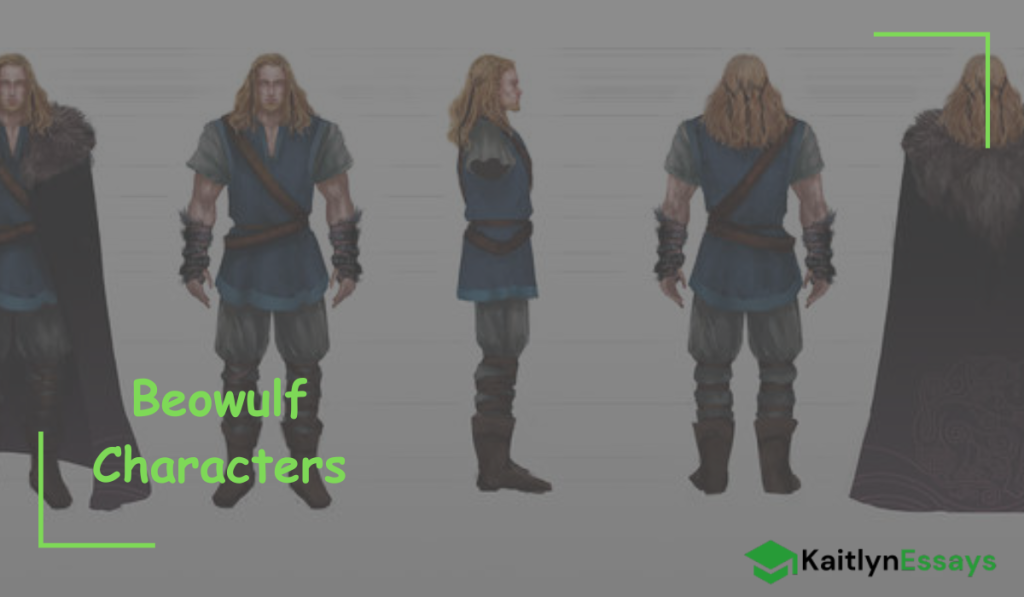
“Beowulf,” the oldest surviving epic poem in Old English, is rich with complex characters that drive its heroic narrative. From the titular protagonist to the monstrous antagonists, each character plays a crucial role in shaping the themes of heroism, loyalty, and the struggle between good and evil. Composed between the 8th and 11th centuries, it provides a glimpse into the culture, values, and social structures of early medieval Scandinavian society. Beowulf characters serve as archetypes of Anglo-Saxon heroism, kingship, and monstrosity, with their complex motivations and actions not only driving the narrative but also reflecting the cultural values and tensions of the medieval society that produced the poem.
Time ticking down and your literature review barely started?
Our team of professional writers can help you meet your deadline without compromising on quality. We’ll work closely with you to understand your specific requirements and ensure that your paper meets your expectations.
Beowulf
Beowulf is the hero and the protagonist of the poem. He is depicted as a Geatish warrior of great strength and courage who comes to the aid of Hrothgar, the king of the Danes, whose mead hall, Heorot, is being terrorized by the monster Grendel.
Beowulf’s key deeds in the poem include:
- Defeating Grendel: He fights and kills Grendel bare-handed, earning great fame and gratitude from Hrothgar and his people.
- Killing Grendel’s Mother: After Grendel’s mother seeks revenge for her son’s death by attacking Heorot, He pursues her to her underwater lair and kills her.
- Battling the Dragon: In his later years, as the king of the Geats, Beowulf faces a dragon that is threatening his kingdom. He kills the dragon but is mortally wounded in the battle.
Beowulf Character Analysis
- Heroic qualities: Beowulf embodies the ideal Anglo-Saxon hero. He possesses superhuman strength, incredible courage, and a strong sense of loyalty. These traits are demonstrated throughout the poem, from his swimming contest with Breca to his battles with Grendel, Grendel’s mother, and the dragon.
- Boastfulness and pride: While considered a positive trait in Anglo-Saxon culture, Beowulf’s boastfulness is a significant aspect of his character. He frequently recounts his past deeds and makes grand promises about future ones. This reflects the importance of reputation and honor in the warrior culture of the time.
- Loyalty and duty: Beowulf shows unwavering loyalty to both his own king, Hygelac, and to Hrothgar, the king he comes to aid. His sense of duty extends beyond personal gain, as he often risks his life to help others and uphold the warrior code.
- Leadership: As Beowulf ages, he transitions from a young warrior to a wise king. His leadership style is marked by generosity, fairness, and a continued willingness to personally face dangers threatening his people.
- Religious duality: Beowulf represents a blend of pagan and Christian elements. While he believes in fate (wyrd) and seeks earthly glory, he also acknowledges God’s role in his victories. This duality reflects the transitional period in which the poem was likely composed, as Anglo-Saxon society moved from paganism to Christianity.
- Superhuman abilities: Beowulf possesses extraordinary physical strength and endurance. He can swim for days, crush his enemies with his bare hands, and hold his breath for extended periods. These abilities set him apart as a legendary figure rather than a purely realistic one.
- Wisdom and maturity: As Beowulf ages, he develops wisdom to complement his strength. This is evident in his reflective speeches and his approach to kingship. However, his desire for glory remains constant, leading to his final battle with the dragon.
- Tragic hero aspects: While Beowulf is largely portrayed positively, his character has elements of a tragic hero. His unwillingness to back down from a challenge, even in old age, ultimately leads to his death. This can be seen as both a flaw and a testament to his unwavering heroic nature.
- Symbol of ideal masculinity: In the context of Anglo-Saxon culture, Beowulf represents the pinnacle of masculine virtues: strength, courage, loyalty, and the ability to protect one’s people.
- Complex motivations: While Beowulf is driven by a desire for fame and glory, he also shows genuine concern for others. This complexity adds depth to his character, making him more than just a one-dimensional hero.
- Relationship with material wealth: Beowulf’s attitude towards treasure evolves throughout the poem. Initially, he seems uninterested in material rewards, focusing instead on glory and honor. However, as he faces death, he takes comfort in the dragon’s treasure, seeing it as a legacy for his people.
- Isolation: Despite his social status and fame, Beowulf often faces his greatest challenges alone. This isolation highlights his exceptional nature but also underscores the lonely aspect of heroism.
Beowulf’s Quotes
- “I have heard moreover that the monster scorns in his reckless way to use weapons; therefore, to heighten Hygelac’s fame and gladden his heart, I hereby renounce sword and the shelter of the broad shield, the heavy war-board: hand-to-hand is how it will be, a life-and-death fight with the fiend.”
This quote exemplifies Beowulf’s courage and confidence. By renouncing weapons, he demonstrates his extraordinary strength and bravery. It also reveals his motivation: to bring glory to his king, Hygelac, showing the importance of loyalty and fame in Anglo-Saxon culture. The decision to fight hand-to-hand emphasizes Beowulf’s heroic nature and his willingness to face danger on equal terms.
- “Fate often saves an undoomed man when his courage is good.”
This statement reflects the Anglo-Saxon belief in fate (wyrd) while also emphasizing the importance of personal courage. It suggests a worldview where destiny and individual action intersect, encouraging bravery even in the face of uncertainty. This quote reveals Beowulf’s philosophy of life and his trust in both his own abilities and a higher power.
- “I had a fixed purpose when I put to sea. As I sat in the boat with my band of men, I meant to perform to the uttermost what your people wanted or perish in the attempt, in the fiend’s clutches. And I shall fulfill that purpose, prove myself with a proud deed or meet my death here in the mead-hall.”
This quote showcases Beowulf’s sense of duty and determination. It emphasizes his commitment to his mission and his willingness to sacrifice his life for it. The statement also reveals the Germanic warrior ethos of valuing a glorious death in battle over a long life without renown.
- “It is always better to avenge dear ones than to indulge in mourning. For every one of us, living in this world means waiting for our end. Let whoever can win glory before death. When a warrior is gone, that will be his best and only bulwark.”
This quote encapsulates the Anglo-Saxon warrior code. It prioritizes action over passive grief, emphasizing the importance of seeking glory through brave deeds. Beowulf acknowledges the inevitability of death but sees it as a reason to strive for greatness rather than despair. This philosophy underpins much of Beowulf’s behavior throughout the poem.
- “I have never known fear, as a youth I fought in endless battles. I am old, now, but I will fight again, seek fame still, if the dragon hiding in his tower dares to face me.”
Spoken near the end of the poem, this quote shows Beowulf’s unwavering courage even in his old age. It demonstrates his lifelong commitment to heroic ideals and his continued desire for glory. The statement also reveals a poignant awareness of his age, adding depth to his character as he faces his final battle.
Hrothgar
Hrothgar is the venerable king of the Danes, ruling from his grand mead hall, Heorot. Renowned for his wisdom and leadership, Hrothgar has created a prosperous and stable kingdom, earning the loyalty and admiration of his subjects. However, his reign is severely challenged by the monstrous Grendel, who relentlessly terrorizes Heorot, killing many of Hrothgar’s warriors and casting a shadow of despair over his people.
Despite his power and experience, Hrothgar finds himself helpless against Grendel’s attacks, which underscores the limitations faced by even the greatest leaders. This sense of vulnerability and the resulting helplessness is a critical aspect of Hrothgar’s character, highlighting the universal struggle against forces beyond human control. His plight emphasizes the themes of mortality and the transient nature of success and security.
When Beowulf arrives to offer his aid, Hrothgar welcomes him with open arms, displaying his generosity and hospitality. After Beowulf defeats Grendel and later Grendel’s mother, Hrothgar’s gratitude is boundless, and he rewards Beowulf generously. This interaction between Hrothgar and Beowulf is central to the poem, showcasing the bond between a wise, aging king and a young, valorous warrior.
In addition to being a gracious host and benefactor, Hrothgar serves as a mentor to Beowulf. He imparts valuable advice, particularly in his famous sermon where he warns Beowulf about the dangers of pride and the importance of humility and generosity. Through Hrothgar’s character, the poem explores themes of leadership, the passage of time, and the cyclical nature of human endeavors and heroism.
Hrothgar Character Analysis
- Heroic qualities: Beowulf embodies the ideal Anglo-Saxon hero. He possesses superhuman strength, incredible courage, and a strong sense of loyalty. These traits are demonstrated throughout the poem, from his swimming contest with Breca to his battles with Grendel, Grendel’s mother, and the dragon.
- Boastfulness and pride: While considered a positive trait in Anglo-Saxon culture, Beowulf’s boastfulness is a significant aspect of his character. He frequently recounts his past deeds and makes grand promises about future ones. This reflects the importance of reputation and honor in the warrior culture of the time.
- Loyalty and duty: Beowulf shows unwavering loyalty to both his own king, Hygelac, and to Hrothgar, the king he comes to aid. His sense of duty extends beyond personal gain, as he often risks his life to help others and uphold the warrior code.
- Leadership: As Beowulf ages, he transitions from a young warrior to a wise king. His leadership style is marked by generosity, fairness, and a continued willingness to personally face dangers threatening his people.
- Religious duality: Beowulf represents a blend of pagan and Christian elements. While he believes in fate (wyrd) and seeks earthly glory, he also acknowledges God’s role in his victories. This duality reflects the transitional period in which the poem was likely composed, as Anglo-Saxon society moved from paganism to Christianity.
- Superhuman abilities: Beowulf possesses extraordinary physical strength and endurance. He can swim for days, crush his enemies with his bare hands, and hold his breath for extended periods. These abilities set him apart as a legendary figure rather than a purely realistic one.
- Wisdom and maturity: As Beowulf ages, he develops wisdom to complement his strength. This is evident in his reflective speeches and his approach to kingship. However, his desire for glory remains constant, leading to his final battle with the dragon.
- Tragic hero aspects: While Beowulf is largely portrayed positively, his character has elements of a tragic hero. His unwillingness to back down from a challenge, even in old age, ultimately leads to his death. This can be seen as both a flaw and a testament to his unwavering heroic nature.
- Symbol of ideal masculinity: In the context of Anglo-Saxon culture, Beowulf represents the pinnacle of masculine virtues: strength, courage, loyalty, and the ability to protect one’s people.
- Complex motivations: While Beowulf is driven by a desire for fame and glory, he also shows genuine concern for others. This complexity adds depth to his character, making him more than just a one-dimensional hero.
- Relationship with material wealth: Beowulf’s attitude towards treasure evolves throughout the poem. Initially, he seems uninterested in material rewards, focusing instead on glory and honor. However, as he faces death, he takes comfort in the dragon’s treasure, seeing it as a legacy for his people.
- Isolation: Despite his social status and fame, Beowulf often faces his greatest challenges alone. This isolation highlights his exceptional nature but also underscores the lonely aspect of heroism.
Hrothgar’s Quotes
- “For fear of God, I am unable to keep that murderer from coming.” This quote reveals Hrothgar’s sense of powerlessness against Grendel and his deep reverence for divine will. It demonstrates his humility as a ruler, acknowledging that there are forces beyond his control. This admission of weakness is particularly significant in a warrior culture that values strength and prowess, showing Hrothgar’s wisdom in recognizing his limitations.
- “Now a man, with the Lord’s assistance, has accomplished the deed that we, for all our wisdom, could not contrive.” Hrothgar attributes Beowulf’s success to divine intervention, revealing his piety and belief in a higher power. This statement also serves to elevate Beowulf’s achievement, suggesting that it was beyond mere human capability. It reflects the Anglo-Saxon belief in the interplay between human effort and divine favor.
- “Beowulf, my friend, your fame has gone far and wide, you are known everywhere.” This quote underscores the importance of reputation in Anglo-Saxon society. Hrothgar’s acknowledgment of Beowulf’s fame is a high form of praise, indicating that Beowulf has achieved one of the primary goals of a warrior – to be known for his deeds. It also shows how news and stories spread in this oral culture, creating legends.
- “Now, Beowulf, best of men, I shall love you as my son; keep well this new kinship.” This statement reveals the deep bond Hrothgar feels with Beowulf, elevating their relationship to a familial level. It demonstrates how heroic deeds could create strong social ties, almost as binding as blood relationships. This quote also hints at the political implications of such bonds, suggesting alliances between kingdoms.
- “O flower of warriors, beware of that trap. Choose, dear Beowulf, the better part, eternal rewards.” Part of Hrothgar’s famous “sermon,” this quote showcases his role as a wise elder. He warns Beowulf against the pitfalls of pride and earthly glory, advocating instead for spiritual values. This advice reflects the influence of Christian thought on the poem, emphasizing eternal rewards over worldly fame.
- “This world is not ours to hold…our bodies fail but the bands of kinship bind fast.” This quote reflects on the transient nature of life and power, a recurring theme in Anglo-Saxon literature. Hrothgar emphasizes the enduring importance of social bonds over material possessions or individual achievements. It reveals a philosophical acceptance of mortality and a valuing of community.
- “My days have gone by, my joy and my strength have left me.” This poignant statement reveals Hrothgar’s awareness of his own mortality and declining power. It adds a melancholic tone to the poem, contrasting sharply with Beowulf’s youthful vigor. This quote also foreshadows Beowulf’s own eventual decline, highlighting the cyclical nature of life and leadership.
- “You are the defender of your people and their strong shield.” Hrothgar’s praise of Beowulf encapsulates the Anglo-Saxon ideal of heroic kingship. It emphasizes the role of a hero as a protector of his people, linking individual prowess with communal welfare. This quote underscores the responsibilities that come with great strength and fame.
- “Fate often saves an undoomed man when his courage is good.” This quote reflects the complex Anglo-Saxon view of fate (wyrd) and human agency. While acknowledging the power of destiny, it also emphasizes the importance of personal courage. It suggests a worldview where fate and individual action interact, encouraging bravery even in the face of uncertain outcomes.
Grendel
Grendel is depicted as a monstrous creature, a descendant of the biblical Cain, who is cursed to wander the earth as an outcast. Grendel lives in the dark, swampy, and desolate moors, a place far removed from the warmth and community of human society. His existence is one of misery and isolation, which fuels his hatred for the joy and camaraderie he observes in Heorot, the great mead hall of King Hrothgar.
Grendel’s character is symbolic of chaos and evil. He is drawn to Heorot by the sounds of celebration and merrymaking, which starkly contrast with his own desolate existence. Enraged by the happiness he can never partake in, Grendel launches night-time attacks on Heorot, killing Hrothgar’s warriors in their sleep. These gruesome assaults continue for twelve years, plunging the Danes into fear and despair. Grendel’s reign of terror highlights the themes of good versus evil, civilization versus savagery, and the vulnerability of human society.
The arrival of Beowulf marks a turning point in the struggle against Grendel. Beowulf, a hero of great strength and courage, comes to Hrothgar’s aid and vows to defeat the monster. In a fierce hand-to-hand battle, Beowulf fights Grendel without weapons, showcasing his extraordinary bravery and strength. He ultimately overpowers Grendel, ripping off his arm and causing the creature to flee back to his lair, mortally wounded. Grendel’s defeat brings temporary relief to Hrothgar’s kingdom and cements Beowulf’s reputation as a great hero.
Grendel Character Analysis
- Monstrous nature: Grendel is one of the three main antagonists in “Beowulf” and is described as a monster or demon. He’s often referred to as a descendant of Cain, the biblical figure who committed the first murder, linking him to a lineage of evil.
- Physical description: While the poem doesn’t provide a detailed physical description, Grendel is portrayed as humanoid but monstrous. He’s described as large and powerful, with tough skin that can’t be pierced by normal weapons. Some interpretations depict him as part-human, part-beast.
- Motivation and psychology: Grendel is driven by a combination of hatred, envy, and pain. He’s tormented by the sounds of joy and celebration coming from Heorot, suggesting a complex psychology that goes beyond simple monstrosity.
- Outsider status: Grendel is explicitly described as an outcast, living in the wilderness away from human society. This outsider status contributes to his antagonism towards the Danes and their mead hall.
- Symbolic significance: Grendel represents the forces of chaos and darkness that threaten the order and light of human civilization (symbolized by Heorot). He embodies the unknown dangers lurking in the wild.
- Relationship to nature: Grendel is closely associated with the natural world, particularly its dark and threatening aspects. He lives in a mere (lake) and stalks the misty moors, emphasizing his connection to the untamed wilderness.
- Invulnerability and weakness: Grendel is invulnerable to normal weapons, which adds to his terrifying nature. However, this invulnerability doesn’t extend to his arm and shoulder, which becomes his downfall when facing Beowulf.
- Nightly attacks: Grendel’s habit of attacking Heorot at night adds to his fearsome reputation. The nocturnal nature of his raids associates him with darkness and the unknown, contrasting with the light and warmth of the mead hall.
- Lack of speech: Unlike other characters, Grendel never speaks in the poem. This silence contributes to his otherness and monstrous nature, setting him apart from the speech-heavy culture of the Anglo-Saxons.
- Relationship with his mother: Grendel’s bond with his mother is one of the few humanizing aspects of his character. Their relationship mirrors human family ties, though in a twisted, monstrous form.
- Cultural significance: In Anglo-Saxon culture, Grendel would have represented very real fears of the dangers lurking in the unknown wilderness, as well as more abstract concepts of evil and sin.
- Literary function: As the first antagonist Beowulf faces, Grendel serves to establish Beowulf’s heroic credentials. The battle between them is a classic contest between hero and monster, good and evil.
- Ambiguity: Despite his monstrous depiction, there’s an element of ambiguity in Grendel’s character. His pain at hearing the joyous sounds from Heorot and his relationship with his mother hint at a more complex being than a simple monster.
- Legacy in literature: Grendel’s character has inspired numerous reinterpretations in modern literature, most notably John Gardner’s novel “Grendel,” which tells the story from the monster’s perspective.
Grendel’s Mother
Grendel’s Mother is another formidable antagonist in the poem. After the death of her son, Grendel, she emerges from her lair to seek vengeance against those who have wronged her. Like her son, she is depicted as a fearsome and monstrous being, living in a murky, underwater lair in a desolate, haunted mere. Her existence is shrouded in darkness and grief, and her motivations are driven by a primal sense of maternal duty and revenge.
Grendel’s Mother’s attack on Heorot is swift and brutal. She invades the mead hall, killing Hrothgar’s trusted advisor, Aeschere, and taking his head back to her lair. This act of vengeance plunges the Danes back into fear and sorrow, highlighting the ongoing cycle of violence and retribution. Hrothgar, stricken with grief over the loss of his friend, turns to Beowulf once more for help.
Beowulf, determined to rid Hrothgar’s kingdom of this new threat, tracks Grendel’s Mother to her underwater lair. The journey to her abode is perilous, filled with ominous signs and dark waters. Once there, Beowulf engages in a fierce battle with Grendel’s Mother. Unlike his fight with Grendel, Beowulf finds himself struggling against her immense strength and the hostile environment of her lair. Eventually, he discovers a mighty sword forged by giants within her lair and uses it to behead her, thus ending her reign of terror.
Grendel’s Mother Character Analysis
- Mysterious identity: Grendel’s Mother is never named in the poem, known only by her relationship to Grendel. This lack of a personal name adds to her mystique and otherness.
- Monstrous nature: Like her son, she is described as a monster or demon, part of the race of Cain. However, her exact nature is more ambiguous than Grendel’s, with some translations referring to her as a “monstrous woman” or “lady troll-wife.”
- Motivation: Unlike Grendel, who attacks out of hatred and envy, Grendel’s Mother is motivated by vengeance for her son’s death. This more relatable motivation adds complexity to her character.
- Strength and ferocity: She is portrayed as a formidable opponent, possibly even stronger than Grendel. Her battle with Beowulf is longer and more challenging than his fight with Grendel.
- Underwater lair: Grendel’s Mother lives in a cave beneath a mere (lake), adding to her otherworldly nature. This submerged lair symbolizes the depths of the unknown and the subconscious.
- Maternal aspect: Her role as a mother humanizes her to some degree. Her desire for revenge stems from maternal grief, a relatable human emotion that contrasts with her monstrous nature.
- Warrior-like qualities: Unlike Grendel, who never uses weapons, Grendel’s Mother wields a knife and is skilled in combat. This portrayal aligns her more closely with the warrior culture of the humans in the poem.
- Symbol of the feminine other: In a poem dominated by masculine warrior culture, Grendel’s Mother represents a dangerous feminine other. She challenges gender norms by engaging in typically masculine behavior (seeking vengeance, engaging in combat).
- Connection to nature: Like Grendel, she is associated with the wild and unknown aspects of nature, particularly the mysterious underwater world.
- Lack of speech: Similar to Grendel, Grendel’s Mother never speaks in the poem, further emphasizing her otherness and separation from human society.
- Moral ambiguity: While still portrayed as a monster, her motivations are more understandable than Grendel’s, creating a degree of moral ambiguity. She acts according to the same code of vengeance that governs much of the human society in the poem.
- Challenge to Beowulf: Her battle with Beowulf serves as a pivotal moment in the hero’s journey. The difficulty he faces in defeating her highlights his mortality and the limits of his strength.
- Symbolic significance: Some interpretations view Grendel’s Mother as representing primal fears or the dangerous aspects of the feminine in a patriarchal society. Her underwater lair has been likened to the womb, with Beowulf’s journey there and back representing a symbolic rebirth.
- Literary impact: The character of Grendel’s Mother has inspired numerous reinterpretations in modern literature and film, often exploring feminist themes or providing her perspective on the events.
- Contrast with human women: Her active, vengeful role contrasts sharply with the more passive roles typically assigned to human women in the poem, such as peace-weavers and cup-bearers.
- Connection to Anglo-Saxon folklore: Some scholars have drawn parallels between Grendel’s Mother and figures from Anglo-Saxon folklore, such as water-witches or nixies, emphasizing her connection to dangerous natural forces.
The Dragon
The Dragon is the final and most formidable antagonist in the poem. Unlike Grendel and his mother, the Dragon emerges later in the narrative, posing a dire threat to Beowulf’s own kingdom, the Geats. This ancient and powerful creature is awakened from its slumber when a thief steals a valuable cup from its hoard of treasure. Enraged by the theft, the Dragon begins to ravage the land, burning villages and terrorizing the people.
The Dragon symbolizes a different kind of threat compared to Grendel and his mother. While the earlier monsters represent chaos and vengeance, the Dragon embodies a more existential and impersonal force of destruction. Its wrath is not driven by personal vendetta but by an almost elemental sense of rage and protectiveness over its treasure. This makes the Dragon a symbol of greed, mortality, and the inevitability of death, forces that no hero, not even Beowulf, can completely overcome.
In his final act of heroism, Beowulf, now an aged and wise king, decides to confront the Dragon. Despite his advanced age, Beowulf is determined to protect his people and face the beast himself. He is aware of the danger and the likelihood of his own death, but his sense of duty and honor compel him to take on the challenge. The battle with the Dragon is fierce and brutal. Beowulf manages to wound the Dragon, but he is gravely injured in the process.
It is with the help of a young warrior named Wiglaf that the Dragon is ultimately slain. Wiglaf, embodying the loyalty and bravery that Beowulf has inspired in his followers, comes to his king’s aid when all others flee. Together, they defeat the Dragon, but the victory comes at a great cost. Beowulf succumbs to his injuries, dying a hero’s death. His final moments are marked by his concern for his people and his desire to leave them a secure future, symbolized by his instructions regarding the Dragon’s hoard.
The Dragon Character Analysis
- Final antagonist: The Dragon appears in the last third of the poem, serving as Beowulf’s final adversary. This placement gives it significant weight in the narrative structure.
- Ancient and powerful: The Dragon is described as being centuries old and immensely powerful, representing a more primordial and elemental threat than Grendel or his mother.
- Guardian of treasure: The Dragon’s primary role is as a guardian of an ancient treasure hoard. This connects it to the Anglo-Saxon concepts of wealth, legacy, and the transient nature of material possessions.
- Symbolic significance: The Dragon often symbolizes greed, destructive power, and the inevitable forces of fate and death. Its appearance marks the end of the heroic age embodied by Beowulf.
- Fire-breathing ability: Unlike Grendel and his mother, the Dragon has the ability to breathe fire, making it a more overtly supernatural threat and connecting it to classical dragon myths.
- Territorial nature: The Dragon is not inherently malevolent like Grendel, but becomes enraged when a thief steals from its hoard. This portrays it as a force of nature rather than an evil being.
- Contrast with earlier monsters: While Grendel and his mother were somewhat humanoid, the Dragon is fully bestial, representing a shift in the nature of the threats Beowulf faces.
- Connection to fate: The Dragon’s awakening and subsequent battle with Beowulf feel almost fated, tying into the Anglo-Saxon concept of “wyrd” or destiny.
- Destructive power: The Dragon’s attacks on the Geatish kingdom demonstrate its immense destructive capability, burning villages and terrorizing the population.
- Test of leadership: The Dragon serves as a test of Beowulf’s leadership in his old age, challenging him to protect his people one last time.
- Parallel to Sigemund’s dragon: The poem draws a parallel between Beowulf’s fight with the Dragon and the legendary hero Sigemund’s dragon-slaying, connecting Beowulf to mythic tradition.
- Psychological impact: The Dragon’s presence creates a sense of dread and inevitability, both for Beowulf and the reader, as it represents a challenge that seems almost insurmountable.
- Lack of speech: Like Grendel and his mother, the Dragon does not speak, emphasizing its otherness and separation from the human world.
- Symbol of natural forces: The Dragon can be seen as a representation of the destructive aspects of nature, uncontrollable and indifferent to human concerns.
- Narrative function: The Dragon provides a suitably epic final battle for Beowulf, allowing him to die heroically and securing his legacy.
- Connection to Anglo-Saxon burial practices: The Dragon’s hoard bears similarities to Anglo-Saxon burial treasures, connecting the creature to themes of death and the afterlife.
- Contrast with Beowulf: The ancient, inhuman nature of the Dragon contrasts sharply with the aged but still human Beowulf, highlighting themes of mortality and the limits of heroism.
Wiglaf
Wiglaf is a key character in the latter part of the poem. He is a young warrior of the Waegmunding clan and one of Beowulf’s most loyal and courageous thanes. Wiglaf’s character is integral to the final act of the poem, where he stands out as a symbol of loyalty, bravery, and the continuity of heroic values.
During Beowulf’s final battle with the Dragon, most of his warriors flee in fear, abandoning their king in his time of greatest need. Wiglaf, however, remains steadfast. His loyalty and sense of duty compel him to aid Beowulf despite the overwhelming danger. Wiglaf’s decision to stay and fight alongside Beowulf highlights his exceptional courage and the deep bond of loyalty he shares with his king.
In the heat of battle, Wiglaf demonstrates his valor and fighting prowess. He comes to Beowulf’s aid, helping him to ultimately slay the Dragon. However, the victory is bittersweet, as Beowulf is mortally wounded in the struggle. Wiglaf’s role in the battle is crucial, not only because he helps defeat the Dragon but also because he embodies the heroic ideals that Beowulf has championed throughout his life.
After the battle, Wiglaf tends to the dying Beowulf, honoring his fallen king with deep respect and sorrow. Beowulf, recognizing Wiglaf’s bravery and loyalty, entrusts him with his legacy. He asks Wiglaf to oversee the treasure hoard taken from the Dragon and to ensure the welfare of the Geats. This moment underscores the theme of succession and the passing of heroic values from one generation to the next.
Wiglaf Character Analysis
- Loyal thane: Wiglaf is introduced as a young warrior in Beowulf’s retinue, notable for his unwavering loyalty to his king. He embodies the Anglo-Saxon ideal of the faithful retainer.
- Last remaining warrior: During the battle with the Dragon, Wiglaf is the only one of Beowulf’s men who doesn’t flee, demonstrating exceptional courage and loyalty.
- Kinsman to Beowulf: Wiglaf is described as a relative of Beowulf, specifically of the Waegmunding clan. This kinship adds depth to his loyalty and sense of duty.
- Young hero: As a younger warrior, Wiglaf represents the next generation of heroes. His actions show that heroic values can persist even as the old guard (represented by Beowulf) passes away.
- Contrast to cowardly retainers: Wiglaf’s bravery is emphasized by contrasting it with the cowardice of Beowulf’s other men, who flee from the Dragon.
- Voice of encouragement: Wiglaf delivers a rousing speech to the other warriors, reminding them of their duty and the rewards Beowulf has given them. This shows his leadership qualities and moral strength.
- Crucial role in Dragon’s defeat: Wiglaf plays a vital part in slaying the Dragon, striking it with his sword and allowing Beowulf to deliver the fatal blow. This cooperative victory suggests a changing nature of heroism.
- Inheritor of heroic tradition: Through his actions, Wiglaf proves himself worthy of carrying on the heroic tradition embodied by Beowulf.
- Comfort to dying Beowulf: Wiglaf tends to the mortally wounded Beowulf, showing compassion and respect. He follows Beowulf’s final instructions, demonstrating his trustworthiness.
- Critic of cowardice: After the battle, Wiglaf harshly criticizes the warriors who fled, showing his strong sense of honor and duty.
- Potential future leader: While not explicitly stated, Wiglaf’s actions and character suggest he might be a suitable successor to Beowulf as leader of the Geats.
- Symbol of hope: In a poem that often dwells on the passing of an age, Wiglaf represents hope for the future and the continuation of heroic values.
- Keeper of Beowulf’s legacy: Wiglaf is entrusted with Beowulf’s final wishes and the task of leading the Geats after Beowulf’s death, making him the guardian of Beowulf’s legacy.
- Embodiment of proper warrior ethos: Through his actions and words, Wiglaf demonstrates the ideal behavior of an Anglo-Saxon warrior: brave, loyal, and willing to sacrifice himself for his lord.
- Bridge between generations: Wiglaf serves as a bridge between the older heroic age represented by Beowulf and the uncertain future facing the Geats.
- Moral compass: His unwavering sense of right and wrong serves as a moral compass in the latter part of the poem, guiding both characters and readers.
Unferth
Unferth serves as a warrior in King Hrothgar’s court and is one of the king’s retainers. Unferth’s role in the poem is complex, as he initially appears as a foil to Beowulf but ultimately serves to highlight Beowulf’s heroism and virtues.
When Beowulf first arrives at Heorot to offer his assistance in defeating Grendel, Unferth is skeptical of the young hero’s abilities. During a feast in the mead hall, Unferth challenges Beowulf by bringing up the story of Beowulf’s swimming match with Breca, suggesting that Beowulf was reckless and boastful. Unferth implies that Beowulf’s past actions do not reflect the qualities of a true hero and questions whether Beowulf can succeed where others have failed.
Beowulf responds to Unferth’s challenge with confidence and grace, recounting his version of the swimming match and emphasizing his victories over sea monsters during the contest. He also subtly rebukes Unferth by pointing out that Unferth has not been able to defeat Grendel himself, despite being one of Hrothgar’s warriors. Beowulf’s measured and dignified response enhances his reputation and underscores his prowess and heroism.
Unferth’s character is further developed when, despite his earlier doubts, he lends Beowulf his ancestral sword, Hrunting, before Beowulf’s battle with Grendel’s mother. This act of lending the sword can be seen as a gesture of reconciliation and respect, acknowledging Beowulf’s superior strength and bravery. However, Hrunting proves ineffective in the battle, and Beowulf ultimately defeats Grendel’s mother using a giant’s sword found in her lair.
Unferth Character Analysis
- Role in the court: Unferth is introduced as the “þyle” (thyle) of King Hrothgar’s court, a position often translated as “spokesman” or “orator.” This role suggests he is intelligent and well-spoken.
- Initial antagonism: When Beowulf first arrives, Unferth challenges him, questioning his reputation and abilities. This confrontational introduction establishes him as a foil to Beowulf.
- Jealousy and insecurity: Unferth’s challenge to Beowulf seems rooted in jealousy and insecurity. He appears threatened by Beowulf’s reputation and the attention he receives from Hrothgar.
- Storyteller and keeper of lore: As the court’s orator, Unferth likely plays a crucial role in maintaining and reciting the stories and histories of the Danes.
- Complex morality: The poem mentions that Unferth has killed his own brothers, a serious transgression in Anglo-Saxon society. This dark aspect of his past adds complexity to his character.
- Symbolic representation: Some scholars interpret Unferth as representing the intellectual or civilized aspects of society, in contrast to Beowulf’s more physical and heroic qualities.
- Character development: Unferth’s attitude towards Beowulf changes over the course of the poem. After Beowulf defeats Grendel, Unferth seems to accept Beowulf’s superiority.
- Gift of the sword Hrunting: Unferth lends Beowulf his sword, Hrunting, for the battle with Grendel’s mother. This act could be seen as an attempt at redemption or acceptance of Beowulf’s heroism.
- Failure of Hrunting: The fact that Hrunting fails against Grendel’s mother might symbolize the inadequacy of Unferth’s type of strength (intellectual, civilized) against primal forces.
- Contrast with Beowulf: Unferth serves as a contrast to Beowulf in many ways – in his initial skepticism, his reliance on words rather than deeds, and his complex morality.
- Representation of internal conflict: Unferth’s presence adds an element of internal conflict to Hrothgar’s court, showing that even within civilized society, there can be discord and challenge.
- Possible etymology: The name “Unferth” might mean “un-peace” or “discord,” which aligns with his role as a source of conflict in the narrative.
- Limited heroism: While Unferth is described as brave in some translations, he notably does not fight Grendel himself, highlighting the gap between him and true heroes like Beowulf.
- Narrative function: Unferth’s challenge allows Beowulf to recount his swimming contest with Breca, providing exposition about Beowulf’s past deeds.
- Ambiguous final status: The poem doesn’t clearly state what becomes of Unferth after Beowulf’s victories, leaving his final status and development somewhat ambiguous.
Other Characters
King Hygelac:
- Beowulf’s uncle and king of the Geats
- Known for his generosity and bravery
- Supports Beowulf’s mission to help Hrothgar
- Dies in a raid against the Frisians and Franks
- His death leads to Beowulf becoming king
- Represents the ideal of a good king in Anglo-Saxon culture
Wealtheow:
- Hrothgar’s queen and a member of the Helming clan
- Embodies the role of a peace-weaver and hostess
- Known for her wisdom and diplomacy
- Plays a crucial role in maintaining social order in Heorot
- Concerned about the future of her sons’ inheritance
Ecgtheow:
- Beowulf’s father
- Had a blood feud with the Wulfings that Hrothgar helped settle
- This past connection explains part of Beowulf’s motivation to help Hrothgar
- His reputation adds to Beowulf’s credibility
Breca:
- Childhood friend of Beowulf
- Participated in a famous swimming contest with Beowulf
- The story of their contest allows Beowulf to prove his strength to Unferth
Scyld Scefing:
- Legendary founder of the Danish royal line
- Arrived mysteriously as a child and grew to be a powerful king
- His funeral at the beginning of the poem sets a tone of legacy and transience
Ongentheow:
- King of the Swedes
- Killed by Hygelac’s brothers Eofor and Wulf
- His death is part of the complex web of feuds and alliances in the poem
Modthryth:
- A princess known for her cruelty before marriage
- Her story serves as a contrast to good queens like Wealtheow
- She eventually reforms, showing the potential for change
Freawaru:
- Hrothgar’s daughter
- Her marriage to Ingeld is intended to settle a feud with the Heathobards
- Represents the practice of using women as peace-weavers between tribes
Ingeld:
- Prince of the Heathobards
- Betrothed to Freawaru
- His future conflict with the Danes is predicted, showing the fragility of peace
Finn:
- Frisian king involved in a blood feud with the Danes
- His story is told in a song within the poem
- Illustrates the cycle of violence and revenge in Germanic society
Heremod:
- A Danish king used as an example of bad rulership
- Contrasted with Beowulf to highlight Beowulf’s good leadership
- His story serves as a warning about the dangers of poor kingship
Heardred:
- Beowulf’s young cousin who briefly becomes king of the Geats
- His short reign and death show the dangers facing young, inexperienced rulers
Wiglaf’s father (Weohstan):
- A Swedish warrior who joined the Geats
- Passed down an important sword to Wiglaf
- His history adds depth to Wiglaf’s character and loyalty
The Geatish Messenger:
- Delivers the news of Beowulf’s death
- Predicts troubles for the Geats, adding a somber note to the poem’s end
- His long speech serves as a kind of epilogue, reflecting on Beowulf’s life and the future of the Geats
The Dragon’s Thief:
- An unnamed slave who steals a cup from the dragon’s hoard
- His act incites the dragon’s wrath, setting up the final conflict
- Represents how small actions can have large consequences
Beowulf: Epic Hero
In the poem Beowulf, the title character emerges as the quintessential epic hero of Norse mythology. Translated by Seamus Heaney, this epic poem Beowulf narrates the journey of the protagonist of the epic as he fights the monster Grendel and later faces a fire-breathing dragon. The Beowulf poet skillfully intertwines themes of heroism and the struggle between man and beast, showcasing Beowulf’s shared traits with fierce fighters from legends.
Throughout the story of Beowulf, the hero thinks of his legacy and the heir he must protect, reflecting on the fifty years of his reign. As he battles two monsters, including Grendel and the serpent, Beowulf tears through the challenges presented, a testament to his strength. Tolkien’s analysis in “Monsters and the Critics” emphasizes the physical appearance of these monsters as symbols of the hero’s inner conflicts.
In the rich tradition of Old Norse storytelling, the bard captures the essence of Beowulf as a hero who must navigate the complexities of fate and honor. With references to Grendel’s arm and the dragon in Beowulf, scholars and enthusiasts alike, such as those at Study.com and University Press, continue to explore the enduring impact of this epic tale. The 1908 and 1936 debates on the Beowulf narrative have kept the legacy alive, ensuring that this ancient text remains a focal point of literary study.
External links
External links can provide valuable resources for readers exploring the works of tolkien or delving into the epic of beowulf must. By clicking on options to jump to content, users can quickly access related materials, including information on isbn references. The poet may interpret themes similar to how beowulf thinks about heroism and honor, while scholars like skelton analyze the texts that consume our literary attention even today.
In the context of ce literature, understanding these connections through external links enhances our appreciation of ancient narratives. Engaging with these resources allows readers to see how the past influences contemporary storytelling, fostering a deeper understanding of literary heritage.
Depictions
Depictions play a crucial role in how we perceive and understand the world around us. Through various forms of media, depictions can convey emotions, stories, and cultural narratives. Artists, filmmakers, and writers often use depictions to challenge societal norms and provoke thought, inviting audiences to engage with complex themes. Ultimately, these visual and textual representations shape our collective consciousness and influence our interpretations of reality.
Is your limited time making your literature review feel like an impossible task?
Our team of professional writers can help you meet your deadline without compromising on quality. We’ll work closely with you to understand your specific requirements and ensure that your literature review aligns with your research objectives. With our efficient and reliable service, you can focus on other aspects of your academic work while we handle paper