
Back

Summary of Book 1 of The Odyssey

Summary of Book 1 of The Odyssey

Homer’s “The Odyssey” stands as one of the most enduring and revered works of ancient literature, captivating readers with its epic narrative, heroic exploits, and timeless themes. Book 1 serves as the opening chapter of this legendary tale, setting the stage for the odyssey of the hero, Odysseus, as he embarks on a perilous journey homeward after the Trojan War.

Introduction to the Epic

At the outset of Book 1, Homer invokes the Muse, the goddess of epic poetry, to aid him in recounting the epic journey of Odysseus. The narrative begins in the midst of the action, with Odysseus stranded on the island of Ogygia, where he has been held captive by the nymph Calypso for seven years. Meanwhile, back in Ithaca, Odysseus’s wife, Penelope, and son, Telemachus, await his return, unaware of his fate.

The Council of the Gods

The scene shifts to Mount Olympus, where the gods convene to discuss the fate of Odysseus. Athena, the goddess of wisdom and warfare and a staunch supporter of Odysseus, appeals to her father, Zeus, to intervene and assist Odysseus in his journey home. Zeus, acknowledging Odysseus’s plight, dispatches Hermes, the messenger god, to deliver a decree to Calypso, demanding the release of Odysseus.

Telemachus’s Struggle

Telemachus's Struggle

Meanwhile, in Ithaca, Telemachus, the son of Odysseus, grapples with the absence of his father and the unruly suitors who have overrun his household, vying for Penelope’s hand in marriage and depleting the family’s resources. Feeling powerless and disheartened, Telemachus longs for guidance and support, unaware of his own potential as a leader and hero.

Athena’s Intervention

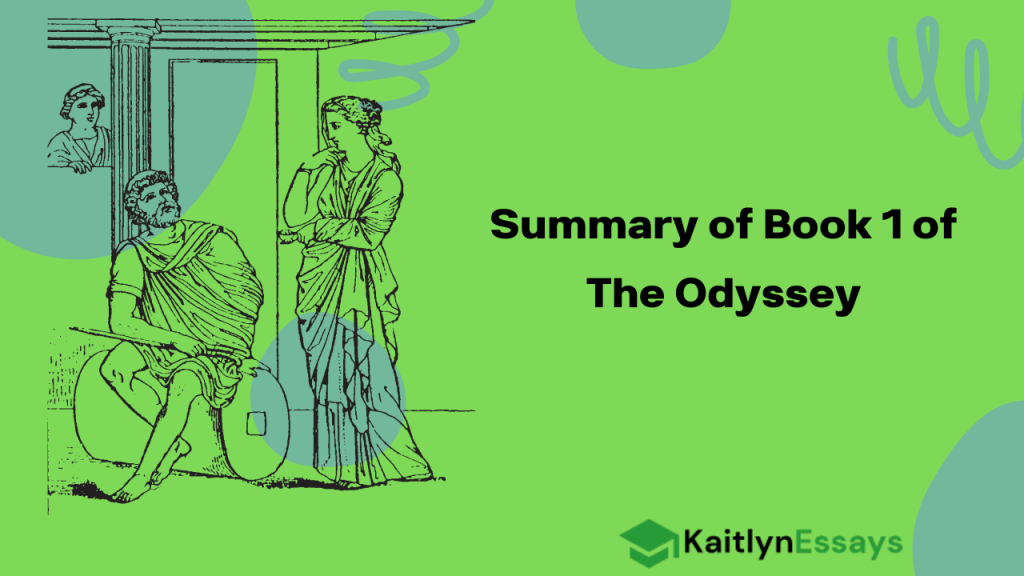
Athena, disguised as Mentor, an old friend of Odysseus, visits Telemachus to offer encouragement and counsel. She inspires Telemachus to take action and seek news of his father’s whereabouts. Encouraged by Athena’s words, Telemachus resolves to embark on a journey to learn of his father’s fate and reclaim his rightful place as ruler of Ithaca.

Telemachus’s Assembly

Telemachus convenes an assembly of the Ithacan nobles, where he delivers a stirring speech condemning the suitors’ behavior and expressing his determination to seek news of his father. Despite initial skepticism and resistance from the suitors, Telemachus’s impassioned plea wins the support of the assembly, who pledge their assistance in his quest.

The Departure of Telemachus

The Departure of Telemachus

With the support of the assembly secured, Telemachus prepares to embark on his journey. Athena, disguised once again as Mentor, accompanies him, providing guidance and protection along the way. Together, they set sail for Pylos, the home of King Nestor, and Sparta, the realm of King Menelaus, where they hope to gather information about Odysseus’s fate.

Conclusion

Book 1 of “The Odyssey” lays the foundation for the epic journey that lies ahead, introducing key characters, themes, and conflicts that will shape the narrative. From the divine intervention of the gods to the mortal struggles of Telemachus and Penelope, the opening chapter sets the stage for the trials and triumphs that await Odysseus and his family. As the epic unfolds, readers are transported to a world of adventure, heroism, and the timeless quest for homecoming.

Ready to Ace Your Assignments? Our academic writing services offer a shortcut to academic excellence. With our expert assistance, you can submit well-researched, impeccably written papers that are sure to earn you top grades and accolades from your professors.

FAQs

What is “The Odyssey,” and what is Book 1 about?

“The Odyssey” is an ancient Greek epic poem attributed to the poet Homer. Book 1 serves as the opening chapter of the epic and introduces key characters and themes. It focuses on the plight of Odysseus, who is stranded on the island of Ogygia, while his wife, Penelope, and son, Telemachus, await his return in Ithaca.

Who are the main characters introduced in Book 1?

Book 1 of “The Odyssey” introduces several important characters, including Odysseus, the hero of the epic; Penelope, his faithful wife; Telemachus, his son; Athena, the goddess of wisdom; Zeus, the king of the gods; and Hermes, the messenger god.

What role do the gods play in Book 1?

The gods play a significant role in Book 1 of “The Odyssey.” Athena, Zeus, and Hermes are prominently featured, with Athena intervening to aid Odysseus and Telemachus, and Zeus dispatching Hermes to deliver a decree to Calypso. The gods’ actions and interventions drive the narrative and influence the fate of the characters.

Why does Telemachus decide to embark on a journey?

Telemachus decides to embark on a journey to seek news of his father, Odysseus, who has been missing for many years. Frustrated by the presence of unruly suitors in his household and longing for guidance, Telemachus is inspired by Athena’s counsel to take action and assert his role as the heir to his father’s kingdom.

What is the significance of Telemachus’s assembly in Book 1?

Telemachus’s assembly in Book 1 serves as a turning point in the narrative, where he publicly declares his intention to seek news of his father and confronts the suitors who have invaded his home. The assembly showcases Telemachus’s growth as a leader and sets the stage for his journey to reclaim his birthright.

How does Athena assist Telemachus in Book 1?

Athena, disguised as Mentor, an old friend of Odysseus, provides guidance and support to Telemachus throughout Book 1. She inspires him to take action, accompanies him on his journey, and offers counsel when needed. Athena’s intervention plays a crucial role in Telemachus’s development and quest for knowledge.

What themes are explored in Book 1 of “The Odyssey”?

Book 1 of “The Odyssey” explores several themes, including the power of divine intervention, the importance of family and lineage, the struggle for identity and autonomy, and the quest for knowledge and truth. These themes resonate throughout the epic and contribute to its enduring significance.

How does Book 1 set the stage for the rest of “The Odyssey”?

Book 1 of “The Odyssey” sets the stage for the epic journey that lies ahead, introducing key characters, conflicts, and themes that will shape the narrative. It establishes the central quest of Odysseus’s homecoming, while also laying the groundwork for Telemachus’s coming-of-age journey and the challenges that await him in Ithaca.

What is the style of writing used in “The Odyssey” Book 1?

“The Odyssey” is written in dactylic hexameter, a form of poetic meter commonly used in ancient Greek epic poetry. The language is rich and evocative, filled with vivid descriptions, heroic imagery, and formal rhetoric. Homer’s narrative style combines epic grandeur with intimate details, capturing the essence of the heroic journey.

Where can I find the full text of “The Odyssey” Book 1?

“The Odyssey” is a public domain text, meaning it is freely available for reading and downloading online. You can find the full text of Book 1, along with the rest of the epic, on various websites dedicated to classic literature, as well as in print editions of Homer’s works.

  • Disclaimer

    We are a professional writing service that provides original papers. Our products include academic papers of varying complexity and other personalized services, along with research materials for assistance purposes only. All the materials from our website should be used with proper references.

  • Services Offered

    Legal  Policies

    • Terms & Conditions
    • Refund policy
    • Privacy policy
    • Cookies policy
    • Code of conduct
  • Small Image

    On Time Delivery

    100% plagiarism-free paper. Get your customized and done in as little as 3 hours

    Get Started

This website stores cookies on your computer. Cookie Policy