

Reflection papers are essential components of academic writing that enable individuals to express their thoughts, experiences, and learning processes regarding a particular topic, event, or concept. Unlike traditional academic essays, reflection papers offer a more personalized approach, encouraging writers to examine their emotions, perceptions, and growth. This paper aims to provide a comprehensive guide on how to write a reflection paper effectively, covering key elements, strategies, and tips for crafting a compelling and insightful piece.
What is a Reflection Paper?
A reflection paper is a type of academic writing where the writer reflects upon and analyzes their own experiences, thoughts, and emotions regarding a particular topic, event, or concept. It typically involves expressing personal insights, reactions, and observations, often in a subjective and introspective manner.
In a reflection paper, the writer may discuss:
- Personal experiences related to the topic.
- How those experiences have influenced their understanding or perspective.
- Insights gained from readings, discussions, or other sources.
- Challenges encountered and lessons learned.
- Future implications or actions based on their reflections.
Reflection papers are often assigned in courses that encourage critical thinking, self-awareness, and deeper engagement with course material. They provide an opportunity for students to connect theoretical concepts with real-life experiences, fostering deeper understanding and personal growth.
Key Elements of a Reflection Paper
Writing a successful reflection paper entails incorporating several key elements that contribute to its effectiveness and coherence. These elements include:
1. Personal Perspective
At the core of a reflection paper lies the writer’s personal perspective and experiences. Unlike objective academic essays, reflection papers encourage subjective analysis and interpretation. Writers are expected to reflect on their thoughts, emotions, and reactions to the subject matter, offering unique insights that stem from their individual experiences.
2. Critical Analysis
Critical analysis is an essential component of reflection papers, as it involves examining the subject matter from multiple angles and perspectives. Writers should critically evaluate their experiences, identifying strengths, weaknesses, challenges, and areas for improvement. This analytical approach demonstrates a deep understanding of the topic and fosters intellectual growth and development.
3. Connection to Theory
While reflection papers are inherently personal, they should also demonstrate a connection to relevant theoretical concepts, frameworks, or course materials. Writers are encouraged to integrate theoretical knowledge with practical experiences, illustrating how course content informs their understanding and interpretation of real-world situations.
4. Structured Reflection
Structuring the reflection process is crucial for organizing thoughts, ideas, and experiences in a coherent manner. Writers can adopt various reflection models or frameworks, such as Gibbs’ Reflective Cycle or Kolb’s Experiential Learning Theory, to guide their reflection process systematically. These frameworks provide a structured approach to examining experiences, facilitating deeper insights and analysis.
5. Clear Communication
Effective communication is essential for conveying ideas, emotions, and insights clearly and concisely. Writers should strive for clarity and coherence in their writing, using appropriate language, tone, and expression. Additionally, incorporating vivid descriptions, anecdotes, and examples can enhance the reader’s understanding and engagement with the reflection paper.
Reflection Paper Format/Outline
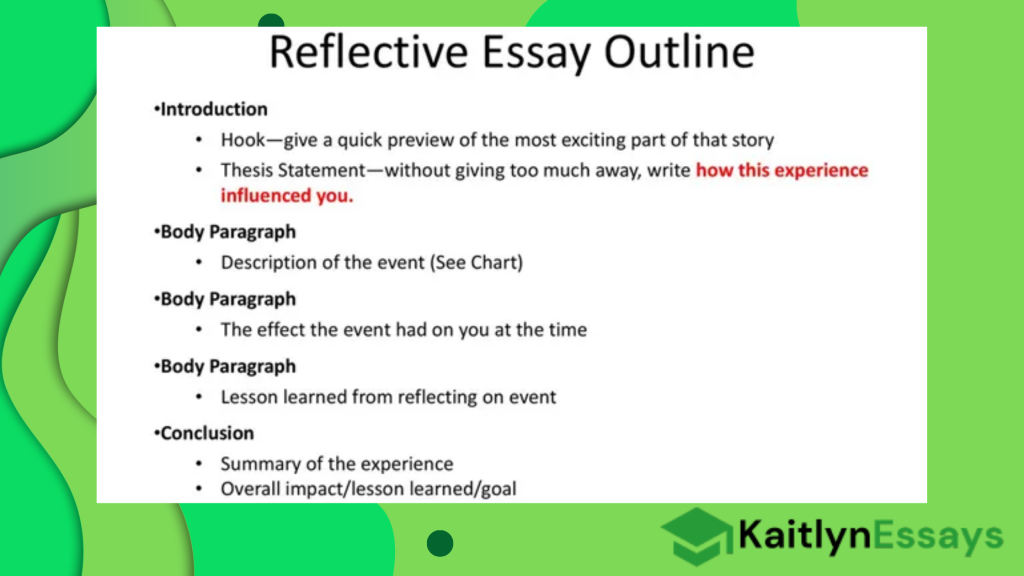
The format of a reflection paper may vary depending on the specific requirements of your instructor or institution, but generally, it follows a basic structure:
- Introduction:
- Start with a brief introduction that provides context for your reflection. You can introduce the topic you’ll be reflecting on and explain why it’s significant or meaningful to you.
- Include a thesis statement or main idea that outlines the central theme or purpose of your reflection.
- Body:
- The body of your reflection paper should contain your main reflections, insights, and analysis.
- Organize your reflections in a logical and coherent manner. You might choose to structure this section chronologically, thematically, or by discussing different aspects of the topic.
- Use specific examples, anecdotes, or evidence to support your reflections. This could include personal experiences, relevant readings, class discussions, or external sources.
- Reflect critically on your experiences and observations. Consider how they have shaped your understanding or perspective on the topic, and analyze any challenges, contradictions, or new insights that have emerged.
- Conclusion:
- Summarize the main points of your reflection and restate your thesis or main idea.
- Reflect on the significance of your insights and any implications for future learning, actions, or personal growth.
- You may also consider broader implications of your reflections for society, professional practice, or academic discourse.
- References (if applicable):
- If you’ve referenced any sources in your reflection paper, be sure to include a list of citations in the appropriate citation style (e.g., APA, MLA).
- Formatting:
- Follow any specific formatting guidelines provided by your instructor or institution, such as font size, margins, spacing, and citation style.
- Proofread your reflection paper carefully for grammar, punctuation, and spelling errors.
The length of a reflection paper can vary depending on the specific requirements set by your instructor or institution. However, they typically range from about 300 to 1000 words or more, but this can vary depending on the complexity of the topic and the depth of reflection expected.
Some instructors may specify a particular word count or page range for your reflection paper, while others may simply provide general guidelines or leave it open-ended. It’s important to clarify the expectations with your instructor to ensure that you meet the required length.
Regardless of the specific length requirements, the focus of a reflection paper should be on the quality of your reflections rather than simply meeting a word count. It’s important to express your thoughts, insights, and analysis in a clear, concise, and thoughtful manner, regardless of the length of your paper.
A reflection paper is a personal and subjective genre of writing, so it’s important to be honest, authentic, and thoughtful in your reflections. It’s also a good idea to engage with feedback from your instructor or peers to deepen your understanding and improve your writing skills.
How to Start a Reflection Paper

Starting a reflection paper can be approached in various ways, but here are some effective strategies to begin:
- Hook the Reader: Start with an attention-grabbing opening sentence or anecdote related to the topic you’ll be reflecting on. This can help engage the reader from the beginning and set the tone for your reflection.
- Provide Context: Give some background information or context about the topic you’ll be reflecting on. This helps orient the reader and provides a framework for your reflections.
- Introduce Your Experience: Briefly introduce the experience, event, or situation that you’ll be reflecting on. This could be a personal experience, a class discussion, a reading assignment, or any other relevant encounter.
- State Your Thesis: Clearly state the main idea or thesis of your reflection paper. This is the central theme or purpose that your reflections will revolve around. It should convey the significance of the experience and what you hope to explore or convey through your reflections.
- Preview Your Reflections: Give the reader a preview of what to expect in the rest of your paper. This could involve briefly outlining the main points or themes that you’ll be discussing in your reflections.
- Set the Tone: Consider the tone you want to convey in your reflection paper. Depending on the nature of the topic and your personal style, you might adopt a serious, contemplative tone, or a more informal, conversational tone.
- Reflect on Expectations: If the reflection paper is part of a course assignment, you can also take a moment to reflect on your initial expectations or assumptions about the topic and how they may have evolved or changed through the course of your reflection.
Writing Process: Step-by-Step Guide
Now that we’ve explored the key elements of reflection papers, let’s delve into the step-by-step process of writing one:
1. Choose a Relevant Topic or Experience
The first step in writing a reflection paper is selecting a topic or experience to reflect upon. Choose a subject matter that is personally significant or relevant to your academic or professional development. This could be a recent event, a challenging assignment, a significant learning experience, or a thought-provoking reading.
2. Reflect on Your Experience
Once you’ve chosen a topic, take some time to reflect on your experience or engagement with the subject matter. Consider the following questions to guide your reflection:
- What was your initial reaction or response to the experience?
- What thoughts, emotions, or insights did it evoke?
- What aspects of the experience were most impactful or memorable?
- How does this experience relate to your academic or personal goals?
- What did you learn from the experience, and how has it influenced your perspective or behavior?
3. Apply a Reflection Model or Framework
To structure your reflection process, consider applying a reflection model or framework that aligns with your topic and objectives. Some popular reflection models include:
- Gibbs’ Reflective Cycle: Description, feelings, evaluation, analysis, conclusion, action plan.
- Kolb’s Experiential Learning Theory: Concrete experience, reflective observation, abstract conceptualization, active experimentation.
Choose a model that best suits your needs and use it to guide your reflection process systematically.
4. Write an Outline
Before diving into the writing process, create a detailed outline that outlines the main points, arguments, and insights you plan to address in your reflection paper. Organize your thoughts logically and ensure a coherent flow of ideas from introduction to conclusion.
5. Craft Your Reflection Paper
With your outline in hand, begin drafting your reflection paper. Start with a compelling introduction that sets the context for your reflection and grabs the reader’s attention. Then, proceed to discuss your experiences, thoughts, and insights in the body paragraphs, using evidence, examples, and analysis to support your reflections.
- Book:
- Introduction: Begin with a brief summary of the book and its themes. You can also mention why you chose to read this particular book or what expectations you had before reading it.
- Body: Discuss key characters, plot points, and themes that resonated with you. Reflect on how the book impacted you emotionally, intellectually, or personally. Analyze specific passages or quotes that stood out to you and explain why they were meaningful. Consider how the book relates to broader societal or philosophical issues.
- Conclusion: Summarize your main reflections on the book and reflect on any lessons learned or insights gained from reading it.
- Lesson:
- Introduction: Describe the lesson or topic you’ll be reflecting on and provide context for why it’s significant or relevant to you. You can also mention any prior knowledge or expectations you had about the lesson.
- Body: Reflect on your experience during the lesson, including what you learned, any challenges you faced, and how you engaged with the material. Discuss specific concepts or activities that resonated with you and why they were impactful. Consider how the lesson relates to your broader academic or personal goals.
- Conclusion: Summarize your main reflections on the lesson and reflect on how it has influenced your understanding or perspective on the topic.
- Movie:
- Introduction: Start by introducing the movie and providing some background information, such as the plot, genre, and director. You can also mention why you chose to watch this particular movie or what intrigued you about it.
- Body: Reflect on your emotional response to the movie, discussing key scenes, characters, and themes that resonated with you. Analyze how the movie conveyed its message or themes through cinematography, dialogue, and storytelling techniques. Consider any personal connections or insights you gained from watching the movie.
- Conclusion: Summarize your main reflections on the movie and reflect on its significance or impact on your worldview or understanding of certain issues.
- Project:
- Introduction: Describe the project you worked on and provide context for why it was important or meaningful to you. You can also mention any goals or expectations you had for the project.
- Body: Reflect on your experience working on the project, discussing the process, challenges, and successes you encountered. Analyze your role within the team and how you contributed to the project’s overall success. Reflect on any lessons learned or skills developed during the project.
- Conclusion: Summarize your main reflections on the project and reflect on how it has influenced your personal or professional growth.
- Song:
- Introduction: Introduce the song and its artist, providing context for why it’s significant or meaningful to you. You can also mention any personal connections or experiences that drew you to this song.
- Body: Reflect on the lyrics, melody, and overall mood of the song, discussing how they evoke certain emotions or themes. Analyze the song’s meaning and any deeper messages or symbolism it conveys. Reflect on your personal interpretation of the song and how it relates to your own experiences or feelings.
- Conclusion: Summarize your main reflections on the song and reflect on its lasting impact or significance in your life.
6. Reflect on Lessons Learned
In the concluding section of your reflection paper, summarize the key lessons learned from your experience and reflect on how it has impacted your personal or professional growth. Additionally, consider discussing any future actions or changes you plan to make based on your reflections.
7. Revise and Edit
Once you’ve completed the initial draft of your reflection paper, take time to revise and edit your work. Pay attention to clarity, coherence, grammar, and punctuation errors. Additionally, consider seeking feedback from peers, instructors, or writing tutors to further improve your reflection paper.
Tips for Writing an Effective Reflection Paper

Writing a compelling reflection paper requires careful thought, introspection, and attention to detail. Here are some tips to help you craft an effective and insightful reflection paper:
- Be Genuine: Be honest and authentic in your reflections, expressing genuine thoughts, feelings, and experiences.
- Use Concrete Examples: Support your reflections with specific examples, anecdotes, or evidence to illustrate your points effectively.
- Write in first person unless instructed otherwise.
- Be Critical: Don’t shy away from critiquing your own experiences or perspectives. Critical analysis is key to deepening understanding and promoting growth.
- Connect to Theory: Integrate relevant theoretical concepts or course materials to provide context and depth to your reflections.
- Practice Self-Reflection: Cultivate the habit of self-reflection in your daily life, as it can enhance your ability to introspect and learn from experiences.
- Seek Feedback: Don’t hesitate to seek feedback from peers, instructors, or mentors to gain valuable insights and perspectives on your reflection paper.
- Revise and Edit: Take time to revise and edit your reflection paper meticulously to ensure clarity, coherence, and accuracy.
Course Reflection Example
Reflecting on my experiences in WRD 103 this semester, I am proud of the progress I have made as a writer. Prior to taking this class, I had written many essays and papers that I believed were of a good standard. However, I had not yet been exposed to the concept of rhetoric and the ways in which it can be used to craft effective written pieces.
After studying rhetoric and understanding its fundamentals, I have come to realize how it can be used to enhance the quality of my writing and make it even more powerful and persuasive. I now know how to identify and use rhetorical strategies to make my writing more effective and compelling. I have also seen a significant improvement in my reading skills since I am now able to analyse the works of other authors, recognizing their use of rhetorical strategies.
Conclusion
Writing a reflection paper is a valuable skill that fosters self-awareness, critical thinking, and personal growth. By following the steps outlined in this guide and incorporating key elements such as personal perspective, critical analysis, and structured reflection, you can craft a compelling and insightful reflection paper that demonstrates your understanding and engagement with the subject matter. Remember to be genuine, introspective, and open to learning from your experiences, as reflection papers offer a unique opportunity for self-discovery and learning.
Take the Stress Out of Your Studies! With our academic writing services, you can bid farewell to late nights and stressful deadlines. Invest in your academic success by entrusting your assignments to our team of experienced writers, dedicated to delivering excellence in every paper.