


How to Write an Annotated Bibliography: A Comprehensive Guide with LibGuides Step-by-Step Instructions
An annotated bibliography is an essential component of academic research and writing, providing a concise summary and critical evaluation of sources relevant to a particular topic or research question. Crafting an effective annotated bibliography requires careful attention to detail, critical thinking skills, and adherence to established citation guidelines. In this comprehensive guide, we will explore the step-by-step process of writing an annotated bibliography, from selecting sources to formatting annotations.
Through practical examples, scholarly insights, and best practices, we aim to equip writers with the necessary tools to produce well-structured and informative annotated bibliographies. Learn how to write an annotated bibliography for your research topic with step-by-step instructions for MLA, APA, and Chicago formats.
What Is an Annotated Bibliography?
An annotated bibliography is a structured list of sources that provides a brief summary and evaluation of each source. It serves as a comprehensive record of the literature consulted and cited in a research project, paper, or thesis. An annotated bibliography typically includes various types of sources, such as books, journal articles, websites, and other scholarly materials.
Each entry in an annotated bibliography consists of two main components: the bibliographic information of the source (such as the author’s name, title, publication date, and source type) and the annotation. The annotation is a concise paragraph or annotation that summarizes the main points of the source and evaluates its relevance, credibility, and contribution to the research.
The annotation in an annotated bibliography provides readers with a brief overview of the source’s content, allowing them to quickly ascertain its relevance to their own research. Additionally, the annotation offers critical insights into the quality and reliability of the source, helping readers assess its credibility and validity.
The Importance/Uses of an Annotated Bibliography
1. Organization and Documentation
One of the primary functions of an annotated bibliography is to organize and document the sources that inform a research project. By compiling a list of relevant sources, complete with bibliographic details such as author names, publication titles, and dates, researchers create a structured framework for referencing and citing the literature they have consulted. This organization ensures transparency and accountability in the research process, allowing others to trace the origins of ideas and information presented in the final work.
2. Evaluation of Sources
Beyond mere documentation, an annotated bibliography facilitates the critical evaluation of sources. Each entry in the bibliography is accompanied by a brief annotation that summarizes the main points of the source and evaluates its relevance, credibility, and contribution to the research. This evaluative component helps researchers assess the quality and reliability of the literature they encounter, distinguishing between authoritative, well-researched sources and those of lesser scholarly merit. By scrutinizing sources through annotation, researchers can make informed decisions about which materials to include or exclude from their own work.
3. Identification of Themes and Trends

An annotated bibliography serves as a valuable tool for identifying recurring themes and trends within the scholarly literature. By synthesizing diverse sources and annotations, researchers can discern common threads, debates, and gaps in the existing literature. This process of thematic analysis enables researchers to situate their own work within the broader context of academic discourse, identifying areas of consensus, controversy, or unexplored terrain. Through systematic analysis of annotated entries, scholars can develop a nuanced understanding of the evolving conversations within their field of study.
4. Support for Research Synthesis and Integration
An annotated bibliography facilitates the synthesis and integration of multiple sources into a coherent research narrative. By compiling annotated entries from a variety of disciplinary perspectives and methodological approaches, researchers can weave together a rich tapestry of ideas and insights. This synthesis enables researchers to construct compelling arguments, draw connections between disparate sources, and develop novel interpretations of the research topic. Through careful selection and annotation of sources, scholars can demonstrate the depth and breadth of their engagement with the literature, enriching the scholarly conversation with new perspectives and analyses.
5. Enhancement of Scholarly Communication
In addition to its role in supporting individual research projects, an annotated bibliography contributes to the broader scholarly communication ecosystem. By sharing annotated bibliographies with colleagues, peers, and students, researchers facilitate the dissemination of knowledge and expertise within their academic community. Annotated bibliographies serve as valuable resources for students conducting literature reviews, instructors designing course syllabi, and scholars seeking guidance on relevant literature within their field. By promoting transparency, accessibility, and collaboration, annotated bibliographies foster a culture of intellectual exchange and inquiry.
6. Promotion of Information Literacy Skills
Engaging with annotated bibliographies cultivates essential information literacy skills among researchers and students. Through the process of selecting, evaluating, and annotating sources, individuals develop critical thinking, research, and writing skills. Annotated bibliographies encourage researchers to engage thoughtfully with the literature, discerning between credible and unreliable sources, synthesizing complex information, and articulating coherent arguments. By honing these skills, individuals become more adept at navigating the vast landscape of information available to them, empowering them to conduct rigorous, evidence-based research.
Difference Between Abstract, Annotated Bibliography, Reference List, and Literature Review
1. Annotated Bibliography
An annotated bibliography is a structured list of sources accompanied by brief summaries and evaluations of each source. It serves as a comprehensive record of the literature consulted during a research project, providing insights into the breadth and depth of scholarly inquiry. An annotated bibliography typically includes various types of sources, such as books, journal articles, websites, and other scholarly materials.
Each entry in an annotated bibliography consists of two main components: the bibliographic information of the source and the annotation. The annotation provides a concise summary of the source’s content and evaluates its relevance, credibility, and contribution to the research. Annotated bibliographies aid in organizing, evaluating, and synthesizing sources, supporting research synthesis and integration, enhancing scholarly communication, and promoting information literacy skills.
2. Reference List
A reference list, also known as a bibliography or works cited page, is a list of sources cited within a research paper or article. Unlike an annotated bibliography, a reference list does not include annotations or evaluations of the sources. Instead, it provides bibliographic details such as author names, publication titles, dates, and other relevant information required for readers to locate and retrieve the sources.
A reference list follows a specific citation style, such as APA, MLA, Chicago, or Harvard, depending on the disciplinary conventions or journal guidelines. Reference lists serve to acknowledge and credit the sources used in a research paper, ensuring academic integrity and avoiding plagiarism. They also facilitate transparency and accountability in the research process by enabling others to verify and validate the information presented in the paper.
3. Literature Review
A literature review is a critical analysis and synthesis of existing research literature on a specific topic or research question. Unlike annotated bibliographies and reference lists, which focus primarily on listing and organizing sources, a literature review provides a comprehensive overview of the scholarly discourse surrounding a particular subject. It involves identifying, analyzing, and synthesizing relevant sources to evaluate existing knowledge, identify gaps or controversies in the literature, and develop theoretical frameworks or research questions for further investigation.
A literature review typically includes a narrative synthesis of the literature, organized thematically or chronologically, and may incorporate theoretical discussions, methodological considerations, and empirical findings. Literature reviews play a crucial role in shaping the direction of research, informing theoretical and methodological approaches, and contributing to the advancement of knowledge within a particular field or discipline.
4. Abstract
Abstract: When creating an annotated bibliography, it is important to follow a writing guide to ensure you are including all necessary information. There are different types of annotated bibliographies such as APA annotated bibliography or descriptive annotation. Your annotated bibliography is a list of research sources that may contain useful information and ideas on your topic.
The selection of sources for your annotated bibliography will depend on your assignment. Step 2 of creating an annotated bibliography involves locate and record citations for your list of research sources. A sample annotation provides a short summary of the material you are looking at. Be sure to check with your instructor for specific requirements and help you identify the best approach for your project. Depending on your assignment, your annotated bibliography may contain useful information and ideas.
Differences in Purpose
The primary difference between an annotated bibliography, reference list, and literature review lies in their purpose and function within academic writing. An annotated bibliography serves to organize, evaluate, and synthesize sources consulted during a research project, providing summaries and evaluations of each source. A reference list, on the other hand, functions to acknowledge and credit the sources cited within a research paper or article, facilitating transparency and accountability in the research process. A literature review, meanwhile, aims to critically analyze and synthesize existing research literature on a specific topic, offering a comprehensive overview of the scholarly discourse and identifying gaps or areas for further investigation.
Differences in Format
Annotated bibliographies, reference lists, and literature reviews also differ in format and presentation. An annotated bibliography includes annotated entries, each comprising bibliographic information and a brief summary and evaluation of the source. A reference list consists of bibliographic details of sources cited within a research paper, presented according to a specific citation style. A literature review typically follows a narrative format, organizing the existing literature thematically or chronologically and incorporating critical analysis and synthesis of the sources.
How Do I Format My Annotated Bibliography?
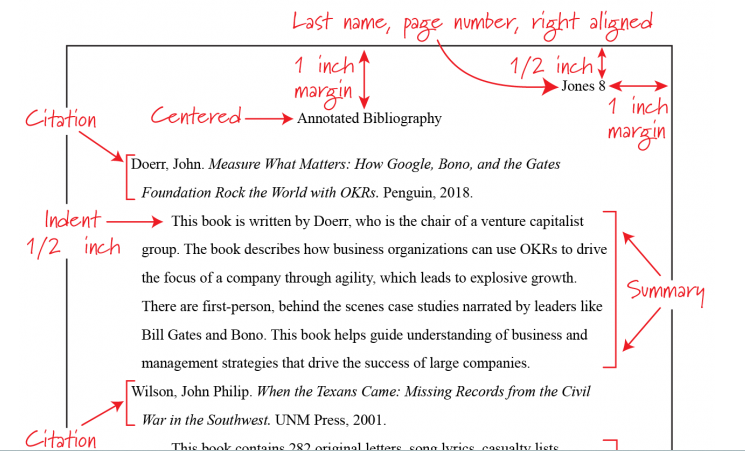
Formatting an annotated bibliography requires attention to detail and adherence to specific guidelines to ensure clarity and consistency. Below are the general steps and formatting guidelines for creating an annotated bibliography:
1. Title
Begin your annotated bibliography with a clear and descriptive title that reflects the topic or theme of your research.
2. Citation Style
Choose a citation style (e.g., APA, MLA, Chicago) specified by your instructor or preferred by your discipline. Ensure consistency in formatting throughout your annotated bibliography.
3. Entries
Each entry in your annotated bibliography should include the following elements:
a. Citation Information
Include bibliographic details for each source in the chosen citation style. This typically includes the author’s name, title of the source, publication date, and other relevant information such as the publisher or journal name.
b. Annotation
Following the citation information, provide a concise annotation for each source. The annotation should summarize the main points of the source and evaluate its relevance, credibility, and contribution to your research.
4. Formatting Guidelines
Follow these formatting guidelines for your annotated bibliography entries:
a. Indentation
Indent the annotation paragraphs after the citation information. The indentation helps distinguish between the citation and the annotation.
b. Double Spacing
Double space the entire annotated bibliography, including both citation information and annotations. This enhances readability and clarity.
c. Hanging Indentation
Use a hanging indentation for each entry, where the first line of the citation is flush left, and subsequent lines are indented. This formatting style helps visually separate entries and improves readability.
5. Length of Annotations
Annotations should be concise, typically ranging from 100 to 200 words. Aim to provide a brief summary of the source’s content and a critical evaluation of its relevance and credibility.
6. Order
Arrange your annotated bibliography entries alphabetically by author’s last name or by title if no author is available. Ensure consistent alphabetization throughout the bibliography.
MLA style format
Creating an annotated bibliography in MLA style format involves following specific guidelines for citation and annotation. Below is an example of how to format an annotated bibliography entry in MLA style:
Smith, John. Sample Book Title. Publisher, Year.
Smith’s book provides a comprehensive overview of the history of ancient civilizations, focusing on the cultural, social, and political developments of Mesopotamia, Egypt, Greece, and Rome. The author utilizes primary sources and archaeological evidence to support his arguments, offering valuable insights into the complex dynamics of ancient societies. While the book offers a thorough examination of key historical events and figures, its narrative occasionally lacks depth in certain areas, such as gender and class dynamics. Overall, Smith’s work serves as a valuable resource for students and scholars interested in the study of ancient civilizations.
In this example:
- Author’s Name: The author’s name is listed with the last name first, followed by the first name.
- Book Title: The title of the book is italicized.
- Publisher: The name of the publisher is provided, followed by a comma.
- Year: The publication year is included at the end of the citation.
- Annotation: The annotation follows the citation and provides a brief summary and evaluation of the source.
Ensure that the entire annotated bibliography is double-spaced and formatted with a hanging indent for each entry. Additionally, alphabetize the entries based on the author’s last name.
APA style format
In APA style format (7th edition), creating an annotated bibliography involves meticulous attention to detail and adherence to specific guidelines for citation and annotation. Below, we will explain the components of an annotated bibliography in APA style format using an example:
Smith, J. (2020). The Impact of Climate Change on Biodiversity. New York University Press.
Annotation:
Smith, J. (2020). The Impact of Climate Change on Biodiversity. New York University Press.
Smith’s book examines the effects of climate change on global biodiversity, drawing on interdisciplinary research from ecology, environmental science, and conservation biology. The author analyzes the mechanisms by which climate change alters ecosystems, disrupts species interactions, and threatens biodiversity hotspots worldwide. Through case studies and empirical evidence, Smith demonstrates the urgent need for conservation efforts and policy interventions to mitigate the biodiversity crisis. While the book provides valuable insights into the ecological impacts of climate change, it primarily focuses on terrestrial ecosystems, overlooking marine and freshwater environments. Overall, Smith’s work offers a comprehensive overview of the complex relationship between climate change and biodiversity loss, highlighting the interconnectedness of environmental, social, and economic factors.
The components of an annotated bibliography entry in APA style format consist of the citation information and the annotation. The citation information provides essential bibliographic details of the source, including the author’s name, publication date, title, and publisher. In the example provided, the citation information follows a specific format, with the author’s name listed with the last name first, followed by the initials. The publication date is enclosed in parentheses, and the title of the source is italicized. Additionally, the publisher’s name is provided after the title, adhering to APA style guidelines for citation formatting.
Following the citation information, the annotation offers a brief summary and evaluation of the source’s content, relevance, and credibility. The annotation serves to provide context and insight into the source’s significance for the research topic. In the example, the annotation summarizes the main points of the source, highlighting its focus on the impact of climate change on global biodiversity and its interdisciplinary approach to studying the topic. Furthermore, the annotation evaluates the source’s strengths and limitations, acknowledging its comprehensive analysis and empirical evidence while also noting its narrow focus on terrestrial ecosystems.
How to Create an Annotated Bibliography: Steps Writing Guide
1. Understand the Purpose and Scope
Before embarking on the writing process, it is crucial to understand the purpose and scope of the annotated bibliography. An annotated bibliography serves to:
- Summarize the content of each source.
- Evaluate the relevance, reliability, and credibility of each source.
- Provide readers with insights into the existing literature on a particular topic.
- Demonstrate the depth of research and critical thinking skills of the writer.
2. Select Relevant Sources
The first step in writing an annotated bibliography is to select relevant sources that contribute to the understanding of the research topic. Sources may include scholarly articles, books, book chapters, reports, and websites. When selecting sources, consider the following criteria:
- Relevance to the research topic or question.
- Currency and recency of the publication.
- Authority and credibility of the author or publisher.
- Diversity of perspectives and methodologies.
3. Cite Sources in the Appropriate Citation Style

Once you have selected the sources for your annotated bibliography, it is essential to cite them correctly according to the appropriate citation style. Common citation styles include MLA, APA, Chicago, and Harvard. Consult the style guide or your instructor’s guidelines for specific formatting requirements. Each citation should include:
- The author’s name(s).
- The title of the source.
- Publication information (e.g., journal name, publisher, publication date).
- Page numbers (for articles or book chapters).
4. Write Annotations for Each Source
The heart of an annotated bibliography lies in the annotations, which provide concise summaries and critical evaluations of each source. Annotations typically consist of two parts: a summary and an evaluation.
Summary:
- Summarize the main arguments, findings, or themes of the source.
- Provide an overview of the content, methodology, and key points.
- Be concise and focus on the most relevant information.
Evaluation:
- Evaluate the reliability, credibility, and relevance of the source.
- Assess the author’s expertise, bias, and objectivity.
- Consider the source’s contribution to the research topic or field.
- Reflect on the strengths and weaknesses of the source.
5. Format the Annotated Bibliography
Once you have written annotations for each source, it is time to format the annotated bibliography according to the citation style guidelines. The format may vary depending on the citation style, but typically includes the following elements:
- A heading indicating that the document is an annotated bibliography.
- A list of sources in alphabetical order by the author’s last name.
- Each entry formatted with a hanging indent (the first line flush left, subsequent lines indented).
- The citation followed by the annotation.
6. Revise and Proofread
Before finalizing your annotated bibliography, take the time to revise and proofread your work carefully. Pay attention to grammar, spelling, punctuation, and formatting errors. Ensure that the annotations are clear, concise, and well-written. Consider seeking feedback from peers, instructors, or writing tutors to improve the quality of your annotated bibliography.
Examples of Annotated Bibliographies
Jayaraman, A & Frazer, J 2006, ‘Arson: Growing Inferno’, Medicine, Science and the Law, Vol. 46, no. 4, pp. 295-300.
In this article Jayaraman, and Frazer evaluate the changing trends in arson by comparing surveys of pre-trial court reports to results of an earlier study from Rix (1994) carried out in the same region. The authors, surveyed quantitative and qualitative social data from pre-trail court reports to compare changing trends of arson in terms of antecedents, triggers, and consequences in relation to the fire-setting incidents and examine the changes in the profile of the offenders. Their research focused on changes in the rate of arson offending and its relation to mental illness, personality disorder, and drug abuse.
This article is helpful in my research since the authors confirm that there is a link between arsonism and mental illness, personality disorder, and drug abuse. One of the major limitations of this study is the collection method of the evidence, the evidence was not first hand and there were no specifics on the mental illness and psychological motives behind the arsons. The authors, therefore indicates that further research on the psychological motives behind the arsons and use of drugs among the youths need to be undertaken. The article will not be the basis of my research; nonetheless, it will provide important information on what influences arson attacks.
Doley, R, et al. 2011, ‘Risk Factors for Recidivistic Arson in Adult Offenders’, Psychiatry, Psychology & Law, vol. 18, no. 3, pp. 409–423.
The author of the article reviewed literature on known risk factors of recidivism arson, with a focus on which factors could be used to differentiate between serial arsonists or ‘one-off’ offenders. Looking at other studies into risk assessments and offender management, this study acknowledges that arsonists have been neglected due to arson being an elusive crime which is difficult to detect. The risk factors researched by this study were: criminal history, mental illness and sociodemographic factors, possible offence-specific factors, offence-related behaviours, offence-related emotional states, and offence-related cognition.
This article will be useful to my research topic because it gives insights on the risk factors associated with arson. The article’s most significant flaw is that despite mentioning that a risk assessment would be valuable in identifying potential fire-starters, there is no exhaustive list of factors nor a risk assessment suitable to identify potential offenders. Thus, the authors conclude that, in order to have an advanced knowledge on both types of offenders, large scale, well-designed research studies are required. This article is valuable in my research since it supports the foundation of my research.
Are you finding it challenging to express your ideas in writing? Don’t worry, we’re here to assist you every step of the way. Our team specializes in delivering high-quality academic writing services, ensuring that your paper not only flows smoothly but also demonstrates a profound understanding of the subject
FAQ on How to Write an Annotated Bibliography with Step-by-Step Instructions for MLA, APA, and Chicago formats
Annotation
An annotation is a brief descriptive and evaluative paragraph that accompanies a citation. In an annotated bibliography, annotations provide a summary of the source along with an evaluation of its quality and relevance to the topic.
Citation
A citation is a formal reference to a source of information. In an annotated bibliography, each citation is followed by an annotation that summarizes and evaluates the source.
How to Write an Annotated Bibliography
To write an annotated bibliography, follow these steps: 1. Select your sources 2. Cite the sources in a specific citation style such as MLA or APA 3. Write a concise and informative annotation for each source.
Descriptive vs. Evaluative Annotations
In an annotated bibliography, annotations can be descriptive (summarizing the content of the source) or evaluative (assessing the source’s strengths and weaknesses).
MLA and APA Format
Annotated bibliographies can be formatted according to MLA or APA citation styles. Make sure to follow the specific guidelines for each style when creating your annotations.
Summarizing and Evaluating Sources
In an annotated bibliography, each annotation should include a summary of the main points of the source and an evaluation of its usefulness for your research.
Types of Annotations
There are different types of annotations you can use, including descriptive, evaluative, or a combination of both. Choose the type that best suits your research needs.
Using LibGuides for Guidance
LibGuides provide step-by-step